REVIEW · ZADAR
Zadar Old Town Guided Walking Tour by Šušur
Book on Viator →Operated by Šušur - Tours of Zadar · Bookable on Viator
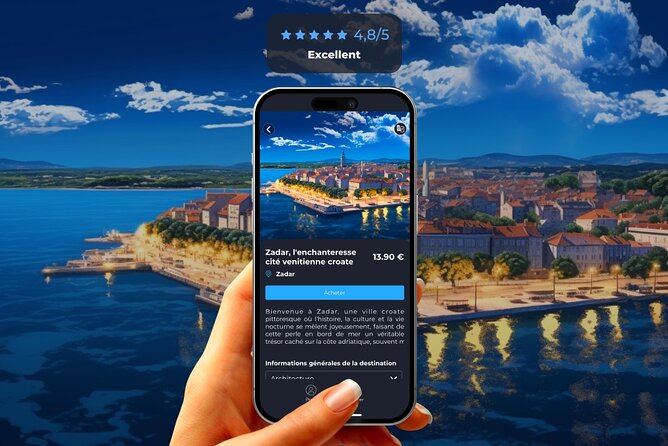
Evening light makes Zadar feel like a movie set. This guided walk strings together iconic old-town sights and ends at the waterfront, where you can hear the Sea Organ and watch the Greeting to the Sun glow. It’s a smart way to get orientation fast without spending hours hunting for history clues on your own.
What I like most is the blend of stories and street-level details. The guide, Ante, brings local context—Roman Zadar, daily life, and how the city changed after World War II—so the landmarks feel less like postcard props and more like real places you’d actually live in. I also like the pacing: it’s set for early evening, so you’re usually walking before the worst heat and finishing right around sunset.
One consideration: you’re on cobbles and mostly outdoors, and the final stretch by the sea can get busy as people linger for the sky show. If you’re sensitive to crowds or have mobility limits, go in with that in mind and plan for a steady walk rather than a slow stroll.
In This Review
- Key highlights you’ll feel immediately
- A 6:00 pm Zadar Old Town walk that ends at sunset
- Trg Petra Zoranića and Five Wells Square: where the tour finds its rhythm
- Queen Jelena Madijevka Park and Foša Land Gate: green breaks and UNESCO walls
- St. Simon, Narodni trg, and Kalelarga: the old town as a living street
- Roman Forum to the seafront: Zadar’s big scale, then local emotion
- Sea Organ and The Greeting to the Sun: sound and sunset, in one compact finale
- Value check: what you get for $17.87 and how to get more out of it
- Who should book this Zadar Old Town tour?
- Should you book the Zadar Old Town Guided Walking Tour by Šušur?
- FAQ
- How long is the Zadar Old Town Guided Walking Tour by Šušur?
- What time does the tour start, and where do I meet?
- What language is the tour offered in?
- Is there an entry fee for the stops along the route?
- Do I get a mobile ticket?
- How big is the group?
- Is the tour suitable if I need service animals, or if I rely on public transport?
- Can I cancel for a full refund?
Key highlights you’ll feel immediately

- Early-evening timing that lines up with sunset at the end
- Ante’s storytelling that links old Zadar to life after World War II
- Free stop access—you’re not paying entry fees along the route
- UNESCO-listed fortifications at the Foša Land Gate
- Sound + light finale at the Sea Organ and The Greeting to the Sun
- Small groups (max 20) for questions and real conversation
A 6:00 pm Zadar Old Town walk that ends at sunset
This Zadar Old Town guided walking tour by Šušur is built around a simple idea: in the old town, the best time is when the day is easing off. It starts at 6:00 pm, meets at Novi caffe Ul. Ilije Smiljanića (23000, Zadar), and finishes at The Greeting to the Sun on Istarska obala. With a duration of about 1 hour 30 minutes, you get a compact route that still lets you stop, look, and listen.
That timing matters more than it sounds. The streets inside the walls can get harsh in the afternoon, and the route hits its biggest “wow” moments at the end—so you’re not trudging to your payoff in the hottest part of the day. By the time you reach the waterfront, people are already gathering, which turns the final portion into a shared moment instead of a lonely sightseeing chore.
You can also read our reviews of more tours and experiences in Zadar.



Trg Petra Zoranića and Five Wells Square: where the tour finds its rhythm

You begin at Trg Petra Zoranića, right by the ancient city gate and the Roman column that marks the start of the main street. This first stop sets the tone. You’re not wandering randomly—you’re learning what direction mattered in Roman times, and why the city’s structure still shapes how you move now.
Next comes The Five Wells Square, a landmark tied to the city’s defenses during the Ottoman invasions in the 16th and 17th centuries. It’s the kind of place where you can imagine strategy without needing a giant museum explanation. Even if you’re not thinking about sieges, the square helps you “read” Zadar: defense systems, urban planning, and later uses all overlap in the same space.
A practical note: these early stops are short. That’s good for energy, but if you love to linger for photos, you may want a few extra minutes of personal time afterward—especially if you’re a slow-walker with lots of stops.
Queen Jelena Madijevka Park and Foša Land Gate: green breaks and UNESCO walls
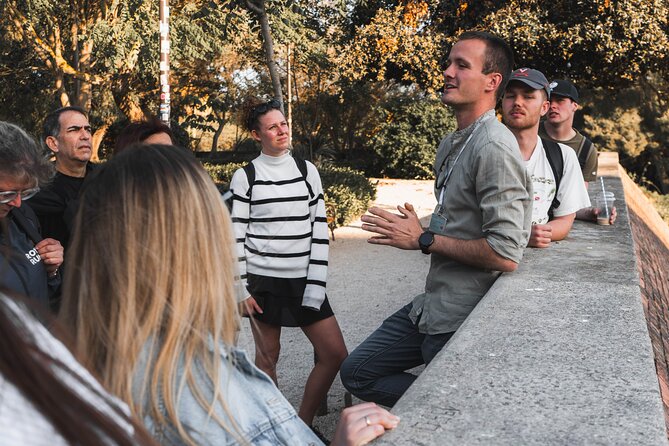
After the first defensive history beats, you get a breathing spell at Queen Jelena Madijevka Park. This is the city’s oldest park, opened in 1829. The guide also points out the so-called Zadar paradox—why the old town can feel greener than you expect for a walled historic core. In practical terms, that means you get a quick reminder that old towns aren’t just stone; they’re also shade, vegetation, and small pockets of calm.
Then you head to Foša – The Land Gate, a Renaissance gateway that’s part of Zadar’s fortification system, listed as a UNESCO World Heritage site. This is where your walk shifts from “street stories” to “architecture you can feel.” A gate is never just a decoration. It’s control—what enters, what exits, where people gather, and how the city’s power shows up in the built form.
The main drawback here is the time squeeze. You’ll see and learn a lot, but you won’t get long study time at each architectural feature. Think of this tour as orientation plus context. If you want deeper material later, you’ll have the names and locations so your follow-up self-guided time is much easier.
St. Simon, Narodni trg, and Kalelarga: the old town as a living street

From the gates and fortifications, the walk turns into “how people actually moved around.” You’ll stop at the Church of St. Simon, where the guide explains what treasure the church holds and why it matters even beyond local boundaries. Even without going into museum-level detail, this stop helps you understand that Zadar’s identity isn’t only Roman and medieval—it also has layers of religious art and international significance.
Then you reach Narodni trg, the center of urban life in Zadar since medieval times. What I like about this kind of square is how it links past to present: Narodni trg is where the city’s public rhythm took shape, and where drinking culture appears early in the historical record. You’re standing in a spot that’s been a social magnet for a long time—so modern cafes and bars feel less random and more like continuity.
Next comes Široka ulica, walking along the main street known as Kalelarga, which has been walked since Roman times. This is a key moment for anyone who likes to picture daily life. When your guide frames it as a Roman path that kept being reused, the street stops being just a nice photo walk and becomes a timeline you can walk on.
A small tip: if you’re traveling with someone who gets restless in history-heavy settings, this is the part that usually keeps them engaged. It’s still story-filled, but the street itself does a lot of the work by letting you feel the flow of the city.
Roman Forum to the seafront: Zadar’s big scale, then local emotion
One of the tour’s anchor stops is the Roman Forum—described as the most important cultural site in the city and the largest Roman forum on the eastern Adriatic. When you’re on the right scale of a site like that, you start understanding how Zadar functioned as a hub. The guide connects it to stories of urban life in ancient times and explains how Zadar’s history keeps shifting, even when you’re standing in the same general space.
From there, the tour moves to Obala kralja Petra Krešimira IV, the seafront promenade. This is where local emotion enters the conversation in a way that’s easy to feel. The guide talks about why locals feel a sentimental connection to the water here—and why so many songs have been written about it. If you’re the type who only wants facts, you can treat this as cultural context. If you like atmosphere, this is where the walk gets warmer.
Drawback to know: the seafront area can be windier than the inner streets. If you run cold easily, bring a light layer even if the day felt mild.






Sea Organ and The Greeting to the Sun: sound and sunset, in one compact finale

The final stretch is the reason most people choose this evening route. First, you visit the Sea Organ, described as one of Zadar’s main attractions and an architectural masterpiece that works with nature. The idea is simple and clever: the sea creates the effect. You’re not just looking at a sculpture—you’re experiencing a place where sound is part of the landscape.
Then you end at The Greeting to the Sun, another architectural marvel and a spot many locals finish their evening walks. This is the moment that turns a walking tour into a real memory: the place where people associate Zadar with some of the best sunsets. Even if you’ve seen photos already, the live version hits differently because the crowd, the timing, and the environment all work together.
If you want the best view, arrive ready to linger for a few minutes. The tour time is about 1 hour 30 minutes total, but the best payoff comes from standing still and letting the sky do its thing.
Value check: what you get for $17.87 and how to get more out of it
At $17.87 per person for about 90 minutes, this is the kind of tour that can replace a half-day of guesswork. You’re paying for two things: a guided path through the old town and a narrative thread that connects places. All the stops listed as part of the walk show admission ticket free, which is a practical win—you’re not stacking costs on top of the tour price.
A small group helps here too. With a maximum of 20 travelers, it’s easier to ask questions and hear the guide clearly when you stop. It’s also the kind of group size that avoids the “herding” feeling that can drain your energy.
A few practical tips to make the tour feel worth it:
- Wear shoes you trust on old-town cobbles.
- Bring a light layer for the waterfront.
- If you care about food and bars, ask the guide for suggestions away from the usual tourist traps. The guide style here is very much about practical, local recommendations.
- If mass tourism is something you think about, this tour’s local perspective can give you a more thoughtful way to shop and behave. The guide puts emphasis on being conscious and supporting local places.
Who should book this Zadar Old Town tour?

This walk is a great fit if you want:
- A guided orientation to Zadar’s old town in under two hours
- A route that blends Roman sites, Renaissance architecture, and seaside icons
- An evening plan that finishes with sound (Sea Organ) and sunset (Greeting to the Sun)
It’s less ideal if you need a lot of resting breaks or you strongly dislike outdoor walking and tight crowd pockets near the waterfront at the end.
Should you book the Zadar Old Town Guided Walking Tour by Šušur?
If your goal is to understand Zadar quickly—and finish with a memorable sunset moment—this is an easy yes. The route is efficient, the price is fair for a guided story route, and the payoff is real at the end rather than just another “see it later” suggestion.
If you already know you’ll spend hours on your own in the old town, you might skip it. But even then, the guide’s local perspective (including how Zadar’s story links back to more recent history) can change how you read the streets while you wander.
Book soon if you’re visiting in peak season. On average, this tour is booked about 9 days in advance, so planning ahead helps you lock in a good time slot.
FAQ
How long is the Zadar Old Town Guided Walking Tour by Šušur?
It runs for about 1 hour 30 minutes (approx.).
What time does the tour start, and where do I meet?
The tour starts at 6:00 pm. Meet at Novi caffe Ul. Ilije Smiljanića, 23000, Zadar, Croatia. The tour ends at The Greeting to the Sun, Istarska obala, 23000, Zadar, Croatia.
What language is the tour offered in?
The tour is offered in English.
Is there an entry fee for the stops along the route?
The tour lists the stops as having admission ticket free, so you shouldn’t need separate paid entry tickets for the listed sights.
Do I get a mobile ticket?
Yes. The tour uses a mobile ticket.
How big is the group?
There is a maximum of 20 travelers.
Is the tour suitable if I need service animals, or if I rely on public transport?
Service animals are allowed, and the meeting area is near public transportation. The tour notes that most travelers can participate.
Can I cancel for a full refund?
Yes. Free cancellation is available up to 24 hours in advance for a full refund. If you cancel less than 24 hours before the start time, the payment is not refunded.