REVIEW · ZADAR
Zadar: Private walking tour through history and modern time
Book on GetYourGuide →Operated by Tomislav · Bookable on GetYourGuide
Zadar’s past talks back on your feet. I really liked the Roman Forum storytelling and the Sea Organ and Greeting to the Sun sights that mix old stone with modern ideas. One thing to think about: tickets for churches or museums aren’t included, so you’ll pay extra if you ask to go inside.
This is a private walking tour with a certified guide, Tomislav (often called Tom). He works in Croatian, English, or German, sets a calm pace, and will adjust based on what you care about—religious landmarks, city life, or how North Dalmatia got shaped over the centuries.
In This Review
- Key highlights worth aiming for
- Zadar’s Roman Forum: the anchor for everything you’ll see next
- Saint Donat and St. Anastasia: two churches, two very different moods
- St. Donat’s strange-at-first-glance character
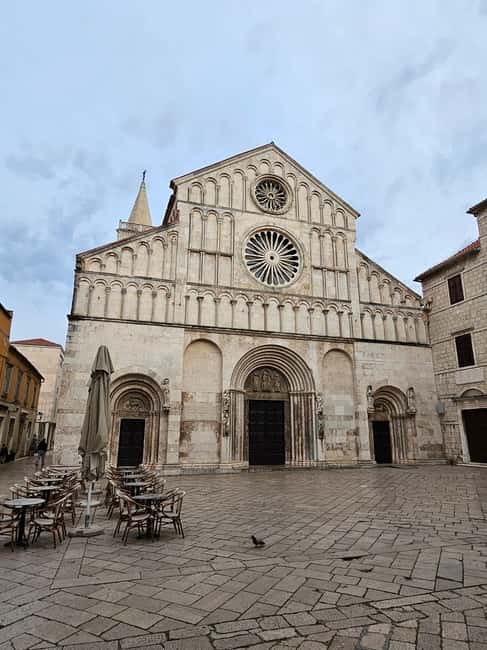
- Cathedral of St. Anastasia: scale you can feel
- The modern Zadar lesson: Sea Organ and Greeting to the Sun
- People’s Square and Kalelarga: the street-level pulse of Zadar
- Market Zadar and Trg pet bunara: where you pause and look like a local
- Market Zadar
- Trg pet bunara: five wells, one memorable square
- Land Gate and St. Simon: edges of the old city still visible
- How Tom runs the tour: pace, tailoring, and real Q&A time
- Price and value: is $47 for 2 hours fair?
- Who this tour fits best
- Practical tips before you meet Tom on the Forum
- Where you meet
- Should you book this Zadar private walking tour?
- FAQ
- How long is the Zadar private walking tour?
- What is the meeting point?
- Is this tour private or a group tour?
- What stops does the tour include?
- Are museum or church tickets included?
- What languages are available for the guide?
- Is the tour wheelchair accessible?
- What should I bring?
- Can I cancel and get a full refund?
Key highlights worth aiming for
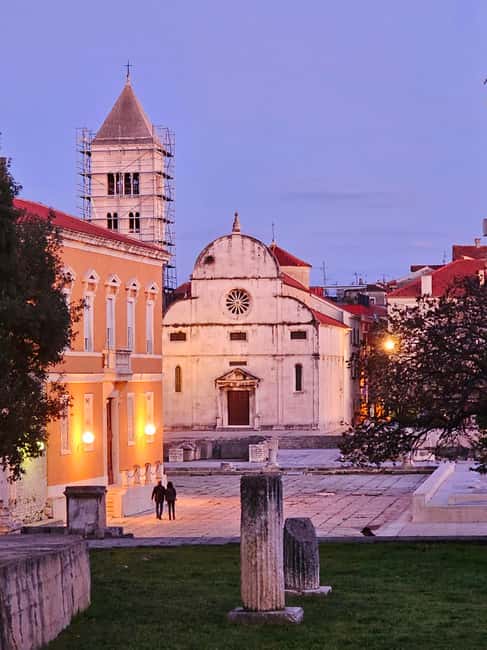
- Roman Forum (Rimski forum): the center of ancient Zadar and an easy way to get your bearings
- St. Donat (Saint Donat): the unusual church form that makes it feel almost otherworldly
- Cathedral of St. Anastasia (Sv. Stošija): big, bold, and central to Dalmatian identity
- Sea Organ + Greeting to the Sun: sound and light designed into the waterfront
- Trg pet bunara: the “square of five wells,” built for a photo stop and a story
Zadar’s Roman Forum: the anchor for everything you’ll see next
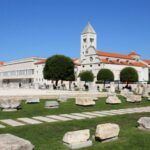
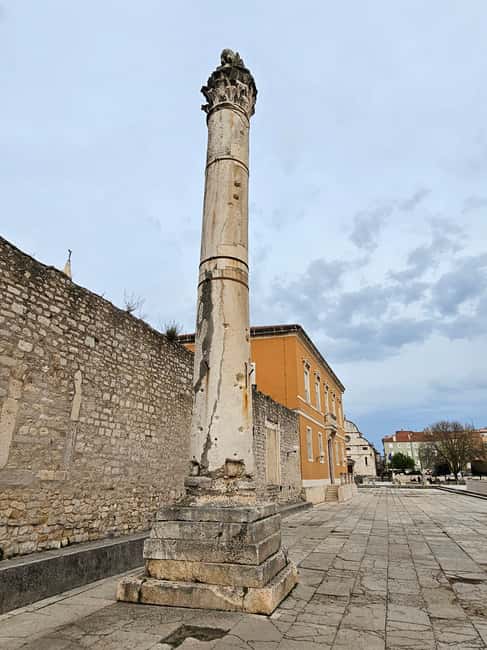
Most cities in the Adriatic feel like they grew outward from the sea. Zadar feels different. Start at the Rimski forum (Roman Forum) and you get the sense that this place has been an organized “city center” for a very long time.
You’ll walk around the Forum area with a guide who explains not just what a wall is, but what it meant—who used it, why it mattered, and how Zadar’s role in North Dalmatia kept pulling people through its streets. It’s a smart first stop because it gives you a mental map before the city gets more layered and more interesting.
If you’re the type who likes history but doesn’t want to drown in dates, this works. The guide keeps the story moving, and you’ll connect the dots as you go—ancient power, later influences, and what still shows up today in street layout and landmark placement.
You can also read our reviews of more tours and experiences in Zadar.

Saint Donat and St. Anastasia: two churches, two very different moods
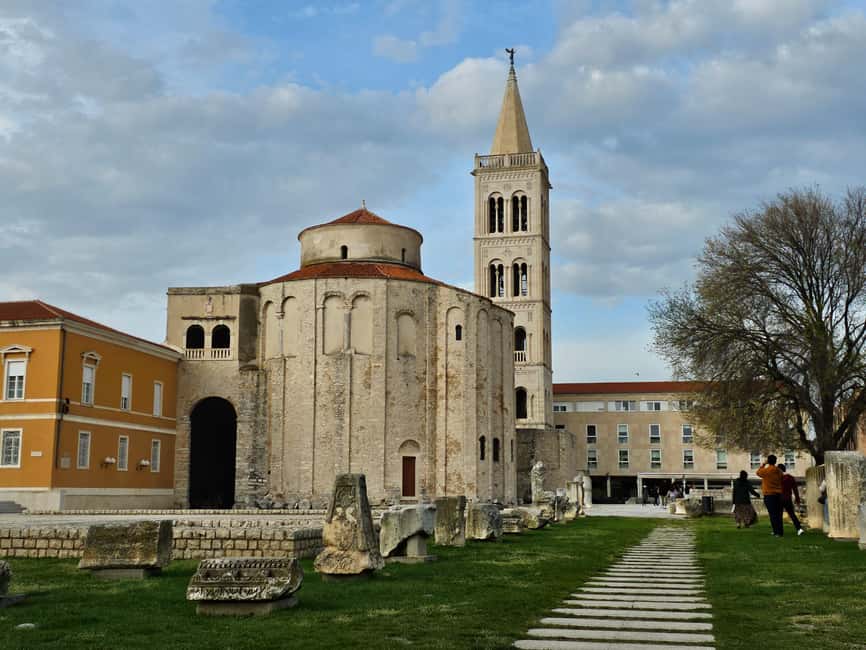
Zadar’s religious architecture is a big reason people come back. And on this walk, you don’t just see a church. You get a sense of why each one exists and what people were trying to express.
St. Donat’s strange-at-first-glance character
Saint Donat (Sv. Donat) is famous for good reason. Even if you don’t know the period names, the building’s shape and presence hit you fast. The guide helps you read it: what makes it unusual in the wider world, how it fits into Zadar’s past, and how the city’s identity shows through religious monuments.
This is the stop that often turns a quick photo into something more. You’ll slow down because you’ll finally have a way to understand what you’re looking at.
Cathedral of St. Anastasia: scale you can feel
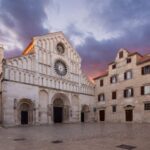
Next up is the Cathedral of St. Anastasia. It’s described as the biggest cathedral in Dalmatia, and that scale changes how the square and streets around it feel. The guide places it in context so the cathedral doesn’t read like a standalone attraction.
Instead, you’ll see how it connects to Zadar’s long religious storyline and civic life. If you’re interested in how a city builds prestige through faith and architecture, this is one of the best stretches of the tour.
The modern Zadar lesson: Sea Organ and Greeting to the Sun
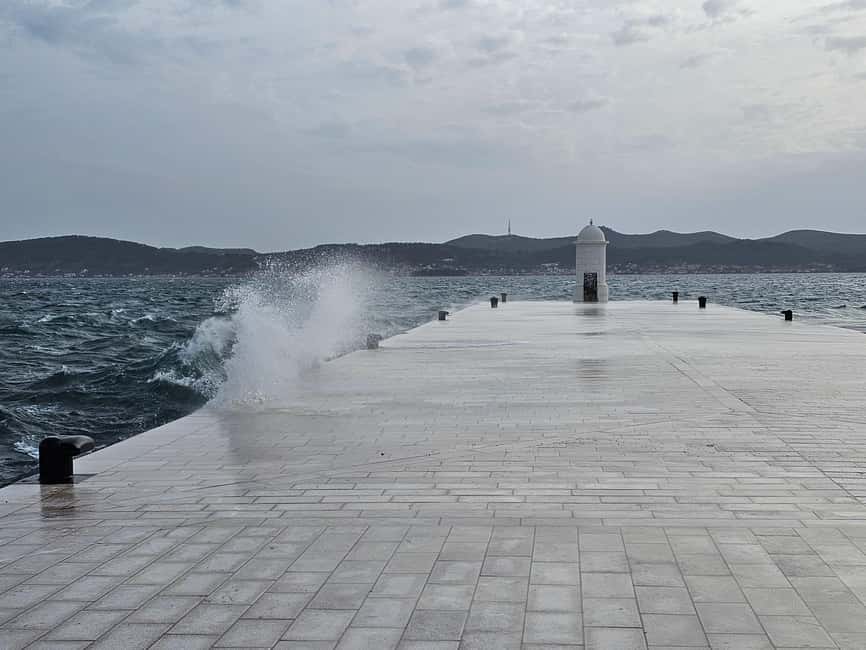
Then you get hit with the modern stuff—and it doesn’t feel like a gimmick. The tour brings you to the Sea Organ and the Greeting to the Sun, two waterfront creations that turn the sea into a collaborator.
The Sea Organ is designed to produce sound from the water’s movement. The Greeting to the Sun uses light and daily timing to create a visual rhythm. Together, they show how Zadar keeps re-inventing itself while still respecting its setting.
What I like about this part is how it makes the city feel alive in the present. Ancient sites are fascinating, but they can feel distant. These two stops keep you grounded. You’ll likely find yourself watching the water, then looking back at the structures nearby with new eyes—because now you understand Zadar as a city that thinks in layers.
Tip: bring a bit of patience for this segment. Even if you know you want a photo, the real payoff is standing there long enough to notice how the waterfront changes.




People’s Square and Kalelarga: the street-level pulse of Zadar
Zadar isn’t only stone monuments. It’s also errands, conversations, and daily routines.
The walk includes People’s Square and Broad Street (Kalelarga)—the kind of central areas where you can feel the city’s economy and social life. This is where the tour helps you understand Zadar as an urban center for North Dalmatia, not just a stop on an Adriatic route.
As you move through these main streets, your guide explains how the city’s layout supports public life. You’ll also get context for why certain landmarks sit where they do and how different historical periods left fingerprints that still affect what you experience today.
If you’re traveling with anyone who says they like history but hates long museum sessions, this section is a peace treaty. You’re outside, walking, seeing real streets, and still getting meaning.
Market Zadar and Trg pet bunara: where you pause and look like a local
A tour that only hits monuments can feel staged. This one adds space for textures of everyday life.
Market Zadar
You’ll see Market Zadar, which is perfect when you want the city to feel grounded. Even if you don’t plan to shop much, markets teach you a lot: what people buy, what’s nearby, and how local life is organized around the center.
Trg pet bunara: five wells, one memorable square
Then there’s Trg pet bunara—the square of five wells. It’s small enough to enjoy quickly, but memorable because it’s visually unusual and easy to remember later.
This is the kind of stop where a guide earns their fee. Instead of telling you to just look around, the guide gives you the why behind the oddness—what the wells meant in practice, how the square functions, and why it became a recognizable public spot.
Land Gate and St. Simon: edges of the old city still visible
Not every stop needs to be dramatic. Some places matter because they show where a city once defined its boundary.
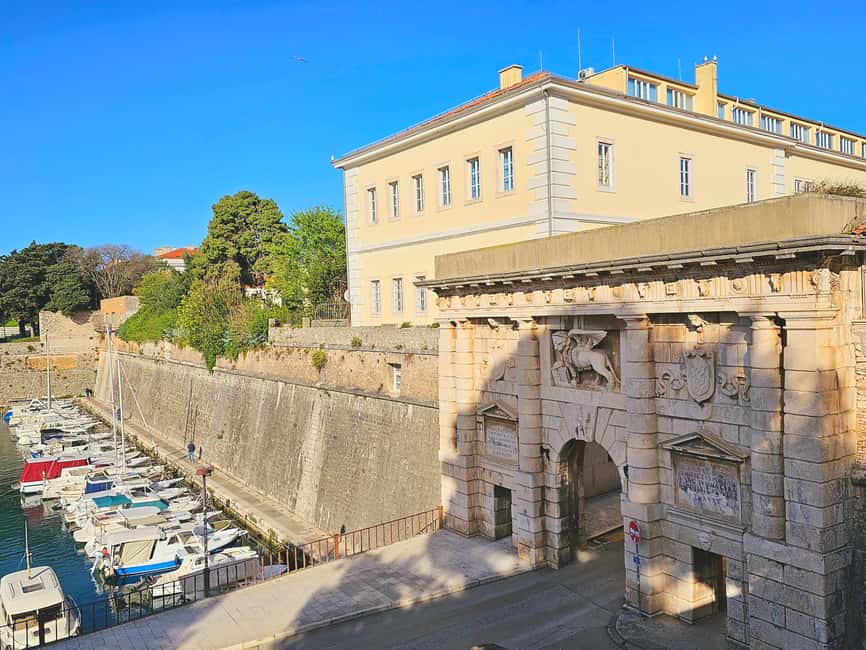
You’ll pass by the Land Gate, a reminder that Zadar wasn’t always open in the way it is now. Gates and entrances give you clues about defense, traffic flow, and how towns controlled movement. Even if you’re not a fortress fanatic, this helps you picture the old city as a working system—not just a collection of buildings.
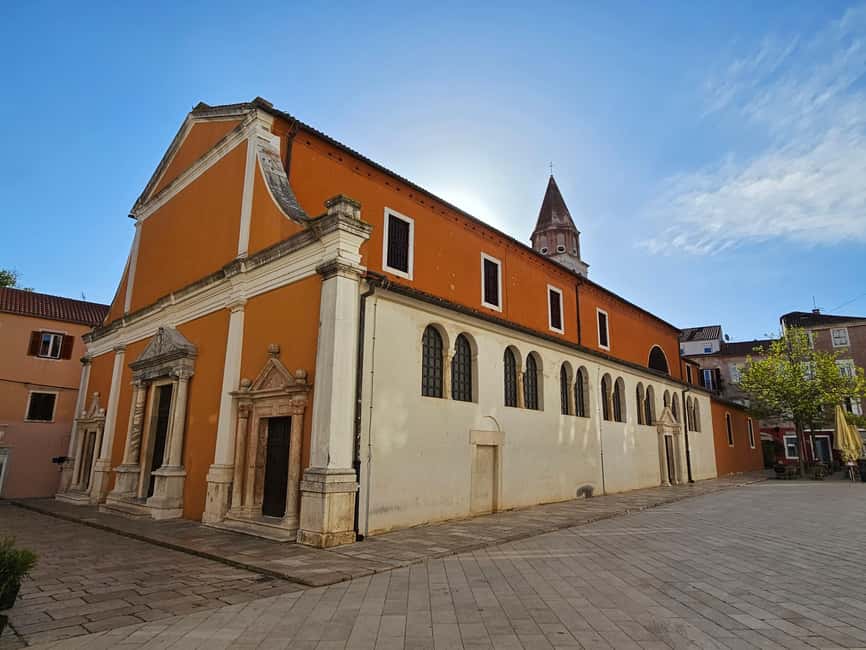
You’ll also visit the Church of St. Simon, adding one more religious landmark to the mix. The guide’s role here is to keep the story connected, so each church doesn’t feel like a random detour. You’ll understand what changes from one monument to the next and how those choices reflect Zadar’s changing priorities.
How Tom runs the tour: pace, tailoring, and real Q&A time
A private walk only works if the guide adjusts to you. This tour does.
Tomislav (Tom) is known for taking time rather than rushing through stops. That matters, because the best parts of Zadar are the details: how one area connects to another, the way architectural styles show up in street context, and the small stories that make you look up instead of down.
He also answers questions beyond the monuments. People ask about daily life in Zadar—what it feels like now, how locals think about their city, and why certain places matter. Tom keeps those answers grounded, with some humor, and he’s happy to connect the dots with wider European parallels.
One more practical win: the guide gives useful local tips for after the tour, like where to eat and drink. Those suggestions can save you time when you’re deciding what to do next.
Price and value: is $47 for 2 hours fair?
At $47 per person for a 2-hour private walking tour, the value depends on what you want.
If you’re visiting Zadar for the first time and you want the big landmarks—Forum, St. Donat, St. Anastasia, Sea Organ, Greeting to the Sun, Kalelarga—this is a straightforward way to get context fast. You’re not paying for a vehicle or a long multi-stop circuit. You’re paying for a certified guide who can connect the sites so they actually mean something.
Also, because tickets for churches and museums are not included, you avoid the all-in price problem. If you only want the exterior views and the guided explanations, you can keep it simple. If you want additional entrances, you can request them and handle costs separately.
Where it’s less ideal: if you already have a strong guidebook routine and you don’t care about interpretation, you might feel it’s extra spending. But if you want a coherent story as you walk, this price makes a lot more sense.
Who this tour fits best
This experience is especially good for:
- First-time visitors who want the main Zadar highlights with context
- People who like history but prefer it explained in plain language on foot
- Travelers who want a private format where questions don’t get cut short
- Anyone who wants both ancient Zadar and modern waterfront design in one plan
It’s also a good match if you’re traveling with someone who cares about different things. The guide can tailor focus, and the walking route still covers core landmarks.
Practical tips before you meet Tom on the Forum
This tour is a walking experience, so keep it simple:
- Bring water. You’ll appreciate it, especially on warmer days.
- Wear comfortable shoes for uneven old-stone areas.
- If you’re planning to visit any churches or museums inside, plan on paying tickets separately, since they’re not included unless requested.
- The guide works in Croatian, English, and German, so pick the language that makes you most comfortable asking questions.
Where you meet
You’ll meet in front of Saint Mary’s Church right on the Forum. It’s on the left side if you’re facing the sea, just next to the Archaeological Museum.
Should you book this Zadar private walking tour?
I’d book it if you want Zadar to make sense quickly—ancient through modern, in one calm, guided loop. The strongest reasons are the mix: Roman Forum + St. Donat + St. Anastasia for the older layers, then the Sea Organ and Greeting to the Sun for the city’s modern creative side. Add Tom’s patient pace and the ability to tailor around your interests, and you get a tour that feels like a conversation rather than a checklist.
Skip it only if you already know you don’t want explanations and you’d rather wander without a guide. Otherwise, for a 2-hour first pass, this is a solid way to get oriented and leave with a clearer picture of Zadar’s identity.
FAQ
How long is the Zadar private walking tour?
The tour lasts 2 hours.
What is the meeting point?
Meet in front of Saint Mary’s Church on the Forum, on the left side if facing the sea, next to the Archaeological Museum.
Is this tour private or a group tour?
It’s a private group tour.
What stops does the tour include?
It covers major highlights such as the Roman Forum, Sea Organ and Greeting to the Sun, People’s Square, Market Zadar, Cathedral of St. Anastasia, Trg pet bunara, Land Gate, Church of St. Simon, and it also focuses on Saint Donat.
Are museum or church tickets included?
No. Tickets to museums and churches are not included unless you request a special visit.
What languages are available for the guide?
The guide is available in Croatian, English, and German.
Is the tour wheelchair accessible?
Yes, the tour is marked as wheelchair accessible.
What should I bring?
Bring water.
Can I cancel and get a full refund?
Yes. You can cancel up to 24 hours in advance for a full refund.