REVIEW · ZADAR
Zadar Private Walking Tour With A Professional Guide
Book on Viator →Operated by Global Guide Services · Bookable on Viator
Zadar’s best stories are on the sidewalk. This private walking tour helps you move through the city’s top sights, from the Sea Organ and Sun Salutation to the Church of St. Donat and the Cathedral of St. Anastasia, with a guide turning landmarks into real-world context. The biggest win here is that you’re not stuck passively following a group—you get a conversation and a plan that can shift based on what you care about.
What I like most is the level of attention you get as a private group, and the fact that your guide can tailor the walk while you’re already in Zadar. One thing to consider: entrance fees aren’t included, so a few sites may cost extra depending on what you choose to enter.
Because it’s on foot, you also get the kind of routing that bus tours can’t do. And with a guide leading you past Sea Gate, Land Gate, the City Wall, 5 Wells Square, and the famous city market, you’ll have a clear sense of where you are and what you’re looking at as you go.
In This Review
- Key things to know before you go
- Why Zadar’s private walking tour works so well
- Price and what you’re really paying for (up to 15 people)
- Where you start (and how the walk stays easy to follow)
- Sea Organ and Sun Salutation: waterfront stops with meaning
- Church of St. Donat and Cathedral of St. Anastasia: seeing more than the facade
- Sea Gate, Land Gate, and the City Wall: reading Zadar like a map
- 5 Wells Square and the city market: where the everyday fits in
- How your guide brings in WWI/WWII and Yugoslavia without making it heavy
- Custom stops: when the tour can flex on the day
- Timing, pacing, and what to expect in a 2-hour format
- Quick practical tips to make your tour feel effortless
- Should you book this Zadar private walking tour?
- FAQ
- How long is the Zadar private walking tour?
- What does the $259.68 price include?
- Are entrance fees included?
- Where does the tour start and end?
- Is this tour private or shared?
- What is the cancellation policy?
Key things to know before you go
- Private guide, your group only: No merging into a crowd; your guide works just with you.
- 2 hours is focused: You’ll cover major highlights without turning it into an all-day marathon.
- Walking access: You’ll reach spots that don’t fit the usual bus route.
- Flexible on the day: Your guide can adjust the route or add stops while you’re there.
- WWI/WWII and Yugoslavia context: You’ll connect Zadar’s monuments to the 1900s stories that shaped it.
Why Zadar’s private walking tour works so well
Zadar is one of those cities where it’s easy to walk past something important and miss the meaning. A private guide fixes that fast, because you’re not spending the whole time trying to decode signs and guidebook captions.
The value here is that your guide is part storyteller, part city navigator. You’ll see the big-name highlights—like the Sea Organ, Sun Salutation, and major churches—then your guide will explain why those places matter and how they connect to Zadar’s changes over time.
I also like that the tone stays practical. This isn’t just a lecture. The tour is structured enough to keep you moving, but open enough that you can ask questions and adjust the emphasis to your interests.
You can also read our reviews of more tours and experiences in Zadar.



Price and what you’re really paying for (up to 15 people)
The price is $259.68 per group for up to 15 people, for about 2 hours. That sounds simple, but it’s where the math gets interesting: because it’s per group, the cost can drop quickly if you’re traveling as a family or in a small circle of friends.
Here’s the most useful way to think about it: you’re paying for a professional guide’s time plus a route that’s designed to keep you from wasting effort getting oriented. If you go as a couple, it’s pricier per person; if you go as a group of 6–10, it can feel much more reasonable.
Just remember one trade-off: entrance fees aren’t included. So while your guide covers the route and interpretation, your total trip cost can go up if you decide to enter ticketed sites during the walk.
Where you start (and how the walk stays easy to follow)
The tour meets at Istarska obala, 23000, Zadar, Croatia, and it ends back at the meeting point. That round-trip structure matters more than you might think, because it removes one of the biggest stress points of a walking tour: you don’t have to figure out how you’ll get back after you’re done.
The start point is also listed as being near public transportation, so if you’re arriving from elsewhere in town, you’re not stuck trying to solve a last-mile puzzle. You’ll also get a mobile ticket, and confirmation is sent when you book.
And yes—service animals are allowed, and most travelers can participate. The main “logistics reality” is simply that it’s a walking tour, so comfortable shoes are smart.
Sea Organ and Sun Salutation: waterfront stops with meaning
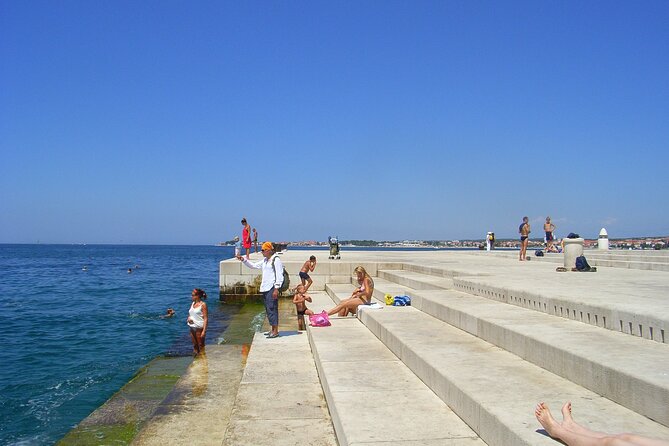
You’ll begin with Zadar’s waterfront highlights: the Sea Organ and the Sun Salutation. These are the kind of places people photograph, but a guide’s job is to explain what you’re seeing in the context of the city around it.
What you’ll appreciate is that your guide doesn’t just say what the landmark is. You’ll get the bigger story: how these waterfront works fit into Zadar’s identity, and how they relate to the city’s shifting public life over time.
A practical note: waterfront stops are great for photos, but they also tend to be places where you may want to pause for good viewing angles. The upside of having a guide is that the pacing stays steady, so you don’t feel like you’re rushing or waiting for the group to catch up.
Church of St. Donat and Cathedral of St. Anastasia: seeing more than the facade

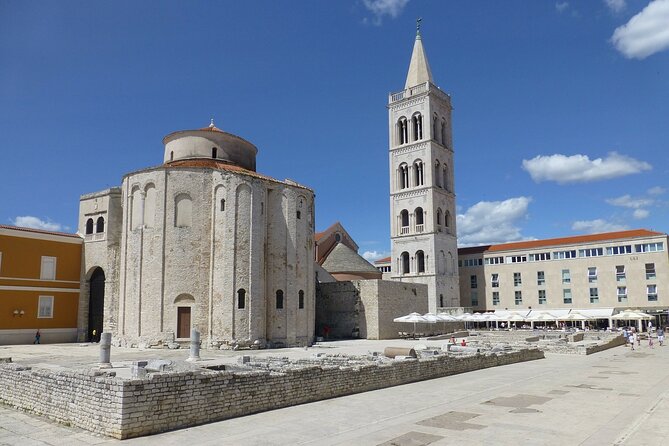
Next up are the Church of St. Donat and the Cathedral of St. Anastasia. These places can feel overwhelming if you’re trying to figure them out alone while walking. With a guide, you get the essentials quickly—what to notice, why it matters, and how they fit into Zadar’s story.
This is where the private format really shows. You can ask questions that match your curiosity. Are you more interested in how Zadar’s culture changed, or in understanding the role these sites played over time? A good guide will steer the discussion to what you actually want to know.
The reviews also point to one common pattern: guides keep the tour interesting from start to finish. Martina is specifically praised for staying engaging and informative, and that kind of momentum helps these church stops feel alive rather than like checklist items.






Sea Gate, Land Gate, and the City Wall: reading Zadar like a map
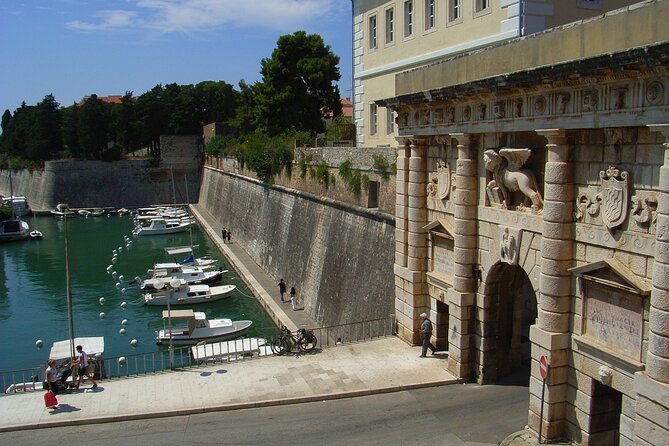
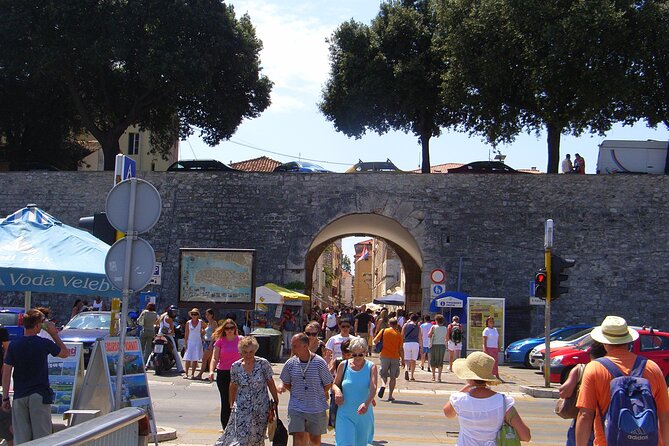
After the churches, the tour shifts toward Zadar’s older structure and defenses. You’ll see the Sea Gate, Land Gate, and the City Wall. These aren’t just impressive walls and arches. They’re a way to understand how the city protected itself and how different areas connected.
I like this part because it helps your brain build a mental map. When you can connect gates and walls to what you’re walking through, the city stops feeling like random streets. It starts feeling organized—like you’re moving through a real historical plan.
The tour is also a good reminder that Zadar isn’t only about postcard monuments. One of the strongest moments mentioned in feedback is the surprise of how stunning the architecture is in areas that can look industrial at first glance. Your guide helps you see the charm and intention in those corners instead of treating them like background.
5 Wells Square and the city market: where the everyday fits in

Then you’ll move to a more local-feeling part of Zadar, including 5 Wells Square and the famous city market. This is a smart pairing with the earlier historic stops because it changes the pace. After learning how Zadar organized and defended itself, you get to see the spaces where daily life happens.
Even if you’re not planning to buy much, a city market is a great way to understand a place through small details: what people choose, what stands out visually, and how the city feels at ground level. Your guide can steer you toward what’s worth noticing without turning the visit into a hard sales pitch.
This is also where customization can be most useful. If your group wants a more culture-and-food oriented walk, your guide can likely adjust your emphasis while keeping the core highlights intact.
How your guide brings in WWI/WWII and Yugoslavia without making it heavy
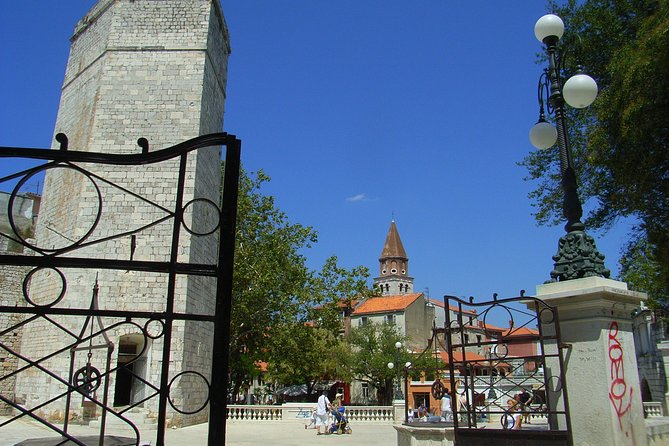
One of the most valuable parts of this tour is that it doesn’t leave the 1900s locked in a textbook. You’ll learn how key events like World War I and II affected Zadar, and how Croatia was once part of the Socialist Federal Republic of Yugoslavia.
This matters because Zadar’s buildings and public spaces don’t exist in a vacuum. When you connect monuments to the political and social shifts around them, you stop seeing them as isolated sights. Instead, you understand why certain ideas and structures remained, changed, or were replaced.
The best guides do this with clarity and respect for your time. The tour stays 2 hours long, so you get an essential narrative without turning it into a history class that drains your energy for the rest of the day.
Custom stops: when the tour can flex on the day
The tour is built for flexibility. Your guide can customize on the spot, which is exactly what you want if you have specific interests.
One example from the feedback: Josip helped a group experience the glass museum and even arranged the chance to catch the last glass-blowing demo of the day. That kind of timing is hard to do on your own, and it’s a good illustration of why a live guide is worth paying for. You can’t always predict the best moment to see a craft demo without local knowledge and coordination.
If you’re the type who loves one extra “try this” or “watch this” moment, lean into that when you meet your guide. Ask what’s possible today, and let them know what you’d hate to miss. A flexible private tour is strongest when you actively share your preferences.
Timing, pacing, and what to expect in a 2-hour format
At about 2 hours, the tour is designed to be efficient. You’ll cover a lot: waterfront landmarks, major churches, city gates and walls, then square and market time. That also means the pacing won’t be slow enough for long wander-offs.
I recommend thinking of the tour like a guided sampler. You’ll get the meaning, the orientation, and the main highlights. After that, you’ll be in a better position to return on your own if a specific place really grabbed you.
It’s also worth considering group size: it’s private for your group, but the cap is up to 15. If you’re in a larger group on a tight schedule, pay attention to how much you can ask during stops. With fewer people, you’ll likely get more back-and-forth.
Quick practical tips to make your tour feel effortless
- Wear comfortable shoes for a 2-hour walking plan through the historic center.
- Bring your questions. If you want more WWI/WWII context or more focus on architecture, say so early.
- Budget for entrances you choose to enter, since entrance fees aren’t included.
- Use the mobile ticket as instructed at booking so check-in is smooth.
- If you want crafts or a demo, ask about it early. Your guide can sometimes build it in through day-of customization.
Should you book this Zadar private walking tour?
If you want a highlight-focused day that doesn’t feel rushed or confusing, I think you should strongly consider booking. The private format is the headline feature: it’s not just “a guide,” it’s someone who can keep you oriented and explain what you’re seeing in plain language.
Book it especially if:
- you like walking tours but hate losing time figuring out where to go,
- you care about understanding the 1900s context around Zadar’s monuments,
- you’re traveling in a group where splitting a per-group price makes sense,
- you want flexibility to adjust the route on the day.
Don’t book it if you’re only interested in ticketed attractions or you expect entrance fees to be included in the price. Also, if you dislike walking at all, this format will feel too active for your taste.
Overall, this is a smart way to get oriented fast, see the major sights, and come away with the story behind them—without turning your day into a slog of passive sightseeing.
FAQ
How long is the Zadar private walking tour?
The tour lasts about 2 hours.
What does the $259.68 price include?
It includes a local guide who works with your group only, a private guided tour, and possible customization on the spot.
Are entrance fees included?
No. Entrance fees are not included.
Where does the tour start and end?
It starts at Istarska obala, 23000, Zadar, Croatia, and ends back at the same meeting point.
Is this tour private or shared?
This is a private tour/activity. Only your group participates.
What is the cancellation policy?
You can cancel for a full refund up to 24 hours in advance of the experience’s start time.