REVIEW · ZADAR
Zadar Roman Walking Tour
Book on Viator →Operated by I TRAVEL HR · Bookable on Viator
Roman Zadar feels close enough to touch. This Zadar Roman walking tour strings together city gates, squares, and the Roman Forum in about an hour, with a guide who makes ancient daily life feel usable. I love that it starts where people once entered the city and ends at the Forum ruins.
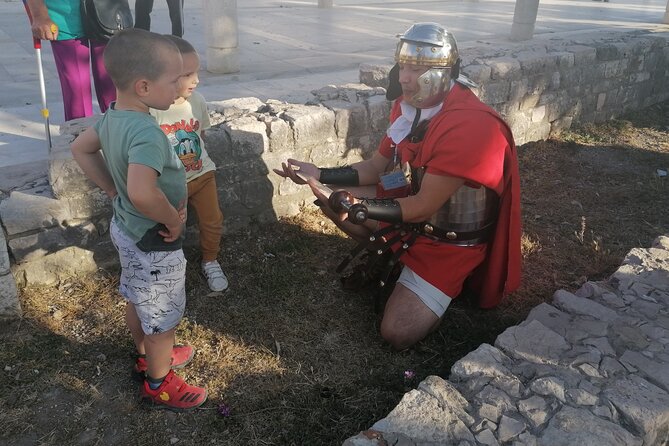
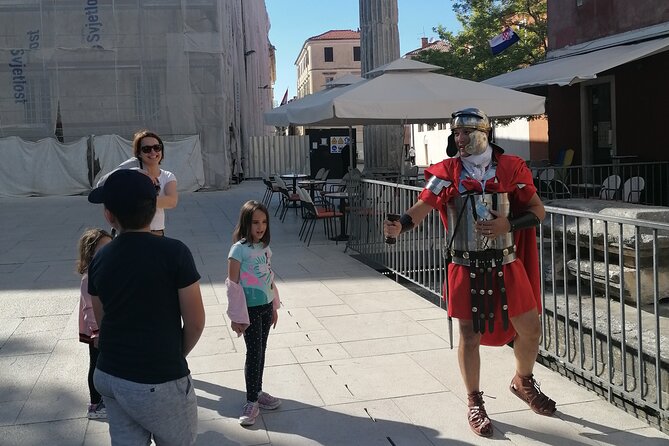
I also like the small-group feel (maximum 10 travelers) and the showy-but-informative Roman centurion style. In at least some departures, the guide comes in Roman centurion dress, and the explanation stays practical instead of lecture-mode.
One thing to plan around: the tour depends on good weather, so rainy conditions can affect the day’s schedule.
In This Review
- Key things you’ll notice on this Zadar Roman walk
- Entering Zadar’s Land City Gates like you mean it
- Narodni trg: the Roman scavenger hunt in a square that kept growing
- Široka ulica: a street that tracks change for 2,000 years
- Sea Gate (Morska vrata): Roman wealth, plus coastal atmosphere
- The Roman Forum: walking the stones Roman citizens walked on
- Timing, group size, and why this feels good at a cruise-port pace
- Tips to make the most of your Roman walking hour
- Should you book this Zadar Roman Walking Tour?
- FAQ
- How long is the Zadar Roman Walking Tour?
- Where does the tour start and where does it end?
- Is the tour offered in English?
- What is the group size?
- Do I get a mobile ticket?
- Is there free cancellation?
- Is the tour suitable for families or kids?
Key things you’ll notice on this Zadar Roman walk

- City gates first, history on your feet as you enter through the gates that shaped movement into Zadar
- A “find the Roman bits” square at Narodni trg, where later centuries layer over older meanings
- Široka ulica as a living timeline, including how street names and roles shift over 2,000 years
- Sea Gate stories with coastal payoff, plus views that add atmosphere to the Roman lesson
- The Forum on real stones, with ruins of a temple and basilica foundations to point and explain
- Short, small-group format, ideal when you want a guided hit without committing all day
Entering Zadar’s Land City Gates like you mean it
The walk begins at Trg Petra Zoranića and kicks off at 9:30 am. From there, you step toward the Zandar Land City Gates, and the whole tour starts with a simple idea: match your pace to the way the city was used.
What I like here is the framing. You don’t just see a gate and move on. You hear how its meaning and position changed later on, including how things shifted in the 1500s. That context matters because gates are never just decoration. They reflect control, trade, and what a city chooses to protect.
The Land City Gate is also described as the most beautiful city gate in all Dalmatia, so you get a strong “hook” early. It’s a great moment for photos, but it’s also a moment for orientation. Once you’ve stood at the entry point, Zadar’s center starts to make more sense.
You can also read our reviews of more tours and experiences in Zadar.



Narodni trg: the Roman scavenger hunt in a square that kept growing
Next you head to Narodni trg, and this stop is built like a puzzle. The square developed over centuries into its current shape, and the modern markers sit right next to older layers. The job for you is to spot the Roman threads—without losing the plot to the more visible later architecture.
You’ll hear how the square today is largely marked by a 16th-century Loggia and the City Guard, with a 20th-century City Hall presence. That mix can feel like a time collage, and that’s exactly why it’s worth doing with a guide. Roman Zadar is not gone; it’s adapted into what locals use now.
There’s a practical takeaway here too. When you walk this kind of old-city center on your own, it’s easy to see “pretty buildings.” With the tour, you get to see how the same space can keep changing purpose while still holding onto earlier identity.
Široka ulica: a street that tracks change for 2,000 years
At Široka ulica, you get a slower, more human stop. The guide explains how the street and even its name have shifted through centuries—over roughly two thousand years—and then ties that to how locals experience the street today.
This is one of those moments where Roman heritage stops being abstract. A street name is small, but it’s a record. It hints at who used the space, what traffic looked like, and which parts of daily life mattered enough to keep labeling.
One thing you can do during this stop: look at the street as a corridor of movement. City gates feed into streets, streets feed into civic spaces, and that chain helps you understand why the Roman Forum matters later on. If you’ve ever walked through an old city and felt like you were missing the “why,” this part helps you rebuild the logic.
Sea Gate (Morska vrata): Roman wealth, plus coastal atmosphere
Then you reach Sea Gate (Morska vrata), the second city gate on the route. The tour notes there are multiple stories around this gate, but the emphasis here is Roman relevance: what Roman life looked like in terms of income and wealth.
That angle is smart. Roman cities weren’t just about statues and temples. They were about systems—taxes, trade, land value, and the people who profited. So when the guide connects the Romans’ financial reality to what happens later, it lands as a pattern you can actually understand.
And yes, you also get a payoff for your senses. The tour experience is described as magical for its coastline views, and people highlight sea views and even memorable light around sunsets. Even if sunsets are more of a bonus than a guaranteed schedule point, the coastal setting gives the Roman lessons extra air.
Also, gates near the water tend to feel different. You’re closer to trade routes and maritime movement, so it’s easier to imagine how the city functioned beyond its stone monuments.
The Roman Forum: walking the stones Roman citizens walked on
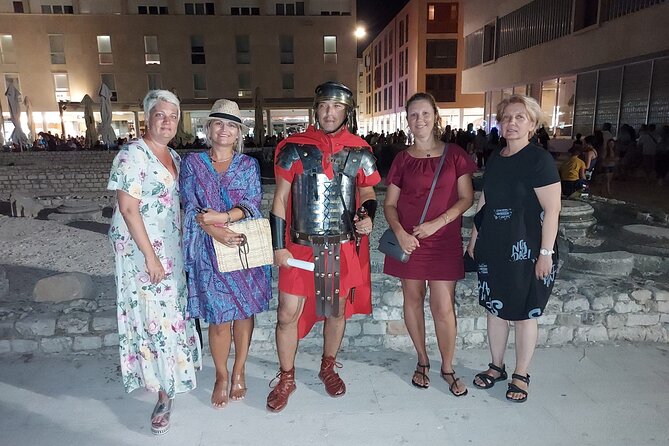
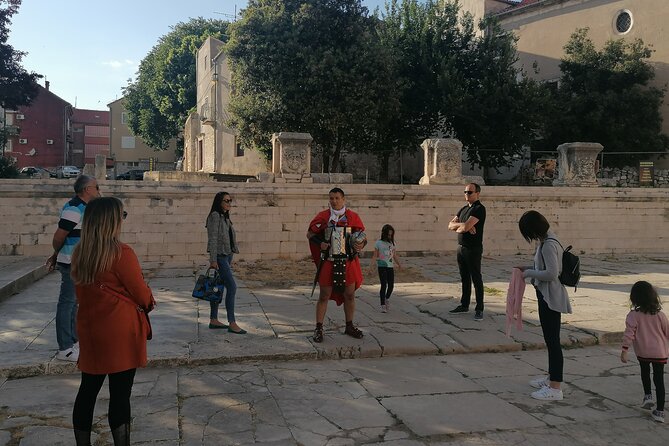
The main moment is the Forum—and the tour is very direct about what makes it special. You’re not just standing near ruins. You’re walking among the same stones that Roman citizens of Zadar once walked on.
This stop focuses on what’s left: remnants of the Forum, ruins of a temple, and the foundations of a basilica. Even when structures are fragmentary, foundations tell you a lot. They show scale. They hint at how crowds moved and where people gathered.
The tour also adds a performance layer. You may see a Roman guard in action around the Forum, and the vibe becomes more than “look at rocks.” In the experiences shared, the centurion-style storytelling really helps people connect the physical layout to human routines—speaking, judging, trading, and meeting.
Once you’re at the Forum, you can keep going on your own. There’s the Archaeological Museum of Zadar nearby, and it’s specifically noted as having a Roman-period collection on the first floor. That’s useful because it turns your walking tour into a two-step experience: first you see the city’s civic space, then you see artifacts connected to that world.
If you like to make your own meaning from places, this combination is a strong value play.






Timing, group size, and why this feels good at a cruise-port pace
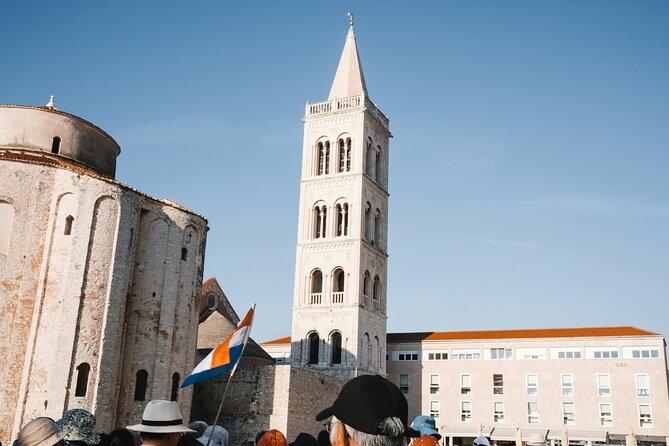
The tour lasts about 1 hour to 1 hour 20 minutes, which is a sweet spot for an old-city walk. Long enough to hit the big Roman sites in the center. Short enough that you’re not stuck with a half-day plan if your schedule is tight.
The price is $35.50 per person, and the value comes from a few things working together:
- You get a focused route through the most meaningful Roman-linked stops in the city core.
- The guide work includes character-driven storytelling in an accessible English format.
- The walking route includes stops where admission is marked as free, so your cost is mainly for interpretation and guided time.
- The group stays small: maximum 10 travelers. That makes it easier to hear details and to ask quick questions.
If you’re visiting from a cruise, this length can be especially helpful. You can get a guided “Roman Zadar” summary fast, then still have room for independent wandering or sunset time.
Practical note: the start is near public transportation, and the tour is described as suitable for most travelers. You’ll still want comfortable shoes, since it’s a walking route through older streets and open areas.
Tips to make the most of your Roman walking hour
This is the kind of tour that goes best when you treat it like a guided story you can walk through, not like a check-list.
First, wear shoes you trust. Even when the route is short, cobblestones and uneven sections can add up. Second, plan for good weather. The experience requires it, so if clouds roll in hard, expect the day to be handled differently rather than forcing an uncomfortable walk.
Third, bring your curiosity. This tour’s payoff is in noticing layered time: gates change, squares evolve, street names shift, and Roman traces show up inside the modern city.
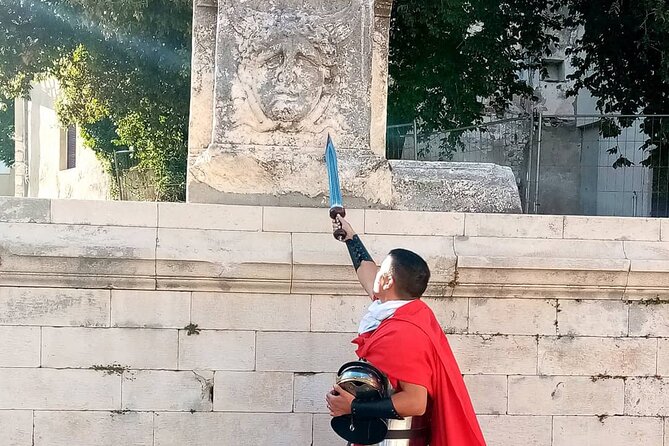
And if you want an extra layer of fun, keep an eye out for the centurion-style guide. One of the most praised parts of the experience is how the Roman character helps history stick in your head, including the example of Ivica being described in full Roman centurion dress.
Should you book this Zadar Roman Walking Tour?
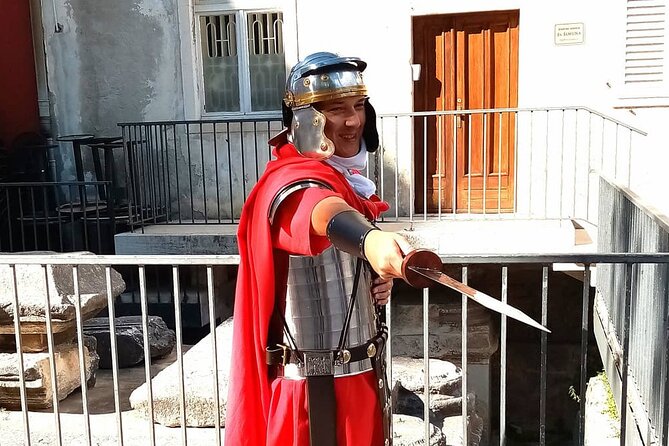
Book it if you want Roman Zadar with context, told on foot and delivered by a guide who keeps the story tied to the street-level reality you’re seeing. The route hits the big visual anchors: gates, square, street, Sea Gate, and the Forum.
You might skip it if you prefer a slower museum-only day or you already have a strong Roman background and want deep archaeology beyond what fits in about an hour. Also, if the weather is unpredictable on your dates, build in flexibility since the tour requires good conditions.
If your goal is to understand the city in a way that feels personal and easy to remember, this one is a solid choice.
FAQ
How long is the Zadar Roman Walking Tour?
The duration is about 1 hour to 1 hour 20 minutes.
Where does the tour start and where does it end?
It starts at Trg Petra Zoranića, 23000, Zadar, Croatia, and it ends at the ruins of the Roman Forum in the center of Zadar (23000, Zadar, Croatia).
Is the tour offered in English?
Yes. The tour is offered in English.
What is the group size?
The tour has a maximum of 10 travelers.
Do I get a mobile ticket?
Yes. It’s provided as a mobile ticket.
Is there free cancellation?
Yes, you can cancel for a full refund up to 24 hours before the experience start time.
Is the tour suitable for families or kids?
The tour is short (about 60 to 80 minutes) and is described as something people participated in with kids, with the history explained in an informal, easy-to-follow way.