REVIEW · ZADAR
Zadar: Virtual Reality Guided History Walking Tour
Book on GetYourGuide →Operated by Magic Croatia trips and tours · Bookable on GetYourGuide
Zadar time travel fits on a two-hour walk. This VR-guided history walk uses 360° scenes, 3D objects, animations, and sound so the old streets make sense fast. I especially like the way the tour keeps you moving between real landmarks while the VR does the heavy lifting.
I also like the human touch: a friendly assistant guides you to each stop and stays with you through the headset time. If you’re hoping to ask questions without getting hit with a nonstop lecture, this setup is built for that.
One possible drawback to plan for: the image quality may feel less modern than you expect, and the headset can occasionally need extra help getting things working smoothly.
In This Review
- Key things to know before you go
- Stepping from today into Zadar’s recreated centuries
- Roman Forum and the 1202 sea invasion: the VR scenes that make it click
- St. Chrysogonus Church: VR access to a closed site
- The aerial feel: peninsula views, market location, and the hot-air balloon moment
- WWII from the air and sea: what the tour conveys well
- The assistant, the controls, and using the OculusGo smoothly
- Price and value: is $35 a good deal for two hours?
- Who should book this VR history walk, and who should skip it
- Should you book the Zadar Virtual Reality Guided History Walking Tour?
- FAQ
- Where do I meet for the tour?
- How long is the Zadar VR guided history walking tour?
- What languages are included in the audio guide?
- What VR headset is used?
- Do I need to bring anything?
- Is food or drinks included?
- Is the tour wheelchair accessible?
Key things to know before you go
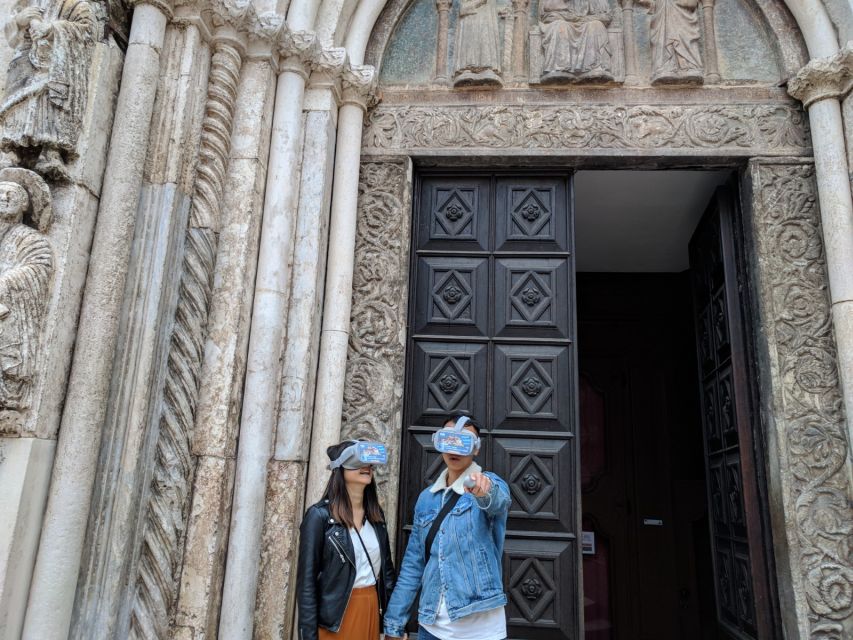
- 360° VR at real Zadar landmarks so you can match past scenes to the present layout
- A live assistant who walks you to each VR stop and handles questions on the spot
- St. Chrysogonus Church access via VR, since it’s otherwise closed to the public
- Roman Forum, Crusade events, and WWII are shown with clear animations and sound effects
- Simple controls let you choose when to move to the next point, without tech know-how
Stepping from today into Zadar’s recreated centuries
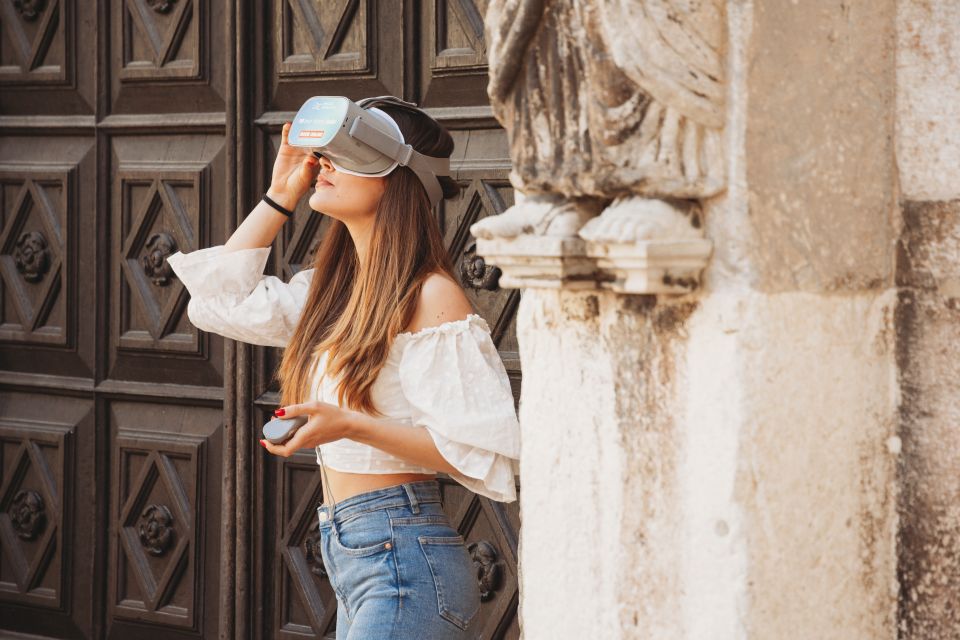
This tour works because it doesn’t ask you to guess. You stand in Zadar old town, then the VR headset places you inside different eras with 360° views, 3D objects, and short, timed reconstructions. It’s like you get an audio guide plus a visual time machine, all in one compact block of time.
The format is practical. You’re not stuck seated for two hours. You walk between key stops, and at each one you switch into the VR scenes. That means you see the actual street, then you see how that same spot looked during events like the 4th Crusade and a 1202 invasion from the sea. For a first-time visit, that pairing is gold.
I also appreciate the translation. The audio guide is offered in seven languages, including English, Croatian, Esperanto, French, German, Italian, and Spanish. In plain terms: if you’re traveling with mixed language levels, you can still follow the story without everyone waiting for one person’s comprehension.
If you’re sensitive to tech, one note: the experience depends on the headset. One review flagged that the image quality might not feel like 2025, and another mentioned the guide had to help quite often. That doesn’t mean the tour is bad. It just means you’ll be happier if you go in expecting a small amount of troubleshooting alongside the fun.
You can also read our reviews of more tours and experiences in Zadar.


Roman Forum and the 1202 sea invasion: the VR scenes that make it click
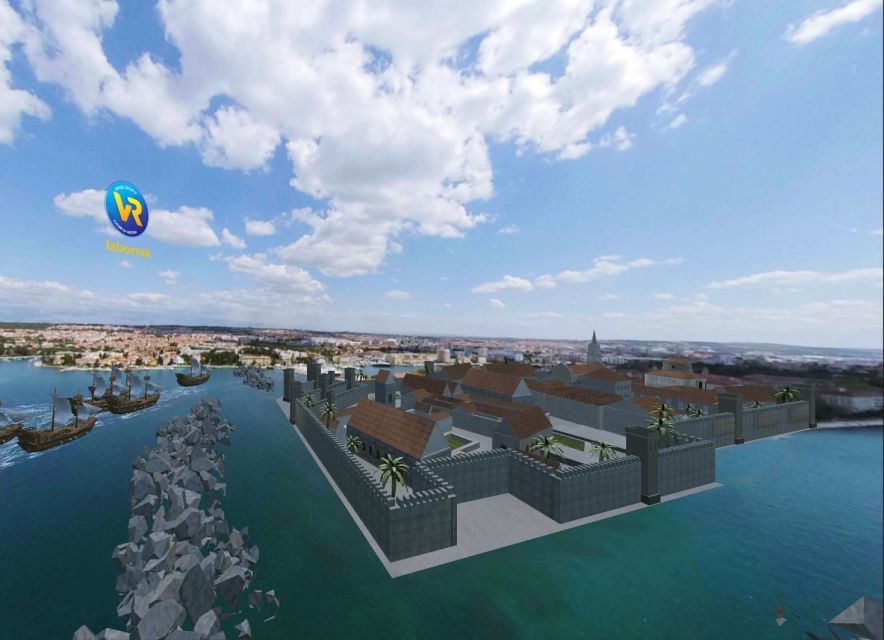
The emotional center of the tour is the reconstructed Roman Forum. The idea is simple: you don’t just hear that it was important, you stand at the location and watch life there take shape. The forum is presented as the social and economic hub of ancient Zadar, so the story connects space with meaning.
Then the tour speeds forward into the 4th Crusade. One of the most memorable moments is the 1202 invasion approaching from the sea. Instead of treating the crusader period like a distant textbook chapter, the VR uses animations and sound effects to show how the attack arrives. You get the direction, the timing, and the shock of it, without needing to picture everything from scratch.
The payoff for you is clarity. Modern Zadar can look “just like a coastal town” until someone points out the layers. Here, the VR does that translation instantly. You’ll leave with a mental map: this street connects to the forum area, that view helps you understand the peninsula, and those historical moments belong here, not somewhere imaginary.
Are there any downsides? The reconstructions are the focus, so you’ll want to keep your expectations realistic. This is VR storytelling, not a museum scan with ultra-photoreal accuracy. If you’re the type who needs every texture to look perfect, you might find the visuals slightly behind what you expect from newer tech. But if you’re open to the “explanatory” style of VR, you’ll likely find it much easier to remember the city after.
St. Chrysogonus Church: VR access to a closed site

One standout stop is St. Chrysogonus’ Church. The key detail is that it’s otherwise closed to the public, so VR becomes the ticket. In a normal walking tour, you’d hear about the church from the outside and move on. Here, you’re invited to see inside through the headset.
For practical reasons, this kind of access matters. Zadar’s old town is compact, and your time is limited, especially if you’re doing a few things in one day. VR doesn’t replace real visits forever, but it helps you get something you otherwise can’t get today.
The way the tour delivers it is also thoughtful. The assistant helps you get to the right place before each VR segment, and the experience is designed with a user-friendly interface. You don’t have to be the person in the group who understands how to work the headset. That’s a big deal when you’re traveling with kids, seniors, or anyone who gets nervous with gadgets.
Still, go in knowing what this is. You’re not walking through the church in person. You’re experiencing a recreated view via VR, paired with audio explanation. If you want the smell of old stone and the quiet you feel when you step inside, you won’t get that. But you may get a strong sense of the setting and layout, which helps the church story land.
The aerial feel: peninsula views, market location, and the hot-air balloon moment
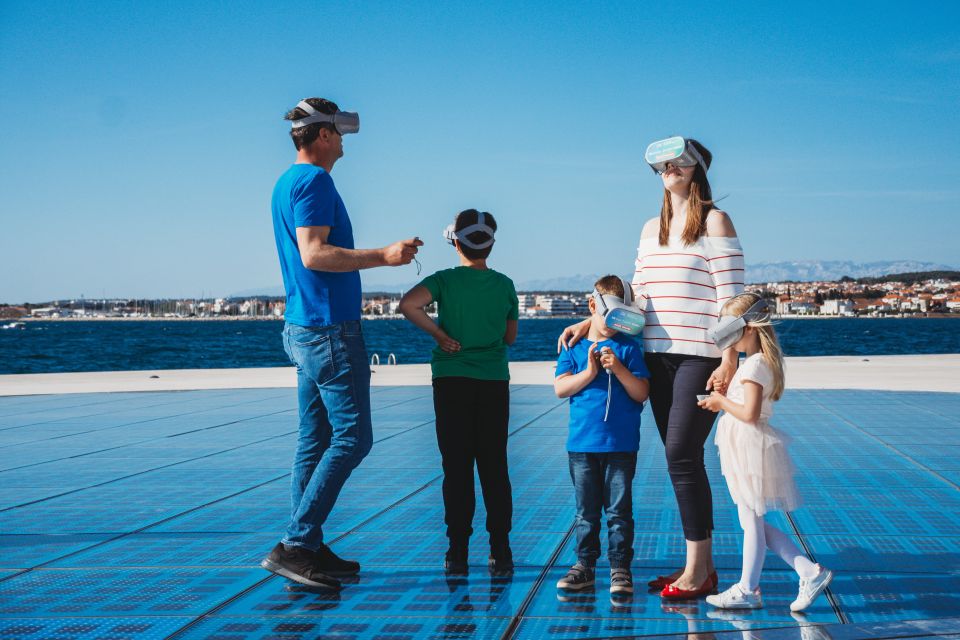
The tour doesn’t keep you at street level all the time. You’ll get an aerial perspective of Zadar’s peninsula, and there’s even a hot-air balloon view that helps you understand the geography at a glance. That’s useful because Zadar’s coastline and peninsula shape can be hard to read if you’re only looking forward from the promenade.
Another meaningful stop is the former city market. The tour places you at the location of the old market and explains how it relates to today’s town layout, specifically that it was on the other side compared with where the market area is now. That kind of detail sticks. It’s the difference between “I saw a square” and “I know how this trading zone shifted over time.”
This is also where the tour’s structure helps you. By mixing walking with VR viewpoints, you’re not just watching history events. You’re learning spatial history: where commerce happened, how the peninsula sits, and how the city’s center of gravity changed.
One consideration: if you’re prone to motion-related discomfort, aerial VR can be a factor for some people. The tour doesn’t mention motion sickness guidance, so I’d treat this as a personal test. If you’re sensitive, take breaks during VR stops and listen to the assistant if they suggest moving to a calmer spot.
WWII from the air and sea: what the tour conveys well
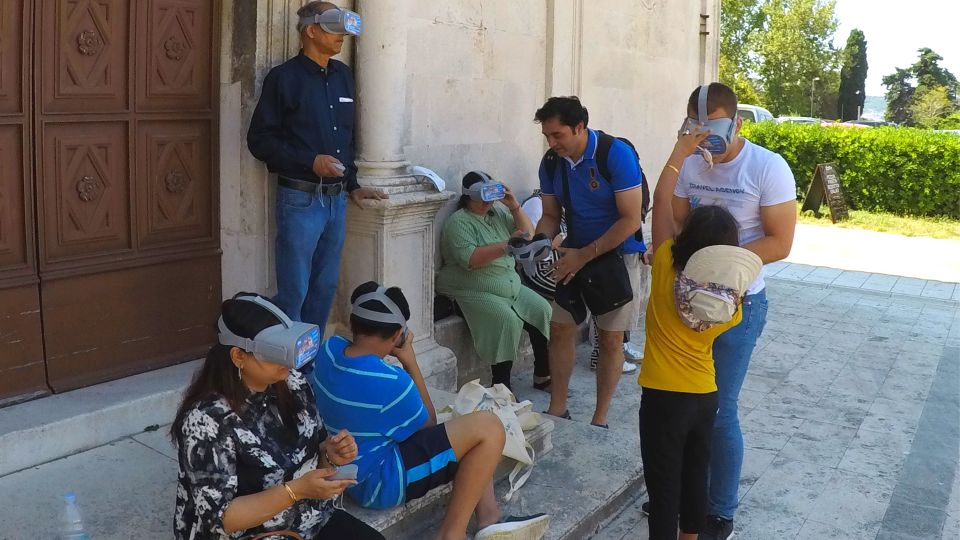
Later in the experience, VR shifts into World War II, including attacks shown from the air and sea. This isn’t handled like a generic war movie clip. The storytelling is tied to the geography of Zadar: what you’re shown connects to why coastal cities experience specific kinds of danger.
For many visitors, this is the moment where the tour becomes more than entertainment. It starts to feel like a guided “remember this place” session. You see the past as something that happened here, not just something written in a headline.
The tour also keeps the pacing controlled through VR stops. If there’s a break in the headset segment, the assistant uses quieter and shadier spots. That’s a real comfort detail. Old town walking can mean sun and glare, especially in the warmer months, and you don’t want to fight heat while trying to focus on a VR explanation.
If you prefer to keep the tone light and upbeat the whole time, note that WWII content will be heavier by nature. You can still enjoy it, but it helps to go in with the right mindset: this is history in the place where it happened.






The assistant, the controls, and using the OculusGo smoothly
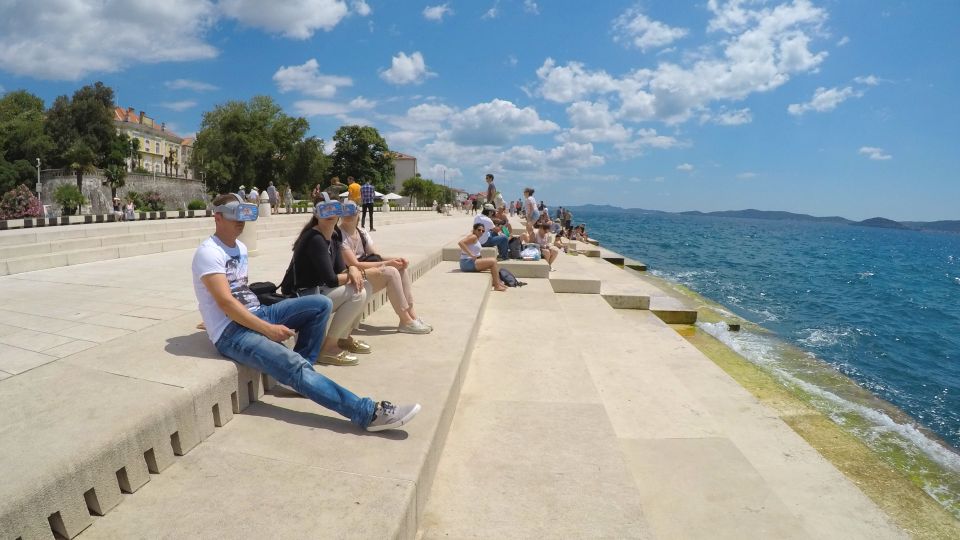
This tour includes VR glasses: an OculusGo All-in-One VR headset with a controller. The big practical plus is that you don’t need advanced technical knowledge. The interface lets you choose when to see the next point, so you can control the flow rather than being forced into a rigid script.
The assistant is the glue. You’re not left standing with a headset and hoping for the best. The assistant walks you to the correct locations, stays available throughout, and helps if you need support with the headset timing or the sequence of scenes.
In one set of feedback, the guide Veronica was praised for local knowledge and for keeping information compact without overwhelming the group. That’s exactly how you want a guide to work in VR: short explanations that help you understand what you’re seeing, then back to the street and back to the next scene.
One more practical tip for you: bring passport or ID card. The tour info specifies it, and it’s better to have it than scramble later.
Also, plan to be patient if something glitches. One note flagged that the headset didn’t always work smoothly and that the guide had to assist frequently. That’s not a reason to avoid the tour, but it is a reason to approach it with calm expectations. This is a guided experience, not a self-serve VR arcade.
Price and value: is $35 a good deal for two hours?
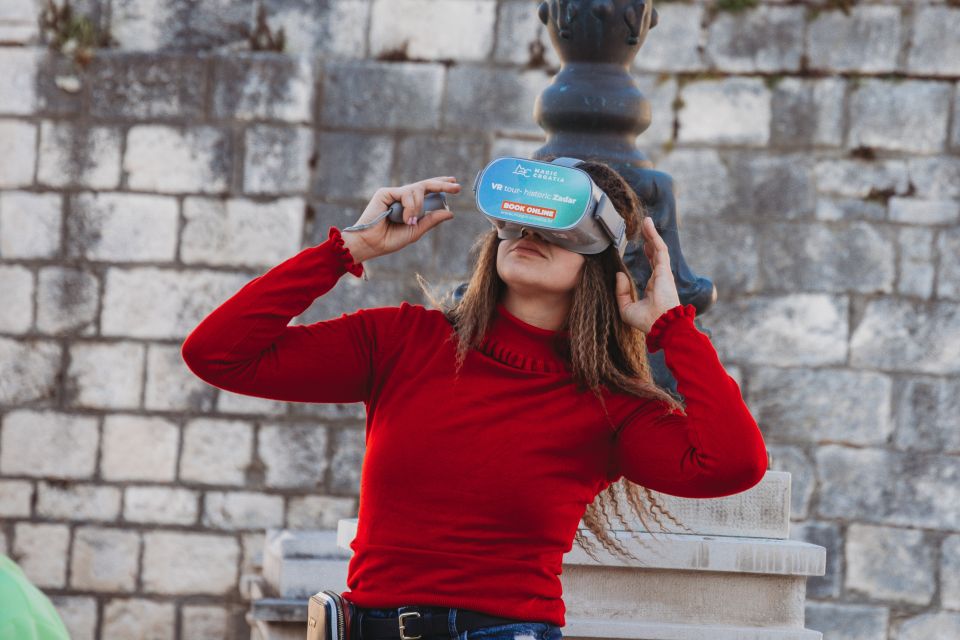
At $35 per person for about two hours, this tour is trying to deliver two things at once: guided history and VR visualization. That hybrid approach can be good value because you’re paying for more than narration. You’re paying for access to recreated views of places and moments that you can’t easily experience on foot.
You also get translations. The audio guide runs in seven languages, which can matter if you have anyone in your group who doesn’t want to rely on ad hoc explanations. For families and mixed-language pairs, that’s a real quality-of-life feature.
The biggest “value driver” is the set of scenes you can’t otherwise access in a normal walk. VR covers St. Chrysogonus Church (otherwise closed), gives you a Roman Forum walkthrough feel, and shows significant events like the 1202 Crusade invasion and WWII attacks from air and sea. If you’re on a short Croatia trip, those added layers may save you time and help you understand Zadar more deeply than a standard outdoor-only tour.
Possible value mismatch: if you’re very picky about VR resolution, you might feel the visuals are a bit dated. One review explicitly noted the quality wasn’t quite at a 2025 level, and another called it fun even for kids while suggesting the images could feel outdated. If you’re expecting cutting-edge graphics, keep your expectations flexible and focus on the storytelling.
And yes, food and drinks are not included, so plan to eat before or after.
Who should book this VR history walk, and who should skip it

I think this works best if you:
- like history but want help connecting dates to places
- enjoy visual learning, not just reading plaques
- want something active for two hours, not a long indoor museum day
- travel with kids or mixed language needs and want an easy setup
- appreciate practical guides who answer questions without turning every stop into a seminar
It may be less ideal if you:
- expect ultra-modern VR visuals and perfect equipment performance
- dislike any chance of headset hiccups
- want a traditional, in-person church interior experience over VR reconstructions
If you’re unsure, consider what you’re actually buying. You’re buying guidance to key points plus VR reconstructions that bring those points to life. That’s a specific kind of value, and it’s worth it when you match your expectations to the format.
Should you book the Zadar Virtual Reality Guided History Walking Tour?
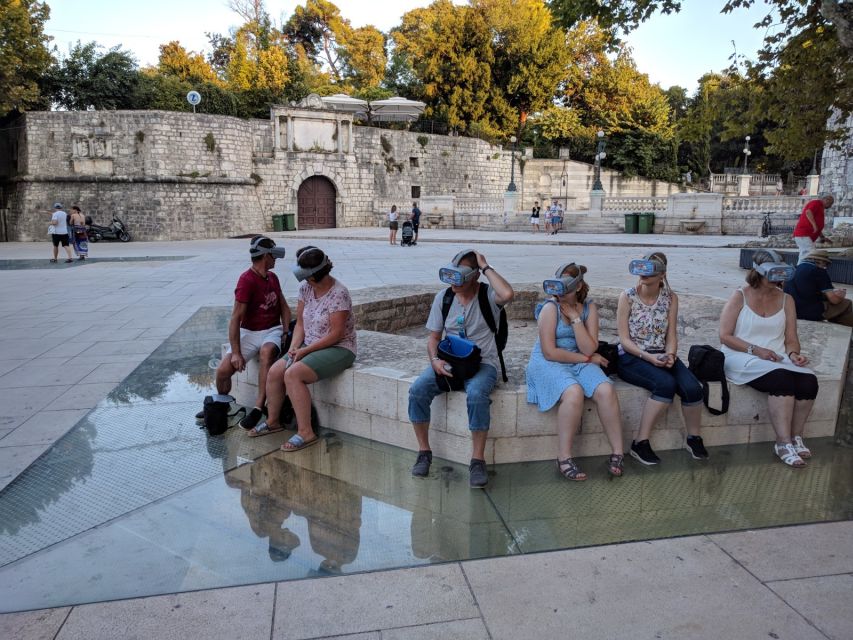
If you want a compact, guided way to understand Zadar beyond the promenade, I’d say book it. The tour’s strengths are clear: Roman Forum, Crusade events, St. Chrysogonus Church via VR, and WWII attacks from air and sea—all delivered with an assistant who helps you use the system and keeps the pace workable.
I’d only hesitate if you’re very sensitive to older tech visuals or you need everything to run flawlessly without any adjustment. For everyone else, the chance to see closed or inaccessible viewpoints and major events in a memorable, place-based way is a strong deal for $35.
FAQ
Where do I meet for the tour?
Meet at a souvenir shop in a red building next to the Sea Gate at Poljana Pape Aleksandra III 7, 23000 Zadar, Croatia.
How long is the Zadar VR guided history walking tour?
It lasts 2 hours.
What languages are included in the audio guide?
The audio guide is available in Croatian, English, Esperanto, French, German, Italian, and Spanish.
What VR headset is used?
The tour includes OculusGo All-in-One VR glasses with a controller.
Do I need to bring anything?
Bring a passport or ID card.
Is food or drinks included?
No. Food and drinks are not included.
Is the tour wheelchair accessible?
Yes, it’s listed as wheelchair accessible.