REVIEW · SPLIT
Controversies behind Split and Croatia-Anthropologist guide
Book on Viator →Bookable on Viator
Split has more drama than the beaches. This anthropological city-center tour turns Diocletian’s Palace into a story of arguments, not a postcard. You’ll connect ancient walls to how locals see themselves now.
I especially like the way the guide uses maps and visuals on an iPad to keep you oriented, and I like the bold focus on how different eras left competing impressions on Split. Marin comes across as warm, prepared, and happy to answer questions as you go, which makes it feel like a guided tutoring session rather than a lecture.
One consideration: it’s still a walking tour, and you should be ready for standing time while the story lands. If you’re sensitive to sun or long pauses, plan for breaks and don’t pick this on your most exhausting day.
In This Review
- Key reasons this Split tour works
- Why an anthropological walk makes Split click
- The $35 price tag: what you get in 2 hours
- Walking route, timing, and what each stop teaches
- Stop 1: Palazzo di Diocleziano (about 35 minutes, admission included)
- Stop 2: Obala Hrvatskog narodnog preporoda (about 15 minutes, free)
- Stop 3: Trg Braće Radić (about 15 minutes, free)
- Stop 4: Narodni trg (about 15 minutes, free)
- Stop 5: Šperun ulica (about 15 minutes, free)
- Stop 6: Trg Franje Tuđmana (about 15 minutes, free)
- Stop 7: Matejuška (about 10 minutes, admission included)
- Diocletian’s Palace controversies: more than a monument
- Squares, underfoot remains, and the modern Split thread
- Marin’s style: iPad visuals, humor, and real answers
- Small group size (12 max) and what it means for your experience
- Practical tips for comfort: pace, standing, and meeting points
- Should you book this Split anthropological tour?
- FAQ
- How long is the Split tour?
- What’s the group size limit?
- Is the tour offered in English?
- What does the price include regarding tickets?
- Where is the meeting point and where does it end?
- Will I get a mobile ticket?
- Are service animals allowed?
- Does the tour require good weather?
- What’s the cancellation window for a full refund?
Key reasons this Split tour works
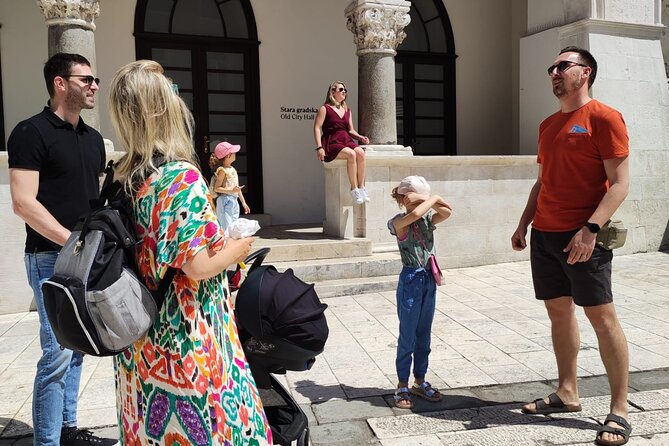
- Diocletian’s Palace controversies: you don’t just tour the site—you unpack why it’s been contested across time
- A small group (max 12) means you can ask questions and actually follow the thread
- Underfoot history at Narodni trg: human remains become part of the conversation, not just background
- Modern identity links: the walk reaches into the late 20th century and how it still shapes local politics
- Marin’s map-and-visual style: the iPad helps you connect squares, streets, and viewpoints fast
Why an anthropological walk makes Split click
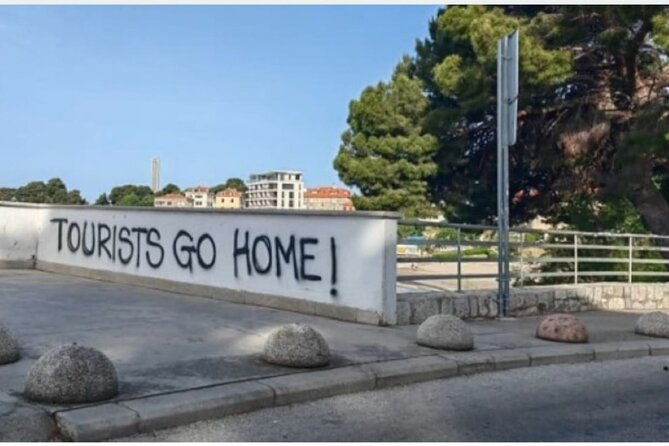
Split is loaded with stone, but the usual tours often treat the buildings like museum exhibits: look, admire, move on. This tour treats the city more like a living argument. You’re guided through the same center you’d explore on your own, but with a strong theme: how historical periods get interpreted, fought over, and repurposed by later generations.
That theme shows up at the most important moment first—Diocletian’s Palace. Instead of one clean narrative, you get the controversy angle: locals contested the palace through different historical periods, so the site became part of politics, identity, and everyday life. That’s what makes the walk feel more honest, and more interesting.
You can also read our reviews of more tours and experiences in Split.


The $35 price tag: what you get in 2 hours

At $35 per person for about 2 hours, the value is in the structure. You’re not paying for random stops—you’re paying for time, pacing, and a guide who links each place to the big idea behind the tour: perceptions of the past and their ripple effects today.
The price also makes sense because admission tickets are included for two key parts. You get an admission ticket included at the palace stop, and you also get an admission ticket included at the ending viewpoint area (Matejuška). The other stops are free, so your money goes toward the moments that need an entry ticket rather than stretching your time across paid-only attractions.
And because the group is capped at 12 travelers, it’s easier to keep the tour moving without losing people. You’ll likely spend less time waiting, and more time hearing the story.
Walking route, timing, and what each stop teaches
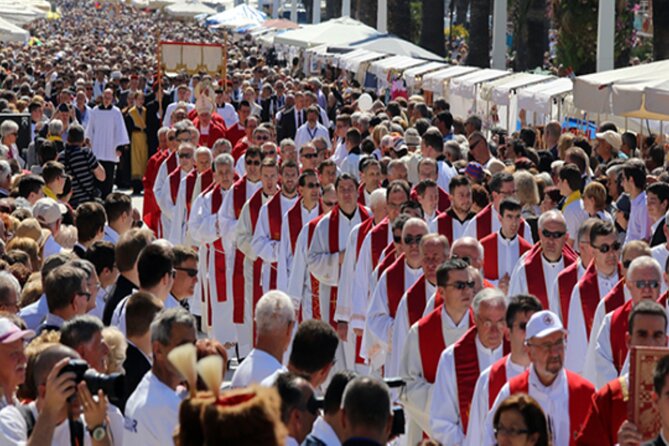
This is a city-center loop that flows through squares, promenades, and a neighborhood street—so you get context, not just scenery. The timing is fairly tight but not rushed: you’ll spend the longest stretch at Diocletian’s Palace, then move through six shorter story stops before a finish at a classic view spot.
Stop 1: Palazzo di Diocleziano (about 35 minutes, admission included)
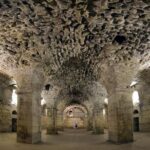
This is the anchor. The tour covers most of Split’s central main locations while telling the story through historical and modern controversies tied to the palace. The big idea here is that Diocletian’s Palace isn’t just architecture—it’s a contested space that different periods have used, argued over, and interpreted differently.
Practical note: this is where you’ll want to pay full attention. If you’ve ever felt like famous sites get flattened into facts-only talking points, this is the moment where the tour’s approach becomes clear.
Stop 2: Obala Hrvatskog narodnog preporoda (about 15 minutes, free)
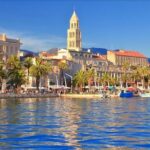
Then you pivot to the waterfront promenade. It’s the kind of Mediterranean public space where day-to-day life happens, but the guide also frames it as a stage for important historical events. This stop works as a breather for your feet while still building the same theme: the past isn’t locked behind walls.
If you like seeing how cities operate at street level, this is one of the more satisfying transitions.




Stop 3: Trg Braće Radić (about 15 minutes, free)
The tour moves into an old Venetian square. Here, the stories focus on turbulent times when Split was a frontier facing Ottoman pressure. More important than the dates is how the guide frames how that period is perceived now, and why it still shapes local identity and politics.
This is where the tour shifts from history-as-events to history-as-influence. You start seeing why people argue about the past in the present tense.
Stop 4: Narodni trg (about 15 minutes, free)
Under your feet here is a layer you’d probably never notice on your own: human remains from an ancient graveyard. Later events also happened on this same location, including both remarkable and infamous history.
This stop is a strong reminder that city centers aren’t clean slates. They’re stacked. If you’re the type who likes your travel with a side of uncomfortable truths, you’ll appreciate how directly this is handled.
Stop 5: Šperun ulica (about 15 minutes, free)
Now you get a neighborhood street—Šperun ulica—one of the most famous in Split. The twist is that it’s also where the tour digs into the story behind the neighborhood, not just the fact that tourists photograph it.
This kind of stop is valuable because it keeps the tour from becoming only about headline monuments. You learn how everyday space and reputation become part of identity.
Stop 6: Trg Franje Tuđmana (about 15 minutes, free)
The conversation connects to the late 20th century through Trg Franje Tuđmana, named after Croatia’s first president. The guide uses this as a pivot to discuss a hard history period and how issues from it still divide Croatian society today.
This is a sensitive topic by nature, but the structure helps: you’re not thrown into a political debate without context. The tour is framed as how history shapes perception, and how that perception carries forward.
Stop 7: Matejuška (about 10 minutes, admission included)
The walk ends at Matejuška. You get a famous view of Split, and it’s also chosen as the place for final words—wrapping the modern Split perspective so the tour doesn’t stop at the past.
If you want an ending that actually helps you place what you just learned, this final stop does the job. You can also use the viewpoint moment to orient yourself before you continue on your own.
Diocletian’s Palace controversies: more than a monument
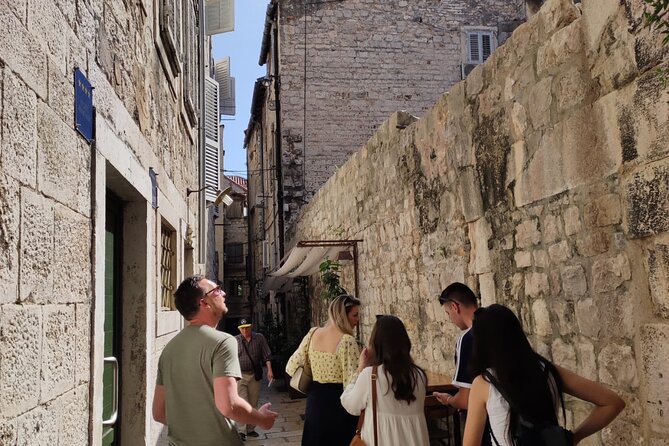
Diocletian’s Palace is the headline, but the tour’s angle is what matters. Instead of a single storyline, you get multiple layers of meaning—how locals contested the palace across different historical periods and how those shifting interpretations affect modern identity.
That approach makes the palace feel less like a fixed relic and more like a center of power and argument over time. It’s a different way to see ruins: not as leftovers, but as evidence of who held influence and whose version of the past won the day.
If you’re the type who likes your history tied to real-world opinions and present-day identity, you’ll find this part the most satisfying.
Squares, underfoot remains, and the modern Split thread
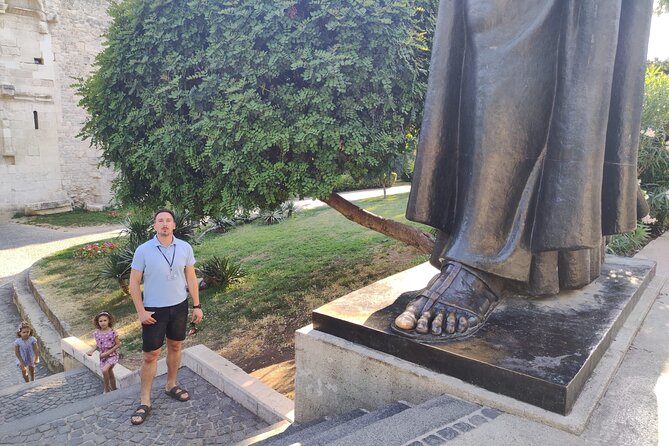
A tour can either feel like a museum walk or like a conversation about place. This one leans toward the conversation.
You move from promenade to squares and then into the city’s more human layers—like the ancient graveyard at Narodni trg. You also get the Ottoman frontier framing and, later, the late 20th century thread. Put together, the stops show how Split’s local story isn’t just about what happened, but about what people believe those events mean.
A standout detail from the overall experience: the guide doesn’t keep the focus only on big-name sites. You may also get pointed to areas you could otherwise miss—one example mentioned is the Jewish ghetto, which isn’t something most first-time visitors spot without help. That’s a big reason the tour feels useful, not just entertaining.
Marin’s style: iPad visuals, humor, and real answers
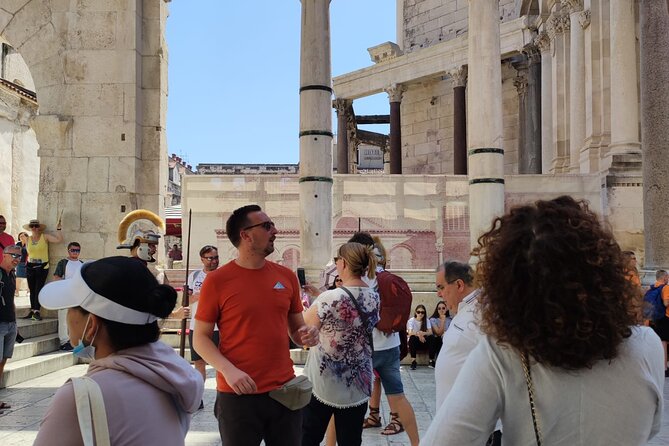
The guide really matters on a thematic tour like this. The strongest praise centers on Marin: he’s described as enthusiastic, warm, open, and very prepared. He uses an iPad with maps and visuals, which helps you connect what you’re seeing with what you’re hearing. Add in geography skills, and the pacing feels natural instead of chaotic.
You’ll also appreciate the delivery. Several comments point to humor and “funny little quips,” but it stays connected to the topic rather than random jokes. And when questions come up, Marin answers them—so the tour feels interactive even though it’s structured.
One practical touch that came up in praise: he tries to find shade when possible. That matters in Split, where the sun can feel relentless, especially during a walking-focused itinerary.
Small group size (12 max) and what it means for your experience
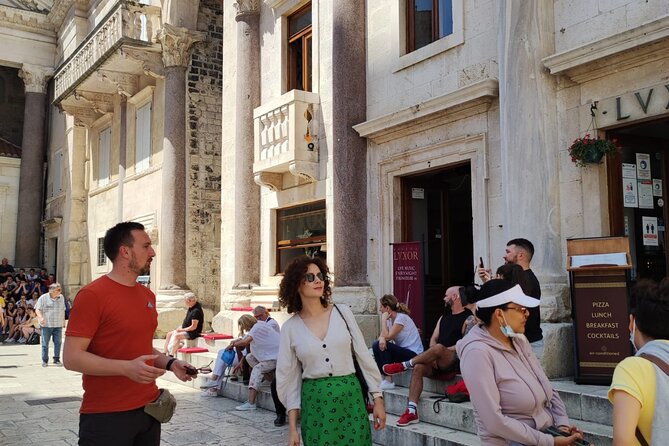
A cap of 12 travelers isn’t just a comfort perk. It changes the whole feel of the tour.
With fewer people, the guide can slow down when someone needs a moment to orient themselves. It also makes it easier to keep the controversial and identity-based theme grounded, because the guide can adjust on the fly—clarifying, answering, or re-framing instead of plowing through a script.
If you’ve ever been on a tour where you can’t hear the guide or you feel like background noise, this size should feel more human.
Practical tips for comfort: pace, standing, and meeting points
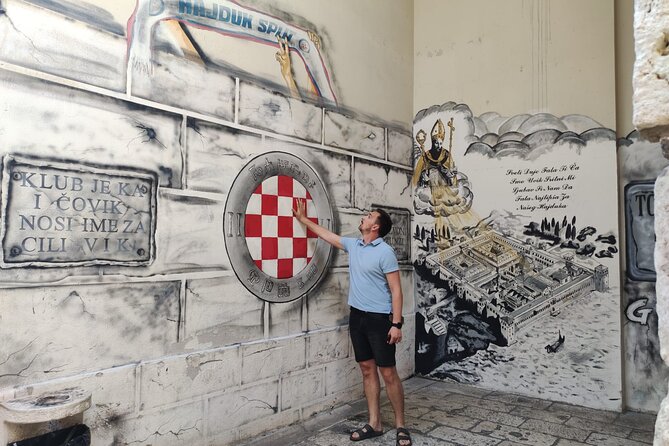
This is a walking city-center tour, and that means you should be ready for some standing time during explanations. It’s not a long hike, but it is a concentrated route over about 2 hours. Wear comfortable shoes and give yourself a little buffer—especially if you’re traveling in warm weather.
For meeting and ending:
- Start at Ul. kralja Tomislava 12, 21000, Split
- End at Trumbićeva obala 2, 21000, Split
The tour is offered in English, and you’ll get a mobile ticket. Service animals are allowed, and it’s described as near public transportation, so you shouldn’t have trouble getting there.
Finally, plan for the weather. The experience requires good weather, and if conditions are poor, it can be canceled and you’ll need to choose another date or get a refund (details are handled by the operator).
Should you book this Split anthropological tour?
Book it if you want Split to make sense as a place with opinions, not just buildings with explanations. This tour is a great fit if you care about how history shapes identity, politics, and public spaces—and if you like guides who can connect walking streets to big themes without getting lost in academic language.
Skip it (or choose carefully) if you hate standing while someone explains details, or if you want a lighter, purely scenic walk. The route is active, and it’s designed to carry you through a lot of context in a short time.
If you’re a first-time visitor, it’s especially good because it helps you read the city fast—where you are, why it matters, and how today’s Split grew out of past controversies.
FAQ
How long is the Split tour?
The tour lasts about 2 hours.
What’s the group size limit?
The experience has a maximum of 12 travelers.
Is the tour offered in English?
Yes, it’s offered in English.
What does the price include regarding tickets?
The tour includes admission tickets at Palazzo di Diocleziano (included) and at Matejuška (included). The other stops listed are free.
Where is the meeting point and where does it end?
You meet at Ul. kralja Tomislava 12, 21000, Split, and the tour ends at Trumbićeva obala 2, 21000, Split.
Will I get a mobile ticket?
Yes, the tour uses a mobile ticket.
Are service animals allowed?
Yes, service animals are allowed.
Does the tour require good weather?
Yes. The experience requires good weather, and if it’s canceled due to poor weather, you’ll be offered a different date or a full refund.
What’s the cancellation window for a full refund?
You can cancel up to 24 hours in advance for a full refund.
If you want, tell me your travel dates and what else you’ve already booked in Split, and I’ll suggest the best time to slot this in so the walking fits your day.