REVIEW · SPLIT
Diocletian’s Palace Small Group Tour in Split
Book on Viator →Operated by South Tours Croatia · Bookable on Viator
Diocletian’s Palace clicks faster with a guide. This 2-hour small-group tour helps you read the UNESCO old town like a map, with a guided walk through the palace maze and Peristyle acoustics explained as you move from square to gate. You also get practical local context, which makes the stones feel less like random ruins and more like a lived-in city plan.
One watch-out: the route is mostly on historic stone and involves steady walking with a moderate fitness requirement, so wear good shoes and don’t plan on a lot of lingering on steps.
In This Review
- Key points you should know
- Split’s Fortress-Palace in Plain Terms
- Small Group Logistics That Keep the Walk Fun
- Diocletian’s Palace: When a Palace Becomes the City
- Peristyle Square and Its Acoustics in Real Life
- Vestibulum: The Palace’s Shape You Feel Instantly
- Diocletian’s Cellars Under Your Feet
- Golden Gate (Porta Septemtrionalis) and June 305
- Why the Guide-Led Streets Matter More Than the Stones
- Guides Who Actually Connect the Dots (Luka, Sandra, Jelena)
- Price and Value at About $60.21 for 2 Hours
- Practical Tips for a Smoother Walk Through the Palace
- Should You Book? My quick decision guide
- FAQ
- How long is the Diocletian’s Palace small group tour?
- What language is the tour offered in?
- Do I need to buy tickets for the sights on this tour?
- What is the meeting point for the tour?
- Will I receive a ticket on my phone?
- Are there multiple departure times?
- Is the tour suitable for people with mobility or fitness limits?
- Can I cancel and get a full refund?
Key points you should know
- Multiple departure times let you match the tour to your day in Split
- English guide with clear explanations, plus local street-level tips
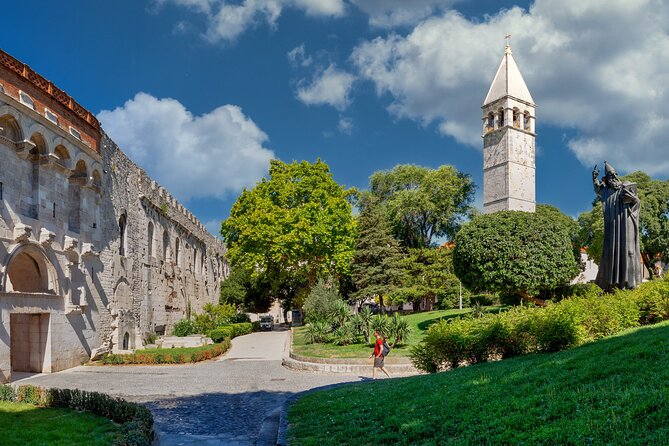
- UNESCO-listed palace core shaped into today’s city center
- Short stop rhythm (about 10 minutes at several major sites) keeps it moving
- Free entry for the main palace areas shown on the route
- Group size cap of 99, with feedback often describing it as comfortably small
Split’s Fortress-Palace in Plain Terms
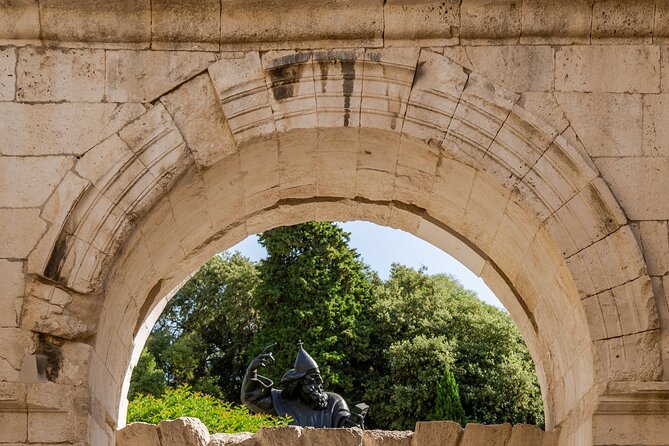
Diocletian’s Palace isn’t a single landmark you park in front of. It’s more like the skeleton of Split. The walls, gates, courtyards, and under-palace spaces still shape how you walk through the center. That is exactly why a guided walk helps: you see the same buildings every other visitor sees, but you understand the logic behind them.
This tour is timed to do the best kind of sightseeing in a short window. In about two hours, you cover the major palace structures that still define the old town: the complex itself, the central Peristyle square, the Vestibulum space with its striking shape, the Cellars under the streets, and the Golden Gate. The pace is built around short, focused stops rather than long museum-style hours.
And the price is easier to justify once you know what you’re paying for. The main sights on this route are marked as admission ticket free, so you’re not paying extra for entry fees to most of what you see. Instead, the value is the guide who helps you connect what’s in front of you to what it used to be.
You can also read our reviews of more tours and experiences in Split.


Small Group Logistics That Keep the Walk Fun
This is a small-group experience (maximum 99 people), and it runs with several departure options throughout the day. That matters in Split because the old town can get crowded, and the light changes the way stone and shadows look. If you want the palace to feel more manageable, pick a departure time that fits when you feel best walking.
The tour is in English, and you’ll get a mobile ticket. The meeting point is at South Tours Travel Agency, Mrčelina 1, 21000 Split, Croatia, and the walk ends back there. So you’re not stuck doing a one-way trek across the city unless you choose to continue on your own.
One more practical note: this tour includes both a local guide and a professional guide. In practice, that usually means you get both historical context and day-to-day city perspective. It helps when you want to know what to look for next, not just what something used to be.
Diocletian’s Palace: When a Palace Becomes the City
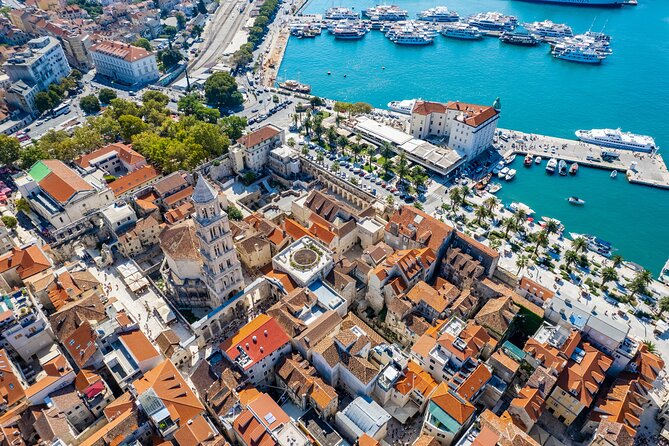
Your first stop is the palace itself, the massive Roman compound built by Emperor Diocletian around the turn of the fourth century AD. Calling it a palace can be misleading. It feels more like a fortress, because it was designed for power and protection. About half of it was for Diocletian’s personal use, while the rest housed the military garrison.
Today, that old structure forms about half of Split’s old town and city center. That’s why the route can feel slightly mind-bending at first. You step into a maze-like network of streets and passageways where architecture from multiple eras sits side by side—Roman foundations, later buildings, and everyday Mediterranean life continuing right on top of ancient walls.
What I like about the first segment is that it works like a starting key for the whole day. The guide doesn’t treat the palace like an isolated ruin. Instead, you learn how the complex functions as a city-in-miniature: where people would have moved, how space was organized, and why certain spots feel more central than others.
Also, there’s a real visual variety here. Expect to spot a mix of Roman remains and later-era structures. One standout is the presence of an Egyptian sphinx within the palace complex—an instantly memorable object that helps break up the uniform look of stone corridors and courtyards.
A possible downside of this opener: because it’s the biggest “zoom out” moment, you’ll want to pay attention at the start. If you mentally drift, the palace can feel like a lot of corridors with no rhyme. The guide is what keeps it readable.
Peristyle Square and Its Acoustics in Real Life
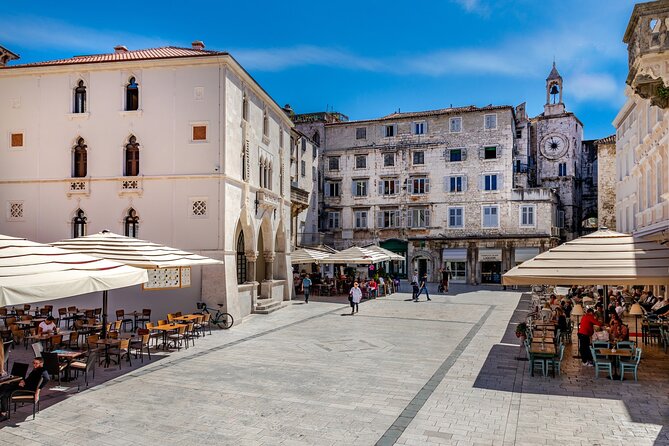
Next you reach the Peristyle, the central square of the palace. This is the space that’s most often associated with spectacle. It was intended as a ceremonial area tied to the emperor’s role, and it’s surrounded by columns and temple-like elements.
The Peristyle is also famous for its unusual acoustics. The idea is simple but powerful: sound carries and echoes in a way that makes the square feel theatrical. The tour frames it as a natural performance setting—useful for opera classics and ancient literature-like drama—while also reminding you that real city life still happens here.
Here’s why this stop matters for you. Even if you’re not a “historic acoustics” person, hearing how the space was designed for gatherings helps you understand why the rest of the palace feels organized. The Peristyle isn’t just pretty. It’s the hub that tells you where public life happened.
Another small benefit: it’s a breather. After navigating maze-like streets, you get a more open space with a clear orientation point. You can look around and reset your mental map.
Vestibulum: The Palace’s Shape You Feel Instantly
From the Peristyle, the route moves to the Vestibulum. This spot might sound like a quick pass-through, but the geometry is the point.
The outside shape is rectangular, while the interior layout is circular. That contrast creates a kind of visual whiplash: you enter expecting one kind of space and step into something else entirely. The tour treats it as a monumental court area, meaning it’s not just a hallway. It was meant to make an impression.
For your viewing, this is a good stop because it trains your eyes. You start to notice patterns: how the palace used shapes to control movement and perception. Once you see that, the palace becomes easier to walk and understand, even after the tour ends.
Potential drawback? If you’re rushing, the Vestibulum can feel like a short moment. Give yourself a few minutes to look at the way the space transitions from outside to inside, and you’ll get much more out of it.




Diocletian’s Cellars Under Your Feet

Then you head to the Diocletian’s Cellars, the palace substructures. These are some of the best preserved complexes of their kind, and they explain why Split’s historic core became a UNESCO World Heritage site in 1979.
What makes the Cellars feel special is that they flip your perspective. The palace above is all about surfaces—arches, squares, doorways, and streets. The Cellars are about structure. They show how massive the palace was and how much was built to support the life and security of the compound.
In a short tour, this stop gives you a big “oh wow” factor without turning it into a long detour. It’s the kind of stop that makes you appreciate scale. Even if you only remember one thing from the whole walk, remember that these substructures are a key reason the palace still holds its value today.
Golden Gate (Porta Septemtrionalis) and June 305
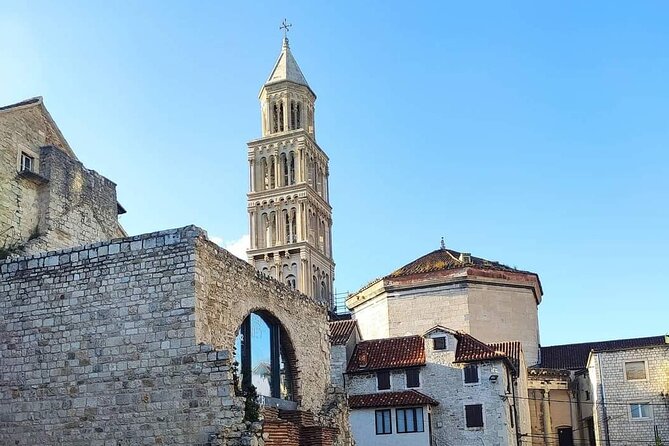
The final major sight on the route is the Golden Gate, known in Roman terms as Porta septemtrionalis. This was one of the entrances used by Diocletian, including his entry into the palace on June 1, 305.
The tour also highlights the gate’s defensive design. It was built as a rectangular structure with double doors, shaped for military tactics—part of a broader system of fortification. In other words, this is not just a decorative landmark. It’s a working edge of the fortress, built to control who moves in and out.
Why this stop is a smart finish: by the time you reach the gate, you’ve already seen the palace from multiple angles—the city-like streets, the ceremonial center, the architectural transition spaces, and the under-palace infrastructure. The Golden Gate ties it together. You understand the palace as a whole system, not a set of isolated stops.
And it gives you closure. After the last gate, you can look back at the old town and start picking out where the palace’s main lines would have guided movement.
Why the Guide-Led Streets Matter More Than the Stones
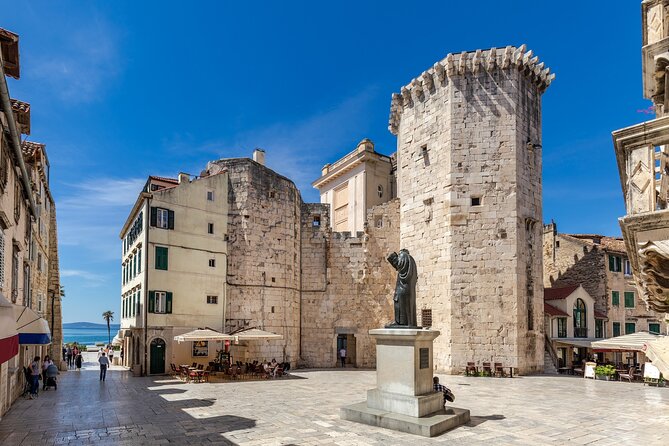
The real “secret sauce” of a tour like this is not just access to monuments. It’s the fact that you get inside tips and city context as you walk.
In a place like Split, with its layers of time and its living streets, it helps to know what you’re seeing and what to look for as you roam afterward. When the guide points out how the palace’s layout influences today’s street grid, your self-guided time feels smoother. You stop feeling like you’re wandering and start feeling like you’re navigating.
Also, the walking tour format helps you experience the atmosphere of the city rather than treating it like a checklist. You’re not just staring at stone. You’re moving through spaces that still function as part of daily life.
Guides Who Actually Connect the Dots (Luka, Sandra, Jelena)
The guide quality is a big reason this tour scores so well. Names that come up include Luka, Sandra, and Jelena, and they share a common style: they connect details to the bigger picture without making it feel like a lecture.
Luka stands out in feedback for being both energetic and deeply informed, with recommendations that go beyond the palace itself. Sandra is praised for being incredibly knowledgeable in a way that still feels friendly and warm. Jelena is described as fun to spend time with and generous with practical tips on shops and city spots, not just dates and emperors.
One more useful detail: some people loved the early-morning timing. If you can choose among departures, consider picking an earlier slot, especially during hot summer months. The palace and old streets can feel much more comfortable when the heat and crowds haven’t fully built momentum yet.
Price and Value at About $60.21 for 2 Hours
At about $60.21 per person for an approximately two-hour walk, you might wonder what you’re paying for, especially since the listed sights are marked as admission ticket free.
Here’s the value breakdown that makes sense:
- Entry fees aren’t the main cost for the big stops on this route
- You’re paying for expert interpretation—the connections between Roman design, later use, and what you see in modern Split
- You’re getting local context that helps you keep understanding after the tour ends
- You’re also getting a structure that keeps your time efficient: several major sites in one go, instead of piecing it together alone
In short, it’s a pay-for-clarity price. If you enjoy walking with a plan and learning what to notice, this is the kind of tour that feels worth it fast.
Practical Tips for a Smoother Walk Through the Palace
Since the tour is described for moderate physical fitness, plan for stone steps and uneven ground. Comfortable shoes are not optional here; they are the difference between enjoying the maze and counting the minutes.
Also, food and drinks are not included. If you’re taking the tour earlier in the day, you might want to eat before you meet. If you’re going later, plan a light snack after. Splitting your day well makes the walk feel less like a chore and more like the main event.
Finally, the cathedral ticket isn’t included. If the cathedral is a must for you, you’ll need to handle that separately.
Should You Book? My quick decision guide
Book this tour if you want:
- A fast, organized introduction to Split’s palace center
- A guide who helps you understand the palace layout and the meaning of major stops like the Peristyle and Golden Gate
- A short, walkable plan that leaves you time to keep exploring afterward
Consider skipping or adding something else if:
- You want a longer, independent museum-style visit where you control every pause
- The cathedral is your main goal, since cathedral tickets aren’t part of this route
- You prefer to read alone without a live guide shaping your route
If you’re on a tight schedule and want to get your bearings quickly, this is a strong choice. It gives you the framework to enjoy the rest of the old town without feeling lost in every corridor.
FAQ
How long is the Diocletian’s Palace small group tour?
It runs for approximately 2 hours.
What language is the tour offered in?
The tour is offered in English.
Do I need to buy tickets for the sights on this tour?
Admission tickets are listed as free for the main palace stops included in the route. Tickets for the cathedral are not included.
What is the meeting point for the tour?
The tour starts at South Tours Travel Agency, Mrčelina 1, 21000 Split, Croatia, and it ends back at the meeting point.
Will I receive a ticket on my phone?
Yes. The tour includes a mobile ticket.
Are there multiple departure times?
Yes. There are several departures throughout the day.
Is the tour suitable for people with mobility or fitness limits?
It’s recommended for travelers with a moderate physical fitness level.
Can I cancel and get a full refund?
Yes. You can cancel for a full refund up to 24 hours before the experience start time.