REVIEW · PULA
Discover the Essence of Pula: Private Tour with a Local Pro
Book on Viator →Operated by Walking Tour Pula with a local - Augustus Walks · Bookable on Viator
Roman Pula in two easy hours. This private walking tour with Augustus Walks covers the city’s top Roman sights and a few curveballs fast, with a history-teacher style guide who explains the stories behind the stones. You’ll get a tight route that helps you understand Pula without feeling rushed or lost.
I love the way the tour blends “big ticket” landmarks with the smaller details that make them make sense. I also like that the guide is known for humor and personal touches, with names like Halan and Dalen often described as especially enthusiastic and funny.
One possible drawback: a few stops are paid separately (especially the Arena and the underground parts), and since it’s a walking route, you’ll want moderate fitness and comfy shoes. If the weather turns, the tour needs good conditions, so plan for flexibility.
In This Review
- Key highlights you’ll actually use
- Getting your bearings fast: Park Nimfeja to the Forum
- Price and what’s included: $60.01 plus site tickets
- Pula Arena: gladiators, architecture, and the underground story
- Tito Park’s miniature Pula model: orientation in 10 minutes
- Twin Gates and Gate of Hercules: reading the city’s entrances
- Zerostrasse: walking through a World War I shelter
- The Forum and Tempio di Augusto: the Roman city in one square
- What makes the guide matter here (and why I’d trust this tour)
- Best time to go, what to wear, and how to pace yourself
- Who this private Pula tour is for
- Should you book this Pula private walking tour with Augustus Walks?
- FAQ
- Is the tour private?
- How long is the Pula walking tour?
- Is it offered in English?
- Do I need to buy tickets for the stops?
- What’s the starting and ending point?
- What happens if the weather is bad?
Key highlights you’ll actually use
- Private route, English-led: only your group, with an English-speaking local pro.
- Roman power to WWI shelter: Pula Arena plus Zerostrasse underground tunnels.
- Quick city orientation: Tito Park’s miniature Pula model helps you “see” the city layout.
- Forum focus: you’ll understand how politics, religion, and daily life connected in the Roman center.
- Time-efficient stops: about 2 hours total, with set durations for each site and time to walk.
Getting your bearings fast: Park Nimfeja to the Forum
This tour is designed as a straight line through Pula’s most important layers. You start near Park Nimfeja and the Arena area, then finish at Forum Square, the heart of the old city’s Roman core. It’s a smart choice if it’s your first day and you want to know where everything sits before you wander on your own.
You’re not expected to sprint between places. The tour allocates time for walking and keeps the stops short enough that you still cover a lot. It also stays close to public transport, so it’s easier to plug into your day if you’re using buses or taxis between sights.
Because it’s private, you can ask questions without waiting for a group. And since it’s led in English, you’ll spend time learning instead of decoding.
You can also read our reviews of more tours and experiences in Pula.


Price and what’s included: $60.01 plus site tickets
At $60.01 per person for about 2 hours, the value is mostly in the guide and the efficiency. You’re paying for a local to connect the dots—how each monument fits into Pula’s story—while you move through the city quickly.
The trade-off is that not every site entrance is included. The Pula Arena typically requires an admission ticket, and Zerostrasse and the Temple of Augustus also list admission as not included. Other stops—like Tito Park, the Twin Gates, the Gate of Hercules, and the Forum—are free to visit.
So the “real” cost depends on which paid entrances you choose and the current ticket situation at the time you go. If you budget a little extra for those, the tour still lands as good value for a concentrated sightseeing hit with a teacher-type guide.
Pula Arena: gladiators, architecture, and the underground story
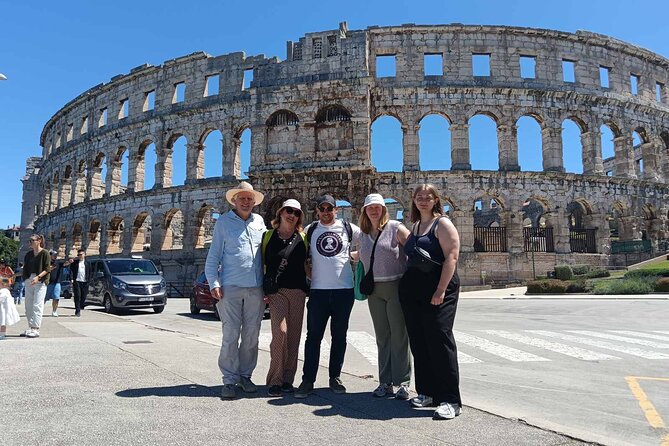
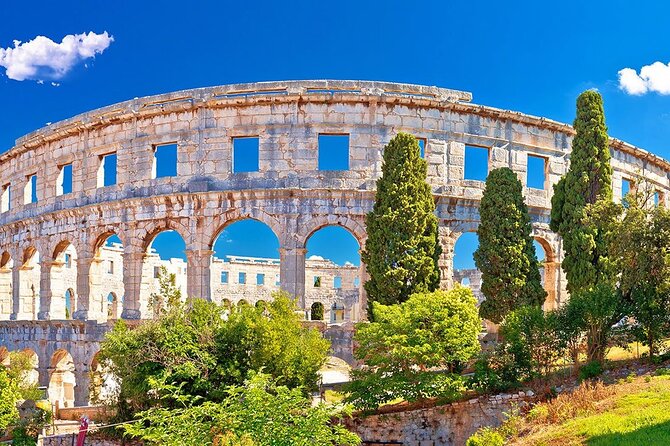
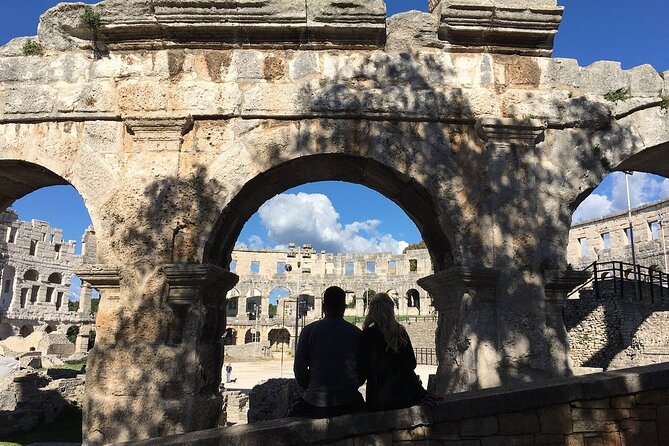
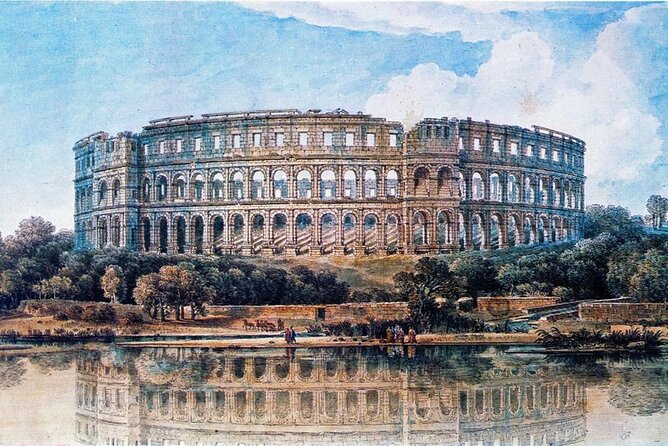
The tour’s biggest Roman stop is the Amphitheatre de Pula, known as the Pula Arena. It dates to the 1st century AD and is one of the best-preserved Roman amphitheaters in the world, with a capacity of over 20,000 spectators. You get the kind of overview you can’t really get just by reading a sign.
What makes this stop feel worthwhile is the way modern life sits on top of ancient design. The Arena still hosts events today—concerts, festivals, and performances—so you can imagine how the same stone spaces serve different audiences across centuries.
Your time here is about 30 minutes, and part of the draw is that you can explore underground passages and chambers. That underground area is where the theater machine of ancient spectacles becomes more real, not just a pretty facade.
Admission isn’t included, so plan for the ticket when you arrive. If you’re the type who likes to see how things worked behind the scenes, this will be a highlight.
Tito Park’s miniature Pula model: orientation in 10 minutes
After the Arena’s scale, the tour shifts to a calmer, more brain-friendly stop: Titov Park (Tito’s Park). It’s near the city center and gives you a green pause from walking streets. The park is named for Josip Broz Tito, and it’s not just a place to rest—there’s a teaching tool here.
The standout feature is the park’s miniature model of Pula. It’s detailed enough to help you understand the city’s layout, landmarks, and topography. For first-time visitors, this is a quick way to stop feeling like you’re guessing where things are.
This stop is about 10 minutes and admission is free. It’s a good moment to absorb what you just saw at the Arena, then connect it to the rest of the old town while you walk.
Twin Gates and Gate of Hercules: reading the city’s entrances

Next you’ll see the Twin Gates of Pula, a striking entrance structure that points to how the city was organized and protected. Even if you don’t know the full background, standing near the gates gives you a sense of where movement into the old center was directed.
A little later comes the Gate of Hercules, marked by a depiction of Hercules’ head. It’s a symbol-heavy stop, and it helps when your guide explains why myth and power were tied together in Roman urban design. Admission is free for both stops, so you’re spending time where it matters without adding costs.
Each of these lasts about 10 minutes. The timing keeps you from over-staying at stone features that are best understood when you have context from the walking route.






Zerostrasse: walking through a World War I shelter
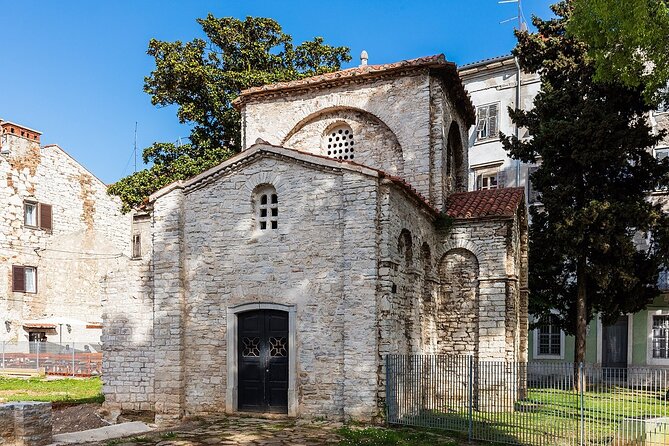
Then comes the curveball that makes the tour feel different: Zerostrasse, an underground tunnel system built during World War I as a shelter. It’s one of those places that changes the mood fast. The air feels different, and the story hits harder because it’s not just ancient—this one is closer to modern memory.
This stop lasts about 10 minutes and lists admission as not included. That means you’ll likely need a ticket or separate entry depending on how the site is operating that day.
Even with limited time, it’s a strong reminder that cities don’t only layer ancient eras. They keep getting rewritten by new conflicts, new needs, and new urban realities.
If you like the practical side of history—how people survived—you’ll probably love this part.
The Forum and Tempio di Augusto: the Roman city in one square

You’ll end in the Forum, the main square and the center of Roman political, administrative, and religious life. The Forum dates back to Roman times and it’s where major monuments cluster, making it the right place to understand how power was displayed.
Within the Forum area, you’ll hear about the Temple of Augustus and the Town Hall, which was built on the site of the former Roman Capitolium. Seeing those connections in a live walking context helps you understand the Forum as more than a square—it’s a blueprint of how Romans organized authority.
This stop is about 20 minutes, and admission is free. It’s a stretch of time that works well after the more dramatic sites, because here the guide can slow down and explain without competing with crowds or ticket lines.
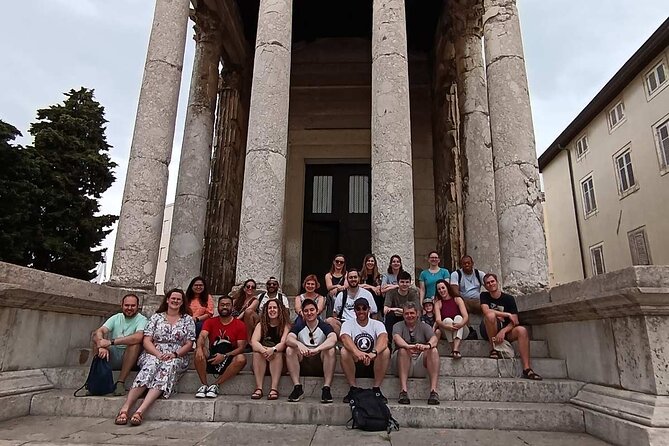
Finally, you’ll reach Tempio Di Augusto (the Temple of Augustus). It’s one of the best-preserved Roman monuments in Croatia, built between 2 BC and AD 14, dedicated to Emperor Augustus. The temple sits on the Forum and now serves as a museum.
You also get the real-world history of damage and restoration. It suffered significant harm over time, including during World War II bombing, and it has been restored to represent an important part of Pula’s heritage. Admission is not included here, so this is another paid entry you’ll plan for.
This stop is about 10 minutes, which is enough time to appreciate why it’s a standout and how it fits the whole Forum story.
What makes the guide matter here (and why I’d trust this tour)
This tour is built around a guide who teaches, not just points. That shows in the way the route is structured: you don’t only see landmarks, you get the “why” behind them. People describe guides like Dalen and Halan as especially enthusiastic, funny, and strong at turning history into something you can actually remember.
One of the most practical benefits is that a good guide helps you see connections while you’re still in walking range. The tour includes several spots that most people wouldn’t naturally pair together—Arena, park mini-map, gates, a WWI shelter, and then the Forum. If you care about understanding a place, this is the kind of route that prevents your first day from becoming a list of photos.
I also like that guides tend to offer practical food and drink ideas. If your guide is anything like the ones described in past experiences, you’ll come away with suggestions for places to eat and even where to sample free brandy or gin (where available).
Best time to go, what to wear, and how to pace yourself
Because the experience requires good weather, you’ll want to pick a day with decent skies. If you’re traveling in shoulder season, having a flexible plan helps.
Wear comfortable walking shoes. It’s only about 2 hours, but the stop durations are short and the route packs in multiple sites, so your legs do the work. If you have moderate mobility limits, this still may be doable, but don’t treat it like a casual stroll with long breaks.
Bring water. Nothing is listed for breaks, so you’ll appreciate the chance to drink and reset during the free stops like Tito Park.
For your group: service animals are allowed, and the route is near public transportation, which can make it easier if you’re adding this tour to a bigger day plan.
Who this private Pula tour is for
This is a strong fit if:
- You’re on your first visit to Pula and want a fast, solid orientation.
- You like Roman sites but also want at least one non-Roman stop that changes the tone.
- You enjoy a guide who explains with humor and real teaching energy.
It may not be the best choice if:
- You only want free sights and don’t want to budget for paid entries at certain stops.
- You prefer a slower pace with long museum time at each location.
Should you book this Pula private walking tour with Augustus Walks?
Yes—if your goal is to get your bearings in Pula and understand how the city layers Roman power with later historical moments. The private format plus an English-speaking guide makes it feel efficient, and the mix of Arena, gates, WWI underground tunnels, and the Forum gives you more than the usual one-note Roman tour.
I’d book it particularly if you want that teacher-style guidance. If you show up ready to walk, ask questions, and absorb stories, you’ll likely finish with a clear mental map of Pula—and a short list of what to explore next on your own.
If you’re comfortable planning for separate admission at the Arena, Zerostrasse, and the Temple of Augustus, this tour is a very solid use of a first-day block.
FAQ
Is the tour private?
Yes. It’s listed as a private tour/activity, so only your group will participate.
How long is the Pula walking tour?
It’s about 2 hours (approx.), with additional time allotted for walking between stops.
Is it offered in English?
Yes, the tour is offered in English.
Do I need to buy tickets for the stops?
Admission ticket inclusion varies by stop. Some sights are free (like Titov Park, the Twin Gates, the Gate of Hercules, and the Forum), while others are marked as admission ticket not included (like the Amphitheatre de Pula, Zerostrasse, and the Temple of Augustus).
What’s the starting and ending point?
You start at Park NimfejaArena, 52100, Pula, Croatia, and end at Forum Square, Forum 3, 52100, Pula, Croatia.
What happens if the weather is bad?
The experience requires good weather. If it’s canceled due to poor weather, you’ll be offered a different date or a full refund.