REVIEW · TROGIR
Discover Trogir: Guided Walking Tour of a Medieval Gem
Book on GetYourGuide →Operated by Discovery tours · Bookable on GetYourGuide
Trogir makes medieval streets feel readable, not random. This 90-minute walk pairs UNESCO architecture at St. Lawrence Cathedral with local guides who keep things personal and organized as you move through the lanes.
I especially like two things: the cathedral details that you can actually spot with a guide’s pointers, and the way guides such as Anna and Daniela slow down just enough for questions and small, human stories. One possible drawback: it’s a concentrated highlight route, so if you want hours of independent wandering, you’ll likely want to add extra time after the tour.
In This Review
- Key Highlights You’ll Feel Immediately
- Why Trogir Works So Well in 90 Minutes
- Meet Your Guide and Get Oriented in Trogir’s Medieval Layout
- St. Lawrence Cathedral: Gothic Meets Renaissance Detail Up Close
- What to watch for during your cathedral moment
- A practical note
- Town Gate: The Moment Trogir Feels Like a Fortified City
- Why I like this stop
- Old Town Streets: Narrow Lanes, Ancient Walls, and Real City Flow
- How to get the most out of the street segment
- Kamerlengo Fortress Views: Adriatic Panoramas With a Purpose
- The tradeoff
- Waterfront Promenade: A Calm Finish After the Medieval Stuff
- Price and Pacing: Is It Good Value?
- Who Should Book This Walking Tour (and Who Might Add Time)
- Should You Book This Trogir Guided Walk?
- FAQ
- How long is the Trogir guided walking tour?
- What is the price per person?
- Is the tour guided and in English?
- What are the main highlights included on the route?
- Is the tour wheelchair accessible?
- Is there free cancellation?
- Is reserve now and pay later available?
- What’s included in the ticket price?
Key Highlights You’ll Feel Immediately
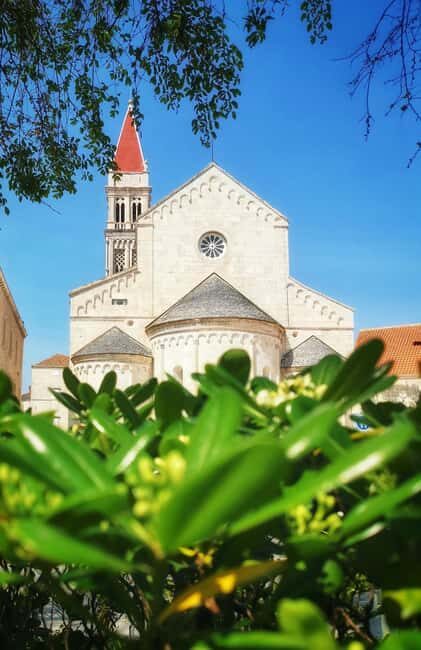
- St. Lawrence Cathedral: Gothic and Renaissance details you can learn to “see,” not just look at
- Old Town lane-walking: narrow streets, ancient walls, and the kind of town layout that makes navigation easier than it looks
- Town Gate pass-through: a real moment of entering the historic flow of the city
- Kamerlengo fortress viewpoints: a short climb in payoff for Adriatic panoramas
- Waterfront promenade finish: the easy, relaxed way to end a walking tour
Why Trogir Works So Well in 90 Minutes
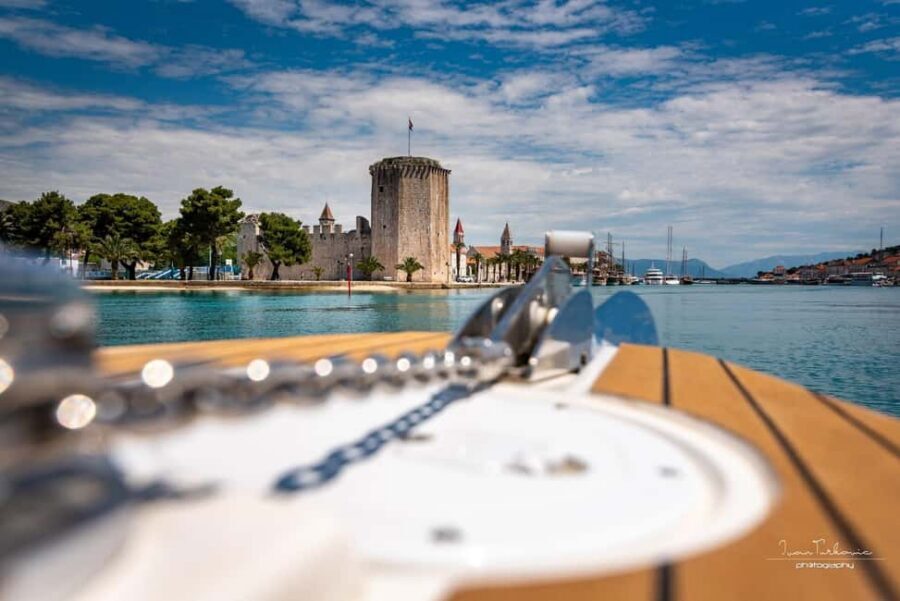
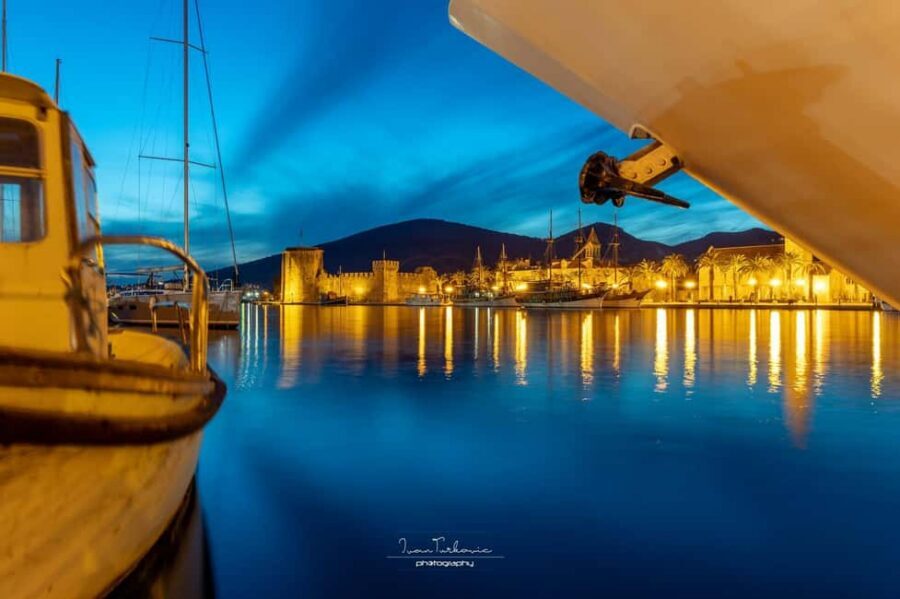
Trogir is the rare place where a short tour can still feel satisfying. The old town is compact, so you spend your time looking at architecture instead of hunting for it. And because the route ties landmarks together—cathedral, gate, fortress, waterfront—you come away with a shape of the city, not just a list of stops.
This is also a good option when your main goal is clarity. A guided walk helps you read what you’re seeing: where Roman-era roots show up, how medieval power expressed itself in stone, and why the UNESCO designation matters in everyday street-level terms. In just 90 minutes, you can get the “why” behind the “wow.”
You can also read our reviews of more walking tours in Trogir


Meet Your Guide and Get Oriented in Trogir’s Medieval Layout
The tour is led by a live English-speaking local guide, and that matters more than you’d think in a place like Trogir. Old towns can look like a maze from the outside, but a good guide turns it into a route you understand. You’ll start moving through the medieval streets with a sense of direction, rather than just drifting behind the group.
What I like about how the guides handle the walk is the practical care. One guide approach you’ll see in how this experience is described: checking that everyone is doing okay, and making sure people have water. That little bit of attention can change the whole vibe—especially in warmer months.
You also get those human “how life felt” moments alongside the big monuments. You’ll hear not only what’s old, but what everyday life used to look like in the past. That’s how a UNESCO site stops being a label and becomes a real place.
St. Lawrence Cathedral: Gothic Meets Renaissance Detail Up Close
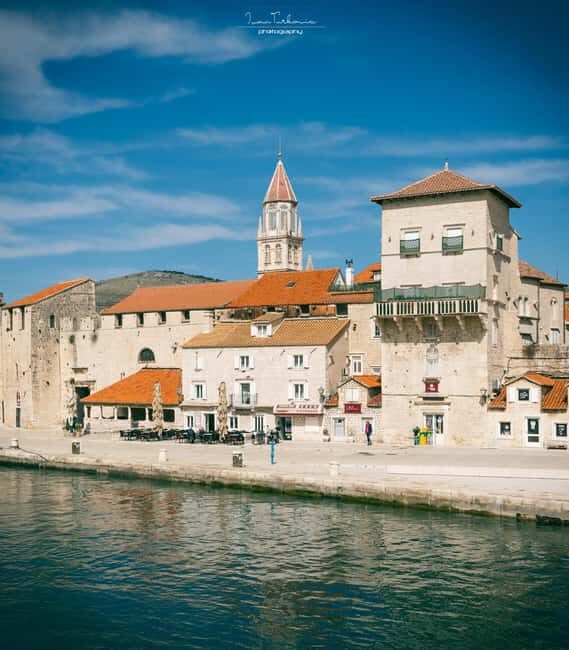
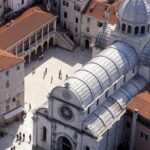
The big draw here is St. Lawrence Cathedral, and your guide helps you look at it intelligently. The cathedral is UNESCO-listed for good reason, but the real value of a tour is that you’re not standing there guessing what you’re supposed to notice.
Expect to focus on the architecture’s mix—Gothic structure paired with Renaissance elements. With a guide, you learn to spot the transitions instead of just noticing “pretty stone.” That means you can appreciate the craftsmanship and the design logic, even if you’re not a specialist.
What to watch for during your cathedral moment
You don’t need to memorize terms. Just let your guide point you to specific details, then look again with that new lens. Pay attention to how the cathedral’s style shifts across parts of the building. Those differences tell a story about how the city changed over time.
A practical note
Cathedrals can be busy, and standing still for photos can eat into your walking time. If you’re the type who wants a slow, long look, it helps to set expectations: you’ll get a guided highlight. For a deeper, unhurried visit, plan to return on your own afterward.
You can also read our reviews of more guided tours in Trogir

Town Gate: The Moment Trogir Feels Like a Fortified City
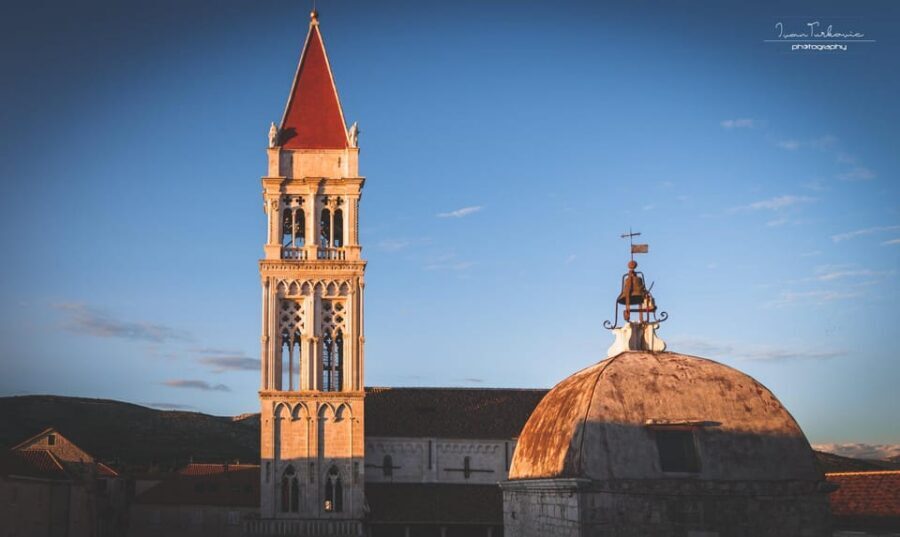
After the cathedral, you move from “masterpiece building” to “how the city protected itself.” Passing through the town gate is one of those simple moments that clicks fast. It’s not just a photo op—it’s a reminder that medieval cities were designed to control movement.
Your guide frames the gate inside the broader story of Trogir’s evolution—from earlier Roman roots to the medieval height of the town’s importance. You’ll learn to connect stone features you can see right now with older layers of purpose. It’s the difference between looking at walls and understanding why they’re shaped the way they are.
Why I like this stop
A good walking tour doesn’t only show you what to photograph. It shows you how to interpret the space. The town gate gives you that “okay, this was built to defend” clarity. From there, the rest of the route feels more coherent.
Old Town Streets: Narrow Lanes, Ancient Walls, and Real City Flow
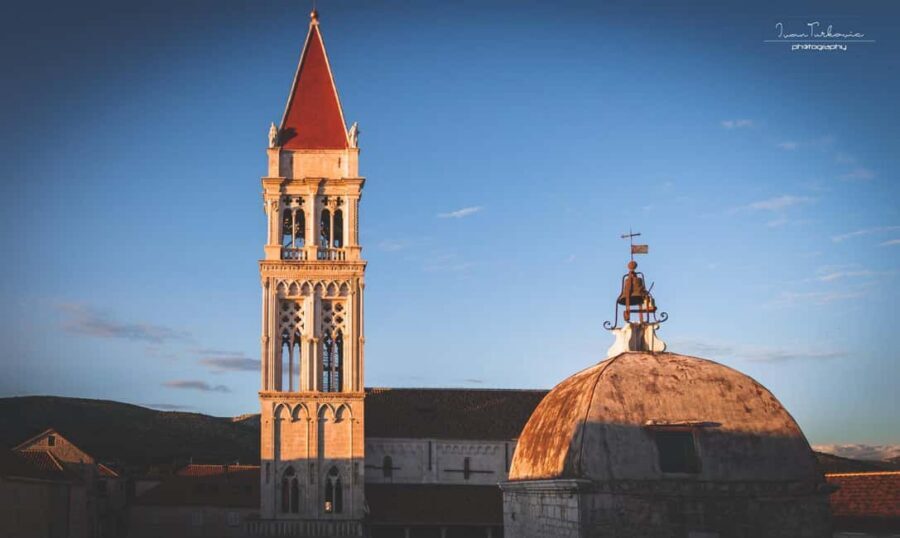
Then comes the part most people came for: the Old Town walking. This is where Trogir’s medieval character becomes a lived-in feeling. The streets are narrow. The corners are tight. And that makes the walk more interesting than a broad promenade where you barely change your view.
As you wander, you’ll pass ancient walls and see the outlines of palaces and important buildings. Your guide’s job is to connect what you’re looking at to the story of changing eras. You’ll hear about Roman origins and medieval glory days, and how later periods built on what came before.
How to get the most out of the street segment
Walk slowly enough to keep noticing details. Don’t rush for the next “big stop.” In a place like this, small features often answer bigger questions—like what kind of power lived here, where people likely gathered, and how the layout supported community life.
This is also a section where you can ask questions. If you tend to be shy about interrupting tours, don’t be. The style of guiding described for this experience includes leaving time so the group understands—not just hears facts while walking past.
Kamerlengo Fortress Views: Adriatic Panoramas With a Purpose
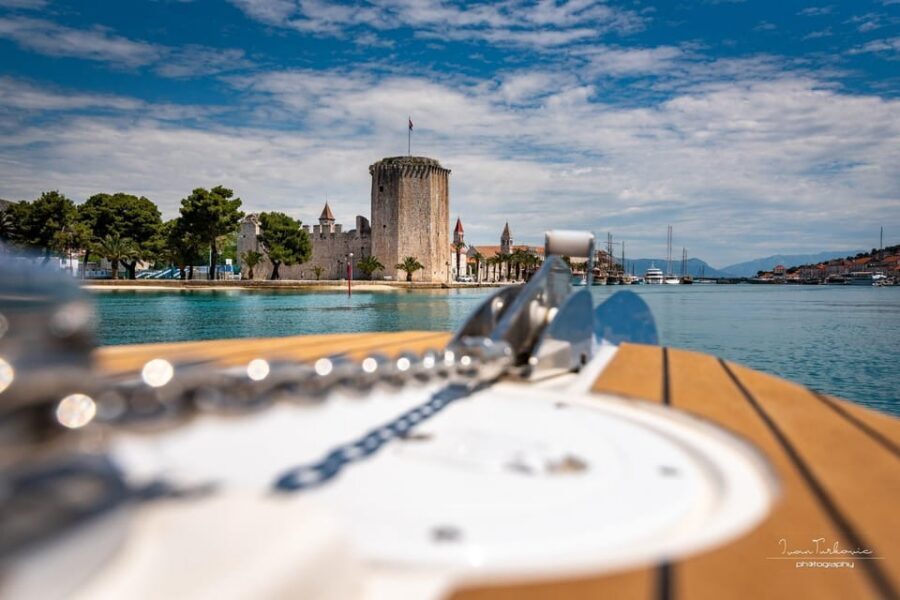
One of the smartest parts of this walk is that it gives you a view after a lot of stone-level detail. The Kamerlengo fortress stop is about perspective—literally. From up there, you can see the relationship between Trogir’s historic core and the Adriatic.
Expect panoramic views of the sea, and expect your guide to connect what you see to why people built and fortified in this location. Coastlines mattered. Control of access mattered. Visibility mattered. The fortress makes those ideas real.
The tradeoff
It’s still a walking tour, so you’re trading a bit of time and effort for payoff. If you’re not comfortable with stairs or uneven ground, you should consider how you’ll manage the fortress approach. That said, the experience is described as wheelchair accessible, so there are options for mobility—just plan to move at your needed pace.
Waterfront Promenade: A Calm Finish After the Medieval Stuff
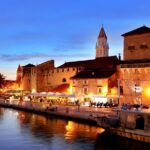
You’ll end with the waterfront promenade, which is a smart rhythm shift. After cathedral details, gates, and fortress views, the sea-level walk feels like exhale time.
This part is perfect for regrouping, grabbing a water bottle, and letting the city’s layout settle in your mind. You also get the visual payoff: the Adriatic framed by the historic edges of Trogir.
If you enjoy travel when it’s not all effort, this ending helps. It’s the kind of finish that makes you feel like you didn’t just “do sightseeing.” You walked through a place and then saw where it connects to the wider world.
Price and Pacing: Is It Good Value?
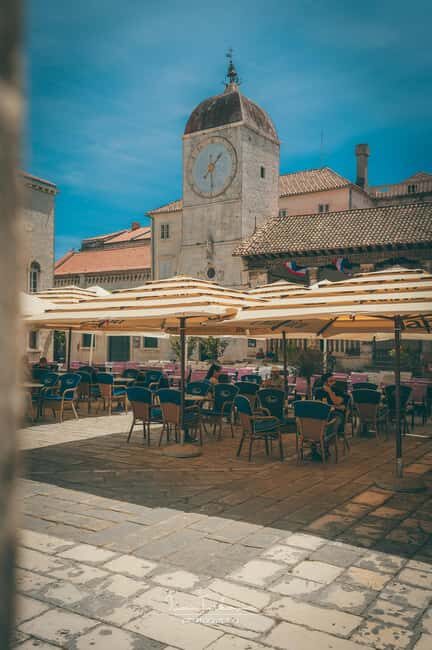
At $17 per person for a 90-minute guided walk, the value comes down to what you get for that time. You’re not only paying for someone to lead you. You’re paying for a local guide to point out architectural details, explain how Trogir evolved, and keep the route moving smoothly.
In practical terms, here’s what that means for you:
- If you’re short on time in Trogir, this tour helps you prioritize the most important moments.
- If you’re the type who likes context, you’ll get it without needing to do homework first.
- If you want friendly pacing, the guidance approach described for this experience includes time for understanding and questions.
Pacing is the main watch-out. Since the tour is 90 minutes, you won’t have hours inside every stop. It’s a “highlights with meaning” format. If you’re traveling with kids, seniors, or anyone who needs frequent pauses, it helps to go in knowing you’ll keep moving, but with a guide attentive to the group’s comfort.
Who Should Book This Walking Tour (and Who Might Add Time)
This tour fits best if you:
- Want a guided route through Trogir’s UNESCO core
- Like architecture and prefer explanations that help you see details
- Enjoy history told in a human way, not just dates
It might be less ideal if you:
- Want long, quiet time inside buildings without a schedule
- Prefer to wander with no structure at all
My suggestion: book this early in your day or early in your time in Trogir. Then use the remaining hours to revisit what you liked most—cathedral details, a particular street view, or a sea-facing viewpoint.
Should You Book This Trogir Guided Walk?
Yes—if you want the fastest way to understand Trogir’s medieval character without guessing. The cathedral stop gives you the kind of architectural payoff that only works when someone helps you look. The gate and fortress add city-defense context and big views. And the waterfront finish keeps it from feeling like constant intensity.
If you like walking tours that feel organized, with guides who genuinely care about the group—like the thoughtful, patient style associated with guides named Anna and Daniela—this is a strong match. Just plan to give yourself extra time afterward if you want deeper wandering.
FAQ
How long is the Trogir guided walking tour?
It lasts 90 minutes.
What is the price per person?
The price is $17 per person.
Is the tour guided and in English?
Yes. It includes a local guide and is offered in English.
What are the main highlights included on the route?
You’ll see St. Lawrence Cathedral, the Old Town streets, the town gate, the waterfront promenade, and you also visit the Kamerlengo fortress for panoramic views.
Is the tour wheelchair accessible?
Yes, the tour is wheelchair accessible.
Is there free cancellation?
Yes. You can cancel up to 24 hours in advance for a full refund.
Is reserve now and pay later available?
Yes. You can reserve now and pay later.
What’s included in the ticket price?
The tour includes a local guide.
If you want, tell me when you’re visiting Trogir (month is fine) and whether you prefer early starts or slower mornings—I can help you choose the best time to do this walk.