REVIEW · TROGIR
Trogir; Private walking tour of higlights of Trogir
Book on GetYourGuide →Operated by Kaius · Bookable on GetYourGuide
Trogir packs serious beauty into a small old town. This private walking tour is a tight, well-paced circuit through the places that explain how the city looks and how it worked—medieval streets, big-name architecture, and viewpoints that make the Adriatic feel close.
I especially like how the guide focuses on why these buildings matter, not just what they look like. You get the Cipiko family palaces, the Cathedral of Saint Lawrence (including the famous portal), and then stories tied to civic life and Greek myth.
One thing to consider: it’s only 90 minutes, so you’ll move at a walking-tour pace. If you want lingering time for photos or shopping, you’ll likely need the “secret stop” moment to slow down.
In This Review
- Key highlights worth planning around
- North City Gate start: getting oriented in the first 15 minutes
- Trogir City Museum stop: a quick primer before the big monuments
- Cipiko Palace: reading noble power in stone and detail
- St. Lawrence Cathedral: the portal and the feeling of importance
- City Loggia, City Hall, and the Kairos story that makes civic life human
- The Benedictine Monastery of St. Nicholas: a quieter stop with strong atmosphere
- Kamerlengo Fortress: the harbor payoff and best photos to end on
- The secret shopping stop and how to use it without losing time
- Weather reality: when an Unwetter hit, the guide handled it
- Group size and guide attention: private means less rushing
- Price and value: $153 per group up to 10
- Who this Trogir highlight walk suits best
- Should you book this Trogir walking highlights tour?
- FAQ
- How long is the private walking tour in Trogir?
- What does the tour cost?
- Where does the tour start?
- What’s included in the price?
- What language is the guide available in?
- Where can the tour end?
Key highlights worth planning around
- North Gate start: get your bearings fast at the main city entrance
- Cipiko Palaces: architectural details that feel personal and specific
- St. Lawrence Cathedral: a major stop with standout portal craftsmanship
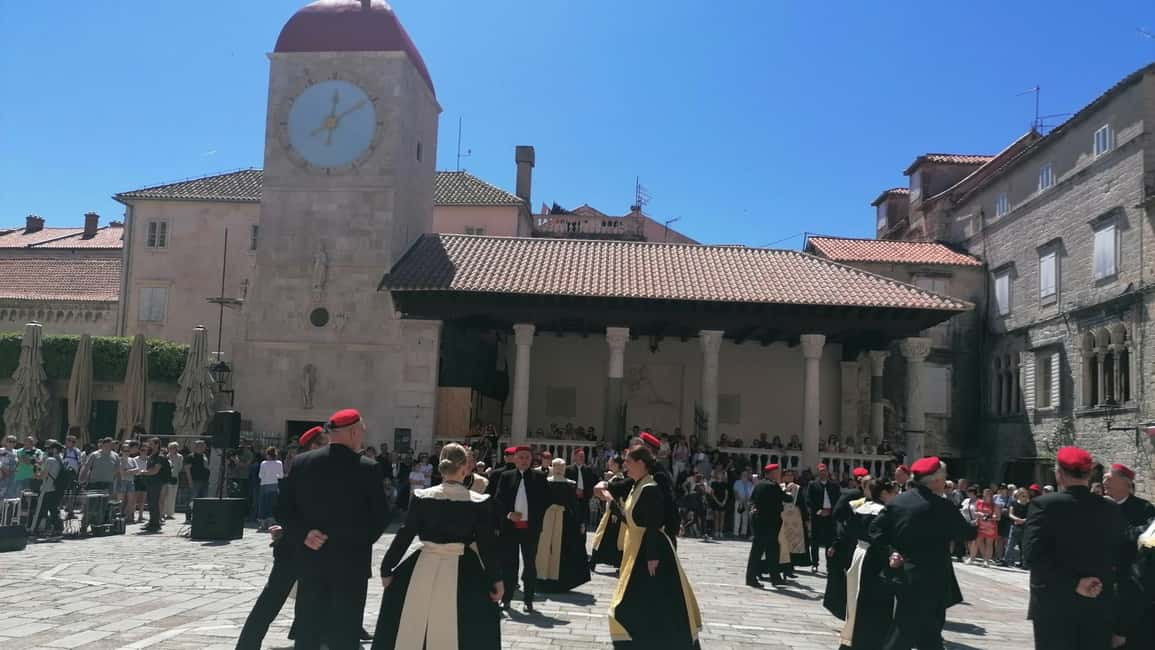
- City Loggia and civic spots: history explained through how people governed
- Kamerlengo Fortress ending: photo stop with strong harbor payoff
- Guide flexibility in weather: when an Unwetter rolled in, the tour was pushed by hours
North City Gate start: getting oriented in the first 15 minutes
The tour begins at the north entrance to Trogir, in front of the North City Gate. The stated meeting point is in the area of TAXI TROGIR 28, which makes it easier than hunting for a tiny street sign when you’re arriving in a hurry.
This is a smart way to start because you’re not starting “inside nowhere.” You start where the city tells you where it begins, and the guide can orient you immediately: how the old town is laid out, where the key monuments sit, and what to watch for as you walk.
You’ll also get an early photo stop and quick orientation time here. That matters because Trogir’s streets can look similar at first glance, especially if you’re comparing arches, stone textures, and doorways. A good opening means the rest of the walk feels clearer, not chaotic.
If you’re the type who likes to see the logic behind a place, you’ll enjoy this start.
You can also read our reviews of more tours and experiences in Trogir.

Trogir City Museum stop: a quick primer before the big monuments
After the gate, you move to the City Museum area for a short sightseeing walk. This isn’t positioned as a deep museum visit; it’s more like a “get context in your head” stop before you start meeting the heavy hitters.
That short pause is useful. A place like Trogir—inhabited for more than 3600 years—has layers. When your guide gives you a fast framework first, the palaces and cathedral stop feeling random. They start to click as part of one long story.
You’ll likely spend only a few minutes here, so don’t expect an all-out indoor experience. But you’ll leave with better eyes for what you’re about to see next, especially the noble families and their surviving stonework.
This is one of those “small stop, big payoff” moments.
Cipiko Palace: reading noble power in stone and detail
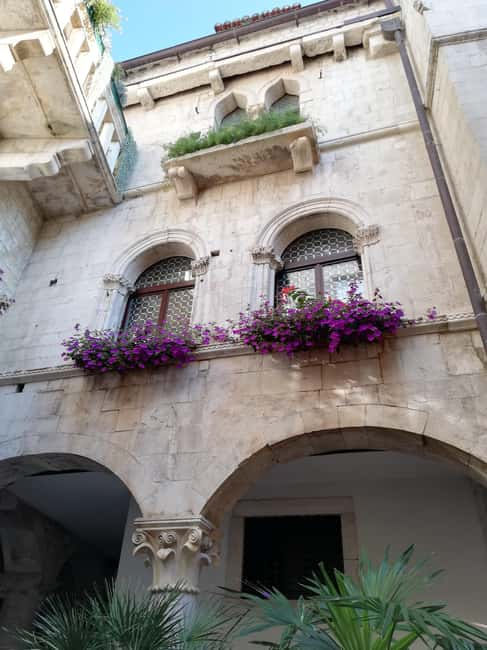
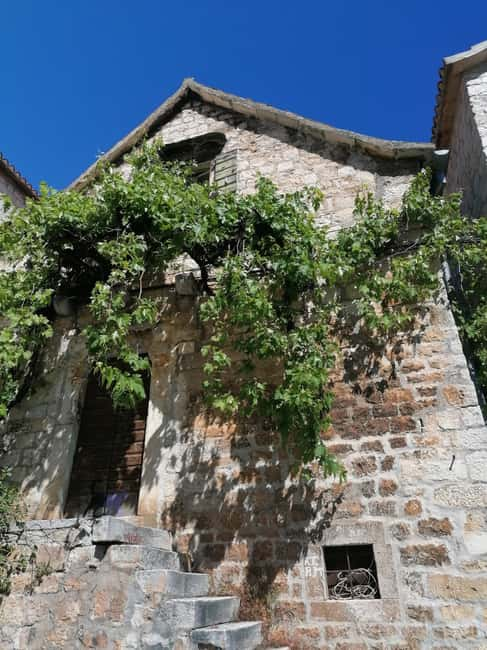
Next comes the Cipiko Palace, one of the big architectural markers of Trogir’s old power structures. You’ll get a focused visit and sightseeing time here, which is just long enough to notice real differences rather than skim past it like background scenery.
What I like about this stop is that it’s not only about pretty facades. The tour frames the palaces in terms of the noble families—who they were, how they showed respect for the past, and how collected stone fragments fit into their identity.
Even if you’re not a dedicated architecture person, you’ll probably enjoy how the guide turns details into meaning. That’s the difference between looking at a building and understanding why it was built that way.
The practical tip: keep your camera ready for doorways, windows, and sculptural elements. These are the kinds of features that reward a closer look, and 10 minutes goes quickly if you’re waving your phone at everything from the same angle.
St. Lawrence Cathedral: the portal and the feeling of importance
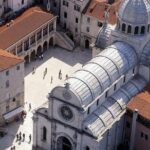
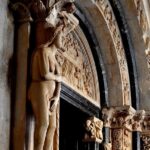
The Cathedral of Saint Lawrence is the tour’s central monument. You’ll spend about 20 minutes here, with guided visit and sightseeing time, including time to appreciate its standout portal—described as a masterpiece.
Cathedrals can feel intimidating on a highlight walk, but this one is handled with a clear goal: see the architecture, then understand what you’re looking at. Your guide’s explanation helps you notice the elements you might otherwise miss, especially on portals and stonework.
One reason this stop works on a 90-minute tour is timing. You’re not stuck here for ages, but you’re given enough time to look upward, step back, and compare the details rather than stare at one carved spot for the whole visit.
If you’re sensitive to crowds, go at a tour pace and don’t rush. Let the guide point things out, then use the remainder of your time for your own photos.
This is the moment when Trogir feels most like a “major destination,” not just a pretty waterfront town.
City Loggia, City Hall, and the Kairos story that makes civic life human
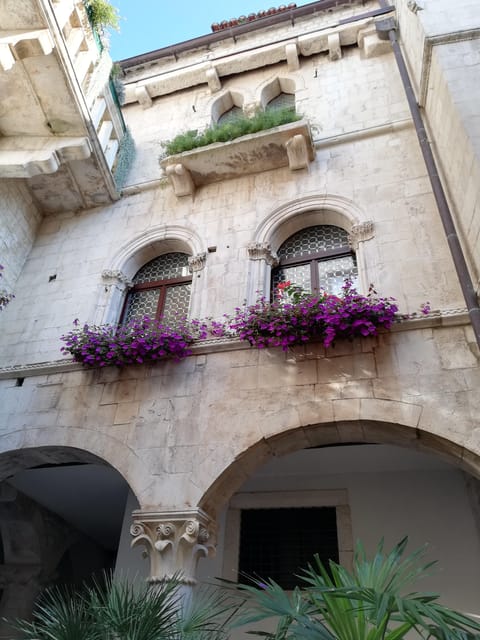
After the cathedral, you walk toward the City Loggia and the broader area linked with civic spaces, often described as City Hall. This part is more about people than stone—how public life worked and what symbols meant.
The guide also brings in a Greek thread: the story of Kairos, the good of the happy moment. It’s the kind of detail that turns a stop from decorative into memorable. You start connecting why certain designs and public spaces felt meaningful in everyday life.
This is also a nice change of pace. By now you’ve had palaces and a cathedral. The loggia-civic segment slows the focus to community identity, and it helps you understand Trogir as more than a backdrop for photos.
Practical note: this segment is shorter (about 10 minutes for the Loggia walk). If you want extra time for lingering or extra photos, you’ll need to keep the moving pace here so you don’t feel rushed later.


The Benedictine Monastery of St. Nicholas: a quieter stop with strong atmosphere
Next is the Benedictine Monastery of St. Nicholas. You’ll get about 15 minutes for sightseeing here, which is enough to get a sense of the monastery’s place in the town without turning it into a long detour.
Monasteries often feel “different” from palaces and cathedrals, and that’s exactly what you’ll want on a highlight walk. Here, the guide’s context makes the stone feel tied to daily rhythm, not just grand power displays.
This part of the tour also helps you pace yourself. After the big visual hits, you’ll appreciate a stop that’s quieter and more reflective. It’s also a great place to slow down slightly for photos that don’t require constant camera work around busy streets.
If you’re walking in warmer weather, this monastery stop can feel like a welcome pause. You may also find that it clarifies why Trogir feels cohesive: different eras and institutions share the same architectural language of stone and Mediterranean light.
Kamerlengo Fortress: the harbor payoff and best photos to end on
The tour finishes with Fortress Kamerlengo (also called Kamerlengo Castle). You’ll get a photo stop plus visit time, about 15 minutes, and this is where the views start doing the heavy lifting.
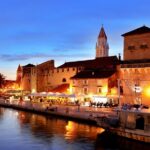
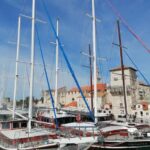
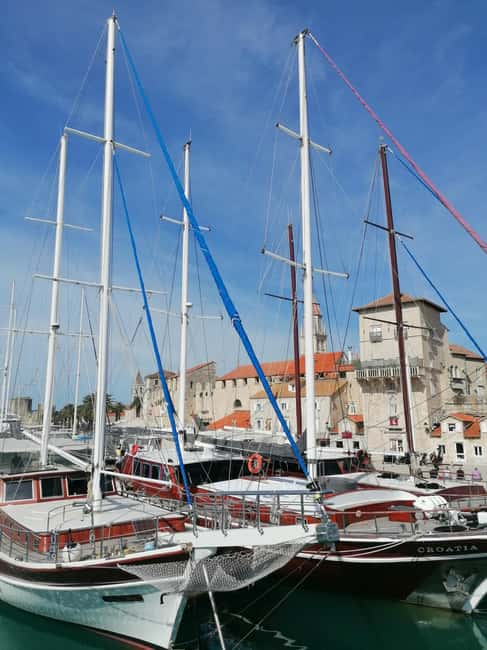
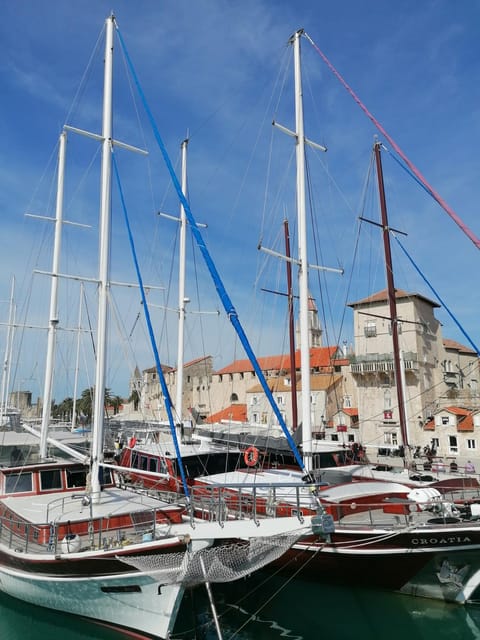
Even in a short tour, ending with a fortress works. You get elevation, sightlines toward the sea, and a stronger sense of where the city meets its coastline. The tour also includes mention of the Riva promenade, with sea views and anchored ships, plus palm trees—so you can connect the harbor vibe to the stone fortifications.
I like this ending because it gives your last minutes a reward. Instead of ending back at a door you already saw at the start, you end with a bigger “picture” that helps everything else make sense.
Also, if your group wants to linger, this is often the best zone to do it. Photographs here tend to justify the final stretch of walking.
The secret shopping stop and how to use it without losing time
There’s a secret stop described as time for shopping, around 10 minutes. The name is playful, and the intent is practical: give you one short window where you can buy something small and local without derailing the full route.
Because it’s only 10 minutes, the best strategy is to treat it as a browse, not a mission. If you see something you truly want—local crafts, small souvenirs—then grab it. If not, you’ll still have time for the end-of-tour fortress.
This kind of stop matters on a highlight tour. It keeps the walk feeling like a real experience, not a checklist of monuments. Just don’t let it stretch into “one more shop,” because 90 minutes disappears faster than you think.
If you love taking home a tangible memory, use this stop with intention.
Weather reality: when an Unwetter hit, the guide handled it
One of the best signs for a walking tour is how it responds when conditions change. There’s been an example where an Unwetter (storm) came over Trogir, and the guide managed the situation by shifting the tour by about three hours.
That tells you something important about the operator and the guide: they don’t just cancel and disappear. They adjust, keeping the experience intact where possible. For you, this is peace of mind in coastal Dalmatia, where weather can change fast.
What to do: if skies look unstable, come prepared with a light layer and shoes that handle uneven stone. And keep your schedule flexible when you can, since a delayed-but-not-abandoned tour is better than losing the day entirely.
It also helps to know that the tour can end back at the start or at another point that suits customers best. So even if timing shifts, you’re not forced into one rigid finish location.
Group size and guide attention: private means less rushing
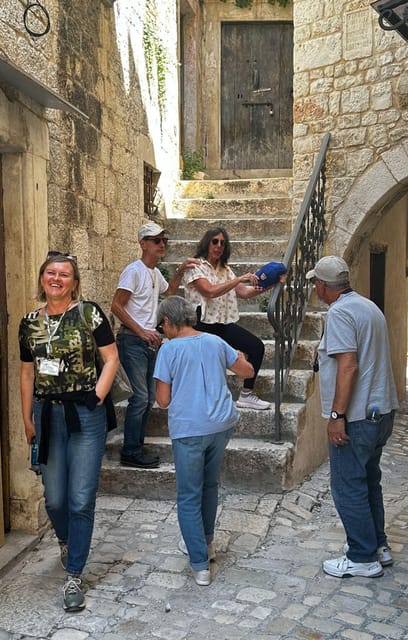
This is a private group tour, priced per group rather than per person, with capacity up to 10. In practical terms, that means you can ask questions without feeling like you’re interrupting a big crowd flow.
A licensed local guide runs the show, and that licensing matters. You’re not just getting directions; you’re getting explanations tied to the buildings and stories you’re seeing.
The guide also has recommendations for your whole vacation in Trogir and Dalmatia. That can be surprisingly valuable if you only have a day or two and you want to avoid repeating the most obvious tourist spots.
The private format also makes it easier to match your pace. If your group wants more photo time at one monument, it’s generally easier to work that into a 90-minute structure than it is on a big shared tour.
Price and value: $153 per group up to 10
At $153 per group for up to 10 people, the value depends on how you group up. If you split it among a full group, it can work out to a low per-person cost for a guided walk through multiple major sights.
Even with fewer people, you’re still paying for a licensed guide and a planned route that covers key highlights without you having to piece together information on your own. And the tour includes more than just “see this, see that.” You get stories tied to noble families, the Kairos moment, and civic spaces.
Duration is about 90 minutes, which is long enough to feel like a real guided experience, but short enough to keep the rest of your day free for beaches, lunch, and extra wandering.
Think of it as buying time and clarity. In a place with layered architecture like Trogir, that can be the best kind of value.
Who this Trogir highlight walk suits best
This tour is a strong fit if you want:
- A high-impact highlights route without planning the order yourself
- Clear guidance through Trogir’s old town monuments in a short window
- A local perspective that connects buildings to people and stories
It’s also ideal for groups of friends or families who want to walk together at their own pace. If you enjoy architecture, religious sites, and old civic spaces, you’ll get more from it.
If you’re the type who wants to read every plaque and spend 30 minutes in each location, you might feel the pace. But as a “great first look” or a “perfect second-day walk,” it’s a smart choice.
Should you book this Trogir walking highlights tour?
Book it if you want a well-structured 90-minute overview of Trogir’s most important visual and storytelling stops—North Gate, Cipiko Palace, St. Lawrence Cathedral, City Loggia, Monastery of St. Nicholas, and the Kamerlengo finish.
Skip it if your travel style is all about long stays in a few places. This tour is built for movement and context, not for slow, unhurried drifting.
If you’re traveling with a small group and want a guide who can handle the unexpected—like weather delays—this one deserves your time.
FAQ
How long is the private walking tour in Trogir?
The tour lasts 90 minutes.
What does the tour cost?
It’s priced at $153 per group, up to 10 people.
Where does the tour start?
The meeting point is in front of the north city gate (main city entrance). The listed start area is TAXI TROGIR 28.
What’s included in the price?
A licensed tour guide is included.
What language is the guide available in?
The live guide is available in German and English.
Where can the tour end?
The tour can end at the starting point or at another point that suits customers best.