REVIEW · DUBROVNIK
Dubrovnik Homeland War Private Tour
Book on Viator →Operated by My Dubrovnik Tours · Bookable on Viator
A siege story on real stone matters. This Dubrovnik Homeland War private tour pairs veteran-led firsthand context with a walk through the old city’s power points, like Luza Square and the Jesuit Staircase. I love how the guide ties the 1991–1992 Homeland War to the streets you’re standing on, and I love that the tour doesn’t stop at the war, it connects Dubrovnik’s layers to what you see today. One possible drawback: the subject matter is heavy, so if you want light, entertainment-only sightseeing, this may feel too serious.
You get a tight walking route that still covers a lot of Dubrovnik identity in about 2 hours 30 minutes. You’ll see fortress viewpoints, major civic buildings, and the church stairways that shape the old-city flow. It’s also private, so you can ask questions as you go, and it runs in English.
If you go in with curiosity and a bit of patience, you’ll come away with more than good photos. You’ll understand why this city’s walls were more than decoration, and why certain places still hold meaning.
In This Review
- 5 key takeaways before you go
- A veteran’s Dubrovnik: why this walk feels different
- From Revelin Fortress to Pile Gate: the route in plain terms
- Stop 1: Revelin Fortress (about 10 minutes)
- Stop 2: Dubrovnik City Walls (about 20 minutes)
- Stop 3: Luza Square and Sponza Palace memorial room (about 20 minutes, entrance included)
- Stop 4: Stradun (about 10 minutes)
- Stop 5: Monument of Poet Ivan Gundulic (about 10 minutes)
- Stop 6: Rector’s Palace (about 15 minutes)
- Stop 7: Cathedral of the Assumption of the Virgin Mary (about 10 minutes)
- Stop 8: Jesuit Staircase and the Church of St. Ignatius of Loyola (about 15 minutes)
- Stop 9: Church of St Joseph (about 15 minutes)
- Stop 10: Franciscan Church and Monastery (about 15 minutes)
- Stop 11: Pile Gate finish (about 10 minutes)
- What’s included, what isn’t, and why that matters for value
- The memorial room at Sponza: what you should expect emotionally
- Logistics that actually affect your experience
- Who this private tour suits best
- When a walking tour becomes a story you can follow
- Should you book the Dubrovnik Homeland War private tour?
- FAQ
- Is this tour private?
- How long is the Dubrovnik Homeland War Private Tour?
- What language is the tour offered in?
- What is included in the price?
- What is the meeting point and where does the tour end?
- Do I need tickets for the sights along the route?
- What happens if the weather is bad?
5 key takeaways before you go
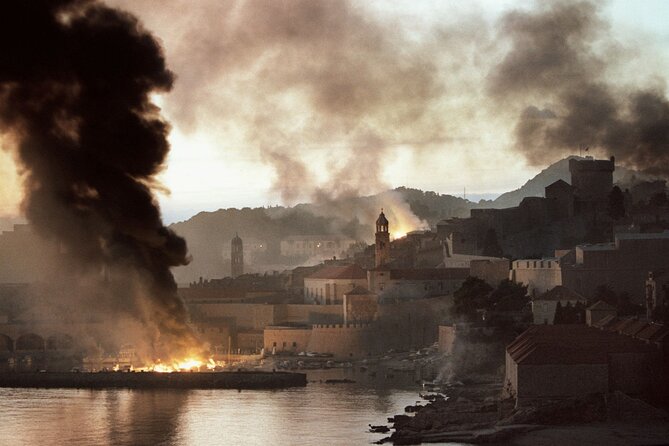
- Veteran-led context: the Homeland War is explained by someone with firsthand experience.
- Sponza Palace Memorial Room included: you get entry (videos and photos included), not just a quick stop outside.
- Old city route with big landmarks: city walls, Luza Square, Stradun, Rector’s Palace, and more.
- Short stops, steady walking: it’s structured for coverage without turning into an all-day marathon.
- Private group pace: only your group participates, with professional guidance throughout.
A veteran’s Dubrovnik: why this walk feels different
Dubrovnik is famous for beauty. This tour adds the other half of the story: what it meant to defend that beauty when the modern world turned deadly.
The biggest reason I think this experience works is the way the guide connects the Homeland War to the city’s layout. It’s not taught like a textbook. You’re given context, then you look at a fortification, a civic building, or a square and the explanation snaps into place. That’s what makes the tour memorable: you’re not only learning what happened, you’re learning how Dubrovnik’s geography shaped decisions and survival.
I also like that the tour keeps a firm grip on place names you can later point to on your own. You don’t leave with vague impressions. You know where Revelin Fortress sits, why Luza Square matters, and what roles buildings like the Rector’s Palace played in Dubrovnik’s civic life.
One more practical point: the tone is serious. In the best moments, it’s quiet and reflective. If you’re expecting a joking, party-style city tour, you may find the mood slower than you planned.
You can also read our reviews of more tours and experiences in Dubrovnik.


From Revelin Fortress to Pile Gate: the route in plain terms
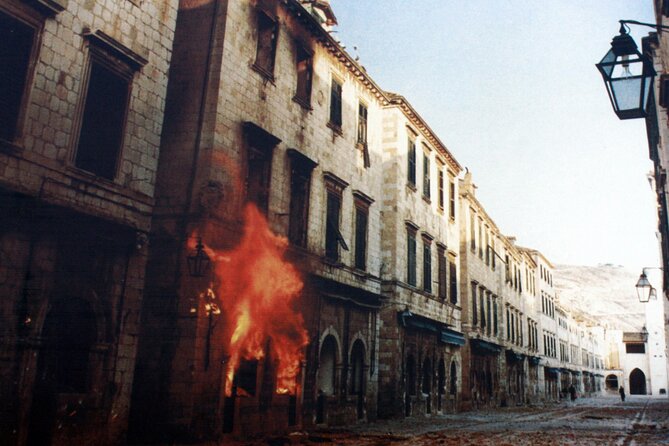
This is a guided walk through the old city that starts at Ulica Vrata od Ploča and ends near the west gate at Brsalje, by Pile Gate. It’s set up as a gradual movement across the historic core, with stop-by-stop framing so you don’t just wander.
Here’s how it typically unfolds, and why each part is worth your time.
Stop 1: Revelin Fortress (about 10 minutes)
You begin at Revelin Fortress. Even if you only spend about ten minutes here, the value is in the opening context. A good tour needs a viewpoint, and this one gives you a sense of defensive thinking from the start.
Admission is listed as free for this stop, so the cost stays focused on what’s actually included later. You’re also just getting your bearings in the old town, which helps for everything that follows.
Stop 2: Dubrovnik City Walls (about 20 minutes)
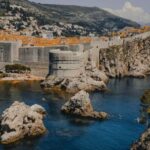
Next comes the City Walls area. This is where Dubrovnik stops being a pretty postcard and becomes a real defense system.
You’ll hear about the old city harbor and neighboring fortifications, including the Fortress of St. John and Fortifications of St. Luke, plus the Dominican Monastery. The guide’s job here is to explain why walls weren’t just for looking tough. They were the backbone for protection, movement, and survival.
Admission is also listed as free here, which means you’re paying for interpretation, not multiple ticket lines.
Stop 3: Luza Square and Sponza Palace memorial room (about 20 minutes, entrance included)
This is the emotional center of the tour.
You’ll cover Luza Square, including the Clock Tower, Small Onofrio’s Fountain, City Hall, and the Church of St. Blaise. Then you’ll go into the Homeland War Memorial Room in the Sponza Palace, where you can see videos and photos. That entrance is included.
Why this stop matters: squares and palaces are where public life happened. By placing the memorial room inside a landmark like Sponza, the tour shows you that the war wasn’t only on battlefields. It landed in everyday space.
Tip: give yourself permission to slow down here. This part is designed to be understood, not rushed.



Stop 4: Stradun (about 10 minutes)
Then you move to Stradun, Dubrovnik’s famous main street. On a normal sightseeing day, Stradun is where you take pictures. On this tour, it becomes a connector street, a way to understand how the city’s movement channels work.
It’s also a breather moment: shorter stop length, less information load, more time just to look at scale.
Stop 5: Monument of Poet Ivan Gundulic (about 10 minutes)
Next is the Monument of Poet Ivan Gundulic, plus the nearby green market, Pucic Palace, and a small fountain.
This is where the tour subtly reminds you that culture doesn’t pause during crisis. It also helps you balance the heaviness with a sense of what Dubrovnik values and remembers.
Stop 6: Rector’s Palace (about 15 minutes)
At the Rector’s Palace, you’ll hear about Dubrovnik’s government—its role as the seat of the Republic of Dubrovnik.
This is a smart inclusion for a war tour. When you understand civic structure, you understand why a city would fight to protect not just people, but institutions and decision-making.
Stop 7: Cathedral of the Assumption of the Virgin Mary (about 10 minutes)
You’ll continue to the Cathedral of the Assumption of the Blessed Virgin Mary, plus the Treasury of the Republic, the Bishop’s Palace, and Ponta Gate.
Even if you’re not a church-architecture specialist, the lesson here is practical. Religious and civic authority intertwined. That matters when you’re trying to understand how communities held together under pressure.
Stop 8: Jesuit Staircase and the Church of St. Ignatius of Loyola (about 15 minutes)
Here’s one of Dubrovnik’s most scenic segments: the Jesuit Staircase near the Church of St. Ignatius of Loyola, with views into surrounding old-city streets.
This is a good stop for photos, but also for context. The guide uses these stair streets to show how the city’s vertical design shapes movement—an important idea when you’re thinking about how people could move, hide, or reach safety.
Stop 9: Church of St Joseph (about 15 minutes)
At the Church of St. Joseph and the surrounding Placeta, you’ll be in another pocket of old streets.
This segment feels like a reset without losing momentum. You get a calmer street rhythm, plus an additional layer of the city’s religious geography.
Stop 10: Franciscan Church and Monastery (about 15 minutes)
Next comes the Franciscan Church and Monastery, plus the large Onofrio’s Fountain and the Church of the Holy Saviour.
If you’re the kind of person who likes to see how places connect, this stop is satisfying. You start to notice patterns: squares, churches, gates, and civic centers all feed into the same story about community life.
Stop 11: Pile Gate finish (about 10 minutes)
The walk ends at Pile Gate, near the St. Lawrence and Bokar Fortresses and Kolorina Bay.
This is a strong way to close because it brings you back to the city’s west-side defense story. You finish at the gate that feels like the old town’s boundary with the rest of Dubrovnik.
What’s included, what isn’t, and why that matters for value
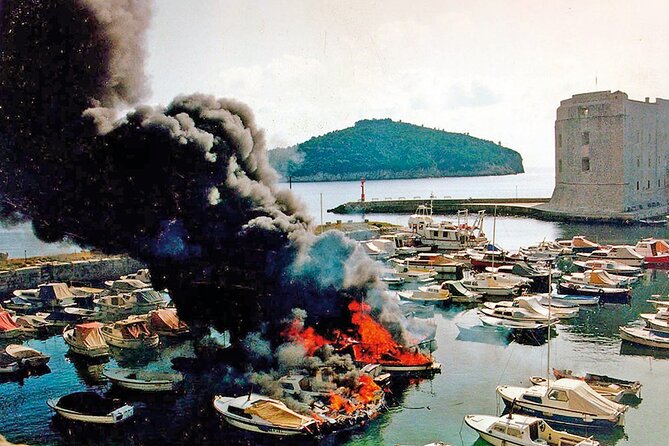
The tour costs $120.16 per person for about 2 hours 30 minutes. That’s not a low price, but it’s easier to judge once you see what you’re actually getting.
You receive:
- Professional tour guidance
- Entrance to the War Memorial Room (Sponza Palace)
You do not receive:
- Any food or beverages
- Any other personal purchases
Most of the named stops are listed as free admission, which helps keep the day from turning into a ticket-heavy checklist. In other words, you’re paying for the guide and the memorial entry, not constant add-ons.
Where this pricing tends to feel especially fair is if you’re going to spend real time in the memorial room anyway. Many city tours pass by the war element quickly. Here, the structure is built around that meaning, and the included entry avoids an extra decision on the day.
Also note: it’s offered in English, and it’s a private tour. So your money is buying your group’s pace and questions, not waiting for a large crowd’s rhythm.
The memorial room at Sponza: what you should expect emotionally
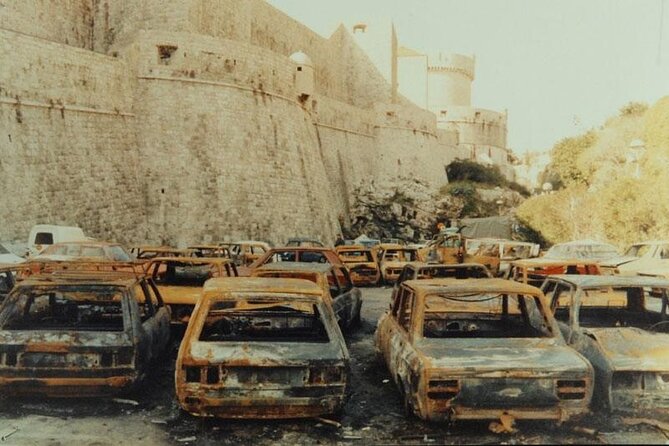
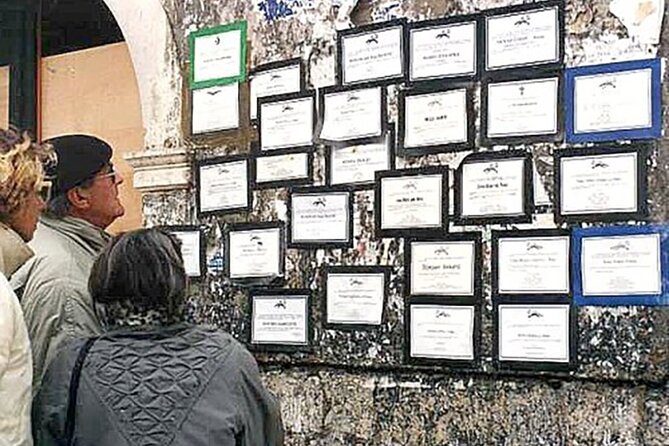
If you only remember one thing, remember this: the tour includes time inside the Homeland War Memorial Room with videos and photos.
This isn’t written off as a quick history stop. It’s positioned in Luza Square, among civic and religious anchors, which frames the war as part of the city’s public memory. That setting is important. You’re not tucked away in a museum corner. You’re still in the city’s “center of life.”
I suggest you come with a calm mindset. Ask questions if your guide offers them. And if you feel overwhelmed, that’s normal. The whole point is that Dubrovnik’s survival came with real human cost, including civilian suffering during the Croatian War of Independence (1991–1992).
Logistics that actually affect your experience
This is a private experience, meaning only your group participates. That matters because it makes the tone easier to handle. You’re not trying to hear sensitive stories over a busload of noise.
You’ll also get a mobile ticket, and the tour is marked as near public transportation, which is useful if you’re planning your day around buses or a hotel pickup.
The biggest practical note is weather. The experience requires good weather, and if it’s canceled due to poor conditions, you’ll be offered a different date or a full refund.
Finally, the walking pace is manageable on paper, but it’s still a lot of stops on uneven old-street surfaces. If you know you get tired fast, plan a lighter afternoon after.
Who this private tour suits best
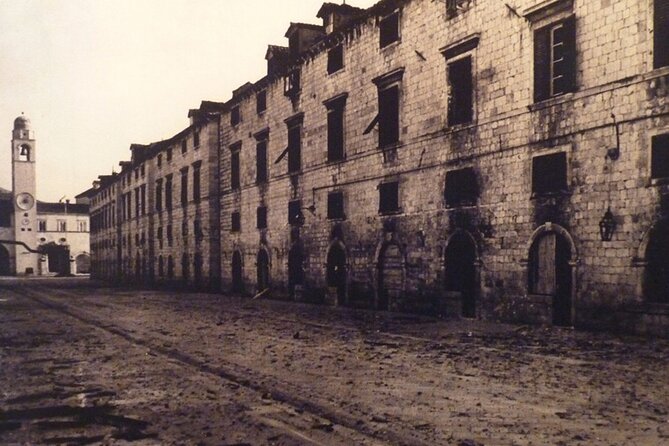
This is ideal if you want Dubrovnik that goes beyond stone-and-sun sightseeing.
You’ll likely love it if:
- You like history explained by real people, not only by facts
- You want the Homeland War in context, connected to the streets and buildings
- You’re comfortable with an emotional subject handled respectfully
It may be less ideal if:
- You want only surface-level old-town wandering
- You prefer purely scenic, low-emotion storytelling
One helpful sign from the way guides describe the experience is how it can work even for teens. If your teen can handle serious topics and asks questions, this can land in a meaningful way rather than feeling like a lecture.
When a walking tour becomes a story you can follow
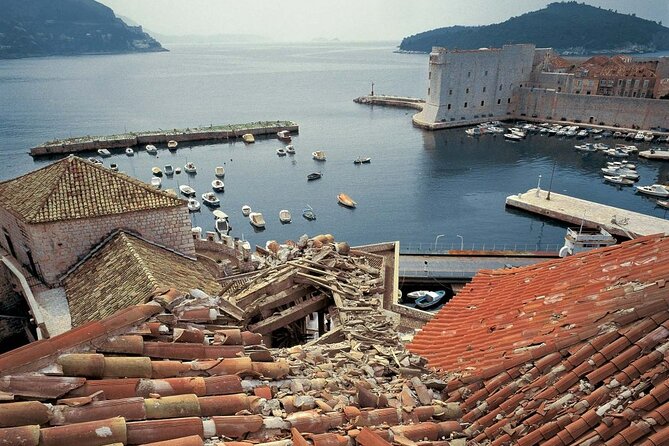
A lot of tours have a list of stops. This one has a line.
The structure is basically:
1) defensive strongpoints,
2) public centers,
3) major civic and religious buildings,
4) old-city stairways and streets,
5) wrap-up at the west gate.
That pattern helps you build a mental map while you walk. You’ll remember where things are, not only what was said.
And there’s a bonus effect: once you’ve learned what the city’s landmarks meant in crisis, your next walk through Dubrovnik feels different. You stop seeing only “cool architecture” and start seeing how design supports safety, community, and resilience.
Should you book the Dubrovnik Homeland War private tour?
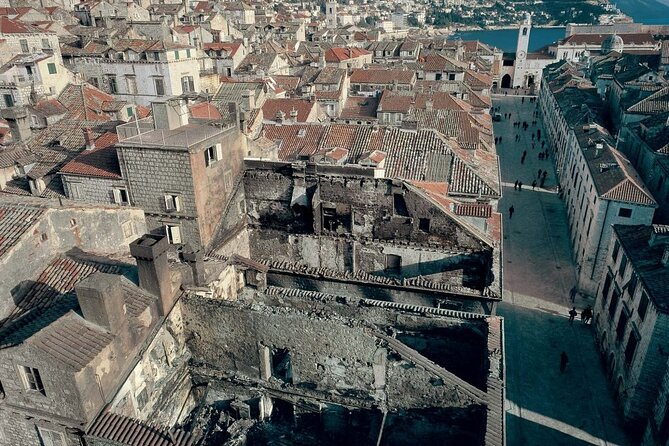
Book it if you want Dubrovnik with a conscience and a clear sense of place. At $120.16 per person, it’s priced like a guided experience that expects you’ll value context and firsthand perspective, not just sightseeing.
Skip it if you only want quick, light entertainment or if you’re uncomfortable with heavy history. Also think twice if you’re traveling with limited stamina for old-town walking.
If you do book, I’d go in with two goals:
- Listen for how the guide links the war to specific sites.
- Take your time in the memorial room at Sponza Palace, because that’s the moment the whole tour makes emotional sense.
FAQ
Is this tour private?
Yes. It’s listed as a private tour/activity, so only your group participates.
How long is the Dubrovnik Homeland War Private Tour?
It runs about 2 hours 30 minutes (approx.).
What language is the tour offered in?
The tour is offered in English.
What is included in the price?
The price includes professional tour guidance and entrance to the War Memorial Room.
What is the meeting point and where does the tour end?
The start is at Ulica Vrata od Ploča, 20000, Dubrovnik. The end is at Nautika, Brsalje ul. 3, 20000, Dubrovnik, in the area of the west gate of Pile called Brsalje.
Do I need tickets for the sights along the route?
The stops are listed with free admission except for the War Memorial Room, which is included.
What happens if the weather is bad?
This experience requires good weather. If it’s canceled due to poor weather, you’ll be offered a different date or a full refund.