REVIEW · DUBROVNIK
Dubrovnik to Tirana; Semi – Private Tour with Tour Leader & Car
Book on Viator →Operated by Choose Balkans · Bookable on Viator
Dubrovnik to Tirana feels like a fast-forward Balkans story. You get a semi-private group ride in one car, plus a real guide, as you jump borders and bounce city to city from Mostar and Sarajevo to Kotor and Kruja. It is a tour built around streets, old bridges, bazaars, and the food moments that make the region click.
What I really like is how much you pack into each stop without it feeling like a stampede. Two standouts for me: the chance to see UNESCO sites like Stari Most in Mostar and Kotor’s old town, and the way the tour brings in everyday Balkan life through markets and tastings, not just monuments.
One thing to keep in mind: this is a long-drive route. You will spend plenty of time on the road, and the tour includes breakfast but not lunches or dinners, so you’ll want a daily food budget ready.
In This Review
- Key points before you go
- The Dubrovnik to Tirana route: what you really get
- Starting in Dubrovnik at 7:00: pickup, borders, and pace
- Mostar and Sarajevo: old bridges, war marks, and Ottoman-Austria contrasts
- Blagaj and Kotor UNESCO: Ottoman springs and the confusing maze of old streets
- Budva, Sveti Stefan, and the Montenegro rhythm
- Shkoder and handmade Venetian-style masks: history you can shop
- Kosovo: Gjakova’s rebuilt bazaar and Decan Monastery’s frescoes
- Kruja: Albanian resistance, a medieval bazaar, and a castle with escape paths
- Tirana at the end: byrek, markets, and grape raki
- Price and value: what $3,433.11 is paying for
- Who this tour is best for (and who should think twice)
- Should you book the Dubrovnik to Tirana semi-private tour?
- FAQ
- How does hotel pickup work in Dubrovnik?
- What countries and cities does the trip cover?
- What’s included in the cost?
- Are meals included besides breakfast?
- What language is the tour in?
- How many people are in the group?
- Can I cancel or change the booking?
Key points before you go
- Up to 10 people: you get small-group attention without the high cost of a full private driver
- Hotel pickup in Dubrovnik at 7:00: they’ll shuttle you to a border handoff since cars can’t reach all streets
- A Sarajevo coffee stop: Turkish coffee or tea at Caffe Divan is included
- Ottoman-to-Austrian Sarajevo contrast: markets, mosques, churches, and synagogues in one walk
- Kosovo culture stops: the rebuilt bazaar in Gjakova plus Decan Monastery’s frescoes
- Tirana food tour: byrek, market wandering, a traditional meal, and grape raki
The Dubrovnik to Tirana route: what you really get
This is the kind of trip where you watch countries change as the car moves. One day you’re tracing Ottoman architecture and war-era scars in Bosnia; the next you’re walking UNESCO stone alleys in Montenegro; then you’re shopping crafts in Kosovo and ending in Tirana with food and market chaos (the fun kind).
Because it is semi-private, your guide can slow down when you’re curious and keep things moving when you’re not. The max group size (up to 10) matters more than people think. With a full bus, you’d lose half your questions to the crowd noise.
You can also read our reviews of more tours and experiences in Dubrovnik.
Starting in Dubrovnik at 7:00: pickup, borders, and pace
Your day starts early: the pickup is at 7:00 am in Dubrovnik. If you’re staying inside older lanes, cars may not be able to enter, so you’ll be collected from the nearest reachable point and then taken to the border. That handoff approach is practical. It saves time and avoids the common headache of trying to route a car through tight historic streets.
The tour also asks for moderate physical fitness, especially because Sarajevo includes walking on uneven terrain and visits to ruins. Wear shoes you can trust on cobbles and stone steps. You’ll thank yourself by the third day.
Mostar and Sarajevo: old bridges, war marks, and Ottoman-Austria contrasts
Day 1 is built for instant payoff. You cross into Bosnia & Herzegovina and head straight to Mostar.
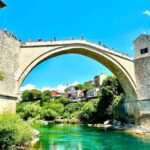
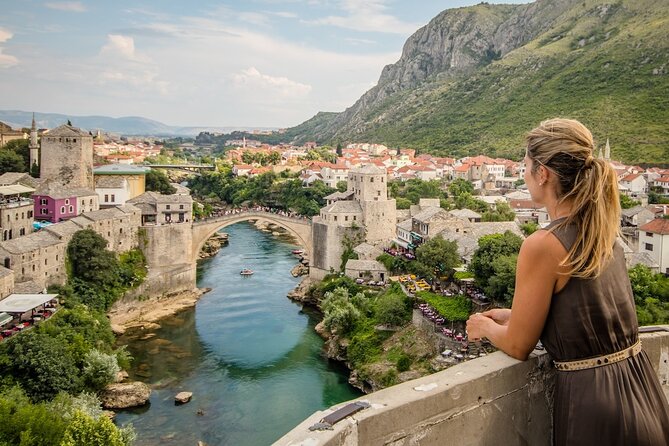
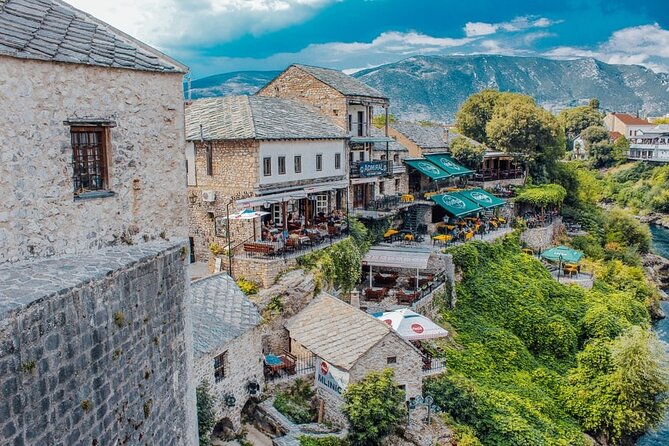
At Stari Most (Old Bridge), you’re not just looking at a famous postcard view. You’re standing in a UNESCO site built in the 16th century with an Islamic architectural style, and the whole area feels like it was designed for wandering. Then the Old Bazaar adds texture: colorful streets, lively atmosphere, and the Ottoman-era street feel you don’t get from modern centers. There are also memorial reminders around town, including stones marked with Don’t Forget.
You also stop at Bišćevića Kuća (Biscevic House), a well-preserved example of Ottoman residential architecture from the 17th century. This is the kind of stop that makes history feel like daily life: riverside rooms, the scale of wealthy Ottoman households, and an easy sense of how the neighborhood used to function.
Day 2 shifts to Sarajevo, and the tone changes. You still get Ottoman and Austria-Hungarian parts of the city—markets, bazaars, mosques, churches, and synagogues—but the walk includes reminders of the Yugoslav War like bullet holes and cannon marks. It’s not one of those sanitized “historic city” tours. You’re seeing how history is still visible in the stone.
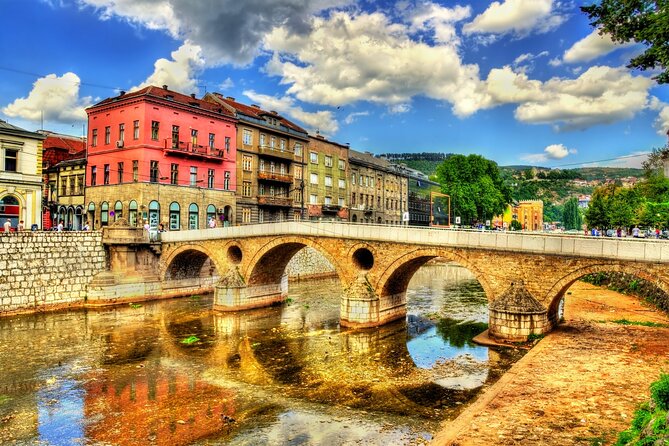
You’ll also visit the Latin Bridge and hear the story of how WWI was triggered there. Then you get a genuinely useful break at Caffe Divan, where Turkish coffee or tea is complimentary. After hours of walking, that sit-down is where the tour turns from information into something you can actually remember.
Blagaj and Kotor UNESCO: Ottoman springs and the confusing maze of old streets
Day 3 is one of my favorite combinations because it gives you nature and then a dramatic historic setting.
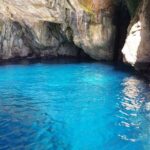
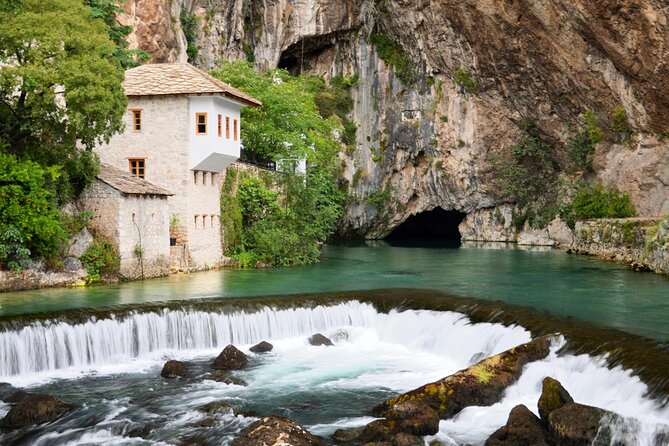
First is Blagaj, just outside Mostar. It’s described as an Ottoman medieval town built at the base of a cliff, facing the blue waters of the river Buna. Even if you only spend an hour, this is the stop that helps your brain reset after war-focused Sarajevo.
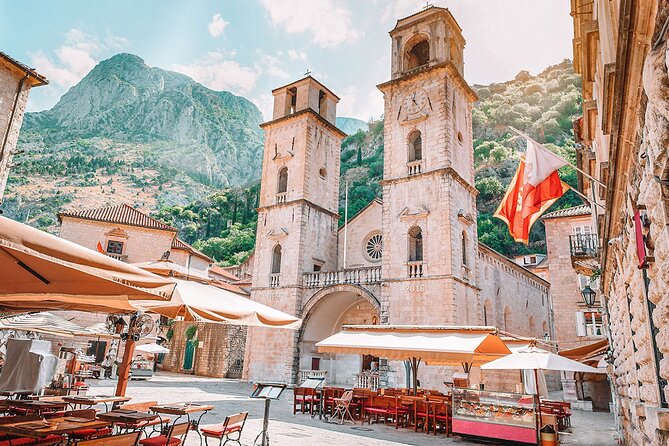
Then you drive to Kotor (UNESCO) in Montenegro. The old town layout is famous for feeling chaotic on purpose—tight lanes that were designed to confuse intruders. It’s a clever idea you can actually feel while walking. You’ll also visit Saint Luke’s church, important to locals because it represents unity. After the guided part, you get time to explore Kotor on your own, which is key here. The streets are the attraction.
Budva, Sveti Stefan, and the Montenegro rhythm
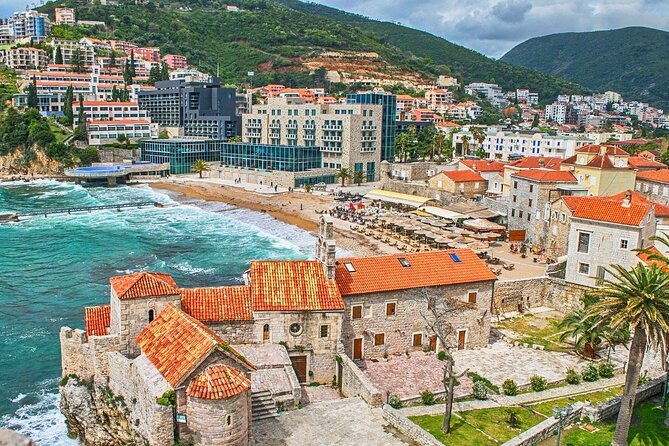
Day 4 starts in Budva, where the city splits neatly into old and new. You’ll see the modern side with offices, shopping, and restaurants, but the tour spends its sightseeing time in Old Budva too, including Saint Ivan Church and the medieval feel of the old center.
This is also a good day for photos, because you make a stop near Sveti Stefan. The view is the point. The island itself isn’t accessible anymore because it has turned into an exclusive residential resort, but from the coast you still get a postcard moment.
Then comes the border to Albania and the first big stop of the Albanian north.
Shkoder and handmade Venetian-style masks: history you can shop
In Shkoder, you focus on Rozafa Castle, with scenery over the lake and where rivers meet toward the Adriatic. You’re also told to expect Venetian influence in the architecture. If you like places that feel layered instead of single-style, this fits.
Then you get a hands-on cultural stop at the Venice Art Mask Factory. This is one of those visits that isn’t just watching from behind a rope. You see how papier-mâché masks are made and painted by hand, inspired by Venetian traditions and carnival styles. If you like souvenirs that feel like craft instead of mass production, this is where you should spend time.
Kosovo: Gjakova’s rebuilt bazaar and Decan Monastery’s frescoes
Day 5 and Day 6 both lean into Kosovo’s cultural weight, and the tour handles it well by mixing crafts, food, and religious art rather than only pushing big landmarks.
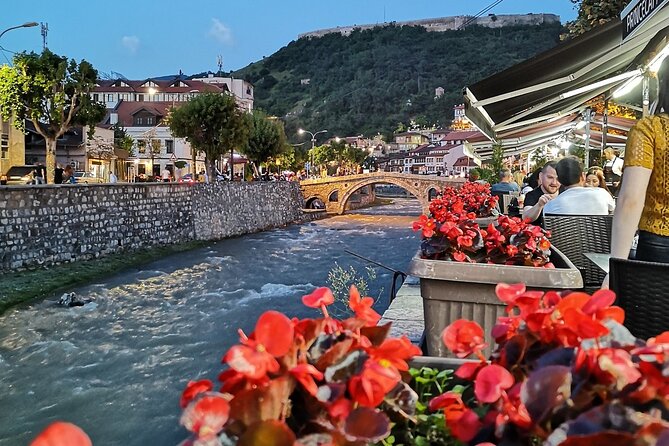
In Prizren, you get the city vibe first. It’s known as the cultural capital of Kosovo, and you walk in a way that highlights religious tolerance and architecture shaped by Byzantine and Ottoman influence. If you’re there in the right season, the tour mentions Dokufest in August. Even outside that window, the city’s structure—with the river running through the old town and bridges cutting across—makes it easy to understand why Prizren became a meeting point.
Then you visit the Sinan Pasha Mosque, known for its colored arabesque patterns. This is a shorter stop, but it’s worth it because the art detail is the point.
After that, there’s a fortress stop with views: Kalaja Fortress gives you a panorama over town. You get a free afternoon afterward, which is smart. It lets you return for photos or shop at your own pace.
The Kosovo day in Day 6 adds the emotional depth. You start in Gjakova, home to the oldest and largest bazaar of Kosovo. It was destroyed in multiple conflicts and rebuilt to its older state. Walking it now means you’re seeing resilience, not ruins. If you want gifts that look like they came from hands, this is where you might spot traditional handmade crafts in artisan workshops.
Then you go to Decan Monastery, a UNESCO site since 2004 for frescoes depicting 14th-century life and the Palaeologan renaissance. The tour also notes that Orthodox monks still inhabit the monastery and make fresh organic foods such as cheeses. Even if you don’t buy anything, it adds a real-world sense of continuity.
Finally, you head to Rahovec, the viticulture area in the Prizren region. The tour frames it as a place where grape cultivation traces back to Illyrian times, with hills at about 350–520 meters that support quality wine production. There’s also an annual wine festival in September, though your visit timing decides whether you catch it.
Kruja: Albanian resistance, a medieval bazaar, and a castle with escape paths
Day 7 focuses on Kruja, a key symbol of Albanian resistance against Ottoman expansion in the 15th century. It’s a mountainous town about 560 meters above sea level, and the terrain makes the story easier to picture.
You’ll spend time in the Medieval Old Bazaar, with wooden houses and narrow lanes. This is one of the best practical shopping moments of the trip, especially for handmade souvenirs like carpets and jewelry.
Then comes Kruja Castle. The tour notes it dates to the 5th century and sits high on a rocky hill for defense. The guide also shows hidden paths used by locals to leave without being noticed when enemies surrounded the castle. Even if you don’t remember every detail, the idea sticks: this wasn’t a passive fort. People lived with it, fought around it, and worked around it.
You also get free time for lunch and more exploring in town. Since lunches aren’t included in the price, this is a good spot to choose something you’ll actually want to eat, not what’s easiest.
Tirana at the end: byrek, markets, and grape raki
Day 8 is a satisfying finish because it’s about food and everyday life, not another border.
You start with Tirana, and then the day turns into a real local eating rhythm. The tour includes a stop for byrek—thin layered dough filled with options like cheese, meat, or spinach—at a small local place. Then you head to Çam bazaar, where you can browse goods and bargain.
After that, you move toward Pazari i Ri, known for second-hand goods. This is one of those experiences that can be surprisingly fun if you like practical shopping: clothes, random useful items, and the joy of hunting for something that fits your taste.
Then you finish at the New Bazaar area for a traditional Albanian meal plus Albanian grape raki. The tour frames this as the end-of-trip ritual, and it works. You’ll feel like you just earned a celebratory sip after a week of walking and driving.
Price and value: what $3,433.11 is paying for
This price is high, no way around it: $3,433.11 per person for an ~8-day route. But you’re not just buying transport. You’re buying a tight routing across multiple countries, plus guided time in major historic places.
Here’s where the value shows up:
- Transport + professional tour leader for the full stretch, not only individual city walks
- Hotel stay with breakfast (BB on all overnights)
- Several included experiences, like the Sarajevo Ottoman coffee/tea, key included attraction entries, and the full Tirana food portion
- A small group size (max 10) that keeps the experience closer to a guided road trip than a cattle-call
Where you should be realistic:
- Meals beyond breakfast are not included. Since the itinerary is packed, you’ll spend extra day-to-day on lunch and dinner. Plan for it so the price doesn’t feel more painful later.
- You’ll want to enjoy historic towns and markets. If you’re chasing beaches every day, you’ll likely wish you had more time in Montenegro’s coast and less time on driving days.
Who this tour is best for (and who should think twice)
I’d point this tour toward you if you want:
- A high-contrast Balkans sampler without booking separate trips
- A good mix of UNESCO sights and daily-life stops like bazaars and monasteries
- A guided structure that includes food moments (Sarajevo coffee, Tirana byrek and meal)
I’d think twice if:
- You hate long driving days and early starts
- You need lots of downtime every afternoon
- You want every meal included in the price
Should you book the Dubrovnik to Tirana semi-private tour?
If you’re the type who loves old streets, bridges, churches and mosques, and you’re okay paying for convenience, this is a strong choice. The combination of guided history and food-led stops is the real selling point, and the small group size helps the guide keep things human.
If you do book, do one thing that makes the week easier: bring a realistic money plan for lunch and dinner. Then pack comfortable shoes and expect a lot of movement. You’ll come away feeling like you traveled through the Balkans, not just around it.
FAQ
How does hotel pickup work in Dubrovnik?
Pickup starts at 7:00 am from your hotel area in Dubrovnik. You’ll be collected from the nearest point, because cars may not enter some parts of Dubrovnik Town, then shuttled toward the border for your tour leader handoff.
What countries and cities does the trip cover?
The route starts in Dubrovnik, then includes Mostar and Sarajevo (Bosnia & Herzegovina), Kotor and Budva (Montenegro), Shkoder (Albania), Prizren, Gjakova, Decan, and Rahovec (Kosovo), Kruja (Albania), and ends in Tirana (Albania).
What’s included in the cost?
Transport, a professional tour leader, hotel nights with breakfast (BB), tourist and road taxes and petrol, Dubrovnik town pickup, one Ottoman style coffee or tea in Sarajevo, and the Tirana food tour are included.
Are meals included besides breakfast?
Breakfast is included on the 7 breakfasts listed. Lunches, dinners, drinks, and snacks are not included, except for the food tour elements in Tirana (and the Sarajevo coffee or tea).
What language is the tour in?
The tour is offered in English.
How many people are in the group?
The maximum group size is 10 travelers.
Can I cancel or change the booking?
This experience is non-refundable and cannot be changed for any reason. If you cancel or ask for an amendment, the amount you paid will not be refunded.