REVIEW · ZAGREB
Explore Zagreb: A Guided Walking Tour of the City Centre
Book on GetYourGuide →Operated by Folow me · Bookable on GetYourGuide
Zagreb in 90 minutes feels surprisingly complete. This guided walk turns big-city sights into a sensible route, starting at the Well of Life and then weaving through key squares, the Upper Town, and the market area. I especially like how the tour mixes famous stops (St. Mark’s Square, Dolac, Zagreb Cathedral) with smaller moments you might miss on your own, and that it’s led by a licensed Croatian-and-English guide. One possible drawback: it’s a lot of footwork over uneven old-town streets, so if you’re not used to walking, plan for slower pacing.
What I think makes this tour work for real trip days is the flow. You start in the city’s cultural core, shift to the historic power center, then end where you can easily keep exploring on your own from Ban Jelačić Square. If you’re hoping for a ride-through highlights tour, this is more of a guided on-foot story of the city’s layout and traditions.
In This Review
- Key things to notice before you go
- Why This 90-Minute Zagreb Walk Is a Smart First Day
- Starting at the Well of Life by the Croatian National Theatre
- Republic of Croatia Square: Where Arts, Learning, and Culture Cluster
- Nikola Tesla and Petar Preradović Square: Big Ideas, Local Hangouts
- Uspinjača and Lotrščak Tower: Medieval Defense With a Daily Noon Story
- St. Mark’s Square: The Government Core and St. Mark’s Colorful Roof
- Stone Gate, Candles, and the Bloody Bridge Between Kaptol and Gradec
- Dolac Market and Zagreb Cathedral: Where Daily Life Meets Gothic Detail
- The Model of Old Zagreb and the Easy Walk Finish at Ban Jelačić Square
- Price and Value: Is $23 Worth 90 Minutes of Guided Walking?
- Who This Tour Suits Best (and Who Might Want a Different Day)
- Should You Book This Guided Walking Tour?
- FAQ
- How long is the Zagreb guided walking tour?
- How much does the tour cost?
- Where does the tour start?
- What are the main stops during the walk?
- What language is the guide available in?
- Is this a small group tour?
- What does the tour include?
- How long do we spend at St. Mark’s Square?
- Is there free cancellation?
- What is the meeting point called again?
Key things to notice before you go
- Meeting at Ivan Meštrović’s Well of Life at the Croatian National Theatre sets the tone fast.
- St. Mark’s Square tells you how Zagreb ruled itself, with Parliament, the Government buildings, and the church roof symbols.
- Lotrščak Tower is timed to a daily tradition, including the story of the Grič cannon that fires at noon.
- Stone Gate and the candles for the Virgin Mary connect old architecture to local devotion.
- Dolac Market and the Zagreb Cathedral give you the city’s everyday life plus its sacred centerpiece.
Why This 90-Minute Zagreb Walk Is a Smart First Day
This is the kind of tour that helps you get your bearings fast. You’ll move through the city’s layers in a logical sequence: cultural squares, the government center, then the old-town approach, and finally the market and cathedral viewpoints. By the time you reach Ban Jelačić Square, you’ll know which streets to follow for cafés, photos, and a second round on your own.
The other big value is the guide’s structure. Instead of random facts, you get explanations tied to where you’re standing—so landmarks stop being names and start being part of a working map. And since the group is small, it’s easier to ask questions and get straight answers while you’re still there.
One practical consideration: the tour lasts about 90 minutes, which means you’ll see a lot, but you won’t linger for long at every stop. If you love long museum-style pacing, treat this as your orientation and save extra time for follow-up visits later.
You can also read our reviews of more walking tours in Zagreb


Starting at the Well of Life by the Croatian National Theatre
Your tour kicks off in front of the Croatian National Theatre at the sculpture called the Well of Life, created by Ivan Meštrović. This is a good start point because it’s a recognizable landmark, and it instantly gives you Zagreb’s “public art meets grand civic space” vibe.
From here, you begin at Trg Republike Hrvatske—the cultural heart of the city—so early on you’re surrounded by buildings tied to education and arts. The guide’s job is to connect the architecture to the city’s identity, not just read a plaque. That makes your next steps feel intentional instead of like you’re simply walking from one tourist spot to another.
If you arrive early, this is also a great area to get your first wide-angle photos before the tour fills in. You’ll already be thinking about the route, which makes the rest of the walk smoother.
Republic of Croatia Square: Where Arts, Learning, and Culture Cluster
On Trg Republike Hrvatske, you’ll get a short guided orientation around the surrounding institutions—like the University building, the Academy of Music, and the Museum of Arts and Crafts. Even if you don’t plan to enter any of them today, it helps to understand what makes this square feel like a cultural center rather than just an open space.
This is where you learn to read Zagreb’s civic planning. Squares aren’t only about views; they’re about how people gather, where education takes place, and how arts institutions anchor a neighborhood. Once you understand that, you start spotting similar logic in the next areas you walk through.
A small tip: wear shoes that handle stone and small curbs. You’ll be on streets that look simple from a distance, but they can be uneven underfoot.
Nikola Tesla and Petar Preradović Square: Big Ideas, Local Hangouts
Next you head toward the statue of Nikola Tesla, where the guide shares details about his life and his groundbreaking contributions. Even if Tesla is a familiar name, the fun is hearing it connected to Zagreb’s street-level storytelling—he’s not tucked away in a museum here; he’s part of your walk.
Then comes Flower Square, officially Petar Preradović Square. This is a favorite gathering spot for locals, with flower stands and cafés that give you an immediate sense of everyday Zagreb. The tour’s value here is contrast: you move from a “science legend moment” to a “morning-and-afternoon life” moment without feeling like the tour forgot what real life looks like.
If you’re a photographer, this stop is where you’ll likely want to pause for a few extra shots. The square’s street life gives you context for how the city feels, not only how it looks in postcards.
Uspinjača and Lotrščak Tower: Medieval Defense With a Daily Noon Story
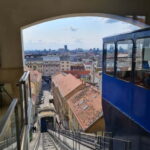
As you continue toward the historic Upper Town, you pass by Uspinjača, a key point on the route upward. Even if you don’t take a ride, it helps you understand the city’s vertical logic: Zagreb has neighborhoods that feel like they sit on different levels, and the walk connects those layers.
Then you arrive at Lotrščak Tower, a medieval defensive structure. Here you’ll hear the story of the Grič cannon, which fires daily at noon. The cannon tradition gives you a timeline you can remember: Zagreb doesn’t just preserve history as décor; it keeps certain moments alive in the present.
If your tour timing doesn’t line up with noon, you might not witness the actual firing. Still, the explanation makes the tower feel active instead of frozen. And if your schedule does match, you’ll have a memorable moment to anchor the rest of your Upper Town exploration.
You can also read our reviews of more guided tours in Zagreb


St. Mark’s Square: The Government Core and St. Mark’s Colorful Roof
One of the best parts of the tour is reaching St. Mark’s Square, where you see the seat of Croatian governance in a concentrated area. The guide points out the Croatian Parliament, the Government building, and St. Mark’s Church—and the church’s roof is the star.
You’ll learn about the iconic roof, famous for its colorful depiction of Croatia’s historical coats of arms. That roof is the kind of detail you might never notice if you were walking alone. With the guide’s explanation, it becomes a visual lesson in political history and identity.
This stop is also valuable because it teaches you how to recognize power and symbolism in a city layout. Zagreb’s Upper Town isn’t just scenic; it’s functional, with institutions built close together so the political center stays readable even to someone new.
Practical note: this area can be busy when tour groups overlap. The small-group format helps, and your guide’s pacing keeps you moving so you don’t lose time waiting.
Stone Gate, Candles, and the Bloody Bridge Between Kaptol and Gradec
After St. Mark’s Square, the tour shifts deeper into the old-town feel with the Stone Gate. You’ll see it described as the only preserved entrance to the old town, which instantly makes it more than just another archway. A preserved gateway is like a historical seam in the city’s fabric—you can almost feel the boundary where old Zagreb began.
Right near the gate, you’ll learn about the candle tradition tied to the painting of the Virgin Mary, Zagreb’s patron saint. That’s the kind of local detail that changes how you look at a landmark. It’s not just architecture; it’s ritual and meaning for people who live with that symbolism every day.
Then you walk toward the Bloody Bridge, a historic conflict site between Kaptol and Gradec. Even if you only catch the essentials, the story helps you understand why Zagreb’s districts developed the way they did. It’s a reminder that cities grow through tension and negotiation, not only through art and commerce.
And once you cross into the lower stretch, Tkalčićeva Street opens up with cafés, restaurants, and shops—perfect for easing out of the Upper Town mood.
Dolac Market and Zagreb Cathedral: Where Daily Life Meets Gothic Detail
The tour brings you to Dolac Market, Zagreb’s best-known market area. This is where you’ll actually feel the city’s rhythm—fresh products, market activity, and the sense that locals come here for real errands, not just photos.
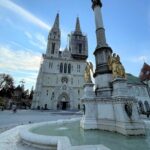
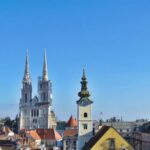
Overlooking Dolac is the Zagreb Cathedral, and the tour connects the market to the bigger landmark view. You’ll hear about its Gothic architecture and also about restoration after a recent earthquake. That restoration detail matters because it explains why the cathedral is both a historic anchor and a living building that has needed care.
If you’re worried that a market stop will feel short, don’t be. The tour uses Dolac as a viewpoint into the city’s daily habits. You’re not shopping for a week; you’re learning what the city smells and looks like in everyday use.
If you want to extend the experience afterward, Dolac is a natural place to grab a quick snack. It’s also a convenient spot to slow down after the walking push toward the Cathedral.
The Model of Old Zagreb and the Easy Walk Finish at Ban Jelačić Square
Before ending, you visit a model of old Zagreb. This is a smart closing move because it turns the route you just walked into a broader understanding of how the city developed. When you can see the city’s layout in miniature, you start remembering connections between places—especially the contrast between old gates, squares, and the market area.
Finally, the tour ends at Ban Jelačić Square, Zagreb’s main square and central meeting point. This matters because it lets you keep your trip flexible. After the tour, you’re already in the place where it makes sense to branch out: cafés, side streets, and more wandering.
If you only have one day in Zagreb, ending at Ban Jelačić Square is a practical win. You can stay close to transit and main walking routes, instead of being dropped off somewhere inconvenient.
Price and Value: Is $23 Worth 90 Minutes of Guided Walking?
At $23 per person for about 90 minutes, the value comes from three things: a licensed guide, a tight walking route, and explanation-rich stops. You’re not paying for transportation or tickets; you’re paying for guided orientation across multiple major city zones.
For many first-timers, this is the most efficient way to understand Zagreb’s structure without spending the whole day researching. A market stop plus political square plus cathedral viewpoints is a lot to pack into 90 minutes, and the guided narration helps you make sense of it as you go.
Also, small group size helps keep it interactive. When you can ask a question at the place where it matters, you retain more—and your self-guided follow-up days feel easier.
Who This Tour Suits Best (and Who Might Want a Different Day)
I think this tour fits best if you want a first-day framework and you like learning while walking. It’s a strong match for couples, solo travelers, and anyone who wants to see major landmarks without overthinking the route.
It’s also a good choice if you enjoy specific storytelling—Tesla’s contributions, the Grič cannon tradition, the meaning behind the Stone Gate candles, and the symbols on St. Mark’s Church roof.
If you dislike walking on uneven streets, or if you need long rest breaks, you may find the pace a little intense for a single session. In that case, consider pairing this with more relaxed, shorter outings afterward rather than stacking too many plans.
Should You Book This Guided Walking Tour?
Book it if you want a guided “map in motion.” You’ll get a clear path through Zagreb’s core zones, from the cultural square area to the government center, then down to the market and cathedral views, finishing at Ban Jelačić Square so you can keep going.
You should also book if you care about context—why St. Mark’s Square matters, what the Stone Gate symbolizes, and how everyday places like Dolac connect to Zagreb’s bigger landmarks. And if you like small-group tours with real interaction, this format is built for that.
If you’re only in Zagreb briefly and you want the best chance of seeing the right things in the right order, this is a solid first step.
FAQ
How long is the Zagreb guided walking tour?
The tour lasts about 90 minutes.
How much does the tour cost?
The price is $23 per person.
Where does the tour start?
It starts in front of the Croatian National Theatre at the Well of Life.
What are the main stops during the walk?
You’ll pass through Republic of Croatia Square, see the Nikola Tesla statue, visit Flower Square, go to Lotrščak Tower, explore St. Mark’s Square, stop at the Stone Gate, walk past the Bloody Bridge, visit Tkalčićeva Street, and spend time at Dolac Market and the Zagreb Cathedral area, before finishing at Ban Jelačić Square.
What language is the guide available in?
The live guide speaks Croatian and English.
Is this a small group tour?
Yes, the tour is designed with small group sizes for a more personalized experience.
What does the tour include?
It includes a 1.5-hour walking tour with a licensed local guide (Croatian and English) and all fees and taxes.
How long do we spend at St. Mark’s Square?
The guided tour at St. Mark’s Square is about 15 minutes.
Is there free cancellation?
Yes, you can cancel up to 24 hours in advance for a full refund.
What is the meeting point called again?
The meeting point is the Well of Life sculpture.