REVIEW · ZAGREB
Zagreb: City and WWII Tunnels Walking Tour
Book on GetYourGuide →Operated by pathfinder TOURS d.o.o. · Bookable on GetYourGuide
Zagreb has an underground side most cities hide. This 2.5-hour walk lines up Zagreb’s core landmarks with WWII-era tunnels and a short ride on the world’s smallest funicular, then tops it off with big views from Grič Hill. I especially like the way it mixes postcard scenes with the kind of local details you only learn from a live guide. The one catch is that the funicular is closed for renovation until March 2026, and both the tunnels and the funicular don’t operate on certain dates.
For me, the two biggest wins are the “see it, then understand it” flow and the practical pacing: you get city-center walking, market time, and a hilltop payoff without feeling dragged around. The WWII tunnel stop is a standout because it makes Zagreb’s story feel physical, not museum-shaped. The main drawback to plan around is that weather isn’t the issue—closures and operating dates are—so check what’s running when you go.
In This Review
- Key Highlights You’ll Actually Feel During the Walk
- How This Tour Works: 150 Minutes, Big Zagreb Context
- Starting at the Meteorological Station: Easy Meet-Up, Clear Orientation
- Zrinjevac Park to Bogovićeva Street: Zagreb’s Pretty Entrance
- Ban Jelačić Square and Zagreb Cathedral: The Center of Gravity
- Dolac Farmers Market: Zagreb’s Everyday Side
- WWII Tunnels in Zagreb: The Story Moves Below Ground
- Grič Hill Views and the Small Funicular Ride (When Operating)
- Lotrščak Tower, St. Mark’s Church, and Stone Gate: Upper Town Icons in Sequence
- Tkalčićeva Street for a Snack Break and Local Energy
- Price and Value: What $14 Buys in Zagreb
- Weather, Timing, and the One Real Planning Headache
- The Guide Factor: Humor, Storytelling, and Practical Tips
- Should You Book This Zagreb City and WWII Tunnels Walk?
- FAQ
- How long is the Zagreb: City and WWII Tunnels Walking Tour?
- Where does the tour start, and where is the meeting point?
- How much does the tour cost?
- Is the tour wheelchair accessible?
- What language is the tour guide?
- Does the tour run in bad weather?
- Is the funicular ride included?
- Is the WWII tunnel stop always available?
- Is food and drinks included?
Key Highlights You’ll Actually Feel During the Walk
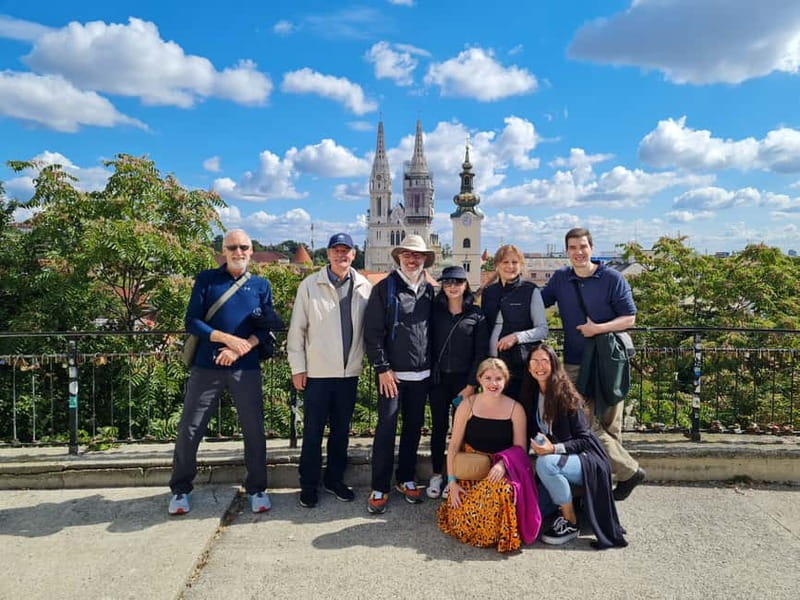
- Zrinjevac Park photo stop that sets the tone for your Zagreb orientation fast
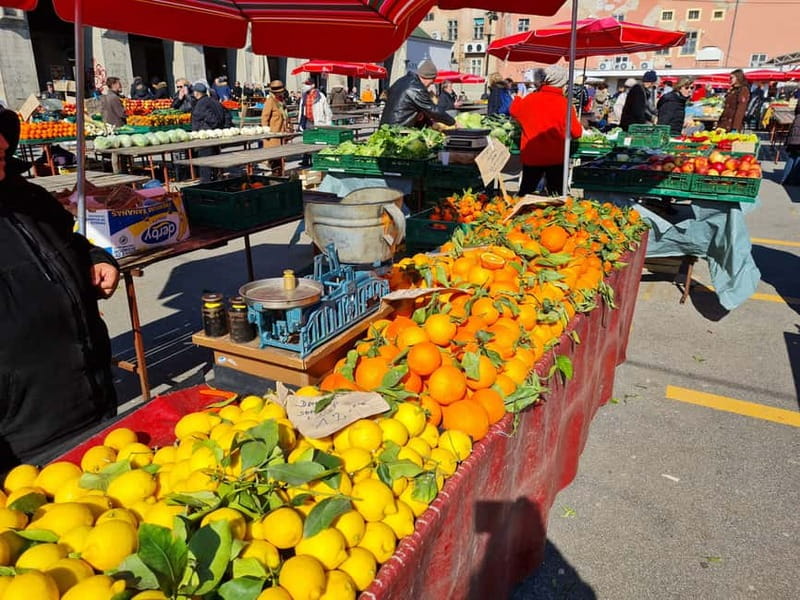
- Dolac Market stop for a real sense of how the city lives, not just how it looks
- WWII tunnels in the city center, tying landmarks to events that shaped modern Croatia
- Smallest funicular ride (when operating) for an efficient hop up to Grič Hill
- Gradec panoramic views from above, especially helpful if it’s your first day in Zagreb
- Historic upper-town sights like Lotrščak Tower, St. Mark’s Church, and Stone Gate in one loop
How This Tour Works: 150 Minutes, Big Zagreb Context
This isn’t a “check the boxes” route. It’s built like a guided story: you start in the city’s most recognizable public space, walk through the old streets and squares that define the center, then shift gears underground for WWII-era survival history. After that, you climb by funicular (when operating) and use the viewpoints to stitch everything together visually.
At 150 minutes and $14 per person, it lands in the sweet spot between a casual stroll and a long day tour. You’re paying for a licensed guide, plus the funicular ticket when it’s running. That matters, because the sights are closer together than you’d think, and the value is in how the guide connects them.
If you’re the type who likes to know what you’re looking at, you’ll get more out of the walk than if you only care about photos. And if you’re traveling solo or as a small group, the experience often feels relaxed—some departures have been as small as a few people—so you can ask questions without a crowd vibe.
You can also read our reviews of more tours and experiences in Zagreb.
Starting at the Meteorological Station: Easy Meet-Up, Clear Orientation
You meet in front of the Meteorological station at Trg Nikole Zrinskog 2. That’s helpful because it’s a central, identifiable landmark—no wandering around side streets trying to match a vague description on a phone.
From the start, the route is designed to give you quick orientation. You begin in the kind of space locals use as a daily backdrop, not a place reserved for tourists. Then you move outward in a logical arc: park and promenades, then squares and cathedral area, then market, then tunnels, and finally uphill views and back down toward café streets.
This matters on your first day. Zagreb can feel compact, but the city has layers: lower town energy, then upper-town history on the hill. The tour helps you map those layers in your head without having to study a guidebook for days.
Zrinjevac Park to Bogovićeva Street: Zagreb’s Pretty Entrance
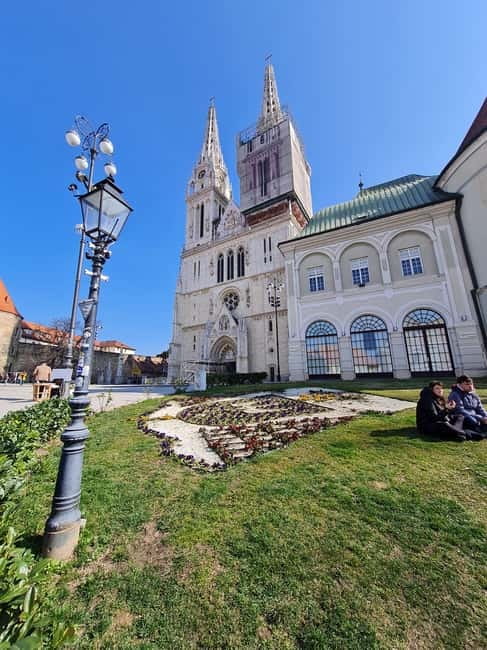
The tour starts at Zrinjevac Park, and yes, it’s exactly the kind of place you’ll want for selfies. It’s a relaxed introduction that makes the rest of the walk easier because you’re not instantly moving at full speed.
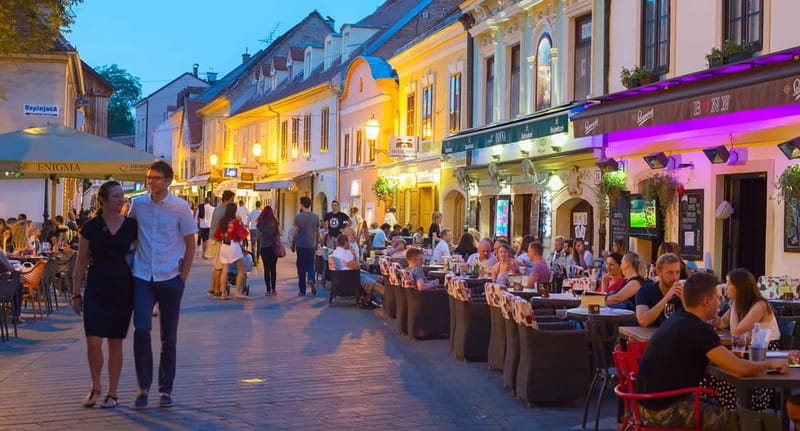
After that, you head to Bogovićeva Street, known for bars and restaurants. This is more than a fun street name. It gives you a feel for Zagreb’s social rhythm—where people go when they want something casual, warm, and close to home.
I like this setup because it doesn’t jump straight to monuments. You get atmosphere first, then the buildings start making sense in context. If you’re planning where to eat later, you’ll already have a street-level sense of what the area is like.
Ban Jelačić Square and Zagreb Cathedral: The Center of Gravity
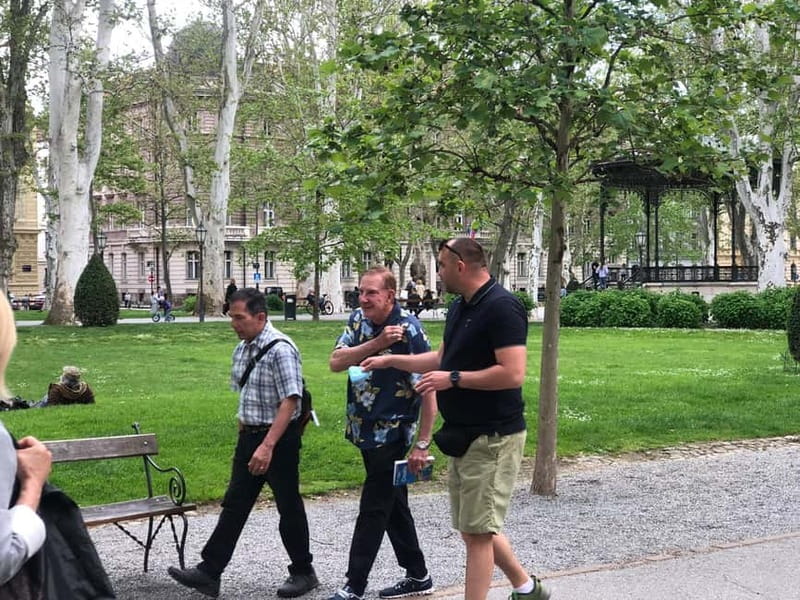
Next comes Ban Jelačić Square, Zagreb’s big public hub. This is the kind of place where you can feel the city’s pulse even if you don’t speak the language. The walk then continues to the Zagreb Cathedral, a stop that helps ground your understanding of how Zagreb’s central identity formed.
Why I like this part: a cathedral visit works best when it’s placed in a wider route, not isolated. Here, it’s one of several landmarks that the guide ties back to the city’s layout and history. So instead of just seeing architecture, you learn why it’s positioned where it is and what it signals about the city.
The potential drawback is simple: if you’re visiting during times when certain sites are closed (damage from earlier events has affected some spaces in the past), your exact experience can shift. The walking tour stays focused on the core route, but indoor access and specific photo angles can vary.
Dolac Farmers Market: Zagreb’s Everyday Side
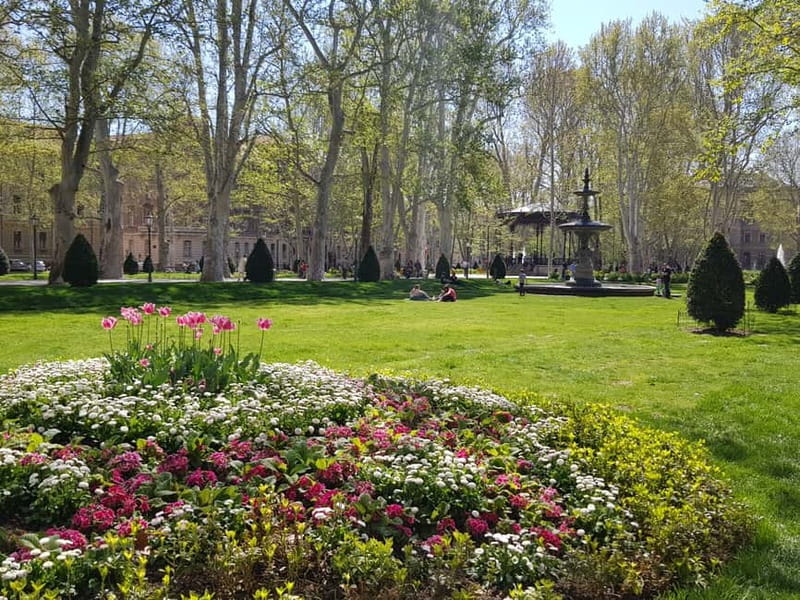
After the cathedral area, you reach Dolac Farmers Market. This is one of those stops that changes the whole feel of a “landmarks-only” tour, because markets tell you what a city values day-to-day.
You’ll get a guided look that helps you see more than stalls. Think of it as an introduction to the city’s taste and routine. You also gain practical knowledge for later, because market areas often point you toward nearby places to snack, buy food, or simply understand local preferences.
This stop is also a good reset. You’re walking outdoors in the open air, and then the market gives you a moment where you can slow down, ask questions, and observe. It’s an efficient way to add texture to the tour without extending the time.


WWII Tunnels in Zagreb: The Story Moves Below Ground
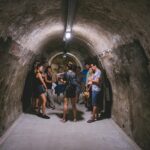
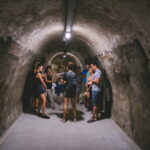
Then the tour shifts to WWII tunnels. This is the emotional center of the itinerary, the part that makes the history feel immediate. You’re walking through the leftovers of an era when cities had to plan for survival in concrete ways.
What I find useful as a visitor is how this stop changes the meaning of everything you’ve seen above ground. Squares, churches, and street corners suddenly feel tied to something bigger than aesthetics. The guide’s role matters here: without explanation, tunnels can feel like a dark detour. With context, they become a living timeline.
A practical note: the tunnels don’t necessarily operate on every date, and they also depend on current operating schedules. So if WWII tunnels are your main reason for booking, you’ll want to confirm availability for your specific day.
Grič Hill Views and the Small Funicular Ride (When Operating)
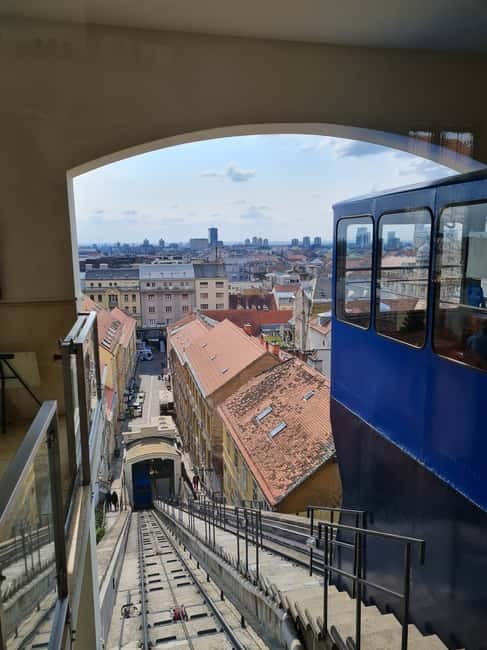
From the tunnel area, you move toward the funicular and Grič Hill. The ride is short—just a couple of minutes—but it’s famous for a reason: it’s described as the smallest funicular in the world. When it’s running, it’s a convenient shortcut that also turns the climb into something you can enjoy instead of grind.
At the top, you reach Gradec (the upper town) and get the panoramic payoff. This viewpoint is the moment when Zagreb starts to look like a layered city instead of a flat map. You can connect the upper-town sights you’re about to see with the streets you walked earlier.
Important planning detail: the funicular is closed for renovation until March 2026. If you’re traveling after that date, you may have a normal ride. If you’re traveling before then, expect the day to adjust if the operator keeps the ride closed. The tunnels and funicular can also shut down on certain dates, so it’s worth confirming what’s actually included for your day.
Lotrščak Tower, St. Mark’s Church, and Stone Gate: Upper Town Icons in Sequence
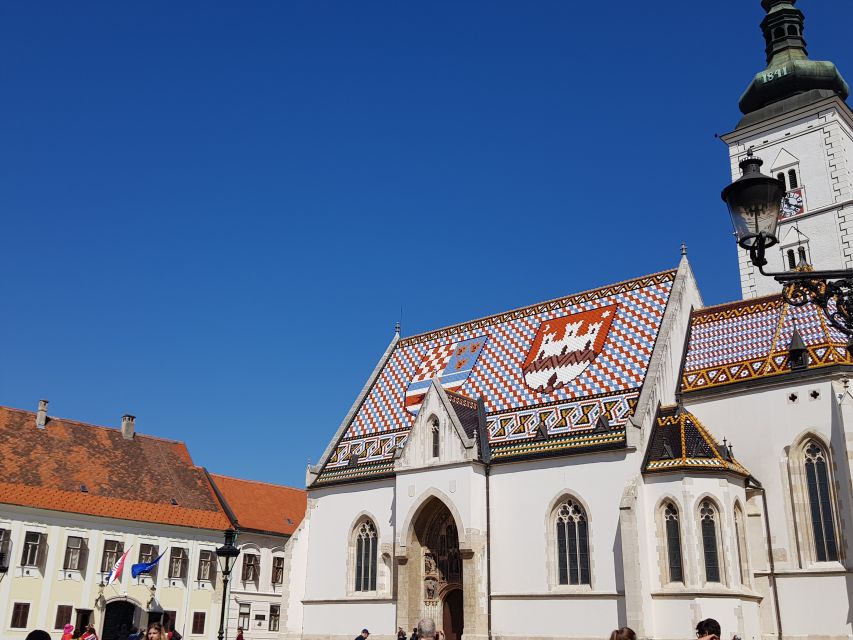
From Gradec, the tour covers a run of upper-town landmarks: Lotrščak Tower, St. Mark’s Church, and the Stone Gate. This sequence is smart because it keeps your brain in “upper town mode” long enough to absorb details.
Lotrščak Tower is a photo-worthy stop, and it’s also the kind of place where timing can add an extra moment. On some departures, guides have been able to line up the walk so you can catch a cannon moment from the tower area, if the schedule aligns.
St. Mark’s Church is one of those sights people recognize instantly, even from far away. Here, you’ll get guided attention to help you notice what tourists often skip. The Stone Gate is a nice counterbalance—less famous than the church, but useful for understanding the city’s old defensive logic and entry points.
If your goal is to get your bearings quickly, this cluster of icons is the payoff section. You get the “wow” sights, and you also learn how they connect to the city’s hilltop layout.
Tkalčićeva Street for a Snack Break and Local Energy
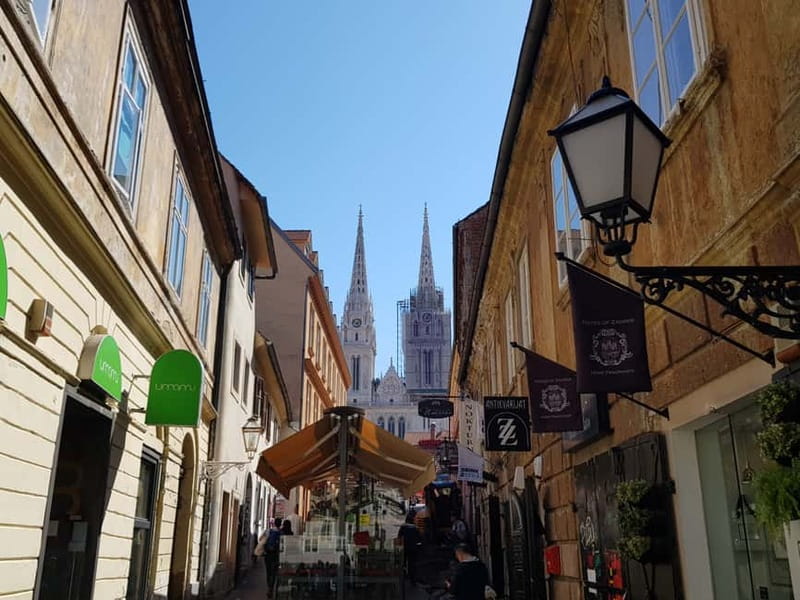
Next you descend toward Tkalčićeva Street, one of the most well-known bar-and-restaurant stretches in central Zagreb. The tour doesn’t pressure you into buying anything, but it sets you up to choose where to pause for a snack or a drink afterward.
This is where the walking tour stops feeling like a school lesson and starts feeling like a travel upgrade. You’ll leave knowing which streets have the most easy options nearby, and you won’t need to guess as much when hunger hits.
The tour ends back at Ban Jelačić Square, which is a practical finish. It’s central, it’s easy to navigate from, and it gives you a clean handoff back into self-guided exploring.
Price and Value: What $14 Buys in Zagreb
At $14 per person for 150 minutes, you’re paying for three things: a licensed guide, a structured route, and (when operating) the funicular ticket. Most self-guided Zagreb walks cost less on paper, but you don’t get the context that makes the city click. Here, the price is low enough that it’s easy to justify on a first day.
The value improves if it’s your first time in Zagreb, because the tour helps you understand where the upper town starts and why the city feels like it has two faces. If you already know Zagreb well, you might feel you’re repeating some surfaces, but the tunnels and Gradec views still carry weight.
Also remember: food and drinks aren’t included. That’s not a problem, but it changes how you should budget if you plan to make a meal of your market stop or your bar-street pause.
Weather, Timing, and the One Real Planning Headache
This tour runs in all weather conditions, which is great for flexibility and not great for “I only want to walk when it’s perfect outside.” Bring appropriate layers for the conditions you’re facing, because the route is outdoors for a big chunk of the experience.
The real planning headache is operations. The funicular is closed until March 2026, and both the WWII tunnels and the funicular do not operate on certain dates. That doesn’t mean the tour is useless—walking parts still cover major sights—but it does mean you should check what your day will include.
If the tunnels are a must-see for you, choose a date when they’re listed as operating. If the funicular ride is a must-see, same rule. The tour is built around both, so closures can reduce the “full loop” feel.
The Guide Factor: Humor, Storytelling, and Practical Tips
One reason this tour earns consistently high marks is the guide style. Many past groups have had guides such as Robert, Marko, Marin, Marco, Zrinka, Eva, Iva, and Goran, and the pattern in their approach is clear: friendly delivery, humor, and real local context. It’s not just dates and names. The best moments are when the guide points out what to look for and explains why it matters.
I also like that the route encourages questions. Multiple departures have been described as paced with regular regrouping stops, plus time near the end for extra recommendations. That means you’re not stuck only with the itinerary. You get a small boost of planning energy for the rest of your Zagreb stay.
If you want to leave with more than photos—like which area to explore next, where to eat nearby, or what to notice when you see a building again—this guide format fits that goal.
Should You Book This Zagreb City and WWII Tunnels Walk?
Yes, if you want an efficient first-day orientation that includes both city highlights and WWII-era underground history. It’s also a strong choice when you’re short on time but still want Zagreb to feel like more than a list of monuments.
I’d think twice if your dates fall during periods when the tunnels and/or funicular aren’t operating, especially if the funicular ride is central to your plan. And if you dislike walking for any reason, this one still may be fine because the total time is set, but it’s still a walking tour, so you’ll want to be comfortable moving outdoors.
Overall, for $14 you’re buying structure, story, and a hilltop viewpoint that ties the whole city together. If you’re heading to Zagreb soon, this is the kind of tour that helps you explore the rest of the city with better context.
FAQ
How long is the Zagreb: City and WWII Tunnels Walking Tour?
The tour lasts 150 minutes.
Where does the tour start, and where is the meeting point?
Meet us in front of the Meteorological station (Trg Nikole Zrinskog 2).
How much does the tour cost?
The price is $14 per person.
Is the tour wheelchair accessible?
Yes, it is listed as wheelchair accessible.
What language is the tour guide?
The guide offers a live English tour.
Does the tour run in bad weather?
Yes, it operates in all weather conditions.
Is the funicular ride included?
A ticket for the funicular ride is included when it is operating.
Is the WWII tunnel stop always available?
No. The WWII tunnels and the funicular do not operate on certain dates, and the funicular is closed for renovation until March 2026.
Is food and drinks included?
No, food and drinks are not included.