REVIEW · SPLIT
Experience Split With Local Professional Historian – Private
Book on Viator →Operated by Pomalo tours · Bookable on Viator
Split’s old stone tells stories fast. This private, 2-hour guided walk links the Golden Gate, Diocletian’s Palace, and the city’s main squares into one easy-to-follow storyline. You get a local professional historian, a tight route, and tools like 3D reconstructions that help you picture what Roman Split looked like when the city was new.
I especially like the guide quality here: the historian has a master’s degree in history, and the format is built for questions and real explanations, not just facts. I also like that the walk keeps moving while still pausing at the important spots you’d otherwise miss—Golden Gate, Peristyle, the cellars area, and the viewpoints over religious buildings like Jupiter’s Temple and St. Domnius.
One consideration: it’s a short, mostly “see-and-learn” route rather than a long museum day, and the tour notes that no admission tickets are included. Also, the schedule runs in the early evening on weekdays, so plan your other Split plans around a start window (you’ll want to be ready when the meeting time comes).
In This Review
- What makes this Split history tour worth your time
- Entering from Golden Gate: the quickest way to understand Split
- Gregory of Nin statue: more than a photo stop
- Palazzo di Diocleziano: the Roman backbone under your feet
- Peristyle and the palace center: where power meets everyday movement
- Jupiter’s Temple and St. Domnius: religion you can see from the street
- From the emperor’s private entrance to Split’s promenade
- Fruit Square and Pjaca: how the city centers its life
- Timing, pace, and how to fit it into your day
- Price value: what $156.21 per group really buys you
- Who this tour suits best (and who might want something else)
- Should you book this private Split history walk?
- FAQ
- Where does the tour start?
- Where does the tour end?
- How long is the experience?
- Is the tour offered in English?
- Are admission tickets included?
- What is included besides the guide?
- When is the tour available?
- Is cancellation free if plans change?
What makes this Split history tour worth your time
- A master’s-degree historian leads the walk, with room for questions and story-based context.
- 3D reconstruction visuals help you understand palace rooms and layers of the city that are hard to read just by looking.
- A smart, compact route: Golden Gate to Peristyle, then cathedral and promenade, finishing at Pjaca (People’s Square).
- Mostly outdoor viewing at big religious landmarks, so you can keep the pace even if you don’t want long indoor stops.
- Private group format (only your group), with flexible starting time if you coordinate ahead.
Entering from Golden Gate: the quickest way to understand Split
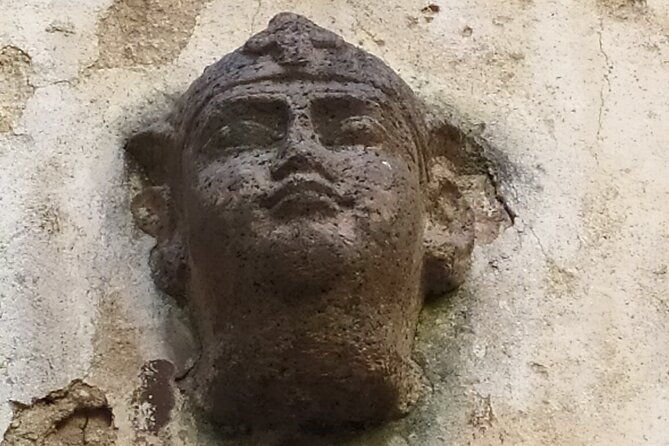
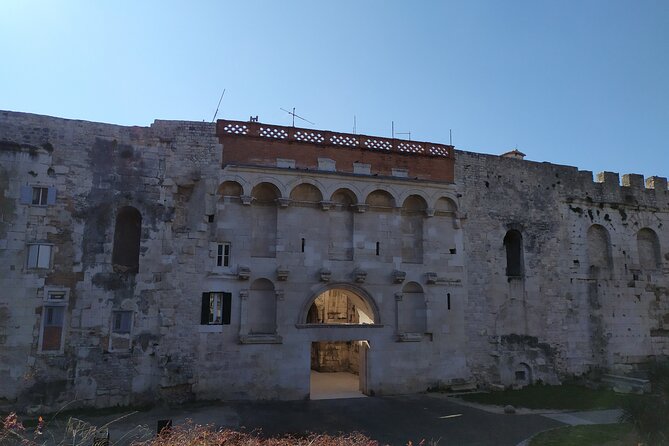
The tour starts at the Golden Gate (Dioklecijanova 7), the northern gate of Diocletian’s Palace. It isn’t gold in real life—just stone, like the rest of the place—but the name matters because it signals importance. From here, you’re in the right mental frame: Split isn’t just a “pretty old town,” it grew inside Roman walls.
The guide uses the gate as a reference point and connects it to what you’ll see almost immediately afterward—especially the nearby monument of Gregory of Nin. If you like history that feels connected rather than random, this opening works well. You get orientation fast: where the palace began, how entrances shaped movement, and why this area became one of the most recognizable parts of Split.
Practical tip: Golden Gate is a perfect first stop because you can get your bearings before you start weaving through the palace streets and courtyards. If you’re arriving late or jet-lagged, starting here helps you keep track of the story.
You can also read our reviews of more tours and experiences in Split.


Gregory of Nin statue: more than a photo stop
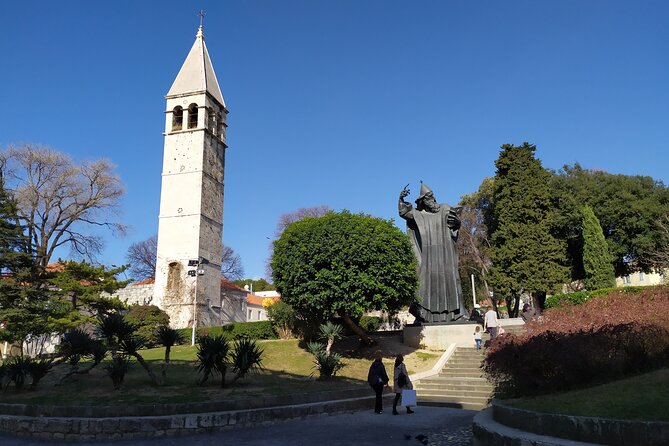
Right after the gate, you’ll head to the Grgur Ninski (Gregory of Nin) Statue. This is where the tour leans into the human side of Split. The guide explains who Gregory of Nin was, why he mattered to local identity, and what’s behind the statue itself—including details about the sculptor and the monument’s status as one of Split’s major memorials.
What I like about stopping here is that it prevents the tour from becoming only about emperors and architecture. Roman Split matters, yes, but medieval and later Split left its own marks too. Gregory of Nin functions like a bridge: you go from the Roman defensive structure to a later figure who shaped the culture of the city.
Watch for this: the setting is right across from other major landmarks, so the guide can point out how Split’s meaning changes depending on where you stand. Even in a tight 2-hour route, that’s valuable.
Palazzo di Diocleziano: the Roman backbone under your feet
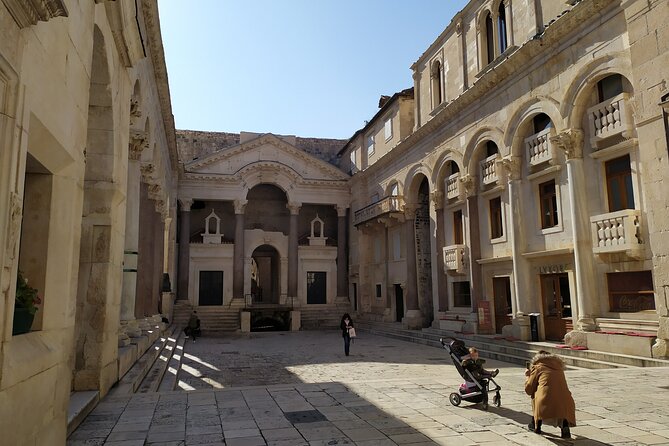
Next comes Diocletian’s Palace, the main city monument in the center of old Split and one of the best-preserved examples of its kind. The historian frames Diocletian not as a distant name from a textbook, but as a ruler whose decisions still shape how the city feels today.
You’ll cover the palace elements that give you the clearest “map of meaning,” including:
- Peristyle (the central open space)
- Jupiter’s Temple (outside)
- Diocletian’s Cellars (central substructure area)
- Triclinium (the dining area)
- Mausoleum/Cathedral of St. Domnius (outside)
The pacing is designed for comprehension. The guide doesn’t just point and move on; the narration ties each place to what life was like in the palace, then what happened when the Roman world gave way to later city life. That shift—from palace complex to medieval city functions—is one of the most useful ideas to take away. You start to see the old stones not as a fixed Roman scene, but as a living space that kept getting re-used.
One smart addition: you’ll also see 3D reconstruction images and pictures via a display book. If you’ve ever tried to read ruins with your own eyes, you know how easy it is to guess wrong. These visuals make it easier to understand what you’re seeing now versus what existed in Roman times.
Peristyle and the palace center: where power meets everyday movement
The Peristyle of Diocletian’s Palace is the kind of space you can feel before you fully understand it. You stand in the central spot of the palace and learn what it was for: a place that connected people, but also separated them from the emperor. That idea hits harder once you’re standing there, because you can visually see how movement and sightlines work.
The guide also explains how the area functions in the palace’s “story of change,” including how the expansion of Christianity affected the palace buildings over time. That’s key for Split: religious history isn’t just something you read later—it’s built into the stone and the reuse of spaces.
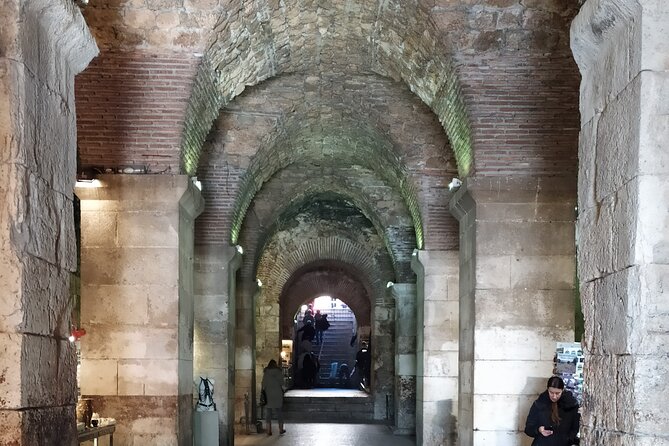
From Peristyle, the tour continues toward the central part of the cellars area where the guide talks about how those spaces were used through history, and how they matter to Split today. Then you check in on the Triclinium, and this is where the tour turns practical. You learn about eating habits of Roman emperors and Romans in general, and how the emperor’s dining room was organized. It’s a reminder that these are not just impressive walls; they were built for routines—food, ceremony, and power.
If you’re the type who likes layout and logistics, this section will be a highlight. The palace design stops being abstract.
Jupiter’s Temple and St. Domnius: religion you can see from the street
The tour includes two major religious landmarks, and both are handled in a way that’s easy to fit into a short walking experience.
First is the Temple of Jupiter, viewed from outside. The guide explains why religion mattered so much in the Roman Empire and what Jupiter’s Temple represents in that system. Standing outside helps keep things moving, and it also keeps the focus on the bigger idea: Roman residences were built with religious structure in mind.
Then you reach the Cathedral of Saint Domnius, again from outside. The historian points out significant parts and explains the story behind them. Importantly, you also get a heads-up about interior details worth noticing if you decide to visit on your own after the tour. That’s helpful because you don’t have to commit to extra time right then. You can decide later based on your energy and interest.
If you want an all-in church-and-art afternoon, this tour won’t replace that. But if you want context so you understand what you’re looking at when you do visit, it’s a good fit.




From the emperor’s private entrance to Split’s promenade
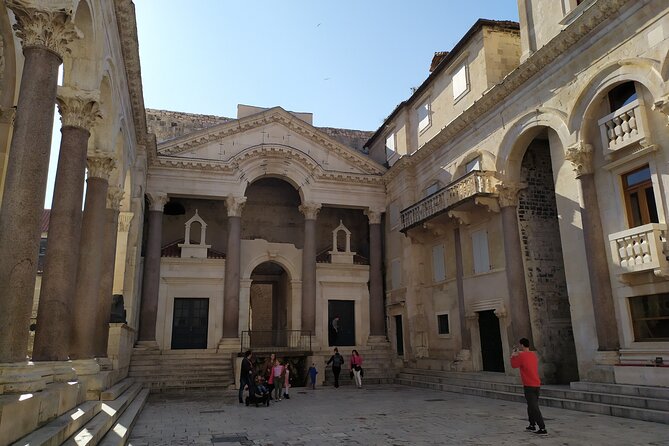
Next comes a less obvious stop with a lot of meaning: the Vestibulum of Diocletian’s Palace. This is the pre-entrance to Diocletian’s private chambers. The guide explains its function and why the decor matched its importance. In other words, even the “waiting area” had status built into it.
Then the tour shifts outward into the city with Riva Harbor, Split’s main promenade. The guide connects how Riva was built across centuries to how locals actually use it. That transition—from imperial space to everyday waterfront life—is one of the cleanest moments in the itinerary. You stop thinking only like a Roman palace visitor and start thinking like a modern city walker.
If you’re planning photos, keep in mind that Riva is also where you’ll naturally slow down. It’s a good place to regroup before the tour finishes at the squares.
Fruit Square and Pjaca: how the city centers its life
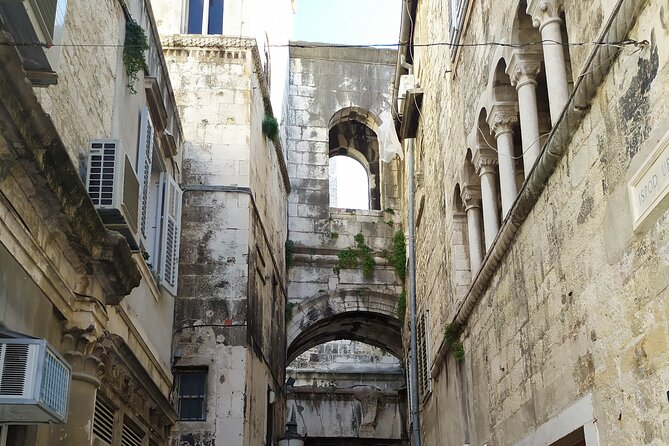
Your last stretches go through the small-but-meaningful corners that help Split feel like a real place rather than a historical set.
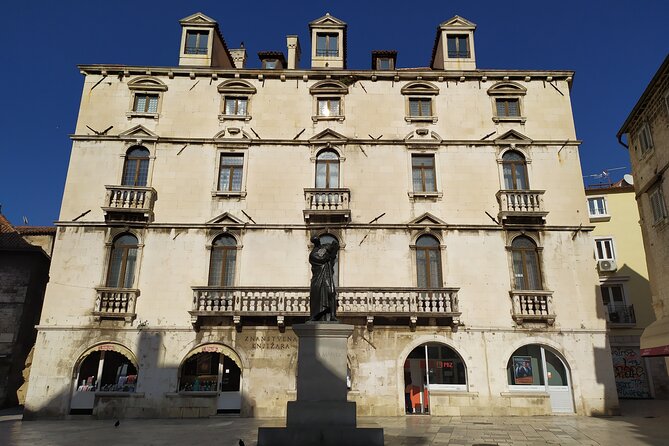
At Fruit’s Square (Trg Brace Radic), you’ll learn why the square is called Fruit Square and what monument sits in the middle. You also get a sense of how the surrounding buildings contribute to the atmosphere and local focus.
Then you end at Pjaca (People’s Square), also known as Pjaca/Piazza. The guide explains why this square has been the center of city happenings from medieval times to today, and you learn stories tied to the square and nearby buildings like the old city hall area.
Ending at Pjaca is a smart finish because it drops you right into the center of everything: easy for a post-tour wander, easy for finding a next stop for dinner, and easy to navigate onward through the old town.
Timing, pace, and how to fit it into your day
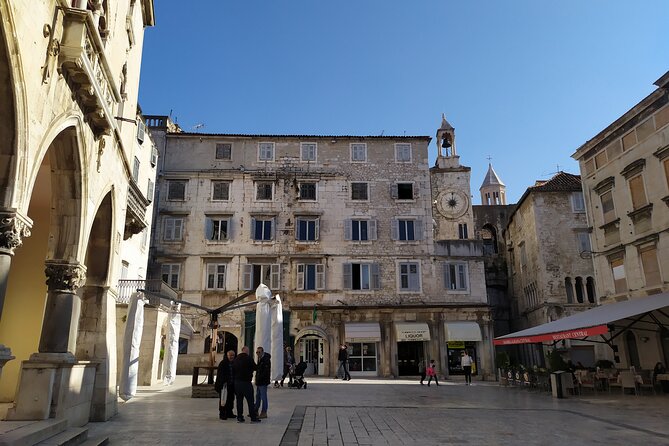
The tour runs for about 2 hours and uses short stop durations, so it works even if you’re seeing Split at a fast pace. The itinerary includes multiple stops around 10–20 minutes each, which keeps your attention from fading while still giving enough time for explanations.
It’s also offered in English and uses a mobile ticket. That matters because it reduces friction: fewer pieces to manage, less time figuring things out on the day.
Another practical detail: the tour has a flexible starting time, but it’s scheduled within opening hours (Monday–Friday from 5:00 PM to 7:00 PM). If your days run late, this can be a good thing. If you want a morning museum-style start, you’ll need to plan around the provided time window.
Good weather is required. That’s not a small detail in Split old town—stone streets, open spaces, and the palace areas all feel better when the weather behaves.
Price value: what $156.21 per group really buys you
The price is $156.21 per group (up to 15). That’s the big value lever here: you’re not just paying for information, you’re paying for a private format that can be cost-effective for families or small groups. In practice, it can work out much better than a per-person sightseeing fee if you have 2–6 people sharing the cost.
What you’re getting for that money is a trained historian with a history master’s degree, plus the 3D reconstruction visuals that make the palace easier to interpret. You’re also getting a tight route that covers the palace core and multiple key landmarks without needing separate planning.
One caution: the tour says no admission tickets are included, even though the itinerary lists the stops as free of admission tickets. So treat it like this: the experience is designed so you can walk through and learn without buying extra entry tickets for each stop, but don’t count on any ticket coverage being included in the package purchase.
If you want to add interior visits after the tour—especially inside landmarks the guide mentions—then you’ll need to handle those separately.
Who this tour suits best (and who might want something else)
This Split Diocletian’s Palace private tour is ideal if you:
- want Roman + medieval context in a short timeframe
- enjoy architecture explanations that connect to daily life (not only dates)
- like asking questions and getting direct answers in English
- want help interpreting ruins using 3D reconstructions
It may be less ideal if you:
- want long indoor museum time as the main event
- prefer self-guided wandering with no guided narrative
- are hoping for a ticketed, fully ticketed deep-dive into interiors (since the package states no admission tickets included)
If you’re someone who likes your sightseeing organized but not exhausting, this tour’s pacing and stop choices work well.
Should you book this private Split history walk?
I think it’s a strong booking when you want the core meaning of Split without losing hours. The combination of a history master guide, a compact route through Diocletian’s Palace, and the added 3D reconstruction support is the kind of setup that turns old stones into an actual story.
Book it if you’re visiting Split for the first time, you want to understand why certain gates and squares matter, and you like to see how Roman power transitioned into later city life. Skip it if you already know the Diocletian palace layout well and your main goal is paid museum-style interiors—this tour is structured more around orientation and interpretation than long ticketed visits.
One last tip: wear comfortable shoes and plan this tour as an anchor for your old-town evening. Ending at Pjaca sets you up to keep exploring while the stories are still fresh.
FAQ
Where does the tour start?
The tour starts at Golden Gate (Dioklecijanova 7, 21000, Split, Croatia).
Where does the tour end?
The tour ends generally at People’s Square, known as Pjaca (Narodni trg 16, 21000, Split, Croatia).
How long is the experience?
It lasts about 2 hours.
Is the tour offered in English?
Yes, it’s offered in English.
Are admission tickets included?
No admission tickets are included in the experience price. The tour description also indicates admission ticket free for each stop, so you should expect to be able to view key areas without ticket purchases, but the package itself does not include tickets.
What is included besides the guide?
The tour includes a local guide with a master’s degree in history, and 3D reconstruction images and pictures shown via a display book. You also receive a mobile ticket.
When is the tour available?
The listed opening hours are Monday to Friday from 5:00 PM to 7:00 PM.
Is cancellation free if plans change?
Yes. You can cancel for a full refund up to 24 hours in advance of the experience start time. If the tour is canceled due to poor weather, you’re offered a different date or a full refund.