REVIEW · ROVINJ
Explore Charms of Rovinj – Private Guided Walking Tour
Book on Viator →Operated by Opatrip.com US LLC – Local Tours in Croatia · Bookable on Viator
Rovinj looks best when you walk it. This private guided stroll pairs iconic hilltop views with photo-ready old-town lanes, and you also get solid local context on how Rovinj grew into a sea town. I love the way the route mixes big sights like St. Euphemia with smaller details like pastel church façades and carved arch faces. I also like that the pace gives you time for quick food and shop stops, not just standing in front of buildings. One thing to keep in mind: the meeting point can be a little tricky to find if you don’t pin it on Google Maps first, which can squeeze your time.
In about two hours, you’ll cover the oldest parts of Rovinj on foot without the stress of transfers or complicated logistics. And since it’s a private tour, your guide can answer your questions and adjust stops if you want more time near the viewpoints.
If you’re visiting Rovinj for the first time, this is a friendly way to get your bearings fast and learn what to look for as you explore on your own afterward.
In This Review
- Key highlights worth your attention
- What $367.25 buys you in a 2-hour private walk
- Before you go: where the tour starts and why it matters
- The walking route: how this tour actually feels
- Stop 1: Church of Our Lady of Health and the story in the façade
- Stop 2: St. Euphemia Church for the climb and the view
- Stop 3: Ulica Grisia, the artist street that earns its fame
- Stop 4: Batana Eco-Museum stories from the outside
- Stop 5: Balbi’s Arch and the carved faces of history
- Stop 6: Rovinj Heritage Museum in the Califfi family palace (outside)
- Stop 7: Ulica Vladimira Švalbe, the street that leads your eyes to the sea
- What to do with your extra time after the tour ends
- Who this tour fits best
- What I’d watch for before booking
- Should you book Charms of Rovinj?
Key highlights worth your attention
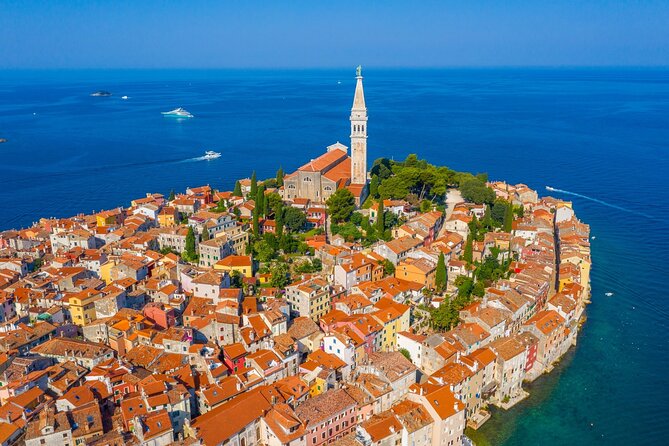
- Hilltop payoff at St. Euphemia with a viewpoint from the bell tower area
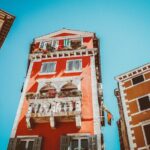
- Baroque details at the Church of Our Lady of Health, including pastel façade work
- Grisia Street’s artist vibe, known for fine arts events that bring people from across the region
- Batana Eco-Museum stories, with Batana fishing-boat history and UNESCO-protected context (outside visit)
- Balbi Arch carvings, where a Turk head and a Venetian head share the same structure
- Ulica Vladimira Švalbe to the sea, often photographed for its straight-to-the-water look
What $367.25 buys you in a 2-hour private walk
At $367.25 per person, this isn’t a budget “see it all” deal. But for a private guided walking tour in Rovinj, it can be good value if you care about context, not just photos. You’re paying for a local professional guide, a tight 2-hour route, and the ability to move at a human pace.
Here’s the math that matters: Rovinj’s old town is compact, but the details are where it gets interesting. A good guide helps you spot what’s worth your attention, explains why certain buildings matter, and saves you from wandering without a plan. This tour’s stops are chosen for that purpose, from churches with strong façade identity to viewpoint moments that make the climb feel worth it.
The tour is also built for comfort. You’re walking, it’s described as eco-friendly, and it’s offered in English. Most people can participate, which makes it a smart pick for couples and small groups who want a classic Rovinj experience without overcomplicating the day.
You can also read our reviews of more tours and experiences in Rovinj.


Before you go: where the tour starts and why it matters
The tour starts at Adriatic Hotel by Maistra Collection, Obala Pina Budicina 16, Rovinj and ends at Ulica Vladimira Švalbe.
Why I’m stressing this: one review mentioned that the meeting point was hard to find and locals didn’t immediately know it. The good news is that the meeting point instructions are now specified and updated. Still, I’d treat meeting time like a meeting with a train connection. Arrive a few minutes early, and before you leave your hotel, open Google Maps and pin the exact spot. That one step can protect your full tour time.
If you’re the kind of traveler who hates being “lost for five minutes” while everyone else waits, do yourself a favor and get there early. Rovinj’s streets are pretty, but they can be confusing when you’re looking for a specific corner.
The walking route: how this tour actually feels
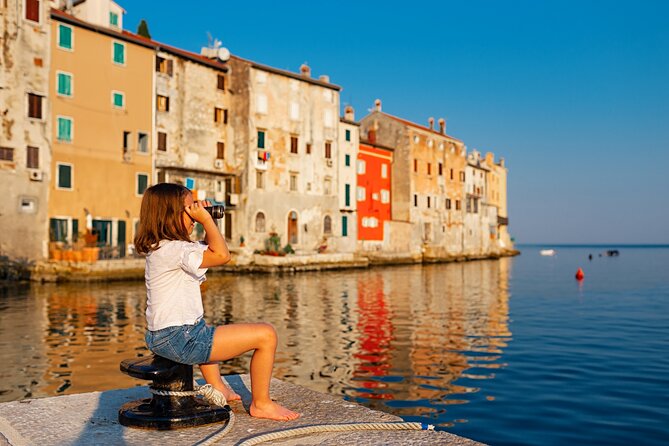
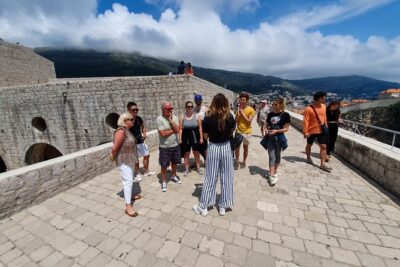
You’ll spend the tour moving through the old center with several short stops. The rhythm is simple: walk, look, photograph, listen, then move on. The total time is about two hours, and each stop is timed so you don’t burn half the tour standing still.
That pacing is ideal if your goal is to learn what you’re seeing and still have energy afterward. Rovinj is the type of place where you’ll want to wander more after the guided portion, especially around the sea and the Instagram-friendly lanes. This tour sets you up for that.
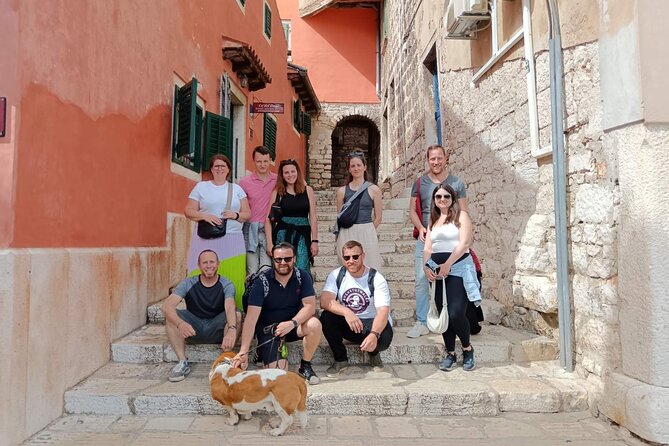
Also, because it’s private, you’ll likely get more direct answers than on a larger group tour. If you’re traveling with family or friends, this kind of guided walking format helps everyone stay aligned instead of splitting into mini-adventures.
Stop 1: Church of Our Lady of Health and the story in the façade
The tour’s first stop is the Church of Our Lady of Health, one of the oldest churches in Rovinj and beyond. What I like here is that it doesn’t feel like a random landmark. The façade is the star: it reflects baroque-style elements and comes alive with pastel colors.
This is the kind of stop that teaches your eye. In many coastal towns, church exteriors are dramatic, but this one is quieter and more delicate in its styling. Once you’ve seen it up close, you’ll start noticing similar design choices elsewhere in Rovinj.
There’s also practical value: it’s a quick stop, and admission is listed as free. So you get a strong start without adding extra time or cost.
Stop 2: St. Euphemia Church for the climb and the view
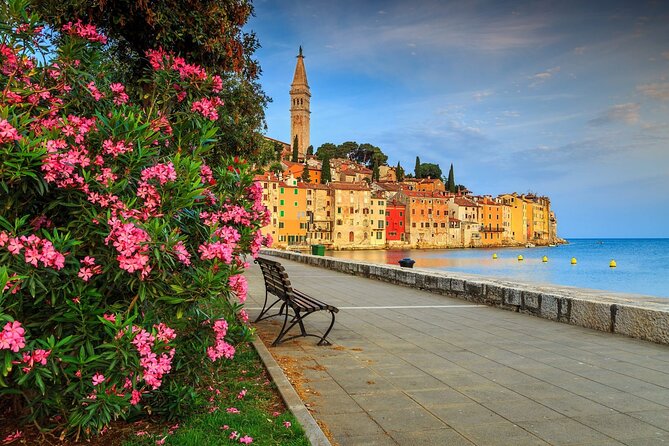
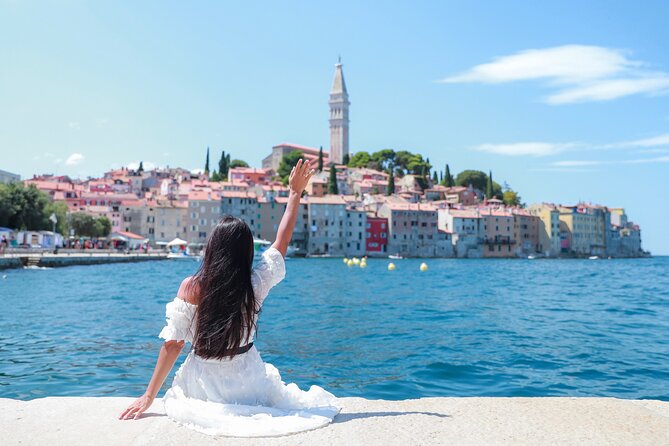
Next comes the big highlight for many people: St. Euphemia Church. The reason it matters isn’t just that it’s famous. It’s because it’s up on the hill, and the payoff is the excellent view from the bell tower lookout point.
What you’ll do here feels like two experiences in one:
1) you’ll look around from the top and orient yourself to the shape of the town
2) you’ll hear a legend connected to what’s kept in the marble sarcophagus
Even if you don’t remember every detail, you’ll remember the viewpoint. Rovinj’s coastline and rooftops are made for photos, but the key is understanding how the hill changes what you see. That perspective makes your later stroll more meaningful.
Admission is listed as free, and the stop is about 10 minutes, so it works even if you’re not looking to spend an hour inside churches.


Stop 3: Ulica Grisia, the artist street that earns its fame
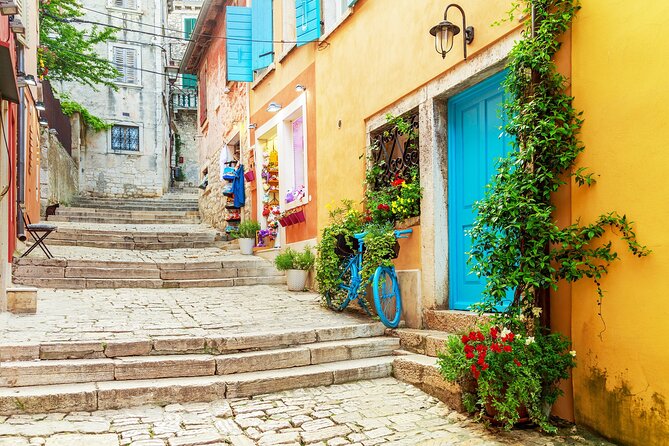
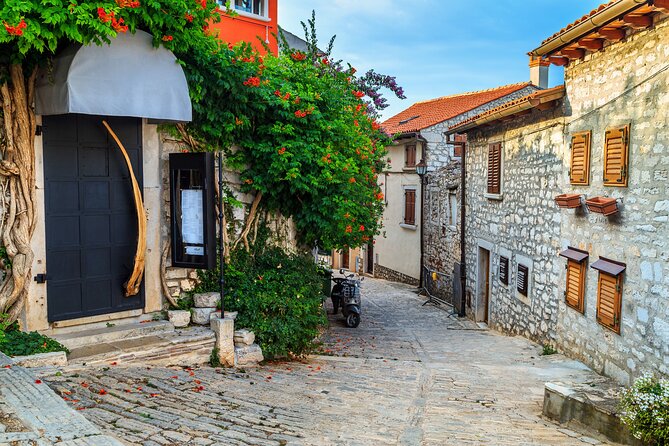
Then you move to Grisia Street (Ulica Grisia), a lane known as an artist street. This matters because it’s not just a cute street name—it connects to a pattern in Rovinj where art and the old-town setting overlap.
You’ll learn why Grisia Street is associated with fine arts events that happen each year, featuring artists from all over Croatia and Europe. If you’re visiting during an event period, you might see signs or evidence of the art cycle. Even if you don’t, the street’s reputation explains why this area feels different from a typical shopping alley.
Time on this stop is about 18 minutes. That’s long enough to walk through slowly and actually notice shopfront rhythm, window details, and the street layout that makes the whole area work visually.
Stop 4: Batana Eco-Museum stories from the outside
Now for something more “Rovinj-specific”: the Batana Eco-Museum. You don’t go inside on this tour, but you do get context because the museum focuses on the history of the batana, an ancient fishing boat.
The details that stick are:
- it’s tied to daily sea life, not just decorative maritime themes
- the boat story is described as under UNESCO protection
- many batanas are still sheltered in ports along the Istrian coast
That outside visit is a good choice inside a walking tour. It keeps the flow moving while still giving you a local anchor. If you’ve only seen beaches and old stone streets, this adds a layer: Rovinj wasn’t just pretty—it was practical, fishing-driven, and shaped by coastal craft.
Important cost note: Batana Museum admission is not included, listed at $3.50. So if you want to step inside on your own after the tour, you can. If you’re happy with the tour’s context-only approach, you can keep costs down.
Stop 5: Balbi’s Arch and the carved faces of history

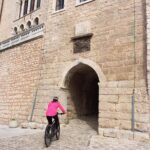
Next is Balbi’s Arch, on the site of the old town gate. This is one of those stops where you’ll instantly understand why it’s famous: it’s not bland stone. It’s carved, and the carvings carry meaning.
Here’s what you’ll be looking for: one side has the carved head of a Turk, and the other side has the carved head of a Venetian. It’s a visual reminder that this part of the Adriatic has long been a crossroads of influences.
This stop is about 10 minutes, and admission is free. I like it because you get a quick but memorable “read” of the past. When you look at an arch like this, you start noticing that Rovinj’s old town isn’t only about churches and views—it’s also about what power, people, and trade left behind in stone.
Stop 6: Rovinj Heritage Museum in the Califfi family palace (outside)
After Balbi’s Arch, you’ll get a view of the Rovinj Heritage Museum area, located in the Califfi family palace. It’s described as a beautiful mansion founded in the 17th century, and it’s also identified as a main city museum.
On this tour, you visit from the outside, which still works. A palace exterior gives you scale and atmosphere. It tells you this place wasn’t built for casual strolling. It was built for status.
If you want to see more, plan for a separate visit because admission is not included and is listed at $2.20. The stop lasts about 18 minutes, giving you time to look around without feeling rushed.
The outside-only approach can actually be a plus. It keeps your 2-hour route tight, while leaving you the option to do the deeper indoor museum work later when you have more time and patience.
Stop 7: Ulica Vladimira Švalbe, the street that leads your eyes to the sea
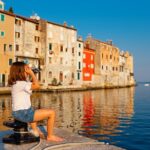
The final leg is Ulica Vladimira Švalbe, a narrow street that leads straight to the sea beach through the buildings of Rovinj. This is probably the most photographed street in town—often recognized for that long, straight visual line that pulls your gaze outward.
This is a great closing stop because it connects everything you’ve seen to where Rovinj’s life happens. You’ll have spent time on a hill and around old-town lanes. Now you end at a sightline that explains why people keep returning to this coastline.
Admission is listed as free, and the stop is about 17 minutes. You’ll likely have time here for photos and a final moment of orientation—then you finish where the street opens toward the water.
What to do with your extra time after the tour ends
Since the tour ends on Ulica Vladimira Švalbe, you’re dropped near one of Rovinj’s most direct routes to the sea. That makes it easy to keep the day simple:
- Walk onward for a few more photos
- Grab a snack or drink in the old town flow
- If you’re still curious, consider stepping into one of the two museums that weren’t included
Also, one of the strongest themes from the experience is that the guide doesn’t just talk monuments. The guide time can include helpful food and shop recommendations, which is the part that saves you from doing research on an exhausted schedule.
Who this tour fits best
This walking tour is best for you if:
- you’re here for a first look at Rovinj and want a guided route that makes the town make sense
- you like photo stops but also want the “why” behind them
- you prefer private, question-friendly touring
- you want to walk mostly flat in short bursts, with hill viewpoints handled as part of a planned route
It’s also a good choice for travelers who want an eco-friendly option without giving up a guided structure.
What I’d watch for before booking
There are two practical points to consider:
- Meeting point clarity: pin the start location on Google Maps and arrive a few minutes early. This helps prevent losing part of your tour time.
- Small add-on costs if you want interiors: the Batana Eco-Museum and the Rovinj Heritage Museum tickets aren’t included (listed at $3.50 and $2.20). You can skip them and still get value from the guided outside viewing.
If you’re the type who hates surprise extras, decide in advance whether you’ll pay for those entrances after the tour—or stick to the outside views.
Should you book Charms of Rovinj?
Yes, if you want a focused, story-driven overview of Rovinj’s old town without spending your day “figuring it out.” This is a strong pick because it combines viewpoints, architecture, and street character in a route that feels designed for real walking time.
Book it if you value:
- expert local guidance paired with photo-friendly moments
- St. Euphemia’s hilltop view
- Rovinj’s artist street energy on Grisia
- the sea connection at the end of the walk
Skip or rethink it only if you’re extremely price-sensitive or you already know exactly where you want to go inside museums and churches. In that case, you might prefer a self-guided route. But if you want your first day in Rovinj to click quickly, this private guided walk is a smart way to do it.