REVIEW · TROGIR
Family-run Vineyard Tour & Award Winning Wine Tasting/Delicacies
Book on Viator →Bookable on Viator
Taste Croatia’s roots in three and a half hours on family-run vineyards in Kaštela, where you learn wine and olive oil the way real farms work—slow, hands-on, and personal.
I especially love the cellar part: tasting wine straight from the winemaking tanks, then getting the story of how the tools and even grappa distilling fit into the process. And yes, you may also get a chance to bottle your own wine.
One possible drawback: this tour isn’t recommended for children under 18, and the experience is built around wine and liquor tastings.
In This Review
- Key highlights you should know before you go
- A Family Estate in Bijaći: Where the Day Begins
- The Olive and Almond Walk in Kaštela: The Work Behind the Taste
- The Cellar Down Below: Tasting From Fermentation Tanks
- Dalmatian Pairings: Three Wines, Seven Liquors, and Real Homemade Food
- Kathrin’s Accordion and Traditional Costume: Culture You Can Hear
- Price and Logistics: Is $225.18 Worth It?
- Timing Tips: Make It Work With Your Trogir Plan
- Who Should Book This Vineyard Tour
- Quick FAQ for planning
- FAQ
- Where does the tour start?
- How long is the vineyard tour and tasting?
- Is pickup available?
- What language is the tour in?
- What will I eat and drink?
- Is it suitable for children?
- How big is the group?
- Should You Book This Tour or Skip It?
Key highlights you should know before you go
- Historic Bijaći setting tied to Prince Trpimir’s Charter (852) and the first recorded use of Croat
- Small group size (max 8) for real Q&A and a relaxed pace
- Olive, almond, and grape walk focused on the work behind award-winning wine and extra virgin olive oil
- Wine tasting in the cellar from fermentation tanks, plus an explanation of the winemaking tools
- Dalmatian pairing meal with three wines and seven liquors, including homemade specialties
- Kathrin’s accordion songs in traditional costume for a true cultural moment, not background noise
A Family Estate in Bijaći: Where the Day Begins
You start in the Kaštela area near Trogir, with the meeting point at Put Bijaća 38, 21217 Kaštel Novi. The tour runs for about 3 hours 30 minutes, with a 11:00 am start, and it ends back at the same meeting point.
What makes this feel different from a typical tasting stop is the location and the setup. You’re not just driving to a view. You’re welcomed as a guest at a family estate in Bijaći, an area described as the cradle of Croatian history going back to 852, when Prince Trpimir’s Charter is noted for the first written mention of the word Croat. It gives the day a grounding: your wine and olive oil aren’t props here—they’re part of a place that has been tended for a very long time.
If pickup is offered for your schedule, take it. In this part of Croatia, it keeps you from turning a wine-and-food afternoon into a parking-lot scavenger hunt. Also, the tour is offered in English, and you’ll get a mobile ticket.
You can also read our reviews of more tours and experiences in Trogir.

The Olive and Almond Walk in Kaštela: The Work Behind the Taste
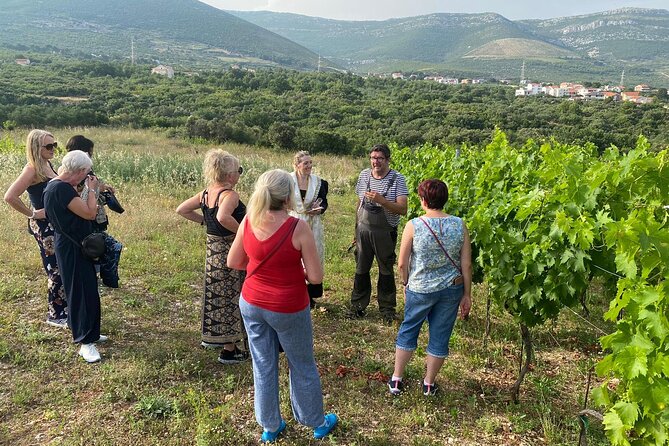
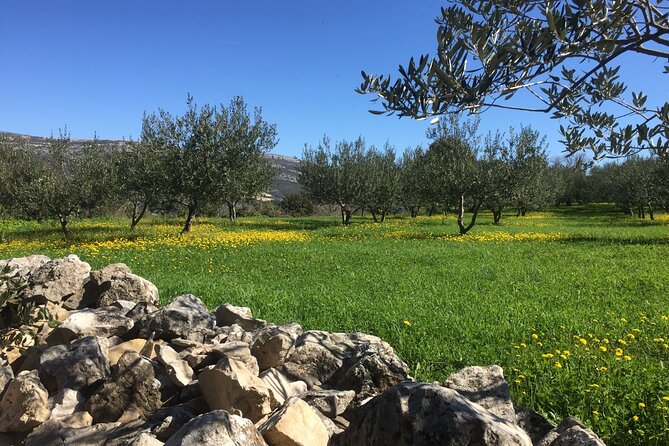
The day shifts into farm mode right away. You walk through olive and almond orchards and also through vineyards, and the guide talks you through how much effort is required to produce award-winning wine and extra virgin olive oil.
This isn’t just a photo walk. The emphasis is on real agricultural choices—pruning, care, harvest timing, and the slow rhythm that turns “a field” into a product people win awards with. You’ll learn why extra virgin olive oil isn’t something that happens by accident. It’s labor. It’s attention. And it’s getting the fruit to the right point at the right time.
You also get views over the Bay, so you’ll catch that classic Dalmatian sense of place while still staying focused on the work. That combo matters: it helps you understand what you’re seeing, instead of just letting it become pretty scenery.
One thing to note: the walk is on a working estate, so wear shoes you trust. The experience is friendly, but you are still walking through ground that makes sense for agriculture, not for visitors’ sneakers.
The Cellar Down Below: Tasting From Fermentation Tanks
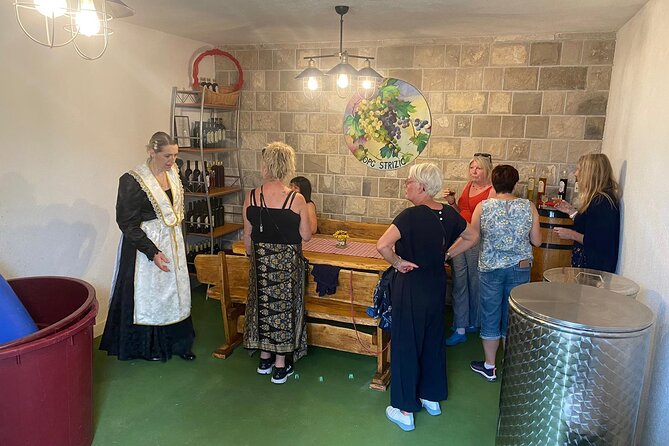
After the orchard and vineyard walk, you go into the wine cellar. This is where the tour turns from “learning about wine” into “seeing how wine gets made.”
You taste wine directly from fermentation tanks, while the guide explains the tools used in the process. It’s one of those moments that helps your brain connect the dots. When you sip something in a tasting room, it can feel like magic. Here, it feels like engineering plus patience.
The cellar portion also includes an explanation of grappa distilling, so you’re not only looking at wine as the main event. You understand how other spirits come from the same agricultural cycle and fermentation logic.
If you’re the type who loves process details, you’ll enjoy this stop. If you’re not, you’ll still likely feel the difference—because tasting from tanks is more direct than tasting from finished bottles.
Practical note: cellars are often cooler than the sun. Bring something light you can layer if you run cold.
Dalmatian Pairings: Three Wines, Seven Liquors, and Real Homemade Food
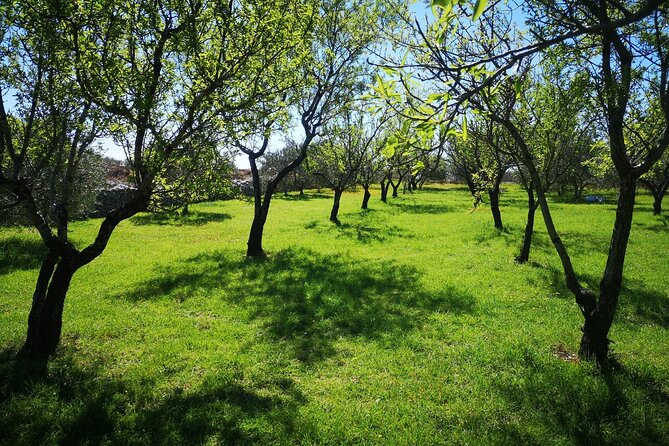
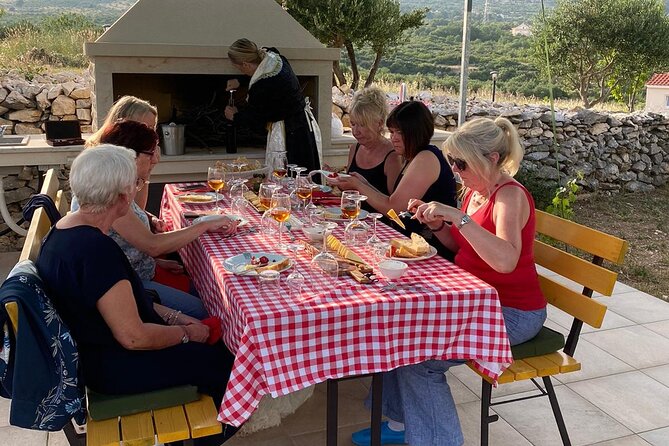
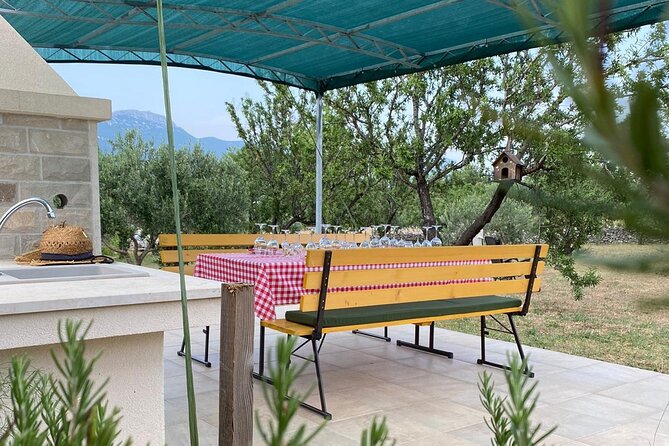
Now for the part that makes the tour worth it: the food and drink pairing, served in a serene setting between the olive and almond orchards.
The menu is built around Dalmatian delicacies and includes:
- Prosciutto and aged cheese
- Peka bread
- Sardines
- Olives and extra virgin olive oil
- Filled bell peppers
- Dried figs
- Sugar-coated almonds and orange peels
On top of that, you get pairing of three wines and seven liquors. The liquor selection is a big deal. One standout mentioned is green walnut rakija, which people describe as uniquely delicious. You’ll also find homemade limoncello in the mix.
This is not just a “small snack and a sip.” It’s a full tasting-and-lunch style meal that builds around what you’ve learned upstairs in the vines and orchards. The olive oil you heard about doesn’t vanish into the air—it shows up in what you eat.
And there’s often a personal touch that makes it feel like a family meal, not a production. In the experience, Kathrin (the host) is known for generous hospitality, and people remember the care that goes into the pairing, not only the volume.
Kathrin’s Accordion and Traditional Costume: Culture You Can Hear
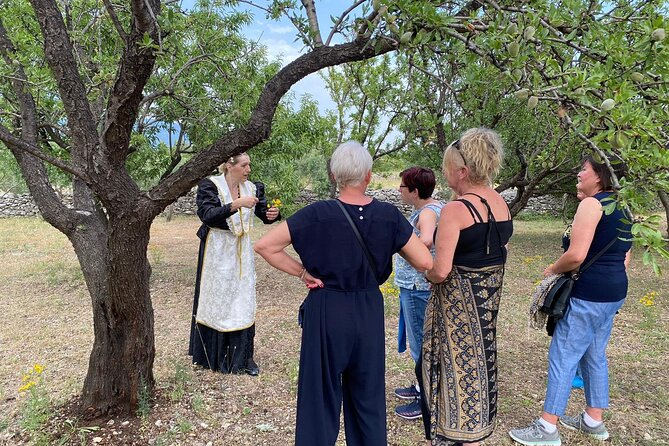
After the cellar and tasting, the tour leans into the human side of Dalmatian life: Kathrin plays traditional Croatian songs on an accordion, wearing local traditional costume.
This moment is more than entertainment. It’s a signal that the estate isn’t trying to be a theme park. It’s family culture shown directly, in the place where the work happens.
If you’ve traveled around Croatia before, you’ll have seen plenty of performances staged for tourists. Here, it’s part of the rhythm of the day—food, drink, stories, music—tied to the orchards you walked through.
The vibe is also romantic in a simple way: you’re eating and sipping between trees, not under fluorescent lights. It’s calm, and it feels appropriate for what you came for.



Price and Logistics: Is $225.18 Worth It?
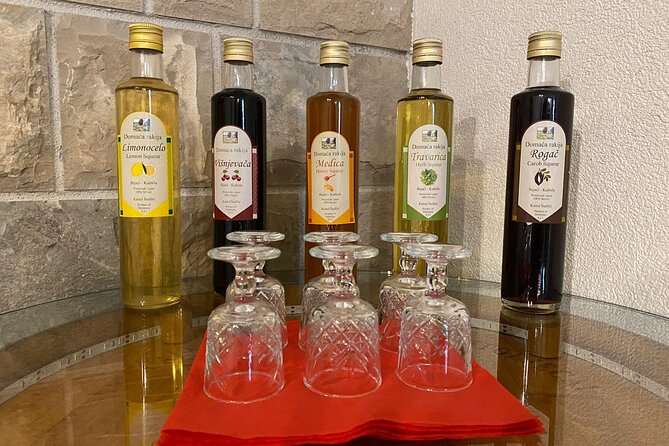
At $225.18 per person, this isn’t a budget tasting. But it doesn’t position itself as a cheap “drink and leave” stop either.
Here’s what you’re paying for, in practical terms:
- A small group experience (max 8), which usually means more conversation and less waiting
- Multiple tastings: three wines plus seven liquors
- A proper meal with multiple homemade and local components
- A farm walk that teaches olive, almond, and vine work—not just branding
- A history-rich setting tied to Bijaći
- Pickup offered (when available), which saves time and stress
One extra value point: many people describe getting to bottle their own wine in the cellar. That kind of hands-on moment turns a tasting into something you take home—especially because you’ve seen the process first.
So, the value comes from combination. You’re not buying one thing. You’re buying the full sequence: farm walk, cellar teaching, and a long food-and-drink pairing.
Logistics are straightforward: confirmation at booking, mobile ticket, English language, and service animals allowed. The one big “be honest with yourself” item is suitability for kids. It’s not recommended for children under 18, and the tasting format is adult-focused.
Timing Tips: Make It Work With Your Trogir Plan
You’re starting at 11:00 am, which is a smart time if your day is based around Trogir. You get a morning start that still leaves you with enough afternoon for beaches, old-town wandering, or a slower dinner.
Because the itinerary includes heavy tasting—wines and liquors—plan your transportation like an adult day out, not like a casual lunch. If you’re staying around Trogir, decide early how you’ll get back safely and comfortably.
Also, this is an estate tour, not a museum sprint. With 3 hours 30 minutes, give it respect. Don’t stack back-to-back activities unless you like rushing, because the best part of this kind of visit is the conversation and the pace.
Who Should Book This Vineyard Tour
This tour fits best if you want:
- Authentic farm energy, run by a family team, not a corporate tasting room
- A real connection between olive cultivation, winemaking, and what’s on your plate
- A longer format than the typical quick tasting
- Culture in the middle of the day, like Kathrin’s accordion and traditional costume
It’s also a strong fit if you like spirits as much as wine. The liquor lineup—especially green walnut rakija and homemade limoncello—is part of what people remember.
If you want a fully child-friendly program, this one is not designed for that age range. And if you hate walking on uneven farm ground, you might find the vineyard-and-orchard portion more physical than you want.
Quick FAQ for planning
FAQ
Where does the tour start?
The tour starts at Put Bijaća 38, 21217 Kaštel Novi, Croatia, and it ends back at the same meeting point.
How long is the vineyard tour and tasting?
It lasts about 3 hours 30 minutes.
Is pickup available?
Pickup is offered.
What language is the tour in?
The tour is offered in English.
What will I eat and drink?
You’ll enjoy homemade Dalmatian delicacies with a pairing of three wines and seven liquors.
Is it suitable for children?
It is not recommended for children under the age of 18.
How big is the group?
The tour has a maximum of 8 travelers.
Should You Book This Tour or Skip It?
Book it if you want a family-run, hands-on experience that treats wine and olive oil like the work they are. The combination of the olive-and-vineyard walk, cellar tastings from fermentation tanks, and a long Dalmatian food pairing is exactly the kind of day that makes Croatia feel real.
Skip it only if you need a kid-friendly tour, you want something very budget-focused, or you prefer short tastings with minimal walking. If you like to learn while you eat and drink, this is a solid choice—especially for an adult day near Trogir.