REVIEW · HVAR
Hvar – An Exclusive Private Walking Tour with a Local Guide
Book on Viator →Operated by Tournava · Bookable on Viator
Hvar rewards slow walking, and this private tour strings together key sights in a smart order so you actually connect the dots in 1 hour 30 minutes. I like that it starts with a calm, scenic church and ends at maritime landmarks that explain how this island thinks and moves. One thing to consider: it’s a set route with specific stops, so if you want hours of free wandering, you might feel a bit boxed in.
What makes it especially good is the private local guide—during a family trip, Josipa was described as accommodating, friendly, and great at answering lots of questions, even from a young granddaughter. The only real trade-off is timing: the tour is short, so plan for light, steady walking rather than lingering at every corner for long photos.
In This Review
- Key highlights you’ll feel right away
- A 90-minute private walk that helps you read Hvar fast
- Meeting at Trg svetog Stjepana 42 and keeping the day easy
- Church of St. Anthony: a calm start with coastal views
- Benedictine Convent (1664) and Hvar’s UNESCO agave lace culture
- The maritime hub: Hvar’s front door to the Adriatic
- Hvar Arsenal: a 14th-century shipyard that turned into theater
- Franciscan Monastery: Renaissance cloister, historic library, and Last Supper
- Price and value: what $250.20 per group really buys you
- How to make the most of the route (without burning daylight)
- Who this tour fits best
- Should you book this private Hvar walking tour?
- FAQ
- How long is the Hvar private walking tour?
- Is the tour private, and how many people can join?
- What language is the tour offered in?
- What’s included in the price?
- Are entrance fees included?
- Where do we meet and where does the tour end?
Key highlights you’ll feel right away
- St. Anthony’s Church opens the tour with a peaceful vibe and coastal views
- Benedictine Convent + agave lace brings UNESCO-recognized craft culture into the story
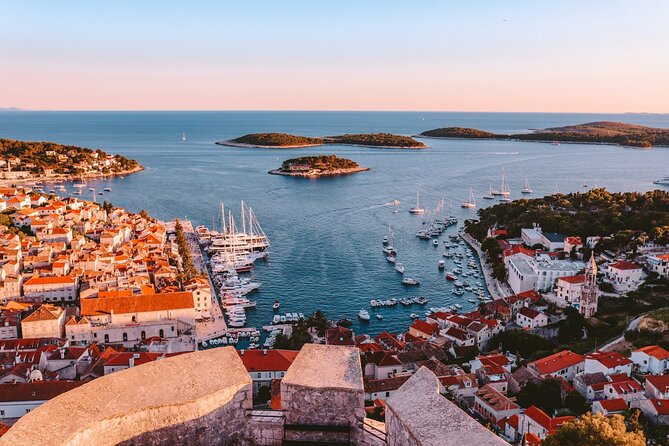
- Maritime hub views show how ferries, catamarans, and yachts connect Hvar to the Adriatic
- Hvar Arsenal links a 14th-century shipyard to one of Europe’s oldest public theaters
- Franciscan Monastery cloister and library add a quiet, reflective end point
A 90-minute private walk that helps you read Hvar fast
This is the kind of tour you do when you want orientation without sitting through a lecture. You meet in central Hvar and move site to site at a pace that works well for most people. With a private group (up to 15) and a guide who can tailor recommendations, you’re not stuck with a crowd rhythm.
The route is built around landmarks that explain Hvar’s identity: faith, craft, the sea, and civic life. In just 90 minutes, you get a framework that makes the rest of your day make sense—why the waterfront looks the way it does, why certain buildings matter, and how the island’s past still shapes what you see.
You can also read our reviews of more tours and experiences in Hvar.


Meeting at Trg svetog Stjepana 42 and keeping the day easy
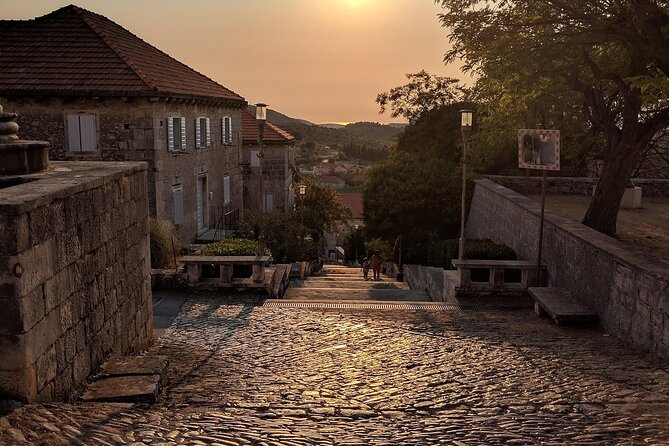
Your start point is Trg svetog Stjepana 42, 21450, Hvar, Croatia, and the tour ends back at the same place. That matters more than it sounds. When a walk returns to your starting zone, you can quickly pivot to lunch, a gelato break, or a second stroll without rerouting your whole afternoon.
The tour is offered in English, and you get a mobile ticket. Service animals are allowed, and the meeting area is near public transportation, which is handy if you’re arriving from elsewhere on the island.
Church of St. Anthony: a calm start with coastal views
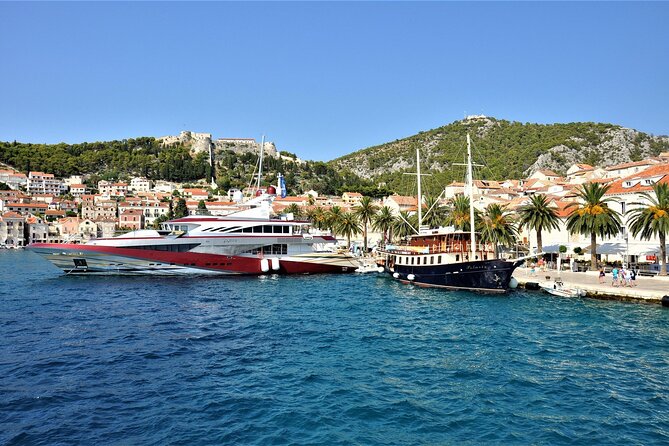
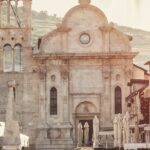
The first stop is the Church of St. Anthony, a picturesque 16th-century church known for a serene atmosphere. The best part here is how the setting lets you slow down. You’re not just ticking off a building—you’re getting that early “okay, I get the mood of Hvar now” feeling.
Expect a church visit that’s visual as well as atmospheric. The info you’ll receive focuses on why the place feels quiet even in a tourist-heavy town, and how the position gives you stunning coastal views. If you’re the kind of person who likes to photograph from a thoughtful angle, this is a good opening moment.
Possible downside: since it’s an early stop, you’ll want to be ready to move on soon after. If you show up already tired or sunburned, this is still peaceful, but the short time window means you’ll have to choose between photos and full attention to the guide.
Benedictine Convent (1664) and Hvar’s UNESCO agave lace culture
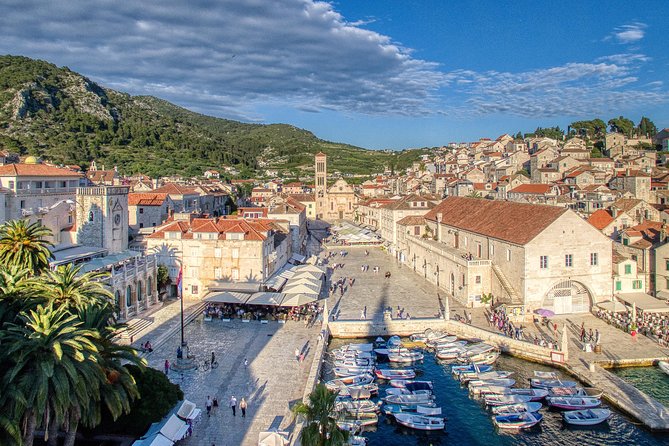
Next up is the Benedictine Convent, established in 1664. This is where the tour turns from “pretty buildings” into “how culture gets made and preserved.” The convent sits in what used to be the residence of poet Hanibal Lucić, and that literary connection gives you an extra thread to follow.
Then comes one of the most distinctive pieces of the story: agave lace. You’ll learn how this craft is tied to the convent’s cultural identity and that it’s recognized as UNESCO cultural heritage. Even if you don’t think of yourself as a craft person, it’s worth paying attention here. Lace isn’t just decoration—it’s labor, design, and tradition passed through generations, and the guide helps you see that rather than treating it like a souvenir idea.
What I like about this stop is the shift it creates. After this, the rest of the tour feels less like sightseeing and more like a connected map: you’re seeing Hvar as a place where the spiritual world, the artistic world, and the everyday world overlap.
The maritime hub: Hvar’s front door to the Adriatic
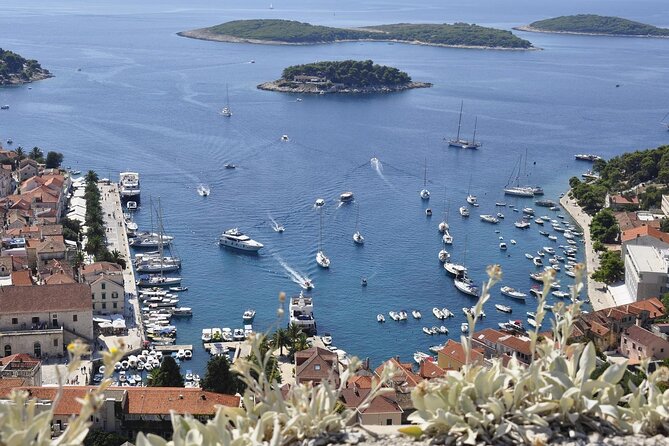
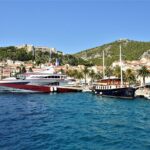
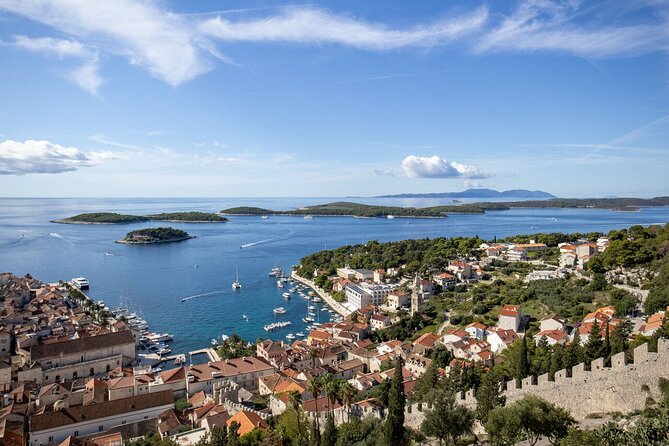
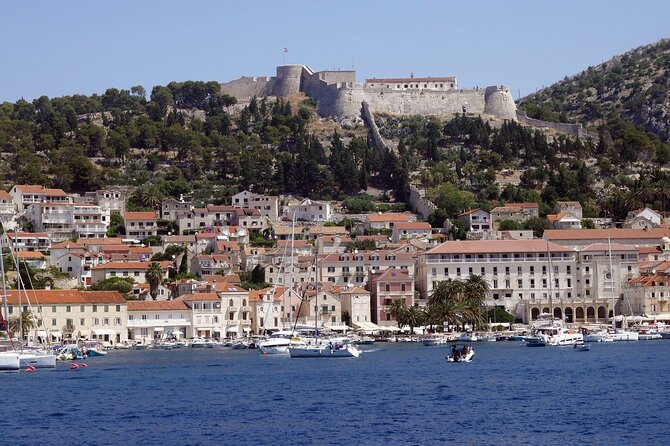
After the convent, the tour steps into the island’s working geography. You’ll explore the maritime hub, a scenic entry to Hvar where ferries, catamarans, and yachts connect the Adriatic coast to the island.
This part is practical and visual. I like tours that explain what you’re actually seeing outside your window. Here, you get context for why the waterfront always looks like it’s in motion, and why maritime life is central to Hvar’s layout and priorities.
It’s also a good reset from indoor or semi-quiet spaces. You can look around, spot boats, and notice details you might otherwise ignore. If you’re traveling with kids or family members, this is often the moment when questions naturally kick in. The guide can point out what’s typical, what’s notable, and how the harbor fits into the bigger story.




Hvar Arsenal: a 14th-century shipyard that turned into theater
The next stop is the Hvar Arsenal, a 14th-century maritime landmark. You’ll hear how it once served as a shipyard, and later it became home to one of Europe’s oldest public theaters.
That time jump is the whole point. You’re not just looking at an old structure—you’re watching history transform. The sea-built space shifts into a civic space for performance, and that tells you something about Hvar’s values. The island didn’t only build ships; it built a stage for community life too.
I’d pay attention to the way your guide frames the Arsenal’s role. Even though you’re walking past stones and walls, the explanation helps you imagine how the space functioned in different eras. You’ll likely come away thinking about Hvar as a place that reuses its strengths rather than abandoning them.
Franciscan Monastery: Renaissance cloister, historic library, and Last Supper
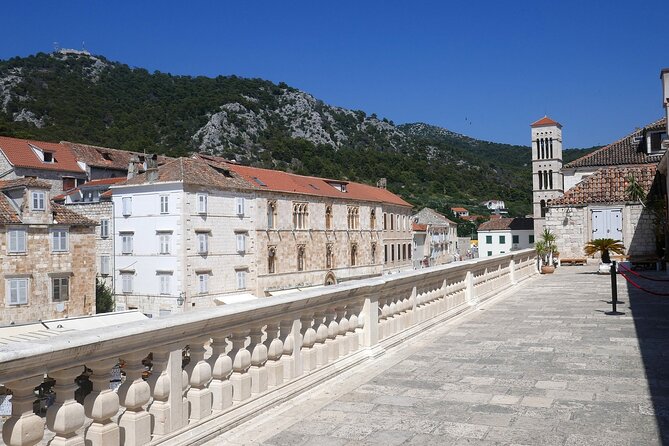
The tour ends with the peaceful Franciscan Monastery, which includes a Renaissance cloister, a historic library, and a 17th-century painting of The Last Supper.
This is a strong ending because it’s a mood shift. Up to this point, you’ve covered craft, sea movement, and maritime civic identity. Then you step into a calmer space where attention changes. Even if you’re not someone who reads a lot of monastery history, the cloister and library setting naturally slows your thoughts down.
The highlight for many people is the painting: a 17th-century depiction of The Last Supper. The guide’s framing matters here because it helps you connect the art to the monastery’s broader spiritual setting, rather than treating the artwork as just another wall photo.
Practical note: monastery spaces tend to reward quieter focus. If you’re traveling with a very energetic group, it helps to give everyone a quick reminder to keep voices down while you’re inside.
Price and value: what $250.20 per group really buys you
The price is $250.20 per group (up to 15 people), for about 1 hour 30 minutes, in English. That structure usually makes sense when you’re traveling as a small group or with family, because the cost doesn’t rise the way per-person tours often do.
What you’re buying isn’t just access to five places. You’re buying:
- an expert local guide
- a private guided tour
- customized recommendations
And that “customized” part is where value shows up. A good guide doesn’t just recite facts; they point you toward what to do next based on your interests. In the family review, Josipa’s flexibility and willingness to answer lots of questions was a real indicator of that. If you’ve got kids, older relatives, or anyone who asks follow-ups, a private setup can feel much better than a standard group tour.
What isn’t included is also important for planning: entrance fees aren’t included, and there’s nothing built in for food and drinks or tips. If you’re trying to control your budget, it’s smart to ask yourself ahead of time whether you’ll need to pay entry at multiple stops.
How to make the most of the route (without burning daylight)
Because the tour is relatively short, I’d treat it like a structured primer. After you finish, you’ll get much more out of Hvar if you use the tour’s framework to choose your next stops.
A few practical tips:
- Wear comfortable shoes. You’re walking through central Hvar and moving between landmarks.
- Bring sun protection. Coastal towns can hit hard, and you’ll be outside for some of the route.
- If you care about photos, tell the guide early. A private guide can help you time shots without derailing the schedule.
Also, since the tour ends back at the same meeting point, you don’t need an elaborate plan afterward. Pick something close—lunch, a waterfront walk, or a second round in the old-town lanes.
Who this tour fits best
This tour is a strong match if you want:
- a private guide and a flexible conversation
- a fast way to understand Hvar’s mix of religion, craft culture, and maritime identity
- a route that works well for a family trip
It may be less ideal if you want long, slow visits inside each site. Since it’s about 90 minutes, you’ll likely experience each stop in a “see and learn” style rather than a “read every plaque and stay for hours” style.
Most travelers can participate, so you don’t need a special plan beyond basic comfort and walking ability.
Should you book this private Hvar walking tour?
If you like guided value—meaning you want your time to turn into understanding—then yes, book it. The tour’s greatest strength is how it ties together five different parts of Hvar: St. Anthony’s peaceful start, the Benedictine Convent and UNESCO agave lace, the working reality of the harbor, the Arsenal’s shipyard-to-theater transformation, and the monastery’s quiet close.
I’d especially recommend it if you’re traveling with family or anyone who asks lots of questions, because the guide experience highlighted Josipa as accommodating and supportive, even for a young participant with many queries.
Skip it only if you’re the type who wants fully free-form wandering and long entrances without structure. For most people, though, this is one of the neatest ways to get oriented in Hvar—and still feel like you discovered something real.
FAQ
How long is the Hvar private walking tour?
The tour lasts about 1 hour 30 minutes.
Is the tour private, and how many people can join?
Yes. This is a private tour/activity, and the group size is listed as up to 15 people.
What language is the tour offered in?
The tour is offered in English.
What’s included in the price?
Included are an expert local guide, a private guided tour, and customized recommendations.
Are entrance fees included?
No. Entrance fee(s) are not included.
Where do we meet and where does the tour end?
You meet at Trg svetog Stjepana 42, 21450, Hvar, Croatia, and the tour ends back at the same meeting point.