REVIEW · TROGIR
Nocturnal Tours Trogir & Split – Myths and Legends of Old Trogir Tour
Book on Viator →Operated by Nocturnal Tours Trogir & Split · Bookable on Viator
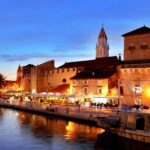
Lantern light turns Trogir into a different town. This nighttime walk through old streets is built around myths, superstitions, and medieval tales that make the stone feel like it is still talking. I like how it uses the city’s shape and shadows, not museum walls, to tell its story.
Two things I especially like: the passionate guide with acting flair (you may see styles like Jelena or Doris described), and the fact that it is organized as a tight small group so you actually hear the details instead of listening from the back row. You also get a neat mix of love, fear, and local legend across several key corners of Trogir.
One consideration: it’s an outdoor walk at night, and the experience requires good weather. If you dislike spooky themes or cold, dark streets, this may feel more intense than a straightforward sightseeing tour.
In This Review
- Key things to know before you go
- Night Walking With Lanterns in Trogir’s Old Town
- Price, Time, and What You Get for $28.83
- Your Starting Point: Finding Ul. Gradska vrata 6 at Night
- Stop-by-Stop: Trogir’s Myths and Medieval Secrets
- Historic City of Trogir: Greek Foundations and Roman Stone
- North Gate: Medieval Life, Fear, and Superstition
- Kula Karmelengo: Love, Despair, and a Medieval Fortress Mood
- Kairos Collection at the Benedictine Monastery of Saint Nikola
- Central Square: Marin Kjudis and the Plague Story
- Loggia – Doorway: The Pillar of Shame and Medieval Punishment
- The Guides: Acting Energy Without Losing the Facts
- Walking at Night: Comfort, Clothes, and Group Dynamics
- Value Check: How This Compares to a Standard Trogir Tour
- Who This Tour Suits Best (and Who Might Skip It)
- Should You Book Nocturnal Tours Trogir & Split?
- FAQ
- Do I need a printed ticket for this tour?
- How long is the tour?
- Is the tour offered in English?
- How big is the group?
- Are there extra admission fees at the stops?
- Where does the tour start and end?
- What should I do if the weather is bad?
- Is the tour wheelchair-friendly based on the information provided?
- Are service animals allowed?
- What is the cancellation window?
Key things to know before you go
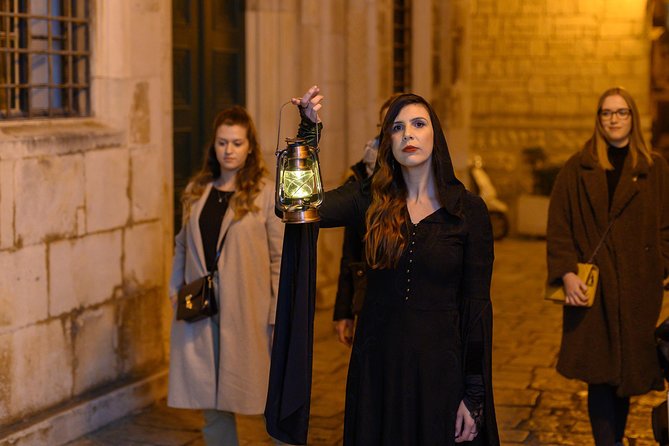
- Lantern-lit atmosphere: you’ll walk at night with light that guides you through narrow medieval lanes
- Stories tied to real places: every stop connects to a specific spot in Trogir’s old core
- Small-group format: capped at a maximum of 10, often presented as very small (around 8)
- English-led tour: offered in English with a mobile ticket
- No separate admission at the stops: stops are listed as admission ticket free
- Acting-style narration: guides may shift into character for parts of the tale
Night Walking With Lanterns in Trogir’s Old Town
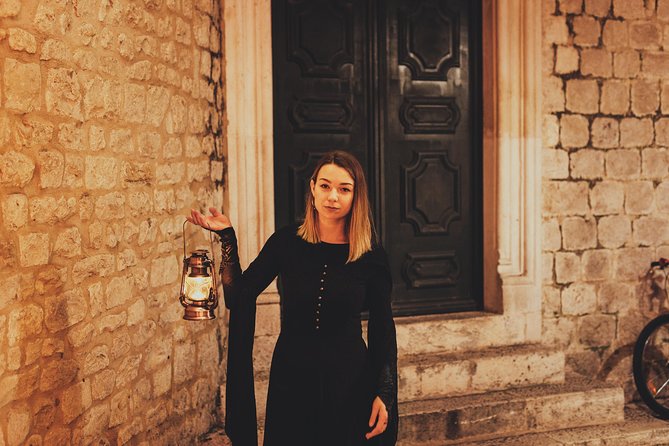
Trogir is beautiful in daylight, but night changes the whole feeling. This tour leans into that. You’re not just looking at old buildings; you’re walking through them while the guide strings together stories of noblemen, intrigues, broken hearts, murders, and revenge that supposedly still cling to the stone.
The best part is that the setting does the work for the story. Narrow streets in darkness compress your sense of space. Lantern light gives just enough visibility to keep you moving, while still letting the city feel half-real, half-legend. That’s why this doesn’t feel like a standard checklist tour.
You’ll also notice the pacing is meant for storytelling. The stop times are short, and the tour stays focused on a handful of places that have meaning—historical, architectural, and dramatic in equal measure.
You can also read our reviews of more tours and experiences in Trogir.


Price, Time, and What You Get for $28.83
The price is $28.83 per person for about 1 hour. Some write-ups describe it running closer to 1.25 hours, which usually means you’re not being rushed between stops.
That value works because you’re paying for more than walking. You’re paying for:
- a structured route through central Trogir
- a guide who explains the myths and superstitions connected to each spot
- a small-group setting that keeps the narration clear
If you’ve already been to Trogir in daylight and you want the town to feel alive again, this is a smart add-on. If you prefer only broad, non-specific facts, you might find the tone more theatrical than you expected. But if you like story-based travel, this is one of those tours that turns an hour into a memory.
Your Starting Point: Finding Ul. Gradska vrata 6 at Night
The meeting point is Ul. Gradska vrata 6, Trogir. From there, the tour flows toward the historic center and ends near St. Lawrence’s Cathedral (Trg Ivana Pavla II).
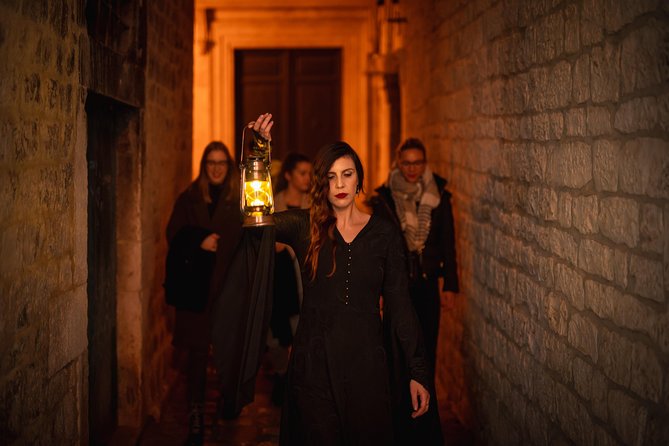
Practical tip: night navigation is easier when you arrive a little early. Old towns are easy to enter and easy to lose, especially when streets look similar. Having a guide holding the lantern cues your route and also helps you feel like you’re part of the story instead of chasing directions.
Also note: the tour is offered in English, and you’ll use a mobile ticket. That keeps things simple—no paper ticket hunt in the dark.
Stop-by-Stop: Trogir’s Myths and Medieval Secrets
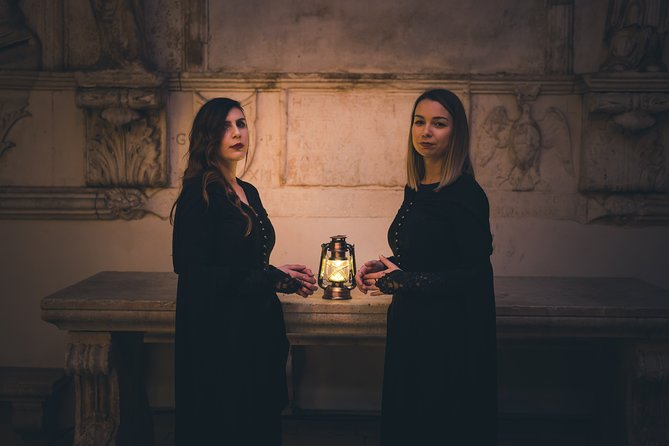
This tour is built around six memorable moments. The stops are listed as admission ticket free, so you’re not paying extra at each location, and you’re not spending the tour waiting in queues.
Historic City of Trogir: Greek Foundations and Roman Stone
Your first real immersion is in the Historic City of Trogir, walking through narrow streets and paths traced back to Greek colonists in the 3rd century BC and later Roman life. The guide frames the setting with stories tied to how the city formed and how people explained what they could not control.
This is where the tone settles in. You’ll hear about dark, glorious stories and the way spirits of the past are imagined to live in stone walls. It’s a lot to pack into a first stop, but the lantern light keeps it moving.
If you’re prone to getting bored by long introductions, you’ll probably still enjoy this part because it is connected to specific streets you walk immediately afterward.






North Gate: Medieval Life, Fear, and Superstition
Next you pass through the North Gate, a threshold moment. The guide treats it like an entrance into medieval Trogir, not just a city wall you happen to pass.
This stop points at some heavy themes: Black Death, beliefs about dangerous sin, witchcraft, and superstitions. It’s the sort of storytelling that turns everyday history into something personal and scary, even if you know it’s legend.
Consideration: if your ideal vacation is light and breezy, these themes might feel intense at night. But if you like the human side of medieval fear—how people tried to explain illness, misfortune, and blame—this is the heart of the tour.
Kula Karmelengo: Love, Despair, and a Medieval Fortress Mood
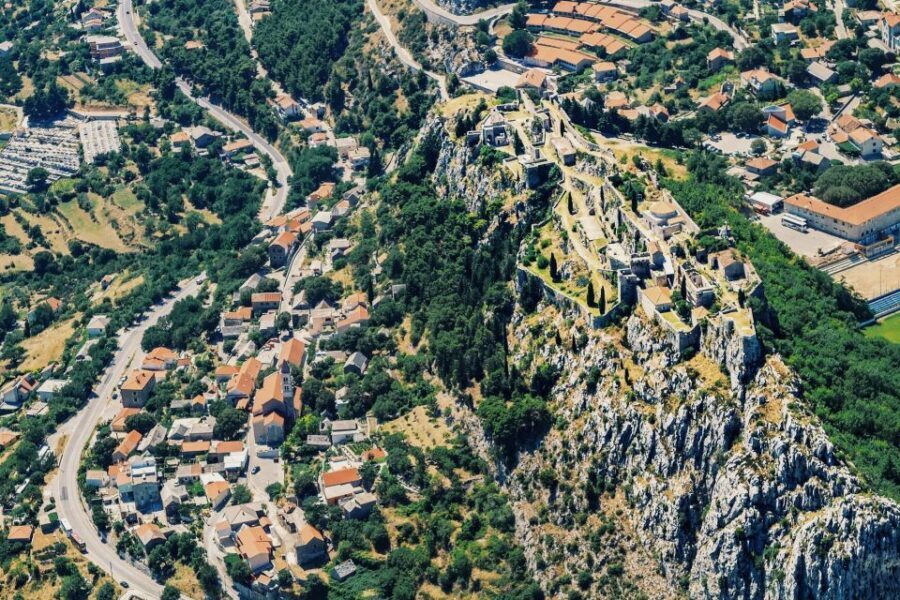
At Kula Karmelengo, the story shifts toward emotional drama—great love and greater despair—set against a breathtaking medieval fortress setting.
This stop is short, but it adds variety. Instead of only fear and punishment, you get story energy built around relationships and loss. That matters because it keeps the tour from becoming a single-tone horror walk.
You’ll also appreciate the change in location. Fortresses and towers change how the air feels and how sound carries, so the storytelling lands differently here than in the tight streets of the old core.
Kairos Collection at the Benedictine Monastery of Saint Nikola
Then you reach the Benedictine Monastery of Saint Nikola, described as the oldest monastery of its kind that is still active. It also features the Koludrice of Trogir (nuns who live behind the walls), and it connects to a key symbol of the city: the sculptural relief called Kairos, dating to the 3rd century BC.
This is a turning point where legend meets tangible history. You’re still hearing stories, but you’re also seeing why certain objects mattered to the people who lived here. It gives the myth themes a grounded anchor.
If you enjoy when a tour blends atmosphere with a concrete cultural artifact, this stop will likely be a highlight.
Central Square: Marin Kjudis and the Plague Story
In the central square, the guide tells the story of Marin Kjudis, described as a hero who unintentionally caused a plague outbreak in Trogir.
This is where the tour’s narrative style pays off. It’s not just “there was a plague.” It becomes a human tale with cause, consequence, and blame. That’s one reason this kind of night tour can be more memorable than a daytime lecture.
Also, the central square is a logical place to pause. It helps you reset your footing and take in the flow of the old town around you while the story continues.
Loggia – Doorway: The Pillar of Shame and Medieval Punishment
The final big stop centers on a doorway linked to punishment in medieval times. The guide talks about criminals and the Pillar of Shame, a public display used as punishment for felons, thieves, pyromancers, killers, and traitors.
This is dark storytelling, and it is supposed to be. It’s part of the tour’s promise of myths, superstitions, and medieval secrets. The point isn’t shock for shock’s sake—it’s that medieval towns ran on fear and public example, and those beliefs shaped daily life.
If you’re sensitive to grim historical themes, treat this as the moment to mentally step back and keep the story in context. You can still appreciate the history without enjoying every detail.
The Guides: Acting Energy Without Losing the Facts
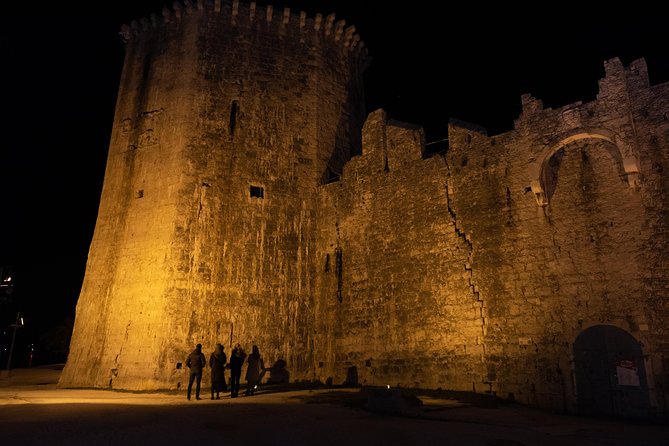
One consistent theme in the experience is how the guides bring the story to life. Names like Jelena and Doris show up in descriptions, and the style is more than reading facts off a phone.
What I like about this approach is that it fits the material. Myths and legends are not neutral. They’re meant to scare, warn, entertain, and explain. When the guide shifts into character, the whole city becomes part of the performance.
The best sign you chose the right tour is focus. People mention keeping attention while walking, which is exactly what you want on a night route. You don’t want the group to fragment every time someone checks a message. You want the story to keep moving, stop to stop.
Walking at Night: Comfort, Clothes, and Group Dynamics
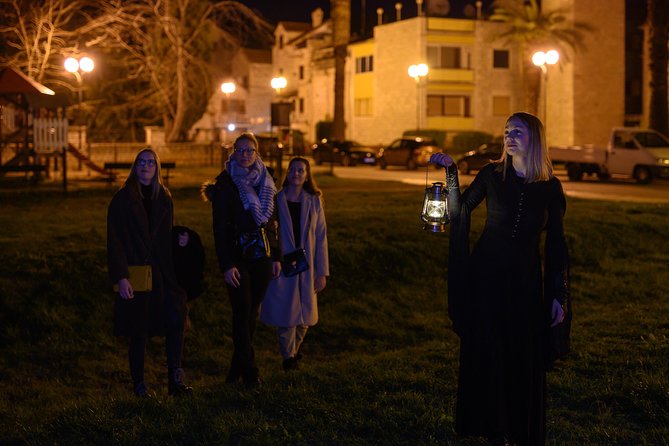
This is a walking tour through old town streets at night. That sounds obvious, but it affects what you should wear.
Go with:
- layers (even in warmer months, evenings can feel cooler in stone streets)
- shoes with grip (old town surfaces can be slick)
The tour’s small-group size helps here. With a maximum of 10 travelers (and the tour is also marketed as very small, up to 8), you’re not stuck behind a large pack. That matters for safety, hearing the guide, and keeping the route tight.
It is also described as near public transportation, which can help if you’re staying just outside the center. If you’re coming from your hotel by foot, check the best nighttime route in daylight first.
Value Check: How This Compares to a Standard Trogir Tour
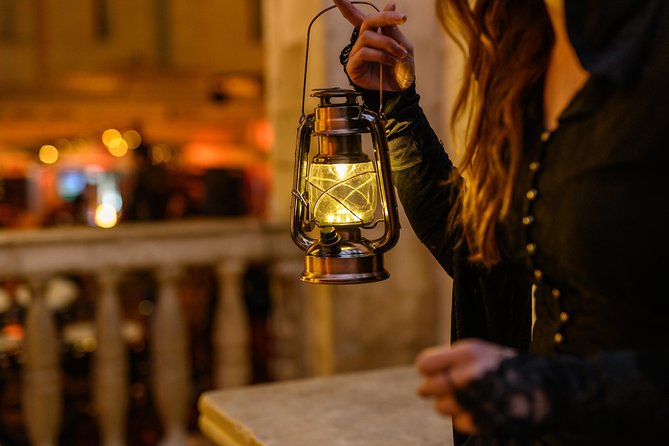
A standard daytime tour often gives you broad history and a few standout viewpoints. This one is different. It spends most of your time inside story, linked to places that have names and roles in the local legend.
Here’s what that means for you:
- If you like facts with atmosphere, you’ll likely enjoy the mix of history and superstition.
- If you want a museum-style timeline, you may wish for more linear structure.
- If you enjoy a theatrical guide, this tour is built for you.
At the same time, the stops are short and admission is ticket free, so you’re not stuck spending your hour paying entry fees or waiting around.
If you’re doing Trogir as a day trip, this evening tour can be a great way to make the time feel longer and more personal.
Who This Tour Suits Best (and Who Might Skip It)
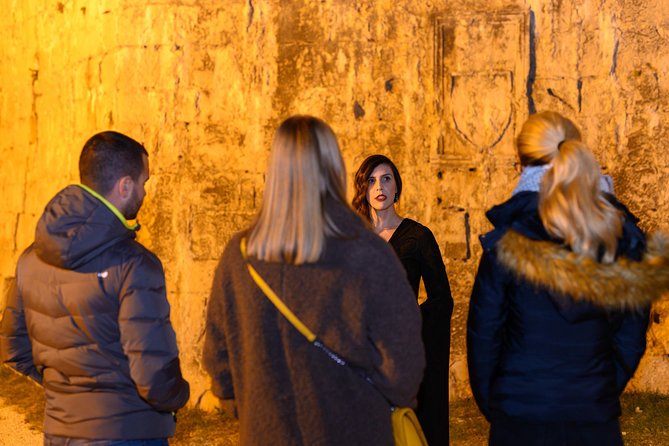
I think this tour is especially good for:
- couples and friends who like story-driven travel
- families with older kids and teenagers (the tour is short and designed to hold attention)
- travelers who want something more atmospheric than a daytime stroll
You might skip it if:
- you prefer quiet commentary and strictly factual explanations
- you don’t like walking at night or don’t want spooky themes
- you want a longer tour that covers a wider sweep of Trogir in depth
Should You Book Nocturnal Tours Trogir & Split?
If you’re choosing between a basic sightseeing walk and a night story experience, I’d lean toward booking this one. For about $28.83, you get a lantern-lit route, a tight group size, English guidance, and a guide-style narration that turns medieval corners into living scenes.
My only hesitation is the same as with any outdoor night activity: if weather is poor, you may need to change plans. If you can handle dark streets and enjoy legends with a bit of bite, this is one of the more memorable ways to experience old Trogir.
FAQ
Do I need a printed ticket for this tour?
No. It uses a mobile ticket, and confirmation is received at the time of booking.
How long is the tour?
It runs for about 1 hour (approximately). Some descriptions suggest it may last around 1.25 hours.
Is the tour offered in English?
Yes, the tour is offered in English.
How big is the group?
It is described as a small-group tour with a maximum of 8 travelers, and it also lists a maximum of 10 travelers.
Are there extra admission fees at the stops?
The stops are listed as admission ticket free, so there are no separate admission tickets indicated for the locations on this route.
Where does the tour start and end?
It starts at Ul. Gradska vrata 6, 21220, Trogir, Croatia, and ends at St. Lawrence’s Cathedral (Trg Ivana Pavla II), 21220, Trogir, Croatia.
What should I do if the weather is bad?
The experience requires good weather. If it’s canceled due to poor weather, you’ll be offered a different date or a full refund.
Is the tour wheelchair-friendly based on the information provided?
The information provided says most travelers can participate, but it does not specifically confirm wheelchair access details. If you need accessibility accommodations, it’s best to ask the provider.
Are service animals allowed?
Yes, service animals are allowed.
What is the cancellation window?
Free cancellation is available up to 24 hours in advance for a full refund. If you cancel less than 24 hours before the start time, the amount paid is not refunded.