REVIEW · SPLIT
Private History tour – small group
Book on Viator →Operated by Ivan Fistanić · Bookable on Viator
Split’s stones tell stories fast.
This private history tour ties the big sights of Split into one clear walk, guided by Ivan Fistanić, a local with a Master’s Degree in History, so you don’t just look—you understand.
Two things I really like are the Diocletian’s Palace orientation (you’ll know where you are and why it matters) and the focused pacing that keeps it manageable at about 1.5–2 hours. One thing to consider: the tour stays mostly outside, and you won’t enter inside the Cathedral of St. Domnius or the Temple of Jupiter.
In This Review
- Key highlights worth planning for
- A private 90-minute orientation to Split’s real center
- Meet Ivan Fistanić and get ready to walk
- Golden Gate: the palace entrance that points you toward the story
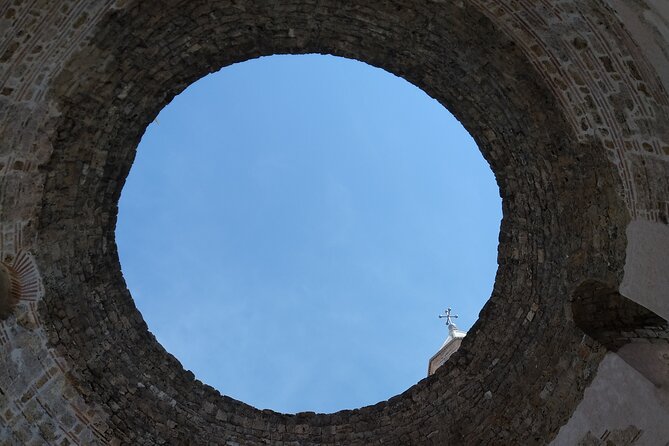
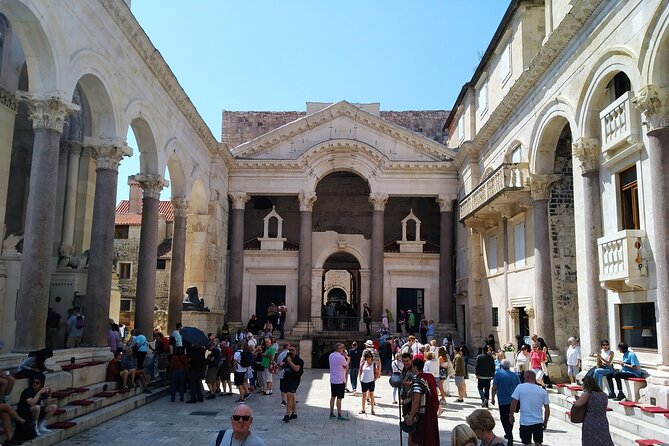
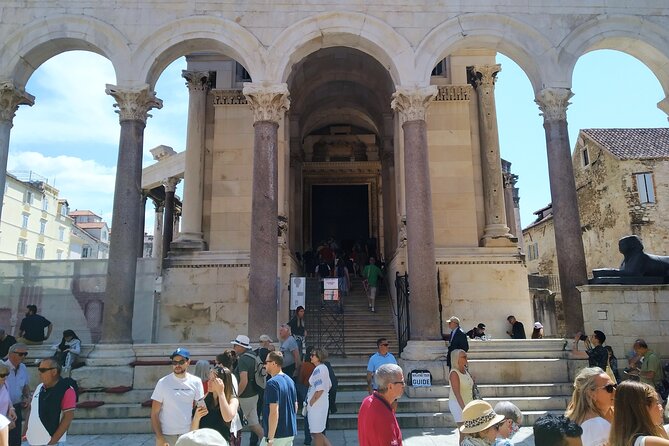
- Peristyle and the palace heart: arcades, colonnades, and religious change
- St. Domnius and Jupiter Temple: same ground, new purposes
- Vestibulum and Triclinium: seeing Diocletian’s private world
- Riva Harbor: the modern promenade that frames the ruins
- Fruit’s Square and Pjaca: squares people still use
- Grgur Ninski statue: toe-rub luck plus a strong historical thread
- Timing, weather, and walking comfort
- Price and value: what $238 per group really buys
- Who this tour is best for
- Should you book this Private History tour?
- FAQ
- How long does the Private History tour in Split take?
- What is the group size for this tour?
- Where do we meet for the tour?
- Is this tour mostly a walking experience?
- Do we get tickets for paid entrances like the cathedral and Jupiter Temple?
- Do I need to print anything or can I use a phone?
- Does the tour run in bad weather?
Key highlights worth planning for
- Master’s Degree history guide (Ivan Fistanić): clear explanations that connect buildings to real life in different eras.
- Small private group (up to 10): more time for questions and a calmer pace through the palace streets.
- Diocletian’s Palace, start to finish feeling: Golden Gate to the Peristyle to the private-chamber vestibule areas.
- A mix of free and ticketed sights: many stops are marked free, while the Cathedral and Jupiter Temple are not included.
- Central city promenade time at Riva: you see how the modern city lives around the ruins.
- Grgur Ninski statue tradition: you’ll learn the story and the toe-rub luck custom.
A private 90-minute orientation to Split’s real center
If Split feels like a maze at first, this tour is made for that moment. You start with the main Roman entry points and end in the civic squares people still use today. The result is practical: you’ll walk away knowing how Diocletian’s Palace fits into modern Split, not just collecting photos.
What I like most is that the story is tied to what you’re standing next to. Ivan Fistanić doesn’t treat the palace like a dead backdrop. You learn how spaces were used, how the buildings changed as Christianity expanded, and why certain locations were chosen—especially in the late Roman era.
This tour also stays short enough to keep your energy for the rest of your day. Expect a mix of shaded spots and open-air walking, plus a few quick views that build into a bigger picture.
You can also read our reviews of more tours and experiences in Split.


Meet Ivan Fistanić and get ready to walk
You meet at Ul. kralja Tomislava 15, 21000 Split, a central address that’s easy to reach. The tour ends back at the same meeting point, so you’re not left figuring out your next step while your legs are still processing old stones.
You’ll use a mobile ticket, and confirmation happens at booking time. The group stays private—only your party joins you—up to 10 people. That matters because the route moves at walking-tour speed, not “herd-and-photo-line” speed.
One more practical note: Split’s historic center is walkable for most people, but you’re still on old streets. Wear shoes you trust. If it’s hot or raining, plan your day around that.
Golden Gate: the palace entrance that points you toward the story
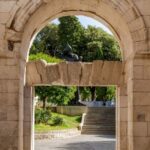
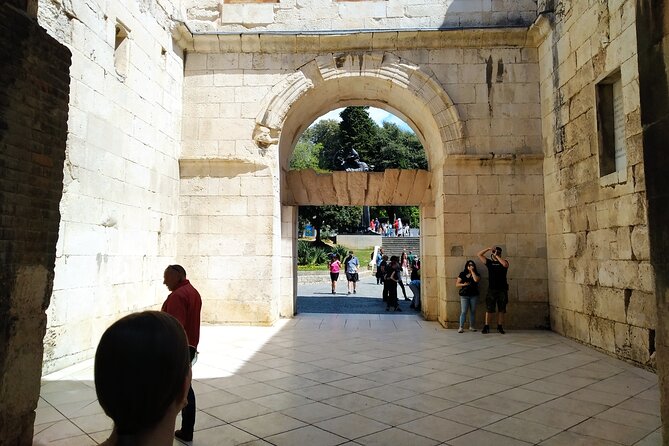
The walk begins at the Golden Gate, the main entrance to Diocletian’s Palace and one of the four major Roman gates into the complex. Even if you’ve seen photos of the palace walls, standing at a gate changes how you read the place. A gate tells you direction. And direction tells you power.
Ivan’s take here is smart: he links the gate’s location to the road leading north toward Salona, the Roman provincial capital and Diocletian’s birthplace. That’s not trivia for trivia’s sake. It explains why the palace wasn’t random—it was the center of a political and geographic world.
You’ll also notice a convenient landmark relationship: the Golden Gate sits opposite the Gregory of Nin area. It’s a small detail, but it helps you build orientation early instead of later.
Time at this stop is brief—about 15 minutes—enough to set the scene, not enough to drag the tour.
Peristyle and the palace heart: arcades, colonnades, and religious change
Next comes one of the most important spaces in the entire complex: the Peristyle. Before you reach the open square, you start in the central part of the cellars connected to Diocletian’s Palace. This is where the tour does something valuable: it moves you from “look at ruins” to “understand function.”
From the cellars, you step into the imperial square, framed by monumental arcades and oriented toward the imperial loggia. This is the kind of open space where even short explanations make sense, because the room itself guides your eye.
What I like about this stop is the way the guide connects the architecture to history. You’ll hear about how the buildings and daily life shifted as Christianity spread and changed how people used major spaces. This is the sort of theme that makes later stops click.
The Peristyle portion lasts about 15 minutes, and it’s often the moment where people stop saying “it’s all Roman” and start asking smarter questions like how and when things transitioned.
St. Domnius and Jupiter Temple: same ground, new purposes
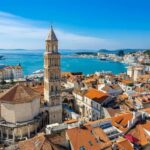
From the Peristyle, you can’t miss the Cathedral of Saint Domnius. You stand in front of it and learn about key parts of the structure without entering. That choice is practical: it keeps the tour moving while still giving you the important architectural context.
The cathedral is described as one of the best-preserved Roman structures in Split and it’s still in use today. Even from the outside, it’s a reminder that historic spaces often survive because they stay useful. The guide points out what to watch for so you don’t treat it like a general church sight.
Next is the Temple of Jupiter, one of the best-preserved late Roman temples in the world. The placement is the point: the temple location was meant to show a divine connection between Emperor Diocletian and Jupiter. You’ll hear who Jupiter was (sky and thunder, king of the gods) and why that mattered to imperial authority.
Then the tour flips forward to the Middle Ages: the temple was converted into a baptistery dedicated to St. John the Baptist. That’s a clear example of architectural reuse with changing meaning. You’ll understand it better if you keep your eyes open for what was repurposed versus what stayed Roman.
You don’t go inside here either, and admissions for these two stops are not included. Still, the outside viewing + explanation can be the right level for a short tour. If you want to go deeper inside later, you’ll be able to do that with a much better mental map.




Vestibulum and Triclinium: seeing Diocletian’s private world
After the public and religious spaces, the tour turns more personal with the Vestibulum of Diocletian’s Palace. This is the pre-entrance area linked to Diocletian’s private chambers. The guide explains that it was decorated according to its importance, which makes sense—you don’t design private space the same way you design civic space.
You’ll learn what it likely looked like and what it functioned as, then you get a viewpoint check toward the Triclinium. The triclinium is tied to dining and ceremonial meals, and that’s a big clue to how power was displayed in everyday life at the palace.
This stop is about 10 minutes, but it changes how you picture Diocletian’s Palace. Suddenly it’s not just gates and big squares—it’s also rooms for status, comfort, and controlled access.
Riva Harbor: the modern promenade that frames the ruins
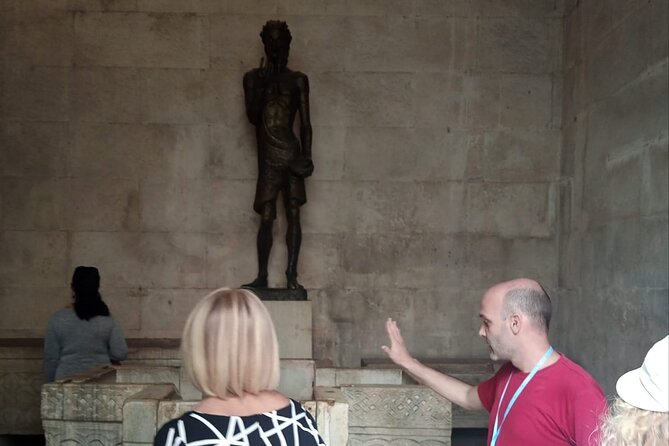
Now the tour shifts to street level life at Riva Harbor, which is a meeting point for locals and visitors and the main city promenade. This is the stop that helps you feel Split as a living city, not just a heritage site.
Ivan explains how Riva was built over centuries and why it became central for locals. Even without extra time, the perspective here matters: you understand the palace isn’t isolated. It borders the city’s movement and daily routines.
You also get a beautifully direct view of the southern wall of Diocletian’s Palace from here. That sight line helps everything else you saw earlier lock into place. After Riva, the palace feels less like “a big landmark” and more like “a specific system of walls, entrances, and squares.”
This section is about 10 minutes, but it has outsized payoff.
Fruit’s Square and Pjaca: squares people still use
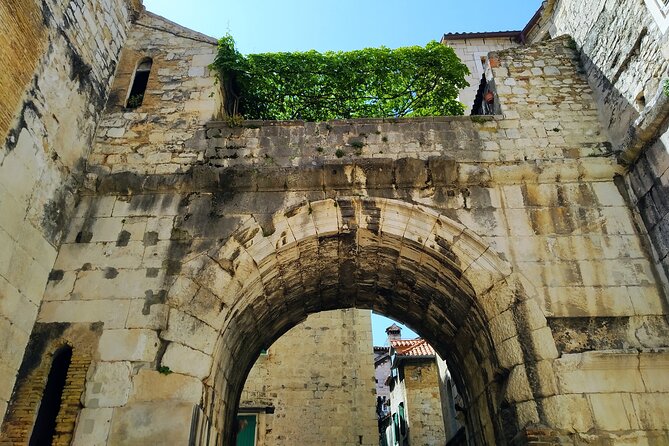
Next up is Fruit’s Square (Trg Brace Radic). It sits just outside the palace, and it’s one of the more picturesque spots on the route. Ivan talks about what stands in the middle of the square and the surrounding important sights, then brings attention to the remains of a 15th-century Venetian fort that dominates the area.
This is where you start feeling the layering of Split. You’re not only seeing Roman decisions. You’re seeing how later powers built on what came before.
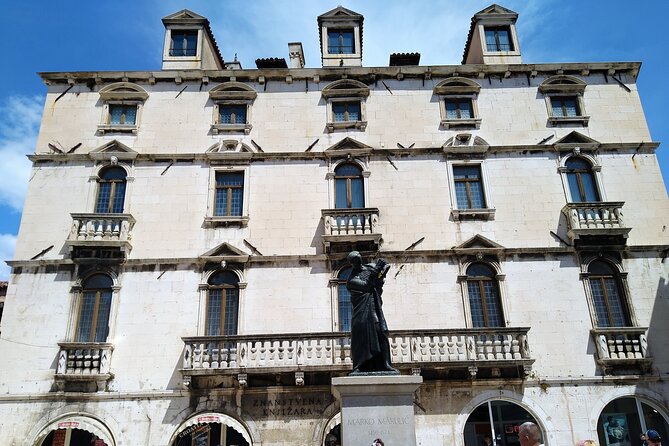
Then you move to Pjaca, in front of the old Town Hall and outside the western wall of the palace. The guide frames Pjaca as the main square of the city since medieval times. You’ll see the 14th-century Town Hall plus other structures around it.
I like that the tour doesn’t skip the civic side. Squares tell you how a city organizes people: markets, meetings, ceremonies, everyday wandering. On a short tour, the civic context keeps your brain from treating the palace as a disconnected relic.
Grgur Ninski statue: toe-rub luck plus a strong historical thread
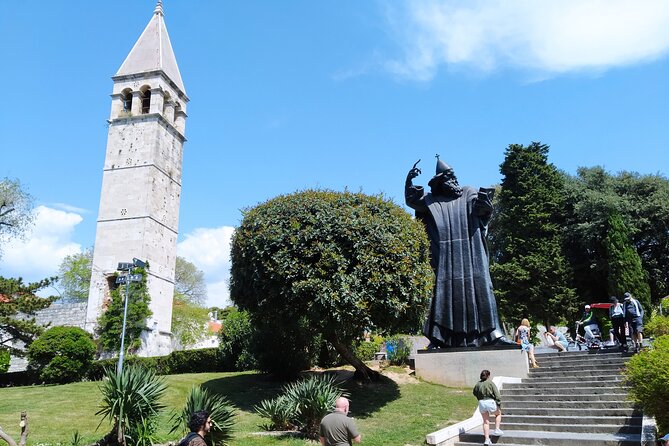
The walk finishes with the Grgur Ninski Statue, a dominant landmark of Split. This is a fun stop, but it’s also a history stop.
Ivan shares the story of Gregory of Nin, including facts tied to his legacy and why there’s a major monument dedicated to him. He also points out the sculptor: Ivan Meštrović. If you like art as much as history, this is where that side of the tour shows up.
And yes, there’s the classic local touch: rub its toe for good luck. It’s one of those traditions that doesn’t need a deep explanation to feel meaningful—it’s a human habit in the middle of stone monuments.
This final stop is short—about 10 minutes—but it leaves you with a clear anchor point for your photos and your memories.
Timing, weather, and walking comfort
The tour runs roughly 1 hour 30 minutes to 2 hours, covering nine stops. The schedule is tight but not frantic, with short time blocks at each location, usually 10–20 minutes. That means you should plan your next activity after the tour thoughtfully—like lunch nearby—rather than stacking a museum right after the last stop.
The tour also requires good weather. Split can change fast with wind and rain, and walking on uneven old-town surfaces isn’t the kind of adventure you want when conditions are miserable. If weather turns, you should be ready for a different date or a full refund.
Price and value: what $238 per group really buys
The price is listed as $238.28 per group, up to 10 people. That pricing model can be a great deal if you’re traveling with friends or family. Even if you’re only a couple, you’re paying for a private guide and a route built around key palace sights rather than generic city highlights.
Here’s the value logic I’d use: you’re buying interpretation. Instead of wandering around Diocletian’s Palace guessing what to look at, you get a Master’s-level guide connecting gates, squares, religious transitions, and private spaces into one coherent story.
If your group is small and you’re paying per-person, you’ll feel that cost more. But if you want to maximize time and walk away with real understanding, this price still competes well with the cost of doing a bunch of separate admissions and self-guided guesswork.
Who this tour is best for
This tour is a strong fit if you:
- Want a quick orientation to Split’s historic core without losing half a day
- Like Roman history but also want to understand later changes, especially the shift connected to Christianity
- Prefer a private small group where you can ask questions as you go
- Enjoy architecture explanations more than “just walk and point” sightseeing
It might be less ideal if you:
- Want lots of time inside churches or temples, since the key interiors here aren’t entered during this walk
- Are chasing a very long tour with extended museum-style stops
Should you book this Private History tour?
If you’re the type of traveler who wants to understand what you’re looking at, I’d book this. The route hits the most important anchors—Golden Gate, Peristyle, St. Domnius area, Jupiter Temple area, Riva, and the key squares—and the guide’s Master’s in History background helps you connect the dots quickly.
My final advice is simple: come with comfortable shoes and let yourself walk with the story. In about two hours, you’ll go from “I’ve seen the palace” to “I can explain it.”
FAQ
How long does the Private History tour in Split take?
The tour lasts about 1 hour 30 minutes to 2 hours.
What is the group size for this tour?
It’s a private tour with your group only, up to 10 people.
Where do we meet for the tour?
The meeting point is Ul. kralja Tomislava 15, 21000 Split, Croatia. The tour ends back at the same point.
Is this tour mostly a walking experience?
Yes. It’s a short walking tour of Split’s main sights in and around Diocletian’s Palace and the nearby city squares.
Do we get tickets for paid entrances like the cathedral and Jupiter Temple?
The Cathedral of Saint Domnius and the Temple of Jupiter have admission ticket notes as not included in the tour. Other stops are marked free.
Do I need to print anything or can I use a phone?
You’ll receive a mobile ticket.
Does the tour run in bad weather?
The experience requires good weather. If it’s canceled due to poor weather, you’ll be offered a different date or a full refund.