Dubrovnik teaches you fast, if you have the right route. This private walking tour packs the city’s big ideas into a clean 1 hour 30 minutes, with a licensed guide and a set sequence of landmarks that make the Old Town feel logical. I especially like the way the Church of Saint Blaise turns a building visit into real city identity through patron-saint legends.
I also love how Stradun is explained as more than a street: you learn how it was formed, how it’s laid out, and even the laws tied to daily life there. One thing to keep in mind is that the stops are short, so it’s ideal for getting your bearings and stories, not for lingering long at any single monument.
In This Review
- Key things that make this tour work
- Why a 90-Minute Private Walk Clicks in Dubrovnik
- Meeting at Amerling Fountain: Quick Start, Less Stress
- Church of Saint Blaise: Patron-Saint Legends That Explain the City
- Stradun Explained: Street Formation, Laws, and Layout
- Rector’s Palace: Politics, Diplomacy, and Peace as a Strategy
- Little Onofrio Fountain: The Republic Through Water and Names
- Orthodox Church of the Annunciation and the Cathedral of the Assumption
- Gunduliceva Poljana Market: Where Local Products Make Sense
- Price and Value: What $132.17 Buys Your Group
- Weather, Timing, and Pacing: The Only Real Variables
- Who Should Book This Dubrovnik Walking Tour
- Should you book it? My practical take
- FAQ
- Where is the meeting point for the tour?
- How long does the walking tour last?
- What does the tour cost, and how many people are in a group?
- Is this a private tour?
- What language is the tour guide?
- Are there admission tickets you need to pay for the stops?
- What’s included in the price?
- What happens if the weather is poor?
- Can I cancel for a full refund?
- Is the tour near public transportation?
Key things that make this tour work
- A private format for up to 6 keeps the pace human and the questions coming
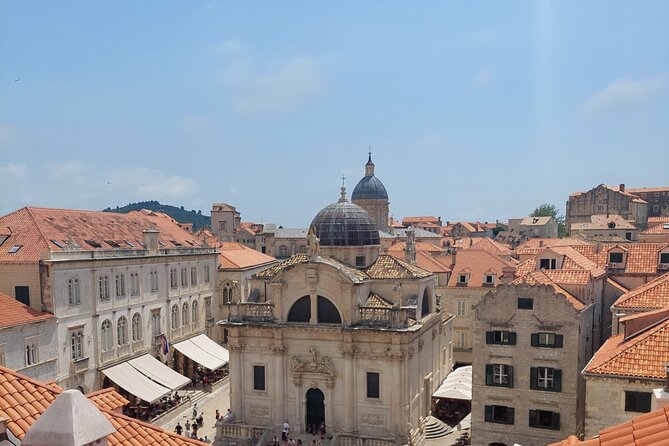
- Saint Blaise to Stradun gives you a clear Old Town storyline instead of random sightseeing
- Rector’s Palace peace-and-politics angle helps you understand Dubrovnik’s long independence mindset
- Onofrio Fountain connection points out both the main and the little version in context
- Different worship communities, close together across orthodox and Catholic sites gives a fuller picture
- A market stop at Gunduliceva Poljana gives you a practical taste of local life beyond monuments
Why a 90-Minute Private Walk Clicks in Dubrovnik
Dubrovnik’s Old Town can feel like one long photo spot. The trick is learning what you’re looking at before you burn your whole day wandering. This is a tight, guided loop that helps you connect the dots quickly.
What I like is that the tour is structured, with about 10 to 15 minutes at each stop. That time window is enough for stories and context, but short enough that you’re not trapped in one place while the rest of the city slips by. You’ll leave with a mental map and a bunch of names to remember.
Since it’s private, you’re not squeezed into a rigid group rhythm. You get to move at a comfortable walking pace and ask for clarification when something doesn’t click right away. In past experiences with this tour format, guides like Kim have been praised for being on time, friendly, and able to tell the story in a way that feels personal.
You can also read our reviews of more tours and experiences in Dubrovnik.


Meeting at Amerling Fountain: Quick Start, Less Stress
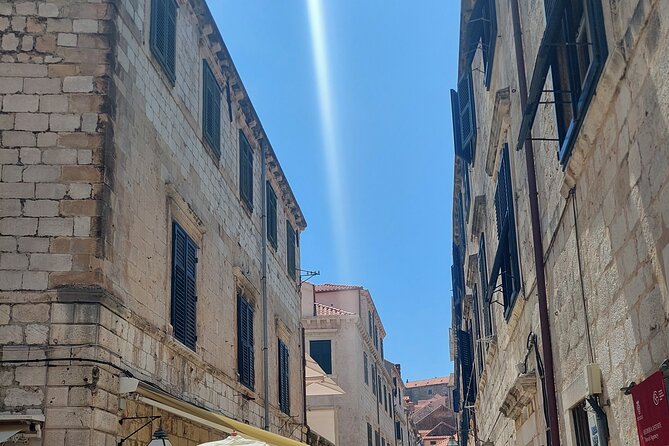
The tour meets at Amerling Fountain on Ul. Svetog Đurđa (20000, Dubrovnik). That matters because it’s easier to arrive with a simple destination than trying to hunt for a guide at a busy, unnamed corner.
From there, you’ll walk the Old Town area and return back to the meeting point at the end. That loop format is handy when your day has other plans after the tour, like dinner or a second walk of your own. The duration is listed as about 1 hour 30 minutes, so you can plan your schedule without guessing.
The tour runs during daylight hours (9:00 AM to 8:00 PM), and you’ll get a mobile ticket. If you’re the type who hates last-minute logistics, the mobile ticket helps. And because it’s near public transportation, you’re not forced to solve a whole transit puzzle before you start.
Church of Saint Blaise: Patron-Saint Legends That Explain the City
Your first stop is the Church of Saint Blaise. This is a smart opener because it sets the emotional tone for Dubrovnik. You don’t just see a church; you hear why Saint Blaise matters, along with the legends tied to him.
You’ll get about 10 minutes here, and in that short time the guide’s job is to connect the church with the people who chose it as a patron symbol. That makes the rest of the tour easier to follow. When you later see civic buildings and power centers, you’ll understand that Dubrovnik wasn’t only trading and governing—it also used faith and tradition to shape identity.
A possible consideration: if you’re hoping for a long, inside-the-building religious experience with lots of time to sit and read, this stop is brief. It’s designed for orientation and story, not a full church visit with extended downtime.
Stradun Explained: Street Formation, Laws, and Layout
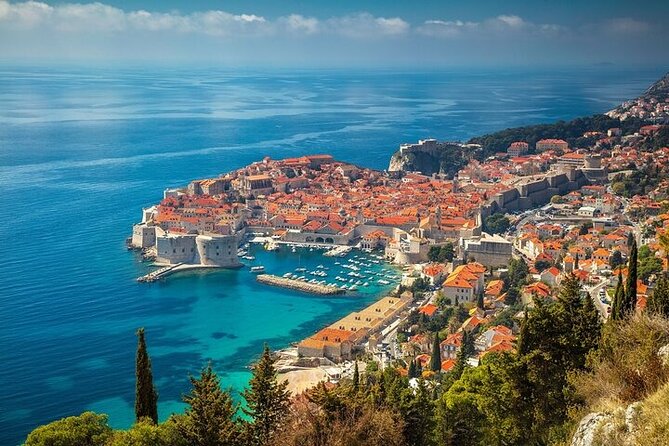
Next comes Stradun, Dubrovnik’s main street. I like this stop because it’s where the Old Town becomes navigable. Stradun is the spine of the area, and once you grasp how it’s formed and laid out, everything around it becomes easier to interpret.
In about 15 minutes, your guide focuses on details like the street’s formation and how the layout supports city life. There’s also a laws-and-order angle—because cities don’t just grow randomly; they build rules right into the way people move.
If you’ve ever walked into a medieval city and felt like every turn was equally confusing, Stradun is the antidote. You learn the logic early, so later photos and side streets feel less like guessing.
The main drawback is simply time. Fifteen minutes goes fast on a famous street, especially when you want to stop for photos. Just remember: you’re getting the story, not collecting a dozen perfect selfies.
Rector’s Palace: Politics, Diplomacy, and Peace as a Strategy
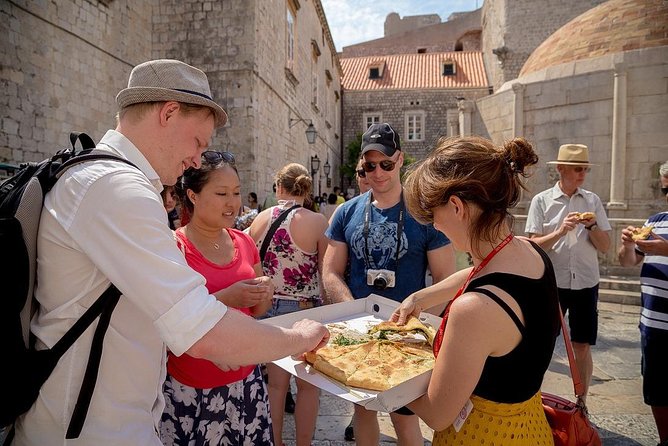
Then you’ll reach Rector’s Palace for a politics-and-diplomacy lesson. This stop lasts about 10 minutes, but it’s packed with the idea that Dubrovnik’s identity wasn’t only built on walls. It was also shaped by how the city handled power—its focus on diplomacy, and how it aimed for peace for centuries.
Why this works on a walking tour: the palace isn’t separate from the street. You see it in the context of where people lived and moved. That helps you understand why civic buildings and government spaces mattered in everyday terms, not just as impressive backdrops.
If you like to travel with context—how and why a place operated—this part is a highlight. Guides have been praised for being able to explain Old Town politics in a way that actually sticks. And in at least one account of this experience, the guide’s local perspective also included how wars impacted daily life, which adds a more human layer to the official story.

Little Onofrio Fountain: The Republic Through Water and Names

Around this stretch you’ll stop at Little Onofrio Fountain. It’s a neat pairing because you’re able to see this smaller version while also learning about the main Onofrio fountain.
On a standard sightseeing day, you might notice a fountain and move on. On this tour, you’ll learn who Onofrio was and why he was so important to the Republic of Dubrovnik. That turns a quick stop into a clue about infrastructure and civic pride: even water features were part of the city’s self-image.
Time here is about 10 minutes. So don’t expect a long technical lecture, but do expect the “why this matters” version that makes the sight feel less random. A quick tip: after this stop, keep an eye out for how water and public works appear around town. Your brain will start noticing patterns.
Orthodox Church of the Annunciation and the Cathedral of the Assumption
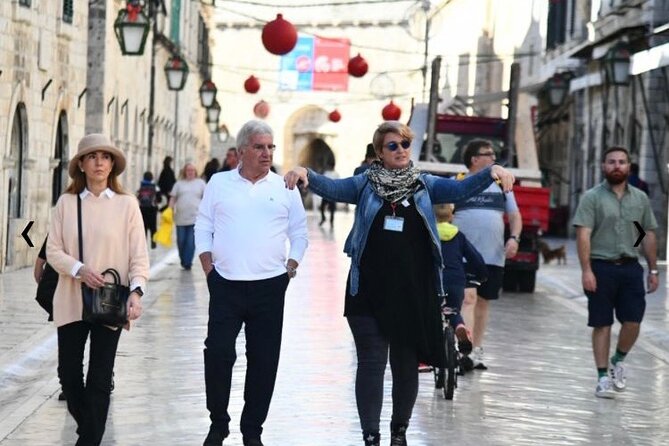
The tour then shifts from fountains and civic power to religion and community.
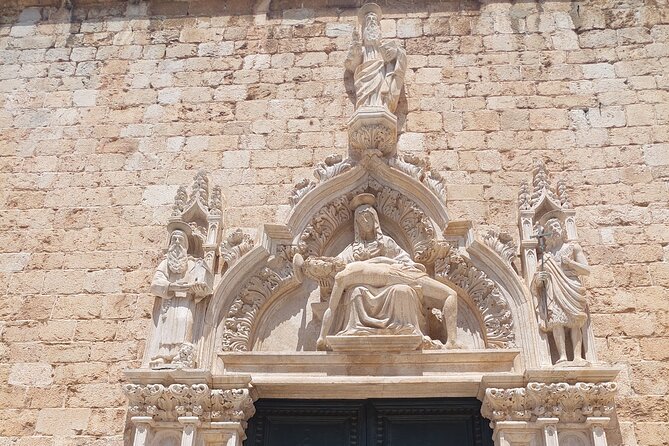
First, you’ll visit the Orthodox Church of the Annunciation, with about 10 minutes to learn about religion in Dubrovnik and the different inhabitants. This is valuable because it nudges your perspective away from a single-story Old Town. Dubrovnik wasn’t one uniform group; it was a place where different communities lived close together.
After that comes the Cathedral of the Assumption of the Virgin Mary. This stop is also about 10 minutes and focuses on two angles: religious importance and archaeological reasons. That combination is useful. You’ll get a sense that the cathedral matters not only because of worship, but also because the site represents layers of the city over time.
A practical consideration: church stops often involve standing and looking upward or along façades. If you plan to do a long day afterward, wear shoes you can handle on stone streets. Comfort matters more than you think, especially when you’ve already walked through other parts of Old Town.
Gunduliceva Poljana Market: Where Local Products Make Sense
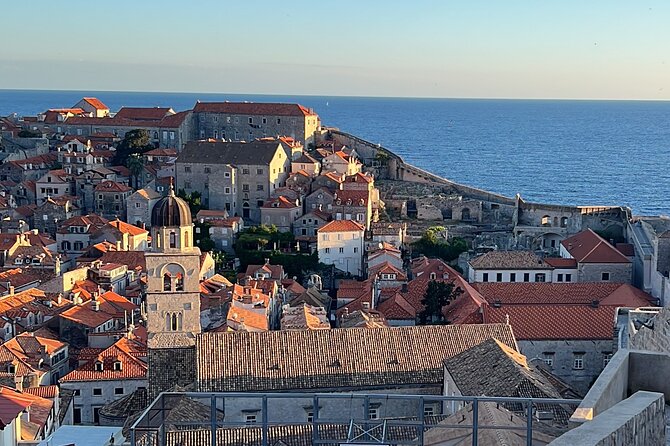
The final scheduled stop is Gunduliceva Poljana Market. This is one of the most practical parts of the tour because it shifts you from monuments to daily life.
You’ll spend about 10 minutes here, and the focus is on what you can buy locally—fruits, oil, herbs, and other products. Even if you don’t shop heavily, the market stop gives your brain something grounded. It reminds you that Old Town isn’t only for sightseeing; it’s also a place where people still live and trade.
If you want to extend your day, this is also a smart moment to ask your guide what to look for. In the past, guides like Kim have shared local restaurant suggestions and advice based on how residents think about food and daily living—especially helpful if you’re trying to avoid tourist traps.
Price and Value: What $132.17 Buys Your Group
The price is $132.17 per group, up to 6 people, for about 1 hour 30 minutes. That structure changes the math. For small groups, it can work out to a sensible cost per person compared with tours priced per head.
What makes the price feel justified is the licensing and the private format. You’re not just paying for someone to walk beside you. You’re paying for a guided storyline through major Old Town sites—Saint Blaise, Stradun, Rector’s Palace, Onofrio connections, multiple religious sites, and the market—kept coherent within a short timeframe.
One more value point: admission tickets are listed as free at the stops in the itinerary. That means you’re not hit with extra museum fees mid-walk. And you get an English-speaking licensed guide included in the cost, which is often the real variable in tour value.
For families, couples, or a small group of friends, this is the kind of tour that can genuinely improve your whole visit. You’ll know where you are and why each place matters, so your self-guided wandering later becomes more enjoyable and less guesswork.
Weather, Timing, and Pacing: The Only Real Variables
This experience requires good weather. Dubrovnik can be sunny and stunning, but a sudden rain change can disrupt your comfort on stone streets. If conditions aren’t good, you’ll be offered a different date or a full refund, so you’re not stuck.
As for timing, you’ll be operating within the 9:00 AM to 8:00 PM window. A 1 hour 30 minutes walking tour is also a good fit for most vacation schedules: it works before lunch, after breakfast, or as a first-orientation step that helps you plan the rest of your day.
Pacing is set by the itinerary: roughly 10 to 15 minutes per stop. That’s a feature. It keeps momentum and helps you avoid the trap of overspending time at one place and arriving at others when you’re tired.
Who Should Book This Dubrovnik Walking Tour
I’d book this if you want a fast, organized way to learn Dubrovnik’s Old Town without committing to a half-day or longer. It’s ideal when you value context—stories about patron saints, civic governance, community life, and what all those famous buildings are really about.
It also fits if you prefer private guiding. The tour size is limited to your group only, so it’s easier to go at your pace and ask direct questions.
If you’re the type who wants to read every plaque, sit for long museum-style breaks, and spend a lot of quiet time inside buildings, you might find the stops a bit brief. In that case, you might add extra solo time later at your favorite stop after the tour ends.
Should you book it? My practical take
Yes—if you want a clear Old Town storyline in 90 minutes and a guide who can turn major sights into connected meaning, this is an excellent choice. The private group size up to 6 helps with cost and comfort, and the stop sequence hits the big themes that make Dubrovnik feel like more than a postcard.
Book it especially if you’re short on time or you’d rather learn first and then explore on your own. The only reason not to is if you want long lingering at a single site or you’re traveling in conditions where good weather is unlikely—because this tour is explicitly weather dependent.
If that sounds like your trip, this one is worth it.
FAQ
Where is the meeting point for the tour?
The tour starts at Amerling Fountain, Ul. Svetog Đurđa, 20000, Dubrovnik, Croatia.
How long does the walking tour last?
It lasts about 1 hour 30 minutes.
What does the tour cost, and how many people are in a group?
The price is $132.17 per group, for up to 6 people.
Is this a private tour?
Yes. It’s a private tour/activity, and only your group participates.
What language is the tour guide?
The tour is offered in English.
Are there admission tickets you need to pay for the stops?
The itinerary lists admission tickets for the stops as free.
What’s included in the price?
A licensed tour guide is included.
What happens if the weather is poor?
The experience requires good weather. If it’s canceled due to poor weather, you’ll be offered a different date or a full refund.
Can I cancel for a full refund?
Yes. You can cancel up to 24 hours in advance for a full refund.
Is the tour near public transportation?
Yes, it’s near public transportation.