REVIEW · SPLIT
Private Walks & Storytelling – the best small group tour in Split
Book on Viator →Operated by Walking tours with The Storyteller Croatia · Bookable on Viator
Split feels like two cities at once, and the best guide knows both. This is a small group, private-feeling walk built around stories, local detail, and the slow Split rhythm—pomalo. I like that the guide is licensed and local-born, so the history comes with everyday context, not just dates. I also like the pacing: you cover big landmarks plus smaller corners, with stops that let you actually reset your eyes between Roman stone and modern life.
The one thing to consider is that not every entrance is included, so a few stops (like the cathedral and the Temple of Jupiter) may require extra payment on the day.
Key things you’ll notice right away
- Small groups up to 10 (so your questions don’t get swallowed by a crowd)
- Story-driven route that ties folklore and daily life into the Roman walls
- Diocletian’s Palace layers: waterfront life, substructures, Peristyle, and gates
- A well-timed chocolate stop with samples at Nadalina cokolada
- You can steer the ending if you’d rather finish closer to where you’re headed
In This Review
- Why Private Walks & Storytelling Works in Split
- Price and Value for a Split Group of up to 10
- Brass Gate Start: the easy first step into Roman Split
- Riva Harbor to the Substructures: daily life on the surface, centuries below
- Peristyle and Saint Domnius: the palace square that still feels like a center
- Temple of Jupiter to Let Me Pass: how the city changed religion and kept the quirks
- Narodni Trg, the Golden Gate, and the wish at Grgur Ninski
- The Nadalina cokolada stop: a chocolate break that actually fits the story
- Customizing your tour without losing the plot
- Who this Split walk is perfect for
- Should you book Private Walks & Storytelling in Split?
Why Private Walks & Storytelling Works in Split
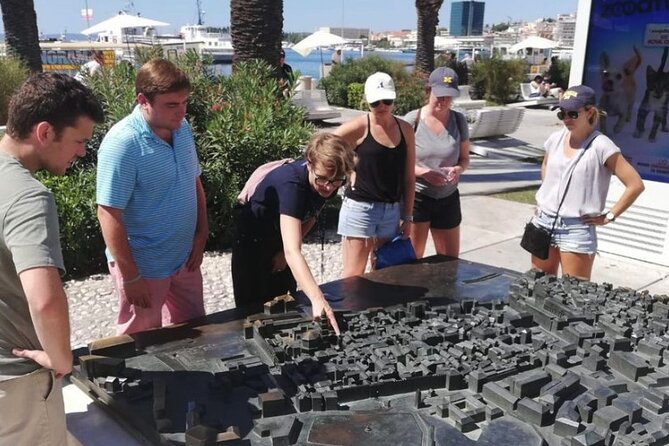
Split is famous for Diocletian’s Palace, but that’s only the headline. What makes this walk worth your time is the way it connects the palace stones to the living city that grew around them. You’re not just seeing “what’s old.” You’re learning why people still use these spaces today.
With a group capped at 10, you get room to ask follow-ups. That matters in Split, where a single street name can point to centuries of change. On this tour, the storytelling also works like orientation: you start at the water, move through Roman structure, and end with places that feel very much part of modern Split. You leave with a mental map you can use the rest of your stay.
The other big win is the guide style. The tour is described as private and customizable, with a focus on what interests you most. If you’re into folklore, daily habits, Roman engineering, or the way faith changed the city, you’ll get a route that puts those ideas in the right places instead of treating everything as the same level of importance.
Price and Value for a Split Group of up to 10
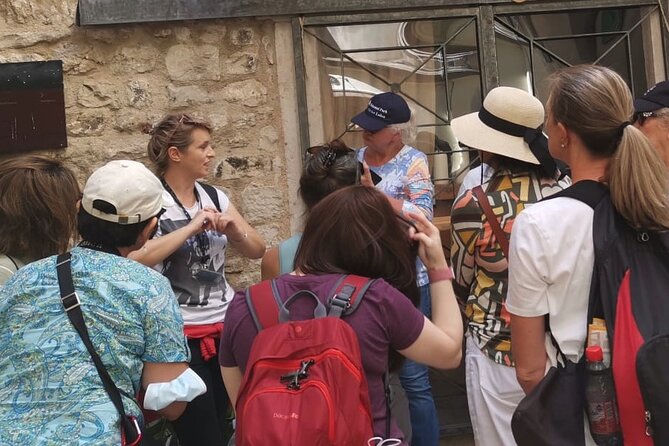
The price is $238.34 per group for up to 10 people, for a walk around 1 hour to 1 hour 40 minutes. That’s not the cheapest line-item “ticket price,” but it can be strong value if you’re traveling as a small group.
Here’s the simple math:
- With 10 people, you’re at about $23.83 per person.
- With 4 people, you’re at about $59.59 per person.
- With 2 people, you’re at about $119.17 per person.
So: if you can split into a group, the deal gets better fast. If you’re a couple, it can still be worth it when you want a guide who adjusts to you, not a fixed script for everyone.
As for entrances: some stops include admission tickets (like the Riva Harbor portion and Peristyle area, plus the chocolate stop and the Grgur Ninski segment). Other key sights are marked not included, including the Cathedral of Saint Domnius and the Temple of Jupiter. You’ll want to budget a bit for those if you plan to go inside.
You can also read our reviews of more tours and experiences in Split.


Brass Gate Start: the easy first step into Roman Split
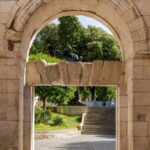
Your tour starts at the Brass Gate (Porta Aenea), right by the waterfront (Obala Hrvatskog narodnog preporoda 22). This is a smart starting point because you immediately get the “real Split” view: people lingering by the water, the city moving at a human pace, and the old town rising out of the modern flow.
The meeting area being near public transportation helps too. Even if your hotel is a short walk away, you shouldn’t feel tied to one exact pickup plan. And because the tour uses a mobile ticket, you’re not juggling paper in a pocket that’s already full.
From the first minutes, the guide’s job is basically this: help you read Split. You’ll learn where life happens, then you’ll learn where Rome tried to control life—and how that control turned into a lived-in maze over time.
Riva Harbor to the Substructures: daily life on the surface, centuries below

The walk begins at Riva Harbor, the kind of place where time doesn’t run on a schedule. The focus here isn’t just scenery; it’s how Split works day-to-day. You’ll be shown why locals sit, chat, sip coffee, and watch the sea. That matters because later stops are all about structure—Roman walls, square layouts, palace geometry. Starting at the waterfront helps those details make sense.
After that, you move into Diocletian’s Palace substructures—the basement areas under the city. This is where the mood changes. The stone feels older in a physical way. Even without getting technical, you can sense how “under the city” became part of how the city functioned: work, trade, storage, and the everyday engine of a palace that wasn’t only for emperors.
Practical note: these interior-feeling spaces tend to be a good break from heat and direct sun. Still, it’s a walking tour, so wear shoes that can handle uneven old-town surfaces.
Peristyle and Saint Domnius: the palace square that still feels like a center
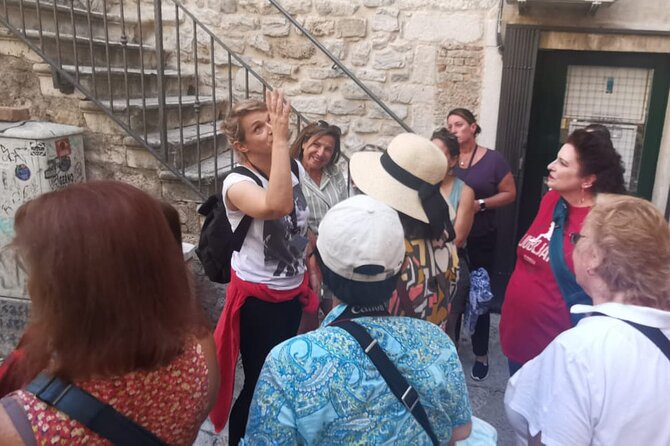
Next up is the Peristyle, the open space at the heart of Diocletian’s Palace. Standing here gives you the big visual idea of the whole palace: an imperial court designed for power, now used for ordinary life and daily movement. This is also where the guide’s storytelling connects the imperial past with modern Split’s temperament—again, that slow way of living, the pomalo attitude.
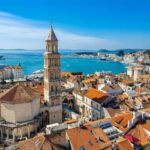
A key highlight at this stage is the Cathedral of Saint Domnius. The cathedral sits protected within the palace area and is known as one of the oldest cathedrals in the world. You’ll see the famous bell tower rising above the square. The catch: the cathedral admission is not included, so if you want to go inside, plan to pay on site.
This stop is one of the best “why Split is special” moments. You see how different eras didn’t simply replace each other—they stacked. Roman planning, later Christian use, and still today’s use of the space all sit within the same view.
Temple of Jupiter to Let Me Pass: how the city changed religion and kept the quirks
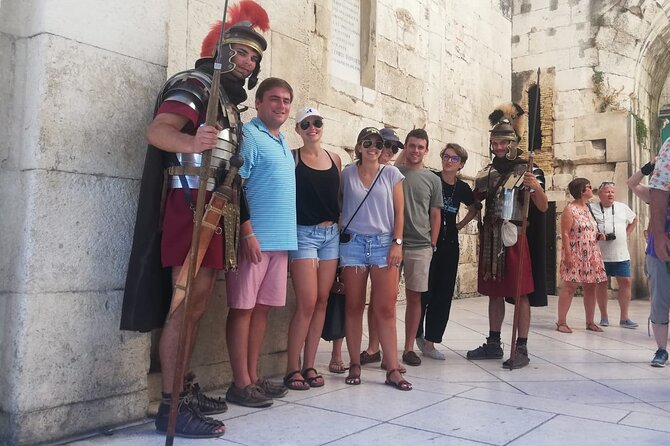
From Peristyle you’ll move through narrow lanes toward the Temple of Jupiter. The location is tied to the idea of Diocletian connecting himself to the Roman god of the sky and thunder—Jupiter. Then, in the Middle Ages, that Roman temple was converted into a baptistery dedicated to St. John the Baptist. That shift is a huge clue to how Split’s identity got rewritten without erasing the old stone.
The Temple of Jupiter admission is not included, so again, decide in advance whether you want to add the entrance cost or simply take in what you can see from outside.
On the way, you’ll pass by Let Me Pass (Pusti me da prodjem) Street, described as the narrowest street in town by local belief. This is a quick stop—about two minutes—but it’s the kind of detail that makes a walk feel local. The guide also explains why the street sits between ancient temple and medieval structures, with a modern hotel now in that space. That contrast is the point: Split doesn’t pause for preservation. It keeps living.



Narodni Trg, the Golden Gate, and the wish at Grgur Ninski
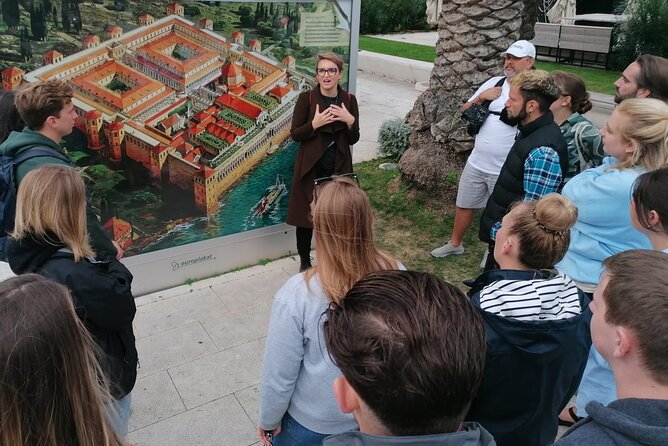
Once you head toward Narodni Trg, you see Split shift westward. This area is described as the place where the city grew when the palace walls could no longer contain life. It’s where the idea of Split as a meeting point of cultures starts to show in the street layers: influences from different parts of Europe, all built in stone and then adapted by everyday people.
Then you move toward the Golden Gate (Porta Aurea), one of four main Roman gates into the palace. The route takes you toward the north road historically tied to Salona, the capital of the Roman province of Dalmatia and Diocletian’s birthplace. The guide connects those directions to military thinking—how gates weren’t decoration. They were strategy.
Near the Golden Gate, you’ll also get a sense of hidden side spaces and nearby buildings. The tour keeps a “look around” mindset, not a “only pose for photos” routine.
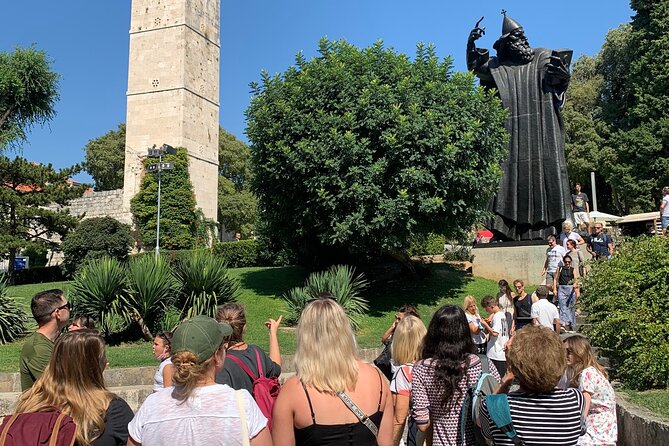
Finally, you end at Grgur Ninski Statue, right by a wall and a square space that blends 4th-century Roman stone with 20th-century art and modern life. You’ll also be part of a local tradition: the guide asks everyone to make a wish while respecting the tradition of that spot.
This ending works well because it’s practical. You finish in a place where you can turn into your next plan fast—coffee, dinner, or just wandering without feeling lost.
The Nadalina cokolada stop: a chocolate break that actually fits the story
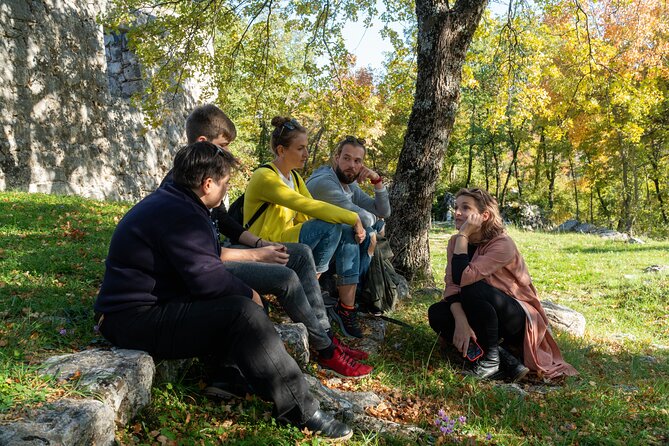
Mid-to-late in the walk you’ll reach Nadalina cokolada. This is more than a random snack break. The stop is timed well so your brain can reset after palace density.
You’ll learn a bit about food production and get samples of locally flavored chocolate. Since the tour already mixes Roman structure with modern street life, it makes sense to end a walking loop with something you can taste. It’s also a nice option if you’re traveling with anyone who needs breaks built into the itinerary, not just optional pauses.
If you’re trying to plan your day, I’d treat this as a “don’t overeat before this” moment. If you wait too long to eat, chocolate can feel like a sugar cliff. If you arrive too full, the samples might not feel as fun.
Customizing your tour without losing the plot
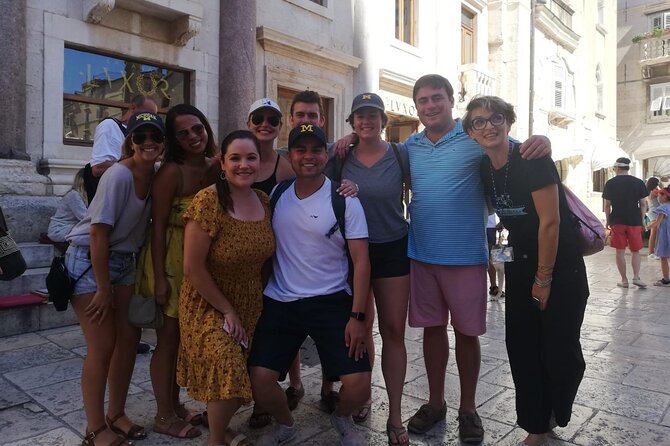
The tour is billed as focusing on what most interests you, and the guide is both a storyteller and a certified history interpreter. That means customization isn’t just “we can go this way or that way.” It’s about how the guide chooses what to explain deeply and what to skim.
When it works best for you: tell the guide what you want more of at the start—Roman architecture details, Croatian folklore and local quirks, or what daily life in Split looks like now. The guide can adjust the ending too. The tour can end wherever you like, and you just tell them your preference at the beginning.
That flexibility is useful if you’re staying near the old town versus closer to the waterfront hotels. You won’t feel stuck finishing far away from your next bus, ferry plan, or dinner reservation.
Who this Split walk is perfect for
This is a strong choice if:
- You want a history and folklore mix, not a one-note sightseeing script.
- You care about small group pacing and asking questions.
- You like walking tours where the guide helps you understand how the city works, not just what to photograph.
It’s also a good match for mixed ages. The guiding style is described as engaging across age groups, and the route keeps variety: open squares, tight lanes, an interior substructure feel, and a break with chocolate.
If you’re someone who hates entrances and ticket lines, you’ll want to plan your priorities. Since a couple of major sites are marked as not included (cathedral and Temple of Jupiter), you may choose to pay for those—or simply focus on the exterior views.
Should you book Private Walks & Storytelling in Split?
Yes, if you want a first-class orientation to Split’s real layers: waterfront life, Roman engineering, and the way religion and culture changed the same spaces without wiping the past away.
I’d book it especially if you can bring a couple friends along to fill out that group size. The price per person drops quickly, and you still get the intimate feel. If you’re traveling solo as a strict-budget pick, it may feel pricier—so compare it to other options where you don’t pay for a private-style guide.
Bottom line: this is a guided walk that teaches you how to see Split. Not just what you’re looking at, but why the city still behaves the way it does.