REVIEW · SPLIT
Split and Trogir Half Day Guided tour
Book on Viator →Operated by Redono d.o.o. · Bookable on Viator
Two Dalmatian towns in one smooth half-day. I love how this guided route stacks Diocletian’s Palace stops with a walk through Trogir’s old center, all starting at Split’s Golden Gate and finished with time to wander on your own.
You also get the payoff of a small-group feel, so you can actually ask questions instead of just following a stream of people.
I especially like the way the palace route is structured, from the basements up through the palace square areas. The best part is how guides such as Antonia or Ante often tie what you’re seeing to real local stories and even pop-culture references, including the palace substructures being used in Game of Thrones filming.
The main thing to plan for is that it’s a walking-focused day. If you have mobility limits or you hate being outdoors for long stretches, this one can feel like a lot, and you’ll also want to check which monuments require extra tickets.
In This Review
- Quick highlights before you go
- Why this Split and Trogir half-day works so well
- Meeting at Golden Gate: your starting point and first orientation
- Diocletian’s Palace stops: basements, Peristyle, and the palace entrances
- Stop 1: Diocletian Palace substructures (the basements)
- Stop 2: The Peristyle
- Stop 3: The Vestibulum
- Stop 4: The Golden Gate (north entrance)
- Split’s old-town stroll: Riva Harbor and Fruit’s Square
- Stop 5: Riva Harbor promenade
- Stop 6: Fruit’s Square (Trg Brace Radic)
- The Trogir transfer: short van ride, big change of pace
- Trogir highlights: town hall, Central Square, and the cathedral zone
- Stop 7: Ayuntamiento Trogir (city hall)
- Stop 8: Central Square
- Stop 9: Saint Lawrence’s Cathedral (ticket not included)
- Stop 10: St. Sebastian
- Stop 11: Kula Karmelengo (ticket not included)
- How the free time in Trogir changes your day
- Price and value: is $60.49 worth it?
- How much walking is involved, and who should consider this tour
- Tips to get more out of Split and Trogir on this route
- Should you book the Split and Trogir half-day guided tour?
Quick highlights before you go
- Game of Thrones filming spot in the palace basements as you start inside Diocletian’s complex
- Peristyle and Vestibulum stops that quickly explain how the palace functioned
- Riva Harbor promenade and Fruit’s Square for a real feel of everyday Split life
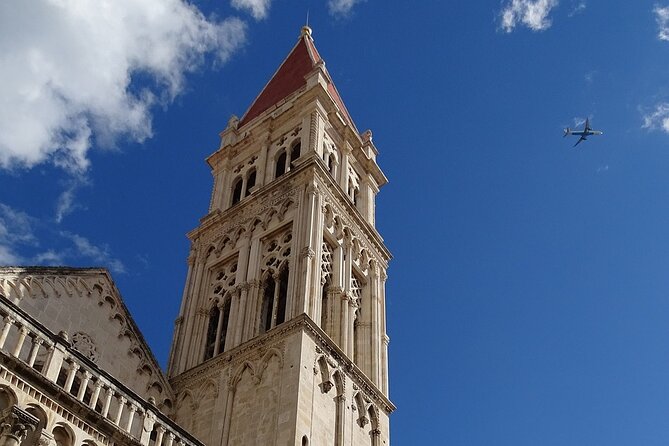
- Trogir’s Central Square and St. Lawrence’s Cathedral to see why the town draws photographers
- Kula Karmelengo fortress (Venetian-built) for a strong final view-and-story finish
- Free time in Trogir, so you’re not stuck in guided mode the whole time
Why this Split and Trogir half-day works so well
This tour is built for people who want big hits without giving up an entire day. In about 5 to 6 hours, you cover the main “what am I supposed to see here” landmarks in Split and then continue to Trogir, where you get a guided orientation plus some breathing room.
That pacing is smart. Split’s old town and palace areas can feel like a maze if you show up cold. Trogir, on the other hand, moves at a slower local pace, and it’s much easier to enjoy after someone gives you the basic layout and the key stories. You end up with context in Split, then you get to enjoy Trogir rather than just tick boxes.
A practical plus: the tour includes round-trip transportation from Split in an air-conditioned vehicle. That means you’re not dealing with buses, taxis, or figuring out where the van drops off and picks up.
Finally, the timing tends to fit both land travelers and people on tight schedules. There’s a set meeting point at Split’s Golden Gate, and the tour ends back there. Some days, the driver may adjust drop-off for cruise passengers, but the standard flow is back to the meeting point.
You can also read our reviews of more tours and experiences in Split.

Meeting at Golden Gate: your starting point and first orientation
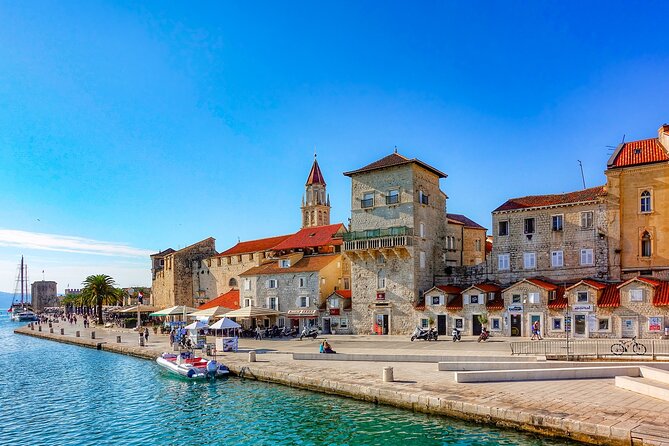
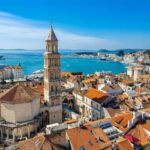
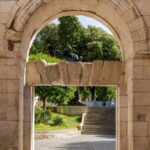
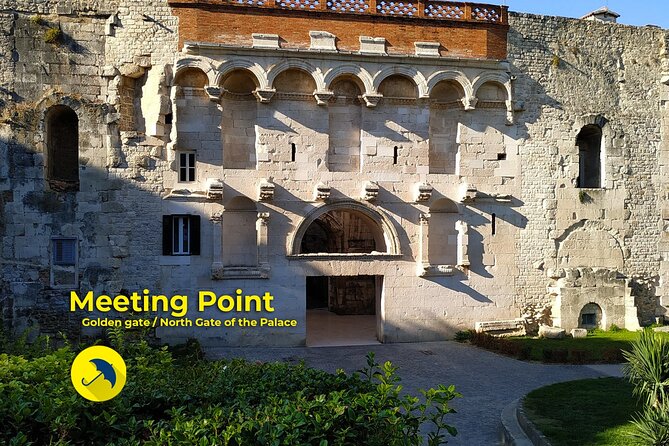
You begin at the Golden Gate (Dioklecijanova 7, 21000 Split). This is also described as the palace’s north entrance and a natural place to start. Starting here matters because Diocletian’s Palace is not one single building. It’s a whole complex that shapes the streets around it.
From the start, your guide uses the palace layout to help you understand the flow. The early stops focus on palace spaces that most people don’t notice until someone points them out. It’s a faster way to get your bearings than wandering for an hour and hoping things make sense.
Expect an English tour throughout. That’s a real comfort factor because these places have layers of Roman, medieval, and later history, and you’ll want your guide’s explanations in plain language.
Diocletian’s Palace stops: basements, Peristyle, and the palace entrances
This is the core of the day. The tour moves through key points inside Diocletian’s Palace that show how the complex worked, not just how it looks.
Stop 1: Diocletian Palace substructures (the basements)
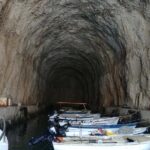
You’ll spend about 10 minutes at the substructures, also called the basements. This is the spot where the tour notes the location was used for Game of Thrones filming. Even if you’re not a fan, it’s worth going because basements change how you picture the palace. You’re not looking at decorative surface history. You’re seeing the parts that suggest structure, storage, and function.
Admission is listed as free for this stop, so it’s a low-risk moment to include.
Stop 2: The Peristyle
Next is the Peristyle, with about 20 minutes here. This is described as the ancient main square of the palace. If you’ve ever wondered why people get excited about “squares” inside palaces, this is where it clicks. It’s the central open area that helps explain how people would move, gather, and live around these spaces.


Stop 3: The Vestibulum
Then you’ll head to the Vestibulum, another entrance-related palace area. You get about 10 minutes. This stop matters because it fills in the missing middle between the big square spaces and the palace entry points. You begin to see how entrances, passageways, and movement were designed.
Stop 4: The Golden Gate (north entrance)
Finally, you revisit the Golden Gate area as part of the organized route, with about 20 minutes allocated here. Since your tour meeting point is also Golden Gate, it’s a useful anchor. The guide can connect what you saw inside the palace to what you’ll experience just outside—streets, promenades, and squares.
In practice, this palace sequence is fast but not random. It’s designed to make the complex feel coherent.
Split’s old-town stroll: Riva Harbor and Fruit’s Square
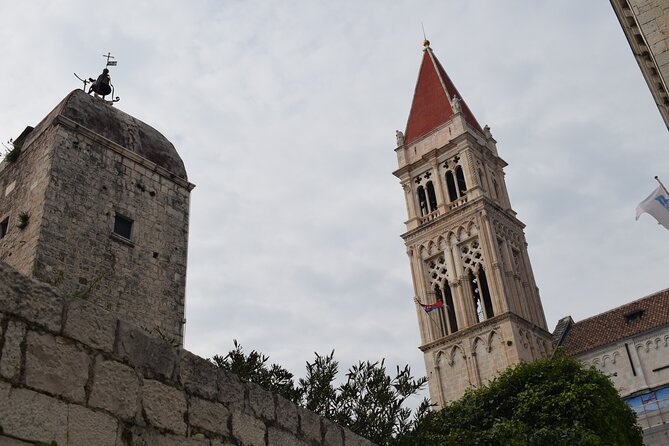
Once you move beyond the palace walls, the tour shifts into “how this city actually feels” mode.
Stop 5: Riva Harbor promenade
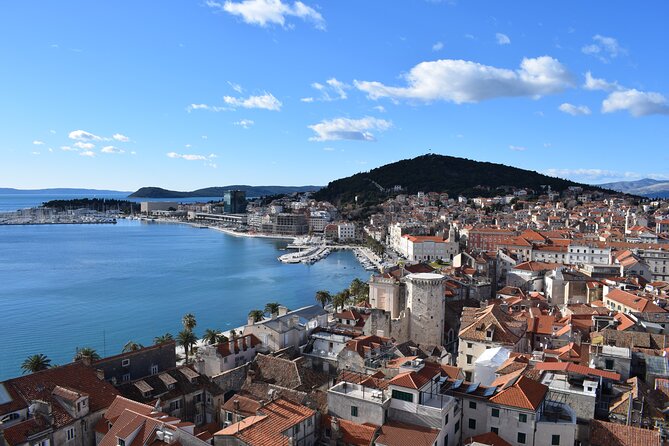
You’ll take about 10 minutes at Riva Harbor, the famous promenade with sea views. This is your visual reset. Palace stones are cool, but then you get to see daylight, boats, and the everyday rhythm of the waterfront.
Stop 6: Fruit’s Square (Trg Brace Radic)
Next is Fruit’s Square, about 20 minutes. The tour calls it one of the more interesting squares in Split, and that’s believable once you’re there. Squares in old towns are where stories become visible: buildings facing the public, everyday routes, and the kind of corners where people linger.
This stop is also a good break in the schedule. You’ll want it. The day has enough “reading” moments that you’ll appreciate some open-air time where you can just look around.
The Trogir transfer: short van ride, big change of pace
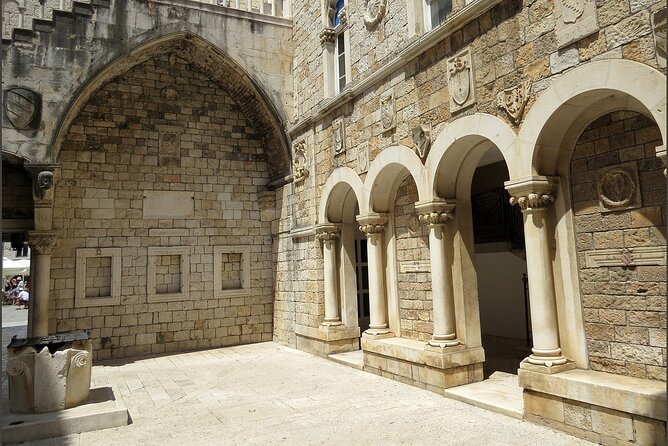
You’ll head from Split to Trogir using the air-conditioned vehicle. The tour includes guided coverage in Trogir plus free time in town.
In real life, this part is a relief. You’re not walking the whole day. You’re using the van to switch locations and reset your brain. One review also mentioned the van ride being well planned, with return transport that could work with cruise-port timing or the Golden Gate return, depending on the day.
When you arrive, you won’t feel lost. The tour gives you a path so Trogir doesn’t become just another pretty town you hurried through.
Trogir highlights: town hall, Central Square, and the cathedral zone
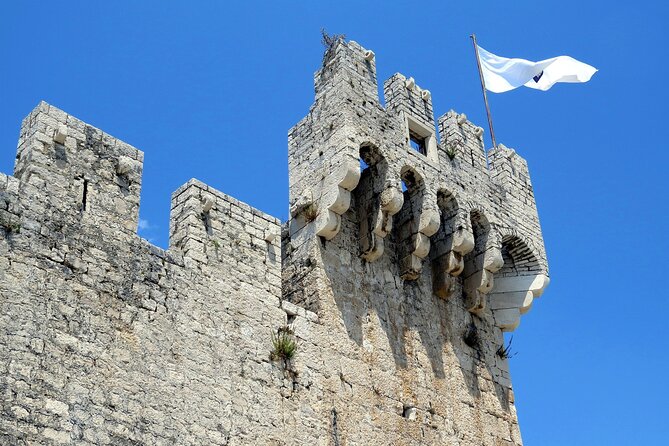
Trogir is the kind of place where the details matter. The tour focuses on key landmarks in a way that helps you understand the town’s shape quickly.
Stop 7: Ayuntamiento Trogir (city hall)
You’ll see Ayuntamiento Trogir (city hall) for about 10 minutes. The description highlights its history, but even without deep background, city halls tell you a lot. They mark where civic life happened, and they help you read the town’s priorities beyond religion and monuments.
Stop 8: Central Square
Then it’s about 20 minutes at Central Square, the main square with plenty of sights and learning opportunities. This is where you can connect buildings, street direction, and your own walking plan. When people say Trogir is “photogenic,” what they usually mean is that the sightlines from the square make it easy to frame the town like a postcard.
Stop 9: Saint Lawrence’s Cathedral (ticket not included)
The tour includes a stop at St Lawrence’s Cathedral for about 15 minutes, and it specifically notes that admission is not included. This is one of the moments where you should be ready with extra payment, or at least plan time around ticketing.
Even if you decide not to go inside, the outside viewing window is still part of the tour’s guided story. But if you do go in, budget time for that extra step.
Stop 10: St. Sebastian
Next is St. Sebastian, about 10 minutes. The tour notes it was once a church and is now a memorial place. This adds a reflective angle to the day. You’re not only seeing architecture. You’re seeing how space changes purpose over time.
Admission here is listed as free.
Stop 11: Kula Karmelengo (ticket not included)
You finish with Kula Karmelengo, about 10 minutes, described as a fortress built by the Venetians. It’s also labeled as not included for admission tickets.
This stop works well at the end because fortresses usually deliver strong views and clear “why it mattered” context. Even if you’re only there briefly, you’ll understand how the town’s coastal position and defenses shaped its history.
How the free time in Trogir changes your day
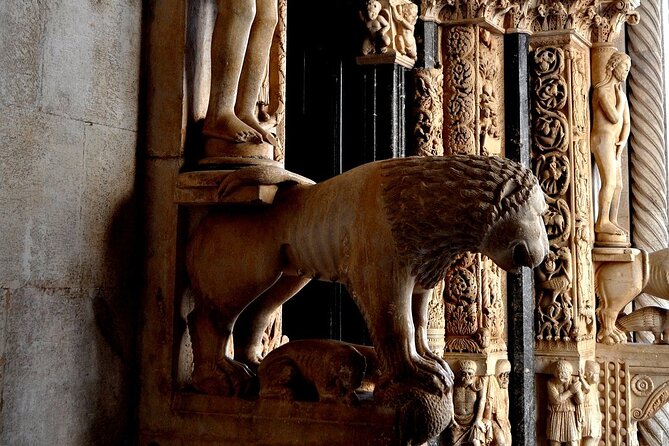
Free time is listed as included. That matters because Trogir’s charm isn’t only in major landmarks. It’s in the spaces between them: side streets, small corners, and the ability to pause without needing permission from a schedule.
So I recommend you use your free time for one simple goal: pick one street to slowly walk and one spot to sit. If you try to “solve” all of Trogir in a free-time window, you’ll feel rushed.
You’ll also want to keep an eye on your return timing. One criticism from a past experience noted that the group had to cut short time in Trogir to meet the return schedule for cruise connections. That doesn’t mean it happens every day, but it’s a good reminder: if your day is tight, treat the tour clock as real time, not a suggestion.
Also, bring a camera. Multiple people pointed out that photography payoff is high here, especially after the cathedral and fortress stops.
Price and value: is $60.49 worth it?
At $60.49 per person, this tour is priced like a “smart consolidation” move: guide + transportation + two-town orientation in one half-day.
Here’s what you get for that price based on the listed inclusions:
- Professional guide
- Guided tour of Diocletian’s Palace and Split old town
- Air-conditioned vehicle
- Guided tour of Trogir old town
- Free time in Trogir
And you avoid a common headache: figuring out how to connect Split and Trogir efficiently. The vehicle takes care of that. It also reduces stress if you’re not comfortable with Croatian transit or you’re short on time.
Where value can shift is in monument tickets. The tour notes tickets are not included for St Lawrence’s Cathedral and Kula Karmelengo. Many other listed stops show free admission tickets, but those two can still add a small extra cost. If you plan to visit both, factor that into your budget before you go.
Overall, if your goal is to see the main old-town highlights with clear explanations and minimal planning, this price often feels fair. If your priority is unlimited roaming with no structure, you might prefer a self-guided approach. But if you want a fast orientation that makes the streets make sense, the cost-to-result ratio is strong.
How much walking is involved, and who should consider this tour
This tour is walking-heavy by design. Even though individual stops are short (often 10 to 20 minutes), you’ll still cover a lot of ground between Split palace areas, squares, the harbor, and then multiple landmarks in Trogir.
One caution that shows up clearly: if you’re older or you struggle with walking, this may be a challenge. There’s also a note that it’s not mostly uphill, but it’s still time on your feet.
What to do with that:
- Wear supportive shoes
- Plan for sun and heat, especially in summer
- Have water on you, since food and drinks are not included
- Use your free time in Trogir for a proper sit-down break
Good news: the tour runs in all weather conditions, and it also says you should dress appropriately. If weather is truly bad, the cancellation terms include the option of a different date or a full refund.
If you’re traveling with a service animal, the tour allows it, and it’s also listed as near public transportation.
Tips to get more out of Split and Trogir on this route
A few small choices can make a big difference.
First, start with your expectations set: this is a highlight run, not a slow museum day. You’ll see a lot, but you won’t have hours inside every building.
Second, decide ahead of time if you’ll budget tickets for St Lawrence’s Cathedral and Kula Karmelengo. If you want both interiors, you’ll enjoy the guided story more, but you’ll need to account for that extra time and cost.
Third, keep an eye on your day’s heat. Even the best tour can feel unpleasant if you’re overheated before the palace sequence ends. Shade in palace areas helps, but waterfront and squares still get sun.
Finally, don’t worry if your group is split. Some experiences note the group was divided into smaller units (in one case, two groups of about nine). Smaller groups usually mean quicker Q and A and less time stuck behind people.
Should you book the Split and Trogir half-day guided tour?
Book it if you want:
- A tight schedule with big payoff across Split and Trogir
- A guided explanation that helps Diocletian’s Palace make sense fast
- Time in Trogir that includes both guided stops and some self-directed wandering
- Air-conditioned transport to cut down planning stress
Consider skipping or switching to a slower plan if:
- Walking all day is hard for you
- You dislike paying extra for cathedral and fortress entry
- You’d rather spend Trogir at your own pace without any “tour clock” pressure
If you like structure but still want time to enjoy the town, this is a strong way to get your bearings fast and see two of the Dalmatian coast’s best-known old towns in one shot.