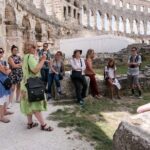
A Roman food walk, timed for evening light. This 3 hours 30 minutes Pula tour mixes quick looks at major Roman landmarks with stops where you actually eat—5 food tastings and 3 glasses of wine—so you get both the city’s story and the flavors right away. One thing to keep in mind: the pace can feel a bit uneven if the group rhythm slips, based on at least one unhappy experience.
I also like that the tour stays small, up to 12 people, which helps you ask questions and get practical tips. And because it starts at 7:00 pm, you’re walking in the comfortable, lively evening hours rather than hot afternoon sun. Still, it runs outdoors between sights, so plan to dress for weather since it needs good conditions.
If you want a guided orientation to central Pula plus a meal-style tasting format, this is a strong match. If you’re picky about strict timing at every restaurant stop, you might want to go in with flexible expectations.
In This Review
- Key things to know before you go
- Why this tour works in Pula (and who it’s for)
- Price and value: what you’re really paying for
- The small-group setup: how the experience feels
- Starting point and timing: Istarska ul. at 7 pm
- The Roman walkthrough: your sights in order
- Stop 1: Pula Arena (outside)
- Stop 2: Twin Gates of Pula
- Stop 3: Titov Park
- Stop 4: Tempio di Augusto area (main square concept)
- Stop 5: Danteov trg
- Stop 6: Arch of the Sergii
- Stop 7: Gate of Hercules (and you wrap soon after)
- Where the food and wine fit in (and what to expect)
- The guide experience: what you get from Denis and the team
- What could be disappointing (so you can choose wisely)
- 1) Timing and flow
- 2) A restaurant stop might not hit your tastes
- Tips to get the most from this night walk
- Should you book the Pula Food Walking Tour?
- FAQ
- How long is the Pula Food Walking Tour?
- Where does the tour start and what time does it begin?
- How much does the tour cost?
- What’s included in the food and drink?
- Does the tour include sightseeing stops, or is it only food?
- What language is the tour offered in?
- How big is the group?
- What if the weather is bad?
- Is the tour accessible to most people?
- How do I get the ticket?
Key things to know before you go
- Max 12 people: small group feel without feeling rushed by a crowd.
- 7:00 pm start: evening stroll with Roman monuments at night.
- 5 tastings + 3 wine glasses: you’re not just snacking.
- Olive oil tasting included: a local product gets treated like it matters.
- Roman landmarks first: Pula Arena, Twin Gates, August Temple area, and the Sergi Arch.
- Licensed guide: you get history plus day-to-day guidance for the rest of your stay.
Why this tour works in Pula (and who it’s for)
Pula is one of those cities where you can’t really separate the past from the present. Roman ruins sit in the middle of everyday streets, and even the squares you walk through feel like they still have jobs to do. This food walking tour uses that to your advantage: you get a fast, guided “how to read the city” lesson while you’re moving between places, then you eat and drink as you go.
I think it’s best for three kinds of people. First, couples or small groups who want a guided start so they don’t spend day one wandering in circles. Second, food and wine lovers who want a structured way to taste local flavors without researching five separate places. Third, history-curious travelers who want just enough context—no museum-marathon required.
It’s also a solid value format if you plan to drink and eat anyway. The price is $94.93 per person, and the inclusions are not vague: you get five tastings, three glasses of wine, one local aperitive, plus an olive oil tasting. If you’d otherwise pay for a guided dinner and a glass (or three), this structure can make the math feel easier.
You can also read our reviews of more tours and experiences in Pula.


Price and value: what you’re really paying for
At $94.93 for about 3.5 hours, you’re paying for three things:
- A licensed guide who covers history and helps you understand what you’re seeing.
- Food-and-wine planning: the stops are designed so you’re tasting rather than ordering random dishes.
- Convenience: you’re guided from sight to sight and then into restaurants, with the tour ending back at the same meeting point.
The tastings matter because they’re counted (5 food tastings) and paired with alcohol (3 glasses of wine) plus a local aperitive. That moves it closer to a dinner you can sample in multiple places instead of one long restaurant meal. Olive oil tasting is also a nice touch because it’s a distinctly local product you can compare in your head after the fact.
If you’re the type who only wants one drink or only eats one big meal, you may not use all the inclusions. But if you like trying a variety of local bites, this is priced like an experience, not just a walk with a snack.
The small-group setup: how the experience feels
This tour caps at 12 travelers, and that size changes everything. You’re less likely to get lost in a long line, and your guide can keep track of questions, photo stops, and timing.
Also, you’ll be using a mobile ticket, which is handy for a 7 pm departure when you’re juggling evening plans. The tour is offered in English, and it ends back at the meeting point (more useful than it sounds, especially in an older city where getting back late can be annoying).
One practical note: the tour needs good weather. If conditions are poor, it gets rescheduled or you’ll get a full refund. So keep an eye on forecasts the day you book.
Starting point and timing: Istarska ul. at 7 pm
You meet at Istarska ul. 40, 52100 Pula, with a start time of 7:00 pm. This matters because Pula’s central streets feel more social after sunset, and you’re walking the historic core in the kind of light that makes stones and arches look dramatic without the midday glare.
The tour ends back at the meeting point. That’s an underrated perk: you can plan a post-tour drink or dessert nearby without changing your whole navigation routine.
The Roman walkthrough: your sights in order
Even though the tour is called a food tour, the structure starts with monuments. That’s smart. When you learn what you’re seeing first, the later tastings feel like part of the same story: Roman-era city planning and local food culture living side by side.



Stop 1: Pula Arena (outside)
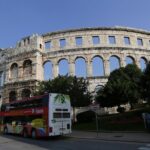
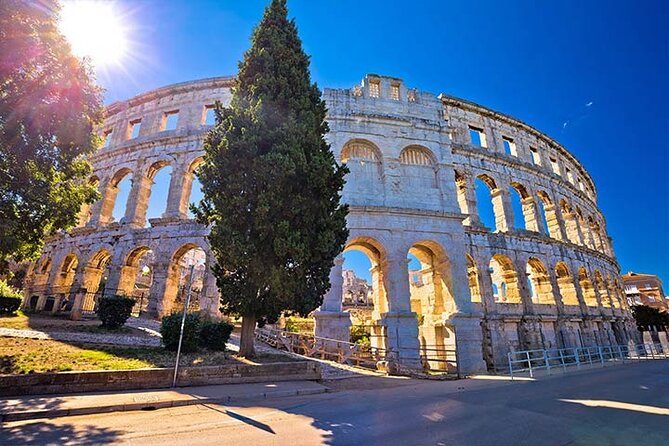
Your first stop is the Amphitheatre de Pula, better known as the Pula Arena. Built in the 1st century AD, it hosted gladiator games, and it’s often associated with a capacity around 20,000 spectators. You’ll be viewing it outside, with time to take photos and orient yourself.
What I like here is pacing. You’re not stuck staring at one building for an hour. You get the big landmark, then you move on while your mind is still focused on “Roman Pula.”
Stop 2: Twin Gates of Pula
Next come the Twin Gates, once the imposing entrance to the city. Today they form arches along your route toward the archaeological museum and the castle area.
This stop is short, but it’s useful. Gates are part of how cities controlled movement, and it helps you understand why Pula’s street layout feels like it still has old rules.
Stop 3: Titov Park
At Titov Park, the vibe shifts. This is one of those intersections that has stayed important across decades—established in the 1950s, still known as a meeting point, especially among younger people later in the day.
This is where the tour stops being only “ancient stones.” You see Pula as a living city, not just a stop on a history checklist.
Stop 4: Tempio di Augusto area (main square concept)
You then get to Tempio di Augusto, in a square below the central hill. In Roman times, this area served as a hub of city life. Even now, it functions as an administrative and legislative center.
If you want to understand how cities keep reusing the same space, this is a good example. The stones change meaning, but the location stays powerful.
Stop 5: Danteov trg
Then comes Danteov trg, famous for being tied to the Italian poet Dante Alighieri.
It’s a lighter moment compared with the Roman stops, but squares like this often explain why a city feels layered. You get Roman foundations and then later cultural identity built on top.
Stop 6: Arch of the Sergii
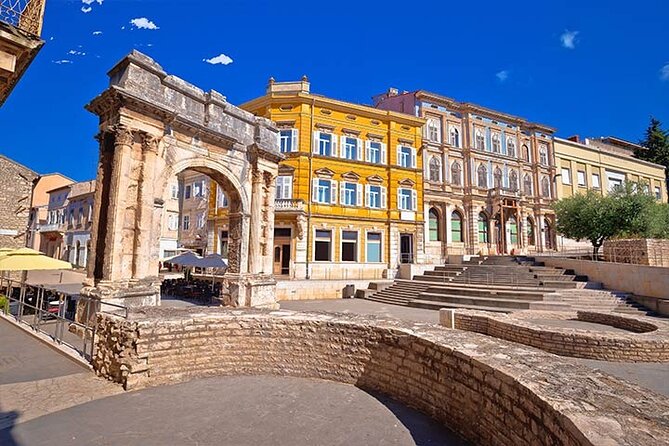
The Arch of the Sergii goes up as another Roman marker, erected in the 1st century by the Sergi family. It’s described as Corinthian-style, and today the square plays host to cultural events like performances.
This stop makes the point that monuments aren’t always silent. Sometimes they’re the stage.
Stop 7: Gate of Hercules (and you wrap soon after)
Finally, you reach the Gate of Hercules, built in Roman times and located between two medieval towers. It marks the approach Romans would have taken to enter the city. After this, the tour ends soon after.
I like that you end with a gateway moment. It feels like a natural finish: you arrive through gates, tour the heart, then head back.
Where the food and wine fit in (and what to expect)
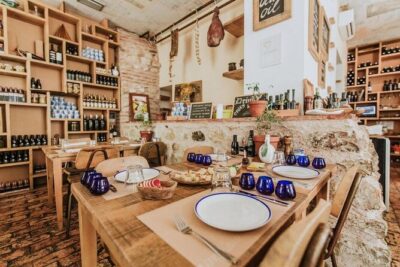
The tour’s sights are mostly outdoors, and then the rest of the time shifts into restaurants for tasting.
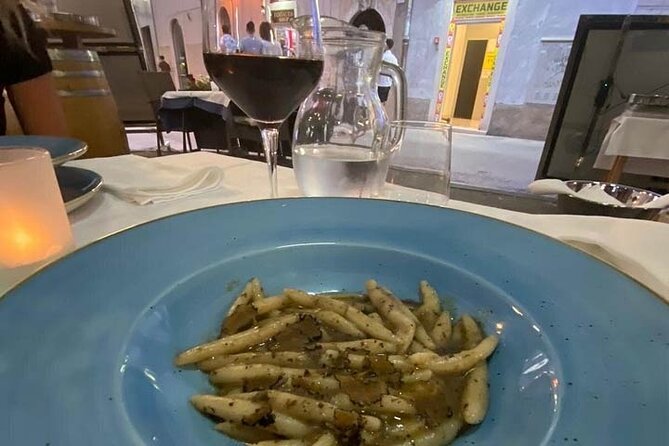
Here’s what the included food plan adds up to:
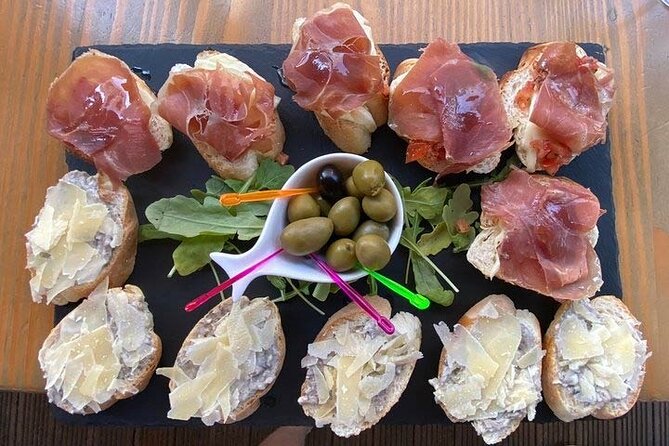
- 5 food tastings
- 1 local aperitive
- 3 glasses of wine
- Olive oil tasting
- A full dinner feel, because the tastings across restaurant stops combine into an actual meal experience rather than a few bites
That “full dinner” setup is key. You’re not walking around hungry waiting for the next place to feed you. You’re meant to leave satisfied.
You should also expect a guided flow—your guide helps coordinate the timing so you’re tasting while the group stays together. For some people, that’s the best part: you don’t have to worry about deciding what’s worth ordering.
One caution from a less positive experience: the pacing can feel disorganized at times. If you strongly prefer tight schedules, keep your expectations flexible. At the same time, many other experiences are described as friendly, informative, and smoothly guided.
The guide experience: what you get from Denis and the team
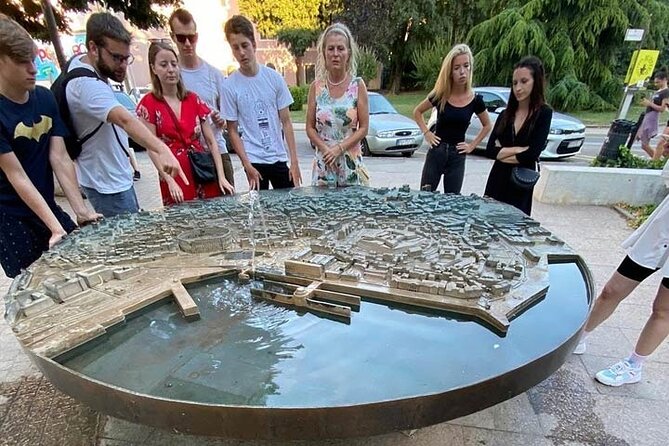
The tour is run by a professional licensed guide. In multiple experiences, guides like Denis stand out for being both friendly and informative, with a clear focus on explaining what you’re seeing and where to go next.
That “where to go next” part can be especially useful in Pula. One good example is practical help like guidance for parking and extra sightseeing tips for the rest of your stay. That’s the kind of value you only notice after you’ve left the tour.
So yes, you get history. But you also get the short, useful advice that saves time when you’re trying to plan day two.
What could be disappointing (so you can choose wisely)

No tour is perfect, and this one has two realistic considerations.
1) Timing and flow
One experience criticized the pace as disorganized and poorly controlled. That doesn’t mean it’s consistently chaotic, but it does mean you should be ready for a tour format that depends on restaurant timing and group movement.
If you dislike “wait a few minutes” moments, you may find the rhythm annoying.
2) A restaurant stop might not hit your tastes
A second disappointment tied to the food quality at one stop. Since the tour includes multiple tastings, one weak stop can stand out more than if you’d had a standalone meal you could swap.
My advice: treat the tastings as a sampler. You’ll likely find some hits, even if one bite isn’t your favorite.
Tips to get the most from this night walk
A few practical moves can make a big difference:
- Wear comfortable shoes. You’re moving between monuments at night, with a walk-and-stop rhythm.
- Eat lightly beforehand if you’re prone to overdoing wine. You’ll still be eating on the tour.
- Have your expectations set: it’s not a deep dive into one site. It’s the quickest way to get oriented across the central core.
- Ask your guide questions. With a max of 12 people, you can usually get answers instead of feeling like a numbered participant.
Should you book the Pula Food Walking Tour?
Book it if you want a guided mix of Roman Pula landmarks and a structured dinner-style tasting plan. The combination of 5 food tastings, 3 wine glasses, plus an aperitive and olive oil tasting is the kind of inclusion set that makes your evening feel “sorted” without extra planning.
Skip it (or choose a different style) if you’re the type who needs precise timing and hates any sense of disorder, especially at restaurant stops. Also, if you don’t drink wine or don’t want alcoholic tastings, the value won’t feel as strong.
If you’re celebrating, meeting friends, or just want day-one confidence in a new city, this is a smart way to get bearings fast and eat well while you learn what makes Pula tick.
FAQ
How long is the Pula Food Walking Tour?
It lasts about 3 hours 30 minutes.
Where does the tour start and what time does it begin?
The meeting point is Istarska ul. 40, 52100 Pula, Croatia, and the start time is 7:00 pm.
How much does the tour cost?
The price is $94.93 per person.
What’s included in the food and drink?
You get 5 food tastings, 3 glasses of wine, 1 local aperitive, and an olive oil tasting.
Does the tour include sightseeing stops, or is it only food?
It includes a walking tour with multiple stops featuring Roman landmarks like Pula Arena, the Twin Gates, the Arch of the Sergii, and the Gate of Hercules.
What language is the tour offered in?
The tour is offered in English.
How big is the group?
The tour has a maximum of 12 travelers.
What if the weather is bad?
The tour requires good weather. If it’s canceled due to poor weather, you’ll be offered a different date or a full refund.
Is the tour accessible to most people?
Most travelers can participate, and service animals are allowed.
How do I get the ticket?
You’ll receive a mobile ticket. Confirmation is provided at the time of booking.