Pula’s Roman center is easy to miss at first. This private walk threads together the big-name sights and the smaller details that explain how Pula worked, from early Roman power to a wartime memory in the same compact area. You get a local guide, Adriano, plus a pace that stays human even when you’re just starting your day.
I especially like two things. First, the tour gives you a tight sense of orientation fast, so you can come back on your own and know what you’re looking at. Second, it’s truly private—so you can ask questions, move at a comfortable speed, and get practical tips beyond the monuments.
One consideration: a few of the major stops require paid entries, so you’ll want to budget a bit extra on top of the $21.14 price. If you’re hoping for a strictly no-extra-cost tour, this isn’t that.
In This Review
- Key things to know before you go
- A 2-hour Roman loop you can actually use later
- Where the walking starts: Forum area to Arch of the Sergii
- Temple of Augustus: the early imperial message in stone
- Giardini 2: the café street that puts life back in the ruins
- Titov Park: a WWII reminder in the middle of sightseeing
- Twin Gate: official entrance and a portal to Zerostrasse
- Circolo and Hercules Gate: the oldest gate meets community life
- Pula Arena: the classic finale that anchors your whole day
- Price and value: what $21.14 really buys you
- Getting the most from a private guide (and keeping it comfortable)
- Who should book this Pula private walking tour?
- Should you book this tour?
Key things to know before you go
- Private, not crowded: only your group, which often means more back-and-forth and easier photo stops.
- Adriano’s storytelling style: you’ll get clear explanations and lots of local context, not just dates.
- A smart Roman route: arches, temples, gates, and the amphitheater are close enough to feel like one continuous story.
- Some entries cost extra: several headline sites are not included in the price.
- Built for a short stay: about 1.5 to 2 hours that helps you plan the rest of your Pula day.
A 2-hour Roman loop you can actually use later
Pula is the kind of city where the most impressive stuff is sitting right on the street. The trick is knowing where to look and what matters, and this tour gives you that mental map quickly.
You start at Forum 3 (near the heart of town) and finish at Flavijevska ul. 1, with the tour ending by the Amphitheater area. That ending matters. Once you reach the Arena, you’re positioned to keep exploring nearby on your own without retracing steps.
At about 1 hour 30 minutes to 2 hours, you’re not trapped on a long schedule. It’s long enough to cover the main anchors, but short enough that you still have time for lunch, a second walk, or optional extras your guide may recommend (like the underground tunnels, which fit nicely with the Arena area).
And since it’s offered in English with a mobile ticket, you can keep things simple. This is also a good choice if you prefer a more personal experience than joining a large group.
You can also read our reviews of more tours and experiences in Pula.


Where the walking starts: Forum area to Arch of the Sergii
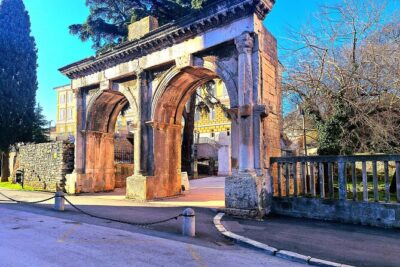
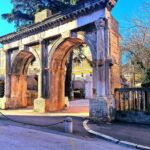
The tour’s first stop is the Arch of the Sergii, a triumphal arch built in the late 1st century BC. It’s not just a pretty fragment. It’s a real clue to how power was announced in stone—Roman public messaging done before social media, before billboards, before basically everything.
The arch is free to view, and it sits close to a bronze statue of James Joyce nearby. That pairing is interesting in its own way: Roman Pula in one direction, and a later layer of cultural memory in another. It’s a reminder that cities keep adding chapters, not replacing old ones.
If you’re the kind of person who likes to look at architecture and also read the human story behind it, this first stop sets the tone. You’ll get a quick frame for the city before the tour becomes more monumental.
Practical tip: at this early stage, take a minute to notice the street layout. The rest of the walk works because the stops line up in a way that feels logical once you’ve seen the first anchor.
Temple of Augustus: the early imperial message in stone
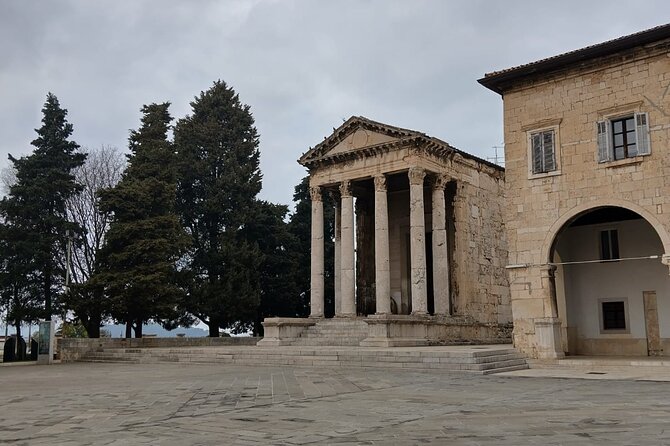
Next comes the Temple of Augustus, built in the early 1st century. This is one of those stops where the building type matters: it’s a notable example of early imperial Roman sacral architecture, meaning it’s tied to the state’s religious and political messaging.
This stop is not included for admission, so you’ll likely pay entry if you want to go inside or access the ticketed areas (depending on how it’s managed that day). Either way, the explanation you get here makes the structure easier to interpret, especially if you’re not a Roman-architecture specialist.
What I like about placing a temple visit here is timing. Early on, you’re still gathering context, and the guide can connect what you saw at the arch to how Romans organized authority. The tour keeps you from treating each site like a separate postcard.
Consideration: if you’re on a tight budget and want to minimize ticket costs, plan around the fact that key stops like this one can add extra charges.
Giardini 2: the café street that puts life back in the ruins
Not all important stops are monuments. The tour includes Giardini 2, a street associated with social activity and events, lined with coffee bars and four rows of about 130-year-old hackberry trees.
This is one of the nicest palate cleansers in the itinerary. After Roman stone power and official religion, you get a street scene that helps you imagine daily life. It’s also practical: you can usually spot good coffee options right here, which makes it easier to plan a break without leaving the main walk.
This stop is free, so it’s a low-cost way to keep the tour from feeling like a checklist. You’re reminded that cities aren’t just artifacts. They’re where people still meet, talk, and pass time.
If you’re traveling with someone who gets tired of ruins-by-the-hour, this is the stop where the mood tends to lift. The tour stays grounded in real street life.
Titov Park: a WWII reminder in the middle of sightseeing
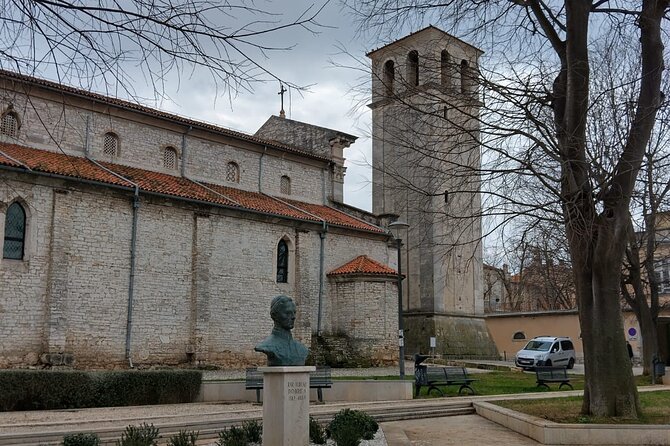
Then you’ll reach Titov Park, which includes a World War II memorial and a city map with a fountain. It’s a quieter stop, but it matters. It shows you that Pula’s identity isn’t only Roman; it also includes the 20th century and the way the city chose to remember.
This stop is free, and it works well near the middle of the tour when your legs might start asking for a little mental reset. Parks are also where you can catch your breath before the heavier-ticket sites ahead.
One thing I appreciate here is balance. This tour doesn’t pretend history is one era only. It moves through time without turning every topic into a lecture. The memorial portion makes the sightseeing feel more honest.






Twin Gate: official entrance and a portal to Zerostrasse
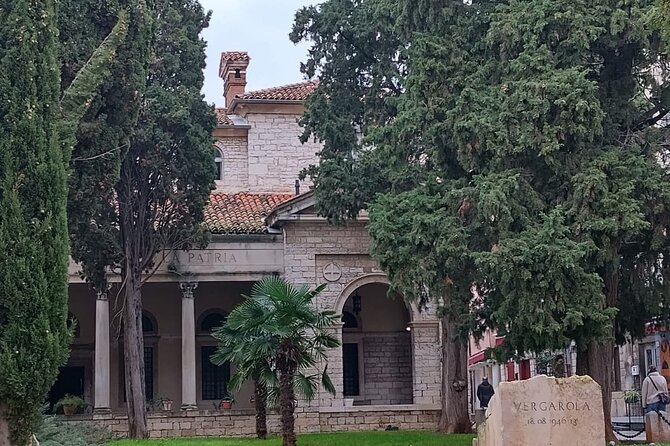
The next big architectural moment is the Twin Gate, a set of gates built in the 2nd century that served as an official entrance to the small Roman theater. Even the name tells you what to look for—two gates, a controlled entry point.
This is also tied to the underground tunnels area known as Zerostrasse. That means you’re looking at a place that connects above-ground city life with the city’s underground movement routes.
This stop is not included for admission. If you decide to pay and go in, you’ll get a stronger sense of how the city functioned. If you skip the paid access, you can still learn the basics from the outside, but it won’t be the same.
Why I like this stop as a transition: it bridges the Roman world you’ve been seeing with the idea that Pula has layers. Once you understand that there are tunnels and entrances tied to daily movement, your later exploration feels more coherent.
Practical advice: if you’re interested in the underground tunnels after the tour, ask your guide while you’re still on-site. Your route ends near the Arena, which is a convenient base for adding that extra exploration.
Circolo and Hercules Gate: the oldest gate meets community life
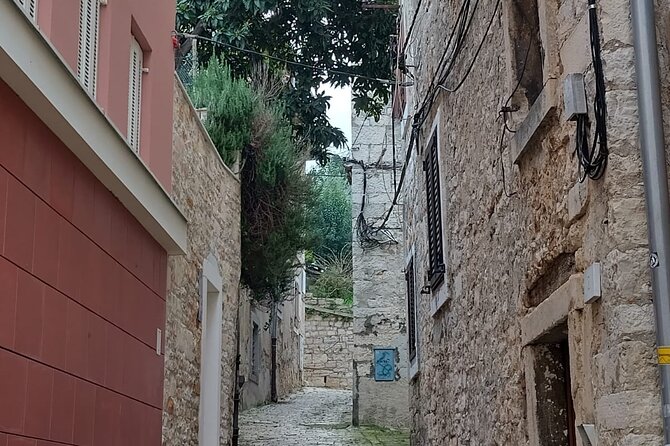
Next you’ll visit Circolo, which includes Hercules Gate, described as the oldest gate in Pula, plus the Italian community centre context.
That combination is exactly why this stop works. You’re not just seeing a Roman threshold. You’re also seeing how identity and community institutions occupy the same urban footprint today. It adds texture to the walk, so the city doesn’t feel frozen in the past.
This stop is free, which makes it easy to enjoy without worrying about extra tickets. It also gives you a bit of visual contrast: gates feel dramatic, and they’re great for photos, but they also slow you down just enough to notice details—materials, proportions, and how streets funnel traffic.
Consideration: if you’re strictly focused on the biggest Roman sites and don’t care much about modern community context, you might treat Circolo as a brief stop. But even then, it’s a good breather before the main event.
Pula Arena: the classic finale that anchors your whole day
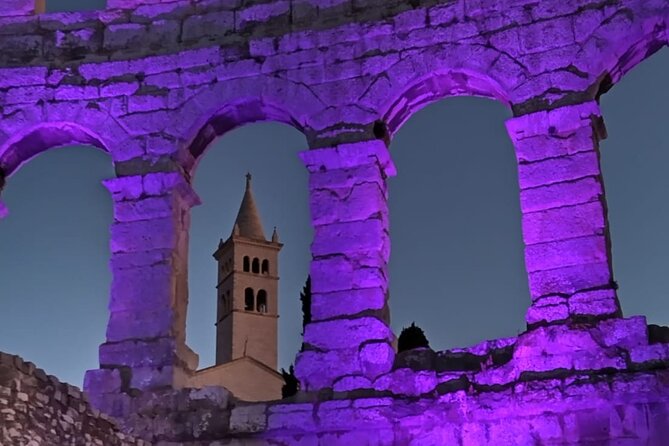
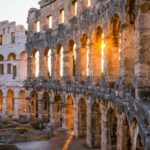
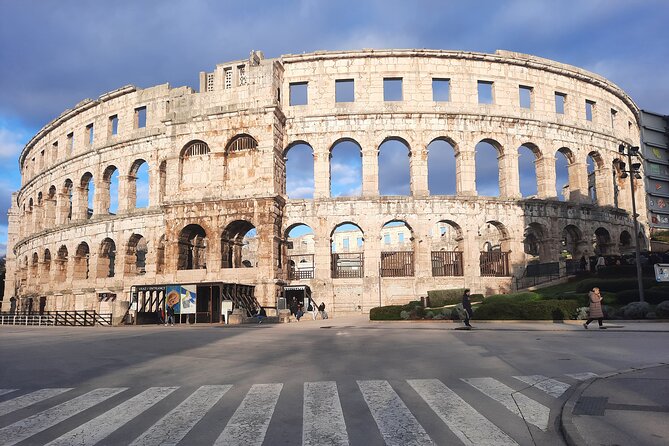
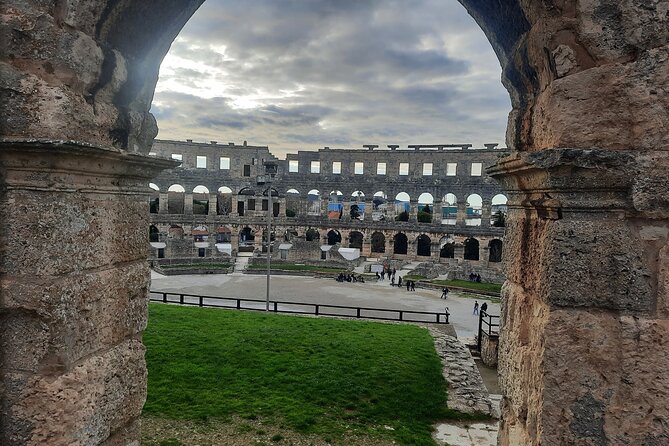
Finally, you arrive at the Pula Arena (amphitheater), built in the 1st century AD and often described as one of the most preserved amphitheaters in the world. This is the stop that makes most people stop walking for photos.
This is also not included in the price for admission. If you want to step into the Arena experience fully, you’ll plan for an extra ticket here. Even if you don’t enter, the sheer scale and well-preserved feel are still impressive.
What makes this ending valuable is how your brain has been primed. Earlier stops—arch, temple, gates—help you connect political messaging, religion, and movement. When you reach the Arena, you can see it as part of a larger Roman system for gathering and public spectacle.
A good guide makes a difference here. With Adriano, the conversation tends to stay lively and responsive, which matters at the Arena. If you like asking questions—about how shows worked, how the city shaped daily life, or why certain structures were built this way—you’ll get answers that don’t feel like memorized facts.
Also, the ending near the Amphitheater area is convenient. After the tour, you’re set up for additional nearby sights without trekking back to where you started.
Price and value: what $21.14 really buys you
At $21.14 per person, the price is mainly paying for two things: a professional local guide and a guided route that saves you time. For a city like Pula—where the “meaning” isn’t always obvious at street level—that’s where the value lives.
What’s not included:
- Food and drink
- Entries (for some stops, especially Temple of Augustus, Twin Gate, and Pula Arena)
So your overall cost will likely be a bit higher than the headline price once you add tickets for the sites marked not included. The good news is that several stops along the way are free, including the Arch of the Sergii, Giardini 2, Titov Park, and Circolo.
The smart way to approach this: treat the tour fee as your orientation tool, then budget separately for the few ticketed anchors you care about most. If you really want the Arena experience and possibly access at Twin Gate, plan for that upfront.
Group discounts may also be available, which can make it more cost-effective if you’re traveling with friends or family.
Getting the most from a private guide (and keeping it comfortable)
Because it’s private, the tour adapts to your group’s questions and pace. That’s a big deal in a 2-hour format. You can slow down for photos, ask for clarification, or spend a few extra minutes on something you care about.
It’s also a practical format if you’re traveling solo. You’ll still get the same story arc, but with more room for conversation. In smaller groups, guides often add sharper local tips because they can tailor answers to what you actually want to do next.
Comfort matters, and this walk covers multiple outdoor stops. Wear comfortable shoes and plan for walking time that fits your day. If weather turns, ask your guide what they recommend for sheltered viewpoints or timing adjustments—your guide can usually steer you toward better cover.
Who should book this Pula private walking tour?
Book it if you want:
- a fast orientation to Pula’s Roman core
- a short, high-impact walk rather than a long day
- a chance to ask questions and get local recommendations
- a private setup where your pacing stays under your control
It may not fit as well if you’re expecting a food-focused experience or a museum-heavy program. This tour is about streetscapes, gates, temples, and the Arena. If you want a lot of indoor time, you’ll likely add that yourself after.
It also suits people with different travel styles: most people can participate, and service animals are allowed. The route is in central areas with public transportation nearby, which makes it easier to weave into a multi-stop day.
Should you book this tour?
If you’re spending a limited amount of time in Pula, I’d lean toward booking. The route is short, logical, and geared toward helping you understand what you’ll see even after the tour ends. The private format with Adriano is especially worth it if you like asking questions or want a little local guidance for what to do next.
Just go in with the right expectation: some entries are extra, and this is not a meals-included food crawl. If you plan for the paid sites you care about—especially the Arena—you’ll get a very solid overview and a much clearer sense of how Pula’s layers connect.