REVIEW · ROVINJ
Rovinj: Guided Walking Tour
Book on GetYourGuide →Operated by Rovinj Walking Tours · Bookable on GetYourGuide
Rovinj can look small at first glance, then the streets keep explaining themselves. This guided walk turns the town into a story you can follow, from island origins to hilltop views over the blue Adriatic. I like that the tour is led by a local, with answers that feel personal rather than scripted.
What I love most is the mix of big moments and real-life details. You’ll walk the cobbled old town with clear context on how people lived on a tiny island for centuries, and you’ll also get practical stops like where locals shop and where to find the best coffee, cakes, and gelato.
One thing to plan for: a good chunk of the route is in the historic lanes over uneven stones, and the climb toward Saint Euphemia can be tough if you have limited mobility. If that describes you, this tour may not be the best fit.
In This Review
- Key things you’ll notice on this Rovinj walk
- Rovinj as an island town, explained while you walk
- Where the tour starts: farmers market area, right by the WW2 memorial
- Valdibora Square: the approach view and the story of the old channel
- Bridge Square’s no-bridge mystery
- Carera Street: trade wealth you can almost smell
- Waterfront stop: the easy Aperol Spritz moment
- Cobblestone lanes toward the old Jewish Ghetto and stables area
- City walls and the climb to Saint Euphemia
- Best sunset positioning: finishing where locals want to linger
- Price and value: why $32 is fair for what you get
- Who this tour fits (and who should skip it)
- Practical tips before you go
- Should you book the Rovinj Guided Walking Tour?
- FAQ
- How long is the Rovinj guided walking tour?
- How much does the tour cost?
- Where do I meet the guide?
- Where does the tour start in the lower town?
- Where does the tour end?
- What languages are available for the live guide?
- Is food or drinks included?
- Is the tour suitable for people with mobility impairments?
- What can I expect to see during the walk?
- Can I cancel for a refund?
Key things you’ll notice on this Rovinj walk
- Valdibora Square and the missing bridges: you’ll learn what used to connect the land and why there are no bridges at Bridge Square
- Island origins in plain terms: how a channel was landfilled about 1000 years ago, turning Rovinj into an island
- Trade wealth you can picture: 18th-century money trails linked to olive oil, fish, and wine
- Old Jewish Ghetto lanes: you’ll move through streets near the Arch of the Bearded area
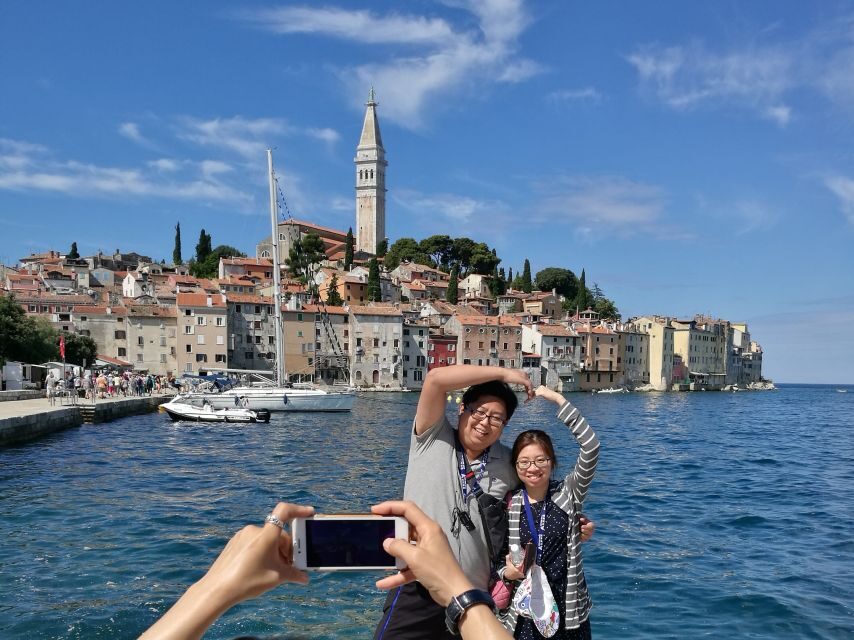
- The hilltop payoff: Saint Euphemia church area makes the final views feel worth every step
- Local food-and-drink intel: where to grab coffee with the best view and where to find strong beach picks
Rovinj as an island town, explained while you walk
Rovinj feels like a postcard until you start hearing why it’s shaped the way it is. This tour is built around that idea: you move through the town and the guide connects geography to history, so you stop seeing random corners and start seeing patterns.
You’ll get a local perspective that’s hard to find on your own. I like that the guide doesn’t just point at landmarks—he or she links them to everyday life, trade, and community. And you’ll still get those “wow” moments, like the waterfront pause and the skyline views with the water behind the roofs.
The duration—about 90 minutes—matters too. It’s long enough to cover the main logic of the town (and some of the sidestreets), but short enough that you’re not trapped in walking fatigue all afternoon.
You can also read our reviews of more walking tours in Rovinj
Where the tour starts: farmers market area, right by the WW2 memorial
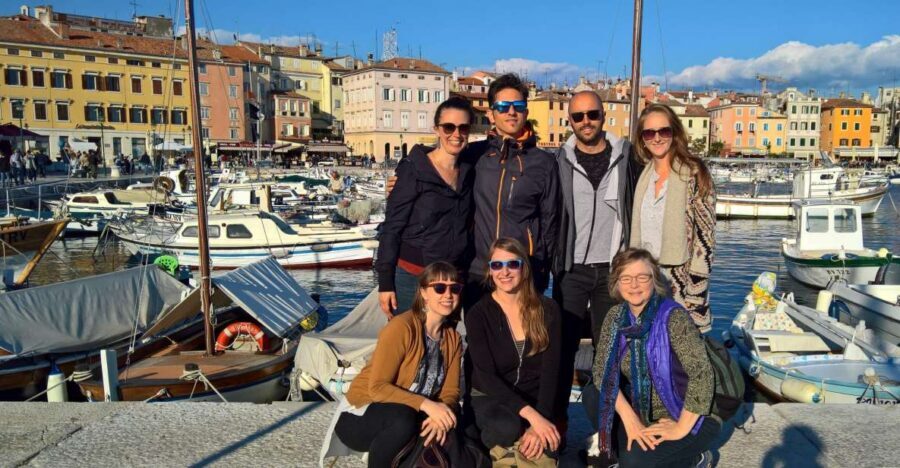
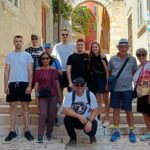
Meet your guide near the local farmers’ market in the lower town area. The exact spot is in front of a large rectangular white WW2 memorial on Pietra Ive Street, just off the market. It’s an easy landmark to find, and once you’re there you’ll quickly spot your guide meeting people in English and other languages.
The guide is a local licensed professional, born in Rovinj, and that changes the tone. Instead of reading a history script, you get a town explanation that includes how people actually talk about it now.
Also, group size is usually the kind that can keep moving at a comfortable walking pace. Based on the experience reports, the guide pays attention to each person’s questions, not just the fastest walkers.
Valdibora Square: the approach view and the story of the old channel
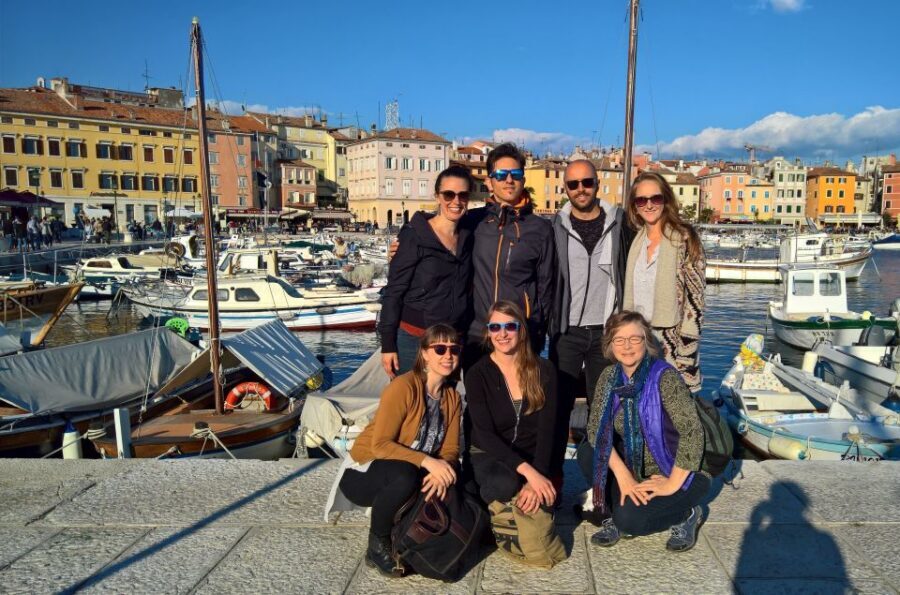
The first major scene you reach is Valdibora Square. This is where you begin to see Rovinj the way people first meet it from the north—open sightlines, then the town folding inward.
The big lesson here is about the water. You’ll learn where the channel used to be and which bridge it was tied to. Then comes the key turning point: the channel was landfilled about 1000 years ago, which made Rovinj an island. It’s one of those facts that changes how the whole town feels. After this, you’ll look at streets and think in terms of shoreline and crossings, not just streets.
Why it’s valuable: when you understand how the town’s edges changed over centuries, the cobblestone maze stops feeling random. It also makes the later viewpoints make more sense.
Bridge Square’s no-bridge mystery
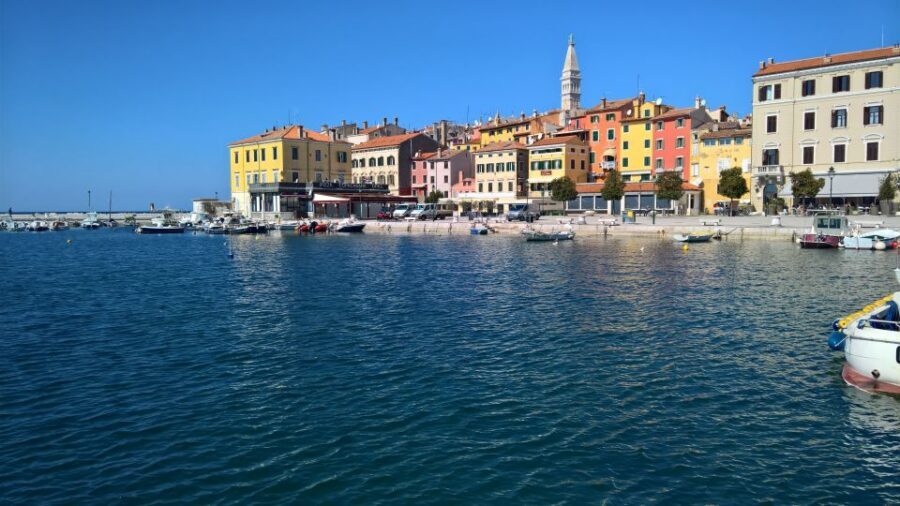
One of the tour’s headline moments is learning why there are no bridges at Bridge Square. That sounds like a small curiosity, but it’s really a shortcut into Rovinj’s geography and its long timeline of land-and-water changes.
You’ll connect this area back to the old channel story. If you’re the type who likes to figure out how a place works, you’ll enjoy this part because it’s practical. You’re basically being taught how to read the town’s layout.
A small caution: since this is town-center history you’ll be outside in daylight, so wear sun protection. You’re walking and looking more than sitting, even though the route is paced.
Carera Street: trade wealth you can almost smell
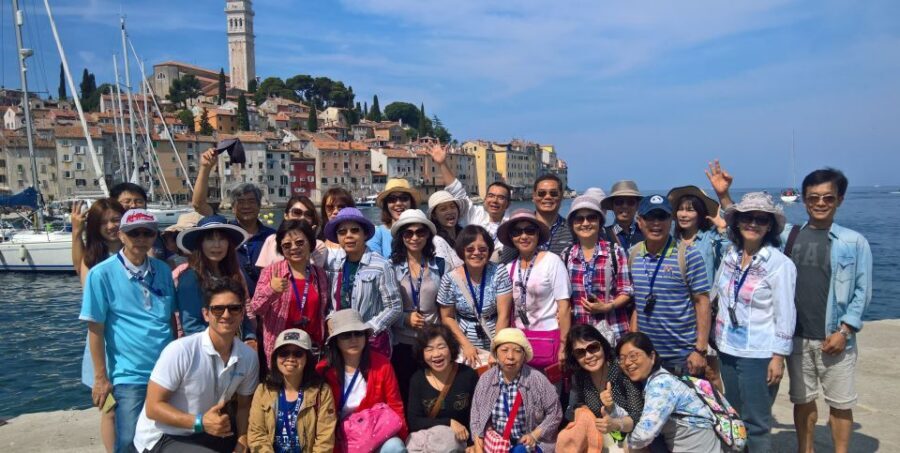
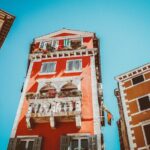
Next, you head along Carera Street, which is a natural corridor for the town’s old wealth stories. This is where the guide helps you connect architecture and street life to trade.
The focus here is on the 18th century and the products that made Rovinj prosper: olive oil, fish, and wine. The point isn’t to memorize dates—it’s to understand how commerce shaped the town’s buildings and status. When you hear those trade links, you’ll notice details you might have skipped on your own.
Why you’ll like it: it’s a shift from pure geography to human motive. You’re not just learning where water went—you’re learning who benefited from it.
And yes, you get those city-walk moments where the town feels like it has a pulse, because the guide keeps the story moving instead of pausing for long lectures.



Waterfront stop: the easy Aperol Spritz moment
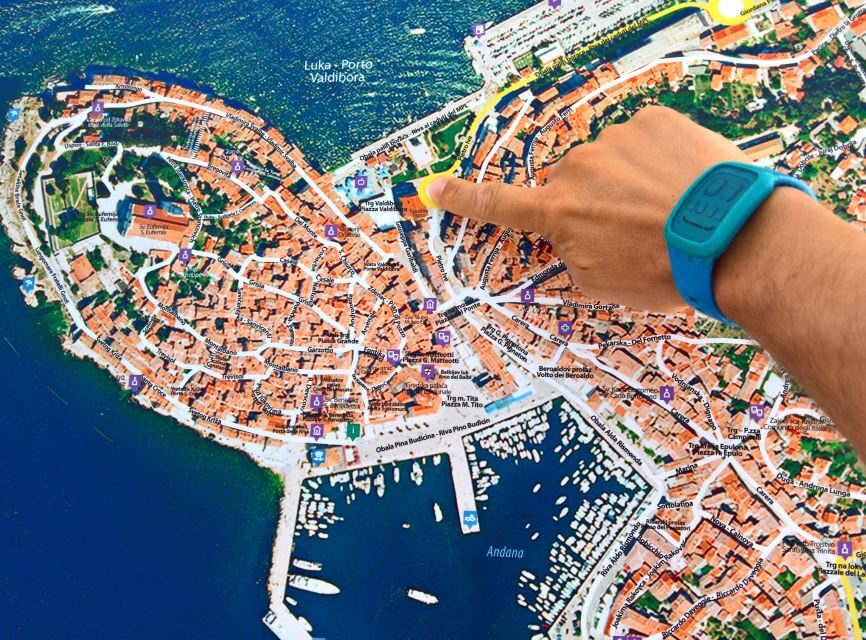
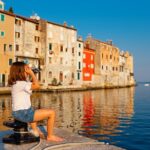
You’ll reach the waterfront, described as a must-see stop and an ideal place to pause—especially if you want an Aperol Spritz. Since drinks aren’t included, you can choose how long you linger, but this is a smart time to reset.
What I like about placing a pause here is that it gives your legs a break right when the views are at their best. Once you’re back on your feet, you’re heading into the older lanes and up toward the hill, so this calm moment matters.
If you’re trying to time photos: the waterfront area is where the light tends to flatter the skyline view. Even if you don’t care about photos, you’ll enjoy watching the water as the guide talks through the town’s layout.
Cobblestone lanes toward the old Jewish Ghetto and stables area
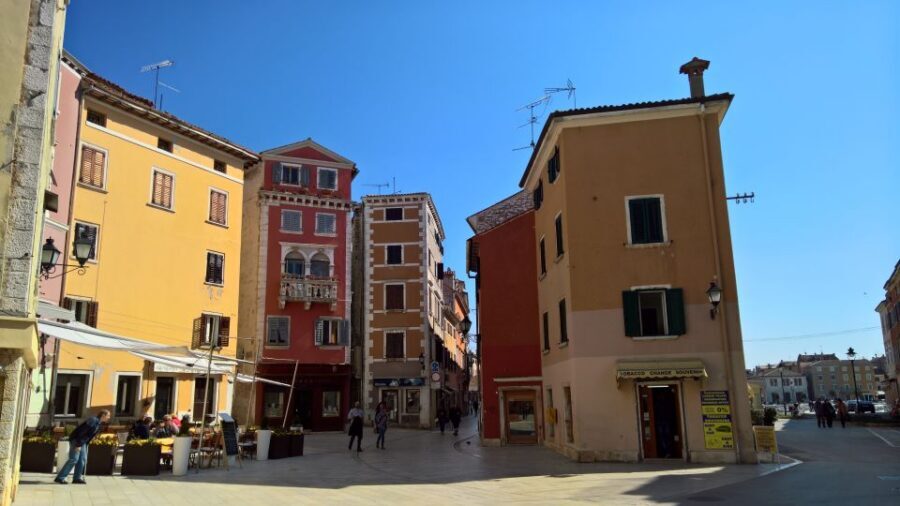
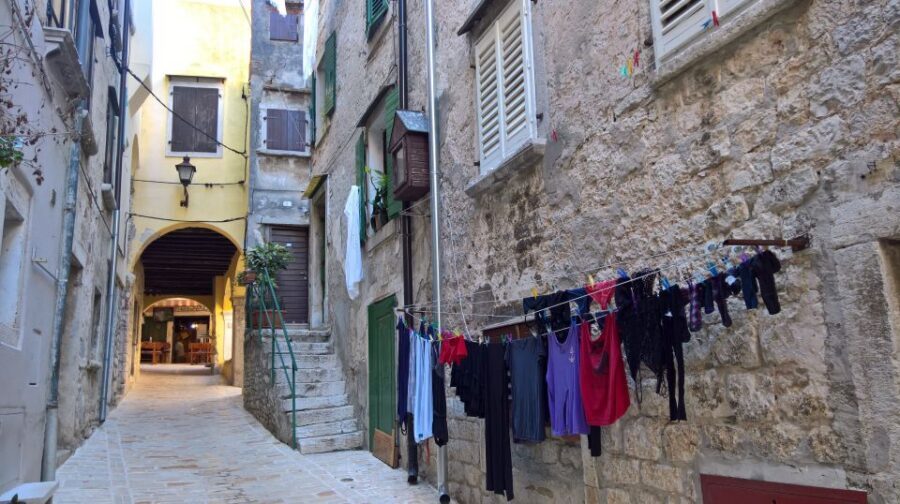
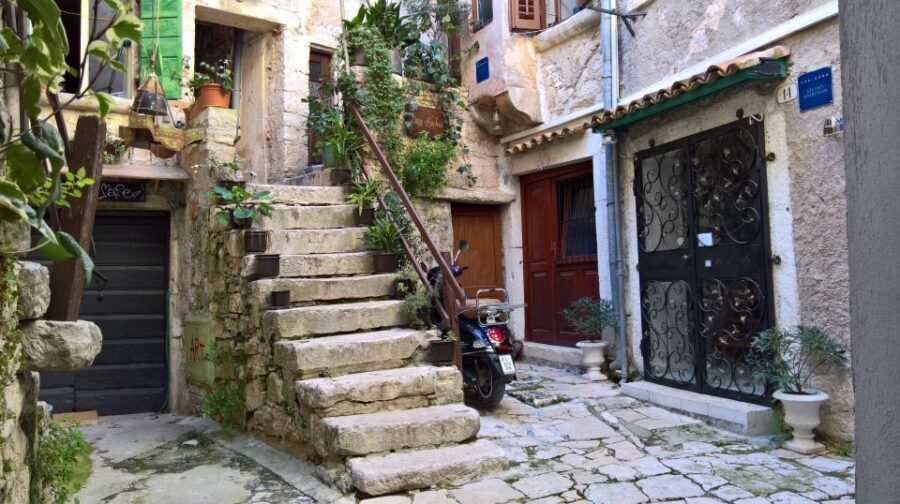
After the waterfront, the tour turns into a maze walk. Expect older lanes, uneven surfaces, and the kind of winding streets that make Rovinj feel like a living museum.
Here you’ll explore around the old Jewish Ghetto area, just off the Arch of the Bearded area, and you’ll also hear about the stables area. The tour handles this as more than a location marker. You’ll get context that helps you understand the neighborhood as part of how the city worked, not just a historical footnote.
Why this section is special: it’s where Rovinj stops being only scenic and becomes deeply human. You’re walking through streets that imply daily life—shops, movement, and community space—while the guide explains why the area mattered.
The practical reality: half of the tour is in the historic old town on cobblestones. The route toward the hill isn’t described as a marathon, but the stones and the incline are real. If you tend to get sore feet on uneven surfaces, plan for that.
City walls and the climb to Saint Euphemia
The walk continues along ancient city walls and climbs toward the hill where Saint Euphemia church watches over the town. This is the part that gives the tour its payoff, because it links all the earlier shoreline and street stories to a panoramic perspective.
The guide’s job here is to help you translate what you’ve learned into what you see. From this height, Rovinj makes sense as a compact island town: you can trace how the waterfront meets the old streets and how the town’s edge creates the skyline effect.
Two notes to keep things realistic:
- The walk up is described as fairly easy, but cobblestones plus a climb can still be tiring.
- The route is not suitable for people with mobility impairments, based on how the walk is structured.
If you’re okay with an uphill stroll, you’ll find this final stretch genuinely worth it because you arrive with context, not just curiosity.
Best sunset positioning: finishing where locals want to linger
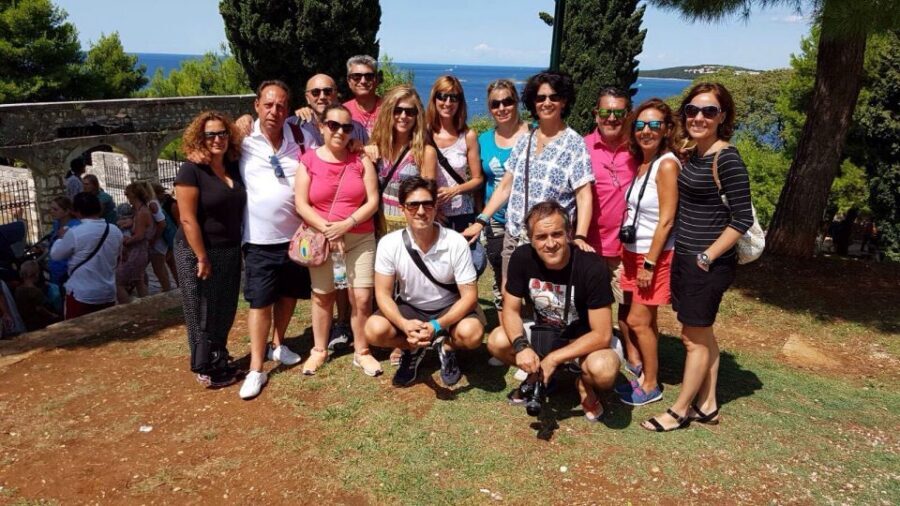
The tour ends near Saint Euphemia, positioned as prime real estate for watching the best sunset in the Adriatic. Even if you arrive earlier than ideal, you still get those elevated, sweeping views over Rovinj and the sea.
I like that the tour doesn’t end with a random landmark. It ends with a place that naturally encourages you to slow down. After 90 minutes of walking and stories, that’s exactly what your brain wants: a calm view that lets the history settle.
And since you’re already at the top, you can decide what to do next without backtracking much—either find a dinner nearby or keep exploring the upper viewpoints.
Price and value: why $32 is fair for what you get
At $32 per person for about 90 minutes, the value comes from two things: the guide and the payoff.
First, you’re not just paying for someone to walk with you. You’re paying for a local licensed guide who was born in Rovinj and who answers questions in multiple languages (English, Italian, Portuguese, French, Croatian). That matters because the guide can tailor explanations on the fly, especially when you ask about the old island geography or the neighborhood stories.
Second, you get practical guidance that turns into real savings later in your day. From the experience reports, Goran in particular is praised for sharing top tips on where to eat, where to get coffee, and where to find gelato. People also highlight how he engages everyone in the group and keeps the pace lively, with humor and constant storytelling.
That kind of value is hard to replicate with a self-guided audio route. A map won’t tell you where locals buy fruits and vegetables, or where to find cakes and coffee with a great view. That’s exactly the sort of information that changes how your time in Rovinj feels.
Who this tour fits (and who should skip it)
This is a great fit if you want:
- A guided structure to get your bearings fast in the historic center
- Clear, story-based context on why Rovinj is shaped like it is
- A mix of landmarks and local-life tips like coffee stops and gelato places
- A fun, chat-friendly guide style (Goran is consistently described as funny and engaging)
It’s less ideal if:
- You need step-free access or have trouble with cobblestones and an uphill finish
- You prefer low-walking itineraries or mostly flat routes
If you’re traveling with limited mobility, you’ll likely want a different plan.
Practical tips before you go
A few details will make your experience smoother.
Wear shoes you trust on uneven stone. Rovinj’s old town cobblestones can be slippery if they’re damp, and you’ll walk for long stretches before you settle into the final church viewpoint.
Bring water. The route is short enough to handle without overpacking, but warm weather plus uphill cobblestones still adds up.
If you want photos, don’t wait until the last moment. The tour gives you multiple picture moments: the skyline framing over the sea, the waterfront, and then the top-of-hill views at Saint Euphemia.
Finally, treat the guide’s suggestions like a menu. The tour isn’t just facts—it’s a way to plan your next hours. If you’re hungry, decide on the spot for coffee or a sweet after the tour, using the guide’s local picks as your shortlist.
Should you book the Rovinj Guided Walking Tour?
I’d book this if you want your Rovinj day to feel connected. The island origin story (channel filled about 1000 years ago), the bridge mystery at Bridge Square, the trade wealth links on Carera Street, and the final hilltop sunset location all work together. You don’t just see things—you understand how they fit.
Skip it if you know cobblestones and the walk toward Saint Euphemia will be uncomfortable. In that case, you’d probably enjoy Rovinj more with a flatter route and fewer inclines.
If you do go, ask questions. The guide’s style is built around answering you, and that’s where this tour really pays off. The best value isn’t just the sights—it’s the local routes to coffee, cakes, gelato, and beach areas that help your next stop feel like it belongs to Rovinj, not to a checklist.
FAQ
How long is the Rovinj guided walking tour?
It lasts about 90 minutes.
How much does the tour cost?
The price is $32 per person.
Where do I meet the guide?
Meet the guide in front of the white WW2 memorial on Pietra Ive Street, just off the farmers market area.
Where does the tour start in the lower town?
The tour starts in the lower town near the local farmers market area, with the meeting point by the WW2 memorial.
Where does the tour end?
It finishes at the Church of St. Euphemia.
What languages are available for the live guide?
The live tour guide is available in English, Italian, Portuguese, French, and Croatian.
Is food or drinks included?
No. Food and drinks are not included.
Is the tour suitable for people with mobility impairments?
No, it is not suitable for people with mobility impairments. The old town involves cobblestones, and the walk up toward the church may be challenging.
What can I expect to see during the walk?
You’ll cover Rovinj’s island origins, Bridge Square with the no-bridge explanation, Carera Street trade stories, the waterfront area, lanes around the old Jewish Ghetto area near the Arch of the Bearded, and the route up to Saint Euphemia.
Can I cancel for a refund?
Yes. You can cancel up to 24 hours in advance for a full refund.