REVIEW · SPLIT
Split Diocletian Palace Highlights – Private walking tour
Book on Viator →Operated by Split Guide · Bookable on Viator
Roman power, mapped on Split’s sidewalks. This private 1.5-hour walking tour stitches together the best Diocletian’s Palace sights while starting and ending at the Split Riva promenade. No museum stops, no ticket headaches—just smart viewing of iconic landmarks in a very walkable old town.
I especially like the small-group feel and the way the guide keeps the story moving. You’ll also get practical help, like restaurant and bar recommendations, plus the option to make the walk fit your interests. The tour is designed for groups up to 6, with an overall stated maximum of 10.
One possible drawback: you’ll mainly see things from the outside. That’s great for efficiency and value, but if you’re hoping for ticketed interior views, you’ll need to plan separate time for that.
In This Review
- Key takeaways
- Split Riva to the Palace: starting where people actually hang out
- Diocletian’s Palace: not a museum—more like a living neighborhood
- Diocletian’s Cellars: the scale shows up fast
- The Peristyle: where power and religion met
- St. Domnius Cathedral outside: Rome’s mausoleum becomes Christian space
- Gates, markets, and the Roman street grid that still works
- Triclinium: dinner for an empire
- Vestibulum and the Temple of Jupiter: private access and a reused sacred space
- Finishing back on the Riva: wrap-up without losing momentum
- Price and value: $137.80 for a fast, efficient private story
- Who this tour suits best (and who might look elsewhere)
- Practical tips so your walk feels easy
- Should you book the Split Diocletian Palace Highlights private walking tour?
- FAQ
- How long is the Split Diocletian Palace Highlights private walking tour?
- Where does the tour start and end?
- Is the tour offered in English?
- Is this tour private, and how big is the group?
- Are there entrance fees included?
- Will we enter the cathedral or other buildings?
- Is a mobile ticket provided?
- Can the itinerary be customized?
- What happens if the weather is bad?
- Is it easy to get to the meeting point?
Key takeaways
- Small-group pace that keeps you from wandering or waiting around
- Outside-only sightseeing helps you avoid entrance fees and keep timing tight
- Gates + markets: you’ll see how Roman walls blend into daily life
- Cellars and Peristyle for scale and meaning, not just pretty stone
- Food-focused stops like the Triclinium that connect dining to empire
- Dana’s-style storytelling: lots of explanations and human stories, not just dates
Split Riva to the Palace: starting where people actually hang out
Your walk kicks off at the Model of the historical core of the city of Split on Obala Hrvatskog narodnog preporoda. It’s a convenient launch pad: you’re right where the waterfront energy is. The first stop is the Split Riva, the long promenade where locals and visitors sit with a coffee, wander between sea breeze and shade, and yes—watch the world go by.
I like using this kind of warm-up first. It gives your brain a map. Before you hit the Roman walls, you get oriented to the setting: the town’s layout, the waterfront, and how you’ll move through Old Town.
The only caution here is the obvious one: Riva time can be hot and crowded. If you’re walking in peak sun hours, wear a hat and plan water. The good news is the tour moves, so you’re not stuck in one spot too long.
You can also read our reviews of more tours and experiences in Split.


Diocletian’s Palace: not a museum—more like a living neighborhood
Next you enter Diocletian’s Palace, built for and lived in by Emperor Diocletian over 1700 years ago. The standout thing about this place is how it works today. It isn’t a classic museum where you look and leave. Inside the palace walls are houses, stores, and everyday bustle—so you experience Roman architecture as part of modern life.
From a visitor’s point of view, this matters. If you’ve ever felt bored by history that’s separated from real streets, this is the opposite. You’re walking corridors and passing through spaces that still function. That makes the architecture stick in your head.
Time-wise, you get a focused introduction—long enough to register the layout, short enough to avoid the fatigue of a longer deep museum day. And since there’s no entrance fee for this outside viewing, it’s easy to justify in your itinerary.
Diocletian’s Cellars: the scale shows up fast
From the south side you head into Diocletian’s Cellars. These underground spaces are also more than 1700 years old and are described as very well preserved. The best part isn’t fancy decoration—it’s perspective.
I like stops like this because they change your sense of scale. Above ground, a palace can look like stonework and a few impressive arches. Underground, you start to understand how much space the palace needed to operate. The guide helps you connect what you’re seeing to the palace’s overall size and purpose.
One practical note: cellars can feel cooler than the open air, but they may be darker and more echo-y than you expect. Wear shoes with good grip and keep your phone flashlight handy if you rely on it.
The Peristyle: where power and religion met
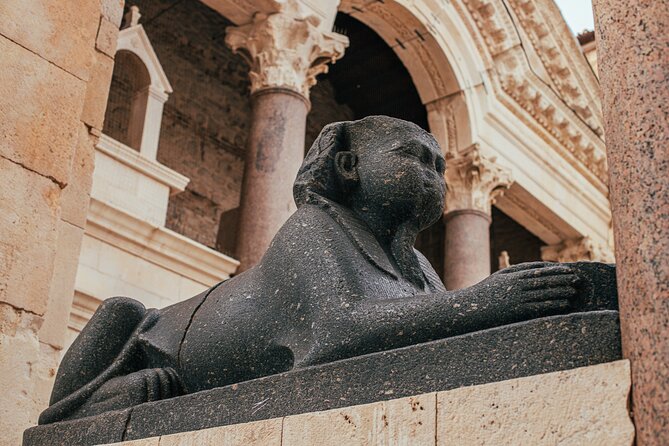
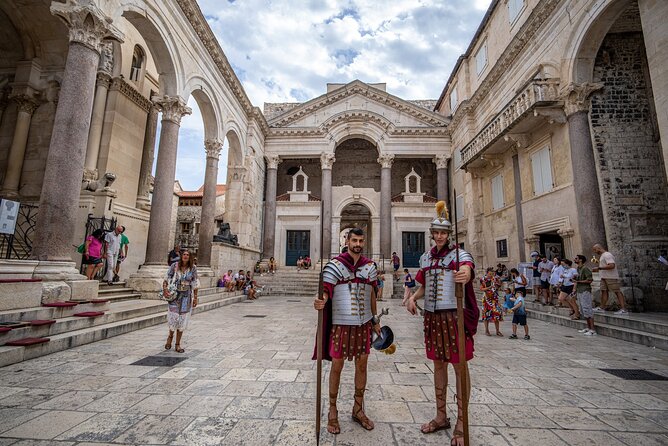
At the Peristyle of Diocletian’s Palace, you’re at the sacral meeting place—basically the stage for showing himself to the people. In Diocletian’s time, he was presented and worshipped in a religious framework tied to the Roman god Jupiter.
This stop is short, but it’s meaningful. It’s where the palace stops being just an arrangement of walls and starts acting like a machine for authority. Standing here, you can see how architecture supports performance—public ceremony, visibility, and controlled movement.
If you like history that explains motivations, this is one of the best moments. It’s not just about what was built; it’s about why the layout mattered.
St. Domnius Cathedral outside: Rome’s mausoleum becomes Christian space
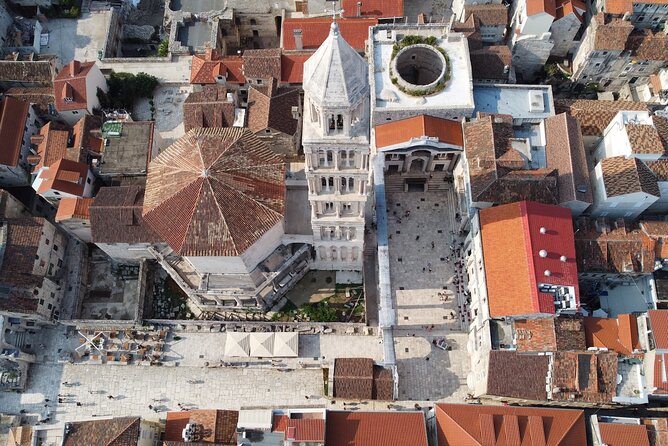
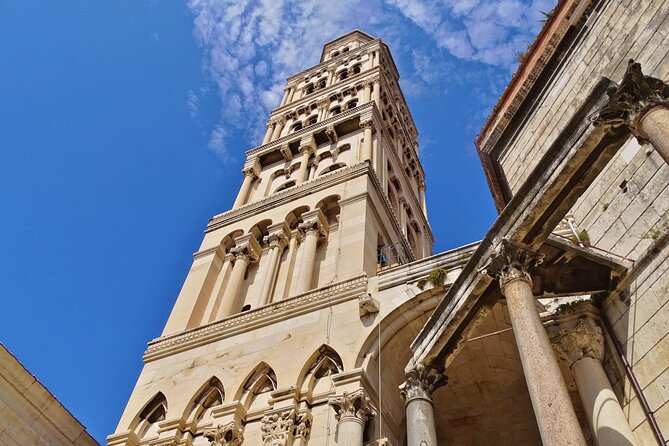
The walk then turns toward the Cathedral of Saint Domnius. Here’s the storyline: the cathedral was for a time the mausoleum of Diocletian. As Christianity spread, Diocletian’s coffin and mortal remains disappeared, and the pagan mausoleum became a Christian cathedral.
You’ll look at the cathedral from the outside. That’s intentional—part of the value of this tour is speed and simplicity. You still get the main historical switch in the same 5-minute window, but without the time and cost of additional entry.
If you’re the type who wants to see the inside details, don’t worry—you’ll just need a separate stop later. For this tour, outside views are enough to understand the transformation and keep your pacing.




Gates, markets, and the Roman street grid that still works
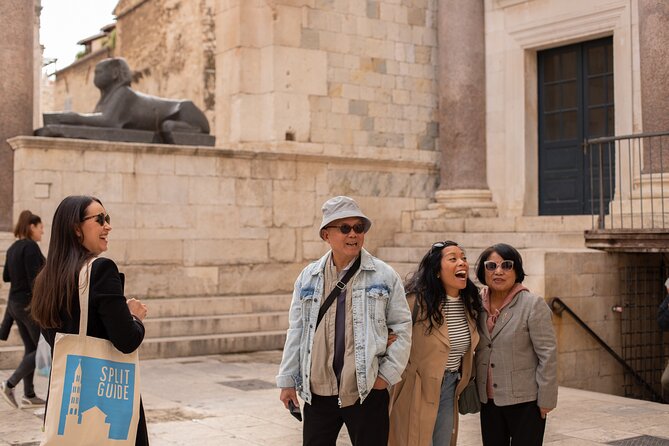
A big chunk of the tour is about gates and the spaces around them. These aren’t just pretty entryways. Gates are where a city controls flow, trade, and defense—then later where it opens into everyday life.
You’ll encounter multiple gates:
- The Iron Gate / east gate known as the Silver Gate leads into the market area. It was walled up several times over the centuries and reopened in the 1940s. Today, it connects directly to where locals sell products. That’s a great reminder that palaces didn’t just look impressive; they needed supply and movement.
- The Iron Gate / west gate—described as a double gate called Propugnaculum—shows the defensive design. Between two gates, an enemy could be trapped and attacked with stones, arrows, and hot oil. The guide keeps it visual, so you can imagine the tactics, not just memorize the words.
After the west gate, you enter the square called Pjaca. This is one of those transition moments: you move from Roman defense logic to open public life.
Then there’s the Golden Gate, the north gate and the most important in Roman times, with a road leading to Salona, the capital of the Roman province. You can think of this as the palace pointing outward—toward the bigger empire.
Finally, you get the Green Market on the east side. It’s where fresh fruits, vegetables, and traditional foods are sold daily. Even if you don’t buy anything, this stop gives context: the palace sits inside a working town, not an abandoned monument.
If you want a little practical tactic here: when you reach the market and square areas, slow down just enough to orient. Those points help you understand where you are relative to the palace walls as you wrap up later.
Triclinium: dinner for an empire
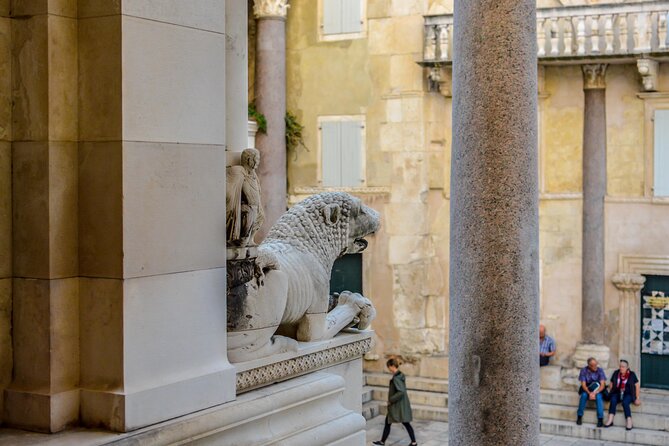
One of the most fun stops is Triklinij, the Triclinium—the Latin word for dining room. This is where Diocletian dined with guests (dining parties) and hosted. The story leans into everyday tastes: Mediterranean dishes, local wine and fish, and even honey.
The guide also highlights that up to 20 different courses could be served in one evening. That’s a wild image to carry while you stand in a palace space built for spectacle. Suddenly, the palace isn’t only about control and ceremony—it’s also about social life, hospitality, and power displayed through food.
This stop is only about 10 minutes, but it works because it explains a human side of rule. You’ll likely remember it long after dates fade.
Vestibulum and the Temple of Jupiter: private access and a reused sacred space
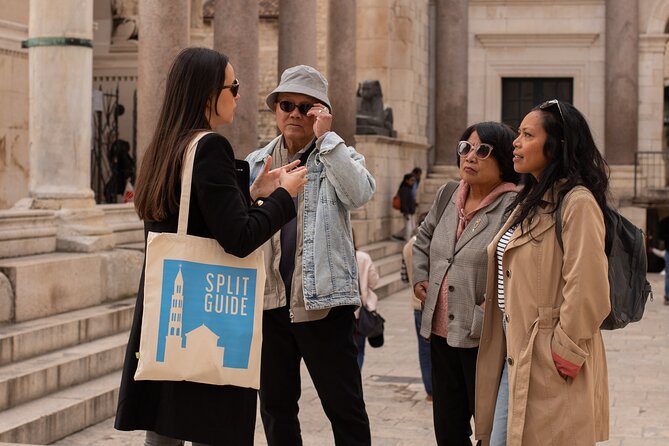
Near the end, you focus on transitional spaces—places that connect public arrival to private chambers.
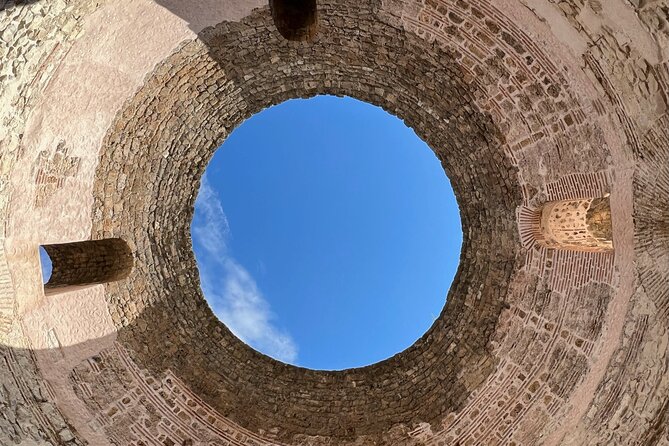
First is the Vestibulum of Diocletian’s Palace, described as the entrance area to Diocletian’s private chambers. Think of it as the internal threshold: you move from the public palace world into the ruler’s more controlled zone.
Then comes the Temple of Jupiter, which today is now a baptistery. You’ll see it from the outside. Again, it’s another example of how sacred spaces change hands and meanings over centuries.
These last stops are perfect if you like the “how did people move through the palace” angle. Gates are dramatic; vestibules and side areas show the choreography of access.
Finishing back on the Riva: wrap-up without losing momentum
To close, you follow the palace walls back toward the promenade for another look at the Split Riva. This final return to the waterfront helps you reset. You go from tight Roman spaces to open sky and sea light.
The tour ends at Republic Square (Prokurative), which is a handy spot for continuing on your own—either for a relaxed meal or for hopping to whatever you plan next.
I like ending where you can instantly pivot. It prevents the classic mistake of planning a long museum day and then realizing your feet are cooked and there’s nothing convenient nearby.
Price and value: $137.80 for a fast, efficient private story
The price is $137.80 per person for about 1 hour 30 minutes, with a mobile ticket and an English-speaking guide. For a private walking tour, value often comes down to three things: time efficiency, how much you actually see, and whether you avoid extra costs.
Here, the big value driver is that you’re seeing major palace highlights with no entrance fees because the sights are visited from the outside. That means you can fit this into a packed day without surprise ticket lines. You also get built-in flexibility: there are recommendations for restaurants, bars, and leisure activities, and the tour can be customized.
Small groups matter too. The tour is set up for a maximum of 6 participants, and the stated maximum is 10. In real life, that kind of group size tends to mean questions actually happen and the guide can keep the pacing from turning into a shuffle.
Also, this is a tour I’d use as your first Old Town history hit. It gives you a mental framework. After that, you can wander on your own with better context.
Who this tour suits best (and who might look elsewhere)
This experience is a strong match if you want:
- a fast, high-impact overview of Diocletian’s Palace
- history tied to real places you can picture on a map
- a guide who explains what you’re seeing while you walk
- a no-fuss plan that doesn’t depend on buying multiple tickets
It might not be your best fit if you’re chasing a purely interior, museum-style day. Since you’re viewing from the outside, you won’t get ticketed interior detail for things like the cathedral or baptistery.
The weather requirement also matters. The tour needs good weather, and if conditions ruin it, you’re offered a different date or a full refund.
Practical tips so your walk feels easy
A few small habits make this kind of Old Town route better:
- Wear shoes you trust. The palace streets and gate areas aren’t designed for flip-flops.
- Bring water and something to shade your head. You’ll spend real time outdoors around the Riva and markets.
- When you hit gate areas, pause for a breath. The defensive layout (especially the double gate) makes more sense when you stand still for a minute.
- Keep your phone brightness turned down. In darker areas like cellars, you’ll see better without glare.
- If you have specific interests or accessibility needs, tell the provider in advance. The tour can be adapted to special needs.
Should you book the Split Diocletian Palace Highlights private walking tour?
I’d book it if you want the best version of Split’s Roman core in one tight, well-paced session. The combination of gates, cellars, the Peristyle, and the Triclinium gives you both scale and meaning, without dragging you into a ticket-chasing day. And the private format matters when you want the story to land, not just pass by.
If you’re the type who needs interior access to feel satisfied, you might pair this with one separate ticketed stop elsewhere in the old town. But as a first pass through Diocletian’s Palace highlights, this is a smart move—especially with a guide who tells the story with clarity.
FAQ
How long is the Split Diocletian Palace Highlights private walking tour?
It runs about 1 hour 30 minutes.
Where does the tour start and end?
It starts at the Model of the historical core of the city of Split on Obala Hrvatskog narodnog preporoda and ends at Republic Square (Prokurative).
Is the tour offered in English?
Yes. The tour is offered in English.
Is this tour private, and how big is the group?
It’s set up for small groups. It’s designed for a maximum of 6 participants, and it also states a maximum of 10 travelers.
Are there entrance fees included?
No entrance fees are included. You visit the sights from the outside only.
Will we enter the cathedral or other buildings?
The plan is mostly outside viewing. For the cathedral and the Temple of Jupiter, you’ll look from the outside as well, and entrance fees are not included.
Is a mobile ticket provided?
Yes, the tour includes a mobile ticket.
Can the itinerary be customized?
Yes. The tour includes recommendations for food and leisure and can be individually customized, and it can be adapted to special needs if you inform them in advance.
What happens if the weather is bad?
The experience requires good weather. If it’s canceled due to poor weather, you’ll be offered a different date or a full refund.
Is it easy to get to the meeting point?
The start location is near public transportation. Service animals are allowed as well.