REVIEW · SPLIT
Split History Walking Tour – Rome away from Rome (small group)
Book on Viator →Operated by Private Tourist Guide Croatia · Bookable on Viator
Split feels like a time machine on foot. This 90-minute small-group tour turns the ruins of Diocletian’s Palace into something you can actually picture, and you’ll get it explained in clear English by a local guide. I especially like the way the route follows the site’s natural flow, from Riva Harbor into the palace core, and the pace stays easy to follow. One thing to consider: you’re packing a lot of stops into a short window, so comfy shoes matter.
You also get real value for the price. Each major stop is paired with free entry to the areas you visit, so you spend money on the guide’s storytelling, not on add-on admissions. And since the group is capped at 10, you’ll have more chances to ask questions without the whole thing turning into a headset-and-herd situation.
Here’s another practical note: it’s a walking tour that starts near Grad and ends at Fruit Square, so plan a relaxed time after—this is a great way to set your bearings for the rest of your day in Split.
In This Review
- Key Things That Make This Split History Walk Worth Your Time
- From Riva Harbor to Palace Stones: Why 90 Minutes Works
- Riva Harbor: How a Palace Waterfront Became the Promenade
- Diocletian’s Palace Cellars: The Vaulted Late-Antique Part Most People Skip
- Peristyle Square: Columns, Emperor-Adoration, and the Cardo/Decumanus Story
- A Secret-Feeling Antiquity Between Houses (With an Optional Interior Fee)
- Vestibulum and the Acoustics of Klapa Singing
- Triklinij: The Emperor’s Dining Room and the Carpe Diem Angle
- From Mausoleum to Cathedral: Diocletian’s Lasting Reinvention
- Golden Gate, Oldest Chapel, and the Wall You Can Feel
- Gregory of Nin’s Statue: A Photo Stop With a Local Legend
- Narodni Trg and Trg Brace Radic: Two Squares, Two Layers of Power
- What You Actually Get for the $24.03 Price
- Practical Tips So You Enjoy the Walk (Not Just Survive It)
- Should You Book This Split History Walking Tour Away From Rome?
- FAQ
- How long is the Split History Walking Tour (Rome away from Rome)?
- Is the tour offered in English?
- What group size should I expect?
- Is a ticket or entry admission included?
- Where does the tour start and end?
- Can I get a full refund if my plans change?
Key Things That Make This Split History Walk Worth Your Time
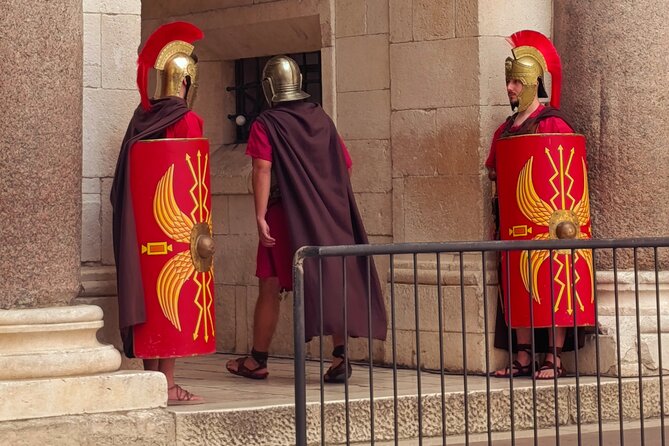
- Max 10 travelers means the guide can slow down and explain what matters.
- English tour with a local guide helps you connect details to everyday life in Split.
- Diocletian’s Palace UNESCO focus across multiple substructures, not just the obvious highlights.
- Acoustics in the Vestibulum and UNESCO-protected klapa singing make the palace feel alive.
- You touch the story behind the Golden Gate and the cathedral bell tower transformation.
- Old-town squares with layered names and styles, from Ottoman-era defenses to baroque architecture.
From Riva Harbor to Palace Stones: Why 90 Minutes Works
Split is one of those cities where the main attraction looks like one big postcard. But the trick is getting the palace to make sense before you’re overwhelmed by it. This tour is set up for that: you move in a logical line, you get context as you walk, and you don’t waste time guessing what you’re looking at.
I like that it stays grounded. You’re not just hearing dates. You’re seeing how a palace waterfront became a promenade, then walking into the internal spaces that once shaped daily life for an emperor and his court. The guide’s local perspective helps you understand why people still treat these spots as part of their normal day.
Also, with a group limit of 10, you’re more likely to get personal clarification when something is hard to see or explain—especially in the palace’s dimmer, more enclosed areas.
You can also read our reviews of more tours and experiences in Split.


Riva Harbor: How a Palace Waterfront Became the Promenade
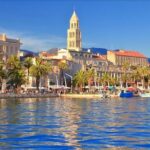
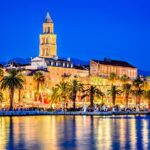
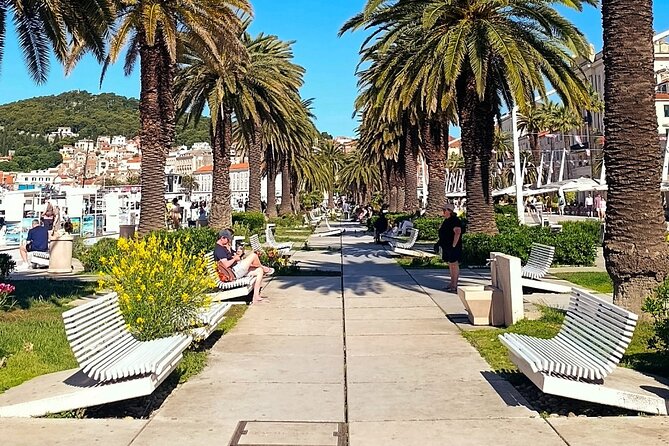
Your walk starts at Riva Harbor, where the tone shifts fast. The guide frames the promenade as a living result of how the waterfront was once tied to the palace—so instead of viewing it as just a pretty harbor strip, you start thinking about function: arrivals, protection, movement, and power.
You also get a quick early win: you’re learning the “why” behind the place before you step into the palace structure. That means when you later see courtyards and gates, your brain has a map already.
This first stop is brief (about 10 minutes), but it works like a warm-up stretch—ideal if you’ve just arrived and want to start making sense of the old town right away.
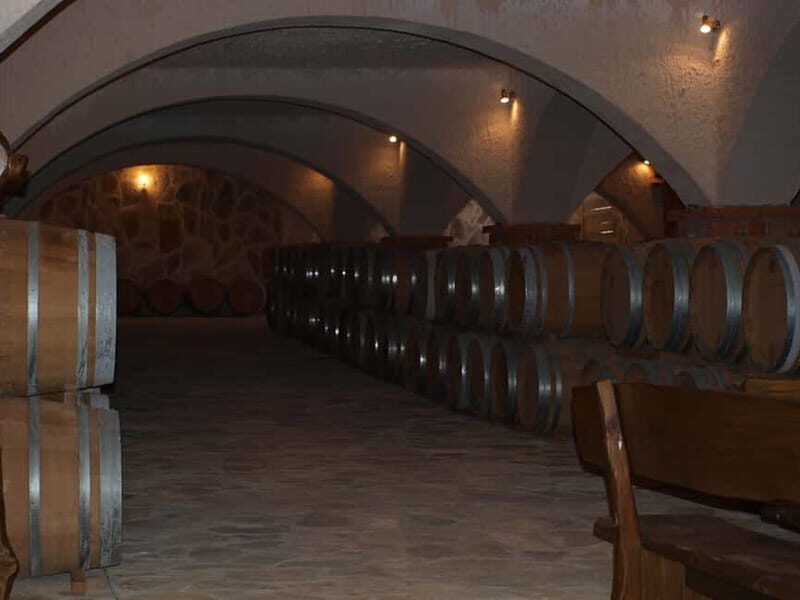
Diocletian’s Palace Cellars: The Vaulted Late-Antique Part Most People Skip
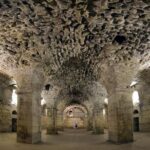
Next comes one of the palace’s strongest teaching moments. Even when you only see the central section of the palace cellars, the whole experience clicks: vaulted late antiquity, extremely well preserved, and built to last.
This is the kind of space where storytelling matters. Without context, it’s easy to just notice the stone. With context, you start understanding how the architecture supported the palace’s needs—practical and strategic at the same time.
If you’re the type who likes walking into structures and thinking about how people used them, you’ll enjoy this segment. And because the entry at this stop is included as free admission, you don’t feel like you’re constantly making small ticket decisions mid-walk.
Peristyle Square: Columns, Emperor-Adoration, and the Cardo/Decumanus Story
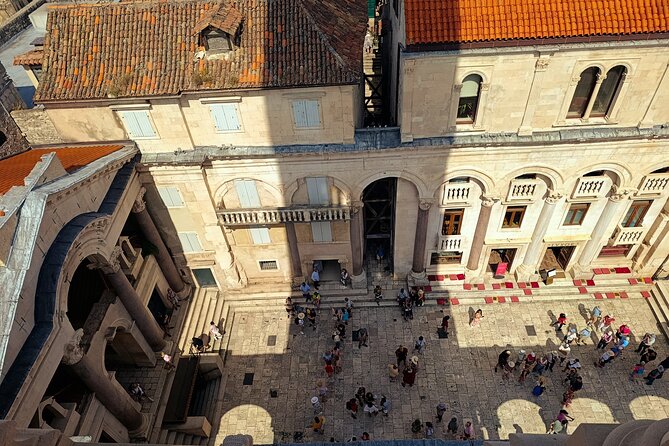
Then you step into the Peristyle of Diocletian’s Palace, which is basically the palace’s grand “heart.” Around you are columns, and the place is built to make you feel what it was like to stand in a ceremonial setting—especially when the guide explains how an emperor’s appearance and movement would have been staged.
You’ll also hear about the Cardo and Decumanus—the two main streets—and how they changed over centuries through different architectural styles. That’s a big deal because Split isn’t frozen in Roman time. The city keeps layering onto itself, and these street axes are one of the clearest ways to see that layering happen.
This stop runs about 15 minutes, which is long enough to take photos, look up, and actually absorb what makes the Peristyle special without feeling rushed.
A Secret-Feeling Antiquity Between Houses (With an Optional Interior Fee)
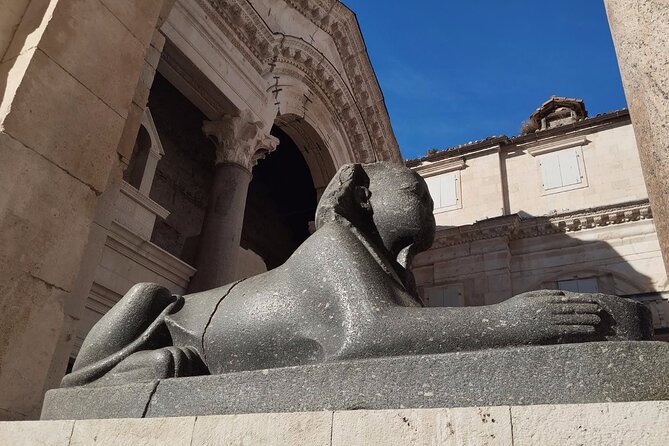
Just a few steps away, there’s a piece of antiquity set between buildings. The guide’s description helps you notice it as more than a quick photo stop. A British architect, Robert Adam, visited Split in the 18th century and included it among the most beautiful monuments in Europe—so it’s worth treating as a highlight, not a waypoint.
Here’s the practical part: access to the interior is available for an additional fee. If you love interiors, plan for that extra cost. If you’d rather keep things simple and stay on the main included route, you can still get a lot from what’s visible.




Vestibulum and the Acoustics of Klapa Singing
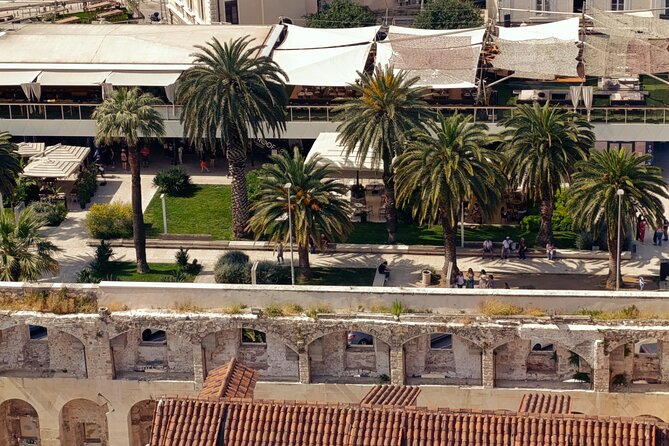
In the Vestibulum of Diocletian’s Palace, the focus shifts from visuals to sound. This circular building has an open ceiling, and the acoustics are strong enough that it’s used by klapa—Dalmatian-style a cappella groups. That singing tradition is protected as UNESCO world heritage, which gives the stop more weight than a normal “look at the architecture” break.
If you’re wondering what to listen for, don’t overthink it. Even without a performance happening on your exact day, the guide’s explanation helps you understand why the space works so well for human voices. You’ll start hearing the building as an instrument.
This stop is about 10 minutes, but it’s one of those short moments that can stick with you for the whole trip.
Triklinij: The Emperor’s Dining Room and the Carpe Diem Angle
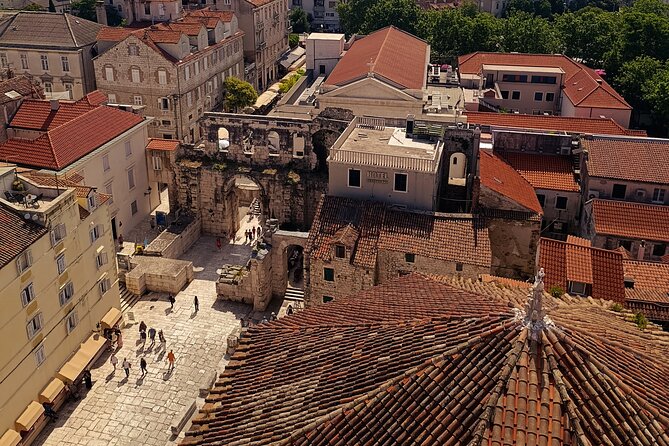
Next is the Triklinij, the part left of the emperor’s dining room. The guide ties the architecture to behavior—how people dined, what they ate in Roman-style terms, and why visitors used the vomitorium so often.
That last detail matters because it connects a word you might see later to the physical layout you’re standing in. And the stop finishes with a clear takeaway: the guide frames the visit with carpe diem energy, turning a room meant for feasting into a story about timing and lived experience.
This is another included 10-minute stop. For me, it’s the most effective “daily life” moment on the tour—history that feels like a routine, not just an exhibit.
From Mausoleum to Cathedral: Diocletian’s Lasting Reinvention
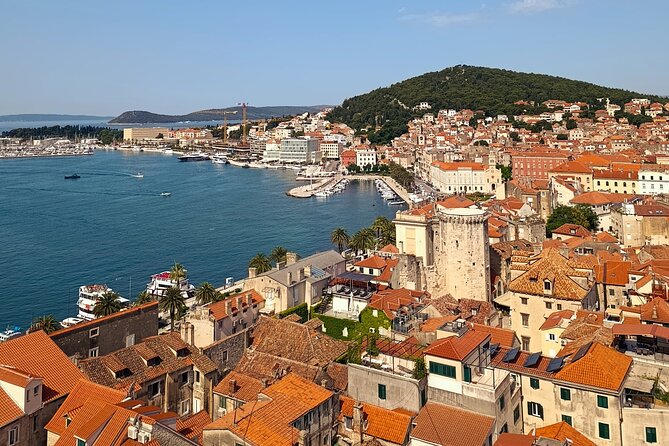
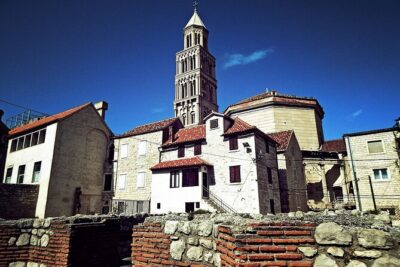
Right after, you get a transformation story. The Diocletian’s Mausoleum becomes an impressive cathedral, and the guide points out what makes the bell tower stand out on the Dalmatian coast.
This is where Split stops being just Roman ruins and starts becoming a city that keeps reusing sacred spaces. You’re seeing how power changes form but still leaves physical marks behind.
Even if religion isn’t your main interest, this stop is valuable because it teaches you how architectural reuse shapes a place’s identity over time.
Golden Gate, Oldest Chapel, and the Wall You Can Feel
The Golden Gate stop brings you to a sense of military reality. The entrance area isn’t just pretty; the guide explains why it wasn’t easy to enter a palace built as a kind of fortified military camp. From there, you can look at propugnaculum and the monumental gate logic.
You’ll also get a view of the best preserved wall of the palace and learn where the oldest chapel in Split is hidden. That last detail is key. It encourages you to look beyond what’s obvious—because Split often rewards careful attention.
This segment is about 10 minutes, and it’s one of the best places on the route to ask questions if you like understanding defense and movement in cities.
Gregory of Nin’s Statue: A Photo Stop With a Local Legend
Then comes the easy, fun reset: Grgur Ninski Statue. It’s a great photo spot, sure, but the guide also brings in the legend that your wish will come true if you touch the statue’s golden toe.
This is one of those cultural rituals you’ll see because it’s simple and communal. The guide’s explanation makes it feel less like a tourist gimmick and more like a small shared tradition.
Plan about 5 minutes here. It’s short on purpose, so you can keep momentum and still enjoy it.
Narodni Trg and Trg Brace Radic: Two Squares, Two Layers of Power
The tour ends by widening your view into daily city space: first Narodni Trg, then Fruit Square (Trg Brace Radic).
At Narodni Trg, the guide talks about how the square changed its name several times. Today it’s the main square of the old town, and the point is to see how architecture layers onto civic life—through turbulent periods, not just calm ones. You spend about 10 minutes, which is enough to get the big idea and notice the different styles around you.
Then you move to Fruit Square (Trg Brace Radic), where you’ll see a strong example of baroque style architecture. The guide connects it to Venetian protection during Ottoman-era attacks and also brings in Marko Marulić, described here as the father of Croatian literature.
This is about 10 minutes as well, and it’s a solid finish: you transition from palace time back into street-level city time, so your mental map of Split holds together.
What You Actually Get for the $24.03 Price
At $24.03 per person for about 1 hour 30 minutes, this is built for value. You’re paying for a licensed local guide, plus structured access to major Diocletian’s Palace areas where admission is effectively free for the stops included on the route.
That means your money goes to interpretation—the kind of detail that helps you see more than you’d see on your own. If you’re doing just one guided walk in Split, this tends to be the kind that pays you back fast because you’re learning how to read the site while you’re standing inside it.
One more value point: the optional interior fee only shows up at one specific stop. Everything else is covered as part of the experience, so you don’t get nickel-and-dimed at every turn.
Also, this tour is offered in English, and it’s typically booked ahead (on average, about 22 days in advance). If your schedule is fixed, don’t wait until the last day.
Practical Tips So You Enjoy the Walk (Not Just Survive It)
This is a walking tour, and Split’s old town involves uneven historic stone. I’d pack comfortable walking shoes. The schedule moves you from harbor to palace structures and then to squares, with multiple short stops rather than one long break.
The tour is marked as suitable for most travelers, and it runs near public transportation. Still, you’ll be doing a good chunk of on-foot time, so plan for that.
Bring a charged phone for your mobile ticket. And since the end is at Fruit Square near Gelateria Voćni trg, it’s a natural spot to plan a snack or sit down after the tour.
If you’re traveling with a service animal, the experience allows service animals.
Should You Book This Split History Walking Tour Away From Rome?
Book it if you want Split’s Diocletian’s Palace story told in plain language, with stops connected to daily life and real city layers. The small group (max 10) is a big plus, and the English-speaking local guide angle matters because the palace is confusing until someone helps you decode it.
Skip it or think twice if you hate brisk pacing. This tour packs a lot of meaningful stops into about 90 minutes, so you’ll want shoes that can handle walking and time that can handle moving.
One more reason to feel good about booking: the experience has a 5/5 rating across 30 reviews, with strong praise for guides like Anita—especially her English clarity and the way she keeps the pace comfortable while sharing both palace facts and local culture.
If you’re trying to make Split click quickly, this is a smart first guided step—then you can wander the rest of the old town with your new eyes.
FAQ
How long is the Split History Walking Tour (Rome away from Rome)?
The tour lasts about 1 hour 30 minutes.
Is the tour offered in English?
Yes, it is offered in English.
What group size should I expect?
The tour has a maximum of 10 travelers.
Is a ticket or entry admission included?
You receive a mobile ticket, and the stops listed include free admission tickets. One stop has an interior that is available for an additional fee.
Where does the tour start and end?
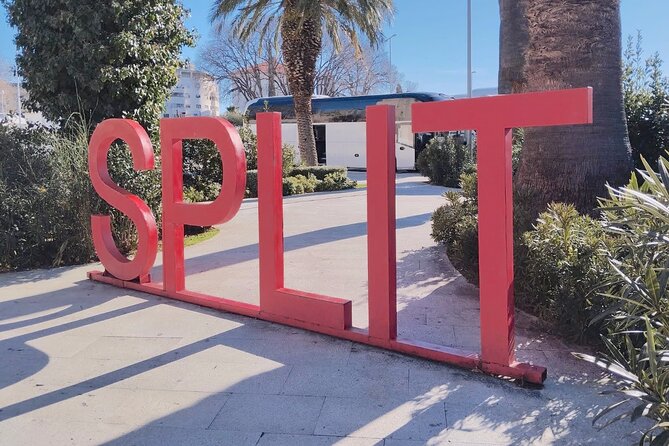
It starts at Split sign 21000, Grad, Split, Croatia and ends at Gelateria Voćni trg, Trg Braće Radić, 21000, Split, Croatia (Fruit Square).
Can I get a full refund if my plans change?
Yes. Free cancellation is available, and you must cancel at least 24 hours before the experience’s start time for a full refund.