REVIEW · SPLIT
Split Old Town History and Monuments Private Guided Walking Tour
Book on Viator →Operated by Viktoria - Tourist Guide · Bookable on Viator
Split’s Roman core is easier to love than you’d think. This private guided walk strings together the key parts of Diocletian’s Palace and Old Town so you’re not just looking at stone—you’re learning what it was for. I especially liked how you start at Riva Harbor and move in a clear line through the palace so your brain can map the place fast.
I also really enjoyed having Viktoria, who made the story feel human instead of like a lecture. If you’re even a little curious about why this city looks the way it does, you’ll get that.
One consideration: the big buildings you’ll want to step into cost extra time and money. The Cathedral of Saint Domnius is optional, and the Temple of Jupiter also has an additional entrance fee, so check that before you set your budget.
In This Review
- Key highlights you shouldn’t miss
- Walking into Split’s Roman spine: what the tour feels like
- Riva Harbor: your orientation point before the stone starts talking
- Diocletian Palace substructures: where the palace gets physical
- Vestibule and the Peristyle: entrances and the heart of the palace
- Temple of Jupiter: a quick stop with a pay-to-enter choice
- Cathedral of Saint Domnius: the one optional ticket you should plan
- Grgur Ninski statue and Old Split: the switch from Roman layout to living town
- The Golden Gate and the palace entrance logic
- Pjaca and Fruit’s Square: learning the Old Town without getting lost
- Price and value: what $90.02 buys you in real terms
- Who this tour fits best (and who might not need it)
- Practical details that help you enjoy it
- Should you book this Split Old Town history walk?
- FAQ
- How long is the Split Old Town History and Monuments private guided walking tour?
- Where does the tour start?
- Where does the tour end?
- How much does the tour cost?
- Is this tour private?
- What language is the tour offered in?
- Are admission tickets included?
- Is the Cathedral of Saint Domnius included?
- Is the Temple of Jupiter included?
- What happens if the weather is bad?
- Can I get a refund if I cancel?
Key highlights you shouldn’t miss
- A tight route through Diocletian’s Palace, from palace approaches to the middle court
- Game of Thrones connections tied directly to the palace substructures used as a filming set
- Optional indoor time at Saint Domnius Cathedral and extra ticket costs you can plan for
- Old Town layout lessons at Golden Gate, Pjaca, and Fruit’s Square so you can navigate after
- Ivan Meštrović’s landmark statue of Grgur Ninski, right where you need it on the walk
Walking into Split’s Roman spine: what the tour feels like
This tour is built for people who want the big landmarks without spending your whole day “figuring it out.” You get a private, licensed guide in English, and the route is paced for about 1 hour 30 minutes to 2 hours. That means you’ll likely have time to wander afterward, but you’ll also leave with a mental picture of how Split grew from a palace town into the Old Town you see today.
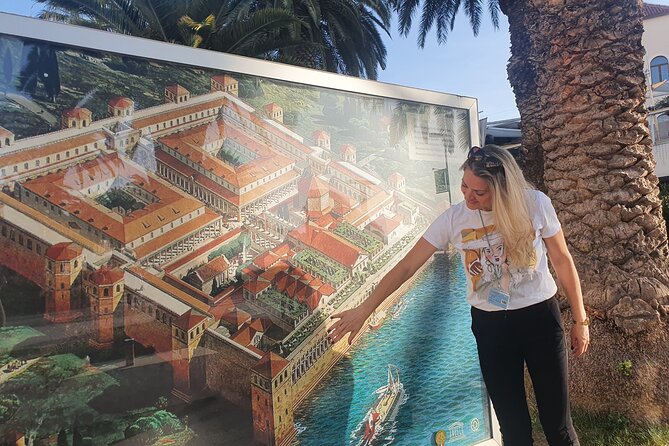
You’ll start at the Model of the historical core of the city of Split near Obala Hrvatskog narodnog preporoda 23. From there, the walk moves in a logical flow: harbor → palace approach and religious center → key statues and gates → squares in Old Split → back to the harbor again.
Because it’s private, it’s also easier to ask questions on the spot. I found that mattered here, since Diocletian’s Palace can feel like “random ancient walls” unless someone helps you connect the dots.
You can also read our reviews of more tours and experiences in Split.


Riva Harbor: your orientation point before the stone starts talking
The tour kicks off at Riva Harbor, where your guide sets the stage with the history of Split and Diocletian’s Palace. This matters more than you might expect. Split’s waterfront is modern enough that it can trick you into thinking the city is mostly “seawalk architecture.” Getting the palace context first helps you see why this harbor area is still the entry point into the historic core.
You won’t have to buy any admission here—this is a free intro stop—so you can settle in and get your bearings. For many people, the harbor is also where you’ll already be headed anyway, so it’s a low-friction way to start.
Diocletian Palace substructures: where the palace gets physical
Next up are the Diocletian Palace Substructures, described as among the best preserved complexes of their kind. These spaces are exactly the sort of place that makes the whole site click, because you can feel the scale and construction logic of the palace underneath the visible streets.
There’s also a Game of Thrones link here: the substructures were used as a filming set. If you’ve watched the show, it’s a fun moment to connect screen memory to real stone. Even if you haven’t, it’s still a highlight because it’s one of the most “palace-specific” parts of the tour. It’s not just a random courtyard—this is the structural backbone.
A small practical note: this is a short stop, so let your guide lead. You’ll get better value by paying attention to what they point out rather than trying to self-explore in a hurry.
Vestibule and the Peristyle: entrances and the heart of the palace
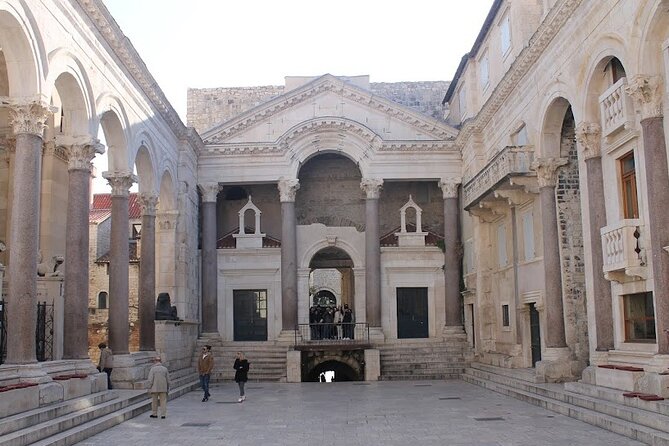
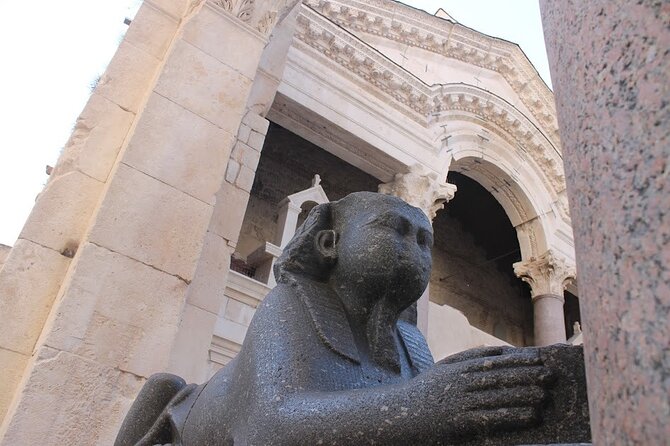
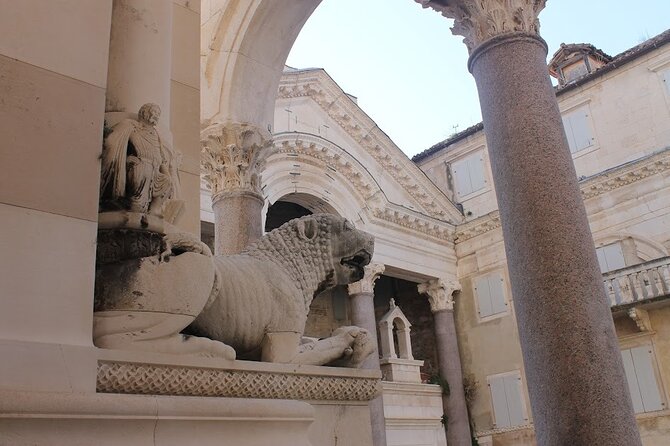
After the substructures, you move to the Vestibulum of Diocletian’s Palace, described as the main entrance to the emperor’s apartment in Roman times. This is the kind of stop that can look like “a doorway and some walls” unless you’re told what it means in the palace layout. In a well-paced walking tour, those clarifications are everything.
Then comes the Peristyle, a beautiful central square inside the palace. Your guide ties it to religion and the worship of Diocletian. This is where you start to understand that the palace wasn’t only administrative power—it had a spiritual and ceremonial side too.
I liked that both stops are short and focused. You get the big ideas without feeling dragged. It’s also a relief that admissions aren’t needed for these segments, so your timing stays easy.
Temple of Jupiter: a quick stop with a pay-to-enter choice
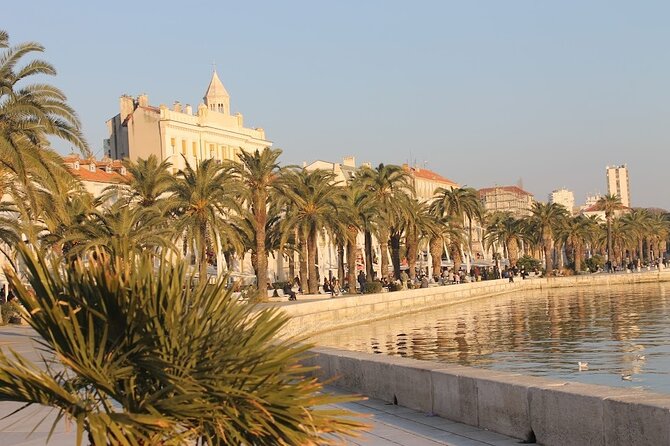
The Temple of Jupiter stop is brief, so treat it as a “spot check” moment rather than a long visit. The Temple of Jupiter has an entry fee and isn’t included, so you’ll likely decide on the spot whether you want extra time inside.
If you’re the type who enjoys stepping into the actual structure, plan to add that fee. If you prefer to keep your tour tight and save your energy, you can still leave with the main context from the outside views your guide provides.




Cathedral of Saint Domnius: the one optional ticket you should plan
One of the most important landmarks on the route is the Cathedral of Saint Domnius. The cathedral was originally built as Emperor Diocletian’s mausoleum, which makes it more than a pretty church stop. It’s a continuity story: Roman emperor’s tomb becomes a central religious space for later generations.
Here’s the practical catch: admission to the cathedral is optional and costs 5 EUR per person. If you care about seeing the inside, I’d budget for it and wear shoes you’re comfortable standing in. If you’d rather keep costs down, you can still get the value of the guide’s explanation from the exterior and surrounding area.
Either way, this stop is a good checkpoint for your energy level. By the time you reach it, you’ve already built your understanding of the palace—so the cathedral lands with more meaning.
Grgur Ninski statue and Old Split: the switch from Roman layout to living town

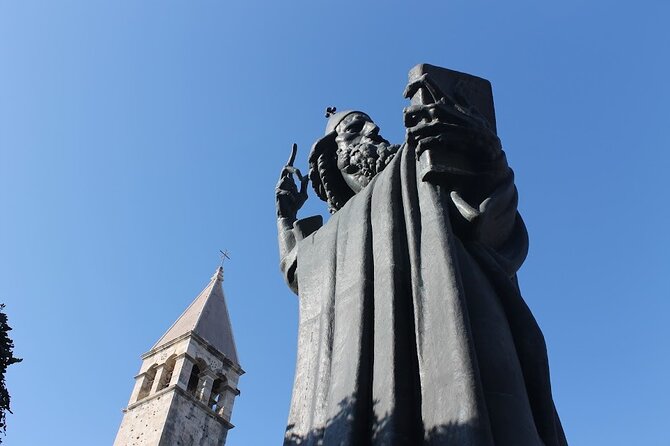
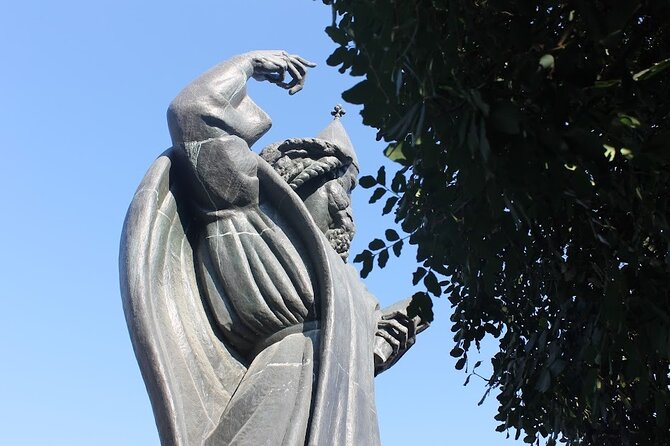
After the cathedral, the tour moves to the Grgur Ninski Statue, made by Ivan Meštrović. This is a nice contrast point. You’ve been focused on Roman architecture and palace geometry, and now you land on a modern artistic landmark that still sits inside the historical core.
Then you’ll walk into Old Split, the area that developed around the palace built at the end of the 3rd and beginning of the 4th century. That line is important: it tells you Split’s Old Town wasn’t “added on later.” It grew out of the palace’s presence, and that explains why streets and squares feel so interwoven with ancient structures.
The Golden Gate and the palace entrance logic
The Golden Gate is the main entrance to the palace in Roman times. This stop helps you connect the earlier entrance spaces with how people would have moved through the site. It’s a good reminder that the palace wasn’t a sealed-off monument. It was designed for flow—approaches, thresholds, and controlled transitions.
If you’ve got any Game of Thrones interest, this is also one of the places that tends to trigger that same brain-translation moment: screen memories and real architecture suddenly align. Even without that angle, Golden Gate is still a “spine” stop because it gives you a clear anchor point for everything you saw earlier.
Pjaca and Fruit’s Square: learning the Old Town without getting lost
The tour then shifts from palace core to the civic vibe of Old Town with Pjaca, the main square. Squares are where cities show how they live, not just how they were built. In a short tour, Pjaca is a smart inclusion because it helps you orient yourself for later independent wandering.
Next is Fruit’s Square (Trg Brace Radic), another lovely square with a baroque building, a Venetian tower, and a statue of Marko Marulić. You’ll feel the timeline layering here. Old Town isn’t one era—it’s a stack. Your guide’s pacing keeps you from feeling overwhelmed by that layering.
Finally, you return to Riva Harbor, where the tour ends back at the meeting position. That “loop” design is practical: it makes the tour feel like orientation, not just a list of stops.
Price and value: what $90.02 buys you in real terms
At $90.02 per person, this tour isn’t the cheapest way to see Split. But you’re paying for two things that matter in a historic city: a private, licensed guide and a tight, efficient route through the most important points of the palace and Old Town.
Here’s how the value plays out:
- Most stops have no admission required, so the tour time isn’t eaten up by ticket lines or extra fees.
- The guide handles the story stitching—what you’re looking at and why it matters—so you don’t need to do guesswork.
- You get a private experience with your own group, which often makes questions easier and pacing more comfortable than on busier group tours.
The only cost surprises come from the optional paid sites. The Cathedral of Saint Domnius has an additional 5 EUR entrance fee, and the Temple of Jupiter also isn’t included. If you plan to go inside both, you should add those costs to your budget before booking.
Who this tour fits best (and who might not need it)
This tour is especially good if:
- You want a high-impact overview of Diocletian’s Palace and Old Split without spending the day alone getting oriented.
- You like history, but you also want it explained clearly, not in a dry way.
- You’re a Game of Thrones fan and want the show connection grounded in real places.
- You’d rather pay for guidance than rely on apps while walking through a complex site.
It might be less ideal if you:
- Want a super long, slow museum-style visit at churches and temples.
- Prefer fully self-guided exploring and don’t care about interpretation.
- Are trying to avoid any extra paid entries at all (because the cathedral and Temple of Jupiter have additional fees).
Practical details that help you enjoy it
- The tour runs Monday through Sunday, 8:00 AM to 7:00 PM.
- It’s offered in English, and you’ll receive a confirmation at booking.
- You’ll get a mobile ticket.
- Service animals are allowed, and the tour is marked as suitable for most travelers.
- It requires good weather; if it’s canceled due to poor weather, you’ll be offered another date or a full refund.
For footwear, bring comfortable walking shoes. This is a city-walk with ancient surfaces and short stops that require you to be ready when the guide calls your attention.
Should you book this Split Old Town history walk?
If your goal is to understand Split fast—and walk away feeling like you truly connected the palace to the city—this is an excellent choice. The structure of the route makes sense, and Viktoria’s style is a big part of why it works. The guide’s ability to make the material interesting even for someone who normally skips history helps a lot here.
I’d book it if you’re willing to add the optional cathedral visit to your day and you want a curated, efficient route through the Diocletian core and Old Town squares. Skip it only if you’re committed to going totally on your own or you don’t want to deal with any extra paid entries.
FAQ
How long is the Split Old Town History and Monuments private guided walking tour?
It lasts about 1 hour 30 minutes to 2 hours.
Where does the tour start?
The meeting point is the Model of the historical core of the city of Split, Obala Hrvatskog narodnog preporoda 23, 21000, Split, Croatia.
Where does the tour end?
The tour ends back at the same meeting point.
How much does the tour cost?
The price is listed as $90.02 per person.
Is this tour private?
Yes. It’s a private tour/activity, and only your group will participate.
What language is the tour offered in?
It’s offered in English.
Are admission tickets included?
No admission tickets are included.
Is the Cathedral of Saint Domnius included?
Entrance to the Cathedral of Saint Domnius is optional, with an additional fee of 5 EUR per person.
Is the Temple of Jupiter included?
No. Entry/admission for the Temple of Jupiter is not included.
What happens if the weather is bad?
The experience requires good weather. If it’s canceled due to poor weather, you’ll be offered a different date or a full refund.
Can I get a refund if I cancel?
Yes, you can cancel for a full refund up to 24 hours in advance.