REVIEW · SPLIT
Split Old Town History Walking Tour
Book on Viator →Operated by Gray Line Croatia · Bookable on Viator
Diocletian’s palace teaches you fast. This 90-minute Split Old Town history walk strings together the best Roman-to-Venetian sights in a tight loop, with sea views at the start and real context from a local guide. I especially like how the route begins at Obala Hrvatskog narodnog preporoda, so you get the city’s layout in your head before you start ducking under arches and into cellars.
Two things I really value here: you don’t pay entrance fees for the listed stops, and the experience is led by a professional licensed local guide with a knack for sharing practical advice. One possible drawback to consider is that, like any popular tour booked through third-party platforms, there can be rare last-minute hiccups (like a cancellation or booking not showing up correctly), so I’d keep your confirmation handy and verify the details the day before.
In This Review
- Key highlights you should care about
- Split’s Waterfront Start at Obala Hrvatskog narodnog preporoda
- Going Underground at Diocletian’s Palace Cellars
- St. Domnius Cathedral: Roman Columns to Mausoleum Meaning
- The Vestibulum Dome and the Klapa Acoustic Moment
- Temple of Jupiter, Then Triklinij Banquets
- Golden Gate Exit, Gregory of Nin’s Lucky Toe, and the Squares
- Guides Make the Difference: Local Passion You Can Feel
- Price and Value: What $30.23 Really Buys
- Choosing Between Two Departure Times
- Weather, Shoes, and Comfort on This Old Town Loop
- Should You Book This Split Old Town History Walking Tour?
- FAQ
- Where do we meet for the tour?
- How long is the Split Old Town History Walking Tour?
- How much does the tour cost?
- What’s included in the tour price?
- Is the tour offered in English?
- Does the tour visit multiple sites in Diocletian’s Palace?
- Are food and drinks included?
- Does the tour run in bad weather?
- What are the child and pet rules?
- What is the cancellation policy?
Key highlights you should care about
- Free admission at the main palace stops, so your money goes to the guide, not ticket lines
- Small groups (max 20), with the kind of pacing that leaves room for questions
- Diocletian’s palace core locations, from cellars to St. Domnius and the Golden Gate
- Practical local tips, including where to eat, drink, and what else to explore
- A good “first day in Split” option, especially if you want orientation fast
- Two departure times, which can help you choose cooler walking conditions
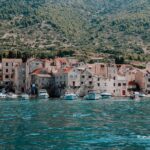
Split’s Waterfront Start at Obala Hrvatskog narodnog preporoda
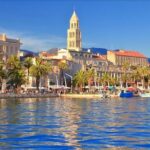
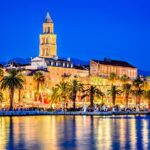
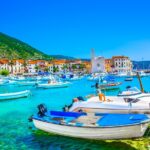
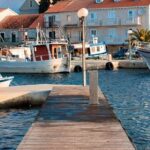
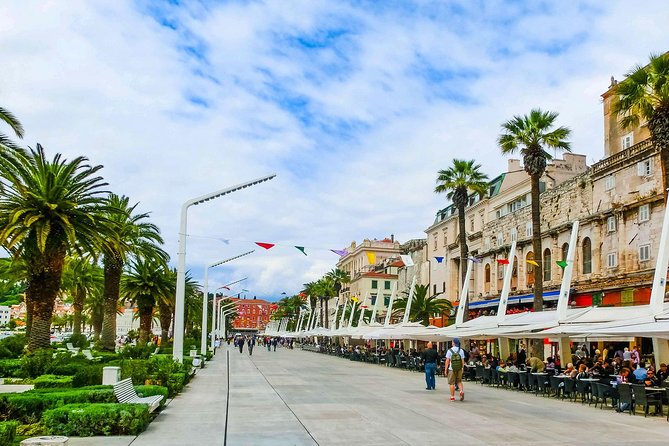
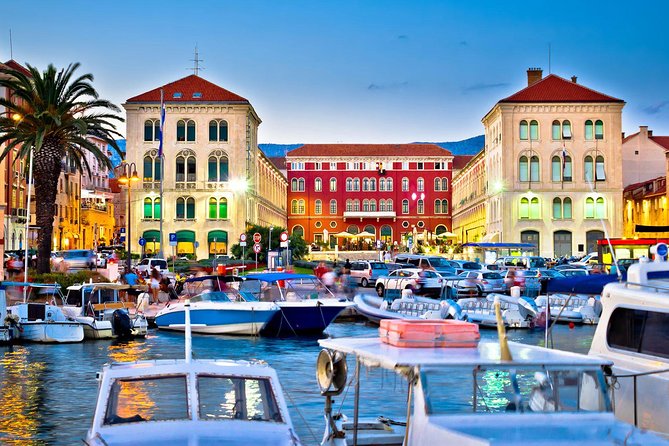
Your tour begins on Obala Hrvatskog narodnog preporoda 21 on the waterfront promenade. It’s the easiest way to start: you’re outside, you can see the harbor and the feel of the city, and your guide sets the stage so the Old Town doesn’t feel like a maze of stone.
This first stretch matters. If you know where the palace sits and how the squares connect, the rest of your time in Split gets simpler. Plus, the meeting point being near public transportation is handy. You can arrive without stressing over parking or timing.
At this early moment, you’ll also hear how Split grew and changed around Diocletian’s Palace. That context pays off later when you’re standing in the shadow of Roman walls and suddenly realizing this city was built for power, not postcards.
You can also read our reviews of more tours and experiences in Split.


Going Underground at Diocletian’s Palace Cellars
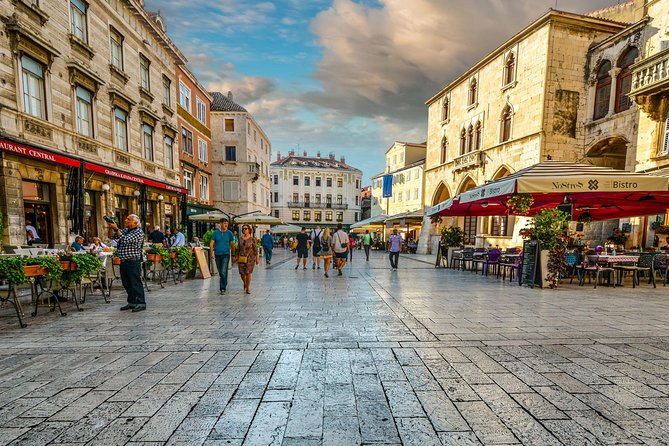
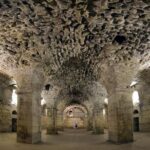
The tour’s first big “wow” comes with the Peristyle of Diocletian’s Palace, specifically the cellars beneath Diocletian’s Palace. These substructures are a smart choice for a walking tour because they explain the relationship between what you see above and what supported it below.
You’ll learn how these underground chambers helped the emperor’s residence function. And you’ll get the kind of explanation that turns a quick photo stop into a real understanding of Roman living. It’s not just history trivia; it’s cause-and-effect. The palace above needed infrastructure below, and that’s what you’re walking through.
A practical consideration: cellars can feel cooler and darker than the street. So if you’re sensitive to sudden temperature changes, bring a layer you’re comfortable wearing briefly indoors.
St. Domnius Cathedral: Roman Columns to Mausoleum Meaning
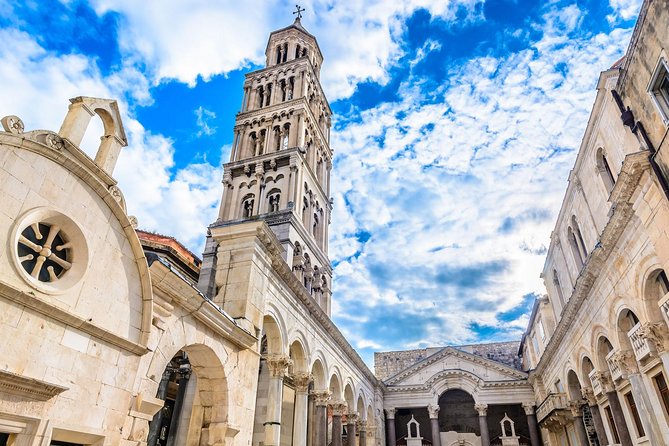
Next up is the Cathedral of Saint Domnius, in the Peristyle and Cathedral area of the palace complex. This is one of those places where the building tells the story even when you’re not listening. The Roman columns and the cathedral space create a strong sense of continuity—Roman foundations, Christian significance.
Your guide frames St. Domnius as the cathedral that was once the emperor’s mausoleum. That connection helps you understand why the spot became important long after the original Roman world faded. It’s a rare moment where you can sense the shift in purpose without needing a history textbook.
If you like religious architecture, this part delivers. If you’re more into everyday city life, it still works, because it’s the anchor point that shaped how people moved through the palace.
The Vestibulum Dome and the Klapa Acoustic Moment
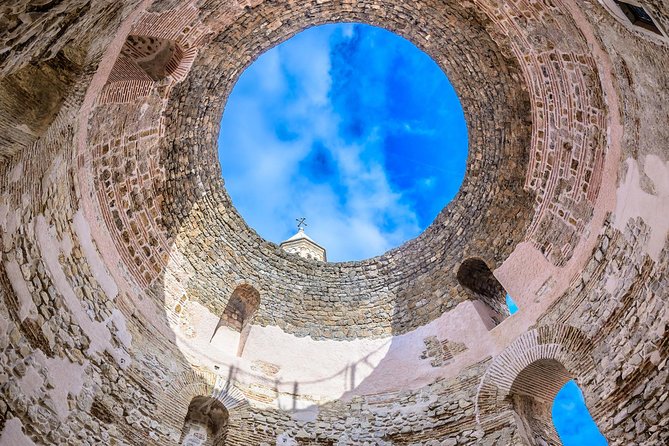
One short stop can still be special, and the Vestibulum of Diocletian’s Palace is exactly that. You stand beneath the circular open dome, and the acoustics are the point. Your guide explains why the sound carries here.
And if you’re lucky, you might catch a live performance from traditional klapa singers. Even if you don’t, this is still a fun “how do they do that” moment—one of those details that makes the stone feel alive.
Timing is tight here (about 5 minutes), so use the moment well. Look up, listen for the sound behavior, and ask your guide what to listen for. This is the kind of stop where a good explanation makes a 5-minute visit feel longer.
Temple of Jupiter, Then Triklinij Banquets
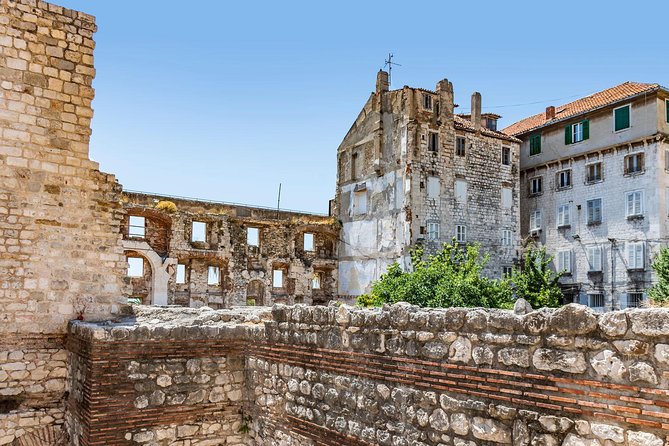
The tour keeps moving through the palace like you’re walking through different chapters of Roman life.
First, you visit the Temple of Jupiter, which is described as a former Roman temple turned baptistery. You’ll see ancient sculptures and a preserved sarcophagus. This mix of old and reused spaces is one of Split’s signature themes: later eras didn’t erase the past; they repurposed it.
Then you reach Triklinij, the area tied to Diocletian’s lavish banquets. Here, the guide shifts from monuments to manners—how Romans dined, what luxury looked like, and what it meant for imperial power. This stop is short, but it lands because it gives you a mental picture of the palace as a functioning world, not a museum set.
If you care about food history, this part can be surprisingly satisfying. It helps you connect what you’re seeing with how people lived day to day in a palace built for authority.




Golden Gate Exit, Gregory of Nin’s Lucky Toe, and the Squares
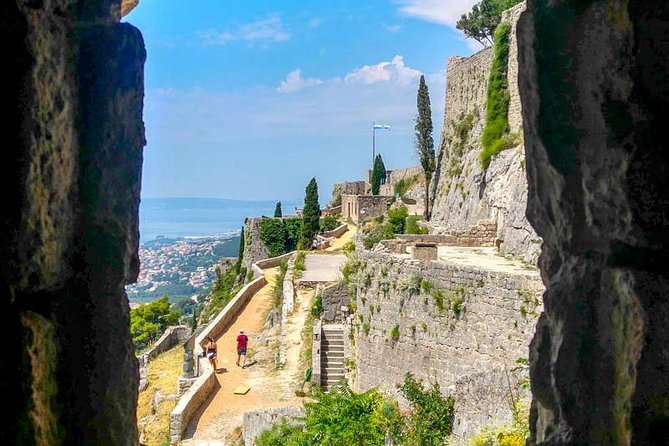
After you’ve worked your way through the palace core, the tour heads to the Golden Gate. This is the grandest of the palace gates, and leaving through it is a good way to feel the transition from fortress to city.
Outside, you’ll stop for the statue of Gregory of Nin. There’s a local tradition here: rub his toe for good luck. This is one of those small rituals that makes the stone feel less distant. Even if you don’t believe in luck, you’ll understand why locals keep the practice alive.
Then you move into the city’s open air again with two key squares. In Narodni trg (Pjaca), you’ll see Venetian-era buildings, an old city clock, and local cafés. It’s a useful contrast after the tight palace spaces—your brain gets a reset.
Finally, there’s Fruit’s Square (Trg Brace Radic). It’s named after the fruit markets that once took place there, and today it’s surrounded by baroque palaces and everyday Split life. This stop is brief, but it’s a nice reminder that the city’s economy and rhythms changed over time, even when the stones stayed.
Guides Make the Difference: Local Passion You Can Feel
The tour includes a professional licensed local guide, and the quality shows up in the feedback patterns tied to specific names like Anita, IVA, Toni, Katarina, Petra, and Rocco. The common thread is clear English, smooth pacing, and a willingness to answer questions without turning the tour into a lecture.
I like tours where the guide feels like a real person who lives here. In this case, multiple guides are described as friendly, efficient, and passionate about Split—exactly what you want when you have only 1.5 hours.
You’ll also get insider tips on where to eat, drink, and explore. That’s not a throwaway promise. In a city like Split, a few good recommendations can save you from wandering into places that look great but don’t fit your tastes.
One more practical note: group size is capped at 20. When groups stay small, you’re not fighting for hearing, and your questions don’t get lost.
Price and Value: What $30.23 Really Buys
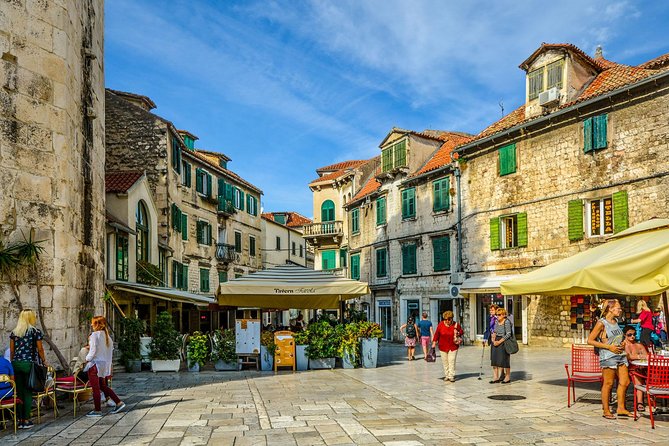
At $30.23 per person, you’re paying for three things: a licensed local guide, an organized route through major sights, and the listed stops with free admission tickets. Food and drinks are not included, so you’re not paying for lunch that you may or may not want.
For many travelers, the real value is time. If you tried to piece together all these palace spaces and squares on your own, you’d need planning, and you’d probably miss the connections between spaces like cellars supporting what’s above, or how old sacred spaces shifted purpose.
Also, the tour is commonly booked ahead—about 35 days in advance on average. That’s usually a sign it’s a practical “do it early” walk, so I’d book sooner rather than later if your dates are fixed.
Choosing Between Two Departure Times
This tour offers two departure times, and that matters more than it sounds. Split can get hot, and Old Town walking is mostly outdoors with short indoor pauses.
One traveler specifically noted that an evening tour felt cooler and quieter than a daytime attempt. You might not get that same exact experience every time, but choosing later can reduce heat stress and crowd pressure.
If you’re also trying to fit in other activities, the two start options make it easier to build a day around beaches, ferry times, or dinner plans.
Weather, Shoes, and Comfort on This Old Town Loop
The good news: it operates in all weather conditions, and you’ll be told to dress appropriately. That means you can’t count on perfect sun, so plan for damp pavement or cooler air.
This is a walking tour, and you’ll cover multiple palace areas plus squares, including spaces that may involve steps or uneven stone. A sturdy, non-slip shoe is the smart move. Bring a light layer if you get cold easily, especially around the palace interior areas.
And because food and drinks aren’t included, think ahead. Even if your guide points you toward good spots, you’ll still want to have a water plan.
Should You Book This Split Old Town History Walking Tour?
Yes, if you want a fast, high-impact orientation to Split’s core sights. This walk is built around Diocletian’s Palace and the squares that orbit it, and the guide-focused format helps you understand what you’re seeing instead of just ticking off stops.
Book it if:
- you like short tours that still feel meaningful
- you want free entry at the main palace stops listed
- you value local context and practical tips for food and exploring
Consider skipping or switching to something else if:
- you need lots of free time to linger at one site (this is tightly paced by design)
- you’re worried about last-minute changes tied to booking platforms (rare, but it has happened)
If this is your first day in town, you’ll likely leave with better bearings and an easier time picking what to do next.
FAQ
Where do we meet for the tour?
You meet at Obala Hrvatskog narodnog preporoda 21, 21000, Split, Croatia. The tour ends back at the meeting point.
How long is the Split Old Town History Walking Tour?
It’s about 1 hour 30 minutes.
How much does the tour cost?
The price is $30.23 per person.
What’s included in the tour price?
The tour includes a professional licensed local guide and the stops listed have free admission tickets.
Is the tour offered in English?
Yes, it’s offered in English.
Does the tour visit multiple sites in Diocletian’s Palace?
Yes. The tour includes stops such as Diocletian’s Palace cellars, the Cathedral of Saint Domnius, the Vestibulum, the Temple of Jupiter, and Triklinij, plus spots outside like Golden Gate.
Are food and drinks included?
No. Food and drinks are not included.
Does the tour run in bad weather?
It operates in all weather conditions, and you should dress appropriately. If it’s canceled due to poor weather, you’ll be offered a different date or a full refund.
What are the child and pet rules?
Children must be accompanied by an adult. Pets are not allowed on the tour.
What is the cancellation policy?
You can cancel for a full refund if you cancel up to 24 hours in advance of the experience start time. If you cancel less than 24 hours before, the amount paid will not be refunded.