REVIEW · SPLIT
SPLIT-PREMIUM Emperor’s Walking Tour for History Lovers + Museum
Book on Viator →Operated by Walking Tour of SPLIT · Bookable on Viator
Split’s Roman layers make history walkable. This 2-hour Emperor’s walking tour turns the UNESCO Diocletian’s Palace complex into a story you can actually follow, led by local licensed guides like Joško and Daniela. I especially like how the route links major sites to the way the city grew, and how the pacing stays personal in a max 15-person group. One thing to weigh: it’s designed as a real history-and-architecture walk, so expect a lot of viewpoints from outside, and if you want more museum time you’ll pay the extra ticket for Diocletian’s Cellars.
Meet at Obala Hrvatskog narodnog preporoda 22 and you’ll start and finish near the Main Stage of the Riva promenade. The group option is adults only (private tours can include all ages), and the main draw is the Roman core plus medieval Old Split squares. If you want Game of Thrones scene-by-scene narration, this is not that style; you’ll spot some filming locations on your own.
In This Review
- Key highlights I’d circle before you go
- Diocletian’s Palace is easier on foot than by bus
- Where you start on the Riva helps you get your bearings
- Palazzo di Diocleziano (305 AD) and the big picture you need
- Old Split: the medieval neighborhood layered over Roman walls
- Cathedral of Saint Domnius: why outside views still matter
- The Emperor’s Square (Peristyle) is the beating heart
- Statues and squares: Grgur Ninski and Marul’s legacy
- People’s Square (Narodni Trg) and the city’s everyday rhythm
- Temple of Jupiter and City Clock: small stops, big payoffs
- Golden Gate and the palace entrances you should recognize
- Diocletian Palace substructures: the best-preserved part
- Vestibulum of Diocletian’s Palace: the emperor’s private threshold
- Where the “museum add-on” fits: Diocletian’s Cellars
- The walking reality: 2 hours is a guide, not a rule
- Price and value: $30 for a small-group history reset
- Who should book this Emperor’s walking tour
- Practical tips so you enjoy every stop
- Should you book this Split history walk?
- FAQ
- How long is the Split Emperor’s Walking Tour?
- What language is the tour offered in?
- Where does the tour start and end?
- Is the Museum of Diocletian’s Cellars included?
- Are entrance fees included for all sites?
- Is this tour only for adults?
- How big is the group?
- What happens if the weather is poor?
Key highlights I’d circle before you go
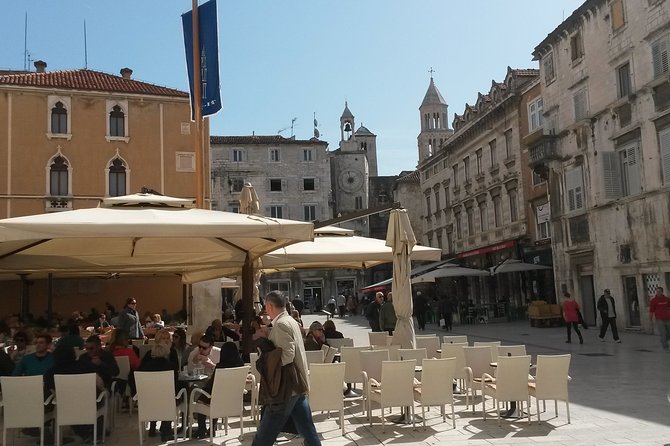
- Diocletian’s Palace with context: you’ll learn what you’re looking at, not just where to stand.
- Small-group feel: fewer people means you get clearer answers and better photo moments.
- Peristyle (Emperor’s Square): the tour hits the spiritual center of Split’s palace world.
- Iconic entrances and viewpoints: Golden Gate and the Temple of Jupiter area are part of the story.
- Square culture in Old Split: People’s Square, Fruit’s/Trg Brace Radic, and more.
- Optional museum upgrade: Diocletian’s Cellars is available if you want to go deeper for €10.
Diocletian’s Palace is easier on foot than by bus
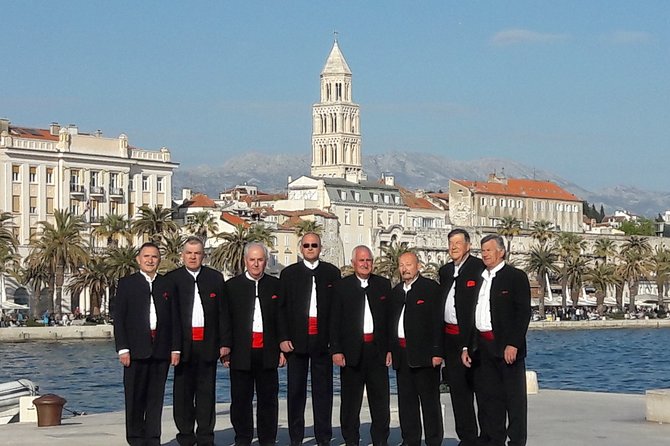
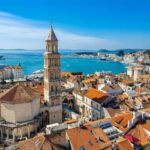
If you’ve ever stared at Diocletian’s Palace from a distance, you know the problem: it’s huge, and it can feel like you’re wandering through stone. This tour solves that. You walk the same kinds of paths locals would recognize, while your guide connects the palace’s Roman purpose to what Split became afterward.
The feel is part lesson, part orientation. You start with the big idea—how an emperor’s retirement palace turned into living space—then you move gate to square to entrance. That makes the place click faster, even if you don’t consider yourself a “history person.”
You can also read our reviews of more tours and experiences in Split.


Where you start on the Riva helps you get your bearings
The meeting point is at Obala Hrvatskog narodnog preporoda 22, and the walking tour begins and ends by the waterfront, at the Main Stage of the Riva promenade. I like this setup because it keeps your brain grounded. Before you go inside the palace maze, you get a sense of where the water and the city sit in relation to everything.
It also makes the tour easy to “attach” to the rest of your day. You’re back near the promenade after the walk, so you can plan lunch or an afternoon stroll without a complicated return.
Palazzo di Diocleziano (305 AD) and the big picture you need
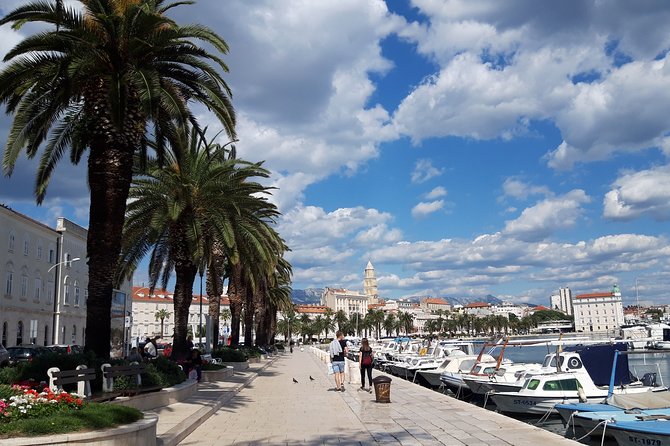
You begin with the core: Palazzo di Diocleziano, the palace built in 305 AD, a UNESCO World Heritage site. This first stop is short, but it sets the tone. You’re not just seeing a monument; you’re learning what kind of machine the Romans built and how long it’s been shaping daily life.
Here’s what I’d watch for as you stand there: the way the palace walls define movement. Once you understand that, the rest of the walk feels less like random touring and more like reading a map written in stone.
Old Split: the medieval neighborhood layered over Roman walls

Next you head to Old Split, the medieval part of town that grew around and inside the palace. This stop is also about 25 minutes, and that matters. You’re not rushed through the “pretty old streets” section; you get enough time to notice the shift from Roman geometry to later street patterns.
This is where you start thinking like a resident: people didn’t just preserve the palace. They reused it. That’s one of the tour’s best themes—how survival beats museum-keeping. You’ll see why Split can be both ancient and everyday at the same time.
Cathedral of Saint Domnius: why outside views still matter
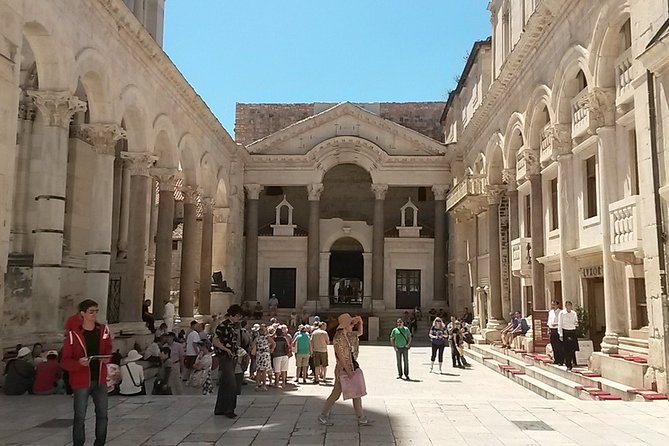
You’ll see the Cathedral of Saint Domnius from outside. Entrance isn’t included here, and the stop is about 5 minutes, but don’t treat that as a waste of time. Outside views help you connect landmarks. You learn how the cathedral sits in the city’s long timeline and how it anchors the medieval story after the Roman foundation.
If you’re the type who wants to step inside everything, you might still appreciate doing a separate visit later. But even without entry, the guide’s framing is what makes the stop useful.




The Emperor’s Square (Peristyle) is the beating heart
One of the most important moments is the visit to the Peristyle, sometimes described as Emperor’s Square, the heart of the palace complex. This stop is short (about 5 minutes), but it’s high impact.
What I like about reaching it relatively early is that it turns every next sight into a “why here?” question. Once you understand the Peristyle as a central public space, other features stop feeling isolated. The palace becomes a system: entrances, courtyards, sightlines, movement routes.
Statues and squares: Grgur Ninski and Marul’s legacy
From the Peristyle, the tour moves through several small-but-smart stops that teach you how Split remembers its own story.
- The Grgur Ninski statue is about one of the most important historical figures in Croatia. The guide’s job here is to connect the person to the wider cultural timeline, not just point at stone.
- You then reach Fruit’s Square (Trg Brace Radic), where you’ll see the statue of Marul, often described as the father of Croatian literature. This is a nice reminder that Split isn’t only Roman; it’s also a place with deep national cultural roots.
These short stops are easy to miss if you’re walking alone. In a guided format, they become anchors. You’ll find yourself understanding why people gather in these spots, not just passing through them.
People’s Square (Narodni Trg) and the city’s everyday rhythm
The tour continues to Narodni Trg, the People’s Square, described as the biggest and liveliest piazza in Old Town. Even if your stop is only around 5 minutes, it’s enough to get the “city pulse.”
This is also where the tour shifts from “emperor and Romans” to “how the city behaves today.” That’s important for value. You’re not leaving Split with only facts; you’re leaving with a sense of how the street layout supports real life.
Temple of Jupiter and City Clock: small stops, big payoffs
Two more quick hits round out the Roman atmosphere:
- Temple of Jupiter: you’ll see it from outside, with an optional inside visit. Admission isn’t included. For me, this is a good choice because you can decide based on your energy level. If you love Roman architecture, you’ll likely want to step inside; if you’re more about the overview, the exterior alone still gives you a strong sense of the original setting.
- City Clock: you’ll see a 500-years-old 24-hour clock. That kind of timekeeping detail sounds niche until you realize it’s a window into how people organized daily life long before digital screens.
These stops are short, but they’re the kind you remember later because they’re specific.
Golden Gate and the palace entrances you should recognize
The tour highlights the Golden Gate, called the main and most beautiful entrance into Diocletian’s Palace. This stop is brief, but it’s a real “click moment.” Once you’ve seen the gate, you can better understand how the palace controlled access.
Pay attention to what your guide points out about entrances. Roman planning is often about control and flow. Knowing how to read the gate makes the next parts—the deeper preserved sections and substructures—make more sense.
Diocletian Palace substructures: the best-preserved part
You’ll visit Diocletian Palace Substructures, described as the best-preserved part of the palace, around 20 minutes. Entrance isn’t included here, so if you want to go in, plan on either paying separately or checking what’s required on the day.
This is the part of the tour that feels most tangible. Upper-level views can be dramatic, but substructures often deliver the “how it was built” feeling. You get a stronger sense of scale and engineering.
Vestibulum of Diocletian’s Palace: the emperor’s private threshold
The final Roman core stop is the Vestibulum of Diocletian’s Palace, essentially the main entrance to the emperor’s private residence. This is about 5 minutes and admission is free for the stop.
Even if you only see a threshold area, it’s still important. It reinforces the earlier theme: this palace was not only public grandeur. It was controlled private space. That balance helps you understand why the palace still feels like a city even today.
Where the “museum add-on” fits: Diocletian’s Cellars
There’s an important detail if you like artifacts and indoor interpretation. The tour does not include admission to the Museum of Diocletian’s Cellars. You can add it for €10 per person.
Is it worth it? For me, the best logic is simple. If you’ve already got enough outdoor walking and you want more atmosphere inside, Cellars are your payoff. If you prefer spending time on squares, streets, and views, you might skip the museum and use the ticket-free parts to keep your day moving.
Either way, having the option means you can match the tour to your style.
The walking reality: 2 hours is a guide, not a rule
The tour is listed at about 2 hours, but I’d mentally budget for a little variation. You’ll be out in the elements, and the pace can stretch if your guide takes time to answer questions or accommodate different walking needs.
One thing I really appreciate is that local guides like Joško and Daniela have a reputation for adjusting sensitively when someone needs a slower pace. That means the experience can feel thoughtful, not just “stick to the script.”
If you’re visiting in summer, plan for heat. Start early if you can, bring water, and wear shoes you’re comfortable with on uneven stone.
Price and value: $30 for a small-group history reset
At $30 per person for a roughly 2-hour small-group walk, this is priced like a solid introductory hit. The big value isn’t only the route. It’s the fact that the tour is run by a licensed resident guide using a custom-designed itinerary and a format that limits the group size.
Small-group size matters in a place like Split. When you’re around 15 people or fewer, you can hear better, ask questions, and get more targeted explanations at each stop. You also avoid that feeling of being herded in a big pack.
Then there’s the optional cost: Diocletian’s Cellars museum at €10. If you add that, your total rises, but you’re choosing to invest in deeper indoor content. You’re not paying extra for something you didn’t want.
Who should book this Emperor’s walking tour
This is a great fit if:
- You want to understand Diocletian’s Palace without getting lost in it.
- You enjoy history told in human terms—who ruled, who built, and what came next.
- You like a guide who uses humor and storytelling to keep the facts from feeling dry.
It may be less ideal if:
- You want heavy time inside museums. (The palace and cathedral stops are mostly exterior viewpoints, and the museum cellar ticket is extra.)
- You are traveling with kids or teens and you booked the group option. The group tour is adults only and not recommended for guests under 18, while private tours can be for all ages.
Also note the tone. This is a real history walk. You might spot popular filming locations around town, but the focus stays on the city’s actual past.
Practical tips so you enjoy every stop
Before you go, do two small things:
- Bring water and plan for sun. You’ll be walking through Old Split and the palace area with limited shade depending on the weather.
- Wear comfortable shoes. The experience is built around short stops connected by real walking.
On the day, listen closely when your guide explains entrances and central spaces like the Peristyle and Golden Gate. Once those are clear, everything else becomes easier to interpret.
And if you have a specific interest—architecture, Roman engineering, or who the city “belongs” to historically—ask. The tour format is short enough that good questions can steer the whole feel of the walk.
Should you book this Split history walk?
Yes, if you’re the type who wants a fast, high-quality mental map of Split’s Roman core plus Old Town context. The combination of a licensed local guide, a small group, and a route built around major palace landmarks makes it one of the best ways to turn scenery into understanding.
Book it especially if you’re worried you’ll “see the palace but not get it.” This tour helps you walk away knowing what you saw and why it matters—without turning the afternoon into a slog.
FAQ
How long is the Split Emperor’s Walking Tour?
It runs for about 2 hours (approx.).
What language is the tour offered in?
The group tour is offered in English.
Where does the tour start and end?
It starts and ends back at the meeting point at Obala Hrvatskog narodnog preporoda 22, Split.
Is the Museum of Diocletian’s Cellars included?
No. Admission to the Museum of Diocletian’s Cellars is not included and costs €10.00 per person.
Are entrance fees included for all sites?
Not all sites include entry. For example, some stops are viewed from outside, and certain entrances (like the Cellars) are not included.
Is this tour only for adults?
The group tour is adults only and not recommended for guests under 18. A private tour is available for all ages.
How big is the group?
This is a small-group tour with a maximum of 15 travelers, and it needs a minimum number of guests (4) to run.
What happens if the weather is poor?
The tour requires good weather. If it’s canceled due to poor weather, you’ll be offered a different date or a full refund.
If you want, tell me your travel month and whether you prefer more indoor time or more outdoor walking, and I’ll suggest whether to add Diocletian’s Cellars on top of this tour.