REVIEW · SPLIT
Split Quest Experience: Discover the City
Book on Viator →Operated by Questo · Bookable on Viator
If you like puzzles, Split comes alive fast. This self-guided phone game turns a walk through Diocletian’s Palace and old-city lanes into a problem-solving adventure, with exact directions and story beats that keep you moving. I especially like the Roman-emperor mystery angle and the way it mixes postcard sights (like Gregory of Nin) with calmer corners you’d otherwise miss. The one catch: it’s not a live guided tour, so if you want a person talking history while you stroll, this may feel like the wrong product.
The format is simple: you start at Sustipanski Park, then follow the Questo app step-by-step from stop to stop, mostly outdoors, mostly on foot, with room to slow down at certain points. I also like that the tickets are low-cost and meant for your own pace—pause when you want, resume when you’re ready. Just don’t underestimate the phone part: you’ll want a charged phone and you must download the app and create an account using the same email you booked with.
In This Review
- Key Highlights You Should Actually Care About
- How the Questo App Guides You Through Split
- Sustipanski Park and the Sea-View Start
- Following the Old Waterfront to Matejuška
- Streets That Feel Local: Neretvanska and Prva voda
- Gregory of Nin and Marko Marulić: Bronze, Literature, and Big Names
- Diocletian’s Palace Footsteps: Eastern Gate Toward Peristil
- Papalić Palace and Glava na Zidu: Baroque Meets the Oddball
- Jupiter’s Temple and the Emperor Thread
- Price and Time: Is $5.97 Actually Good Value?
- When This Works Best (And When It Doesn’t)
- Should You Book Split Quest Experience: Discover the City?
- FAQ
- Where does the Split Quest Experience start and end?
- How long does the experience take?
- How much does it cost?
- Is there a live tour guide?
- What do I need on my phone to play?
- Can I start and stop whenever I want?
- What are the opening hours?
- Is cancellation free?
Key Highlights You Should Actually Care About
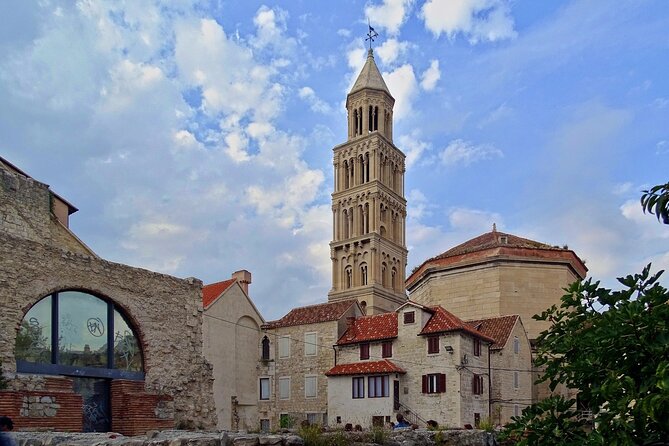
- Self-guided, not guided by a person: you get directions in the app, plus 24/7 customer support.
- A Roman mystery thread: the story ties your clues to Roman-era places and Diocletian-area landmarks.
- Short, structured steps: roughly 1 hour 30 minutes to 2 hours total, with many stops designed for quick “arrive, look, solve, move on.”
- Outdoor walking with fewer crowd headaches: built around an open-air city route and your own timing.
- Great value pricing: $5.97 per person for an app-based city adventure is tough to beat if you enjoy interactive travel.
- Two-photo-day worthy zones: sea-front views at the start and major palace architecture near the finish.
How the Questo App Guides You Through Split
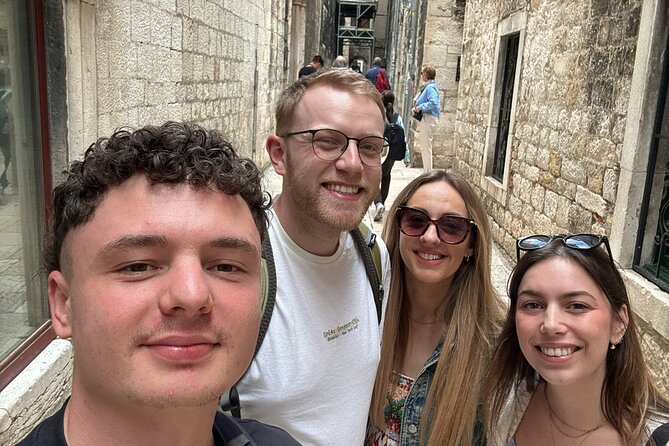
This experience is built around the Questo app. After you book, you get an email telling you how to download and play, and you’ll use the app as your “guide.” When you’re walking, the app provides exact directions to the next location, and the story unfolds as you complete each challenge.
A big practical point: this is self-guided. There’s no live host meeting you with a group and talking you through history. That’s why your phone matters. You’ll need the app downloaded ahead of time, and you should have a charged device before you begin. The good news is that you can keep it flexible. You can start when you want within the operating window, take breaks, and continue at your own pace.
Also note the group setup. It’s described as a private activity, meaning only your group participates. If you’re traveling with friends or family, it’s easy to split up a bit—but you’ll still want everyone to see what’s happening on your phone. The experience says several people can share a phone, which is useful if you’re trying to travel light.
Finally, if you run into problems, you have 24/7 customer support. That’s a comfort when you’re relying on a phone for navigation and clues.
You can also read our reviews of more tours and experiences in Split.


Sustipanski Park and the Sea-View Start
Your route begins at Sustipanski Park (Sustipanski put). This is a strong opening move because it gives you greenery, benches, and a view over the sea—perfect for settling in before you start hunting clues.
Stop 1 is positioned as scenic and relaxing, with walking paths and places to pause. Even if you’re eager to solve the first part of the mystery, I like using the start as a warm-up: get your bearings, check the app directions, and take in a couple of sea-facing angles before the urban density kicks in.
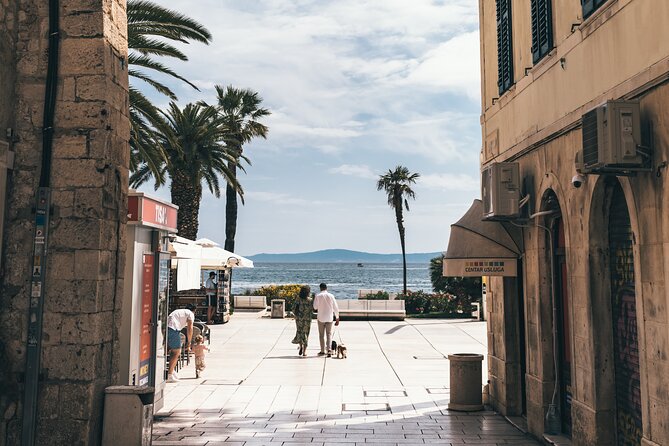
From there, the next step takes you to Obala kneza Branimira, a waterfront promenade. Here, the app keeps you moving, but you’re explicitly allowed to spend as much time as you wish until it’s time to follow the next directions. That’s a nice design choice. Waterfront stretches can be slow by nature, and you don’t want a game that forces you to rush.
Following the Old Waterfront to Matejuška
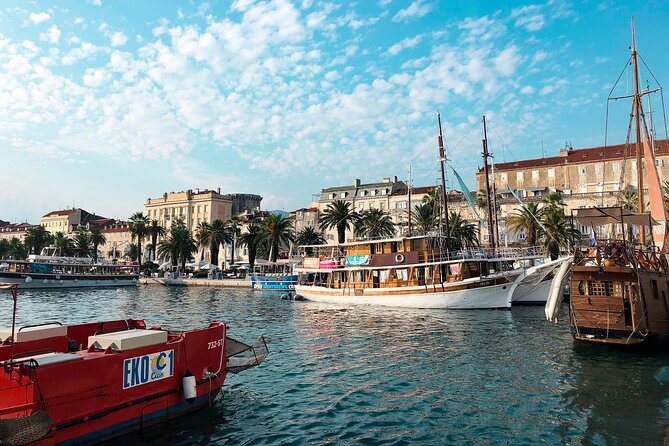
After the promenade, you’ll move toward Matejuška, a small fishing harbor and marina. The key idea here is authenticity. This is the kind of place that feels more lived-in than the historic core right at the center.
You’ll be guided to the harbor area, and again the pace is on you. The route includes a “quick hit” feel—arrive, look around, solve, and go—but you also get permission to linger. If you’ve been photographing beaches and palace stone all morning, Matejuška is a welcome reset. You’re in a working-lifestyle setting, watching boats and shoreline details rather than just monuments.
Then the route turns into the old-city maze. That shift—water first, then streets—is one of the smartest ways to experience Split because the city changes mood quickly. By the time you’re in the lanes, you’ll already understand what the sea brings to daily life here.
Streets That Feel Local: Neretvanska and Prva voda
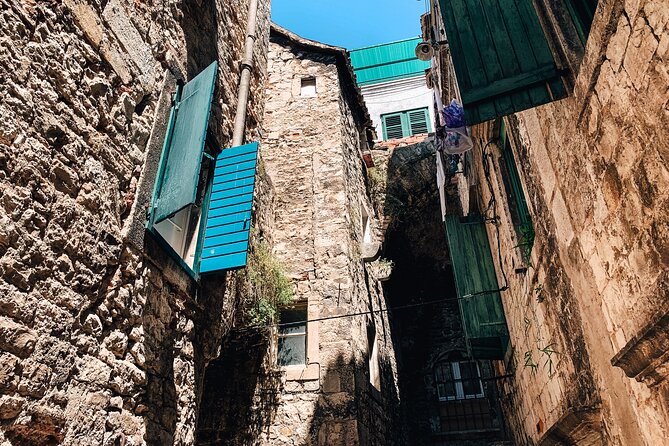
Once the route moves inland, you’re guided to Neretvanska ulica, described as a street with a mix of residential buildings, shops, restaurants, and other everyday stops. This matters more than it sounds. If you only visit “sight” spots, Split can feel like a stage set. Streets like this remind you the city is still functioning.
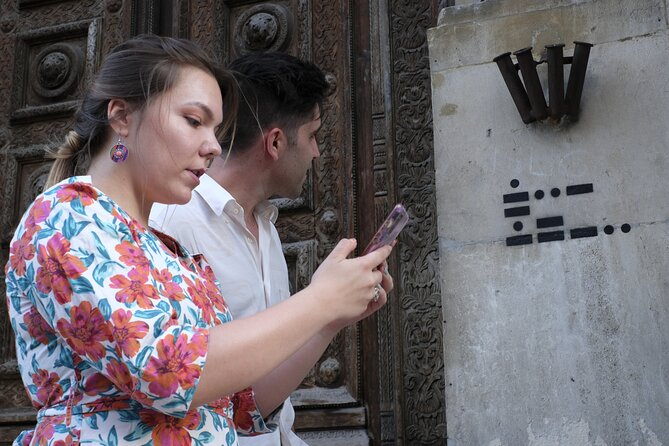
Right after that, you’ll encounter the weird fountain, locally known as Prva voda. It’s described as unique and quirky, which is exactly why I think it works inside a puzzle route. A strange fountain gives your brain something concrete to notice—shape, placement, oddness—so the “look for this clue” moments feel natural instead of forced.
This is also where comfortable shoes pay off. The game is structured with short segments, but you’re still doing a city walk. If you’re the type who enjoys noticing small details—street corners, building edges, sculpture placement—this portion will reward you. If you hate slow scanning and just want facts spoken to you, it might feel like work.
Gregory of Nin and Marko Marulić: Bronze, Literature, and Big Names
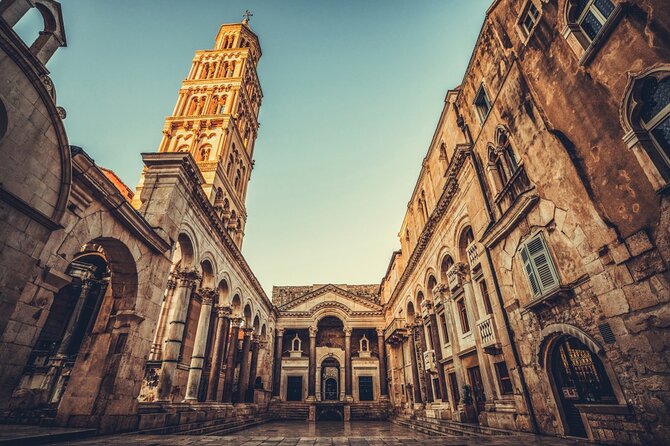
Next up: major Split icons. You’ll visit the Gregory of Nin Statue, created by the Croatian sculptor Ivan Meštrović, erected in 1929. This monument is one of the city’s most recognizable figures, and the reason it fits a game is simple: it’s a landmark you can’t miss, even if your attention is divided between clues and surroundings.
From there, you follow the route through Marulićeva ulica, a street named after Marko Marulić, a Renaissance poet and author from Split often referred to as the father of Croatian literature. Then you’ll reach the Marko Marulić Statue, which is dedicated to that literary figure and is part of Split’s cultural landscape.
I like this pairing because it adds variety to a route that could otherwise become only Roman architectural sightseeing. You go from Roman-era themes into Croatian cultural identity—two layers of meaning walking side by side.
This section also gives you a mental break from purely architectural scale. Statues let you pause and frame photos without having to interpret palace engineering, and they provide “pause points” that fit the game’s short steps.





Diocletian’s Palace Footsteps: Eastern Gate Toward Peristil
Now we head into the area that most people come to Split for: Diocletian’s Palace. The route includes stops near the palace complex, and you’ll walk among preserved elements that reflect multiple architectural influences—Roman, Hellenistic, and Byzantine.
One of the palace-related stops is Ul. Iza Vestibula 3, which points you to Diocletian’s Palace and emphasizes what you can expect to see: well-preserved walls, gates, columns, and courtyards.
Then comes the Iron Gate, described as also known as the Silver Gate, or Porta Orientalis—the eastern gate of the palace. This gate is one of the four main entrances to Diocletian’s Palace, which makes it a powerful place to solve clues: a gate is a natural “threshold” moment in a story.
From there, your route leads toward the palace finishing area—ending at Peristil ulica. Peristil is right at the heart of the palace spaces, so you’re basically finishing inside the setting the story has been steering you toward.
If you want photos, this is where you’ll likely linger. Architectural stops reward you when you slow down to look at scale: how wide the openings are, how tall the walls feel, and how the space is shaped for movement.
Papalić Palace and Glava na Zidu: Baroque Meets the Oddball
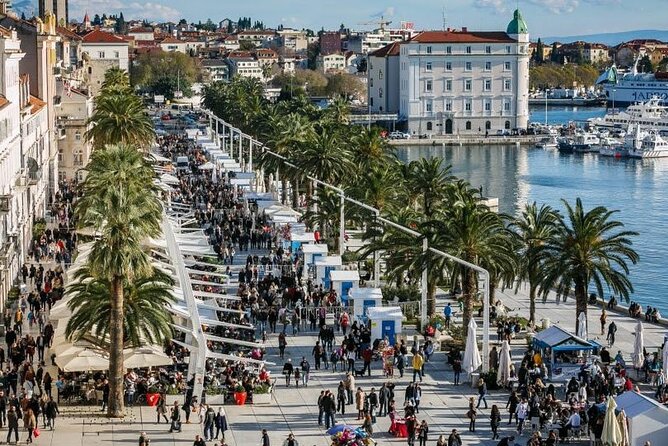
The route takes you to Papalićeva ulica for the Large Papalić Palace (Velika Papalićeva palača). It’s described as Baroque architecture from the 18th century, built for the Papalić family, and it’s a strong contrast to the Roman foundation elements you saw earlier.
Then you’ll reach Dominisova ulica for Glava na Zidu, known as the head on the wall. The experience describes it as a unique and intriguing sculpture affixed to a building façade, depicting a human head. This kind of sight is perfect for a phone-based quest because it’s memorable. You’ll see it, recognize it, and then connect it to whatever clue or story beat you’re working through.
I also like the way this segment keeps the route feeling like Split, not just a museum. Baroque details and playful street art-style moments show how layered the city is, even when you’re walking only a couple of hours.
Jupiter’s Temple and the Emperor Thread
The final stretch pulls you back into Roman themes with Jupiter’s Temple, also called Jupiter’s Temple (Hram Jupitera). It’s described as a historic Roman temple built in the 3rd century AD during the construction of Diocletian’s Palace.
This is where the mystery theme makes the most sense. You’re not just seeing Roman architecture; you’re seeing a place tied to Roman religious structures and temple context—elements that help explain why Roman rulers and emperors show up in the story.
The route also includes Vestibul, described as an ancient vestibule or entrance hall part of Diocletian’s Palace. It served as the central and grand entrance leading to the emperor’s residential quarters. Ending on an entry space like this is clever. It feels like a conclusion because you’re standing at a “before you go inside” moment, which matches a quest structure.
Price and Time: Is $5.97 Actually Good Value?
At $5.97 per person, the price is low enough that you’re really buying access to the game and the self-paced route, not a full live-guide experience. For this kind of app-led city walk, that’s a good sign—especially because you get a structured time window (about 1 hour 30 minutes to 2 hours) and an itinerary with many defined stops.
But value depends on your style.
- If you like figuring things out, reading clues, and using directions on your phone, you’ll likely feel like you got your money’s worth quickly.
- If you need a spoken narrative from a person, or you hate stopping to look at details, the experience could feel like paying for instructions you could get for free—just without the story.
One more factor: the route is open-air and self-guided, which means your enjoyment will match your comfort with walking and with phone navigation. This is not a sit-and-enjoy tour.
Also, the rating is 3.4 out of 5 from a small sample. The main problem signal from the existing feedback is expectation mismatch around the app format—people who wanted a guided tour by a person were not happy. If you go in knowing it’s app-based, that risk shrinks a lot.
When This Works Best (And When It Doesn’t)
This is best for you if:
- you’re exploring Split at your own pace,
- you want a story-based route rather than a lecture,
- you’re happy using a phone for directions,
- you enjoy iconic landmarks but also like small street detours and odd details.
It’s less ideal if:
- you’re traveling without reliable phone battery or data (the instructions stress you need a charged phone),
- you strongly prefer a live human guide,
- you find puzzle-style tasks frustrating when you’re tired from a long day.
If you’re visiting in warm weather, I’d also plan for outdoor walking time. The route has multiple street and palace areas, and the pacing includes stops that can be lingering-friendly. Bring basics like water and sun protection, even if the game doesn’t mention it.
Should You Book Split Quest Experience: Discover the City?
I’d book this if you’re the kind of traveler who likes turning sightseeing into a game. The route hits big Split anchors—Gregory of Nin, Marko Marulić, Diocletian’s Palace entrances, and Jupiter’s Temple—while also giving you street-level stops like Prva voda and the head on the wall. At $5.97, the financial risk is low, and the time is just right for a first-half-of-the-day adventure.
Skip it if you want someone to guide you in real time. There’s no live tour guide here—your “guide” is the Questo app. Also, make the phone part your friend: download before you go, confirm your account, and start with a fully charged device.
If you match the product to your travel style, this can be a fun, budget-friendly way to see Split beyond the straight-line tourist track.
FAQ
Where does the Split Quest Experience start and end?
It starts at Sustipanski Park (Sustipanski put, 21000, Split) and ends at Peristil ulica (Peristil ul., 21000, Split). You’ll follow directions in the app to reach the final stop.
How long does the experience take?
Expect about 1 hour 30 minutes to 2 hours.
How much does it cost?
The price is $5.97 per person.
Is there a live tour guide?
No. This is a self-guided experience using the Questo app on your phone.
What do I need on my phone to play?
You must download the Questo app, create an account using the same email you used to make the purchase, and have a charged phone. You’ll open the app to guide you and follow the instructions.
Can I start and stop whenever I want?
Yes. The experience is flexible and self-paced. You can take a break and continue, and some stops allow you to spend as much time as you wish until it’s time to follow the next directions.
What are the opening hours?
The experience hours listed are 8:00 AM to 6:00 PM, Monday through Sunday, within the date range 09/16/2023 to 08/25/2026.
Is cancellation free?
Yes. You can cancel for a full refund up to 24 hours in advance of the start time. If you cancel less than 24 hours before, the amount paid is not refunded.