REVIEW · SPLIT
Storytelling World War II in Split Tour
Book on Viator →Operated by Ina Nikolic · Bookable on Viator
WWII leaves fingerprints on Split. This WWII storytelling walk shows how the war touched daily life in Split.
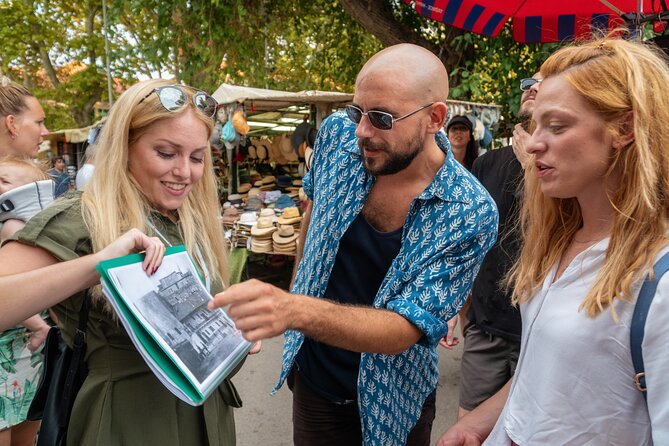
You’ll move through the old center with a licensed guide who explains what happened at key spots, using real photos from the time.
I really like how Ina Nikolic turns ordinary street corners into understandable stories, with connections to later events too. I also love the archival photographs she’s allowed to use from the Museum of the City of Split archive, not generic images.
One heads-up: the tour is mostly short stop-and-story segments, so there’s some standing time between viewpoints rather than nonstop walking.
In This Review
- Key highlights worth your attention
- Why Split’s WWII story fits into two hours
- Meeting in central Split: where the tour begins and ends
- Stop 1 at Split Riva: where the war story begins
- Green Market: a bombing story tied to a familiar place
- Eastern (Silver) Gate: Diocletian’s Palace as a wartime boundary
- The Peristyle: seeing which parts of the palace were hit
- Narodni Trg and Marmontova Ulica: the main square and the main street
- Prokurative at the end: prisons and executions
- Photos and maps: making the past feel close
- Price and value: what $60.01 buys you in Split
- Who this tour suits best (and who should think twice)
- Should you book this WWII storytelling tour?
- FAQ
- How long is the WWII in Split storytelling tour?
- Is the tour offered in English?
- Is pickup available?
- Where does the tour start and end?
- What’s included besides the guide?
- How big is the group?
Key highlights worth your attention
- Small group size (max 15) keeps the tour personal and question-friendly
- Archival WWII photos from the City of Split archive are part of the experience
- World War II stories mapped onto real Split locations like the Riva, Diocletian’s Palace, and Narodni Trg
- A guide who connects eras, including WWII and the broader regional timeline
- Pickup options near the ferry port if you’re arriving by boat
Why Split’s WWII story fits into two hours
If you only have a couple of hours in Split, this tour is a smart way to get context without feeling like you need a full-course history class. The format is simple: you meet in the historic center, then you walk a short route that hits the places where the war’s impact shows up most clearly in the city’s layout.
What makes this work is that it’s not just dates and big speeches. The guide anchors the story to specific spots you can still point at today. You’ll also get the visual side of history through old photos drawn from the city’s own archive, so you’re not relying on memory or textbook diagrams.
The pacing is also realistic. You’re moving often enough to stay engaged, but not so fast that you miss details. Plan on wearing decent walking shoes and being okay with stopping. This isn’t a “power-walk” tour. It’s a “listen closely while you look around” tour.
You can also read our reviews of more tours and experiences in Split.


Meeting in central Split: where the tour begins and ends
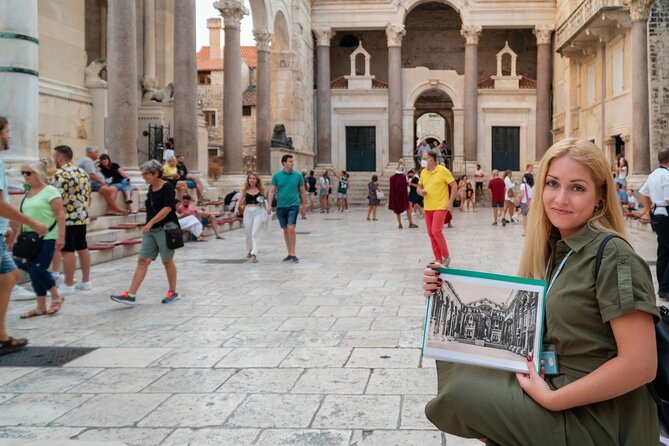
The start point is Obala Hrvatskog narodnog preporoda 27, in central Split. The tour ends at Trg Republike (Republic Square), near Prokurative—still in the historic core, close to the promenade.
If you want pickup, there’s an option near Trajektna luka Split, Obala kneza Domagoja. That’s especially useful if you arrive by ferry or you’re trying to avoid extra walking at the start.
One more practical note: it’s listed in English, and it uses a mobile ticket. Confirmation comes within 48 hours of booking (when available). The group is capped at 15 travelers, which matters because it helps keep the tour conversational instead of rushing.
Stop 1 at Split Riva: where the war story begins
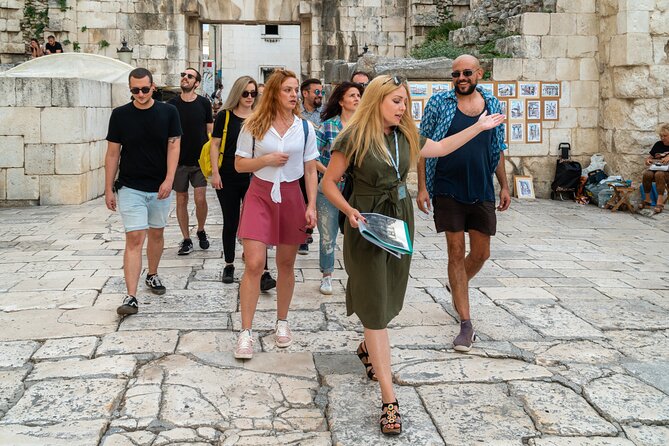
You’ll start at Split Riva, the waterfront area that locals still treat as the city’s front porch. Here the guide sets the stage: how the war reached Split and how that shift changed the city’s day-to-day rhythm.
This first stop is valuable because it frames everything that follows. Without it, the later locations can feel like random landmarks. With it, you can understand why certain streets and squares became stages for fear, disruption, and survival.
You’ll also get a sense of how the guide thinks: she pulls you from the city’s present form back into the wartime reality. That’s the trick with WWII history in an old town. You’re not just learning what happened; you’re learning how the city carries memory in plain sight.
Green Market: a bombing story tied to a familiar place
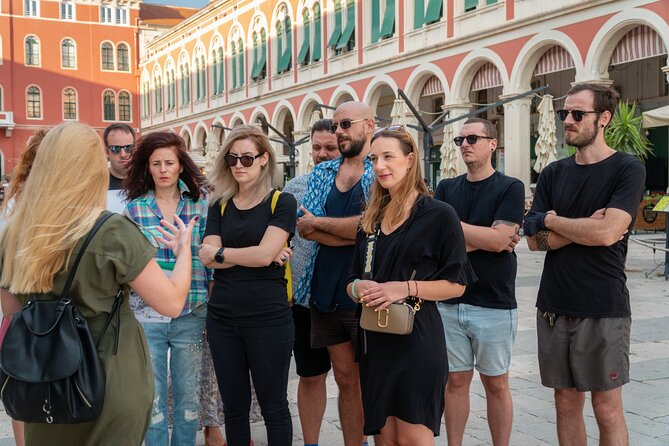
Next is the Green Market, a place that today feels everyday and local. In the tour context, it becomes a window into one of the worst bombing experiences in Split.
Even if you don’t remember the exact details of a bombing, you’ll remember the feeling of looking at a market space and realizing it was once surrounded by terror. That’s one reason I like this style of tour. It connects the historical event to something you might otherwise walk past without thinking.
This stop also works well because it’s time-efficient. You’re not stuck in one spot too long, but you do get enough story to make the architecture and layout mean something.
Eastern (Silver) Gate: Diocletian’s Palace as a wartime boundary
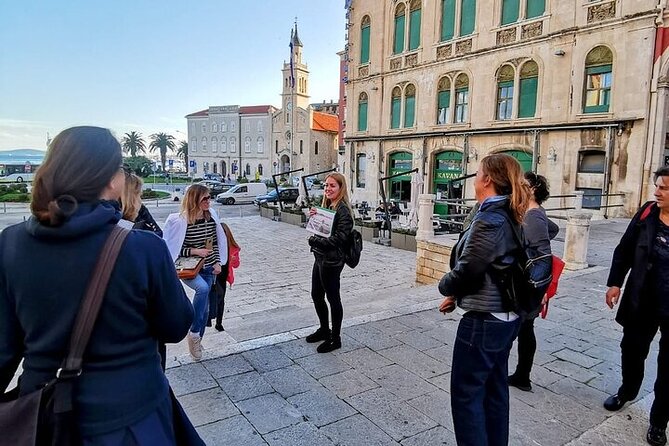
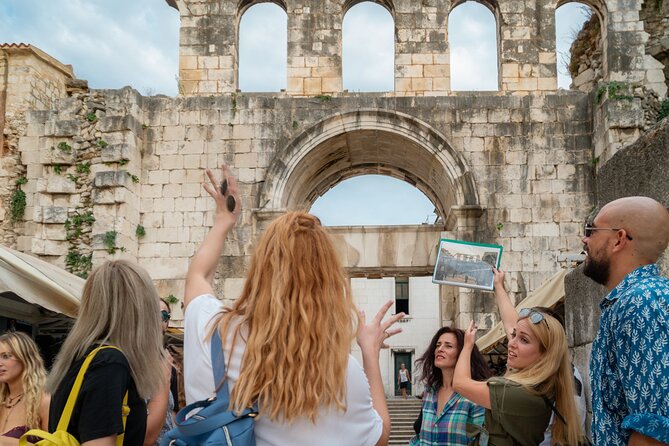
At the Eastern (Silver) Gate, you enter the broader story of Diocletian’s Palace from the east. This is one of the most interesting ideas in the whole tour: the palace isn’t only ancient spectacle. During WWII, it was also part of how the city was protected, targeted, or used.
Think about that for a second. A Roman-era complex designed around walls and passages suddenly becomes part of a modern war’s pressure system. The guide uses this idea to help you see the palace as a living framework, not frozen ruins.
You’ll also get a quick sense of how the war shaped what people could access and where danger concentrated. It’s not abstract. It’s about routes, entrances, and the “who was where” logic of urban conflict.




The Peristyle: seeing which parts of the palace were hit
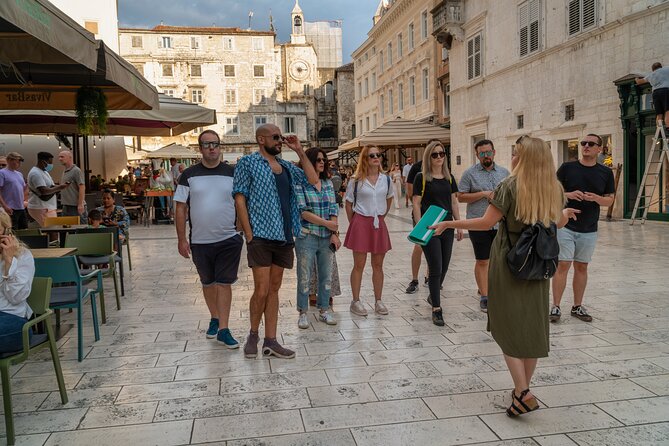
Then comes the Peristyle of Diocletian’s Palace, where the guide points you to the areas that were affected during the war. The Peristyle’s open space helps the stories land, because you can imagine movement through the palace and how chaos might have spread.
What I liked here is the focus on physical detail. Instead of only talking about outcomes, the guide points out what matters on the ground. That makes the history easier to picture, even if you’re not a “history person.”
If you enjoy architecture, this stop is especially rewarding. The palace gives you scale: the sheer sense of space makes wartime descriptions feel more grounded. It’s also a good moment to slow down, look up, and understand why people throughout history have used this kind of stone geometry when things got dangerous.
Narodni Trg and Marmontova Ulica: the main square and the main street
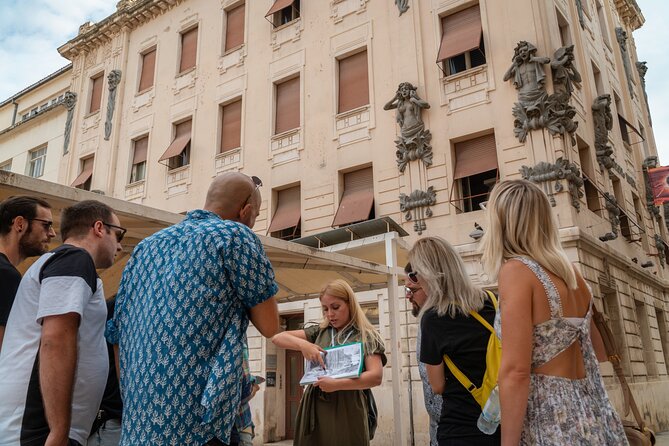
After the palace, the tour moves back into the city’s civic center with Narodni Trg, the main square. Here you’ll hear about terrible events that took place there during the war.
Squares are powerful story locations. They’re where announcements happen, where people gather, and where a city’s power structure shows itself. When war hits, squares can become focal points for fear and disruption. That’s why this stop feels heavy in the best way: the guide makes you understand why the place mattered.
Next you head to Marmontova Ulica, the main street. The tour treats it like another witness. Short stop, big idea: the street that looks like a normal corridor today once carried the stress of wartime movement.
Together, Narodni Trg and Marmontova Ulica help you see Split as an interconnected system. War didn’t just happen “in one area.” It changed behavior across whole corridors of daily life.
Prokurative at the end: prisons and executions
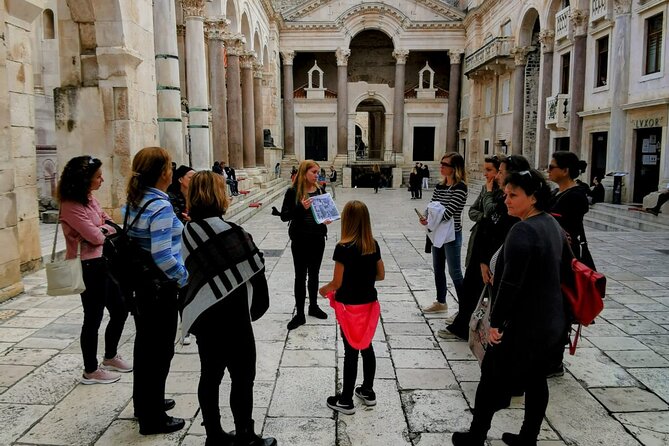
The last stop is Prokurative, at the tour’s end near Trg Republike. This is where the storytelling turns darker, focusing on prisons and executions during the war.
This final stretch is emotionally intense, but it’s also historically coherent. Earlier stops teach you about the environment of fear and disruption. The last stop explains what happened to people caught up in the machinery of wartime punishment.
If you’re traveling with teens or family, this is also the stop where questions naturally pop up: Why were certain places used? How were people treated? How did locals navigate survival? A small group size helps here, because you’re not just listening to a lecture.
Photos and maps: making the past feel close
A big reason this tour works is the use of archival WWII photographs from the Museum of the City of Split archive. These images aren’t on permanent display, and the guide has permission to use them. That matters. It means you’re seeing material that’s not just floating around online.
In addition to photos, the guide uses visual aids like aerial perspective material to help you compare then-and-now. That’s a huge help for an old city like Split, where the present layers can make it hard to imagine wartime layouts.
If you’re the type who learns best by seeing, you’ll appreciate this. The photos give you concrete reference points, while the map-like perspective helps you mentally “rebuild” the wartime city in your head.
Price and value: what $60.01 buys you in Split
The price is $60.01 per person for about 2 hours. For that money, you get a local licensed guide, access to the WWII archive photos, and a route through key areas in the historic center.
Here’s how I think about value:
- The tour covers multiple meaningful locations in a tight window, rather than scattering your time across separate tickets or museums.
- The photo component isn’t an add-on. It’s woven into the storytelling.
- The group cap of 15 keeps it from turning into a rushed “look and go” format.
Also, the tour is marked as admission free at the stops. That’s important for budgeting, because it suggests you’re not hit with surprise entrance fees just to follow the main story route.
If you’re already planning to walk Split’s center anyway, this is a useful way to upgrade your walking into a guided history lesson with real visual evidence.
Who this tour suits best (and who should think twice)
This is a great fit if you:
- want WWII history that’s grounded in real streets and squares
- enjoy when a guide connects events to geography
- like visual context, especially archival photos
- travel with curiosity, not just a checklist
It’s less ideal if you:
- want a nonstop walking tour with lots of movement
- get impatient with standing and listening in short bursts
- prefer only light, feel-good content (this one goes into prisons and executions)
That said, the structure is efficient. You’re outdoors in the historic center, you keep moving, and you leave with a clearer mental map of how the war moved through Split.
Should you book this WWII storytelling tour?
I’d book it if you want WWII to make sense in Split’s real space. The guide-led storytelling plus the archival photo access is the core value, and the small group size helps you actually process what you’re seeing rather than zoning out.
If you’re sensitive to darker themes, plan your headspace for the last stop. If you’re okay with that, you’ll come away with a sharper understanding of how an ancient city didn’t escape modern war—it absorbed it, changed with it, and carries those scars in the layout you can still walk today.
FAQ
How long is the WWII in Split storytelling tour?
It runs for about 2 hours.
Is the tour offered in English?
Yes, it’s offered in English.
Is pickup available?
Pickup is offered, including Trajektna luka Split, Obala kneza Domagoja. The main start is Obala Hrvatskog narodnog preporoda 27.
Where does the tour start and end?
It starts at Obala Hrvatskog narodnog preporoda 27, 21000 Split and ends at Trg Republike (Republic Square), near Prokurative.
What’s included besides the guide?
You’ll see old WWII photographs that the guide has permission to use from the Museum of the City of Split archive (not permanently displayed).
How big is the group?
The tour has a maximum of 15 travelers.
If you want, tell me your travel dates and whether you’re arriving by ferry or bus, and I’ll help you pick the most practical meeting approach for your day in Split.