REVIEW · SPLIT
Walk through Split with an archeologist
Book on Viator →Operated by Antonjeta Vulić Bilobrk · Bookable on Viator
Roman ruins start making sense fast. This walk through Split’s core is built around Diocletian’s Palace and the street-level clues that explain how the city formed and kept changing. I like that the route is paced for staying oriented, so you get the big layout without playing guesswork.
I also like the small group size (max 10), which means your guide can actually slow down when questions pop up. Antonjeta Vulić Bilobrk’s style, as shared in real feedback, focuses on practical walking plus detailed explanations that turn stonework into a story you can repeat later.
One consideration: not every stop has included entry. The Peristyle and the Vestibulum are listed as admission not included, while other segments are free—so plan for a bit of extra ticketing if you want to go inside everything.
In This Review
- Key highlights
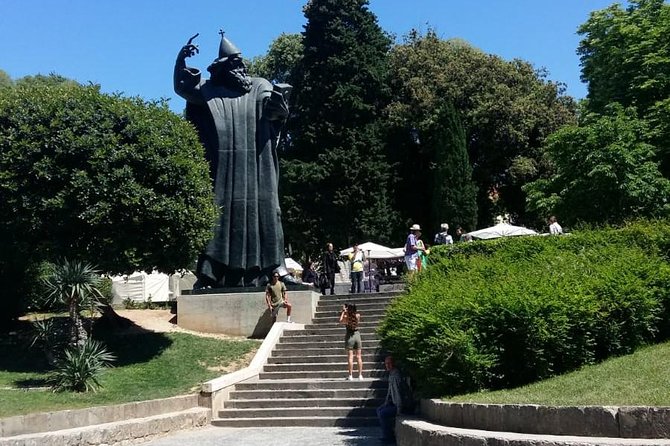
- Starting at the Gregory of Nin Statue to Get Oriented
- Two Hours of Stone: What the Walk Really Covers
- Stop 1: The Peristyle of Diocletian’s Palace (First Impressions Matter)
- Stop 2: Vestibulum to the Emperors Quarters (Where Movement Becomes Meaning)
- Stop 3: Diocletian Palace Substructures (Best-Preserved Roman Layers)
- Stop 4: Narodni Trg Medieval Square for a Reset
- Antonjeta Vulić Bilobrk’s Guide Style and Why It Works
- Price and Value: Is $23.67 Worth It?
- What to Expect When You Arrive
- Who This Tour Suits Best (and Who Might Prefer Another Format)
- Should You Book This Split Archeology Walk?
- FAQ
- How long is the Split walking tour with an archaeologist?
- What is the price per person?
- What language is the tour offered in?
- Where do I meet, and where does it end?
- How many people are in the group?
- Are tickets included for all stops?
- What ticket type do I receive?
- Can I cancel for a full refund?
- Is the tour wheelchair-friendly or accessible?
Key highlights
- A max of 10 people keeps the pace calm and the guidance personal
- Antonjeta Vulić Bilobrk leads the walk with clear, detail-focused storytelling
- Diocletian’s Palace stops give you the layout, not just random sights
- One of the best-preserved Roman substructures is part of the route
- Narodni Trg adds a medieval square moment to reset your brain
- English guidance and a mobile ticket make it easy to show up ready
Starting at the Gregory of Nin Statue to Get Oriented
You meet at the Gregory of Nin Statue on Ul. kralja Tomislava 12. That spot is handy because it places you right where many first-time walks begin, and it naturally anchors you to the old-city flow. Even if you arrive tired, you’ll usually find that the group forms fast and the first instructions come quickly.
This is also the kind of meeting point that helps you avoid the most common “I’m lost in Split” problem. Instead of wandering and hoping you accidentally hit the right walls, you get a guided path from the start. The tour is near public transportation, so it’s easier to stitch into your day without a long scramble.
You can also read our reviews of more tours and experiences in Split.


Two Hours of Stone: What the Walk Really Covers
The whole experience runs about 2 hours and follows a tight circuit. That matters because Split’s palace complex can be overwhelming at first—you see walls, arches, columns, street bends, and you assume it’s all one complicated blur. Here, the route concentrates on the most readable parts: palace entrances, palace substructures, then a medieval square.
Think of it as a guided “map lesson.” By the time you reach Narodni Trg, you’re not just seeing sights—you’re understanding how the palace space relates to the street network outside it. This is especially valuable if you want to plan the rest of your stay with more confidence.
Group size stays small (max 10), so the guide can keep the walk moving while still giving enough context at each stop. And since the tour is offered in English, you don’t have to work to translate what you’re looking at.
Stop 1: The Peristyle of Diocletian’s Palace (First Impressions Matter)
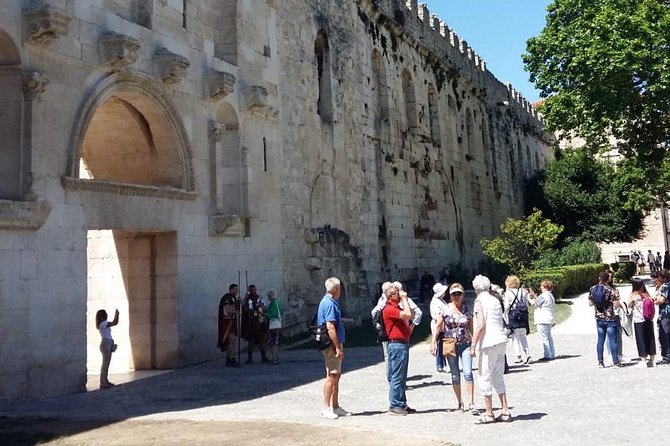
The walk’s first stop is the Peristyle of Diocletian’s Palace, a major open area inside the palace complex. You’ll spend about 10 minutes here, and the listing notes that admission ticket is not included.
Why this start works: the peristyle is one of those spaces where your brain can quickly grasp the palace scale. Even in a short visit, you can usually understand the idea of a ceremonial courtyard—an interior “center” that shaped daily movement and authority.
What to watch for in a quick stop like this:
- how openings and edges guide foot traffic
- how the scale compares to the streets outside
- how the palace spaces link visually to each other
If you’re planning ahead, be ready for the chance you may need to buy an entry ticket for this segment. That doesn’t make the tour less valuable; it just affects total out-of-pocket cost.
Stop 2: Vestibulum to the Emperors Quarters (Where Movement Becomes Meaning)
Next is the Vestibulum of Diocletian’s Palace, described as the entrance to the emperors quarters. Again, it’s about 10 minutes, and admission is not included here either.
This stop is more “explain the layout” than “long sightseeing.” The value is in how the guide connects a relatively small architectural area to the bigger idea of control and hierarchy inside the palace. When you see an entrance zone like this, you start noticing that the palace was designed to manage who moved where, and why.
Even if you only have 10 minutes, you can leave with a mental model:
- entrances are not just doors—they’re transitions
- transitions shape what people experience and how they feel
- the palace planning still influences the city fabric
Tip for your comfort: if you’re sensitive to standing during tours, wear shoes you can stand in without thinking. Short stops are manageable, but they add up across the circuit.
Stop 3: Diocletian Palace Substructures (Best-Preserved Roman Layers)
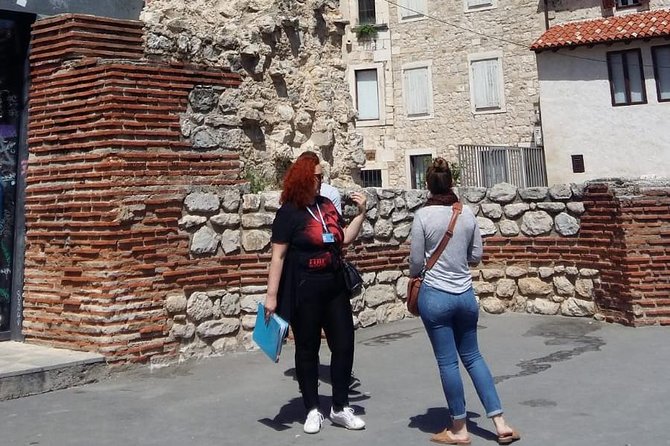
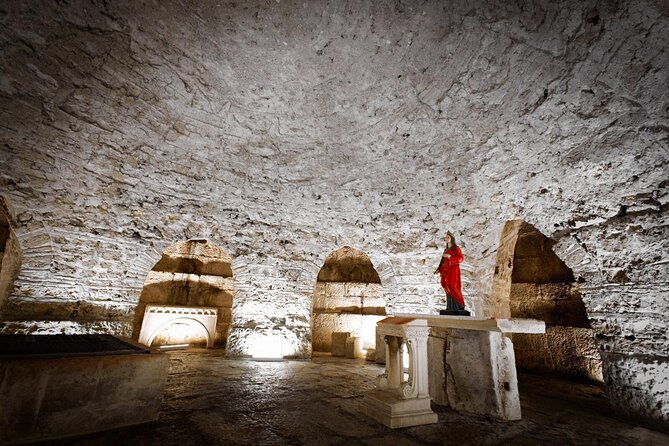
Stop three is one of the most rewarding segments: Diocletian Palace Substructures, described as one of the best-preserved Roman substructures that carry the city of Split. This one is about 10 minutes, and admission is free.
Here’s why this stop hits so well. Underground and substructure spaces often feel hard to read on your own. A guided explanation turns stone corridors and structural remnants into a sense of function—storage, infrastructure, support, and the hidden backbone of the palace.
This is the segment that makes the word archaeology practical. You’re not just admiring old walls; you’re seeing how the city literally rests on older layers. That perspective helps later when you walk around Split and spot how the modern street level relates to what came before.
If you like photography, this is also typically where you’ll get stronger angles and less “busy tourist framing.” Keep expectations realistic about tight interior spaces, but the historical payoff is usually worth it.





Stop 4: Narodni Trg Medieval Square for a Reset
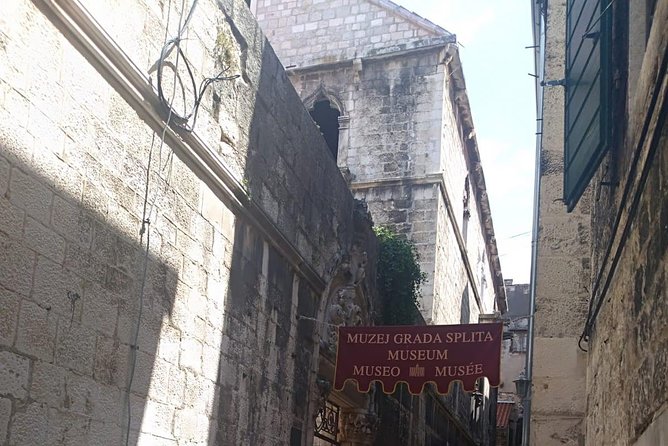
Finally, you reach Narodni Trg, a medieval square, with about 10 minutes set aside. This stop is listed as admission free.
This isn’t filler. After palace architecture and substructures, a square gives your eyes and feet a break. Narodni Trg helps you reconnect the palace world to street life. You get to look outward, catch your breath, and notice the everyday rhythm of the old city.
This is the kind of stop where you can:
- reorient your sense of direction
- pick a next destination with clearer logic
- take a short rest before you continue exploring on your own
Antonjeta Vulić Bilobrk’s Guide Style and Why It Works
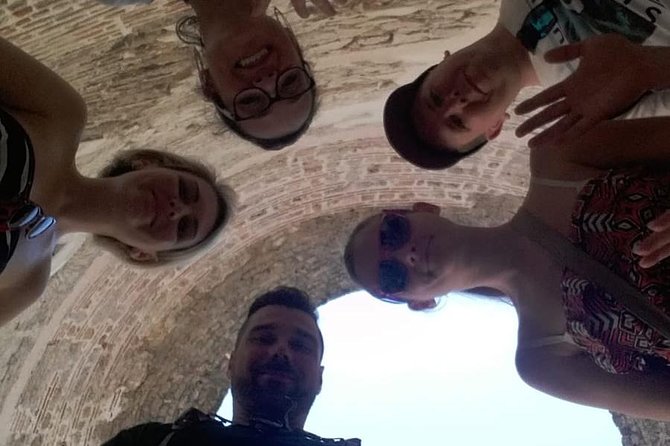
The experience is led by Antonjeta Vulić Bilobrk. Based on the strongest feedback, her walk-through focuses on two things people genuinely appreciate: staying on track in the palace areas and sharing lots of concrete details.
That matters because Diocletian’s Palace can be a maze of similar-looking stone elements. A guide who explains what you’re looking at helps you avoid the dead-end feeling of standing in front of something impressive and not knowing what it is. The best part is that the explanation isn’t just academic. It connects structure to movement, and movement to how the city functioned.
The small-group format (max 10) also supports her style. There’s room for answers, and the pace doesn’t have to squeeze everyone through the stops like a conveyor belt. If you’ve ever felt rushed inside historic sites, you’ll likely feel the contrast here.
One note: if you’re visiting in off-season, you may find the walk feels even calmer. That can mean more time to look closely and pause without the sense of racing the clock. (Even then, the itinerary is still designed for a tight 2-hour circuit.)
Price and Value: Is $23.67 Worth It?

The price is $23.67 per person, about 2 hours, offered in English, with a mobile ticket. That’s a solid baseline value for a guided walk that focuses on a complicated site.
Here’s the part you should think about: entry is not included for the Peristyle and the Vestibulum, while the substructures and the medieval square are free. So the best value usually comes when you’re comfortable paying for those two included-by-entry stops, or when you plan to use your own judgment about which interiors matter most to you.
What you’re paying for isn’t just access—it’s the ability to understand what you’re seeing fast. Diocletian’s Palace is the kind of place where a guide can save you from wasted time. You spend your attention learning the layout instead of searching for the right angles and explanations.
If you want a practical history and culture orientation without overcommitting your day, this fits the bill.
What to Expect When You Arrive
You’ll want to start ready to walk. The tour runs for about two hours, with short stops around 10 minutes each. That means a lot of “moving + looking + listening” rather than long museum-style pauses.
You’ll also want to be flexible about ticket timing for the parts marked as admission not included. If you show up without considering that, it can add friction right when you’re trying to settle into the first stop. Quick planning removes stress.
Good news: service animals are allowed, and most people can participate. The route is near public transport, which makes it easier to combine with other old-city plans.
Who This Tour Suits Best (and Who Might Prefer Another Format)
This walk is a great fit if you:
- like history and culture but want it explained clearly
- want to explore Split without getting lost
- prefer a small group experience where you can actually ask questions
- enjoy reading architecture and urban layout instead of only collecting landmarks
You might choose a different type of tour if you’re looking for a long deep-immersion museum day or if you dislike any chance of entrance fees at specific stops. This one is short, targeted, and very much about orientation plus key palace sections.
Also, if you’re already extremely confident about Diocletian’s Palace and you just want free roaming, you might not need a guide. But for most people, understanding the palace core quickly is the payoff.
Should You Book This Split Archeology Walk?
I think you should book it if your goal is to make Split click fast—especially the Diocletian Palace parts that otherwise feel like confusing stone corridors. For the money, you get a focused route, English guidance, and a small group led by Antonjeta Vulić Bilobrk.
Book it sooner rather than later if you know you’ll want help building a mental map. Walking tours like this are at their best when you’re still fresh enough to learn.
Skip it only if you strongly want entry included at every stop, or if you already know the palace layout so well that a guided explanation won’t change how you experience it.
FAQ
How long is the Split walking tour with an archaeologist?
The duration is approximately 2 hours.
What is the price per person?
The price is $23.67 per person.
What language is the tour offered in?
The tour is offered in English.
Where do I meet, and where does it end?
You meet at the Gregory of Nin Statue, Ul. kralja Tomislava 12, 21000 Split, Croatia, and the activity ends back at the meeting point.
How many people are in the group?
This tour/activity has a maximum of 10 travelers.
Are tickets included for all stops?
Admission tickets are not included for the Peristyle of Diocletian’s Palace and the Vestibulum of Diocletian’s Palace. The Diocletian Palace Substructures and Narodni Trg are listed as free.
What ticket type do I receive?
You get a mobile ticket.
Can I cancel for a full refund?
Yes. You can cancel up to 24 hours in advance of the experience for a full refund.
Is the tour wheelchair-friendly or accessible?
The only accessibility information provided is that service animals are allowed and most people can participate. No further accessibility details are listed.