REVIEW · SPLIT
Walking Tour of Diocletian’s Palace and Old town-small group
Book on Viator →Operated by City tour Split · Bookable on Viator
Split’s stone tells a story fast. This small-group walk through Diocletian’s Palace and the Old Town hits the key spots without dragging, and Luka keeps it friendly and easy to follow. I especially like the relaxed pace and how Luka uses smart shortcuts so you spend less time weaving through crowds. The other standout is his mix of facts and questions that makes you feel part of the group. One thing to consider: the tour needs good weather, so plan a backup day if skies look sketchy.
You get a structured loop that makes sense geographically: start at the Golden Gate, then work your way through the Palace’s core spaces and out into the later-built squares of Split. In about 1 hour 25 minutes to 1 hour 35 minutes, you’ll cover the big architectural highlights like the Peristyle and the Palace substructures, then finish with a memorable stop at Grgur Ninski’s statue.
In This Review
- Key highlights you’ll feel right away
- The Golden Gate start: how the tour gives you instant orientation
- From the Peristyle to the square you can actually picture
- Vestibule and Triklinij: the imperial entry feel, then the residence rhythm
- Substructures (cellars) and what “well preserved” really means
- Temple of Jupiter: a transformation you’ll notice without going inside
- Narodni Trg and the westward expansion story
- Fruit’s Square (Trg Brace Radic): small places with specific points
- Prokurative: a European-square model and nearby landmarks
- Grgur Ninski statue: the ending that sticks
- Price and value: what $23.83 buys you in real time
- Who should book this Split walk (and who might skip it)
- Should you book the Walking Tour of Diocletian’s Palace and Old town?
- FAQ
- What’s the duration of the Walking Tour of Diocletian’s Palace and Old town?
- How much does the tour cost?
- Is the tour in English?
- How many people are in the group?
- Where does the tour start?
- Is a ticket required for the stops?
- Does the tour include going inside buildings?
- Is the tour affected by weather?
- Is service animal access allowed?
Key highlights you’ll feel right away
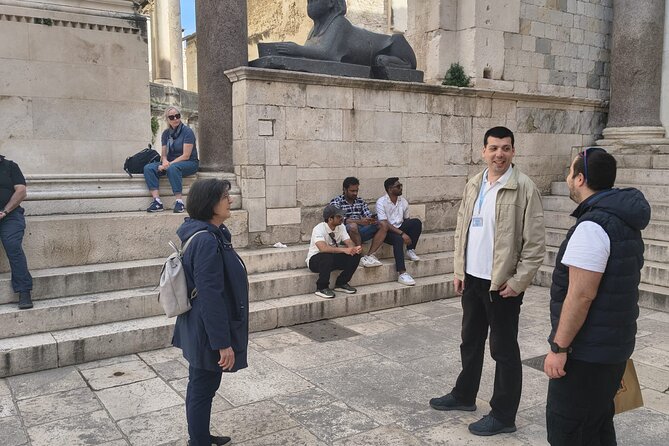
- Maximum 7 travelers means more personal attention and fewer bottlenecks
- Luka’s shortcuts help you reach the best viewpoints without wasting time
- Clear stop-by-stop storytelling across Palace spaces and Old Town squares
- Peristyle and Triklinij show how Roman design shaped imperial life
- Substructures cellars help you understand why these underground spaces survive so well
- End at Grgur Ninski for a satisfying final note to the walk
The Golden Gate start: how the tour gives you instant orientation
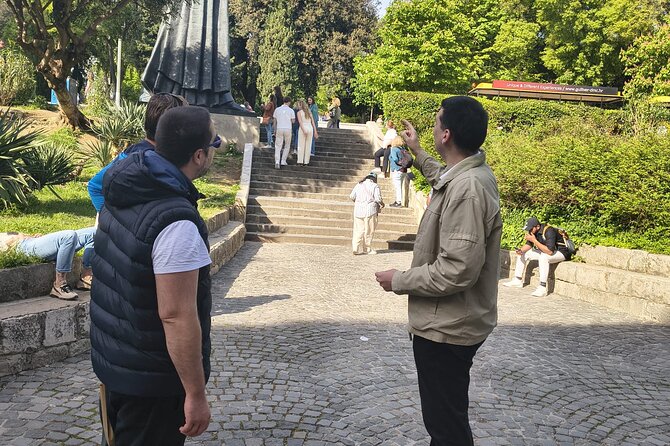
This tour kicks off at Ul. kralja Tomislava 15, right where you can get oriented quickly before the maze of streets and stone starts to blur together. The first stop is the Golden Gate, one of the clearest “start reading the Palace” moments in Split. It’s the kind of entry point that instantly communicates scale and power.
What I like about starting here is that it reduces guesswork. Once you understand where the main access points are, the rest of the Palace makes more sense as you move inside. You’ll also get the basic setup for Diocletian’s Palace—why it was built the way it was and how that layout still shapes what you see today.
Time-wise, it’s about 10 minutes, and that’s a sweet spot: long enough to get your bearings, short enough to keep momentum.
You can also read our reviews of more tours and experiences in Split.


From the Peristyle to the square you can actually picture
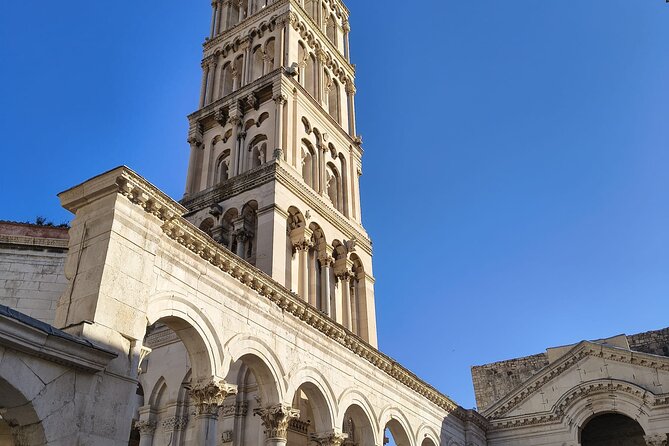
Next you step into the Peristyle, described as the most preserved Roman square area within the Palace. This is where the architecture stops being abstract and turns into something you can visualize. Luka’s approach keeps the conversation grounded: he explains what the space is and why it mattered.
The Peristyle works well on a walking tour because it’s both a literal center and an interpretive one. From here, you can understand the Palace as a planned world with designed movement and sightlines. You’re not just staring at columns—you’re learning what functions were happening around you.
You’ll spend about 15 minutes here. That may sound short, but the guide’s goal is to make you leave understanding what you’re looking at. If you tend to get overwhelmed by long lectures, this tour’s pacing is a good match.
Vestibule and Triklinij: the imperial entry feel, then the residence rhythm
After the Peristyle, the itinerary moves to the Vestibulum of Diocletian’s Palace. This is the vestibule that acts as an entrance to the imperial chambers. Even without going deep into areas that require entry fees, this kind of stop helps you connect the dots between outside movement and inside authority.
Then comes Triklinij, where you’ll see the emperor’s residence as well as his promenade. This is one of those spaces where Roman planning becomes practical: you can picture how someone of power would transition between areas and where “public-looking” movement would happen.
Triklinij is about 10 minutes, so you won’t have time for a slow, lingering museum-style visit. But on a short guided route, that’s not a drawback—it’s the point. You’re collecting the main architectural beats so you can later explore on your own with more clarity.
Substructures (cellars) and what “well preserved” really means
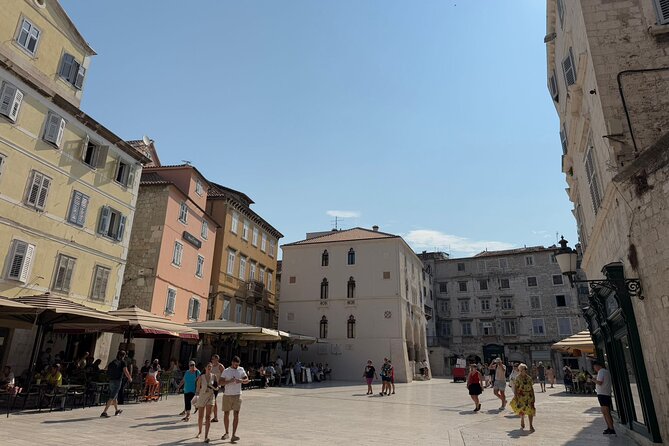
One of the most interesting parts of the tour is the Diocletian Palace Substructures. This is where you get the “how did they build this and why does it last” angle, not just the surface grandeur. Luka explains the cellars and why they’re so well preserved. That explanation matters because it gives you a reason to look closer.
You’ll spend about 10 minutes here, and there’s an added note: you’ll be passing through parts that are not paid for. That’s useful context. It suggests the guide is choosing a route that gives you meaningful access and understanding without turning the experience into a ticket-and-line marathon.
If you like architecture, conservation, or the engineering side of ancient sites, this stop is one of the best uses of your limited time.
Temple of Jupiter: a transformation you’ll notice without going inside
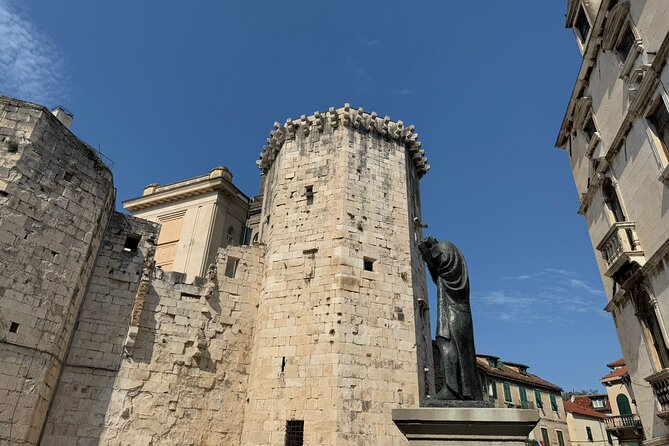
Next is the Temple of Jupiter. The tour notes the transformation from a temple to a baptistery, and you won’t go inside. Even so, it’s a strong stop because it highlights how buildings change roles over centuries.
I like these “you don’t need to enter to understand” moments. You’ll still get the concept of reuse and adaptation, and you’ll keep moving so the walk stays lively.
This stop is about 5 minutes. Think of it as a quick but meaningful checkpoint—enough time to learn the transformation and then shift your attention to the street-level expansion of the city.





Narodni Trg and the westward expansion story
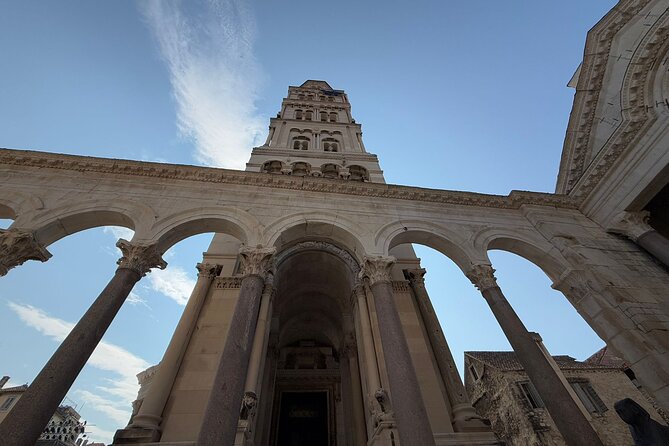
Then the tour pulls you out into Narodni Trg, with an explanation of how the city expanded westward. This is important because it anchors Diocletian’s Palace in the bigger story of Split. The Palace wasn’t the whole city forever. Over time, the surrounding area evolved, and squares like this reflect that outward growth.
You’ll spend about 10 minutes here. The value of the stop isn’t just that you see a square—it’s that you learn to read the square as a timeline marker. When you later walk around on your own, you’ll spot these “older vs newer” spatial clues faster.
Fruit’s Square (Trg Brace Radic): small places with specific points

After Narodni Trg, you’ll reach Fruit’s Square, also called Trg Brace Radic. The itinerary flags several interesting points in this square, and the takeaway is that Old Town life has always clustered around practical spaces like markets and street hubs.
You’ll spend about 10 minutes, which again fits the tour’s overall rhythm: short explanations, clear direction, and just enough time to connect what you’re seeing with the guide’s story.
If you’re the type who likes photographing details (doors, stone textures, street corners), this kind of stop is a good use of time because it breaks up the heavier architectural sections.
Prokurative: a European-square model and nearby landmarks
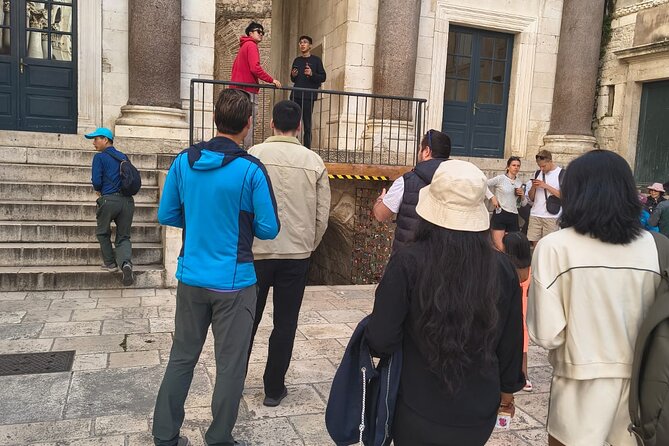
Next is Prokurative, where you’ll hear about how the square was modeled after a European square. That context is useful: it helps you understand what you’re seeing as more than random scenic space. You’ll also learn there’s a hotel and an interesting church nearby, which gives you easy ideas for what to check out after the tour.
This stop lasts about 15 minutes, making it one of the longer “street scene” segments. It’s a nice shift from Palace interiors to a more urban square feel—less about ancient engineering, more about how Split presents itself in public space.
Grgur Ninski statue: the ending that sticks
The last stop is the Grgur Ninski statue, about 5 minutes. It’s a compact finale, but it works because it ties the walking route together with a human story from later in Split’s past.
Ending here gives your brain a place to land. When you finish, you’ll be standing at a recognizable point in Old Town, which makes it easier to keep exploring without feeling lost.
Price and value: what $23.83 buys you in real time
At $23.83 per person, this is a budget-friendly way to get structured highlights in a short window. The big value isn’t only the price—it’s the format.
You’re looking at:
- 1 hour 25 minutes to 1 hour 35 minutes
- Mobile ticket
- English-speaking guide
- Maximum 7 travelers
- The main stops are handled as free admissions for the listed parts, plus time-efficient sight connections
That small group cap is the main reason this feels personal. With fewer people, you can actually hear Luka, ask questions, and not spend your whole time trying to see over shoulders.
Also, the tour is built as a loop: you start and end at the same meeting point (Ul. kralja Tomislava 15). That’s practical. You’re not forced into a complicated transit plan.
Do note: you’re on a walking route through busy historic streets and stone pathways. Even if you don’t expect a huge workout, comfortable shoes help.
Who should book this Split walk (and who might skip it)
I’d especially recommend this tour if you want:
- A guided orientation to Diocletian’s Palace and the key Old Town squares
- A short itinerary that doesn’t overwhelm you with too many stops or too much information
- A relaxed atmosphere where Luka is friendly, easy to understand, and willing to answer your questions
It’s also a good fit if you like when a guide interacts with the group. Luka tends to involve people with questions of his own, which keeps the experience from turning into a one-way lecture.
You might want to skip or reschedule if you hate walking in crowds or if you only have time for a deep, slow museum-style visit. This walk is about highlights and clarity, not long indoor exploration. Also, since it requires good weather, rain plans matter.
Should you book the Walking Tour of Diocletian’s Palace and Old town?
Yes—if your goal is to understand Split’s layers quickly and enjoy a guided route that stays easy to follow. For the money, the combination of small-group size, Luka’s friendly teaching style, and the mix of Palace spaces plus major squares is strong value.
If you only want one guided experience in Split, this is a smart one to choose. It gives you the anchor points you’ll keep using as you wander the rest of the Old Town on your own.
FAQ
What’s the duration of the Walking Tour of Diocletian’s Palace and Old town?
It runs about 1 hour 25 minutes to 1 hour 35 minutes.
How much does the tour cost?
The price is $23.83 per person.
Is the tour in English?
Yes, it’s offered in English.
How many people are in the group?
The maximum group size is 7 travelers.
Where does the tour start?
The meeting point is Ul. kralja Tomislava 15, 21000, Split, Croatia.
Is a ticket required for the stops?
You’ll use a mobile ticket, and the tour lists admissions as free for the stops included.
Does the tour include going inside buildings?
The Temple of Jupiter is noted as a stop where you won’t go in. You’ll also pass through parts that are not paid for during the substructures portion.
Is the tour affected by weather?
Yes. It requires good weather, and if it’s canceled due to poor weather, you’ll be offered a different date or a full refund.
Is service animal access allowed?
Yes, service animals are allowed.