REVIEW · SPLIT
Walking Tour of Split with a ‘Magister’ of History
Book on Viator →Operated by DiocleSpot Tours · Bookable on Viator
Split hits you fast. Then it makes sense.
This walking tour with DiocleSpot Tours turns the streets of Split into a readable story, from Riva Harbor to the city’s main gates. I especially like that the guide, Toni Šare, uses 3D reconstructions to help you see what you’re looking at, even when parts are long gone.
I also love the way the route doesn’t treat Split like one era. You’ll spend real time on Roman structure, then watch how the Christians repurposed the mausoleum, and how medieval Split still used Roman walls for defense. And you get extra flavor when the group is interested, including Game of Thrones filming locations and a quick stop by the fan shop.
One possible drawback: you’re outdoors most of the time, and this experience requires good weather, so plan your day around sun or mild conditions.
In This Review
- Key highlights worth getting excited about
- Why Split’s Stone Feels Like It Has a Job
- Price and What You Actually Get for $34.83
- The Route Starts at Porta Aenea, Then You Learn to Read the City
- Riva Harbor: The Best First Look at Diocletian’s Palace
- Peristyle Square: Where Roman Architecture Still Holds the Center
- Saint Domnius Cathedral: From Diocletian’s Grave to a Living Cathedral
- The Temple of Jupiter: Seeing the Real World in Roman Construction
- Eastern (Silver) Gate View: A Palace Picture Framed in Stone
- Grgur Ninski Statue: Croatian Language and Identity in Plain Sight
- Vestibulum of Diocletian’s Palace: The Private Entrance That Changes the Story
- Noble Palaces and the Slow Reveal of Later Split
- Golden Gate: The Main Entrance and the Northern Wall’s Defense Logic
- Renaissance Courtyard Context at the City Museum Stop
- Finishing in Piazza Square at Narodni trg
- Who This Tour Is For (and Who Might Skip It)
- Small Group Size Means Real Conversation
- How to Get the Most Out of the Walk
- Should You Book This Split History Walking Tour?
- FAQ
- How long is the Walking Tour of Split with a Magister of History?
- What language is the tour offered in?
- Where does the tour start and end?
- Is museum entry included?
- Which stops are included without admission fees?
- Are there stops where you do not enter but the guide explains the place?
- How big is the group?
- What happens if the weather is poor?
Key highlights worth getting excited about
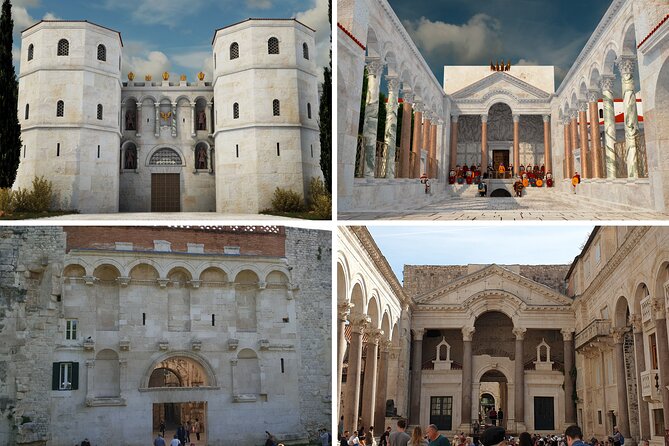
- Toni Šare’s 3D reconstructions help you visualize Diocletian’s Palace in its original glory.
- No museum scrambling: you see the courtyard/palace context without paying for paid interiors.
- Roman-to-Christian transformation at Saint Domnius, explained without going inside.
- Best viewpoints from the gates (Silver Gate and Golden Gate) with clear palace alignment.
- Cultural stop at Grgur Ninski and what his statue means for Croatian identity.
- Small group size (max 18) makes it easier to ask questions and hear details on foot.
Why Split’s Stone Feels Like It Has a Job
Split’s best view isn’t always a lookout point. It’s often a wall, a square, or an entrance—because Diocletian’s Palace was built to function. Once you understand that, the whole city stops feeling like random streets and starts feeling like a map of decisions made centuries ago.
This tour is built around exactly those decisions. You’ll walk through the palace’s main spaces and the points where later Split clearly kept using the Roman shell. I liked that it’s not just, Here’s a thing, end of story. You get the why.
And Toni’s local perspective comes through in a practical way: he doesn’t just point at stones. He explains what they’re doing in today’s city life—where people gather, where defenses were reused, and how old structures were repurposed rather than erased.
You can also read our reviews of more tours and experiences in Split.


Price and What You Actually Get for $34.83
At $34.83 per person, this is priced like a mid-level city tour, and the value comes from two smart choices.
First, most stops don’t require paid admission. The itinerary is designed so you learn from key exteriors and key public spaces, not just ticketed interiors. That keeps your time flexible and avoids the typical trap where half your tour budget disappears into museum entry fees.
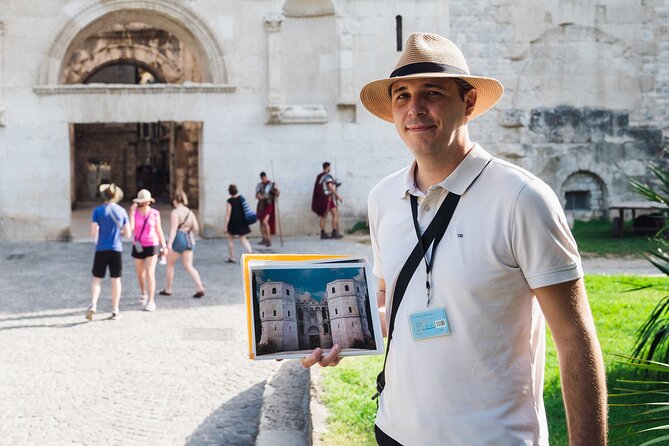
Second, the tour includes demonstrations with 3D reconstructions. That matters because Diocletian’s Palace is partly intact and partly transformed. Without a visualization tool, it can be easy to lose the plot—especially in an old town where walls, alleys, and later buildings overlap. With the reconstructions, you can follow the original layout in your head while you’re standing on the actual ground.
So yes, you’re paying for a guide—but you’re also paying for interpretation. This is the kind of tour that helps you turn photos into understanding.
The Route Starts at Porta Aenea, Then You Learn to Read the City
The meeting point is Brass Gate (Porta Aenea) on Obala Hrvatskog narodnog preporoda in Split. Starting at a gate is a good move. It instantly frames the palace as something fortified, designed, and controlled.
From there, you’ll walk into the palace core and work outward through the key entrances and ceremonial spaces. You’re also ending at Narodni trg (Pjaca), the main square. That ending matters because it’s easy to orient yourself after the tour and head to lunch, a viewpoint, or your next stop.
Expect the tour to run about 1 hour 40 minutes to 1 hour 50 minutes. It’s short enough to fit into a first day, and long enough that you don’t feel rushed past the meaning of the buildings.
Riva Harbor: The Best First Look at Diocletian’s Palace
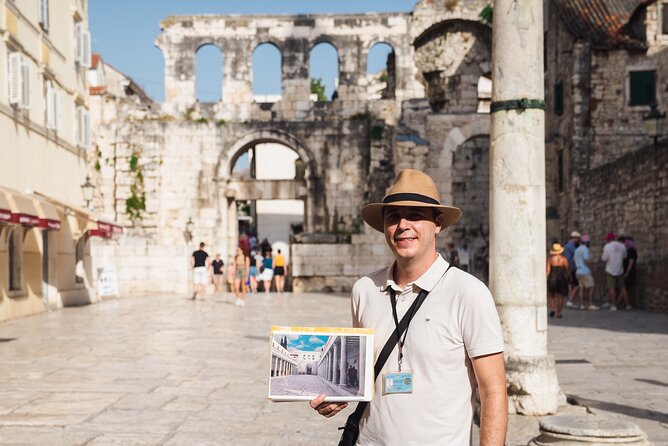
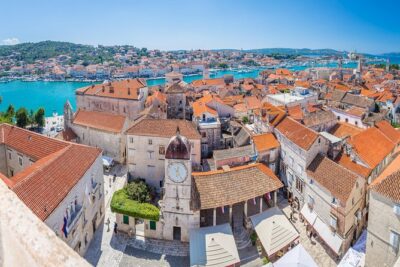
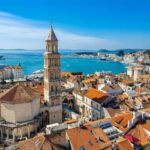
Stop one is Riva Harbor, the Riviera by the water and the site that matters to local residents. The payoff here is visual: you get a strong look at the southern wall of Diocletian’s Palace from outside the palace grounds.
Toni uses this start to set expectations. You’ll see graphic and model representations connected to what you’re going to encounter later inside the palace complex. In other words, this isn’t a random waterfront pause. It’s the preface.
You also get a quick sense of scale. Diocletian’s Palace isn’t a single building. It’s an architectural force that shaped how Split grew around it. Watching the wall from Riva Harbor helps you understand why the later gates and squares feel like they’re arranged with purpose.
Peristyle Square: Where Roman Architecture Still Holds the Center
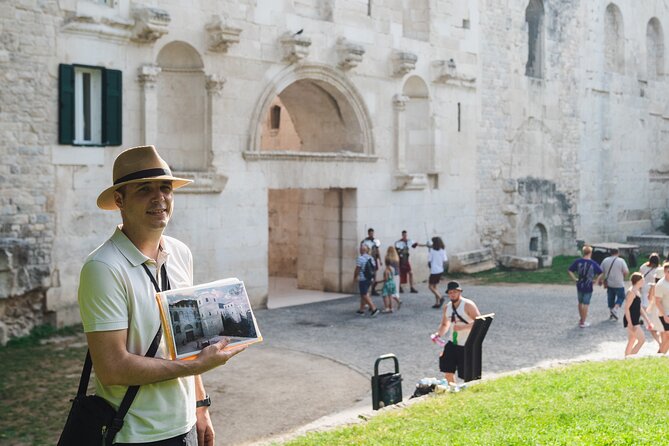
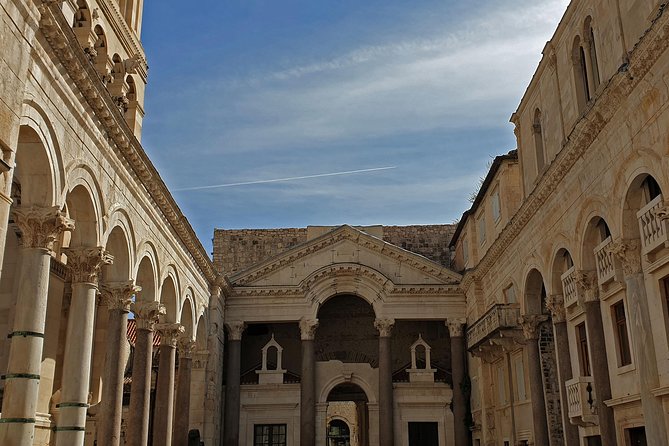
Next up is the Peristyle of Diocletian’s Palace, described as the central square of the palace and one of the most important squares in Split today.
This is one of the stops where you’ll notice how preserved Roman structures can still dominate the space. The guide points out what’s still visible and uses 3D reconstructions to show how the decorations and buildings related to the original setup.
The value here is clarity. Without guidance, a square like this can feel like a pretty stop. With the explanation, it becomes a clue: a reminder that this was once the heart of an imperial residence.
Tip: give yourself time to look up and around. The structures here reward slow glances, especially when you’re mentally comparing today’s form to the original palace layout Toni reconstructs.




Saint Domnius Cathedral: From Diocletian’s Grave to a Living Cathedral
At the Cathedral of Saint Domnius (the mausoleum of Emperor Diocletian), you’ll get one of the tour’s key storytelling moments: how one sacred space was converted into another.
You do not enter the cathedral on this tour. Instead, you learn what you need from the outside, including the connection to Diocletian’s grave and how Christians adapted the imperial tomb into a cathedral. You’ll also hear about the bell tower and the transformation logic.
I like this stop because it explains change without turning it into confusion. You’re not asked to pretend the present didn’t happen. You’re shown how the past was reused, and that’s the theme running through Split.
You’ll leave knowing how to look at the cathedral as both Roman architecture and an active religious space. That dual reading makes the building more meaningful, even if you skip interior time.
The Temple of Jupiter: Seeing the Real World in Roman Construction
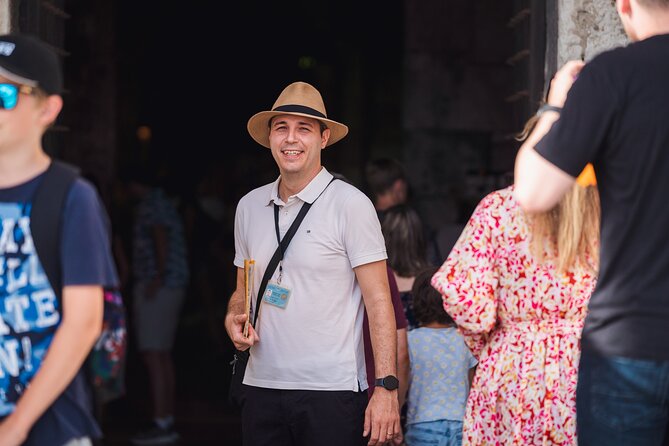
Then comes the Temple of Jupiter, known as one of the best-preserved late-Roman temples in the world. You won’t enter here either. You view it from outside while Toni points out details and explains what’s going on.
The interesting angle: Toni talks about anomalies and mistakes that Romans made during construction. That’s a great reminder that even imperial projects weren’t magic. They were human, and human means imperfect.
This stop can feel like a free lesson in how to look carefully at stone. If you’ve ever wondered why architecture doesn’t always match the ideal picture, this is where you’ll start noticing the evidence.
And since it’s an exterior stop, it also works as a short break in the walking rhythm—just enough time to refocus.
Eastern (Silver) Gate View: A Palace Picture Framed in Stone
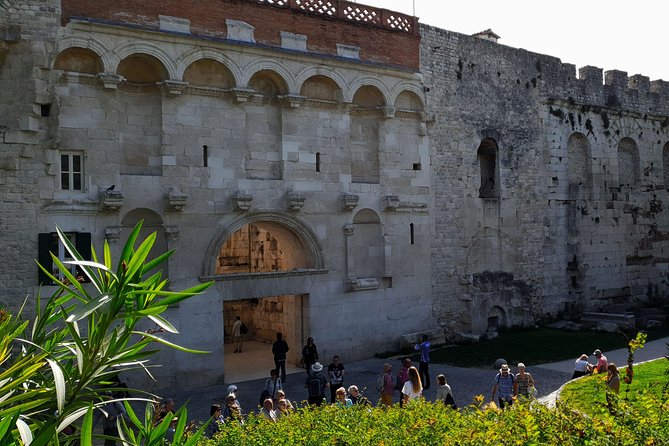
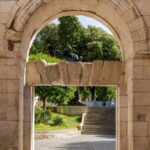
At Eastern (Silver) Gate, you’re set up for one of the tour’s strongest views. Toni guides you to a spot where you can see key palace elements lined up: the Cathedral (Mausoleum) on one side, the Silver Gate on the other, and beneath you the only preserved part of the original road.
That last detail is a big deal. Roads are the quiet infrastructure of history. When the original path survives, it connects you to how people moved through the palace centuries ago.
I like gate viewpoints because they make the palace feel defensive and organized. You’re not just looking at impressive ruins. You’re looking at an engineered system of entrances, walls, and controlled movement.
Grgur Ninski Statue: Croatian Language and Identity in Plain Sight
The tour then turns from architecture to culture at the Grgur Ninski statue. This landmark is recognizable, but the guide adds what you might miss at first glance: what the figure represents and what it means for Croatian language and culture in early medieval times.
This is the kind of stop that balances the tour. You get Roman and later urban history, but you also get the human and cultural side—how identity was shaped and claimed.
Even if you’re not chasing religious or linguistic history, the point lands. It explains why some monuments matter beyond their visual impact.
Vestibulum of Diocletian’s Palace: The Private Entrance That Changes the Story
Next is the Vestibulum of Diocletian’s Palace, described as an ancient entrance to Diocletian’s private residence.
Here Toni leads you around the remains of Diocletian’s private residence, and the stop feels different from the public square moments. The tone shifts from ceremonial space to controlled, personal space.
For me, that’s where a walking tour beats a static museum visit. You can feel the transition from public to private by moving through the built environment. It’s not just what things looked like—it’s how the layout guided behavior.
You’ll likely appreciate this stop most if you enjoy architecture that has a personality—imperial, practical, and designed to separate roles.
Noble Palaces and the Slow Reveal of Later Split
As you move through the palace complex area and surrounding parts of the city, Toni also points out the various palaces of noble families you’ll see along the way.
This is where Split becomes more than a Roman story. Even though the city is famous for its Roman core, you’re walking through layers of medieval, Renaissance, and early modern heritage too.
The practical benefit: when you later wander on your own, you’ll be able to spot what belongs to which era. That reduces the frustration of old towns where everything looks similar until someone explains the pattern.
And if your group is interested, Toni also takes you past Game of Thrones filming locations in Split and mentions the fan shop stop. Even if you’re not a superfan, the locations add a pop of modern cultural context that keeps the walk from feeling stuck in time.
Golden Gate: The Main Entrance and the Northern Wall’s Defense Logic
The Golden Gate is next, described as the main entrance to the palace and the most preserved out of the four entrances. It’s also the most decorated and memorable, so yes, it earns its reputation.
Toni positions you so you can see the entire northern wall from here. This is an important viewpoint because it explains how medieval Split used Roman-made structures for defense, and how they removed what they didn’t need.
I like this explanation because it stops the palace from feeling like a museum piece. Instead, it becomes a system that later people modified to fit new realities. That idea of reuse is one of the tour’s strongest themes.
If you want a single photo point that also carries meaning, this is it.
Renaissance Courtyard Context at the City Museum Stop
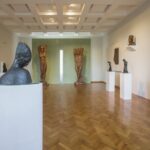
The itinerary includes a stop at the City Museum of Split, located within a well-preserved Renaissance noble palace. You do not enter the museum. Instead, you only see the courtyard to view the Renaissance palace from within.
This is a smart compromise. Museums are great, but they often force you into a different pace. A courtyard visit gives you architectural context without locking you into ticketed time.
Toni also explains Venetian history, including how these kinds of palaces appeared during Venetian influence. That adds another layer to your understanding of why Split’s old town looks the way it does beyond the Roman core.
If you want to keep the walking tour focused and avoid paying for more entry tickets, this stop fits the tour’s overall design.
Finishing in Piazza Square at Narodni trg
The tour ends at Old Town Hall on Piazza Square (Pjaca) at Narodni trg.
Pjaca is the natural ending spot because it’s the main square since medieval times. You can see the 14th century Town Hall and other structures, and best of all, the central square is where it’s easy to reorient and continue exploring.
I find end points like this matter. Walking tours can leave you tired and slightly disoriented. A square with open sightlines makes the next steps feel easy.
Who This Tour Is For (and Who Might Skip It)
This tour is a strong fit if you:
- want a first-day introduction to Split that you can build on later
- like architecture, urban layout, and how one era reuses another
- enjoy visualizing what used to be here, which is exactly what Toni’s 3D reconstructions support
It may not be ideal if you’re expecting lots of inside-the-building museum time or if you get bored by architectural explanations. This tour keeps you outside and moving, with learning anchored to the spaces you can immediately see.
Also, if you’re traveling with limited outdoor time, keep the weather requirement in mind. You’ll be best off with a plan that allows for a good-condition walking window.
Small Group Size Means Real Conversation
The tour caps at 18 travelers, and that’s not just a comfort detail. It affects how the guide can pace the group.
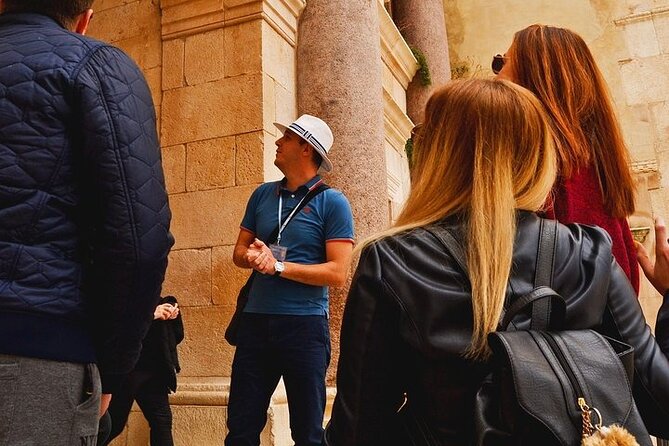
With a smaller size, Toni can answer questions without the usual time squeeze. You’re also more likely to hear the key points while you’re walking, rather than half missing the explanation because the group ahead shuffled too fast.
The result is a tour that feels like a guided walk with a story, not a race.
How to Get the Most Out of the Walk
To make this tour feel worth it on day one, do two things:
1) Bring your curiosity about change over time. Split’s buildings are layered, and the guide’s job is to help you notice those layers. If you go in thinking only Roman, you’ll miss half the point.
2) Pause when Toni points to details. The stops are short on purpose, but the meaning lives in what you see when you slow down—like how gates frame views, or how a converted sacred space still shows its past.
If you follow that, you’ll leave with a mental map. And that map pays off later when you’re wandering through the old streets on your own.
Should You Book This Split History Walking Tour?
I’d book it if you want Split to make sense fast and you enjoy learning from a guide who can connect Roman engineering to modern city life. The 3D reconstructions plus the gate-and-square route are a good combo for turning stone into story, and the price is reasonable for the time, interpretation, and small-group format.
Skip it only if you’re mainly chasing museum interiors or if you don’t like outdoor walking. Otherwise, this is the kind of tour that improves every hour you spend in Split afterward, because you’ll know what you’re looking at while you wander.
FAQ
How long is the Walking Tour of Split with a Magister of History?
It runs about 1 hour 40 minutes to 1 hour 50 minutes.
What language is the tour offered in?
The tour is offered in English.
Where does the tour start and end?
It starts at Brass Gate (Porta Aenea) and ends at Narodni trg (Pjaca), the main square.
Is museum entry included?
No. The tour does not enter any museums or paid sites. You’ll see key places from outside, and there’s a courtyard viewing at the City Museum of Split.
Which stops are included without admission fees?
Several stops are listed as free, including Riva Harbor, the Peristyle of Diocletian’s Palace, Eastern (Silver) Gate, Grgur Ninski Statue, Vestibulum of Diocletian’s Palace, Golden Gate, and Old Town Hall.
Are there stops where you do not enter but the guide explains the place?
Yes. You won’t enter the Cathedral of Saint Domnius or the Temple of Jupiter, but Toni will explain what you need to know from outside.
How big is the group?
The tour has a maximum of 18 travelers.
What happens if the weather is poor?
This experience requires good weather. If it’s canceled due to poor weather, you’ll be offered a different date or a full refund.