REVIEW · ZADAR
WALKING TOUR ZADAR: Top rated guide, Tastings, Private tour
Book on Viator →Operated by Magic Croatia: Trips and Tours · Bookable on Viator
Zadar sounds like nowhere else. This private walking tour threads together classic Roman Zadar and the modern shoreline artworks like the Greeting to the Sun, all with a guide who keeps the pace friendly. I like that you can shift the start time to fit your cruise schedule, so you’re not racing the clock.
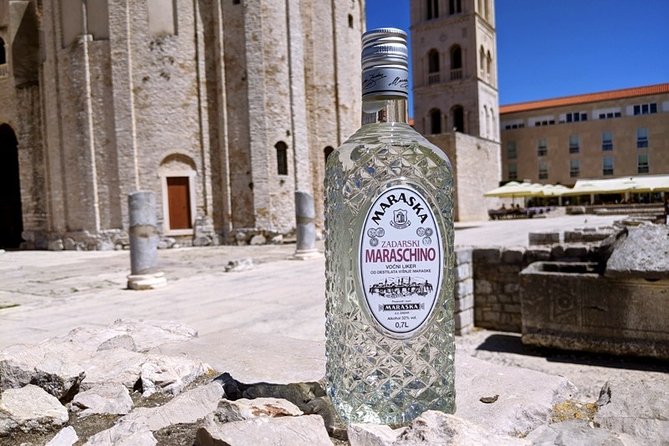
I also love the included Maraschino tasting—a local fruit liquor with a cult following that even Hollywood writers and poets were into. In reviews, top guides such as Lucija, Lea/Leah, and Ivana get praised for explaining history clearly and adjusting the walk to your group’s comfort. One thing to consider: some church stops note admission is not included, so if you want to go inside those specific sites, plan for possible extra ticket costs.
In This Review
- Key highlights at a glance
- Why Zadar on foot makes sense
- Price and value: $295 per group (up to 15)
- Meeting at Poljana Pape Aleksandra III: timing that respects your day
- The walking route: a 2-hour loop with momentum
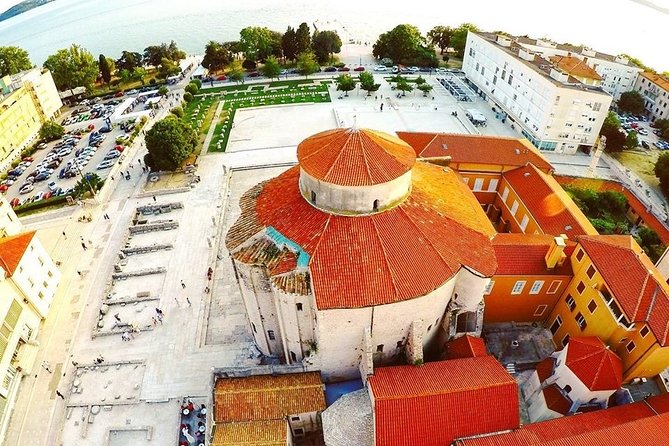
- Liburnians to Roman Zadar: starting at the Forum
- St. Donatus: an exterior that carries heavy meaning
- Cathedral of St. Anastasia: Romanesque scale and a saint’s story
- The modern shoreline: Greeting to the Sun (2005)
- Sea Organ: when the sea plays music
- Narodni trg and Kalelarga: Zadar’s public-life core
- St. Simon’s Church: early Christian roots and silver relics
- Five Wells: Venetian water and UNESCO defensive walls
- What you’ll learn beyond the photos
- Who this tour is best for
- Should you book this private Zadar walking tour?
- FAQ
- FAQ
- How long is the Zadar walking tour?
- Is this a private tour or shared group?
- What does the tour cost?
- Where do we meet, and where does the tour end?
- Is pickup or drop-off included?
- What’s included besides the guide?
- Are admissions included at churches?
- Can the start time be adjusted for a cruise schedule?
- What languages is the tour offered in?
- Do I need good weather?
Key highlights at a glance
- Private guide, exclusive group time so you’re not stuck listening over other groups
- Maraschino fruit liquor tasting included in the 2-hour loop
- You hit the big Zadar icons quickly without wasting time guessing where to go
- Sea Organ and Greeting to the Sun show why Zadar is more than old stones
- Cruise-friendly flexible start time so the tour works with arrival and departure plans
- A mix of free viewpoints and paid interiors depending on the church you visit
Why Zadar on foot makes sense
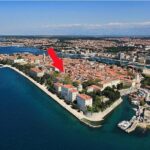
Zadar is compact in a way that surprises people. In about two hours, you can cover the essentials of the old city center and still end up at the waterfront area where Zadar’s modern attractions sit.
What makes this tour work is the mix. You’re not only looking at buildings from different eras—you’re learning what each place meant to the people living there, then connecting that to what you see today.
You can also read our reviews of more tours and experiences in Zadar.

Price and value: $295 per group (up to 15)
The price is listed as $295.01 per group for up to 15 people, for roughly two hours. For a small group, the cost per person can be high compared with a public group tour, but you’re paying for the real value driver here: your guide stays with just your group.
Think of it like this:
- If you fill the group with friends or family, the per-person cost becomes much easier to justify.
- If it’s just you (or you plus one other person), the decision comes down to whether you’ll actually use the time. You’ll, because the walk is focused and time-smart.
Also, the tour includes a local tasting (Maraschino fruit liquor). That doesn’t turn it into a bargain, but it does add real local flavor so you’re not just paying for sightseeing.
Meeting at Poljana Pape Aleksandra III: timing that respects your day
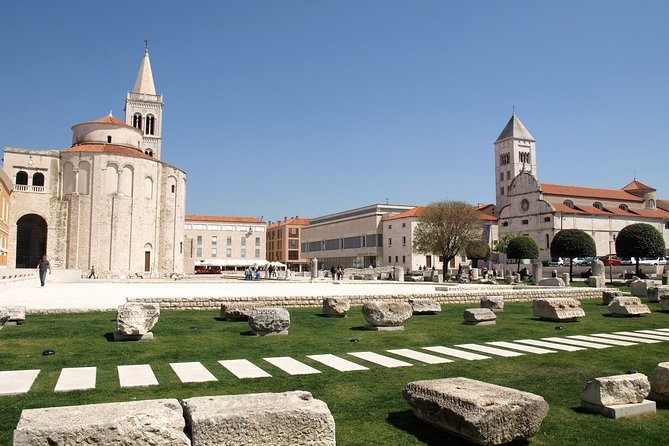
You meet at Poljana Pape Aleksandra III 7, Zadar, and the tour ends back at the same meeting point. There’s no pickup or drop-off included, so build in a little buffer to get there before the start time.
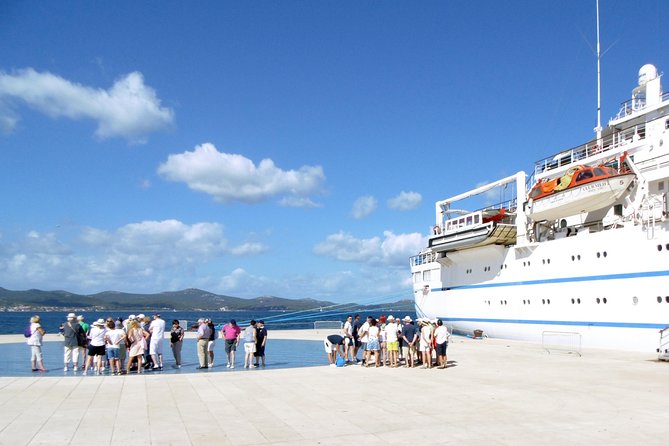
The best part for busy itineraries: the operator says the start time can be adjusted to match your cruise ship schedule. If you’re in Zadar for a port day, this matters. You can plan your morning and not feel like you’re constantly guessing when you’ll be walking.
The walking route: a 2-hour loop with momentum
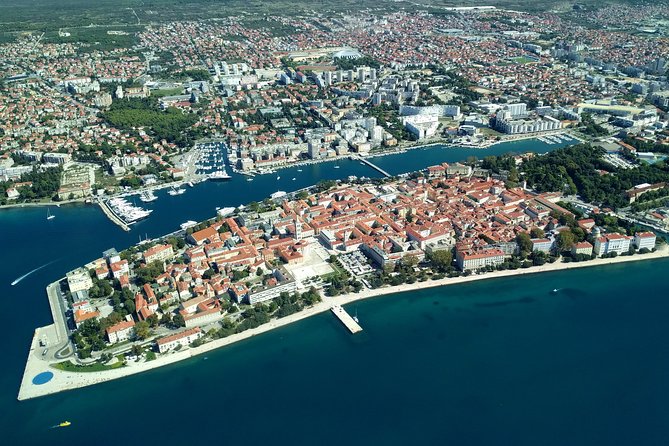
This is built as a “key sights” walk through Zadar’s historical center, led by a licensed local guide in English (and other languages are offered by the provider). You’ll cover big landmarks in a way that keeps the story moving—Roman grid life, medieval religious power, and then modern ocean sound engineering.
Expect a steady city-center pace. Most people can participate, and reviews mention guides who keep the walk comfortable for the group, including adjusting when people are late.
Liburnians to Roman Zadar: starting at the Forum
Your tour begins with context: Zadar is one of the oldest urban areas in the Mediterranean, with permanent settlement going back to around 1000 B.C. The earliest inhabitants, the Liburnians, were known as skilled seafarers and merchants.
Then you step into the Roman era at The Forum. This was the kind of central space that mattered every day—where social life happened and where the city’s regular grid of streets and squares took shape. If you’ve ever wondered why old European cities feel so “designed,” this is where you start to see the logic.
It’s also a quick stop, so don’t expect it to feel like a museum visit. It works best as orientation: you learn what you’re looking at, then you move on with the meaning already attached.





St. Donatus: an exterior that carries heavy meaning
Next is the Church of St. Donatus, one of the most recognizable sights in Zadar. The church traces back to the 9th century and began as a private chapel for Bishop Donat.
Here’s the practical note: you pass by without stopping, and the site is listed as not included for admission. So the value is in the guide’s story—what the church was for and what it has become—rather than a long inside visit.
If you’re hoping for deep interior time at this stop, this might not be the tour style you want. But if you want the fast “get the picture” version, it’s right on target.
Cathedral of St. Anastasia: Romanesque scale and a saint’s story
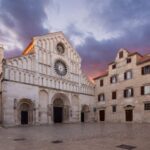
The next big spiritual landmark is the Cathedral of St. Anastasia. It’s described as the biggest cathedral in the Dalmatia region, built in Romanesque style, with stories tied to St. Anastasia.
Again, admission is not included at this stop. You’ll learn the background, likely including why St. Anastasia matters and how the cathedral fits Zadar’s wider religious story.
If you love architecture and want to linger inside, you might need to plan for additional time or additional tickets. If you’re more about understanding the city’s layout and key eras, the time you spend here is still useful.
The modern shoreline: Greeting to the Sun (2005)
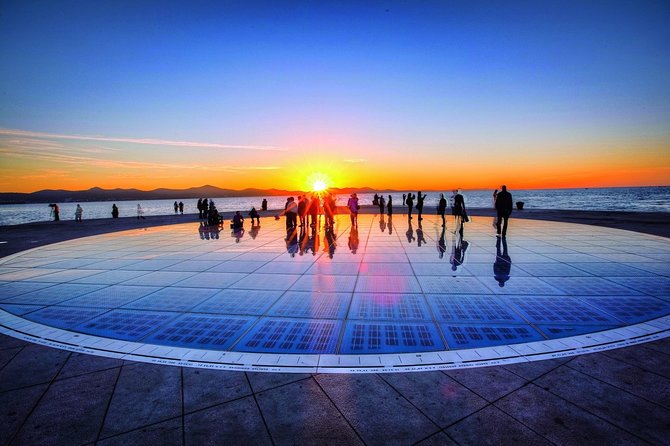
After the heavier history, the tour pivots to something that feels almost sci-fi if you don’t know it yet: Greeting to the Sun. This attraction was built in 2005, and your guide will share less-known facts about it.
This is one of those moments where Zadar stops being only an old-city quiz. It becomes a living place with contemporary creativity aimed at daily life—light, sound, and the way the sea meets the city.
Plan for weather here. Waterfront stops mean sun, wind, and changing light, so bring sunglasses and a layer if you run into a breeze.
Sea Organ: when the sea plays music
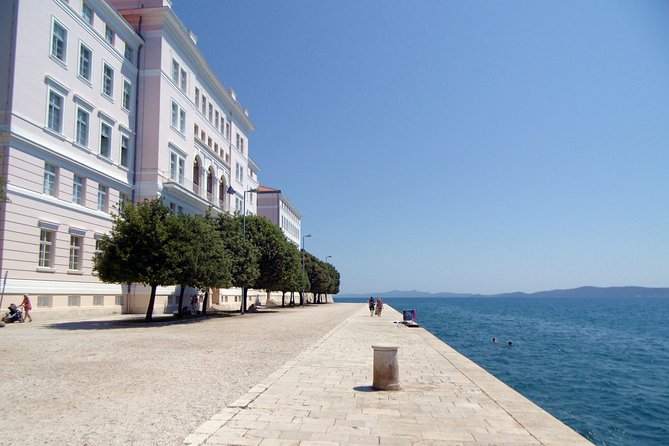
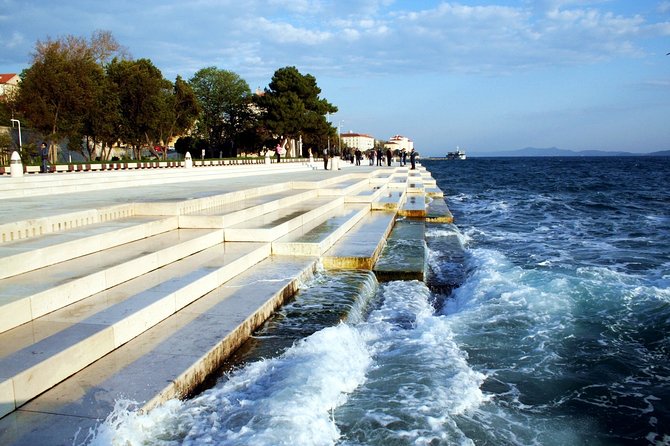
Then comes one of the most memorable stops on the whole walk: the Sea Organ. It’s described as a one-of-a-kind organ that looks like stairs descending into the sea, and it creates unique melodies shaped by the sea itself.
This is the reason many people love Zadar even if they’re not “church people.” You’re seeing public art that works without electricity in the simplest way imaginable: nature and design do the performance.
You’ll get the story behind what you’re hearing (and what makes the experience different from any normal waterfront stroll). It’s short, but it’s the type of stop you remember later because it’s physical. You’re standing there while it happens.
Narodni trg and Kalelarga: Zadar’s public-life core
Next you move into Narodni trg (People’s Square). This is the center of public life in Zadar, which means it’s where the city’s social engine shows up—places for people to meet, pass through, and linger.
Your guide points out landmarks around the square, including:
- City Loggia
- City Guard with the clock tower
- Kalelarga, also known as the Wide Street
This is where the tour shifts from “big monuments” to “how people actually move.” Even if you don’t go inside every building, you’ll start to understand where to walk on your own later—and which streets give you the best views while still feeling like a real neighborhood.
St. Simon’s Church: early Christian roots and silver relics
At St. Simon’s Church, you get a stronger payoff if you like religious art and iconography. The church started as an Early Christian basilica built in the 5th century, and inside is a silver chest holding relics of St. Simon, the city’s patron saint.
This stop is listed as admission ticket free. So unlike some other churches on the route, you’re not being asked to budget for entry in advance for this one.
The guide’s job here is crucial: you learn why the relic chest is such a big deal and how the craftsmanship connects to the city’s identity. It’s not just “look at a church.” It’s “why this specific detail mattered to Zadar.”
Five Wells: Venetian water and UNESCO defensive walls
Finally, you end up at Five Wells Square, where you learn about a water cistern built by the Venetians. Water infrastructure is one of those unglamorous topics that suddenly turns fascinating when you realize it’s what kept cities alive during sieges and dry seasons.
From here, the guide connects the site to defensive walls that are included on UNESCO’s World Heritage List. That link matters because it explains why Zadar developed the way it did—this wasn’t random stonework. It was engineering aimed at survival.
It’s also a nice ending because it brings you back to the practical city story—how Zadar protected people, fed people, and then carried that memory forward.
What you’ll learn beyond the photos
A good guide can turn a “see these stops” walk into real understanding. Based on how guides are described in past experiences, you can expect stories that make Zadar feel human, not just historic.
In some walks, the guide also points out signs tied to the 91–95 war, including visible reminders like grenade marks on walkways, and ties them to what the city looks like now. If you want a tour that treats the past as present—not dusty—you’ll like that approach.
Who this tour is best for
This is ideal if you:
- want a private walking tour of Zadar without spending time figuring out route logic
- like your sightseeing with context, not just facts on plaques
- value a short, focused walk that still hits major highlights
- appreciate a local tasting as part of the experience, not a separate add-on
If you want a long, slow architecture day with lots of inside time at every church, you may feel the pace is tighter than you prefer. This is built for momentum and key highlights.
Should you book this private Zadar walking tour?
Book it if you want the fastest path to understanding Zadar’s center, plus a genuine local taste. The value improves dramatically when you’re splitting the cost across a small group, and it’s helped by the included Maraschino fruit liquor tasting.
Skip it or plan carefully if your top priority is guaranteed interior access everywhere. The route includes some churches where admission is listed as not included, so check your expectations before you arrive. Also, if you’re the type who hates short stops, note that many highlights here are quick “right place, right story” moments.
If you’re balancing a port day, want a focused private guide, and enjoy connecting old streets to modern waterfront design, this is a strong choice.
FAQ
FAQ
How long is the Zadar walking tour?
It runs for about 2 hours.
Is this a private tour or shared group?
This is a private tour/activity. Only your group participates.
What does the tour cost?
The price is $295.01 per group, up to 15 people.
Where do we meet, and where does the tour end?
You meet at Poljana Pape Aleksandra III 7, 23000, Zadar, Croatia, and the tour ends back at the same meeting point.
Is pickup or drop-off included?
No, pickup and drop-off are not included.
What’s included besides the guide?
A fruit liquor tasting (Maraschino) is included, and you get a licensed local guide. The tour also includes a mobile ticket.
Are admissions included at churches?
Some sites list admission as free, while others list admission as not included. For example, stops like St. Donatus and the Cathedral of St. Anastasia note that admission is not included.
Can the start time be adjusted for a cruise schedule?
Yes. The start time can be adjusted to suit your cruise ship schedule.
What languages is the tour offered in?
English is offered, and the provider lists guides in English, German, Spanish, French, and Italian.
Do I need good weather?
Yes, this experience requires good weather. If it’s canceled due to poor weather, you’ll be offered a different date or a full refund. Service animals are allowed and it’s near public transportation.