REVIEW · SPLIT
90 Minute Walking Tour of Split
Book on Viator →Operated by Vegolas Tours · Bookable on Viator
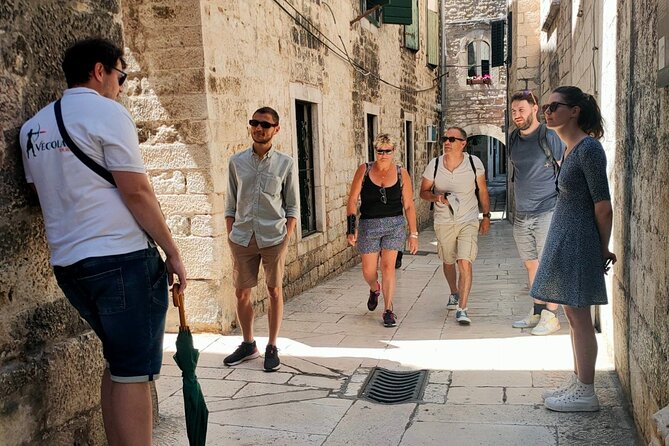
Split can feel like a maze, but this walk gives you a clean route through the essentials. You’ll cover ancient and medieval highlights in about 1.5 hours, then you’re done and free to explore the rest of the city. The tour is offered in English with a mobile ticket, and the group stays small (max 12), so the guide can keep things moving without losing context.
I especially like how the tour balances famous stops with practical guidance, including where to go next and what to skip later. I also love the pacing: several quick orientation stops, then a longer chunk inside Diocletian Palace so it doesn’t feel like you’re just rushing photos. One thing to consider: the tour is built for good walking weather, and some key entrances (like Jupiter and St. Domnius) cost extra since they’re not included.
In This Review
- Key Highlights at a Glance
- A 90-Minute Split Primer That Leaves Your Day Free
- Meeting at Strossmayerova Fountain: Easy Start, Easy Finish
- Orientation Stop: Strossmayer Park Sets the Tone
- Golden Gate and the Palace Entrance Story
- Peristyle Square: The UNESCO Core You Actually Feel
- Eastern (Silver) Gate: How Function Beats Fame
- Temple of Jupiter: A Chosen-Depth Moment (Entrance Not Included)
- Cathedral of Saint Domnius: Mausoleum or Church?
- Old Split Adds the Medieval Counterweight
- Palazzo di Diocleziano: The 55-Minute Main Event
- What You’re Really Paying for: Value at $18.14
- Weather, Walking Pace, and How to Get the Most Out of 1.5 Hours
- Who This Tour Suits Best (and Who Might Want a Different Style)
- Should You Book This 90-Minute Walking Tour of Split?
- FAQ
- How long is the 90 Minute Walking Tour of Split?
- What’s included in the tour price?
- Are entry tickets included for Diocletian Palace and the other sights?
- What language is the tour offered in?
- How big is the group?
- Where do I meet the guide?
- If the weather is bad, what happens?
Key Highlights at a Glance
- Strossmayerova Fountain meeting point makes it easy to start without hunting around the waterfront
- Diocletian Palace time (about 55 minutes) means you actually see how the palace works
- Small group of up to 12 helps you hear the guide and ask questions
- Multiple gates and squares show how Split’s Roman layout still controls the streets
- Entrance tips for St. Domnius and Jupiter let you choose your level of extra time
- You’re done in 90 minutes, so the rest of your day stays yours
A 90-Minute Split Primer That Leaves Your Day Free
This is the kind of tour I recommend when you want the “big picture” fast. In roughly 1.5 hours, you get oriented in central Split, learn what you’re looking at, and build a map in your head before you wander on your own.
The smart part is that you’re not stuck with a half-day tour. After the route ends, you can use the remaining hours for beaches, viewpoints, wandering side streets, or just going back to the palace areas that grabbed you most. If you’re only in Split for a short stay, this format helps you feel like you made progress on Day 1 instead of just collecting random sights.
You can also read our reviews of more tours and experiences in Split.


Meeting at Strossmayerova Fountain: Easy Start, Easy Finish
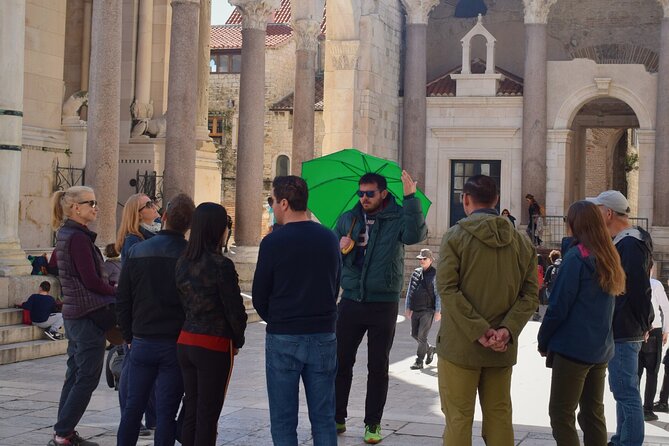
You start at Strossmayerova Fountain, Ul. kralja Tomislava 12, right by the waterfront. That “near the waterfront” detail matters. Split’s old streets can be charming and confusing at the same time, and this meeting point keeps you out of the maze before the walking begins.
The walk also ends back near the waterfront at Ul. kralja Tomislava 15. In practice, that means you can roll into your next activity without a long scramble across town. It’s a small logistics win, but it adds up—especially if you’re traveling with limited mobility or you’re hungry and ready for coffee sooner rather than later.
Orientation Stop: Strossmayer Park Sets the Tone
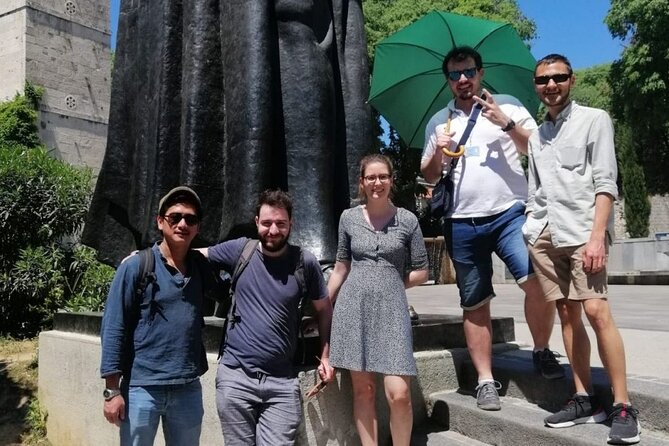
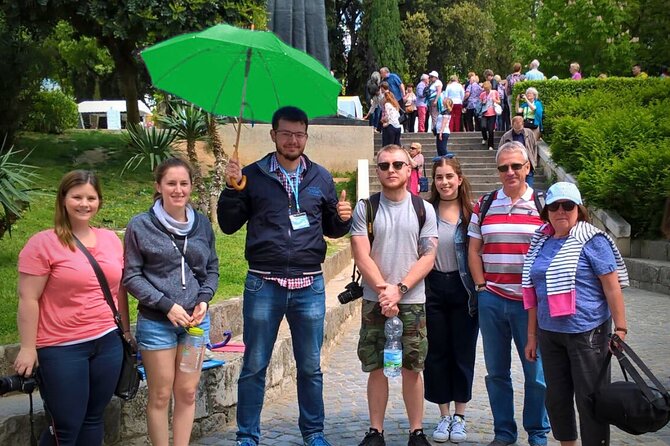
The tour opens in Strossmayer Park with your guide meeting you at the fountain. It’s a quick start—about 5 minutes—but it’s useful. You’re not thrown immediately into stone trivia. Instead, you get introductions and a sense of what this walk will cover, which helps the rest of the route click faster once you enter Diocletian’s world.
Even as a short orientation, this stop does two things well: it calms the start of the tour and it frames the city as more than postcard scenery.
Golden Gate and the Palace Entrance Story

The Golden Gate is your next step, and it’s more than just an impressive entrance you can photograph. It’s the point where you begin to understand how access worked into Diocletian’s Palace and why this layout mattered.
Expect the guide to connect the dots: what the palace was, why it existed, and how it shaped daily movement. That matters because once you know the logic of entrances and routes, you stop feeling lost. You start recognizing why streets curve the way they do and why certain areas feel like they’re built for passage and control rather than casual wandering.
Peristyle Square: The UNESCO Core You Actually Feel
The Peristyle of Diocletian’s Palace is the heart of the UNESCO-protected complex, and it’s also the moment where Split’s “Roman layer” becomes real. This is the main square, and the guide focuses on how the emperor would have used it—and what kinds of people and routines would have filled the space around it.
Even with only about 5 minutes here, the takeaway is strong: you’re not just looking at ruins. You’re reading a room. You’ll likely notice how the layout creates a sense of ceremony and authority, and that helps explain why people keep using the same types of spaces for gathering long after the empire era ended.




Eastern (Silver) Gate: How Function Beats Fame
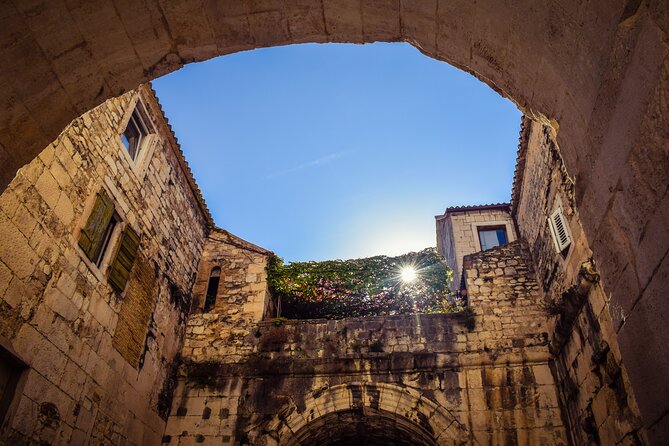
Next up is the Eastern (Silver) Gate, one of the four gates. It’s not the “main” entrance, and that’s exactly why it’s interesting. The guide points out the important function it served and what’s still visible today.
This stop is a good example of what the tour does well: it shifts your attention from only the most famous features to the ones that make the whole system make sense. You’ll leave with a clearer idea of how gates weren’t just decoration. They were part of how the palace controlled movement, access, and security.
Temple of Jupiter: A Chosen-Depth Moment (Entrance Not Included)
You’ll reach the Temple of Jupiter next. The focus here is how ancient Romans expressed religion—and how the emperor’s devotion tied into that. The guide also flags that the temple’s entrance isn’t included, so you’ll get tips first, then you can decide whether to go in afterward.
This is smart for you if you like options. Not every traveler wants extra tickets or extra time inside. With guidance beforehand, you’ll know what to look for if you choose to enter, and if you skip it, you won’t feel like you missed the point.
Cathedral of Saint Domnius: Mausoleum or Church?
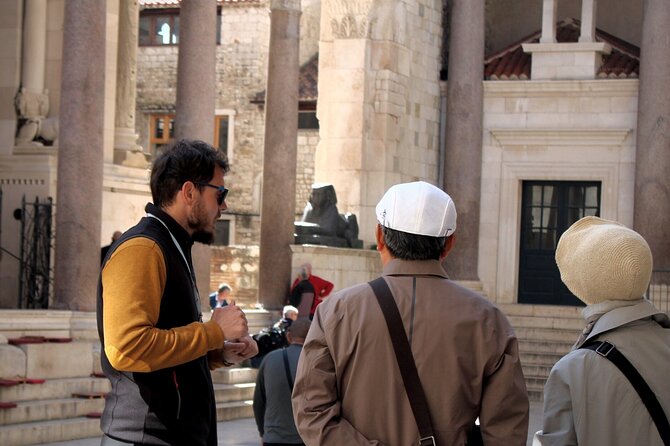
The Cathedral of Saint Domnius is one of those places where your brain may do a double-take. The tour treats it as a question: was it originally a Roman mausoleum or something else, and why does it have the famous cat figure guarding it?
As with Jupiter, the entrance isn’t included, but the guide provides enough detail to make your visit afterwards feel purposeful rather than random. If you decide to go in, you’ll likely get more out of the space because the guide has already explained what the building represents and why it’s such a key stop in Split’s timeline.
Old Split Adds the Medieval Counterweight
After the ancient core, you get a taste of Old Split, described as the newer—but still old—middle-aged part of town. This contrast is valuable because it stops you from viewing Split as only a Roman museum.
You’ll get a quick orientation toward how the city evolved, with secrets of its own. Even if you only spend a few minutes here, it changes how you look at what comes next inside Diocletian’s Palace. Instead of thinking “ruins,” you start thinking “a living city layered over history.”
Palazzo di Diocleziano: The 55-Minute Main Event
Most of your walking time—around 55 minutes—goes to inside Diocletian’s Palace, the core of this tour. That long middle stretch is the real value. You get time to understand what you’re seeing, not just pass by it.
This is where the palace becomes a city inside a city: squares, passageways, and the sense of scale that makes Split’s UNESCO status make sense. Because you’ve already visited gates and key reference points, the palace interior feels connected instead of confusing. You’re not just collecting landmarks—you’re learning how the palace organizes space.
It’s also the part where your walking becomes more interesting. Outside sections can feel like “stop, point, move.” Inside, you get more of the explanation and context that turn those stones into a story you can navigate.
What You’re Really Paying for: Value at $18.14
At $18.14 per person, this isn’t a luxury add-on. It’s a budget-smart way to get a guided orientation through Split’s top draw—especially when you consider the scope is both ancient and medieval, with licensed guidance.
Here’s what that price buys you in practical terms:
- Licensed professional guide who explains what you’re looking at
- UNESCO site exploration focused on the palace complex
- Top highlights plus guidance on how to keep exploring after
- Small-group size (up to 12) which usually means less noise and more ability to hear details
- Mobile ticket for smoother check-in than paper-only options
Also, with an average booking window of about 25 days in advance, the tour often runs well on predictable schedules. That’s useful if you’re planning ahead and want Day 1 to feel organized.
Weather, Walking Pace, and How to Get the Most Out of 1.5 Hours
This tour requires good weather. If conditions are poor, you’ll either be offered a different date or a full refund. That’s the kind of policy you’ll appreciate here because much of the time is on foot.
You can also plan for the walk’s rhythm. Several stops are around 5 minutes each, which keeps the tour moving and prevents you from zoning out. The 55-minute palace segment is the heavier time commitment, so you’ll want comfortable shoes and a quick water plan.
One small tip: since entrances to Jupiter and St. Domnius aren’t included, decide early whether you want extra time. If you go in, you’ll benefit from the guide’s setup. If you skip, you can spend that time elsewhere in the palace area.
Who This Tour Suits Best (and Who Might Want a Different Style)
This works especially well if:
- you’re visiting Split for the first time and want a fast, organized orientation
- you like your history tied to real places you can walk through
- you want a small-group experience and you don’t want to be one face in a crowd
- you want to keep your day open after the walk for food, beaches, and independent exploring
It may not be the best fit if you want only museum-level depth, long indoor time, or a tour that includes every major entrance fee by default. This one is built for momentum: learn the layout, understand the meaning, then take it from there.
Should You Book This 90-Minute Walking Tour of Split?
If you want the cleanest start to Split with Diocletian Palace as the anchor, I’d book it. The combination of a clear route, small group size, and a guide who keeps the story grounded in what you’re standing in front of makes the time feel well spent.
I’d especially recommend it if it’s your first day, because it gives you a mental map you can reuse all week. And at $18.14, it’s one of the more sensible “guided orientation” choices in town—without turning your afternoon into a full-day commitment.
FAQ
How long is the 90 Minute Walking Tour of Split?
It runs for about 1 hour 30 minutes (approximately).
What’s included in the tour price?
You get a licensed professional guide, exploration of UNESCO world site heritage, and top highlights of the inner city, plus recommendations and tips from the guide.
Are entry tickets included for Diocletian Palace and the other sights?
Stated entrances are not included for Temple of Jupiter and Cathedral of Saint Domnius. Palazzo di Diocleziano entry is listed as not included as well, while other listed stops have admission tickets marked free.
What language is the tour offered in?
The tour is offered in English.
How big is the group?
The maximum group size is 12 travelers.
Where do I meet the guide?
You meet at Strossmayerova Fountain, Ul. kralja Tomislava 12, Split.
If the weather is bad, what happens?
The tour requires good weather. If it’s canceled due to poor weather, you’ll be offered a different date or a full refund.