REVIEW · ROVINJ
Discover the Essence of Rovinj
Book on Viator →Operated by Walking Tour Pula with a local - Augustus Walks · Bookable on Viator
Rovinj’s best stories are on foot. This walk threads you through Trg Valdibora and the old-town lanes, then lands you at the Baroque Church of St. Euphemia—so you get both everyday life and big architectural moments in one smooth loop. I also love how the route mixes legends, street-level details, and practical tips, but do note it does include some walking on cobblestones and a few steeper lanes, so plan with moderate fitness in mind.
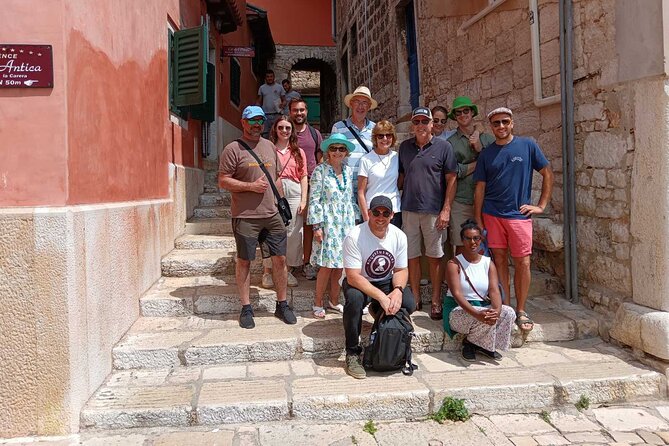
You’ll go with an English-speaking guide (the experience is capped at 35 people), which keeps the pace comfortable and the explanations clear. It’s a small-town style guided stroll—exactly the kind of format that helps you understand what you’re looking at without turning the day into a checklist.
The start and finish are easy to anchor yourself around: you begin near the Denkmal Gefallener Soldaten area and end at Marshal Tito Square, with a mobile ticket ready on your phone. Total time is about 1 hour 45 minutes, so it fits well into a day that also includes beach time or a longer meal.
In This Review
- Key things to know before you set off
- Walking from Square to Sea-City in 1 hour 45
- Trg Valdibora: where the day’s rhythm starts
- City Market: local produce, seafood, and craft
- Balbi Arch: Rovinj’s famous gate (and why it matters)
- Ulica Bregovita: the steep lane that feels like a time machine
- Crkva Svete Eufemije: Baroque power in the middle of it all
- Ulica Sv. Križa: lanes for slow walking and quiet atmosphere
- Distillery AurA shop: local spirits and craft ingredients
- Guide energy: why Dalen’s style makes the walk feel short
- Price and time: does $72.10 feel worth it?
- Who this Rovinj walk is best for
- Should you book this Rovinj experience?
- FAQ
- What’s the duration of the Rovinj walking tour?
- What time does it start, and where does it end?
- Where is the meeting point?
- Is the tour offered in English?
- How big is the group?
- Is there a weather requirement or cancellation option?
Key things to know before you set off
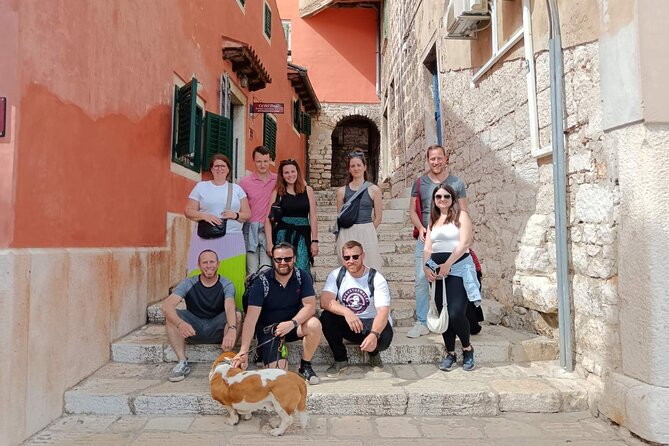
- Market-first orientation: You start in and around local squares, so the town’s food-and-daily-life side comes early.
- Streets with steep character: Bregovita and Sv. Križa give you that old Rovinj feel fast—narrow lanes, stone houses, and turns that change the view.
- Balbi Arch is the shortcut to the postcard view: You’ll hit Rovinj’s famous gate early enough to remember it.
- St. Euphemia is the big visual payoff: Expect a Baroque church stop that reframes the town’s identity.
- Aura Distillery shop adds a local flavor angle: Spirits and craft ingredients show up right near the historic core.
- A guide like Dalen sets the tone: People highlight guides who teach history like a story—personal, upbeat, and good at making details stick.
Walking from Square to Sea-City in 1 hour 45
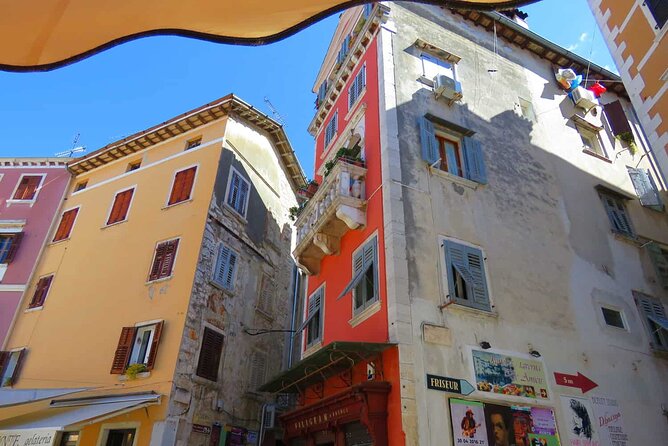
This is the kind of Rovinj tour that helps you get your bearings fast. Instead of scattering you across far-apart sights, the route stays inside the historic core, linking squares, arches, lanes, and landmarks in a way that feels like a natural wander. The total duration—about 1 hour 45 minutes—is long enough for real context, but short enough that you won’t end up tired and cranky before dinner.
The meeting point puts you near Denkmal Gefallener Soldaten (you’ll end at Trg Maršala Tita, aka Marshal Tito Square). That matters because Rovinj’s old town can feel maze-like when you arrive. Having the tour start in one anchor zone and finish in the main square helps you keep momentum. You’ll also be close to cafes and shops after the walk, so you can head straight into the evening without hunting for a “next stop.”
One more practical note: the experience asks for moderate physical fitness. That’s code for cobblestones plus some steep bits. If you’re comfortable with uneven pavement and short uphill pulls, you’ll be fine. If you’re hoping for totally flat walking, you may want to take it easy outside this route.
You can also read our reviews of more tours and experiences in Rovinj.

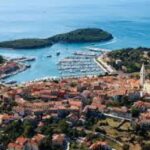

Trg Valdibora: where the day’s rhythm starts
Your first stop is Trg Valdibora, a square that works on two levels. In the daytime, it plays host to an outdoor market atmosphere where you can see the town’s daily habits. Food, produce, and the general “people are here for a reason” energy make this an easy place to understand what locals do when they’re not posing for photos.
But the square also includes a monument dedicated to victims of fascism. That’s an important detail, because it shifts your visit from pure sightseeing into context. Rovinj’s old town isn’t just picturesque architecture—it’s a real place with a layered past. When you see a memorial like this in the middle of a market square, you understand how history sits right inside everyday life here, not off in some museum corner.
The stop lasts about 20 minutes, with no admission fee needed. For your planning, that’s actually a smart length: it’s long enough to take in the square and get your bearings, but short enough that you don’t miss the rest of the town.
City Market: local produce, seafood, and craft
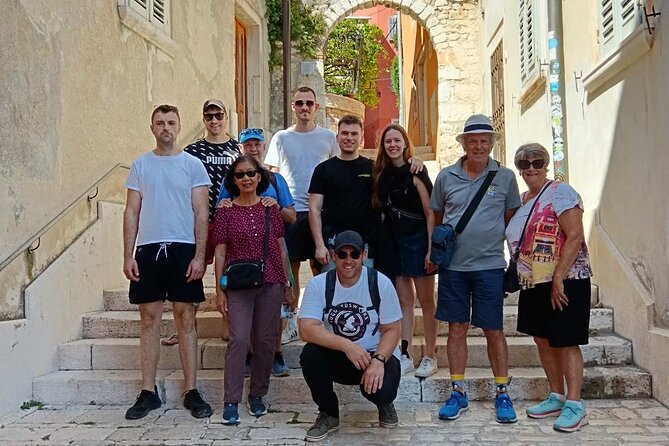
Next you’ll pass through the City Market, a compact but meaningful stop. This is where the tour leans into Rovinj as a coastal food town. You’ll see the range of what people come for—fresh local produce, seafood, meats, cheeses, and handmade crafts.
This part of the walk is valuable even if you don’t plan to buy anything. Looking at what’s for sale tells you what Rovinj considers “normal.” It’s the difference between walking past restaurants and understanding what ingredients the area is built on. If you’re the type who likes to order smarter—thinking about what’s local rather than guessing—this stop helps you do that.
Time-wise, it’s about 10 minutes, and there’s no admission fee indicated for the market. It’s quick, but it sets up the rest of the day: you’ll keep noticing food and shopfront details as you move deeper into the old lanes.
Balbi Arch: Rovinj’s famous gate (and why it matters)
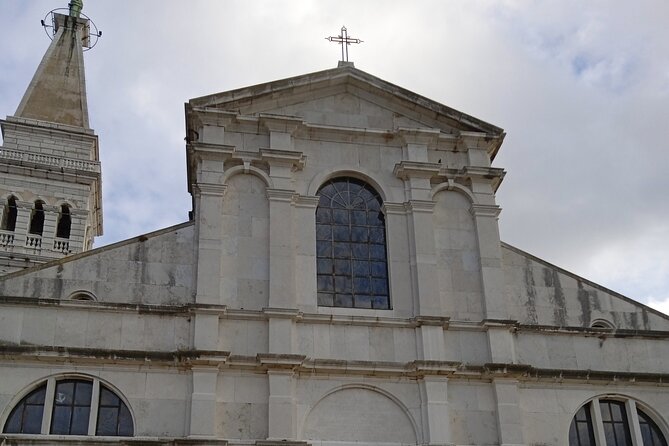
Then comes Balbi Arch, an unavoidable Rovinj attraction. This is the kind of structure that’s famous for a reason: it’s a clean visual marker in a town where streets twist and slope. When you pass through or near it, you quickly understand why so many photos look similar—this area funnels you toward that “old Adriatic town” look.
The stop is around 10 minutes and free to view (no admission fee noted). You might think it’s just a photo moment, but the real value is how it helps you read the town layout. Arches like this often act as practical connectors historically, guiding movement between parts of town. With a guide explaining what you’re seeing, the arch becomes less random and more like a piece of the city’s logic.
If you tend to get overwhelmed in historic centers, don’t skip the explanation here. Ten minutes is enough to give the landmark context, so the next street you turn into makes more sense.
Ulica Bregovita: the steep lane that feels like a time machine
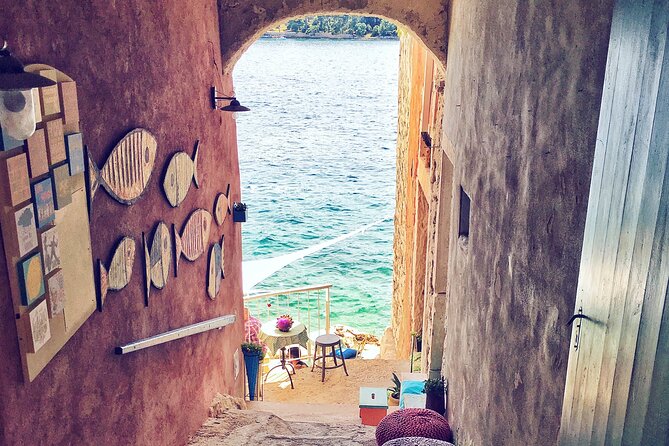
From Balbi Arch, you head to Ulica Bregovita, a steep, narrow lane in the historic core. This is where Rovinj shifts from “landmarks” into “experience.” Narrow turns, old stone houses, and little storefronts create that Mediterranean feel you want in photos—but the best part is how the lane makes you slow down.
It’s designed for foot traffic: you’ll move along at a comfortable walking pace, noticing details like stone textures and shop signs, and maybe pausing when the view opens. Expect about 10 minutes, free of admission.
A good reason to include Bregovita in your day is that it trains your eye. After you walk it, you start seeing Rovinj as a network of micro-views rather than a single scenic street. That makes your independent exploring afterward easier—you’ll know where to look, and you’ll feel less like you’re wandering blindly.



Crkva Svete Eufemije: Baroque power in the middle of it all
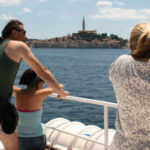
The biggest landmark stop is Crkva Svete Eufemije, the Church of St. Euphemia. This is a Baroque church in the heart of Rovinj’s historic section, and it’s one of those places where the town’s personality gets louder.
You’ll spend about 20 minutes here. That’s enough time to notice the church’s role in the streets around it—how it anchors the skyline and how your perspective changes as you look at it from nearby lanes. Even if you’re not a church-architecture superfan, this kind of stop pays off because it tells you what the town values.
Also, there’s no admission fee indicated in the tour details, which makes it a good “value stop” if you’re budgeting your Rovinj time.
Ulica Sv. Križa: lanes for slow walking and quiet atmosphere
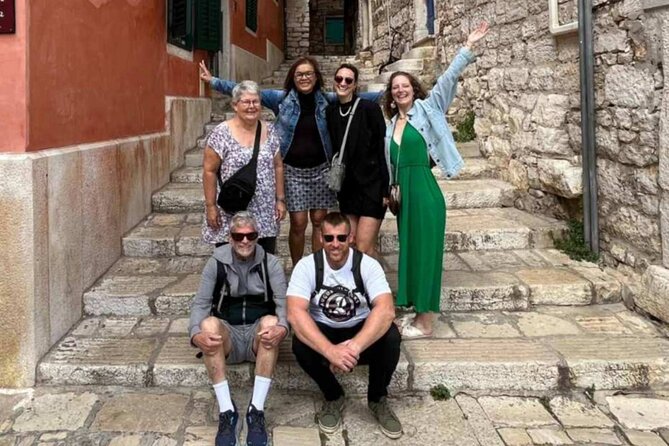
Next up is Ulica Sv. Križa, another historic lane with cobblestone paths and traditional stone houses. If Bregovita is the steep lane, this one is the “keep your pace slow” lane. You’ll pass small shops, cozy cafes, and local art galleries, all in that tightly packed old-town style.
This stop is about 10 minutes and free to access (no admission fee noted). It’s short, but it gives you a second perspective on the town’s character. The two lane stops together help you see the contrast: one highlights the climb and turns; the other feels calmer and more gallery-and-cafe focused.
If you’re planning where to sit for a coffee after the tour, this is also a good place to spot options. The tour keeps moving, but you’ll come away with names and storefront styles that you can remember.
Distillery AurA shop: local spirits and craft ingredients
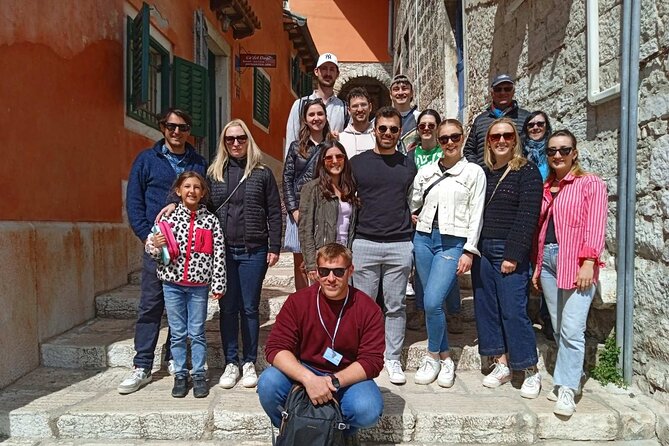
To close the loop, you’ll stop at the Aura Distillery shop. This is where Rovinj stops being only scenery and becomes a place with a modern craft industry rooted in tradition. Aura Distillery is known for handcrafted spirits made using traditional methods.
The distillery focuses on fruit brandies, herbal liqueurs, and gin, using local ingredients and careful production techniques. The time here is about 10 minutes, free of admission (as listed).
Now, here’s the practical angle: even if you’re not buying a bottle, this stop helps you understand what “local drink” means in Rovinj. It’s also a smart way to break up the day’s walking with something more sensory. If you like bringing home a taste of a place, this is one of the easiest times to do it.
Guide energy: why Dalen’s style makes the walk feel short
The standout theme from people who loved the experience is the guide style. A guide named Dalen gets special praise for being personable, upbeat, and able to explain history the way a teacher does—connecting details instead of just listing facts. That matters because Rovinj’s old town can look like “pretty stones” if you don’t know what to look for.
A good guide also makes the walking feel easier. When you’re told why Balbi Arch is important, why a square includes a fascism memorial, or what St. Euphemia signals about the town, you’re not just moving from photo to photo. You’re building a mental map, which is why time can fly without you feeling rushed.
People also highlight that the guide offered helpful recommendations around Rovinj after the tour. That’s the kind of bonus that makes a half-day experience feel like it turns into a full-day plan.
Price and time: does $72.10 feel worth it?
At $72.10 per person for about 1 hour 45 minutes, the value comes from what you’re paying for beyond the sights. You’re paying for:
- a tight route that keeps you in the historic core,
- interpretation at key landmarks (market square, arch, church),
- and a local flavor stop at Aura Distillery.
The stops themselves are listed as ticket-free (no admission for Trg Valdibora, City Market, Balbi Arch, Ulica Bregovita, Crkva Svete Eufemije, Ulica Sv. Križa, and the AurA shop). So your fee is mainly for the guided storytelling and the time-efficient structure.
For me, that’s a good sign. If you’re the type who wants to understand your destination instead of just see it, this price is easier to justify. If you’re only chasing quick photos, you could technically wander alone—but you’d likely miss the “why” that makes Rovinj click.
Also, it’s booked fairly ahead of time (about 25 days on average). If you know your travel dates, don’t treat it like a casual option. Lock it in and then build the rest of your day around it.
Who this Rovinj walk is best for
This tour is a strong match if you:
- want a single walking loop that covers old-town sights without hopping across town,
- like history explanations but don’t want a slow, museum-style experience,
- enjoy markets and local craft shopping,
- and appreciate a guide who adds practical tips.
It may be less ideal if you:
- need minimal uphill/cobblestone walking,
- or prefer long, self-paced stops at just one landmark.
Because the group cap is 35, it should feel social but not crowded. That’s usually the sweet spot for a walking tour in a tight historic center.
Should you book this Rovinj experience?
I’d book it if you want Rovinj to feel coherent from the moment you arrive. The mix—market square context, Balbi Arch, two lane walks, St. Euphemia, and a distillery stop—keeps the day from turning into one-note sightseeing. And if you get a guide with the energy of Dalen, you’ll likely walk away with more than photos—you’ll have stories you can actually repeat.
If you’re short on time, this is a smart use of it. If you have the energy for a moderate walking day, you’ll get a lot of meaning per minute.
If you’re not a fan of walking on uneven surfaces or steep lanes, consider other options—because Rovinj’s charm often comes with those cobblestones.
FAQ
What’s the duration of the Rovinj walking tour?
The tour runs for about 1 hour 45 minutes (approx.).
What time does it start, and where does it end?
It starts at 10:00 am. It ends at Trg Maršala Tita, 52210, Rovinj, Croatia (Marshal Tito Square).
Where is the meeting point?
The start is listed near Denkmal Gefallener Soldaten, 52210, Rovinj, Croatia.
Is the tour offered in English?
Yes. The tour is offered in English.
How big is the group?
The experience has a maximum of 35 travelers.
Is there a weather requirement or cancellation option?
Good weather is required. You can cancel for free up to 24 hours in advance for a full refund, and if it’s canceled due to poor weather, you’ll be offered a different date or a full refund.