REVIEW · DUBROVNIK
Dubrovnik By Night Walking Tour
Book on Viator →Operated by Experience Dubrovnik · Bookable on Viator
Dubrovnik looks different after dark. This 90-minute walking tour strings together the big highlights of the Old Town while you get a local explanation of how the city works and why its history still matters. I like how it starts just outside the walls and builds in a logical route toward Luza Square, so you’re not wandering blindly later.
Two things I especially liked: you get an easy orientation route (perfect for your first evening), and you’ll hear stories that go past the postcards, including personal accounts from the 1990s and how everyday life changed. One consideration: it’s a walking tour, and even with the night chill, you should be ready for lots of pavement and tight stairways.
If you want a “see it all quickly” overview with a real guide, this is a strong pick. If you’re hoping for lots of long indoor visits or a slow, sit-down style tour, you may want to plan other timed tickets separately.
In This Review
- Key Things I’d Plan for This Dubrovnik Night Walk
- Why Dubrovnik After Dark Is the Right Time for an Orientation Tour
- Meeting at Amerling Fontana Near Pile Square (The Start That Actually Starts)
- Amerling Fontana: Your First Reference Point Outside the Walls
- Pile Gate and the City Structure Lesson You’ll Use All Weekend
- Franciscan Church and Monastery: Stradun, Water Stories, and Old Pharmacy Clues
- Stradun: The Main Street Where the City’s Rhythm Shows
- Luza Square: The Old Town’s “Center of Gravity”
- Rector’s Palace: When a Building Becomes a Story
- Cathedral of the Assumption: A Big Church With a Treasury Focus
- Poet Ivan Gundulic and Jezuits Stairs: Details That Make the City Feel Lived-In
- Prijeko Street: The Side-Street Maze That Feels Local
- Price and Value: Is $24.19 Worth 90 Minutes of Walking?
- The Guide Effect: Why Storytelling Shows Up in Reviews
- What to Expect From the Walking Style (And When It Might Feel Just Okay)
- When This Tour Fits Best (And Who Should Skip It)
- Should You Book Dubrovnik By Night Walking Tour?
- FAQ
- Where does the tour start and end?
- How long is the Dubrovnik by Night walking tour?
- What’s included in the price?
- What is not included?
- Is admission required at the stops?
- What language is the tour offered in?
- What should I know about cancellation and weather?
Key Things I’d Plan for This Dubrovnik Night Walk
- Blue-umbrella meeting at Amerling Fontana near Pile Square, so you can actually find your group
- A tight 90-minute loop that hits major landmarks without wasting time
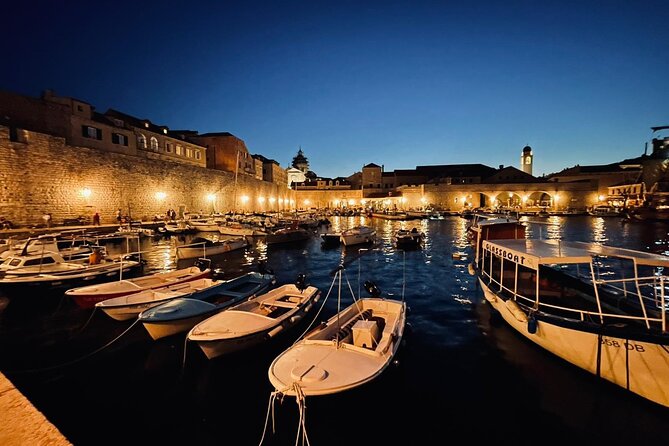
- Night timing means cooler walking and fewer day crowds, with the walls and streets lit up
- You’ll get the “how the city is laid out” explanation at Pile Gate and around Stradun
- The guide’s storytelling can include war-era context and local personal history
- Maximum group size is up to 20, so it stays manageable
Why Dubrovnik After Dark Is the Right Time for an Orientation Tour
Dubrovnik is gorgeous in daylight. But at night, the Old Town changes texture. The streets feel less like a checklist and more like a place locals actually move through, and the lighting on stone can make details pop that you’d miss in the harsh afternoon sun.
This tour is built for that moment. In about 90 minutes, you’ll walk a route that connects the city’s “big picture” points: how the walls and gates define the Old Town, how Stradun acts like the main spine, and where the major churches and civic buildings sit in relation to the squares.
You’ll also get something practical out of it. When your walk ends in Luza Square, you’re not left with a vague memory. You’ll have a mental map: where the main street runs, where the palace is, and which lanes to take next if you want calmer corners.
You can also read our reviews of more tours and experiences in Dubrovnik.



Meeting at Amerling Fontana Near Pile Square (The Start That Actually Starts)
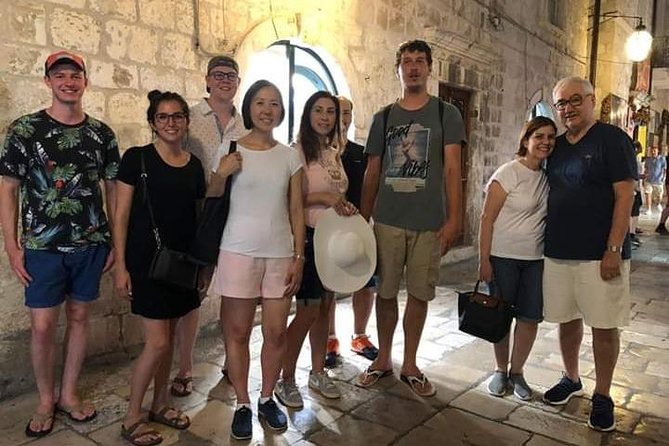
The tour begins at Brsalje ul. 2 (20000 Dubrovnik). Your guide meets you at Amerling Fontana by Pile Square, and they wait with a blue umbrella. That detail matters because the Old Town edges around Pile can be confusing the first time you’re there.
From the start, the vibe is “let’s get oriented quickly.” You’re not being dropped into the middle of Stradun with no context. Instead, the tour starts slightly outside the walls where you can see how the neighborhood is positioned before you step into the tighter streets.
If you’re arriving by bus or using public transport, the start is described as being near public transportation, which helps. And since there’s no hotel pickup or drop-off included, you’ll want to plan on being at the meeting point on your own.
Amerling Fontana: Your First Reference Point Outside the Walls
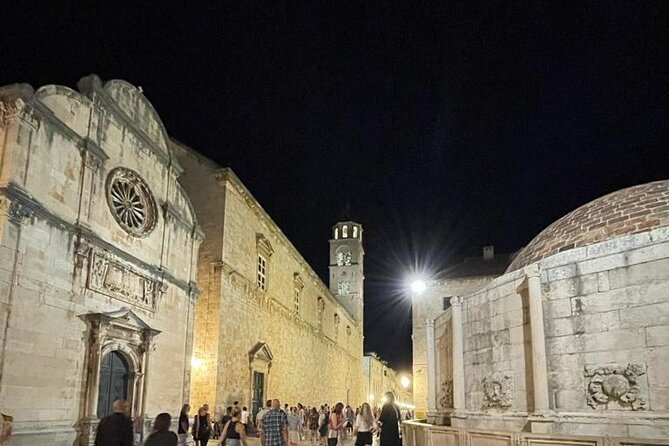
Amerling Fontana is a small start, but it’s smart. When you begin near the walls at Pile Square, you’re setting yourself up to understand the geography of the Old Town—where entrances connect to key streets and how the city “turns inward” once you cross the gate area.
The guide keeps this first segment brief. You’re there for about five minutes, and it’s basically the “check in, get ready, and set the route” moment. That short start is ideal if you’re traveling with a group or you want to save your energy for the actual walk.
Because this stop is free and quick, it doesn’t interrupt your flow. You just get oriented and move on.
Pile Gate and the City Structure Lesson You’ll Use All Weekend
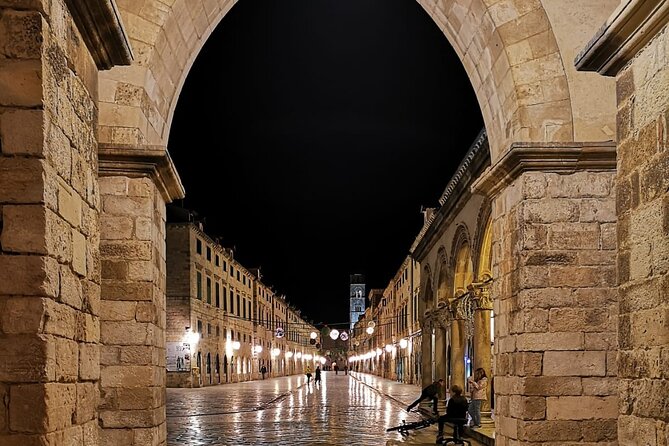
At Pile Gate, the tour shifts from meeting you to teaching you. You’ll pause by the city map and get a short introduction to the city’s structure and history—enough to give meaning to the stones you’ll be seeing over the next hour.
This is one of the best parts of the tour for most people, because it turns the walls from scenery into information. Once you understand how the Old Town is organized, everything else makes more sense: why certain streets lead where they do, why squares feel like destinations, and why the main street matters.
Even if you’re not into detailed history lectures, this “how the city is put together” explanation pays off when you’re exploring on your own afterward.
Franciscan Church and Monastery: Stradun, Water Stories, and Old Pharmacy Clues
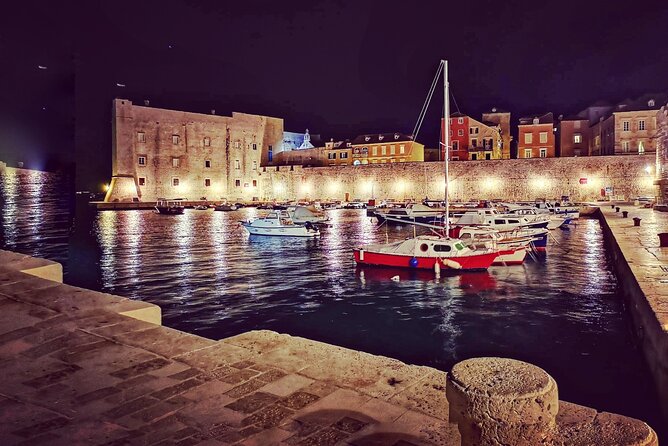
Next comes the Franciscan Church and Monastery area, reached as you move onto Stradun (the Old Town’s main street). This is where the tour starts to sound like a story, not a march.
You’ll hear about the old pharmacy and the early water supply—specifically tied to the famous Onofrio Fountain. Even though you’re walking, the guide is painting a picture of what Dubrovnik needed to function and what residents relied on day to day.
One practical note: this stop is about understanding what you’re looking at rather than spending time waiting in lines. The tour describes admission tickets as free here, which usually means you’re not paying to access each viewpoint during the walk.
If you like history that connects to real urban life—water, services, institutions—this segment is a good match.






Stradun: The Main Street Where the City’s Rhythm Shows
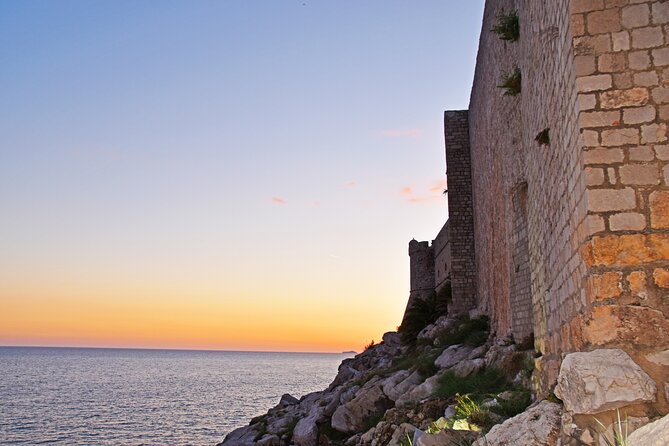
Stradun is the postcard street. You’ll see it with people in the shops and then, on a night tour, you’ll see it again when the crowd pressure is lower.
On this walk, Stradun becomes more than shopping. It’s a way to understand how the Old Town channels movement. The guide uses the street to explain big themes and to point out houses and details you can’t fully appreciate if you’re rushing through by yourself.
This is also where the timing shines. Multiple reviews highlight the benefit of going at night to avoid intense day heat. Starting later also keeps the pace comfortable for more people.
Luza Square: The Old Town’s “Center of Gravity”
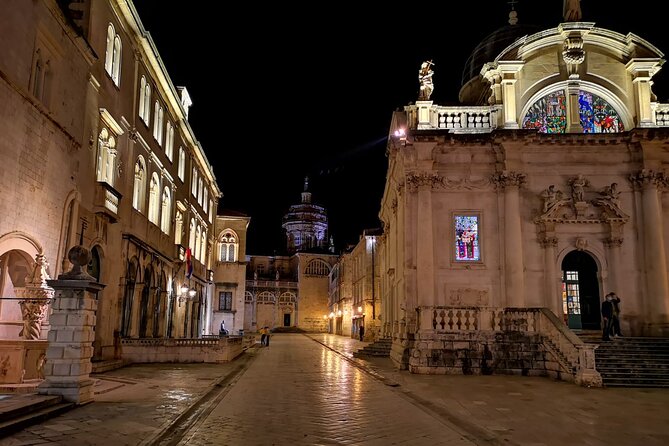
You’ll reach Luza Square, the main square of the old town. The tour includes the patron church in the middle, plus the bell tower and the Sponza palace area.
Squares like Luza work like city stage sets. They pull you in, but they also let you orient yourself. Standing here at night gives you a clear sense of where major buildings sit relative to one another, which helps if you plan to return for photos later.
This stop is about ten minutes—long enough for the big landmarks, not long enough to turn the tour into a long break. If you’re the type who likes to move, it keeps you engaged without dragging.
Rector’s Palace: When a Building Becomes a Story
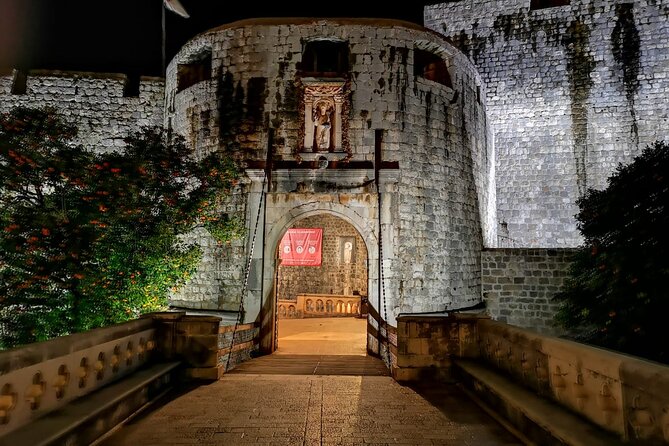
One of the highlights on the route is Rector’s Palace. The tour calls it the most beautiful building in the city, and what matters for you isn’t the superlative—it’s the way the guide uses it.
You’ll hear stories about its structure, its history, and how it’s used today. That “past to present” framing is a big reason this tour scores high. You end up looking at the façade and thinking, okay, this building wasn’t just decorative—it had a job.
Also, the pace here is easy to follow. Ten minutes means you get the key points without getting lost in a lecture.
Cathedral of the Assumption: A Big Church With a Treasury Focus
Next is the Cathedral of the Assumption of the Virgin Mary, described as Dubrovnik’s biggest church, plus its treasury.
Even if you don’t spend deep time inside every stop, having this stop in the route matters. It anchors the religious and cultural centerpiece of the city, and it helps connect the squares and streets you’ve already walked through.
In a quick walking tour, these “anchor” stops are what keep the story coherent.
Poet Ivan Gundulic and Jezuits Stairs: Details That Make the City Feel Lived-In
From there you move to the Monument of Poet Ivan Gundulic and the Jezuits stairs area. These are the kinds of points that can look random on a first pass—just a statue or a stair climb—until you learn what they connect to.
The guide uses this portion to keep you moving through the Old Town’s vertical texture. Dubrovnik isn’t flat, and nights are when you notice the stairways more because you’re not fighting midday glare.
This segment also helps you experience the city beyond Stradun. That’s where the “many travelers miss” feeling comes from: side streets and stair corners that you might not intentionally seek out.
Prijeko Street: The Side-Street Maze That Feels Local
Finally, the tour strolls through Prijeko Street and narrows into side streets, designed to feel like the way locals experience the Old Town.
This is a strong ending because it turns your last stretch into a discovery walk. Instead of repeating the main spine, you’re moving through lanes that feel like they belong to a real neighborhood.
You finish in Luza Square, which is convenient. After the tour, you’re not stuck far from the main hub. You’re positioned to keep exploring in the direction you prefer.
Price and Value: Is $24.19 Worth 90 Minutes of Walking?
At about $24.19 per person, this tour lands in the “good value if you’re new to town” category. It’s not just because of the price. It’s because you’re buying three things that are hard to DIY fast:
- Time: In 90 minutes, you cover a lot of ground across major landmarks.
- Context: The guide connects the sites to stories—civic buildings, institutions, water supply, and war-era impacts mentioned in the accounts.
- Orientation: You learn the city’s layout so you don’t waste your next day trying to figure out where everything is.
Group size also supports value. With a maximum of 20 travelers, it’s less crowded than the big bus-style tours, and your guide can still manage the group without losing the explanation.
If you’re the kind of traveler who enjoys a structured first night, the cost usually feels justified. If you hate guided walks or you already know the Old Town well, you might skip it and save your money for a museum ticket or a slower meal instead.
The Guide Effect: Why Storytelling Shows Up in Reviews
A lot of tours say they have a great guide. Here, the feedback pattern is specific: guests praise the guide’s delivery, pacing, and how the history feels human.
You’ll see names like Petra, Mikhaila, Goran, Danielle, Mihaela, Davor, and Makayla in the feedback. Even with different people leading, the consistent thread is the same: the guides don’t just list dates. They explain the city as a place where real events happened.
Several reviews mention the guide being honest about the war and bringing personal stories into the tour. Others mention how the guide’s local living experience helped fill knowledge gaps, and a few note added details like filming connections.
What you should take from that: this tour isn’t trying to be cold and textbook. It aims for a guided walk with personal meaning. That’s often what turns “a nice stroll” into a memory.
What to Expect From the Walking Style (And When It Might Feel Just Okay)
This is a walking tour with short stops. That means:
- You’ll spend most of your time moving between points.
- Some segments are viewpoint-and-story, not long museum-style time.
- The pace can feel different depending on the group and guide.
One review notes a radio or communication issue when groups were combined. Another says the tour felt like mostly walking with limited building entry and not enough learning for their taste. Those aren’t universal conclusions, but they’re a useful warning: this isn’t designed to be an extended deep history session.
If you’re the type who likes lots of inside time, plan extra stops after the tour. If you want a guided overview with practical orientation and stories, you’re likely to love it.
When This Tour Fits Best (And Who Should Skip It)
I think this works best for:
- First-time visitors who want quick orientation
- People traveling in the evening who want to avoid day heat
- Travelers who enjoy history explained in a human way, including difficult topics
- Anyone who wants a manageable group size and a clear route
You might skip it if:
- You already know Dubrovnik’s Old Town layout and don’t need orientation
- You strongly prefer long indoor time with lots of ticketed entrances
- You’re traveling with very limited walking tolerance (stairs and uneven Old Town streets can add up)
The good news: the tour description says most travelers can participate, and it allows service animals.
Should You Book Dubrovnik By Night Walking Tour?
I’d book it if you want to get your bearings fast and you’d rather spend your first evening learning the city than guessing. The route hits the big landmarks—Pile Gate, Stradun, Luza Square, Rector’s Palace, the Cathedral area—without making you commit to a long, tiring day visit.
Also, the night timing is a real advantage. When Dubrovnik’s stone is lit up and the day heat fades, the Old Town feels more like a place you can actually navigate.
My main “don’t book” trigger would be if you want long indoor access or a slower, deeper session at each building. For that kind of trip, you’ll likely want a different style tour.
If your goal is simple—key sights, local stories, and a useful map in your head—this is a great fit.
FAQ
Where does the tour start and end?
The tour starts at Brsalje ul. 2, Dubrovnik (meeting at Amerling Fontana next to Dubravka gift shop outside the walls at Pile Square). It ends at Luza Square (Luža ul., 20000 Dubrovnik).
How long is the Dubrovnik by Night walking tour?
The duration is about 1 hour 30 minutes.
What’s included in the price?
Included are a local experienced licensed tour guide, local taxes, and a walking tour.
What is not included?
Hotel pickup and drop-off, plus transportation to/from attractions, are not included.
Is admission required at the stops?
Admission tickets are listed as free for the stops on the route, so you typically won’t be paying separate site entry fees during the walk.
What language is the tour offered in?
The tour is offered in English.
What should I know about cancellation and weather?
Free cancellation is available up to 24 hours in advance for a full refund. The experience requires good weather, and if it’s canceled due to poor weather, you’ll be offered another date or a full refund.