REVIEW · DUBROVNIK
Dubrovnik City Walls: Small-Group 2-Hour Tour With a Local
Book on GetYourGuide →Operated by Dubrovnik Local Guides · Bookable on GetYourGuide
Dubrovnik from above teaches fast. This small-group City Walls walk is one of the most practical ways to see the Old Town while learning how the city survived centuries of pressure, with a licensed English-speaking guide and real military detail. I love how you’re treated like a person (not a number) in a group of up to eight, and I also love the focus on how the harbor, forts, and diplomacy connected to everyday survival. The one catch is physical: the route has more than 700 stairs, no elevator, and it’s not for people who fear heights or struggle on uneven steps.
You start just inside Ploče Gate, at a square overlooking the Old Harbor, and the tour quickly ramps up from wide-open views to close-up fort design. Along the way, you’ll cover iconic spots like Fort Revelin, Minčeta Fortress, and the viewpoints above Stradun, then finish with harbor-area views that put the whole city in context.
In This Review
- Why This 2-Hour Walls Walk Works So Well
- Meeting at Ploče Gate: the views and orientation you want on day one
- A quick reality check before you commit
- Fort Revelin and the eastern approach: learning the harbor’s job
- The underrated value here
- Northern walls and medieval tactics: bows, boulders, and siege logic
- What to watch for on your walk
- Minčeta Fortress and Michelozzi: the gunfoundry story and the best sun-soaked views
- A small but important detail
- Stradun from above: seeing Dubrovnik’s main street like a map
- Why this matters for value
- Western walls and the Pile Gate defense: Lovrijenac and Bokar
- What the forts teach you
- Southern walls and the Venice/Ottoman pressure: oldest and youngest sections
- Price and ticket math: what $41 really buys
- When this tour is a strong deal
- The guide experience: humor, interaction, and keeping everyone engaged
- Who should book this Dubrovnik Walls tour
- Should you book the Dubrovnik City Walls with a local guide?
- FAQ
- How long is the Dubrovnik City Walls small-group tour?
- How big is the small group?
- Is the city walls entrance ticket included in the $41 price?
- Where do I meet the guide?
- Is this tour suitable for wheelchair users or people with mobility impairments?
- Is it okay for children?
- Is the tour in English, and can I cancel?
Why This 2-Hour Walls Walk Works So Well
- Small group pace (up to eight) means you can actually ask questions instead of shouting over other languages.
- Panoramic payoff early: the Old Harbor views start right when you begin climbing.
- Fort-and-harbor storytelling ties the walls to trade, seafaring, and defense needs.
- Diplomacy shows up alongside warfare, including the Dubrovnik Republic’s complicated relationship with the Ottoman Empire.
- Minčeta Fortress details you’ll remember: Michelozzi’s contributions plus an old gun foundry and cannons.
- One wild stat to picture: some Lovrijenac wall sections reach 12 meters thick.
Meeting at Ploče Gate: the views and orientation you want on day one
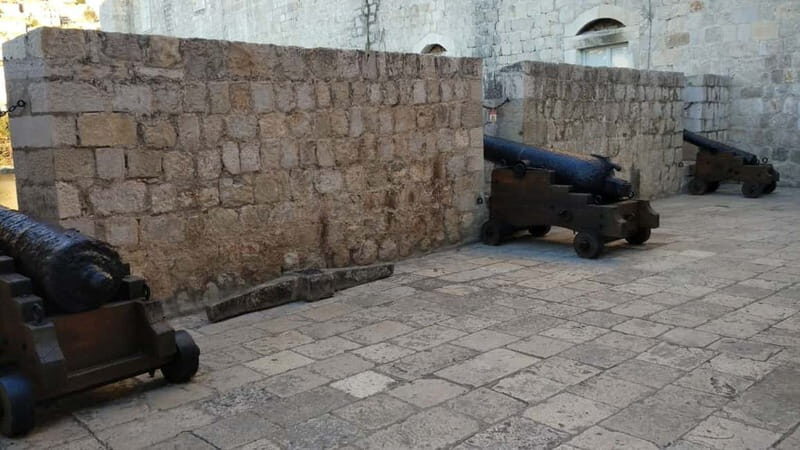
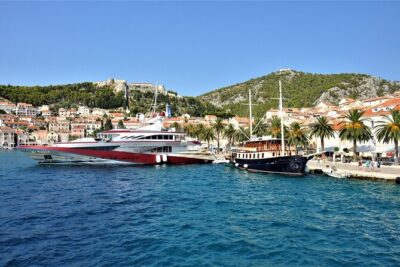
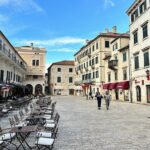
If your goal is to understand Dubrovnik without getting lost in a crowd, start where this tour meets: a small square just inside Ploče Gate, overlooking the Old Harbor. Look for the guide in the corner by the cannon, holding a red and white flag. It’s an easy landmark, and it helps you begin with your bearings instead of trying to orient yourself on the wall later.
The timing matters. In just two hours, you’ll move through several key defensive sections, which means you get the big visual payoff before the day gets hot and hectic. The route is built around sightlines: Old Harbor, the Adriatic beyond, and how the city’s main street fits into the fortifications above it.
You can also read our reviews of more city tours in Dubrovnik


A quick reality check before you commit
This isn’t a flat stroll. The walking portion is stair-heavy—over 700 steps are part of the experience—and there’s no elevator or escalator. If you have mobility challenges, low fitness, or a fear of heights, you’ll want to choose a different style of sightseeing.
Fort Revelin and the eastern approach: learning the harbor’s job
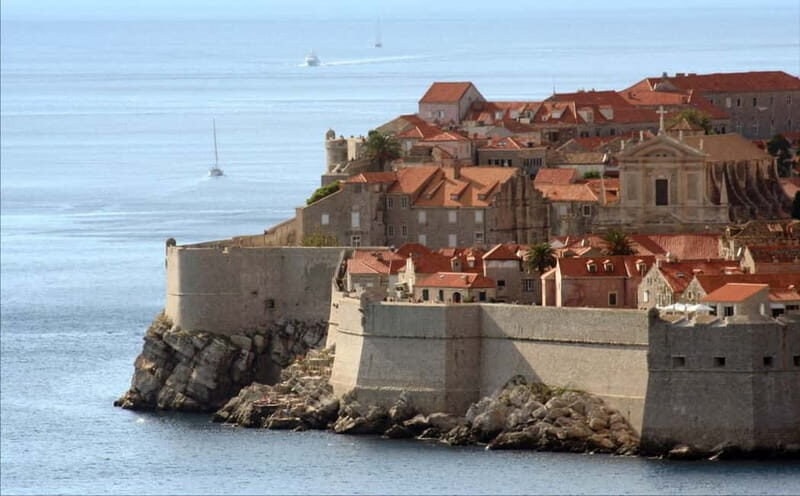
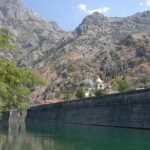
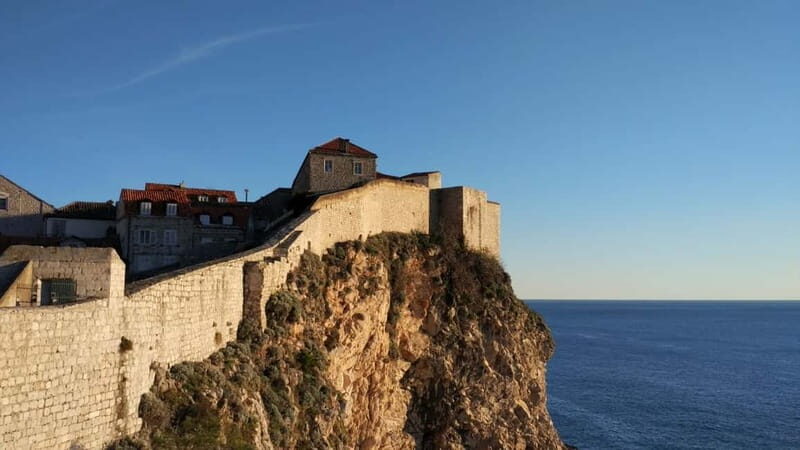
Early on, you climb onto the walls and the city opens up fast. The first big moment is the panoramic view of the Old Harbor, where Dubrovnik’s maritime power becomes obvious. Your guide explains why the harbor mattered so much to the Dubrovnik Republic—seafaring strength, trade, and the constant need to protect that lifeline from enemy incursions.
Then you meet Fort Revelin, which guarded the eastern approach to the Old Town for centuries. This is where the walls stop being just scenery and start acting like an engineering lesson. You’ll hear about medieval defense thinking, including how controlling approaches helped a city stay standing when threats came from sea.
The underrated value here
Even if you’ve seen photos of Dubrovnik, the harbor angle is different from street level. Up on the walls, you start to understand the city as a defensive system rather than just a pretty shoreline. That mental shift is the reason this tour feels efficient.
Northern walls and medieval tactics: bows, boulders, and siege logic
From the eastern side, the tour continues along the northern stretch of the walls, where you’ll get a hands-on sense of medieval warfare. Your guide talks through practical defense tools: bows and arrows, stone boulders, and siege tactics designed to slow, disrupt, and break attacks.
At a strategic tower, the story moves beyond tactics into politics and pressure. You’ll hear about Dubrovnik’s relationship with the powerful Ottoman Empire, and how diplomacy often mattered as much as weapons. The walls make more sense when you understand that survival wasn’t only about winning battles—it was also about negotiating threats and buying time.
A few more Dubrovnik tours and experiences worth a look


What to watch for on your walk
When you hear about siege tactics, look at the wall lines and the way positions overlap. This isn’t just trivia. The goal is to train your eye to see why certain walls were placed where they were, and why the city’s defense depended on angles, sightlines, and controlled chokepoints.
Minčeta Fortress and Michelozzi: the gunfoundry story and the best sun-soaked views
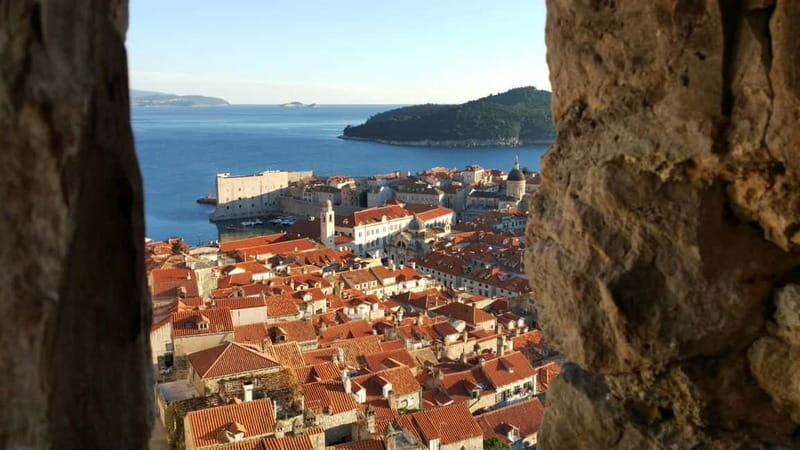
One of the most memorable stops is Minčeta Fortress, and it’s built for photo moments. This is where the views can feel almost unreal: Dubrovnik spreads out, and the walls frame the Old Town with the sea in the background. If you’re touring earlier in the day, you might catch the warm sun mentioned for this point, which makes the fortress feel even more cinematic.
Your guide brings in a specific design thread by explaining the contributions of the Italian architect Michelozzi. You’ll also hear about the old gun foundry and the cannons that once defended this section. It’s a rare combination of art-and-armor: you’re seeing architecture and learning what kind of firepower it supported.
A small but important detail
The tour keeps moving, but Minčeta is a moment where the pace feels worth it. This is the part where you’ll likely pause more than you planned to—just to look and let the story settle.
Stradun from above: seeing Dubrovnik’s main street like a map
Midway through the walk, you reach a perfect photo opportunity that frames Stradun, Dubrovnik’s main street. Seeing Stradun from the wall gives you something street-level sightseeing can’t: layout clarity.
From above, you start understanding how the city’s walkways and street geometry fit within defensive boundaries. Even if you only spend a short time in the Old Town later, that first wall-view helps you navigate without the constant backtracking and guessing.
Why this matters for value
This tour costs money partly because the guide’s job is to connect views to meaning. When Stradun shows up from a unique vantage point, it’s not random. It’s the payoff that turns the climb into understanding.
Western walls and the Pile Gate defense: Lovrijenac and Bokar
As the tour moves along the western stretch, the focus sharpens on the forts protecting the Pile Gate. Here you’ll hear about Forts Lovrijenac and Bokar and how they fit into the defensive plan.
One standout fact that stays with you is the thickness of some of Lovrijenac’s wall sections—up to 12 meters. That number is useful because it changes how you interpret what you’re seeing. You stop thinking of walls as decoration and start picturing the weight, survival, and construction effort behind them.
What the forts teach you
This segment is great if you like cause-and-effect history. The walls aren’t explained as a list of stops. You’re shown why certain structures were placed to guard entrances and control movements—especially at the gate systems that could open or close the city’s access.
Southern walls and the Venice/Ottoman pressure: oldest and youngest sections
On the southern stretch, you’ll hear about the oldest and youngest sections of the walls. That change over time is one of the best ways to understand Dubrovnik as a living city-state rather than a frozen monument.
Your guide explains historical ties with Venice and the rivalry between maritime powers. Then those stories connect back to the earlier Ottoman-era diplomacy themes. The walls weren’t built once and done. They were adapted, repaired, and reinforced as political realities shifted.
You’ll also get more harbor-side context as the route incorporates stops like Fort St John and views of the Old Port area. Even without extra museum time, these wall segments keep pulling you back to the same idea: Dubrovnik’s survival depended on defending its approaches while staying smart about power outside its borders.
Price and ticket math: what $41 really buys
The tour price is $41 per person, and what you’re paying for is the licensed English-speaking guide and the focused wall interpretation. The key detail: the city walls entrance ticket is not included.
That changes the value equation, so you should do the math before you book:
- If you have a Dubrovnik Pass, you can enter the walls for free and typically skip the line.
- Without a pass, the single ticket is 40 euros, purchasable at the entrance by cash or card.
- In January, February, November, and December, tickets cost 20 euros.
- Students with a valid ISIC card and under-18s pay 15 euros.
When this tour is a strong deal
If you’re already planning to go inside the walls anyway, paying $41 for a guide’s narration can be the difference between seeing views and understanding why those views were chosen. The wall walk becomes more than sightseeing because the guide’s stories cover both warfare mechanics and diplomacy.
If you don’t plan to buy a walls ticket, then the tour price alone won’t get you full access. In that case, you’re paying for guidance, but you’re still missing the main infrastructure unless you add the entrance fee.
The guide experience: humor, interaction, and keeping everyone engaged
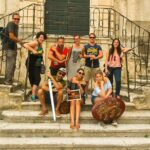
Small-group tours like this rise or fall on the guide, and the energy described for this one is consistently social and interactive. Guides such as Marko and Roco are associated with strong communication skills, quick answers to questions, and humor that keeps the group attentive.
It helps that the format encourages participation. Even during the stair-heavy parts, the guide style is described as engaging, with the tour using short check-ins to keep learners focused. If you like history but get bored when it turns into a lecture, this approach is worth paying attention to.
Who should book this Dubrovnik Walls tour
This is a great match if you:
- Want Old Town walls context in only two hours
- Like history that explains both military details and political pressure
- Prefer a group of up to eight where questions are easy to ask
- Can handle 700+ stairs and steadier footing
It’s a poor match if you:
- Have mobility impairments or need wheelchair access
- Struggle with moderate fitness demands
- Fear heights
- Are traveling with children under 12 (and it’s not suitable for babies under 1 year)
Should you book the Dubrovnik City Walls with a local guide?
I’d book it if your goal is to understand Dubrovnik’s defense logic while you’re still fresh and energized enough to climb. The wall views are fantastic, but the real reason this works is that the guide connects those views to Fort Revelin, Minčeta Fortress, the Stradun viewpoint, Lovrijenac’s defenses, and the Venice/Ottoman political pressure that shaped the walls over time.
Skip or rethink it if stairs are a dealbreaker, or if you’re unlikely to purchase a walls entrance ticket. Otherwise, for a first or second visit to Dubrovnik, this is one of the most efficient ways to turn the walls from a photo stop into a story you can actually remember.
FAQ
How long is the Dubrovnik City Walls small-group tour?
The tour lasts 2 hours.
How big is the small group?
The tour is limited to up to eight participants per guide.
Is the city walls entrance ticket included in the $41 price?
No. The entrance ticket is not included. If you have a Dubrovnik Pass, you can enter the walls for free.
Where do I meet the guide?
Meet in a small square overlooking the old harbour, just inside Ploče Gate. Look for the guide by the cannon in the corner, holding a red and white flag.
Is this tour suitable for wheelchair users or people with mobility impairments?
No. It is not suitable for people with mobility impairments, and there is no elevator or escalator.
Is it okay for children?
It is not suitable for children under 12. It’s also not suitable for babies under 1 year.
Is the tour in English, and can I cancel?
The tour is in English with a live guide. You can cancel up to 24 hours in advance for a full refund.