REVIEW · DUBROVNIK
Dubrovnik Old City Walls Private Tour
Book on Viator →Operated by My Dubrovnik Tours · Bookable on Viator
Walk Dubrovnik’s defenses like a pro. I love how this private Old City Walls walk keeps things moving at your pace, and I also like that the guide connects the walls to the political and military events that shaped Dubrovnik. The big thing to consider is the Old City Walls entrance fee isn’t included, so you’ll want to plan for that extra cost once you’re onsite.
The route is set up so you’re constantly switching between wall-top viewpoints and key fortress and church areas below—so it doesn’t feel like one long loop of stone. And if you’re traveling with kids or a mixed crew, the guides (I’ve seen names like Mia, Tea, Viktor, and Paolo come through) tend to keep people engaged with questions and photo-friendly stops. The trade-off: the whole experience depends on good weather, and the walls can mean steady walking and stairs.
In This Review
- Key things that make this Old City Walls tour worth your time
- Your day plan: 2 hours 30 minutes on Dubrovnik’s defenses
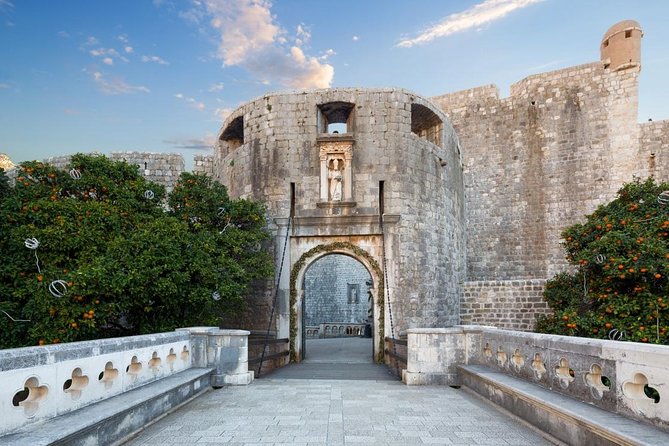
- Meeting at Ulica Vrata od Ploča: the right start point
- Stop-by-stop: what you’ll actually see on the walls route
- Revelin Fortress: set the stage before you climb
- Dubrovnik City Walls entrance: the moment the view takes over
- City Harbor viewpoints: see the city’s “front door”
- Buza Gate area: rooftops, moat, and the story between them
- Minceta Fortress and the climb to Minčeta Tower
- Franciscan Church and Monastery plus Stradun connections
- Fort Bokar and the seaside rhythm of the walls
- Church of St. Ignatius of Loyola and the Buža/bastion zone
- St. John’s Fortress and the “sea-safety” details
- Cathedral of the Assumption and power from above
- Rector’s Palace: the seat of government
- Luža Square finish: Clock Tower, fountains, and a memorial stop
- Guides can make or break this walk: what stands out
- Price and value: what $132.45 really buys
- When to book, and how weather affects the walls
- Who this private Dubrovnik Old City Walls tour suits best
- Should you book this private Old City Walls tour?
- FAQ
- How long is the Dubrovnik Old City Walls private tour?
- Is the Old City Walls entrance fee included?
- What’s included in the price?
- Is this tour private?
- What language is the tour offered in?
- Where do we meet, and where does the tour end?
- Do I get a mobile ticket?
- Are there any site tickets not included?
- Do I need good weather?
- Can I cancel for free?
- Is there an option for wireless audio?
Key things that make this Old City Walls tour worth your time
- Revelin Fortress start: You begin with the city’s defensive story already in motion.
- Wall-top walking with context: The history isn’t random facts—it’s tied to what the fortifications were built to do.
- Game of Thrones filming locations: You’ll pass spots linked to the show while you’re seeing the real architecture.
- High viewpoints at Minceta Tower: Expect the kind of views that make you stop and look twice.
- Harbor + seaside segments: You’ll move between Dubrovnik’s old harbor, bays, and breakwaters.
- Ending at Luža Square and Sponza area: The tour finishes where Dubrovnik life and power played out.
Your day plan: 2 hours 30 minutes on Dubrovnik’s defenses
This is a 2 hours 30 minutes private walking tour in Dubrovnik’s Old City Walls area, offered in English. The price is $132.45 per person, which sounds steep until you consider what you’re buying: a guide who can keep a tight route, point out details you’d otherwise miss, and adjust the pace for your group.
A big advantage is that this is genuinely private—so you’re not stuck listening from the back while a big bus group streams past you. Guides here also seem comfortable working with different styles of travel: adults who want defense details, and families who need a bit more “why are we seeing this?” along the way.
One more practical note: some stops include places where entry tickets are not included. That doesn’t mean you won’t see them—it means you’ll likely be viewing key areas from outside or focusing on the exterior streetscape unless you pay extra on your end.
You can also read our reviews of more tours and experiences in Dubrovnik.


Meeting at Ulica Vrata od Ploča: the right start point
Tours start at Ulica Vrata od Ploča, 20000 Dubrovnik, with the day’s energy beginning near the fortification zone. You’re also ending at Luža Square (near the Church of St. Blaise, on the east end of the Stradun/Placa).
Why that matters: starting and ending on opposite sides of the Old City keeps your walking feeling purposeful instead of backtracking. You’ll also finish in a convenient hub, so it’s easier to connect to your next meal or stroll without a long walk to “get back to the center.”
Stop-by-stop: what you’ll actually see on the walls route
Revelin Fortress: set the stage before you climb
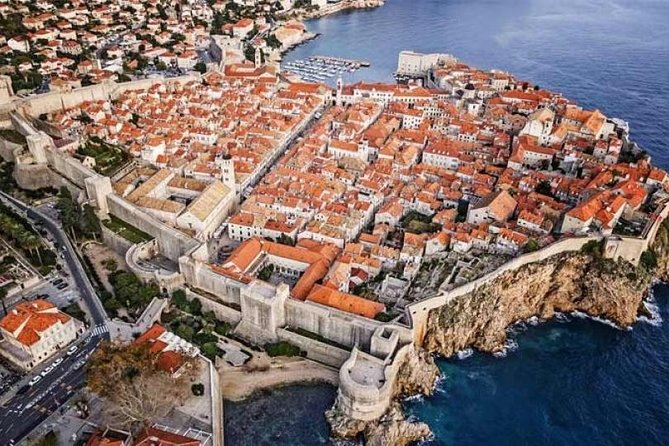
You begin at Revelin Fortress, where your guide gives a quick welcome and intro. Even if you’re not a history person, this first stop helps you understand the walls as a system, not just a pretty ring around town.
Because this is early in the route, it also helps you learn how to read what you’re seeing right away. You’ll be thinking in terms of approaches, control points, and protection—so later wall segments feel like they’re making sense.
Dubrovnik City Walls entrance: the moment the view takes over
Next comes the entry into the Old City Walls, and then your walk begins. The walls themselves are the star of the show, but the guide’s job is to tell you what to notice: where defenses tighten, how the city’s geography plays into fortification design, and which areas were built to manage threat.
The entrance fee isn’t included, so budget for that. If you’re thinking value: paying separately is common on major wall experiences, and it’s still worth it when the guide helps you get more out of every single turn.




City Harbor viewpoints: see the city’s “front door”
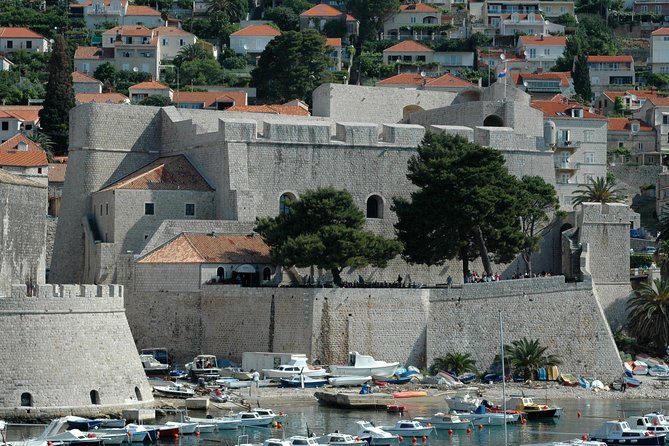
At City Harbor, you’ll look over key landmarks tied to the city’s defense and seafaring posture. The route calls out views toward the Fortress of St. John, the fortifications of St. Luke, and the Dominican Monastery.
This is one of the smartest sections of the tour because harbor views explain a lot of the why. When you can picture ships, approaches, and lines of sight, the defensive choices behind the walls become easier to understand.
It’s also a great time to pause and reset your bearings—especially if you’re planning to do more exploring later in the Old City.
Buza Gate area: rooftops, moat, and the story between them
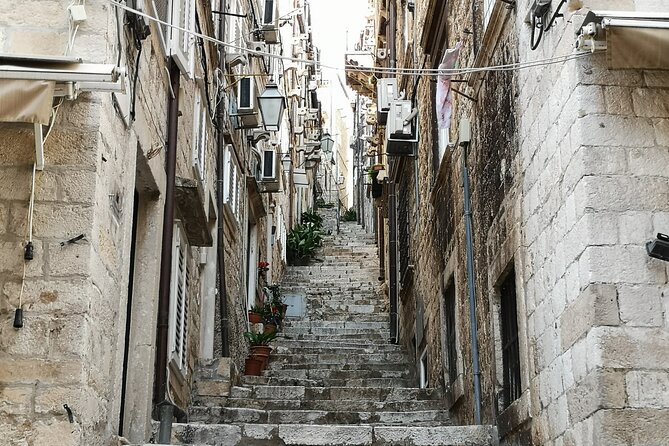
The tour then reaches Buza Gate, along Ruđera Boškovića street and toward Peline street, with stops around the lower wall and the moat. You’ll also see the roofs of the old city, which is where Dubrovnik starts to feel like a place you could live inside.
This part can be visually stunning and mentally helpful, too. The guide’s explanations here tend to connect the gate and moat functions to how Dubrovnik controlled access—so it’s not just a pretty photo moment.
Minceta Fortress and the climb to Minčeta Tower
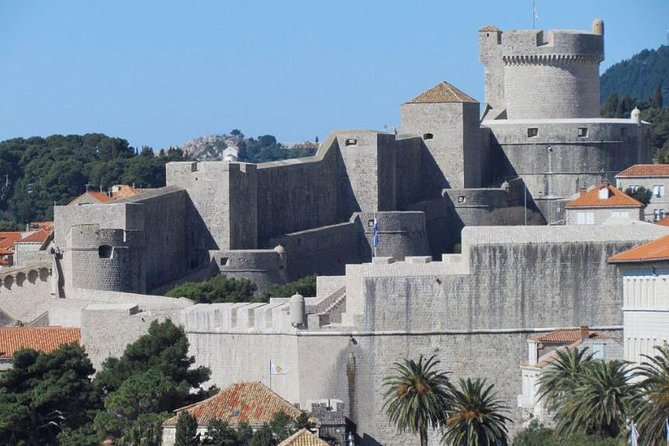
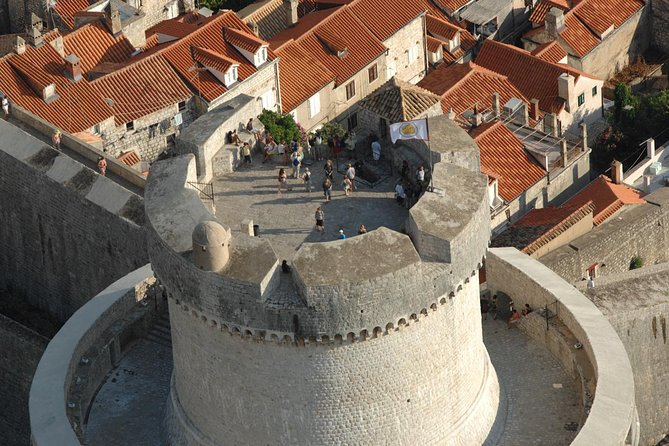
Next is Minceta Fortress, including a climb toward the Minčeta Tower and the highest point on the walls route. The stops mentioned here include the last depozit and aqueduct and the Upper Corner.
If you want a “wow” moment, this is often it. The higher you go, the more you can see how the city is arranged around sea access. It’s also a good spot to remind yourself you’re walking a defense line—so take a minute and look for the logic of angles and cover.
Franciscan Church and Monastery plus Stradun connections
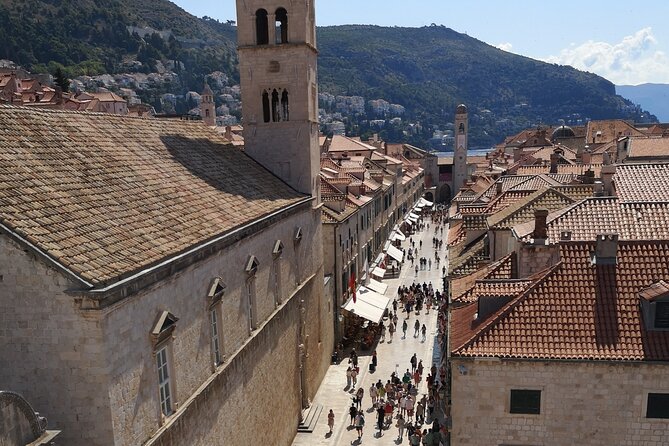
The route brings you toward the Franciscan Church and Monastery, and then you’ll connect this area to major Old City landmarks like Large Onofrio’s Fountain, the Church of the Holy Saviour, Stradun (the main street), and Pile Gate.
One thing to know: the Franciscan Church and Monastery entry is listed as not included. That means your time there is likely focused on the surrounding sights and context unless you choose to add entry separately.
Still, this segment is valuable because it bridges the walls experience with everyday Dubrovnik street life. You’ll see how the city’s “main drag” sits under the protection of the walls you’re walking above.
Fort Bokar and the seaside rhythm of the walls
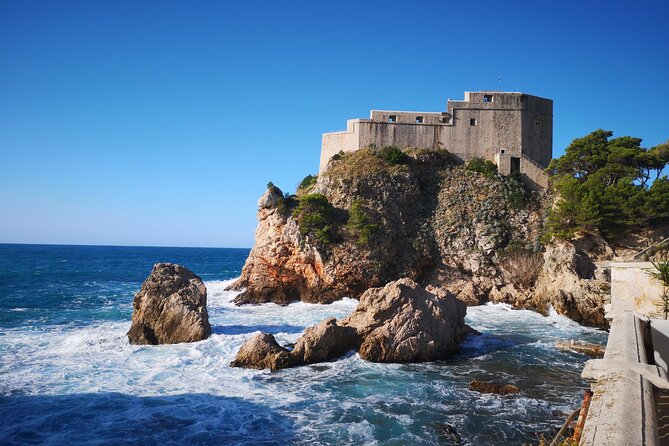
Next is Fort Bokar, plus a seaside walk. The route includes the St. Clara Monastery, Fortress of St. Lawrence, Kolorina Bay, Park Gradac, and the Penatur Rocks.
This is where the walls stop feeling like only stone-and-history and start feeling like a living coastline. The seaside stretches help you gauge distance and how Dubrovnik’s defenses relate to the waterline.
If you’re the type who likes photos, you’ll probably want to slow down here. The view angles change often, and the guide will help you time where to stand.
Church of St. Ignatius of Loyola and the Buža/bastion zone
The tour moves to Church of St. Ignatius of Loyola and the area around Minor and Major Buža. You’ll also see references to Lokrum Island and bastions like St. Peter, St. Margarita, and St. Steven, plus points including Holy Saviour.
The value of this stop is that it connects multiple defensive features into one mental map. Even if you’re not going to memorize names, you’ll start recognizing patterns: where bastions sit, how they shape firing lines, and why certain corners matter.
St. John’s Fortress and the “sea-safety” details
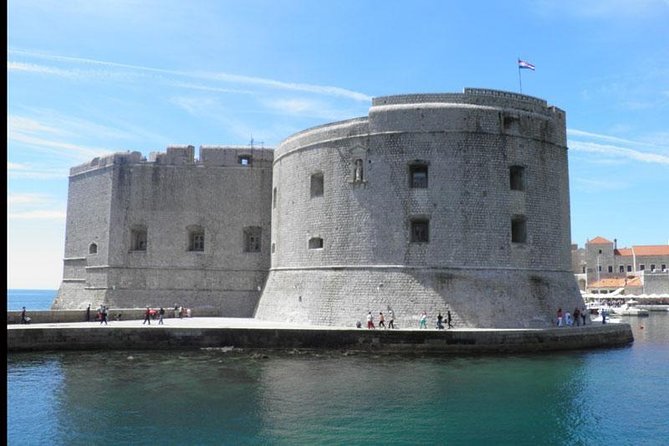
Then comes St. John’s Fortress, plus Church of St. Carmen, Quarantine, and breakwaters including Kaše and Porporela. You’ll also see beaches named in the route: Banja and St. Jacob’s beaches.
This section tends to bring out a different side of Dubrovnik’s defense story: not just war, but managing arrival and movement around the sea. The guide’s explanations here help you see the walls as a tool for control and safety, not just a wartime wall.
Cathedral of the Assumption and power from above
Next is the Cathedral of the Assumption of the Virgin Mary, along with the Treasury of the Republic, the Bishop’s Palace, and Ponta Gate.
This is a “history meets city identity” moment. You’re walking on defenses, but your route also passes the places that mattered in governance and public life. If you like understanding how power works in old cities, this stop is for you.
Rector’s Palace: the seat of government
The tour includes Rector’s Palace, noted as the seat of the government of the Republic of Dubrovnik. Entry is listed as not included, so again, expect more of an exterior-and-context approach unless you add separate access.
Even if you keep it outside, it’s a powerful viewpoint pairing: imagine the decision-making happening while the walls protected the city below.
Luža Square finish: Clock Tower, fountains, and a memorial stop
Finally, you end at Luža Square. The route includes the Clock Tower, Small Onofrio’s Fountain, City Hall, and the Church of St. Blaise. The tour also notes a visit to the Homeland War Memorial Room in the Sponza Palace area.
Why this is a smart finish: it anchors the wall walk back into modern Dubrovnik understanding. You finish in the kind of public space where people actually gather, not just where fortifications sit.
Guides can make or break this walk: what stands out
The standout theme in the guide experience is story plus patience. Names that show up in the guide lineup include Mia, Tea, Viktor, Paolo, and Vlaho, and the pattern is consistent: strong English, clear explanations, and enough flexibility to handle different group energies.
I especially like the way guides here seem to help you keep moving without rushing. One guide approach I saw described kids being prompted with questions to stay engaged, while adults were led through defense systems and political influence. That balance matters, because Dubrovnik walls can become repetitive if the guide can’t connect each segment to what came before.
Photo help also shows up in the feedback—Paolo is specifically mentioned as being great about taking photos along the way. That’s not a minor detail. When you’re above the Old City, waiting for the exact moment matters, and a good guide knows where the best angles are.
Price and value: what $132.45 really buys
At $132.45 per person, you’re paying for three things at once:
- a private walking experience (only your group),
- professional tour guidance, and
- a route that links major wall segments to the stories behind them.
The two main “extra” costs to remember are that the Old City Walls entrance fee isn’t included and some specific sites along the way (like parts of the Franciscan Church/Monastery and Rector’s Palace) are listed as not included as well.
Is it worth it? In my view, yes—especially if you care about the details of how Dubrovnik defended itself and governed itself, or if you want a less frustrating experience than big-group wall tours. If you’re traveling solo and just want a casual wander, you might choose to go self-guided. But if you want the walls to make sense, a guide earns the price.
When to book, and how weather affects the walls
This tour is explicitly tied to good weather. If conditions aren’t right, you’ll be offered a different date or a full refund. That’s important because walls are an open-air experience.
As for timing, the tour is commonly booked far in advance (about 117 days on average). If you’re visiting in the busy season or you want a specific day, booking early helps you avoid the “can’t get the time I wanted” problem.
Who this private Dubrovnik Old City Walls tour suits best
This tour fits best if you:
- want a guided walk of Dubrovnik’s defenses, not just views,
- enjoy history that’s explained in plain language and tied to real structures,
- have a group that would benefit from pace control (families, mixed ages, friends),
- want to see Game of Thrones filming locations while you’re already in the right place.
It may be less ideal if you want a fully relaxed, stop-anywhere-anytime beach day vibe. The walls experience is naturally physical, and it’s designed as a route with a clear flow.
Also, if you hate stairs or long stretches of walking, consider whether you’ll be comfortable with the wall route and the higher point at Minčeta Tower.
Should you book this private Old City Walls tour?
If you’re planning to spend real time in Dubrovnik and you want your wall walk to feel like a guided “how it worked” story, I’d book it. The private format helps you slow down for views and photos without getting swallowed by crowds, and the stops cover the whole arc from fortress beginnings to the Luža Square finish.
I’d hesitate only if you’re trying to keep costs ultra-low, or if your schedule can’t flex around weather. Otherwise, this is one of those experiences where a good guide turns a famous loop of walls into something you’ll remember for the logic, the viewpoints, and the sense of how Dubrovnik functioned under pressure.
FAQ
How long is the Dubrovnik Old City Walls private tour?
It’s approximately 2 hours 30 minutes.
Is the Old City Walls entrance fee included?
No. The Old City Walls entrance fee is not included.
What’s included in the price?
The price includes professional tour guidance.
Is this tour private?
Yes. It’s a private tour/activity, and only your group participates.
What language is the tour offered in?
The tour is offered in English.
Where do we meet, and where does the tour end?
Meet at Ulica Vrata od Ploča, 20000 Dubrovnik and end at Luđa ul., 20000 Dubrovnik (Luža Square, near the Church of St. Blaise).
Do I get a mobile ticket?
Yes. The tour offers a mobile ticket.
Are there any site tickets not included?
Yes. The City Walls entrance fee isn’t included, and some stops (like the Franciscan Church and Monastery and Rector’s Palace) are listed as not included as well.
Do I need good weather?
Yes. The experience requires good weather, and if it’s canceled due to poor weather, you’ll be offered a different date or a full refund.
Can I cancel for free?
You can cancel for free up to 24 hours in advance for a full refund.
Is there an option for wireless audio?
Wireless tour guiding is available upon request at an extra charge.