REVIEW · SPLIT
Experience Split History Walking Tour With Local Historian
Book on GetYourGuide →Operated by Pomalo · Bookable on GetYourGuide
Split’s palace rooms have a story for you. This 2-hour Split history walking tour turns UNESCO Diocletian’s Palace into something you can actually picture, using a See, Hear and Feel style of guiding and quick visual help like 3D reconstructions. I especially liked the way the guide connects Roman power to everyday Split life, and the focused time spent in signature spaces like Peristil instead of rushing past them.
One heads-up: you’re doing a fair amount of walking on uneven historic surfaces, and it’s not set up for wheelchair users or people with mobility impairments. Bring comfortable shoes, and on sunny days plan for water and a hat or cap.
In This Review
- Key things that make this tour worth your time
- Where your Split story begins: Golden Gate and Gregory of Nin
- Inside Diocletian’s Palace: Peristil, Jupiter’s Temple, and the palace’s real rhythm
- From emperor to cathedral: Mausoleum-Cathedral, Vestibule, and the cellars below
- Riva promenade and the Roman-to-medieval connection you can feel
- Fruit Square and People’s Square: two medieval civic spaces, not just photo stops
- Hidden corners that turn the tour from facts into a hunt
- 3D reconstructions and the See, Hear and Feel method
- Pace, group size, and practical tips for a 2-hour walk
- Price and value: what $37 buys you in real-world terms
- Who this tour is best for (and who should look elsewhere)
- Should you book Split History Walking Tour with a Local Historian?
- FAQ
- How long is the Split history walking tour?
- Where does the tour meet?
- What’s the maximum group size?
- What major sites are included?
- Is ticket entry included?
- What languages is the guide speaking?
- Do I need food and drinks during the tour?
- Is the tour suitable for wheelchair users or mobility impairments?
- What should I bring?
- What if my plans change?
Key things that make this tour worth your time
- Golden Gate start + Gregory of Nin statue context so you understand where you are before you step inside
- Peristil and the main palace spaces explained with stories, legends, and practical architectural details
- Saint Domnius Cathedral and Diocletian’s cellars tied into one clear timeline of reuse and adaptation
- Fruit Square and People’s Square where medieval street life shows up in the layout and the events tied to it
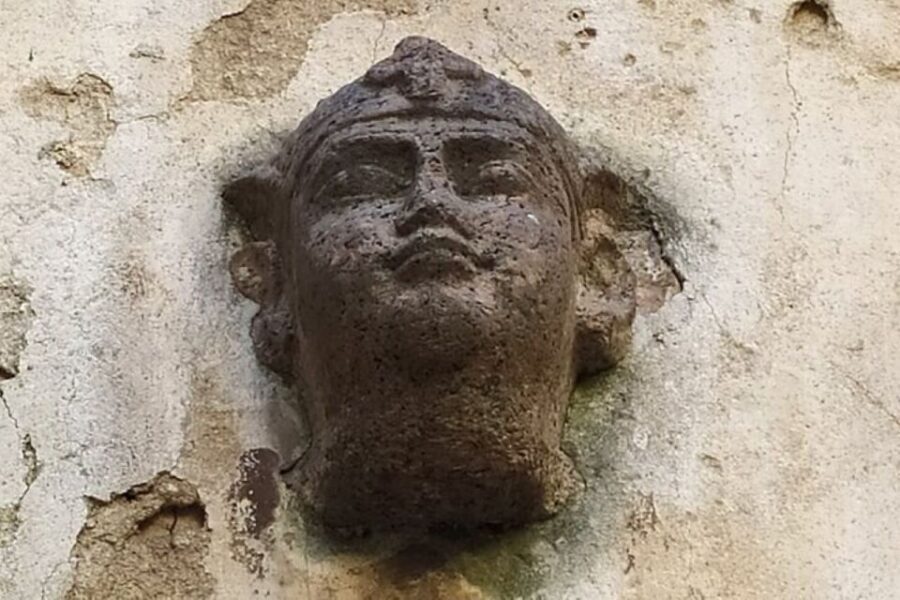
- Hidden corners like the narrowest street/church area, a lost sphinx head, and a secret garden stop
- Small group size (max 12) that keeps questions and detours from turning into chaos
Where your Split story begins: Golden Gate and Gregory of Nin
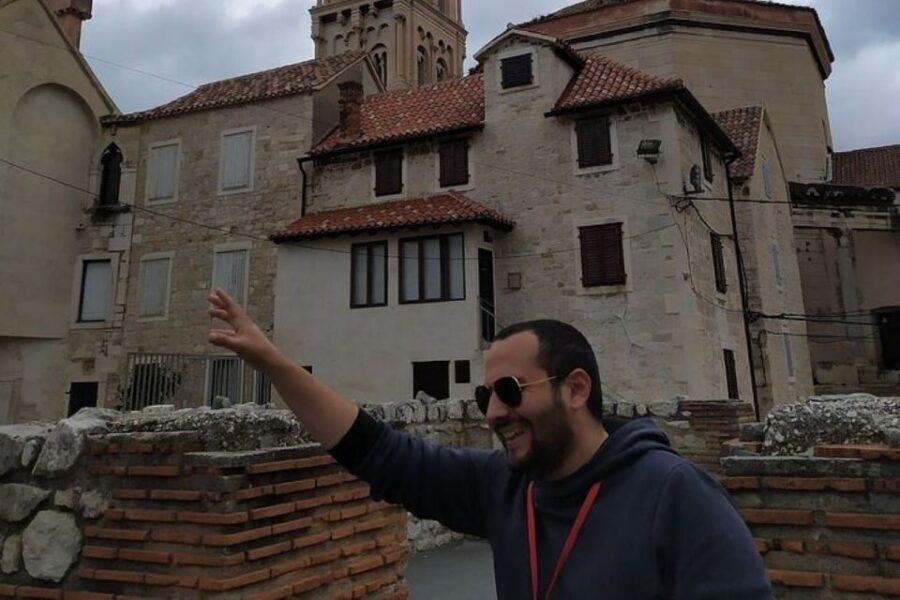
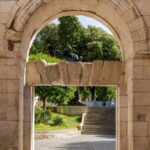
Your tour starts at the Golden Gate, the northern gate of Diocletian’s Palace. Standing here first matters. If you walk straight into the complex without context, the palace can feel like one big maze of stone lanes; starting at the gate gives you orientation fast and helps you understand why this spot was important.
Right across from where you meet, you’ll see the eight-meter statue of Gregory of Nin. The guide uses that to introduce the person behind the monument, and it’s a smart move: you’re learning how Split honors history in modern times while still looking at a Roman site. Even if you’ve only skimmed Split’s highlights, this opening helps your brain connect the layers.
In this first stretch, you’ll also get general background on Split and Croatia, plus an intro to the history of the area. It’s short, but it sets the tone for the rest of the walk: stories with a point, not trivia for trivia’s sake.
You can also read our reviews of more walking tours in Split
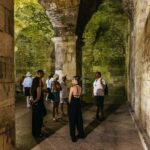

Inside Diocletian’s Palace: Peristil, Jupiter’s Temple, and the palace’s real rhythm
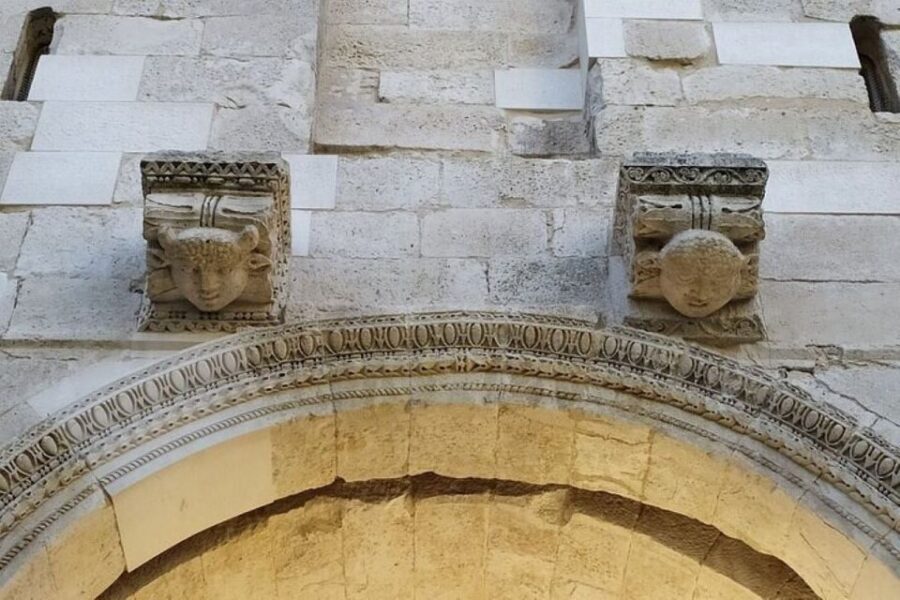
Once you enter the palace, you move through spaces that were built for imperial life and later repurposed for ordinary living. This is where the tour’s See, Hear and Feel approach really helps. Instead of treating the palace like a museum floor plan, the guide points out how the setting supports the way people moved, gathered, and lived.
A centerpiece is Peristil, the main palace square and the monumental core around it. Expect the guide to talk about why this open space works so well—its scale, its surrounding buildings, and the way it shaped movement inside the palace. You also get more than “what it is.” You’ll hear how the architecture connects to the life of the emperor, and what changed when the centuries piled up.
You’ll also stop around other key palace areas such as Jupiter’s Temple and the nearby court spaces. The names alone can sound dry, but the tour treats them like chapters. You’ll learn what Diocletian’s world looked like in and out of the palace, then the guide makes the shift toward later eras without making you feel lost.
One thing I like for planning: the tour hits several major spots but still leaves room to look closely. You’re not just snapping photos; you’re being shown what to notice first.
From emperor to cathedral: Mausoleum-Cathedral, Vestibule, and the cellars below

A big value of this tour is how it handles continuity. It doesn’t frame Split’s past as a one-way Roman story that ended neatly. Instead, it shows reuse—how major spaces stayed important, changed meaning, and remained part of city life.
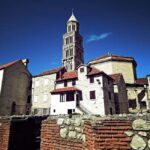
You’ll visit the Cathedral of Saint Domnius (linked to the palace’s mausoleum complex) and get explanations that tie it back to imperial origins and later religious life. The guide also points out how the palace’s sacred and civic roles overlap when you’re standing in the right spot.
The Vestibul is another stop where the explanation helps you read the space. Don’t expect a long lecture; you’ll get a guided walk-through designed for understanding, with the pace staying easy for a 2-hour format.
Then comes a highlight for anyone who likes the “what’s underneath” feeling: Diocletian’s Cellars. Even if you’ve seen photos of the palace, being down in the substructures changes the way you imagine the complex. It’s a good contrast to the open squares above, and it reinforces the idea that Diocletian’s Palace was a complete system, not just a fancy front door.
Riva promenade and the Roman-to-medieval connection you can feel
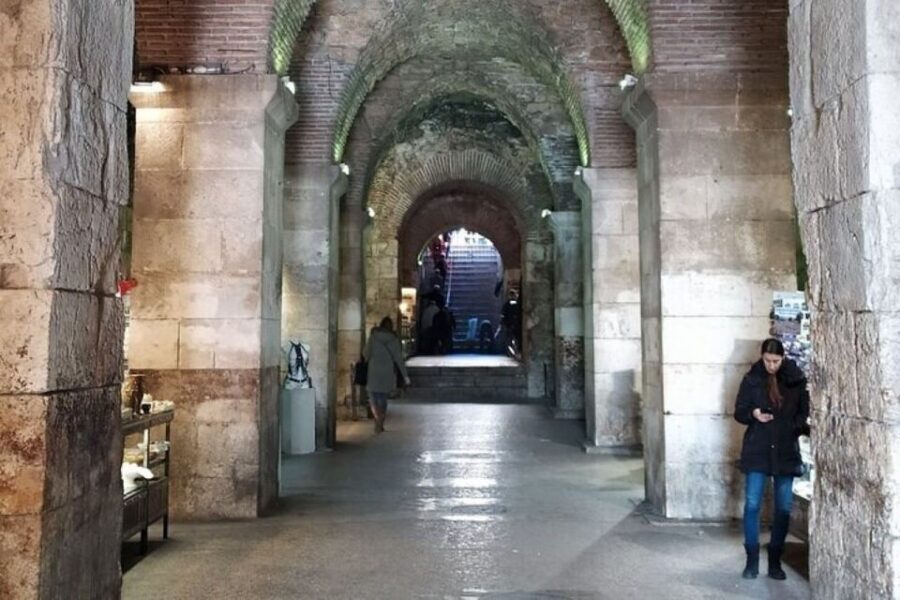
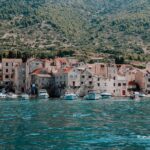
After you’ve seen the imperial core, the tour brings you to Riva, the promenade. This isn’t just for views, though Split’s waterfront energy is part of the point. The guide uses Riva to explain how Roman and medieval Split connect—how the city’s geography and street life grew outward from the palace zone.
The “live” historical monument part isn’t a gimmick here. You learn to watch for the links between stone eras. You start noticing how the palace perimeter shapes movement, where people naturally gather, and why the modern promenade sits where it does in the city’s story.
This segment also slows the mind down. You get a break from intense site-reading and a chance to absorb the vibe—enough to make the rest of the medieval square stops feel more grounded.
Fruit Square and People’s Square: two medieval civic spaces, not just photo stops
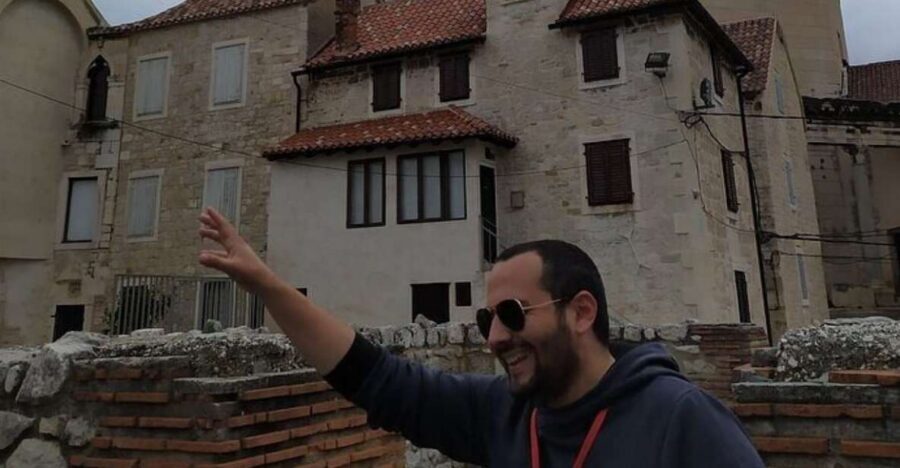
Next you shift from palace spaces to two medieval squares: Fruit Square and People’s Square. The tour treats both as “read the city” spaces. You’re not just told their names; you’re guided to look at the architecture and understand why these squares mattered.
These are places where public life happens, and the guide explains secrets linked to how the squares were used across centuries. It’s the kind of storytelling that makes you understand why citizens cared about location, frontage, and movement.
This is also where you’ll get a clearer sense of how Split isn’t only ancient. You’ll see how medieval and modern life layered onto what was already there.
If you want a practical takeaway: once you’ve walked these squares with context, it becomes easier to explore the same areas on your own later without feeling like you’re wandering aimlessly.
You can also read our reviews of more historical tours in Split




Hidden corners that turn the tour from facts into a hunt
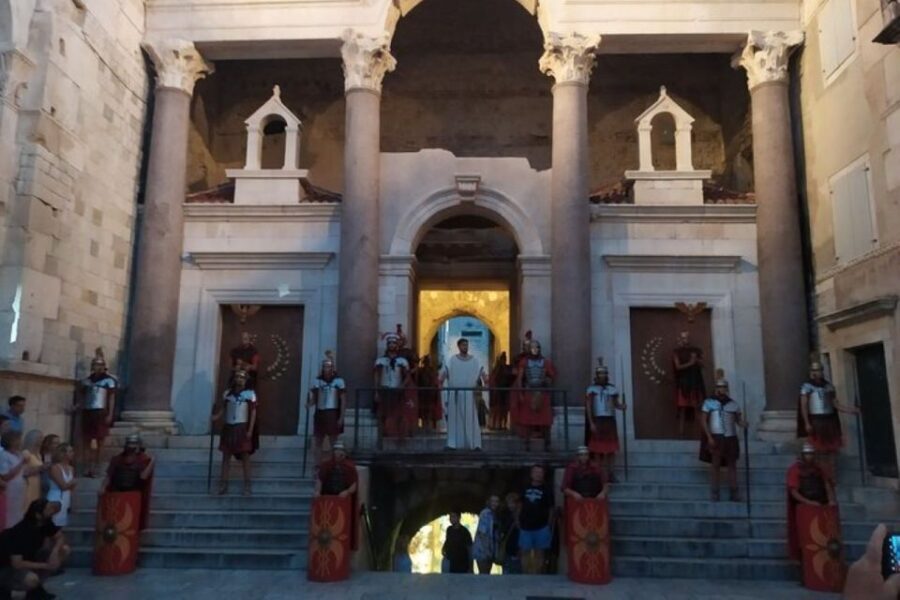
One of the most memorable parts is the plan for mystery and surprise. The tour includes hidden gems that go beyond the obvious highlights. You’ll hear about the narrowest church and narrowest street areas, plus stories around a lost sphinx head and a secret garden stop.
These aren’t just “look here” moments. The guide uses them to make a point about how cities keep secrets in plain sight. When you’re walking a compact UNESCO area, it’s easy to miss these details unless someone tells you what to watch for.
And if you like a little legend flavor mixed with real place facts, this is where it lands. Expect short stops that change your perspective quickly, then move you back into the main flow.
3D reconstructions and the See, Hear and Feel method
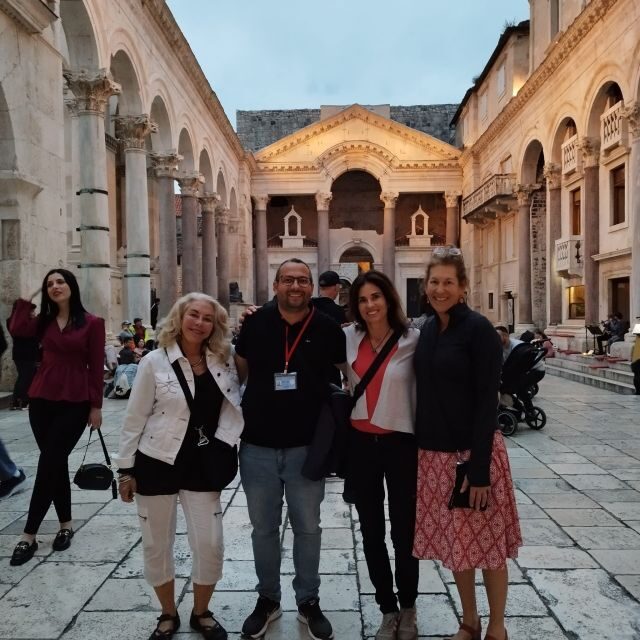
A standout detail in the format is the use of 3D reconstruction images and pictures. The tour isn’t only hands-on walking; it also supports understanding when you’re standing in a spot where the original details don’t fully survive.
In practice, this helps you imagine what you’re looking at. For example, when you’re near complex palace spaces—temples, passages, and substructures—the reconstructions make the timeline easier to hold in your head.
You’ll also see how the guide explains things in a way that connects physical spaces to stories: legends, intrigues, and the life of Emperor Diocletian both inside and outside the palace. The overall effect is that you leave with a clearer mental map, not just a list of names.
Pace, group size, and practical tips for a 2-hour walk
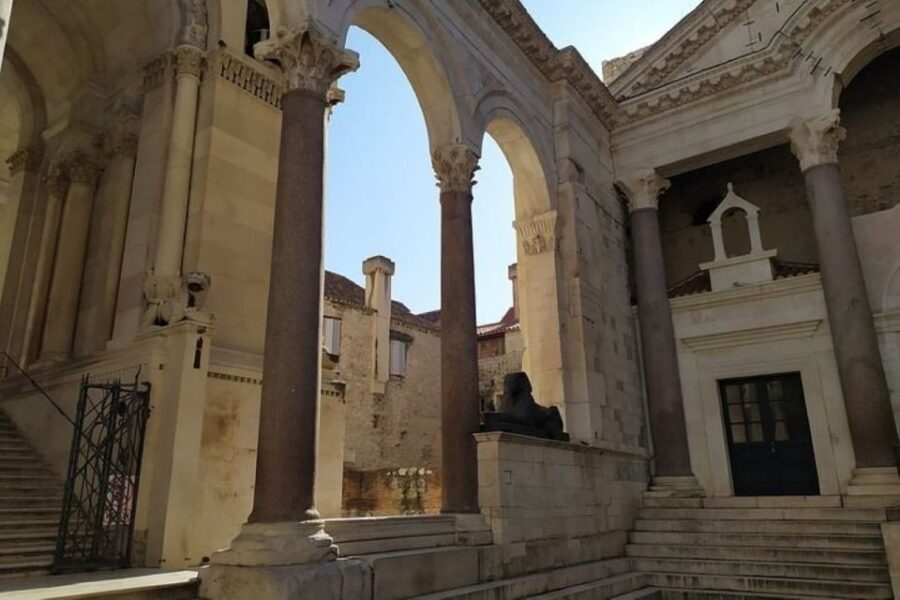
This tour runs for 2 hours and keeps the group small, with a maximum of 12 participants. A small group isn’t just a comfort perk. It usually means more chance for the guide to answer questions without rushing the pace.
The route moves through a lot of sites, but the timing is designed for steady progress rather than a sprint. You’ll spend short, focused stretches at each major stop—enough time to learn, look around, and reposition for the next segment.
Practical advice that actually matters:
- Wear comfortable shoes. Historic streets and palace surfaces aren’t flat and forgiving.
- Bring water on warm days and consider a hat/cap if the sun is strong.
- The experience is not suitable for wheelchair users or people with mobility impairments.
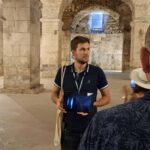
Language options are English and Croatian, and the guide is a local licensed professional with a master’s degree in history. That combination tends to show in the explanations: you get context plus place-based detail.
Price and value: what $37 buys you in real-world terms
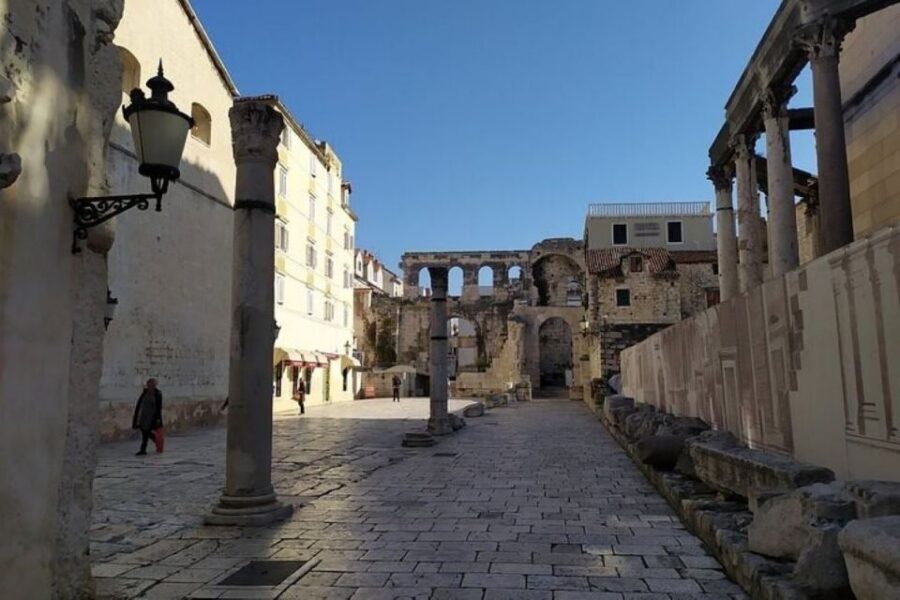
At $37 per person for 2 hours, this tour is priced like a focused specialty experience rather than a generic highlights walk. The value comes from three things you can feel on the ground.
First, you get a historian-style guide at UNESCO-level sites like Diocletian’s Palace. Second, the pacing is built around understanding key spaces, not just collecting photos. Third, you receive visual support through 3D reconstructions, which helps you interpret what’s missing or altered over time.
There’s also a practical bonus: the tour includes skipping the ticket line. That can save time and keep the flow smooth, especially in busy seasons.
If you compare this to hiring a private guide for a longer session, this is a compact way to get real expertise without committing to a half-day.
Who this tour is best for (and who should look elsewhere)
This is ideal if you:
- want to see Diocletian’s Palace but feel overwhelmed when you’re on your own
- like stories tied to specific places (gate, square, temple, and substructures)
- enjoy a balanced mix of Roman and medieval Split
- want a tour format that includes visual reconstructions and room-by-room context
It may not be ideal if you:
- need step-free access or wheelchair-friendly routes
- prefer long, sit-down museum-style time at one site instead of multiple stops
- want food to be included (it’s not part of the tour)
Should you book Split History Walking Tour with a Local Historian?
If you’re spending even a half-day in Split and you care about meaning—not just landmarks—this tour is a smart book. The starting point at Golden Gate, the time in Peristil, the emperor-to-cathedral connection, and the quick hidden-gems hunt make the experience feel like a guided way to read the city.
Book it if you want your visit to feel structured but not stiff. Also book it if you appreciate small-group attention and a guide who can connect architecture to everyday life, not only names and dates.
Skip it only if you’re looking for fully accessible walking routes or you’d rather explore at your own pace with no scheduled stops.
FAQ
How long is the Split history walking tour?
The tour lasts 2 hours.
Where does the tour meet?
The meeting point is at Golden Gate, the northern gate of Diocletian’s Palace, opposite the eight-meter statue of Gregory of Nin.
What’s the maximum group size?
The tour is capped at a maximum of 12 participants.
What major sites are included?
You’ll visit Diocletian’s Palace and see Peristil, Jupiter’s Temple, Cathedral of Saint Domnius, Vestibule, Diocletian’s Cellars, plus stops around Riva, Fruit Square, and People’s Square.
Is ticket entry included?
You get skip-the-ticket-line as part of the experience.
What languages is the guide speaking?
The tour is available in English and Croatian.
Do I need food and drinks during the tour?
Food and drinks are not included, so you’ll want to plan separately if you snack.
Is the tour suitable for wheelchair users or mobility impairments?
No. It is not suitable for people with mobility impairments or wheelchair users.
What should I bring?
Wear comfortable shoes, and on sunny days bring water and/or a hat/cap.
What if my plans change?
There is free cancellation up to 24 hours in advance for a full refund.