REVIEW · SPLIT
Split: Walking tour of Split with a ‘Magister’ of History
Book on GetYourGuide →Operated by HISTORY TOURS SPLIT, vl. Toni Šare · Bookable on GetYourGuide
Split’s past clicks into place fast. With Toni Šare leading a 110-minute walk, you start at the sea-facing Bronze Gate and move through Diocletian’s Palace as the Roman world turns into medieval and Venetian Split right in front of you.
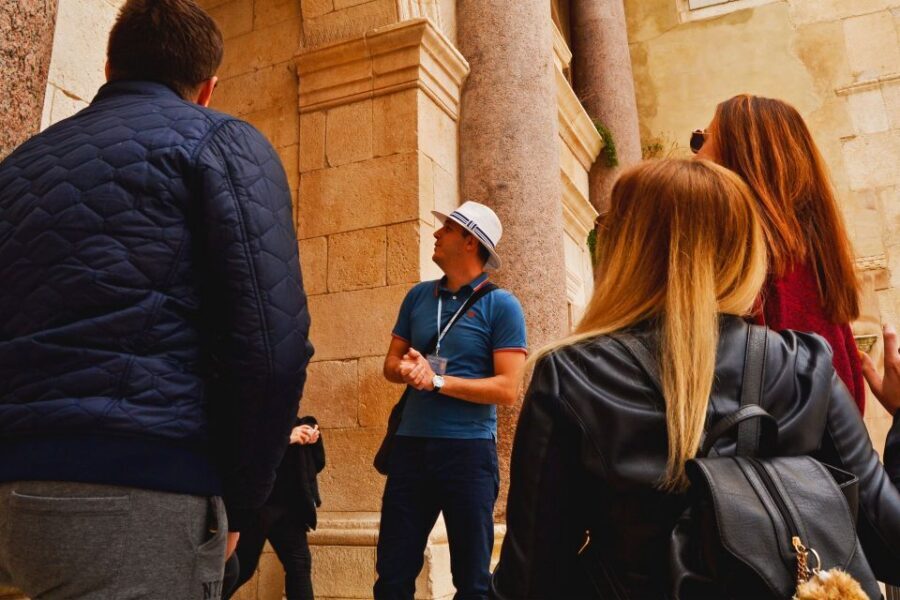
What I really like is the way the tour uses 3D reconstructions to show you what you’re looking at when parts are missing. I also like the teacher-style delivery: questions are welcome, and Toni uses your curiosity to add context, not just recite facts.
One thing to keep in mind: this is a walking tour on old stone with some uneven spots, and it’s not suitable for wheelchair users or people over 95, plus it runs rain or shine.
In This Review
- Quick hits: what makes this Split history walk different
- Start at the Bronze Gate, the easiest way to read Split
- Entering the Palace: gates, cellars, and what Romans did with space
- Peristyle square: where the palace stops being a ruin and starts being a stage
- Vestibule and Triclinium: the palace’s private rhythm
- Cathedral of Saint Domnius and Jupiter’s Temple: the Roman-to-medieval handoff
- Silver Gate and the Golden Gate: exiting the past without leaving it behind
- The real value: Toni’s 3D reconstructions and teacher-style Q&A
- Practicalities: how to time it, what to bring, and how to handle the crowds
- Price check: is $33 worth it for Diocletian’s Palace?
- Who should book, and who should skip it
- Should you book this Split Walking Tour?
- FAQ
- How long is the walking tour?
- How much does it cost?
- Where does the tour start, and how do I find it?
- What language is the tour in?
- Will I visit paid museums or ticketed sites?
- What landmarks are included during the walk?
- What should I bring?
Quick hits: what makes this Split history walk different
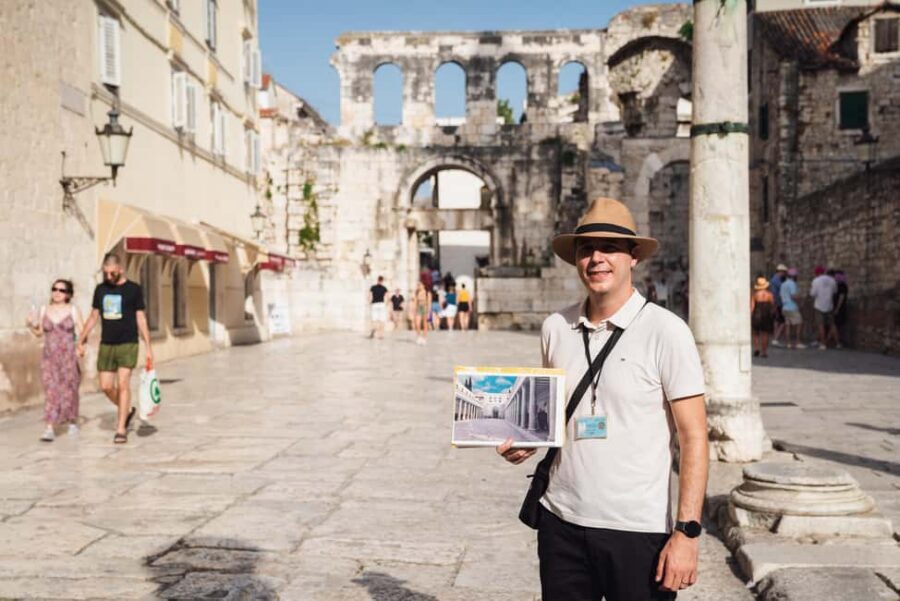
- Master’s-level history guide who teaches: an ex teacher with a history Master’s degree, so the tour stays explainable and clear.
- 3D reconstructions you can actually follow: Toni uses renderings (including printed CG images) to help you visualize iconic structures in their original forms.
- A route that follows the layers: you move from Roman foundations into medieval and Venetian-era remnants, then end back at the palace’s Golden Gate.
- Stops are chosen for how Split works: Diocletian’s private spaces and major landmarks like Saint Domnius and Jupiter’s Temple are woven into one story.
- You’re encouraged to ask questions: dialogue is part of the experience, not an afterthought.
- Local perspective from someone who never left: Toni is a Split local, born and living his life there, so the city’s “why” comes through.
Start at the Bronze Gate, the easiest way to read Split
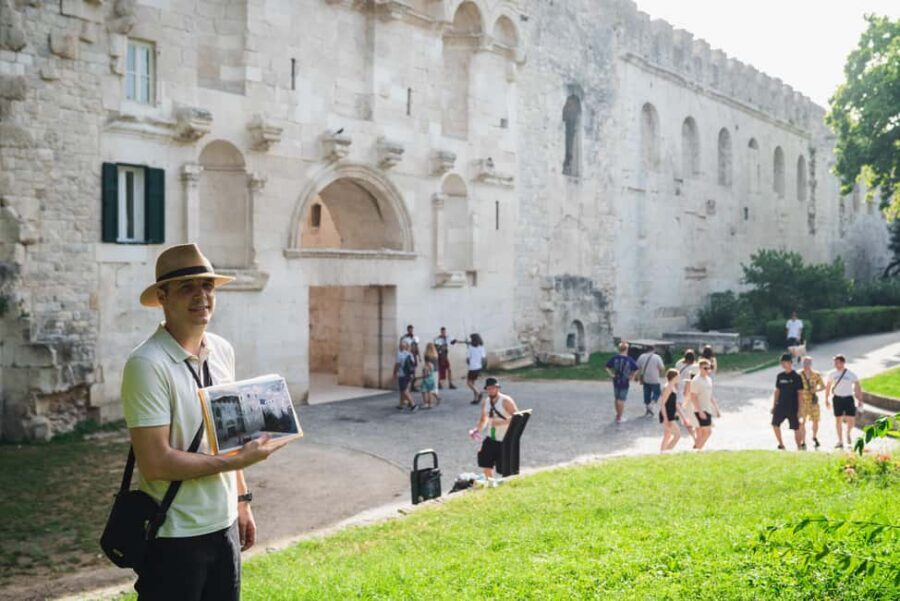
Your tour begins at the Bronze Gate of Diocletian’s Palace, on the southern seaside side near the Promenade (Riva). If you get turned around, just find the Riva first, then walk toward the palace entrance from the waterfront. The meeting address is Obala Hrvatskog narodnog preporoda 22.
From that first step, Split feels different. Instead of sightseeing as a checklist, you start with a single question: how did this Roman structure become the core of a whole city?
That’s the magic of this tour format. You don’t jump around. You walk the palace quarter in a logical order, beginning with the oldest heart of Split and moving forward through time.
You can also read our reviews of more walking tours in Split

Entering the Palace: gates, cellars, and what Romans did with space
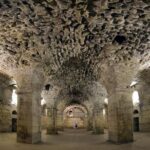
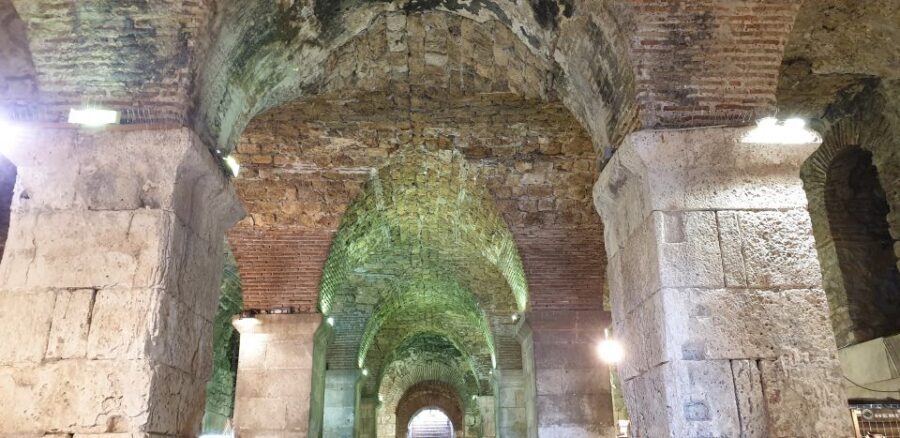
You’ll pass the Bronze Gate, then head into the palace area through the space that connects to the “underworld” side of Diocletian’s complex. The tour briefly pauses in the Diocletian’s Cellars / Basement Halls, which is where the story becomes practical. You’re not just learning what the palace looked like—you’re learning how it functioned.
A cellar tour might sound dull on paper, but here it’s useful. When you understand what the Romans stored, managed, and protected underground, the rest of the palace makes more sense. Suddenly the big public square and the more private rooms aren’t random highlights. They’re part of one system.
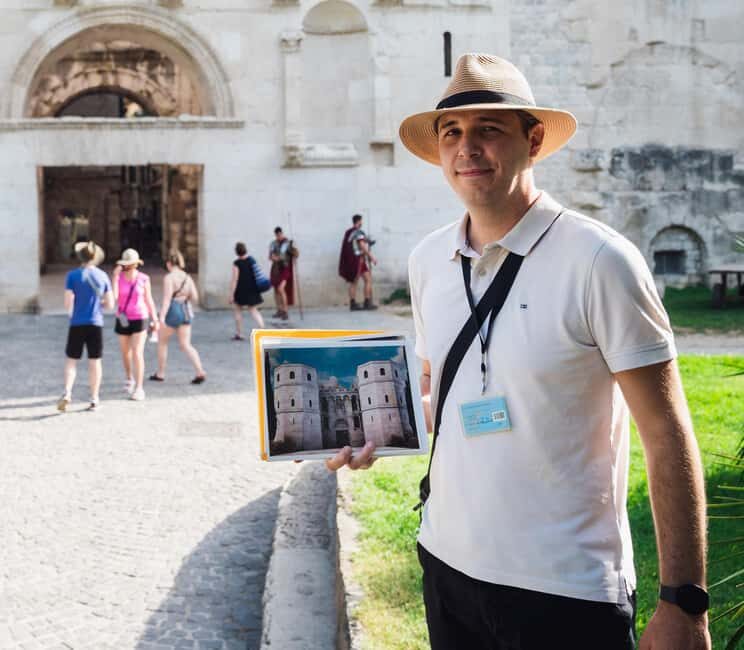
If you tend to learn visually, pay attention here. Toni uses 3D reconstructions to show how major structures may have looked when they were intact, so even a stop that’s mostly “remains” turns into a clearer picture.
Peristyle square: where the palace stops being a ruin and starts being a stage
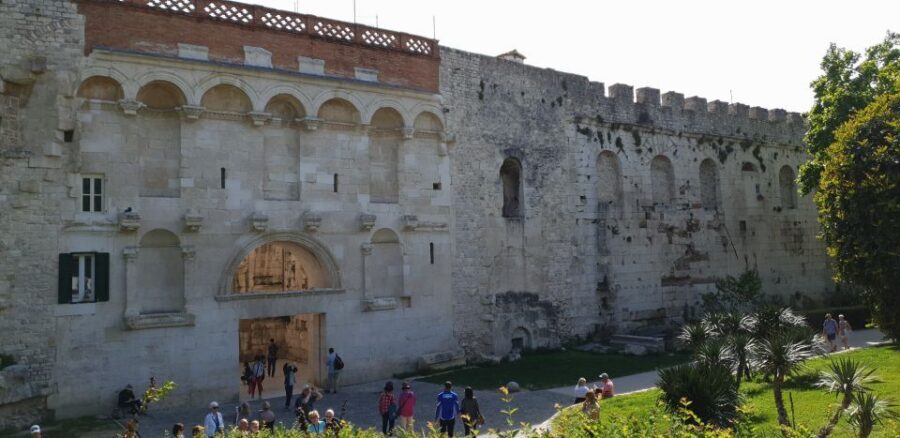
Next comes the Peristyle, the palace’s famous preserved square. This is one of those places where your eyes do the work first, and the guide gives it meaning second.
In the Peristyle area, you’ll be oriented to major landmarks: the Mausoleum of Diocletian, the Temple of Jupiter, and the Vestibule. Seeing these names in a guidebook is one thing. Seeing them positioned in relation to each other—and understanding why they matter to the palace’s plan—is another.
Here’s a tip I’d give you: look around first before you start listening hard. The square’s layout is what makes the explanations land. Once you can map the space, the details stick.
This stop is also a good place to use the tour’s Q&A style. If you want “but why here?” answers—ask. Toni’s background as a history Master’s guide and former teacher shows in how he handles follow-up questions without losing the group’s pace.
Vestibule and Triclinium: the palace’s private rhythm
After the Peristyle, the tour moves into Vestibul and Triklinij (Triclinium), the kinds of spaces that help you understand how Diocletian’s daily life might have worked inside the palace core.
The triclinium, in particular, is where Roman domestic and ceremonial life overlap. You’re not looking at a museum room behind glass. You’re seeing a building form with a human purpose behind it—so the scale and placement feel personal.
This portion of the walk is also where Toni’s teaching style really helps. You’ll get guidance on what to look for in the remaining structures. You’re learning to read the site, not just pass through it.
One small drawback to expect: this part of the tour can feel a bit more “inside the details,” so if you’re visiting Split mainly for beach strolls, you may need a minute to switch gears. The upside is that you’ll leave with a mental map that makes the rest of Old Town easier.
Cathedral of Saint Domnius and Jupiter’s Temple: the Roman-to-medieval handoff
Then the tour shifts outward. You’ll pass by the Cathedral of Saint Domnius, which is a key landmark in Split’s long continuity of sacred space. You’ll also pass by Jupiter’s Temple.
These stops are valuable because they show continuity, not just change. Romans built the palace around power and religion. Over time, newer generations layered their own meanings onto those same bones. That’s why Split feels so unique: the city didn’t demolish its origin—it repurposed it.
When you stand in these areas and follow the guide’s timeline, it’s easier to understand why locals still move through this space as a living city. It’s not just “old buildings.” It’s a place with ongoing identity.
You can also read our reviews of more historical tours in Split



Silver Gate and the Golden Gate: exiting the past without leaving it behind
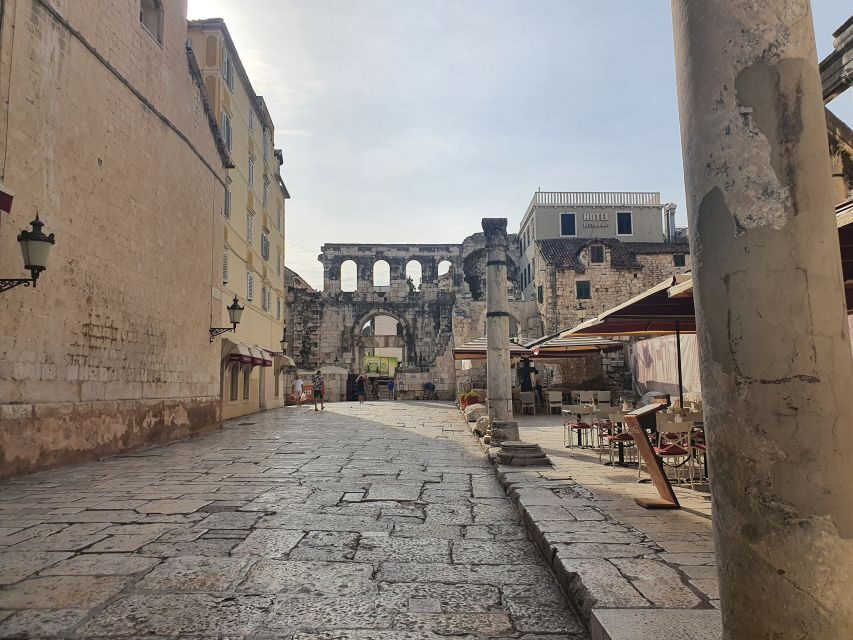
You’ll pass through the Silver Gate area and then finish at the Golden Gate. These gates matter because they frame the palace as something both defensive and functional—a boundary between worlds.
Ending at the Golden Gate gives the walk a clean shape. You start at a seaside entrance, move through palace interiors and key squares, and come back out toward the sea again. By the time you’re done, you can orient yourself in Old Town much faster than if you’d wandered randomly.
If you’re planning to keep exploring after the tour, this is where it pays off. Knowing the gates and the palace core helps you decide what to see next without doubling back for directions.
The real value: Toni’s 3D reconstructions and teacher-style Q&A

Plenty of history tours point at stones and talk. This one uses a stronger tool: 3D reconstructions. They’re not just decoration. They’re used as a way to translate what’s missing into something you can understand.
In practice, Toni helps you connect the present-day remains to an earlier layout. You’ll see iconic structures explained in a way that makes the physical space feel complete, even when you’re standing in front of partial ruins.
The other big advantage is the pace of interaction. Questions are encouraged, and Toni answers in a way that builds context rather than shutting you down with a quick “because Roman.” That teaching approach shows up in how the tour stays coherent even as the conversation branches.
Also worth noting from the experience: Toni is local. Being born and living in Split his whole life changes the tone. The tour doesn’t feel like someone read a script on the way to your meeting point. It feels like a resident guiding you through the city he actually uses and thinks about.
Practicalities: how to time it, what to bring, and how to handle the crowds
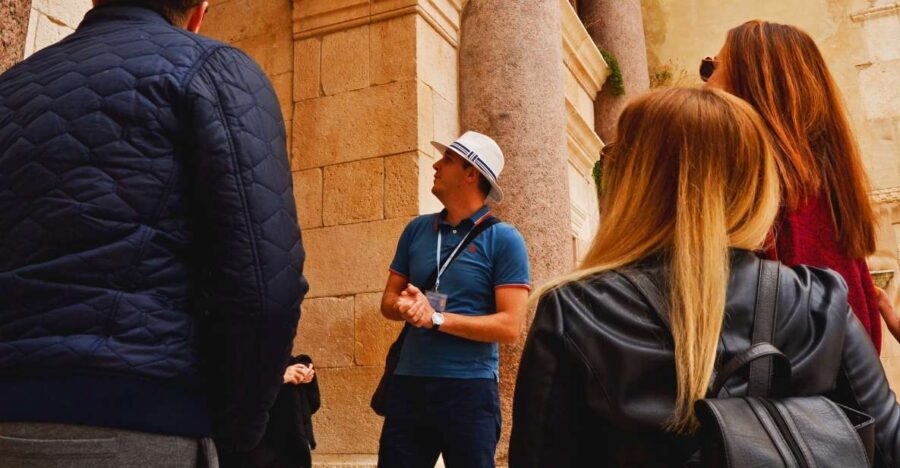
The tour lasts 110 minutes—long enough to build a real understanding, not so long that you lose the thread. It’s in English, and it runs rain or shine.
Bring drinks, especially in warmer months. The route involves walking and standing for explanations, and you’ll want water within reach.
Timing matters too. If you can choose between starting times, I’d go for an earlier slot. The experience can get more crowded later, and the guide is better able to manage the group when there are fewer people spilling into the same narrow palace spaces.
From what you’ll experience on the ground, Toni also tries to use shade and quieter stretches when possible. That makes a big difference in summer heat and when you’re trying to hear explanations clearly.
Price check: is $33 worth it for Diocletian’s Palace?
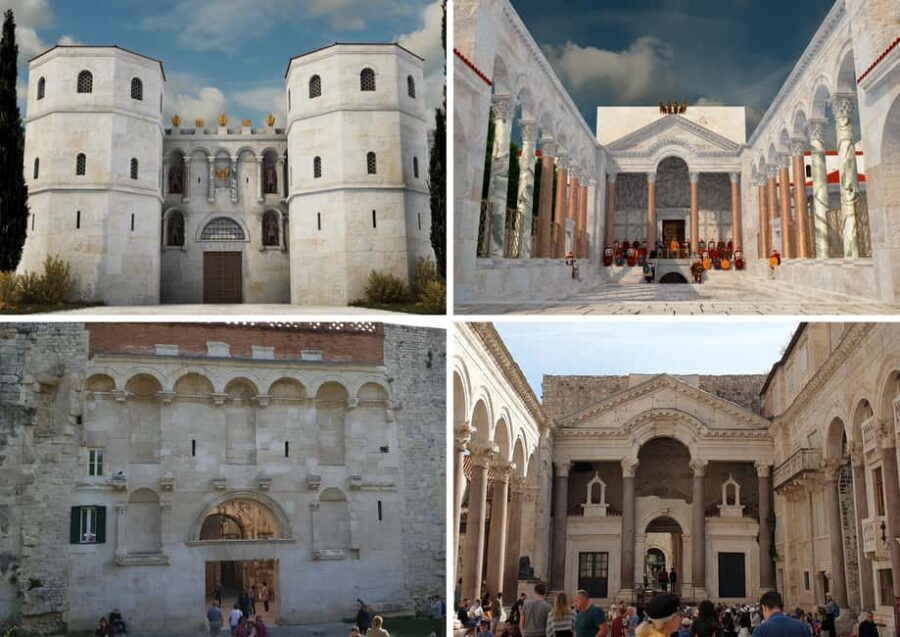
At $33 per person for about 1 hour 50 minutes, you’re paying for more than a walk through famous ruins. You’re paying for two things that are hard to fake: a trained historian (Master’s in history, ex teacher) and built-in visual support (3D reconstructions and printed CG-style visuals).
If you’ve ever done a standard “look at this, it’s old” tour, you know how quickly value disappears. Here, the value comes from turning the palace into a readable story: Roman layout, private spaces, then later layers of sacred and civic life. That’s exactly what makes Diocletian’s Palace so confusing without guidance—and exactly what this tour is designed to solve.
You’re also not stuck inside paid-ticket-only areas. The tour includes the palace spaces that don’t require museum-style admission, plus major landmarks you can access as part of the Old Town flow.
Who should book, and who should skip it
This tour is a strong fit if you want more than quick facts. If you like understanding how buildings work—how a plan turns into daily life—this is your lane.
It’s also a great pick if you’re traveling solo or as a couple and want to ask questions without feeling like you’re interrupting. The guide’s teaching background and Q&A style are built into the experience.
If you struggle with walking on uneven, historic surfaces, you’ll want to think carefully. This tour isn’t suitable for wheelchair users and it’s not recommended for people over 95. Also, because it runs rain or shine, you’ll be happier if you’re comfortable outdoors for the full 110-minute duration.
Should you book this Split Walking Tour?
Yes—if your goal is to understand Diocletian’s Palace and leave with a mental map of how Roman, medieval, and Venetian-era Split connect. At $33, you’re getting a proper history instructor and visual tools that help you read the ruins instead of just admiring them.
I’d book it especially early in your Split visit. Learning the palace structure first makes everything you see afterward easier: the gates, the squares, and the landmarks start to feel like parts of one story.
If you want a relaxed wander with zero explaining, you might find it a bit structured. But if you’re the type who asks why something is here, you’ll get your money’s worth in the way the tour answers—and in how it keeps you thinking as you walk.
FAQ
How long is the walking tour?
The tour runs for 110 minutes.
How much does it cost?
It costs $33 per person.
Where does the tour start, and how do I find it?
You meet at the Bronze Gate (Brass Gate) of Diocletian’s Palace. The address is Obala hrvatskog narodnog preporoda 22. The easiest way is to find the Promenade (Riva) first, then walk toward the Bronze Gate along the seafront.
What language is the tour in?
The tour is in English.
Will I visit paid museums or ticketed sites?
The tour does not enter any paid sites or museums. It specifically notes that entering Diocletian’s Palace does not require admission.
What landmarks are included during the walk?
You’ll center on Diocletian’s Palace and pass by or cover major areas and landmarks such as Diocletian’s Cellars, the Peristyle, the Vestibule, Triclinium, Saint Domnius (Cathedral of Saint Domnius), Jupiter’s Temple, plus stops near the Silver Gate and the Golden Gate.
What should I bring?
Bring drinks. The tour runs rain or shine, so it helps if you also plan to stay comfortable outdoors.