REVIEW · SPLIT
Split: Diocletian Palace & Old Town Guided Walking Tour
Book on GetYourGuide →Operated by APODOS TRAVEL AGENCY · Bookable on GetYourGuide
Diocletian’s Palace gets a smart, human-scale introduction. You start on the Riva promenade and then slip inside the 4th-century Roman complex that still forms the core of Split’s Old Town, walking the Bronze, Silver, Golden, and Iron Gates plus key spaces like the Peristyle. What I like most is how the guide turns stone into stories, and how you also get a quick tour of Split’s later layers like the 15th-century Town Hall and Fruit Square. The only real catch is the pace: in under an hour, you’ll cover a lot, so if you want long stops in every site, this may feel a bit tight.
The duration is 50 minutes, which I find ideal for a first day when you want orientation fast and then freedom afterward. Guides I’ve seen leading this tour, including Ina and Nataša, are praised for keeping things moving while still answering questions without losing the plot. Just remember this is a walking experience on uneven cobblestones, with some steps required even though the tour is marked wheelchair accessible.
In This Review
- Key moments you’ll remember from the walk
- From Apodos Travel Agency to the red-bus meeting spot
- Riva promenade first: the waterfront that explains Split’s mood
- Step into Diocletian’s Palace through the Bronze, Silver, Golden, and Iron Gates
- Peristyle courtyard and palace cellars: when the stones start talking
- St. Domnius Cathedral bell tower: the view and the meaning
- Town Hall and Fruit Square: the medieval and baroque layer
- The walking reality: short, efficient, and not for slow meandering
- Guides make the difference: the names and styles you might hear
- Value check: is $17 worth it for Diocletian’s Palace?
- Who should book this tour
- Should you book Split: Diocletian Palace & Old Town Guided Walking Tour?
- FAQ
- How long is the Split Diocletian’s Palace and Old Town walking tour?
- How much does the tour cost?
- Where do I meet for the tour?
- What sites are included during the walk?
- What language is the guided tour offered in?
- Is it wheelchair accessible, and what should I bring?
Key moments you’ll remember from the walk

- Riva promenade warm-up: Palm-lined waterfront that sets the mood before you hit the palace walls
- The palace gates in sequence: Bronze, Silver, Golden, and Iron Gates to help you understand the fortress layout
- Peristyle courtyard access: The architectural heart of Diocletian’s Palace, not just a photo stop from outside
- Cathedral of St. Domnius views: A walk up to the bell tower for panoramas over the harbor
- Split’s layered timeline: Roman foundations, medieval charm, and later Venetian-era influence you can actually point to on the street
- Fruit Square stop: Baroque monuments that show how the area kept evolving long after the empire era
From Apodos Travel Agency to the red-bus meeting spot
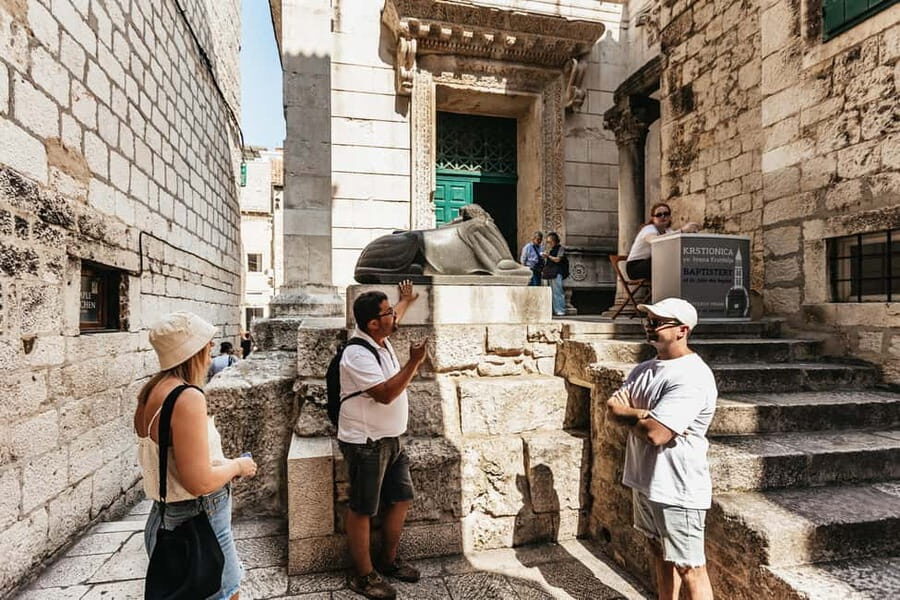
Your tour starts at Apodos Travel Agency, with the staff meeting you by an open-top red bus. The instructions are simple: find the team wearing red or white shirts next to the bus, and they’ll connect you with your guide.
This matters more than it sounds. Split’s Old Town is easy to get turned around in, and a clear meeting point reduces stress. If you hate searching in tight streets, this is a good setup because you can locate the tour group quickly before you start walking.
You can also read our reviews of more walking tours in Split

Riva promenade first: the waterfront that explains Split’s mood
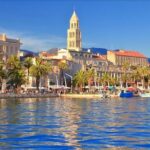
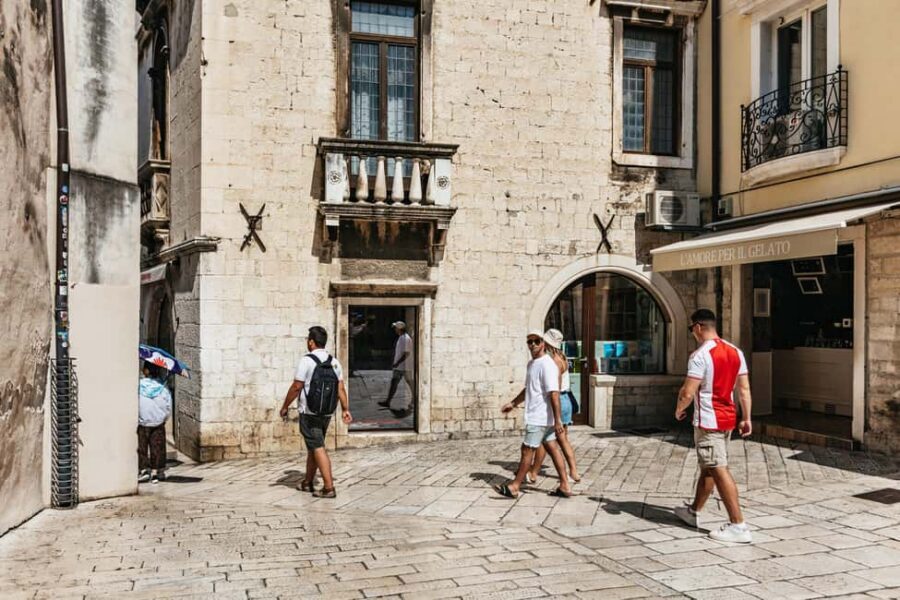
Before the Roman stone takes over, you begin on the Riva promenade. It’s a sunlit stretch with cafés and palm trees where the Adriatic breeze does what good travel should: it resets you from travel fatigue and gets you walking in the right frame of mind.
Then the guide starts connecting what you see outside to what you’ll see inside Diocletian’s Palace. Even if you’ve only glanced at photos, the Riva makes Split feel like a living city, not a theme park of ruins.
Practical note: bring water and comfortable shoes. The tour is short, but it’s still city walking, and the surfaces inside the Old Town can be rough.
Step into Diocletian’s Palace through the Bronze, Silver, Golden, and Iron Gates

The centerpiece is Diocletian’s Palace, built in the 4th century AD for Emperor Diocletian, and now the living core of Split’s UNESCO-listed Old Town. The real win here is that you don’t wander randomly. You move through the palace in a way that lets you understand the logic of a fortified complex.
The tour includes stops at the Bronze, Silver, Golden, and Iron Gates. Those names aren’t just decorative. They help you mentally map where entrances were and how this imperial space was protected.
You’ll also get a guided orientation around major interior spaces, including:
- The Peristyle courtyard (a standout architectural center)
- The palace’s cellars
- Diocletian’s private chambers
- An observatory area (part of the emperor’s more private life)
This is where a guide really pays off. Palace walls and arches can look similar when you’re on your own. With a guide, you learn what to look for, and the buildings start to read like a plan.
Peristyle courtyard and palace cellars: when the stones start talking
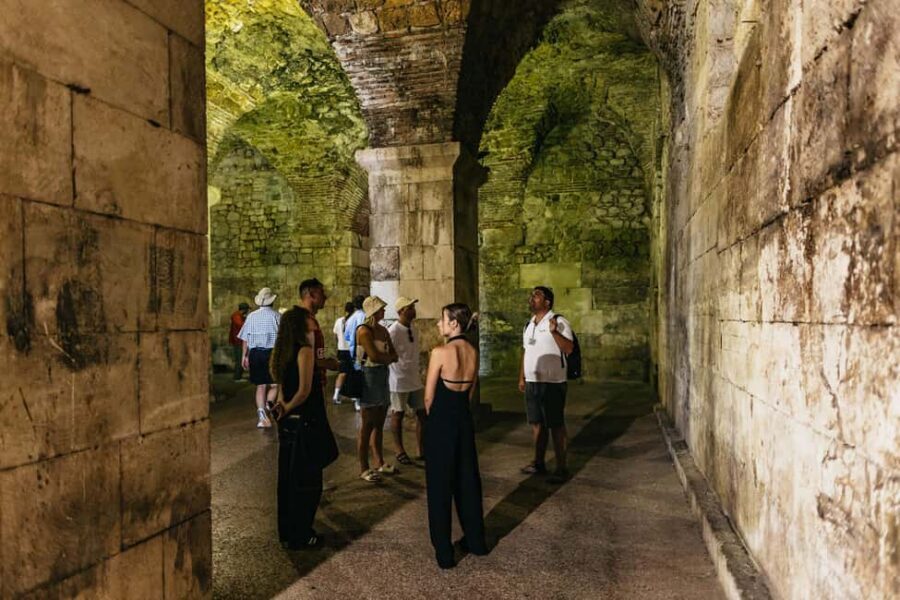
Once you’re inside, the experience becomes less about single-photo moments and more about understanding scale. The palace layout is dense, and the Peristyle courtyard gives you a visual center so the maze of streets later makes sense.
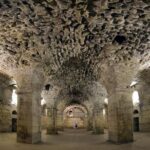
You’ll also see the cellars. Even in a brief tour, cellars are an important clue to how the palace functioned. They signal storage and daily operation, which is a helpful counterpoint to the grand idea of an emperor’s residence.
The best part here is how guides tend to explain the difference between a palace as an imperial statement and the palace as something that became part of everyday city life. If you like history that actually connects to the present, this portion is where you’ll feel it click.
St. Domnius Cathedral bell tower: the view and the meaning
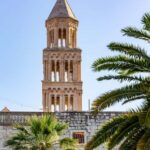
The tour includes St. Domnius Cathedral (Sv. Duje). It was once tied to Diocletian’s mausoleum plans, and today it stands as one of the world’s oldest cathedrals.
You also have the chance to climb the bell tower for panoramic views over the city and harbor. This is one of those moments that justifies the walking effort. You get height, you get perspective, and you understand why Split grew the way it did around this sacred and strategic center.
If you’re the type who likes to see where you’ve been from above, don’t rush this stop. Take a moment to look down the streets and imagine how people moved when this was still an imperial environment.
You can also read our reviews of more guided tours in Split





Town Hall and Fruit Square: the medieval and baroque layer
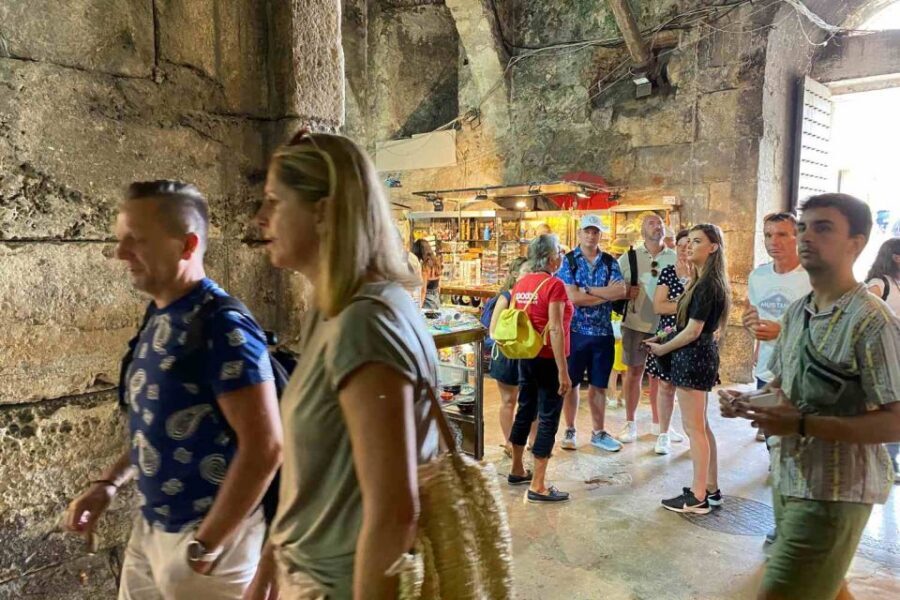
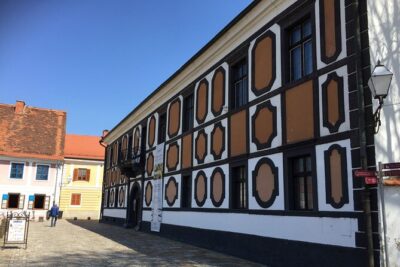
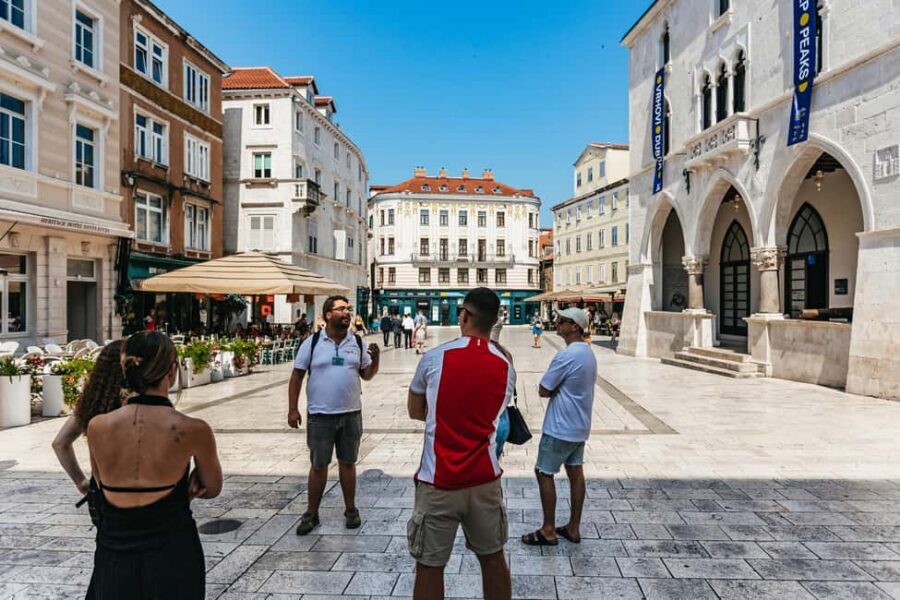
After the Roman core, the walk shifts to Split’s later identity. The tour includes insights into the 15th-century Town Hall, plus a stroll through the baroque monuments of Fruit Square.
This is valuable because it shows that Split isn’t frozen in one era. The city’s identity comes from change over time: Roman foundations, medieval development, and later external influences that shaped local style.
Fruit Square is the kind of stop you might otherwise treat as a quick street-corner photo, but here it becomes a checkpoint. You can look at the baroque details and think, Okay, this is what the Romans left behind, and this is what Split chose to build next.
The walking reality: short, efficient, and not for slow meandering
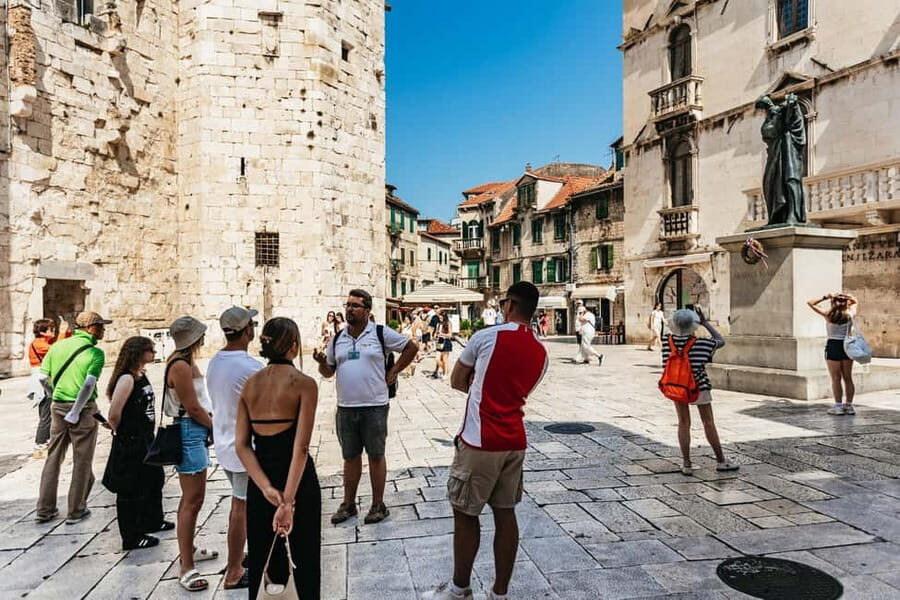
This is a 50-minute tour, and that affects expectations. You’ll cover a lot, and the design is clearly built for an efficient overview.
Also note the terrain rules: you must be able to walk over uneven cobblestone surfaces with 15 to 30 steps. The tour is marked wheelchair accessible, but those step requirements mean you’ll want to consider your personal mobility needs realistically.
My practical advice: wear comfortable shoes, and on windy days consider long sleeves. On sunny days, bring sunglasses and a hat. Even short tours feel longer when you’re overheated, squinting, and trying not to slip on stone.
Guides make the difference: the names and styles you might hear
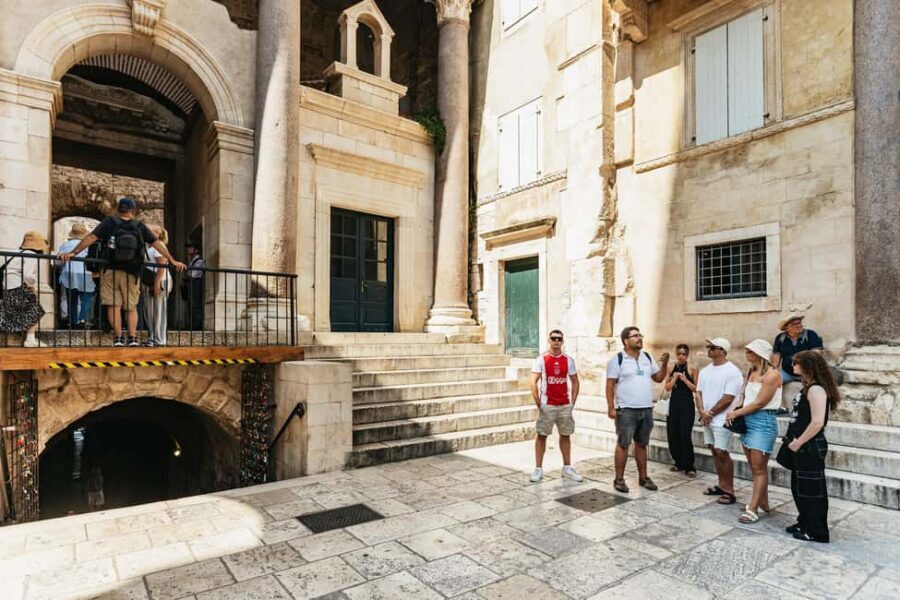
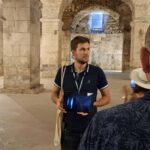
One reason people love this tour is the guide quality. The tour descriptions and participant comments consistently highlight guides such as Ina, Nataša, Darko, and Tin.
What comes through in the way the guides teach:
- clear explanations tied to actual buildings you’re standing in
- humor and a steady rhythm that keeps groups from getting stuck
- patience for questions, including the harder, detail-oriented ones
- extra suggestions for what to do next in Split after the tour
If you’re the kind of traveler who likes to ask why something was built a certain way, you should feel comfortable here. A walking tour like this works best when the guide can turn your questions into part of the story, not a distraction.
Value check: is $17 worth it for Diocletian’s Palace?
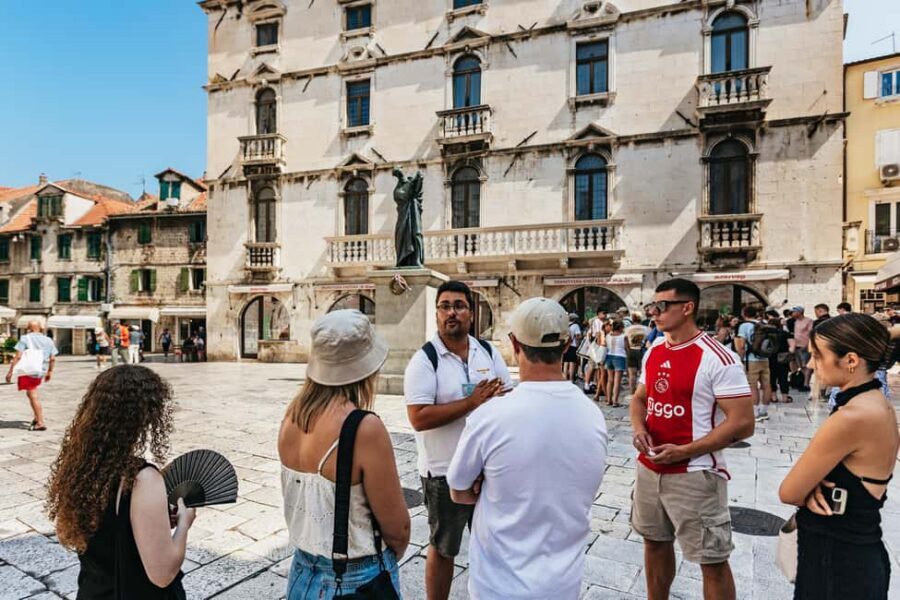
For $17 per person and about 50 minutes, I think the value is strong if your goal is orientation and context. You’re not just buying access to a couple of viewpoints; you’re getting a guided walkthrough that connects multiple major sites: the palace gates, the Peristyle courtyard, cathedral context, and later Split highlights like Town Hall and Fruit Square.
Is it enough time to see everything slowly? No. That’s not the point. The point is to help you leave with a working mental map so you can explore the rest of Old Town with far less guesswork.
Who should book this tour
This works especially well if:
- you’re short on time and want the basics covered fast
- you want context for Diocletian’s Palace before you wander on your own
- you prefer guided explanations over reading plaques at every turn
You might skip it if:
- you dislike walking on cobblestones or step counts
- you need lots of quiet time in each site rather than a structured route
- you’re hoping for a deep, slow archaeology seminar (this is a fast, guided overview)
Should you book Split: Diocletian Palace & Old Town Guided Walking Tour?
If it fits your schedule, I’d book it. The combination of major Roman landmarks (including the gates and Peristyle), plus the added stops that show Split’s later evolution, makes this more than a quick stroll. It’s also priced in a way that’s hard to beat for a first pass.
Book it early in your day or early in your trip. You’ll use that mental map for the rest of your Old Town wandering, and you’ll know which streets and buildings are worth slowing down for.
FAQ
How long is the Split Diocletian’s Palace and Old Town walking tour?
The tour lasts about 50 minutes.
How much does the tour cost?
The price is listed as $17 per person.
Where do I meet for the tour?
Meet at Apodos Travel Agency. Look for an open top red bus next to it, and find the team wearing red or white shirts.
What sites are included during the walk?
The tour includes Diocletian’s Palace areas such as the Peristyle courtyard, palace cellars, Diocletian’s former private chambers, and the Bronze, Silver, Golden, and Iron Gates. It also includes St. Domnius (Sv. Duje) and stops with context for the 15th-century Town Hall and Fruit Square.
What language is the guided tour offered in?
The live guide is available in English, Spanish, and Italian.
Is it wheelchair accessible, and what should I bring?
It’s marked wheelchair accessible, but you must be able to walk over uneven cobblestone surfaces with 15–30 steps. Bring comfortable shoes, water, and a camera.