REVIEW · SPLIT
Split: 1.5-Hour Walking Tour and Diocletian’s Palace
Book on GetYourGuide →Operated by www.south-tours.com · Bookable on GetYourGuide
Split feels like a time machine with feet on pavement. This 90-minute to 2-hour walking tour threads you through Diocletian’s Palace and the surrounding old town, from Roman walls to later city life. You’ll also get small “aha” moments in unexpected places, like the last Egyptian sphinx in the palace complex and the story behind the cathedral that grew out of an ancient mausoleum.
What I especially like: you’re not just staring at stones—you’re learning how the place actually works, down to the palace grounds and cellars. And you get the kind of local-flavored storytelling that makes Split feel livable, not museum-dry, with guides such as Sandra, Ana/Anna, Ivan, and Jelena sharing sharp anecdotes (including Game of Thrones filming pointers). One possible drawback: you’ll be doing steady walking on uneven old streets, so it’s not recommended for people with limited mobility.
In This Review
- Key highlights to watch for on this Split walking tour
- Why Split’s Diocletian’s Palace beats a quick photo stop
- Starting points: where the tour begins in old Split
- Golden Gate to Game of Thrones Museum: history with pop-culture detours
- People’s Square and Fruit Square: where the Roman palace meets daily life
- Heading to the Riva: the Mediterranean rhythm you can actually feel
- Entering Diocletian’s Palace through the palace gates
- Roman cellars: the part that changes your mental picture
- Peristil and the Egyptian sphinx: the most memorable visual payoff
- Cathedral of Saint Domnius: where Roman mausoleum becomes Catholic history
- Vestibul photo stop: the quick moment to capture the palace vibe
- Price and value: is $41 worth it for 1.5 to 2 hours?
- What kind of traveler should book this Split walk
- Should you book this Split: 1.5-hour Diocletian’s Palace walking tour?
- FAQ
- How long is the Split walking tour with Diocletian’s Palace?
- What’s the meeting point for this tour?
- What’s included in the tour price?
- Are entrance fees included?
- Which languages are available for the guide?
- Is the tour suitable for people with limited mobility?
- What’s the cancellation policy?
- Is there a way to book without paying right away?
Key highlights to watch for on this Split walking tour
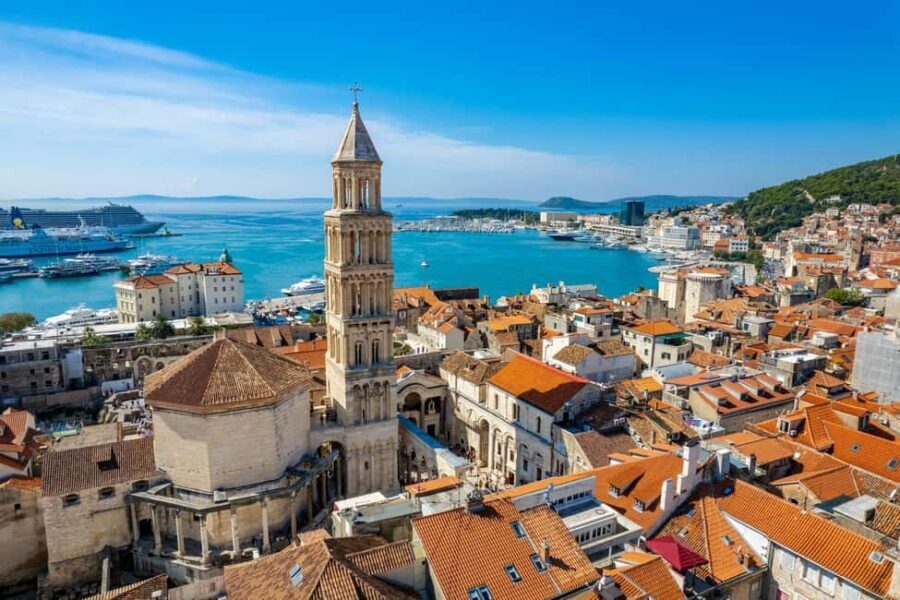
- Diocletian’s Palace cellars: Roman-era underground spaces that change how you picture the palace above.
- Roman gates and palace streets: South, North, and West Gate stops that help you orient fast.
- Peristil and the Egyptian sphinx: A striking black-granite relic in the palace complex.
- Cathedral of Saint Domnius: The oldest Catholic cathedral in the world, built from an imperial Roman mausoleum.
- Fruit Square to the Riva promenade: Old-market history plus panoramic views toward Marjan Hill.
- Guides who connect old and new: Expect stories from Split locals, with Game of Thrones-related spotting in the mix.
Why Split’s Diocletian’s Palace beats a quick photo stop
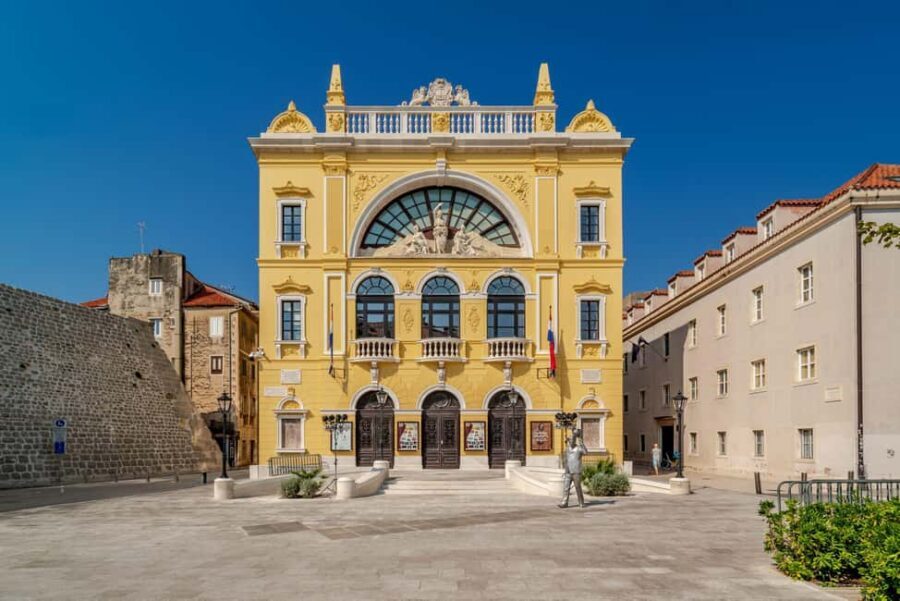
Diocletian’s Palace is one of those sights where a postcard fails you. Up close, it’s not “ruins over there.” It’s a real neighborhood made from Roman power and later layers of city life. On this tour, you walk the lines of the palace so the layout starts to click—streets, gates, courtyards, and that sense of why this fortress became a town.
I like that the pacing stays human. You’re not stuck in one lecture spot. You move through the old core while your guide explains what you’re seeing in plain language—plus little stories that make the stones feel less distant. It helps that guides often bring a local viewpoint; in past departures, I’ve seen names like Sandra and Ana/Anna mentioned for being enthusiastic and very good at connecting history to today’s Split.
There’s also a practical side. After a guided loop like this, you usually feel more confident wandering on your own afterward. That’s a real value, especially in a city where the streets can look confusing at first.
You can also read our reviews of more walking tours in Split
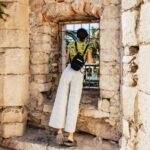
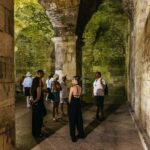

Starting points: where the tour begins in old Split
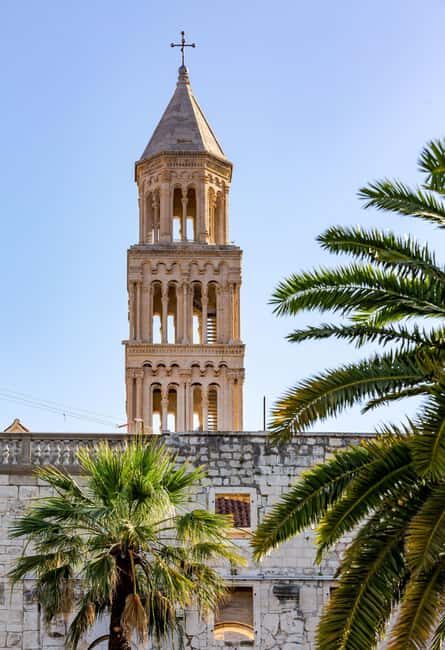
Depending on the option you book, you’ll meet at one of two practical places: South Tours Travel Agency or near Golden Gate. Either way, you’re starting in the zone where Split’s “old town maze” is easiest to understand once someone points out the major lines.
From the start, the tour uses quick stops to set your mental map:
- Golden Gate is your early orientation anchor, so you understand where the palace connects to the city outside.
- Then you move into the old-center atmosphere, where later life shows up next to Roman structure.
The biggest payoff of this approach is that you don’t just see highlights—you understand direction. That matters in Split because you’ll likely keep roaming afterward, and having those reference points makes it easier to choose your next walk.
Golden Gate to Game of Thrones Museum: history with pop-culture detours
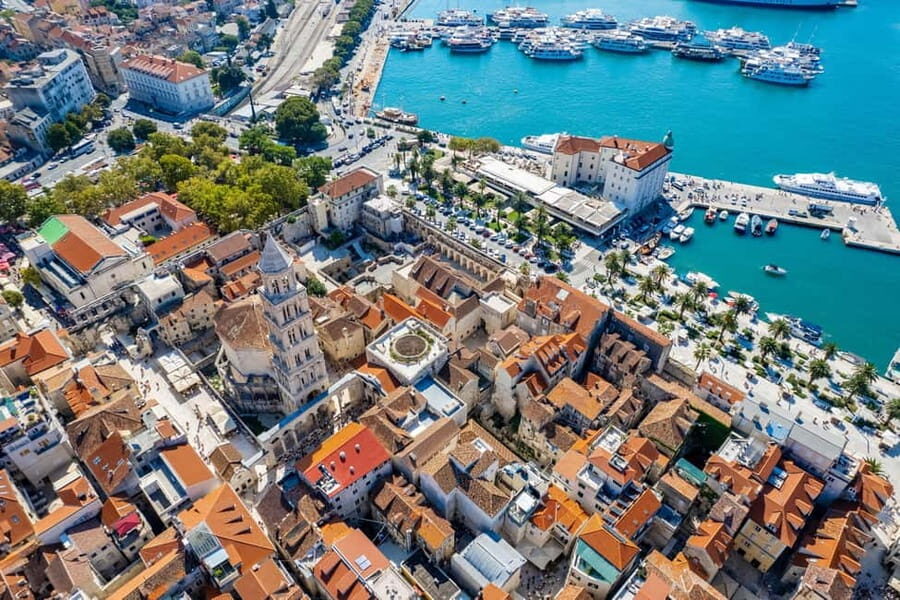
Right after you begin near Golden Gate, the tour continues through the old streets toward the Game of Thrones Museum. This isn’t just a detour for people who love TV. It’s a clever way to bring modern attention to a place that otherwise feels purely ancient.
You’ll spend only a short time at the museum stop, but it gives you context for why these locations keep getting referenced in pop culture. And guides often use that to explain how Split’s architecture and street layout lend themselves to storytelling. If you’re a fan, this can feel fun. If you’re not, it still helps you notice details you might otherwise ignore—angles, squares, and street widths that determine how a scene is staged.
A small warning: if you’re sensitive to museum-style crowding or if you’re rushing for other tickets, keep an eye on timing. This tour is designed to stay within the 1.5 to 2-hour window, so it’s not built for long museum time.
People’s Square and Fruit Square: where the Roman palace meets daily life
Next come two stops that show how Split keeps working as a city, not a frozen relic.
People’s Square is a good “breather” moment. It helps you reset before going back into the palace core. A guide can use this pause to connect earlier Roman ideas to later civic life—how the city grew, changed, and absorbed different architectural periods.
Then you reach Fruit Square (Voćni Trg), and here the tour makes history practical. You’ll learn that this space ties back to the old fruit market. That kind of fact is more than trivia: it teaches you to look at squares and street fronts as evidence of everyday routines, not just scenic backdrops.
If you’re the type who likes to understand how a place functioned day-to-day, these two stops are a big part of why this walk feels satisfying rather than rushed.
Heading to the Riva: the Mediterranean rhythm you can actually feel
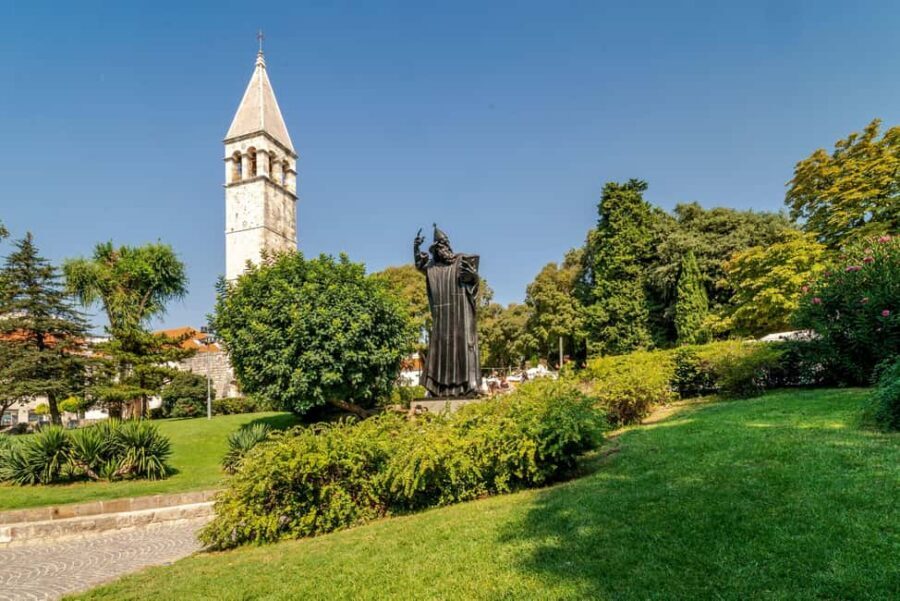
After Fruit Square, the route moves to the Riva waterfront. This is where you get the “oh right, we’re in the Adriatic” feeling. The Riva promenade is the pulse of Split—people walking, talking, watching boats, and taking in the view.
The tour uses the waterfront well. You’re not just looking at water; you’re getting panoramic views of Marjan Hill from the promenade. That matters because Marjan is one of Split’s defining backdrops, and it helps you orient your bearings for future sightseeing.
Also, mixing “Roman time” with “Mediterranean present” keeps your brain from turning history into a blur. You’ll likely leave with a better sense of how locals move through their city—slow strolling, frequent breaks, and a lifestyle built around the coast.





Entering Diocletian’s Palace through the palace gates
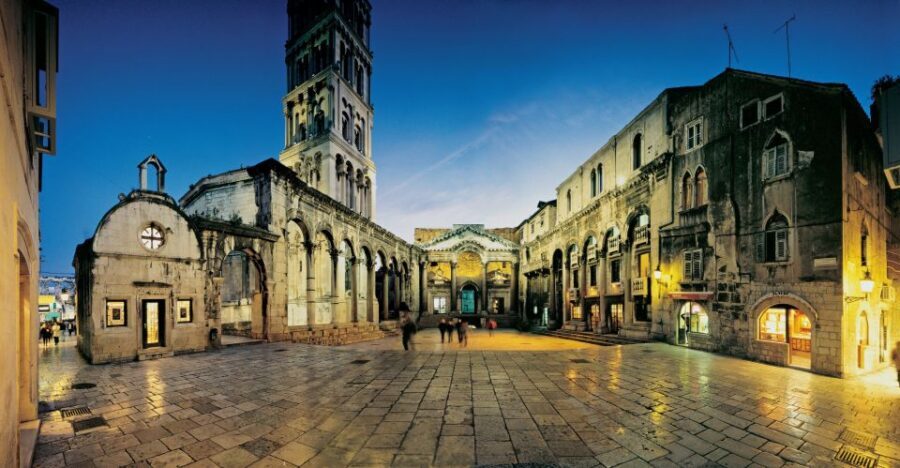
Now for the core move: you step into Diocletian’s Palace and start walking the internal logic of the complex. The tour typically routes you through the palace grounds from the South Gate area toward the cellars and main palace spaces, then around toward the broader palace highlights such as the Peristil, while also checking out the North Gate and West Gate along the way.
Why this gate-focused approach is smart: gates are structural storytelling. They tell you where people entered, how the palace controlled movement, and how power shaped everyday circulation. Even if you only remember a few names afterward, you’ll remember the layout better because you’ll have walked it.
One detail that makes the palace feel special is its layered architecture. You’ll see design that starts in the Roman era and blends with later periods, including 20th-century buildings within the same overall urban fabric. That’s one of the reasons Split feels so alive. The palace doesn’t sit “behind glass.” It’s part of the city’s working streets.
Roman cellars: the part that changes your mental picture
A standout highlight is the visit to the cellars of the Roman era inside the palace complex. Underground spaces are not just cool for photos. They shift how you imagine the palace above. Instead of seeing a fortress only as a monument, you experience it as a system—storage, control, and practical use.
These cellars often feel like a different temperature of time: Roman stone engineering under streets that now carry daily pedestrian traffic. On a short tour, it’s a big win to spend time where most visitors only glance from the surface.
If you’re someone who wants more than surface-level appreciation, this cellar stop is usually the moment you think, okay, I get it now. It’s also one of the reasons the tour is worth doing even if you’re planning independent palace wandering later.
Note on cost: entrance fees aren’t included, so you may pay separate ticket costs depending on what you’re entering during the tour.
Peristil and the Egyptian sphinx: the most memorable visual payoff
Next you’ll reach the Peristil (the Peristyle area). This is where the tour leans into one of Split’s most eye-catching relics: the last remaining Egyptian sphinx set in black granite in the palace complex.
That detail alone is a magnet for the camera. But what I like is that a good guide doesn’t treat it like a random oddity. You’ll get explanation that ties the sphinx to the palace setting and to how later eras layered meaning onto earlier Roman spaces.
The Peristil stop also helps you slow down visually. Instead of racing between points, you focus on the central feel of the palace: the kind of space designed for command, ceremony, and circulation. Even within a short itinerary, it’s a “pause and absorb” moment.
Cathedral of Saint Domnius: where Roman mausoleum becomes Catholic history

Then comes one of the biggest emotional stops: the Cathedral of Saint Domnius. The tour frames it in a way that sticks—this cathedral is formed from an Imperial Roman mausoleum, and it’s known as the oldest Catholic cathedral in the world.
That transformation is the story. You’re not only looking at a holy building. You’re seeing how architecture survives political and religious change. The reuse of an older structure speaks to how cities repurpose power, memory, and sacred space.
If you like places where you can stand and read the layers—Roman engineering beneath later religious meaning—this stop is a must. It’s also the kind of moment where a skilled guide makes a short visit feel meaningful, not just checkbox tourism.
Your guide should tie what you see to the broader story of Split: how an imperial project became a living city.
Vestibul photo stop: the quick moment to capture the palace vibe
Near the end, you’ll have a Vestibul photo stop and more guided walking. This is the kind of wrap-up point where you can capture the palace atmosphere—angles, stone textures, and the feeling of being inside a structure that still functions.
Photo stops can be hit-or-miss on tours. Here, it works because by this stage you’ve already built the context. So your photos aren’t random. They’ll actually represent what you learned: palace layout, gate movement, and the Roman-meets-later-eras mix.
Price and value: is $41 worth it for 1.5 to 2 hours?
For $41 per person, you’re paying for a live guide for 1.5 to 2 hours. Entrance fees and food aren’t included. So the value comes down to one question: does the guide time make your visit smarter?
In Split, I think it often does. A guide helps you avoid the “walk in circles and guess” problem. With an informed route—gates, squares, key palace areas, and the cathedral—you start recognizing what you’re seeing fast. That’s not just convenient. It’s a quality-of-visit upgrade.
Where you’ll feel the cost clearly is if you plan to buy lots of extra tickets on your own. Since entrance fees aren’t included, you may still pay separate amounts for the interiors you enter during the tour.
Still, if you want a fast, focused way to understand Diocletian’s Palace and key old-town landmarks without building a complicated self-guided plan, $41 is a reasonable entry ticket to real comprehension—especially in a place where the stories are as important as the stones.
What kind of traveler should book this Split walk
This tour fits best if you want:
- A short but structured orientation to old Split
- A guided route through Diocletian’s Palace plus the cathedral stop
- Storytelling that connects ancient architecture to modern Split life
- Help planning your next steps afterward (even just knowing your way back)
It’s less ideal if you:
- Need step-free, low-walking routes (the tour is not recommended for people with limited mobility)
- Don’t like guided time limits (this is designed to stay within 90 minutes to 2 hours)
Comfortable walking shoes matter. You’re on uneven historic streets, and the pacing is steady.
Should you book this Split: 1.5-hour Diocletian’s Palace walking tour?
If you’re doing Split for the first time and you want the palace story told in a way that makes the place easier to navigate, I’d book it. The best reason isn’t just the highlights—it’s the structure: gates, squares, Riva views, cellars, and Saint Domnius tied together into one coherent walk.
I’d hesitate only if you want a slow, long palace linger (this tour isn’t built for deep self-paced wandering) or if mobility is a concern. But for most people, this is a strong “starter kit” for Split—efficient, memorable, and guided by people who genuinely know how to turn an ancient city into something you can picture.
FAQ
How long is the Split walking tour with Diocletian’s Palace?
It runs about 90 minutes to 2 hours.
What’s the meeting point for this tour?
The meeting point can vary depending on the option you book, with starting locations that include South Tours Travel Agency and Golden Gate.
What’s included in the tour price?
You get a live guide for 1.5 to 2 hours.
Are entrance fees included?
No. Entrance fees and food and beverages are not included.
Which languages are available for the guide?
The tour offers a live guide in English and Spanish.
Is the tour suitable for people with limited mobility?
No. It is not recommended for people with limited mobility and it’s not suitable for people with mobility impairments.
What’s the cancellation policy?
You can cancel up to 24 hours in advance for a full refund.
Is there a way to book without paying right away?
Yes. You can reserve now and pay later, so you don’t pay anything today.