REVIEW · DUBROVNIK
Dubrovnik Old Town: Small-Group Walking Tour With A Local
Book on Viator →Operated by Dubrovnik Local Guides · Bookable on Viator
Old Town makes sense with a local guide. This small-group walk (capped at eight) starts at Ploče Gate and uses locally raised stories to connect the big landmarks to how Dubrovnik once worked. I love the tiny group size and the easy, efficient pace that gets you a true overview without feeling rushed.
One consideration: the tour avoids paid interiors. You’ll see major sights like the cathedral and monasteries from the route, but entrance fees aren’t included, so you may need separate tickets if you want inside.
In This Review
- Key points
- Where the tour starts: Harbour Viewpoint to your first steps into Old Town
- Ploče Gate and the Old Town core: the story behind the stones
- Dominican Monastery, the City Harbor, and the cathedral question
- St. Ignatius of Loyola and Rector’s Palace: power, faith, and politics in walking distance
- Ivan Gundulić to Sponza Palace: culture, markets, and the customs house you can still feel
- Marin Držić’s golden nose, Stradun’s shine, and the Old Town rhythm
- Saint Blaise, the Orlando Column, and the symbols people still point to
- Dubrovnik Synagogue and quiet corners: Stradun’s contrast with St. Roch
- Onofrio’s Fountain to the Franciscan Church: water, daily life, and a pharmacy that kept running
- How much time you should plan, and how to make it feel worth every minute
- What this tour costs, and why it can still be good value
- Should you book this Dubrovnik small-group Old Town walk?
- FAQ
- How long is the Dubrovnik Old Town small-group walking tour?
- How many people are in the group?
- What language is the tour offered in?
- Where does the tour start and end?
- Is a mobile ticket included?
- Are entrance fees included?
- What sights are included along the route?
- Is the tour outdoors?
- Is the tour accessible for most people?
- What is the cancellation policy?
Key points
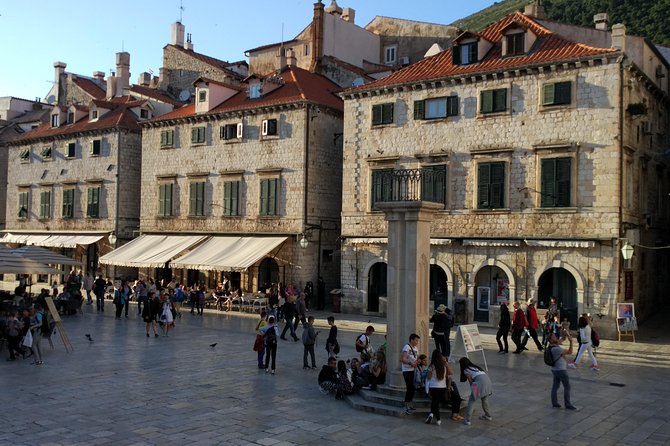
- Max 8 people keeps the walk personal, not like a cattle drive
- Licensed local guide with real-life context, not just memorized facts
- Interactive style often includes quick trivia and friendly competition (you’ll stay alert)
- UNESCO Old Town orientation through 15+ landmark stops in about two hours
- No paid museum/church entrances included, so plan for outside viewing at some stops
- Start/end near Old Town gates for a smooth flow: Harbour Viewpoint to Onofrio’s Fountain by Pile Gate
Where the tour starts: Harbour Viewpoint to your first steps into Old Town
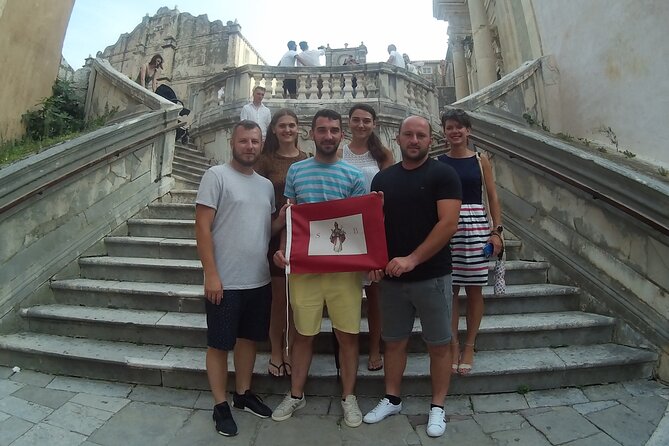
The meeting point is at Harbour Viewpoint, on Ul. Svetog Dominika bb, which is a handy spot to get oriented before you hit the densest parts of the Old Town. You’ll get a confirmation at booking, and the tour uses a mobile ticket—small detail, but it saves hassle when you’re already navigating narrow streets.
From the first minutes, the tone is set: you’re not just sightseeing; you’re learning how the Old Town was arranged for defense, trade, faith, and politics. This is a walking tour, so comfy shoes matter more than anything fancy.
You can also read our reviews of more tours and experiences in Dubrovnik.


Ploče Gate and the Old Town core: the story behind the stones
You begin near Ploče Gate, the eastern entrance to the Old Town. The guide starts with a short intro—how Dubrovnik developed and why this place mattered—then you immediately move through the streets where that history still shows on every corner.
This is where the small group size pays off. With up to eight people, questions don’t get swallowed by a crowd, and the guide can point out architectural details you’d normally miss while you’re simply looking for the next photo spot. It’s also a smart way to start your Dubrovnik visit: by the time you reach the central sights, you already understand what you’re looking at.
Dominican Monastery, the City Harbor, and the cathedral question
Next up is a quick stop at the Dominican Monastery, described as the oldest still active monastery in Dubrovnik. Even if you don’t go inside, the exterior visit works well because the guide frames the monastery in the rhythm of everyday religious life in the city.
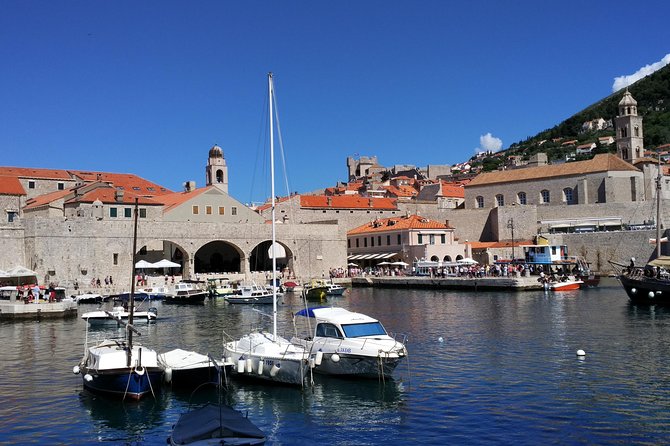
Then you turn your attention to the City Harbor, once the center of trade for the old Dubrovnik Republic. This stop is more than a scenic glance; it’s where maritime Dubrovnik comes alive—wooden galleons built long ago, commerce driving the city’s power, and the sea shaping everything.
After that, you reach the Cathedral of the Assumption of the Virgin Mary. The route explanation includes a fun twist—one cathedral or maybe three—and you’ll hear about its baroque architecture and the stories and legends people connect to it. One practical note: since entrance fees aren’t included, think of this as seeing the cathedral as part of your walking storyline, not as a guaranteed interior visit.
St. Ignatius of Loyola and Rector’s Palace: power, faith, and politics in walking distance
The Church of St. Ignatius of Loyola is next, and it brings a big theme: how the Jesuits arrived and why Dubrovnik welcomed their influence. There’s also a memorable detail tied to a famous Jesuit from Dubrovnik—one so notable that a crater on the Moon carries his name.
Then you move into political territory with Rector’s Palace. This building is presented as the supreme political institution of the old Dubrovnik Republic, and the guide’s job here is to translate “history” into something you can picture: the aristocracy, political wisdom, and a few strange and curious details that make the past feel human rather than dusty.
This section is usually the moment the tour clicks for people who like context. You start seeing the Old Town as a system: religious influence beside governing power, all within a walkable pocket of stone.
Ivan Gundulić to Sponza Palace: culture, markets, and the customs house you can still feel
At the Monument of Poet Ivan Gundulić, you meet a key cultural figure of the old Dubrovnik Republic and the guide typically ties him to the market square area around him. It’s a quick stop, but it helps you spot that this wasn’t just a fortress city—it was also a place where culture and public life mixed.
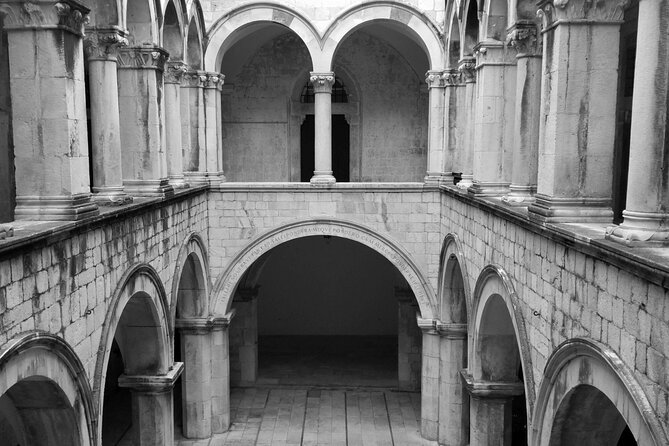
Then comes Sponza Palace, once the customs house of the Dubrovnik Republic and now home to historical archives. Even if you don’t enter, this stop is useful because it shows how trade wasn’t just an economic activity—it shaped the city’s buildings and public spaces. You might also hear about Latin proverbs connected with the place, which is the kind of small detail that makes later sightseeing feel richer.
Next you visit the Bell Tower, another short stop that focuses on what makes it special. These quick moments are part of why the tour works: it keeps moving, but not so fast that you stop processing what you’re seeing.


Marin Držić’s golden nose, Stradun’s shine, and the Old Town rhythm
If you’ve heard of people touching a certain nose in Dubrovnik, this is where it fits. The tour includes the Statue of Marin Držić, the famous renaissance playwright, where the story centers on the golden nose and why people touch it.
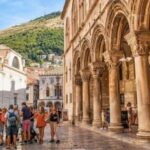
After that, you reach Stradun, the shiny main street of the Old Town. The guide’s approach here is practical: you get a guided walk along Stradun with context so you’re not just staring at walls. It’s also a great place to notice how crowds move. Since this tour keeps the group small, you can actually read the street instead of getting swept along by a larger mob.
As you cross from one landmark cluster to the next, the tour keeps a consistent pace that doesn’t feel like a sprint. In past departures, guides like Marko (and others such as Lucy, Lucia, and Markus) have used trivia-style prompts and short competitions to keep everyone engaged, which helps a lot if you get antsy watching crowds flow around you.
Saint Blaise, the Orlando Column, and the symbols people still point to

Next you’ll stop at the Church of Saint Blaise, Dubrovnik’s patron saint. The tour explanation focuses on the legend and the true story behind him, along with how you’ll see his statues referenced across the city.
Then the route moves to the Orlando Column, where you hear the story of the knight Orlando and how he became a symbol of the old Dubrovnik Republic. This is one of those stops that’s easy to treat as a photo-op—until the guide connects it to how the city wanted to represent authority and identity.
Together, these two moments help you understand that Old Town Dubrovnik isn’t just buildings. It’s messaging—religious devotion, civic pride, and political symbolism built into stone.
Dubrovnik Synagogue and quiet corners: Stradun’s contrast with St. Roch
The tour includes a visit to Dubrovnik Synagogue, with a focus on the history of the Jewish community in the city—from early days, through hardship, to the present. This stop is typically brief, but it matters because it broadens Dubrovnik’s story beyond the most common postcard themes.
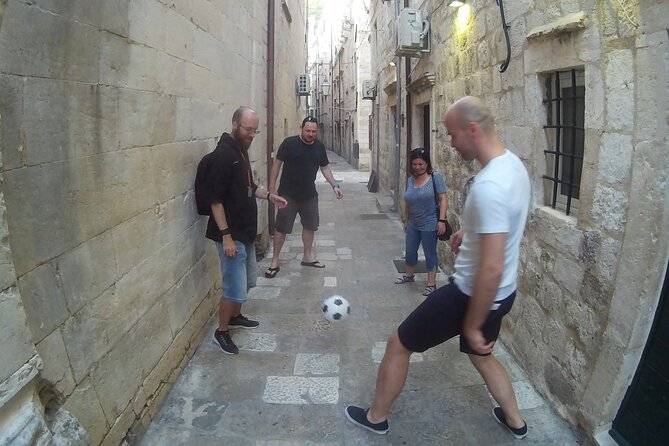
Then you head to Church of St. Roch, tucked away from Stradun. This one has a charming detail: in the 16th century, kids used to play football in front of the church, and the guide points out very old graffiti on the side wall. If you like human-scale details—little reminders of daily life—this is a standout.
Since the tour avoids paid entrances, you’ll mainly experience these places through observation from the outside and through the guide’s narrative. If you want a deeper interior visit, you can plan to add it on your own later.
Onofrio’s Fountain to the Franciscan Church: water, daily life, and a pharmacy that kept running
You finish the Old Town walk with Onofrio’s Fountain, built in the 15th century and described as the terminus of the old aqueduct. Water stops might sound small, but this one is a perfect “practical history” moment: it connects engineering, daily routines, and why the city’s layout worked.
After that, you reach the Franciscan Church and Monastery. The tour frames the Franciscans’ role in Dubrovnik society and highlights a specific claim about the Franciscan pharmacy’s continuity of work in Europe, described as the third oldest pharmacy by continuity. It’s a focused stop that helps you connect faith, community services, and everyday needs.
Finally, the tour ends near Pile Gate, by Onofrio’s Fountain area. The ending near a major gate is convenient because you’re positioned to continue exploring without backtracking through the densest lanes.
How much time you should plan, and how to make it feel worth every minute
The tour runs about 1.5 to 2 hours, which is a strong length for Old Town Dubrovnik. You’ll cover a lot of the “big names” without exhausting yourself to the point where the rest of your day turns into a recovery mission.
Because entrances aren’t included, keep your expectations aligned. This route is best if you want a guided orientation, clear context for what you’re seeing, and a map in your head by the end. If you’re a must-see-interiors person, treat the tour as step one, then add paid entry stops afterward based on what interested you most during the walk.
The guide can also matter more than you’d expect. A frequent theme in the feedback is an energetic, interactive delivery—light contests, trivia prompts, and close attention to architectural details. That style works especially well when Old Town feels overwhelming because it turns passive looking into active noticing.
What this tour costs, and why it can still be good value
At $34.59 per person, you’re paying for a professional licensed guide and a small-group format capped at eight. You’re also paying for efficiency: in under two hours, you get an organized loop through major landmarks—Ploče Gate, cathedral area, Rector’s Palace, Sponza, Stradun, and the finish by Pile Gate—plus the stories that help you remember them later.
The value is strongest if you’re the type who likes to understand a place, not just photograph it. If you only want a quick wander and don’t care about context, you might find a slower self-guided walk cheaper. But if you want your time in Dubrovnik to turn into real understanding fast, this price-to-time ratio can feel fair.
Should you book this Dubrovnik small-group Old Town walk?
You should book it if:
- You want a guided overview of Old Town’s key sights in about two hours
- You prefer a small group where questions and details actually land
- You like learning from a local who can connect buildings to the city’s old institutions and daily rhythms
- You enjoy interactive guiding style, where trivia-like prompts keep you engaged
You might skip it if:
- You want a tour that includes lots of paid interior access, since this one avoids attractions requiring entrance fees
- You’re aiming to spend your entire day inside churches and museums rather than walking through the Old Town’s streets and viewpoints
If your goal is to get your bearings fast, understand why Dubrovnik’s symbols show up again and again, and finish with a clear sense of how the city functioned, this is a solid bet. Then you can follow your own curiosity into the specific places that grabbed you most—on your own terms.
FAQ
How long is the Dubrovnik Old Town small-group walking tour?
It runs about 1 hour 30 minutes to 2 hours.
How many people are in the group?
The tour has a maximum of 8 travelers.
What language is the tour offered in?
It’s offered in English.
Where does the tour start and end?
It starts at Harbour Viewpoint (Ul. Svetog Dominika bb) and ends near Onofrio’s Large Fountain by Pile Gate.
Is a mobile ticket included?
Yes, the tour uses a mobile ticket.
Are entrance fees included?
No. Entrance fees are not included, and the tour does not visit churches or museums that require entrance fees.
What sights are included along the route?
The route includes stops such as Ploče Gate, the Dominican Monastery, City Harbor, the Cathedral of the Assumption of the Virgin Mary, St. Ignatius of Loyola, Rector’s Palace, Sponza Palace, Stradun, Onofrio’s Fountain, and the finish near Pile Gate.
Is the tour outdoors?
It’s a walking tour, and it requires good weather. If canceled due to poor weather, you’ll be offered a different date or a full refund.
Is the tour accessible for most people?
Most travelers can participate.
What is the cancellation policy?
You can cancel for a full refund if you cancel at least 24 hours in advance of the experience start time.