REVIEW · SPLIT
Split: History Walking Tour of the Old Town
Book on GetYourGuide →Operated by HI-story HiSTORY · Bookable on GetYourGuide
Split’s ancient stones tell stories fast. This history walking tour of Old Town Split turns the Palace of Diocletian into a living map, with stops like Golden Gate and the cellars that explain what life looked like here over 1,700 years. I especially like how the route blends big-name landmarks with small, human details that make the place feel real.
What I like second is the guide-led style: you get a licensed storyteller and a quick pace that keeps things moving, even when the heat climbs. The only real drawback is straightforward: it’s still a 90-minute walk on uneven old-stone streets, so comfortable shoes matter, especially in summer.
In This Review
- Key highlights worth your attention
- Split’s Golden Gate start: where the walk sets its rules
- Peristyle and the palace center: Roman grandeur you can actually follow
- Temple of Jupiter and the headless Sphinx: the fun stop that teaches
- Vestibule and People’s Square: the palace meets real street life
- The Diocletian cellars: cooler air and big storytelling
- “Human mousetrap” and the aqueduct surprise
- The cathedral-bell tower stop: the old city’s spiritual layer
- The jokes, riddles, and guide personalities that actually improve the tour
- Ending at the Riva: where your next step gets easy
- Price and value for $41 per person
- Who this tour suits best (and who might prefer something else)
- Practical tips to make the most of your 90 minutes
- Should you book this Split Old Town history walk?
- FAQ
- How long is the Split Old Town History Walking Tour?
- How much does it cost?
- Where does the tour start and does pickup exist?
- What languages are offered?
- What’s included in the price?
- What should I bring?
- Is there free cancellation?
Key highlights worth your attention
- Golden Gate and Diocletian’s palace core: a fast start that sets the whole city in context.
- Peristyle, Mausoleum, and Temple of Jupiter: major Roman spaces, explained without turning into a lecture.
- Riddles and the Sphinx moment: an on-the-ground way to remember what you’re looking at.
- Cellars under the palace: cooler air plus the drama of Game of Thrones chains and palace-era uses.
- Finish on the Riva: you end where you can immediately keep enjoying Split.
Split’s Golden Gate start: where the walk sets its rules
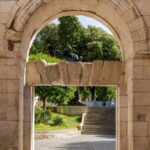
Split’s old town is built like a time machine, and this tour starts right at the point where the ancient and the everyday overlap: the Golden Gate. You’re not just looking at an impressive entrance. You’re getting the city’s “why” first, so later stops land with more meaning.
From there, the walk flows into the palace world that Diocletian left behind. The scale is still big enough to impress, even if you’ve seen Roman ruins before. What makes it work is the short, guided stops that connect each place to the next, instead of hopping around with no thread.
If you’re the type who likes your walking tours to include a story, not just photos, this one fits. Guides also have a reputation for humor and for turning questions back on the group, which helps everyone pay attention without feeling forced.
You can also read our reviews of more walking tours in Split

Peristyle and the palace center: Roman grandeur you can actually follow
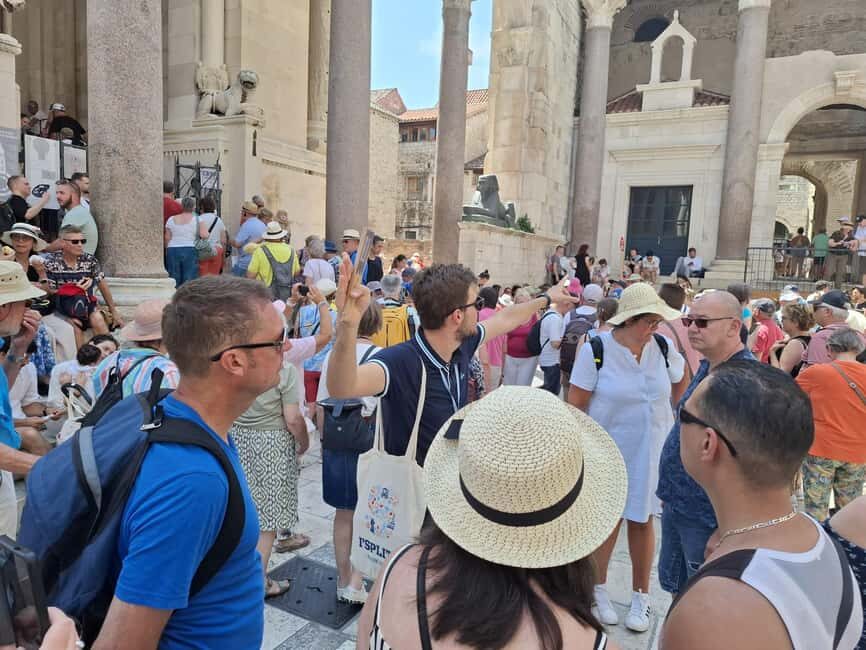
The Peristyle is the kind of space that looks obvious in a picture and surprising in real life. You see why it became a focal point inside Diocletian’s palace complex, and you get the sense that this wasn’t an out-of-the-way outpost. It was a planned center for power and daily movement.
Then you move toward the Mausoleum area and the palace’s spiritual-leaning spaces, where the explanation helps you connect architecture to belief systems. Roman sites often feel like “look, big stone, next.” Here, the guide gives you a way to read the stones: who used them, what the space meant, and how Split’s later identity grew on top of them.
One of the smartest parts of the pacing is that you don’t linger too long in any single stop. For a 90-minute experience, it keeps your feet moving and your attention intact. And if you’ve already walked a bit on your own, this still gives you the structure to understand what you’ve been passing all along.
Temple of Jupiter and the headless Sphinx: the fun stop that teaches
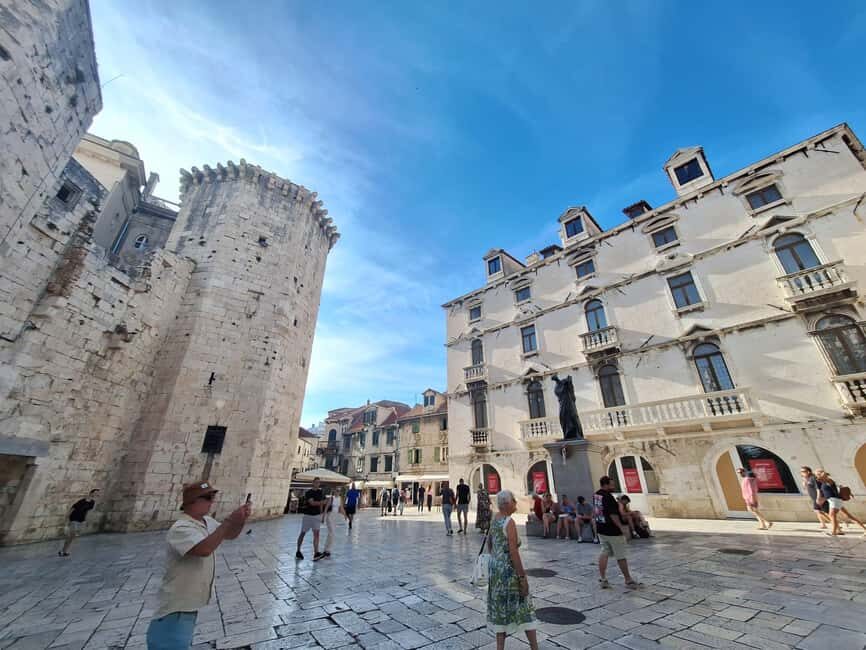
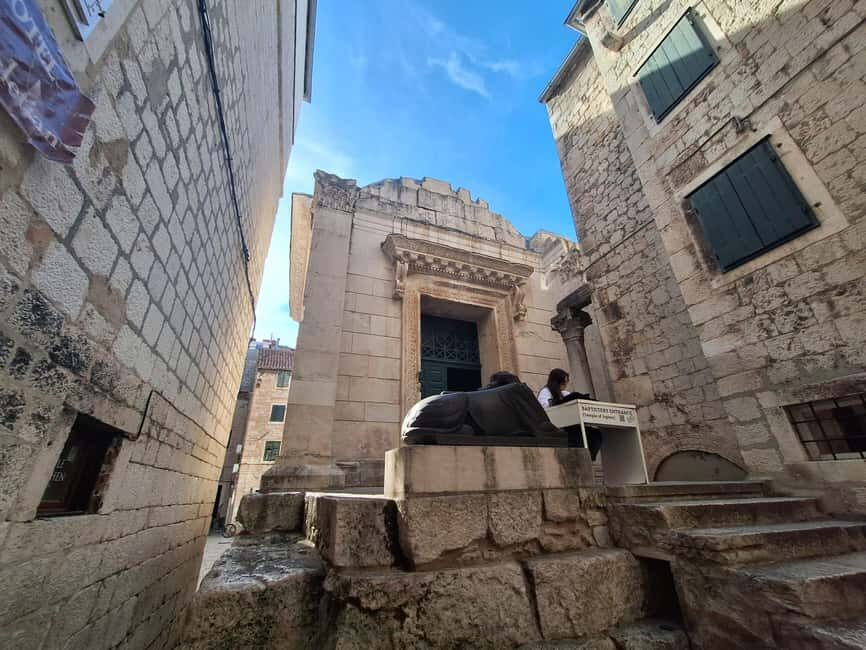
At Jupiter’s Temple, you get that perfect mix of “wow” and “wait, what am I looking at?” This is where the tour leans into playful learning. The headless Sphinx guarding the entrance becomes part of the story, and you’re prompted to understand why that symbol matters here.
There’s also a riddle element in the tour style, which sounds silly until you realize it does one useful thing: it forces your brain to remember details. You’ll leave with a clearer mental picture of the temple approach, the symbolism, and how Roman religious sites were communicated visually.
Even if you’re not big on mythology, this stop works because the guide anchors it to place. You’re standing in the real setting while the story clicks, instead of reading about it later with no reference.
Vestibule and People’s Square: the palace meets real street life
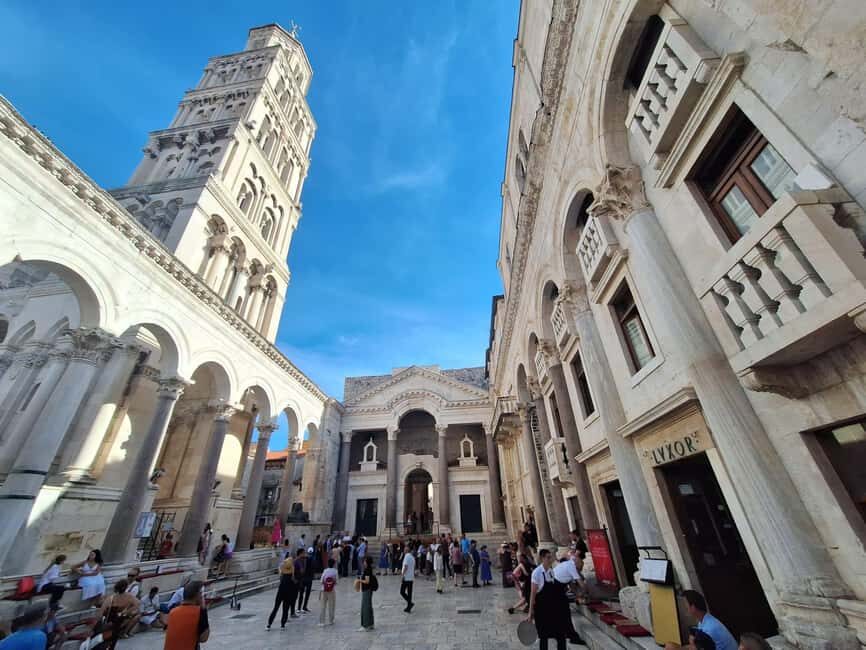
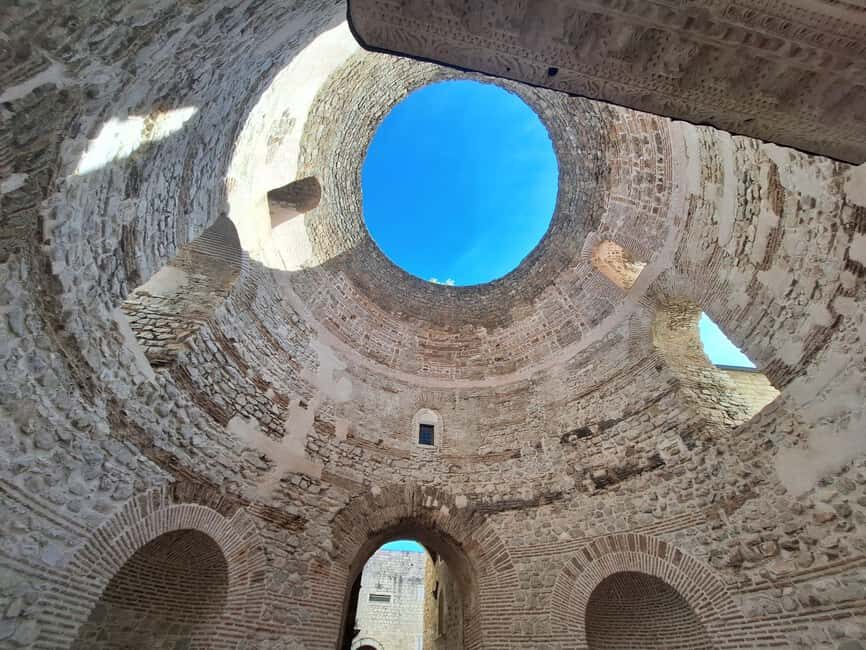
The Vestibul is one of those “in-between” spaces that can be easy to miss. With a guide, it becomes a connector between the grand, formal zones and the everyday flow of the city.
From there, the walk reaches Pjaca (People’s Square) and Fruit Square (Voćni trg), and this is where Split shows its personality. These are not just architectural pit stops; they’re civic spaces where the city’s routines happen. You get a quick look at how historic cores evolve, how commerce and community keep operating inside old walls.
This part also tends to feel more social. If you enjoy asking questions or listening to how a local explains modern life next to ancient stone, this section does the job without running too long.
The Diocletian cellars: cooler air and big storytelling

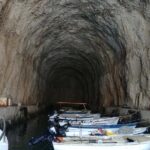
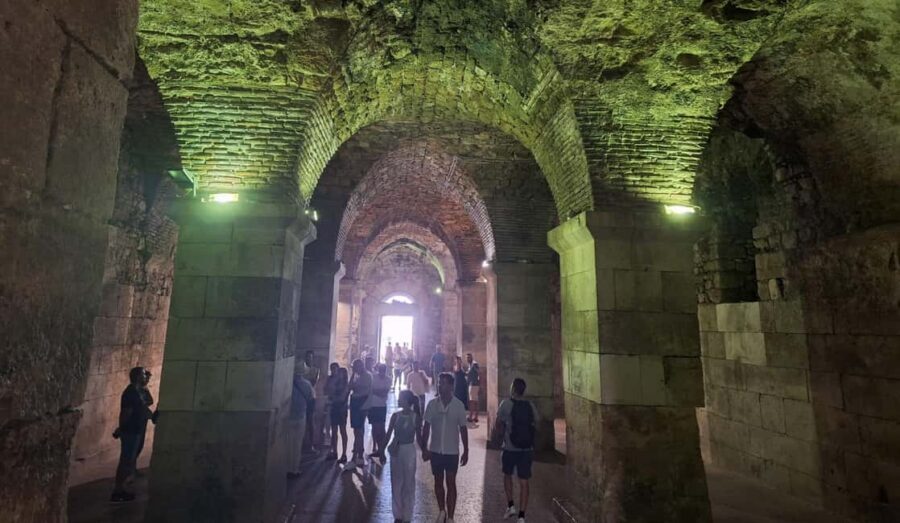
One of the best reasons to book this tour in the first place is the time underground. Diocletian’s Cellars are where the tone shifts from Roman splendor to practical, controlled space—storage, protection, and power in a different form.
On this walk, the cellars are also tied to pop-culture imagery. If you’re a Game of Thrones fan, the tour highlights the idea of Daenerys Targaryen’s dragons being chained here, plus references to other series scenes connected to the palace setting. Even if you watched only some of the show, it gives you a memorable handle to understand why these spaces were used.
A practical perk: the cellars are naturally cooler than the street. In hot months, that alone can make the entire tour feel more comfortable. One guide style detail that really helps is managing the flow in tighter areas so you don’t feel rushed and you still get time to look.
You can also read our reviews of more historical tours in Split





“Human mousetrap” and the aqueduct surprise
As the story turns toward the more dramatic features of the palace spaces, you’ll hear about the “human mousetrap” concept and other clever descriptions that bring up how passageways and layout affected people moving through the complex.
You may also get an unexpected technical highlight: a fresh-water fountain fed through an aqueduct that’s described as about 2,000 years old. This is the kind of detail that makes you rethink the palace as a living system, not just a monument.
These moments are why I think this tour is better than an all-photo experience. You’re learning how the place functioned, not just what it looked like.
The cathedral-bell tower stop: the old city’s spiritual layer
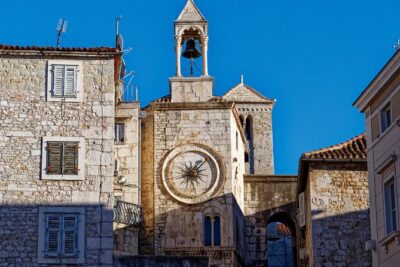
Split is a layered city, and the tour touches a key point in that story: the area includes the oldest cathedral in the world and a bell tower with standout views. You get a guided look that connects the religious evolution of the site to the earlier Roman setting.
This stop can be brief, but it matters because it shows you that “ancient Split” didn’t freeze. Instead, it kept changing—new beliefs, new uses, and new architecture built into the same footprint.
If you’re someone who likes to understand why places remain important over centuries, this is one of the “I get it now” moments.
The jokes, riddles, and guide personalities that actually improve the tour
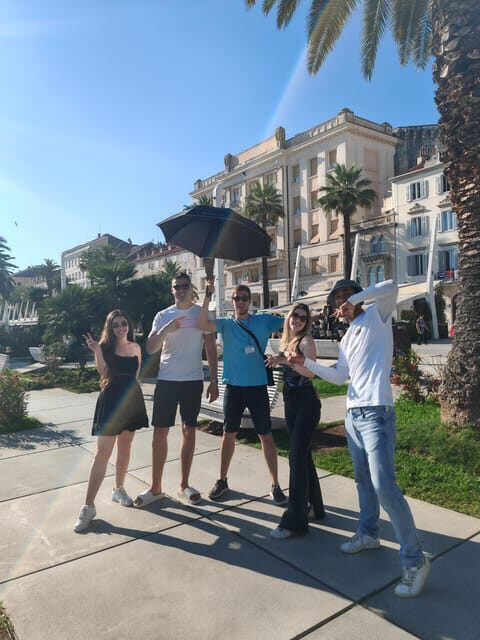
The difference between an average walking tour and a great one is usually the guide. This tour’s guides lean into humor, question prompts, and story hooks, which keeps the group from drifting mentally.
You might hear guide names like Nina, Maya, Marc, and Marko, and the common thread in their approach is clear: they explain the past in a way that stays light and engaging. One guide even brings a folder with photos and maps, which is handy if you like visual context while you walk.
Another very practical style note that can matter more than people expect: a good guide helps you navigate crowds and line pressure, and can steer you to better shaded spots. In Split’s summer heat, that’s not a luxury. It’s part of making the experience enjoyable.
Ending at the Riva: where your next step gets easy
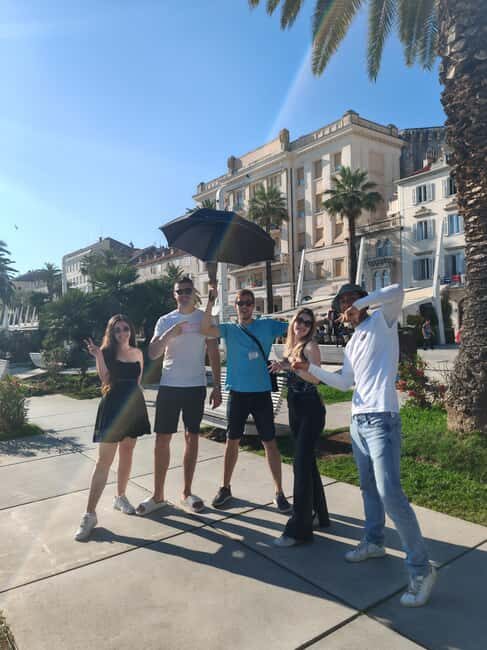
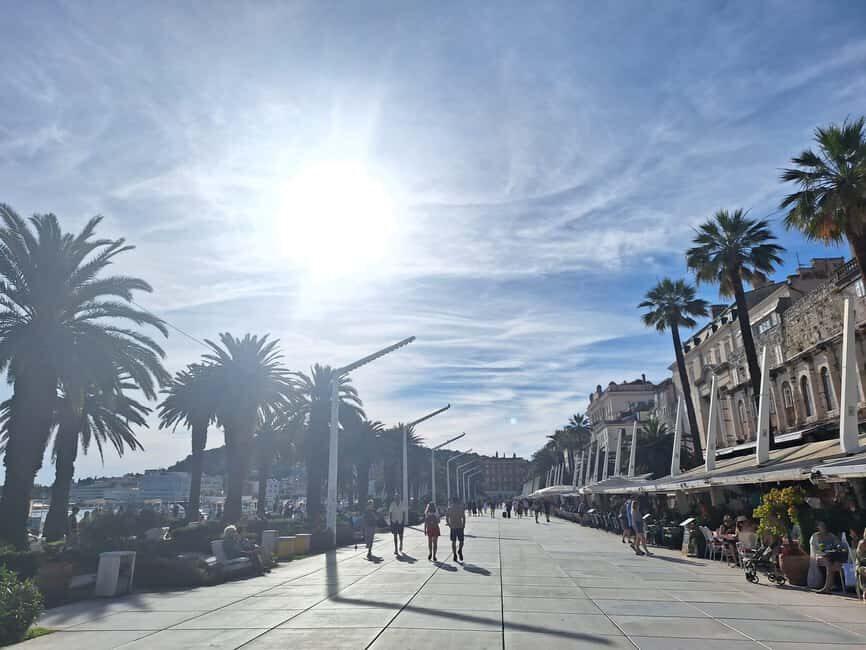
The tour finishes at the Riva, the sea-front promenade lined with tall palm trees. This is smart planning because you’re not left in the middle of old streets with no clue what to do next.
From there, you can naturally transition into post-tour priorities: a long drink, a slow walk by the water, or planning your next day. The tour also shares recommendations for how to spend the rest of your day and which islands to consider, plus tips on where to find Dalmatian specialties.
If you want a “start strong, end conveniently” day, this is a good structure. You’ll also be in a spot where it’s easier to orient yourself for the rest of your sightseeing.
Price and value for $41 per person
At $41 per person for about 90 minutes, the value mostly comes from the guided format and the specific set of stops you get inside the palace complex. You’re paying for more than entry into impressive-looking places. You’re paying for a local guide who connects the stops so you leave with a coherent picture.
This is also one of those tours where duration works in your favor. Ninety minutes is long enough to cover the palace’s major nodes and the cellars, but short enough that you’re not stuck commuting between far-flung sites.
If you have a limited time window in Split, this price feels reasonable because it concentrates the highest-impact landmarks into one walk. If you have plenty of time and love self-guided exploration, you could go on your own—but you’d likely lose the “why it matters” layer that makes the architecture easier to remember.
Who this tour suits best (and who might prefer something else)
This tour is ideal for first-timers who want the Palace of Diocletian story told clearly and quickly. It’s also a strong fit if you like guides who use stories and small challenges like riddles to keep you engaged.
It’s also great for couples, friends, and small groups—especially if you’re curious about both ancient Roman life and modern Split culture. The tour includes tips on local food habits and discounts, which adds practical value when you’re figuring out where to eat next.
If you’re someone who hates any walking at all, or you’re sensitive to heat and uneven stone, you might prefer a shorter or more transport-based option. This is not a sit-and-stare museum experience.
Practical tips to make the most of your 90 minutes
Bring comfortable shoes, plus water. A hat and sunscreen are worth it because you’ll spend time outdoors before and after the cooler cellar section.
If you care about comfort, show up early enough to settle. One of the guide advantages is finding better shade and keeping the group moving smoothly, but your best experience still starts with being ready for summer walking.
Also, don’t overpack with expectations. This tour doesn’t try to cover every corner of Split. It focuses on high-signal stops and keeps the story moving, so you’ll be happiest if you let the guide lead.
Should you book this Split Old Town history walk?
Yes, if you want a guided, story-driven way to understand Split’s most famous layer: Diocletian’s Roman palace sitting at the heart of the modern city. The pairing of major sights like Golden Gate and Peristyle with the underground cellars makes it more complete than a basic highlights stroll.
Book it especially if you’ll enjoy playful learning—Sphinx riddles, jokes, and vivid descriptions make the architecture easier to remember. And you’ll like the practical payoff: ending at the Riva with recommendations so you can keep enjoying Split without stopping to figure things out.
Skip it if you already know the Roman basics and just want free time wandering. In that case, you might prefer a longer independent day. But for most visitors, this is a solid, efficient way to get orientation and meaning fast.
FAQ
How long is the Split Old Town History Walking Tour?
It lasts about 90 minutes.
How much does it cost?
The tour price is $41 per person.
Where does the tour start and does pickup exist?
The starting point can vary depending on the option you choose. Pickup is optional, and you can provide your hotel and street, or message if you are arriving by boat.
What languages are offered?
The live guide speaks English and Spanish.
What’s included in the price?
You get a local licensed tour guide and a history walking tour covering the palace and key sights, with insights into local food, habits, and discounts. You also have a private meeting point available on private tours.
What should I bring?
Bring comfortable shoes, a hat, sunscreen, and water.
Is there free cancellation?
Yes. You can cancel up to 24 hours in advance for a full refund.