REVIEW · SPLIT
Split: Private Walking Tour in the Historical Town Center
Book on GetYourGuide →Operated by Sanja - Tour Guide in Split · Bookable on GetYourGuide
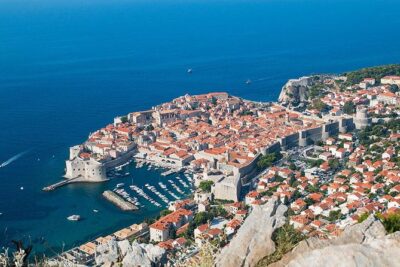
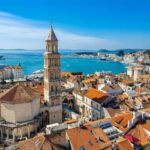
Split reads like a time machine. This private walking tour stitches together the Diocletian’s Palace complex, medieval streets, and major squares in one focused 1:45 route, with the added bonus of learning how the city’s look changed under different rulers. You meet right on Riva promenade by the bronze model of the old town, so you start with context instead of wandering.
I like that you hit the biggest visual anchors in a smart order: Peristil, St. Domnius Cathedral, Jupiter’s Temple (seen from outside), and the palace gates, then you continue to the squares outside the palace walls. I also like having Sanja, a licensed local guide with a Master’s degree, leading the story in several languages with room for questions. The main drawback to plan for: the palace Substructures (Basements) have an entrance fee that is not included.
In This Review
- Key highlights to look forward to
- A 105-minute private route through Split’s palace walls and squares
- Meeting on Riva: how to start in the right place
- Diocletian’s Palace: where Roman walls turn into medieval streets
- Peristil: the palace’s main square in plain sight
- Substructures (Basements): the extra ticket that changes the story
- St. Domnius Cathedral: Mausoleum turned living landmark
- Jupiter’s Temple (Baptistery): what you learn even from outside
- Golden Gate and the palace walls: four gates, one city logic
- A medieval neighborhood inside the Roman walls
- The small former Jewish ghetto: a living link to the past
- Outside the palace walls: Pjaca, Fruit Square, and Prokurative under shifting rulers
- A simple way to use what you learn
- Ending on Riva promenade: turn the last 10 minutes into a plan
- Price and value: what $153 per group really buys you
- Who should book this private Split walking tour
- Should you book it?
- FAQ
- Where does the tour start?
- How long is the tour?
- What is the price?
- Is this a private tour?
- What languages are available?
- What’s included in the price?
- What is not included?
- Are any stops outside only?
- Is there free cancellation?
- Is the tour suitable for wheelchair users?
Key highlights to look forward to
- Meet at the bronze model on Riva promenade for quick orientation from minute one
- Diocletian’s Palace + the medieval town inside it, with style mix you can actually see
- Substructures visit includes optional entry (extra fee) so you can decide on the spot
- A guided route through palace gates and major landmarks without wasting your energy
- Squares outside the palace (Pjaca, Fruit Square, Prokurative) tied to Venetian, French, Austro-Hungarian, and Yugoslav rule
A 105-minute private route through Split’s palace walls and squares
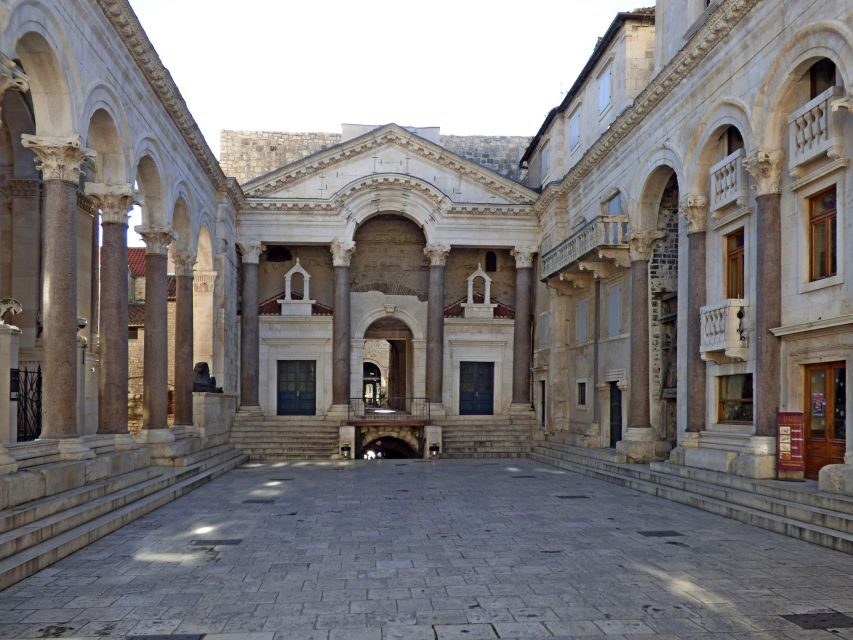
This is the kind of tour I recommend when your time in Split feels short but you still want the city to make sense. Instead of hopping randomly between photos, you get walked through the old town’s structure: Roman foundations first, then the centuries layered on top. With a private group, the pace stays human, and it’s easier to ask follow-up questions when something catches your eye.
The 105 minutes also has a practical feel. You’re not trapped for hours in one place, and you’re not rushed so hard that you only catch a silhouette of each stop. The ending on Riva promenade is a smart finish too: you get daylight, sea air, and an easy jump-off point for your own evening plans.
You can also read our reviews of more walking tours in Split

Meeting on Riva: how to start in the right place
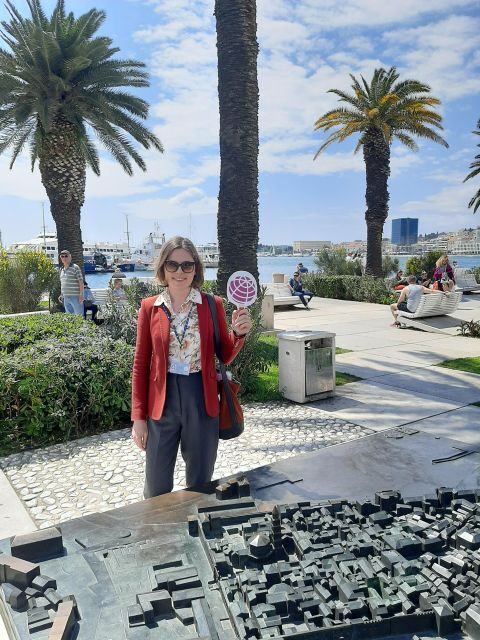
You meet at the bronze model of the historical core on Riva promenade, in front of the south entrance to Diocletian’s Palace. That matters more than it sounds. Split’s old town can feel like you’re walking inside a maze, but the bronze model gives you a quick “map in your head” before you go anywhere serious.
If you’re coming from a cruise ship or central waterfront areas, Riva is usually the easiest landmark to navigate. Once you see the model, you can orient your direction before you even start thinking about shoes, crowds, or where to eat later.
Diocletian’s Palace: where Roman walls turn into medieval streets
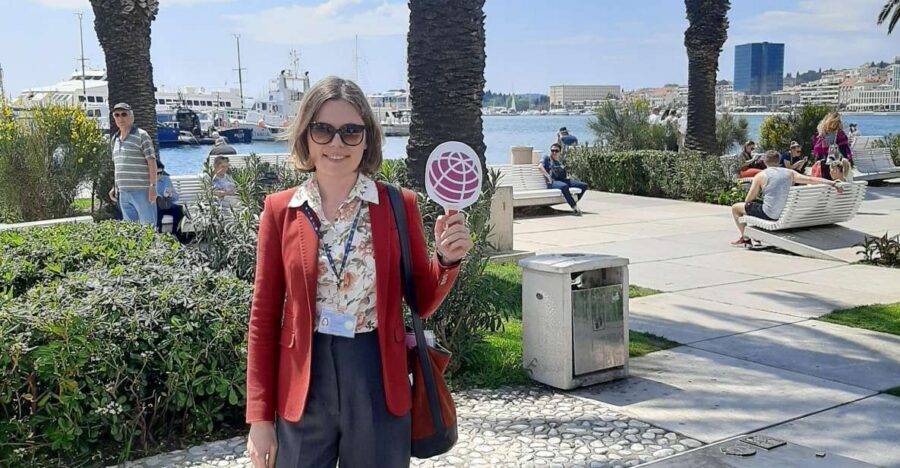
The first big chunk is inside Diocletian’s Palace, the oldest part of Split, dating to the 4th century. What makes this tour work is that it doesn’t treat the palace like a single monument. You see how the Roman structure became a lived-in space, with a small medieval neighborhood growing inside it. That visual mix is the point: stone that was once built for power is later adapted for ordinary life.
You’ll walk and get guided time here, including stops that let you understand the palace’s logic—where public life sat, where protection mattered, and how the town evolved within the walls. Even if you’ve seen “Roman ruins” before, the palace is different because you’re not viewing an empty site. You’re moving through a place where the city kept going.
Peristil: the palace’s main square in plain sight
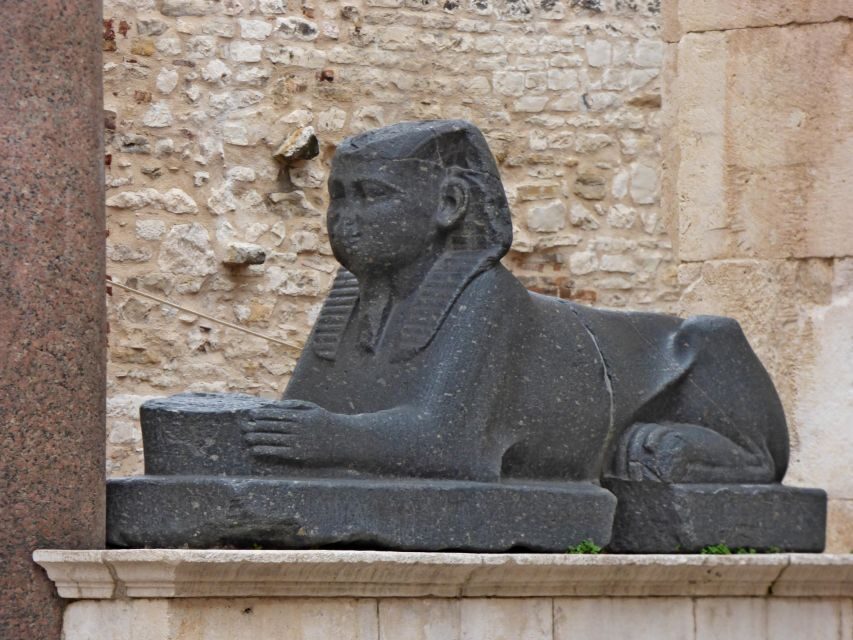
Next up is Peristil, the central square. This is where your guide helps you read the layout. In practical terms, Peristil is a visual anchor: once you understand it, the rest of the palace corridors and surrounding spaces feel less confusing. You get guided time here for sightseeing without it turning into a lecture about every stone.
If you only had one stop to understand the palace’s “center of gravity,” it would be this.
Substructures (Basements): the extra ticket that changes the story
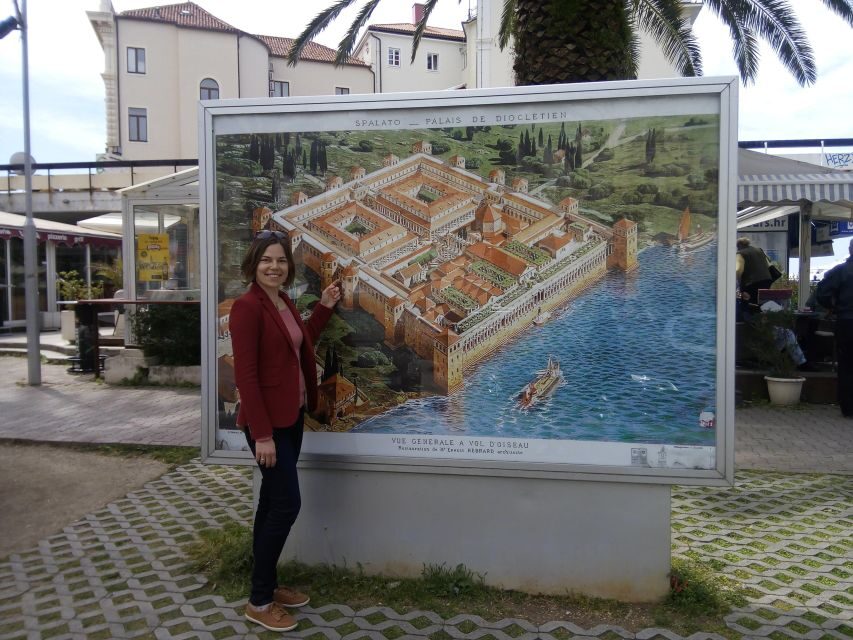
The tour includes a visit to the palace Substructures, also called the Basements. Here’s the practical catch: you’ll need an entrance fee for this part, since it’s not included. If you’re the type who likes seeing how buildings work from the inside—storage, access routes, and the kind of infrastructure that usually stays hidden—this is the stop that pays off.
If you’re trying to keep your budget tight, you can treat it as an optional upgrade. Even so, the guide’s explanation beforehand helps you understand what you’re looking at once you step down.
You can also read our reviews of more private tours in Split





St. Domnius Cathedral: Mausoleum turned living landmark
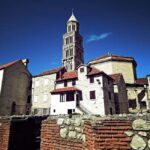
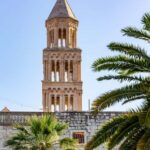
You also visit the Mausoleum / St. Domnius Cathedral. This is one of Split’s most important spiritual and architectural turning points: a Roman imperial burial structure transformed into a Christian landmark. The tour gives you time for a guided look plus sightseeing, so you’re not just passing by for a quick photo.
The good part here is the context. Without it, you might just see a big church. With it, you start recognizing the “why” behind the building’s reuse—how power changes hands and architecture follows.
Jupiter’s Temple (Baptistery): what you learn even from outside
Jupiter’s Temple is visited from the outside. That sounds limiting, but it’s actually useful on a short tour. You get a sense of the original Roman structure and how the site’s identity shifted over time. It’s described as being seen as the Baptistery, and you’ll get guided time for sightseeing without needing another ticket.
This is a good example of how the route protects your time. One ticketed stop, then back to visible anchors where you can keep momentum.
Golden Gate and the palace walls: four gates, one city logic
Another highlight is walking the palace walls with its gates, including the Golden Gate. Gates are more than decorative entrances. They’re how a city controls movement. When you connect the gates to the layout of surrounding streets, Split stops feeling random and starts feeling designed.
You’ll get guided time that helps you connect the palace’s boundaries to where later neighborhoods took shape. If you’re the type who likes to orient yourself for self-guided exploring later, pay attention here. You’re building a mental map, not just collecting facts.
A medieval neighborhood inside the Roman walls
One of the most interesting parts is how the tour introduces you to medieval houses of noble families inside the palace complex. This is where you see the city’s layers in a way that feels real, not staged. You’re walking through space that has kept shifting uses over centuries, which helps you understand why Split feels so tightly packed.
Also, you spend time in areas that reflect social life, not just royal or religious power. That makes your later strolls more rewarding, because you start noticing the difference between ceremonial spaces and everyday corners.
The small former Jewish ghetto: a living link to the past
The tour includes a small former Jewish ghetto area, including a synagogue that is still active. This is one of those stops where the meaning is larger than the stones. The value here is the human angle: you’re shown how community life persisted through changing rules and regimes.
Since the tour gives you guided time rather than a rushed pass, you should be able to ask questions if you’re curious about how the site connects to Split’s broader story. Even if you don’t go inside, the explanation changes how you read what you see.
Outside the palace walls: Pjaca, Fruit Square, and Prokurative under shifting rulers
The second part of the walk moves you to the medieval neighborhood built outside the palace. This section is where you learn to connect architecture and urban life with political control—how different powers shaped what the city looked like and how people lived day to day.
You’ll discover key squares:
- Pjaca
- Fruit Square
- Prokurative
You also learn about socio-political lifestyle under Venetian, French, Austro-Hungarian, and Yugoslavian rule. The practical takeaway is this: the squares aren’t just pretty backdrops. They were stages for commerce, administration, and public life. When your guide ties the vibe of each square to its era, you’ll notice details you might otherwise miss.
A simple way to use what you learn
After this kind of guided “timeline in the street,” your self-guided exploring gets easier. You’ll likely find yourself thinking, okay, that square feels like X era, so the surrounding buildings make sense. That’s the real value of a tour like this: it turns walking into reading.
Ending on Riva promenade: turn the last 10 minutes into a plan
You finish back on Riva promenade by the sea. Ending here works because you can decompress right after concentrating on history. It also makes logistics simpler: you’re back in a lively, easy-to-navigate waterfront zone.
If you want to keep your momentum, use the ending to pick one direction for your evening walk. With the palace layout and the key squares fresh in your mind, you’ll be less likely to zigzag randomly.
Price and value: what $153 per group really buys you
At $153 per group (up to 15), this is priced like a true private experience: you’re paying for a licensed local guide and a tight route that aims to cover the must-see highlights without wasting time. The value depends on your travel style.
If you’re a small group or even just a couple, the private format often feels like the cheapest way to get quality attention rather than trying to listen through crowds. If you’re budget-focused, the only extra “gotcha” is the entrance fee for the palace Substructures. Plan for that and the math stays straightforward.
One note from real-world feedback: the tour can feel a bit pricey at first glance. That’s fair. The best way to justify it is to treat the guide as part of your sightseeing plan, not just a storyteller. When the explanations help you understand what you’re seeing and where to go next, the cost starts to make sense quickly.
Who should book this private Split walking tour
This fits best if you:
- Want a guided overview early in your Split visit so the old town makes sense later
- Like learning how power and politics show up in buildings and city layout
- Prefer a private pace where you can ask questions
- Plan to spend time both inside Diocletian’s Palace and in the surrounding squares afterward
It’s not a great fit if you need wheelchair accessibility, since it’s not suitable for wheelchair users. It’s also a walking tour, so you’ll want comfortable shoes and a willingness to move steadily for the full 105 minutes.
Should you book it?
If you’re trying to get your bearings in Split without turning your trip into a scavenger hunt, I’d book this. The route hits the major landmarks in a logical order, and the combination of Roman palace structure plus later medieval squares gives you a fuller picture of the city than a “just show me the highlights” walk.
I’d especially recommend it if you care about understanding architecture across eras, and if having one clear guide makes your sightseeing more enjoyable. Just remember the Substructures have an extra entrance fee, and you’ll get the most out of the tour if you use it as your starter map for the rest of your day.
FAQ
Where does the tour start?
It starts by the bronze model of the historical core of the city on Riva promenade, in front of the south entrance to Diocletian’s Palace.
How long is the tour?
The tour lasts about 105 minutes (roughly 1 hour and 45 minutes).
What is the price?
The price is $153 per group, up to 15 people.
Is this a private tour?
Yes, it’s a private walking tour with a private group.
What languages are available?
The guide offers live tours in English, Italian, French, and Spanish.
What’s included in the price?
It includes a professional licensed local guide with a Master’s degree and the private tour. Commission tax is also included.
What is not included?
Entrance fees to Diocletian’s Palace Substructures (Basements) are not included.
Are any stops outside only?
Jupiter’s Temple (described as the Baptistery) is an external visit with no entrance fee.
Is there free cancellation?
Yes. You can cancel up to 24 hours in advance for a full refund.
Is the tour suitable for wheelchair users?
No, it is not suitable for wheelchair users.