REVIEW · SPLIT
Split: Private Food Tasting Tour
Book on GetYourGuide →Operated by www.splitwalkingtour.com · Bookable on GetYourGuide
Split tastes better with a guided bite route. This private 2-hour food tour in Split mixes the Green Market and Fish Market with quick stops for long-time favorites and real local stories.
I especially like the small group pace and the way you get lots of samples, from Dalmatian prosciutto with bread to Soparnik and salted anchovies. The guide often brings names and context to what you’re eating, like how Split’s snack culture connects to the city itself.
One consideration: the wine part can feel like a separate segment for some schedules, so if you’re stacking plans after the tour, ask the guide how the tastings will run.
In This Review
- Key things to know before you go
- How this Split food tour works in 2 hours
- Meeting at Golden Gate and what that means for your time
- The Farmers’ Market and Fish Market: where the tour earns its value
- Dalmatian snack classics you’ll actually recognize after
- The chocolate shop with a Guinness World Record and the oldest pastry stop
- Wines, olive oil, and how to pace your tastings
- Private group comfort: the pace and the people behind it
- What to do before and after the tour
- Price and timing: getting $176 per group up to 2 to feel fair
- Who should book this tour (and who should skip it)
- Should you book this Split private food tasting?
- FAQ
- Where is the meeting point?
- How long is the Split private food tasting tour?
- Is this a private tour or a group tour?
- Is hotel pickup included?
- What food and drinks are included in the tastings?
- Do you visit the markets?
- Is there wine on the tour?
- Are children allowed?
- Is the tour suitable for wheelchair users?
- What are my options if I need flexibility?
Key things to know before you go
- Market-first start: you begin by seeing how locals shop at the Farmers’ and Fish market, not just tasting off a plate
- Food with stories, not just bites: each snack comes with background on why it exists in Dalmatian cooking
- Dalmatian staples you can actually name: Soparnik, arancini, prosciutto with bread, and more
- Chocolate and pastry stops are real “Split” landmarks: including a chocolate shop with a Guinness World Record and an old pastry shop
- Sweet ending is part of the plan: you don’t leave with only savory impressions
- Private means you can ask questions: you’ll get room to slow down, point, and clarify
How this Split food tour works in 2 hours
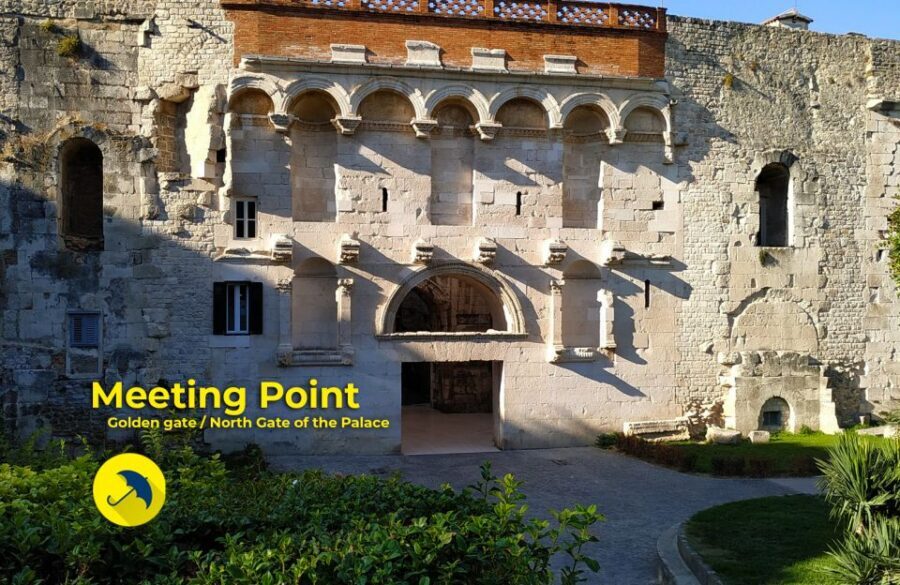
This is a tight, efficient food walk built for people who want authentic Dalmatian flavors without a half-day commitment. You meet at the Golden Gate of Diocletian’s Palace, down the stairs from the bronze statue of Gregory of Nin. If you spot a guide with a blue umbrella, you’re in the right place.
The best part? You’re not just “doing tasting” and moving on. You’re learning how these foods fit together: market ingredients turn into street-level snacks, snacks turn into a full meal, and the day ends with something sweet. With a private group setup (price is per group up to 2), the guide can keep the pace comfortable and answer questions as you go.
You should expect a couple of hours of purposeful walking plus stops where you taste. It’s not presented as a long museum tour; it’s more like a guided path through Split’s everyday eating culture—just with better context than you’d get on your own.
You can also read our reviews of more food & drink experiences in Split

Meeting at Golden Gate and what that means for your time
Meeting point matters in old-town cities, and Split’s old core rewards getting your bearings fast. Starting at the Golden Gate keeps the route anchored right where you want to be if you’re exploring Diocletian’s Palace area anyway.
There’s no hotel pickup, so plan to arrive on your own and be ready to depart on schedule. That can be a plus if you’re already in the center and don’t want to wait around for a pickup window.
Also note a practical limit: it’s not set up for wheelchair users. If mobility is an issue, you’ll want to consider an alternative.
The Farmers’ Market and Fish Market: where the tour earns its value
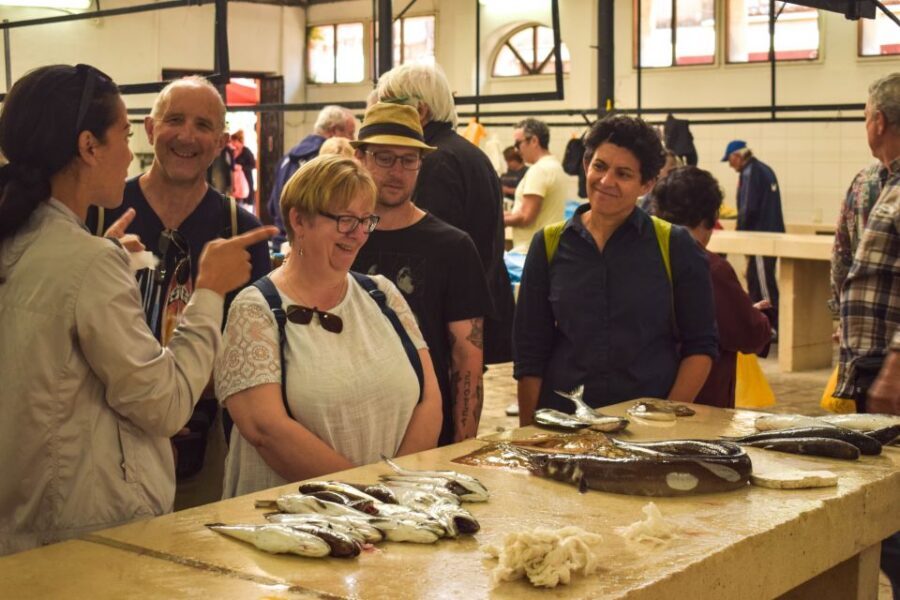
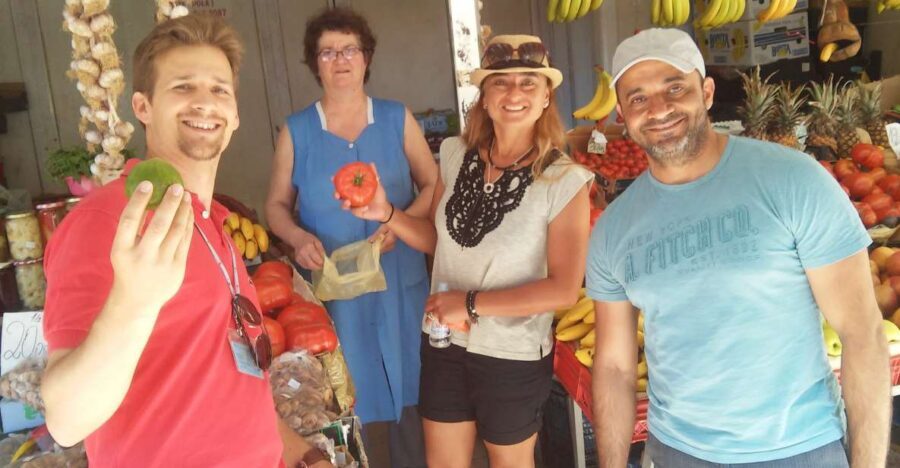
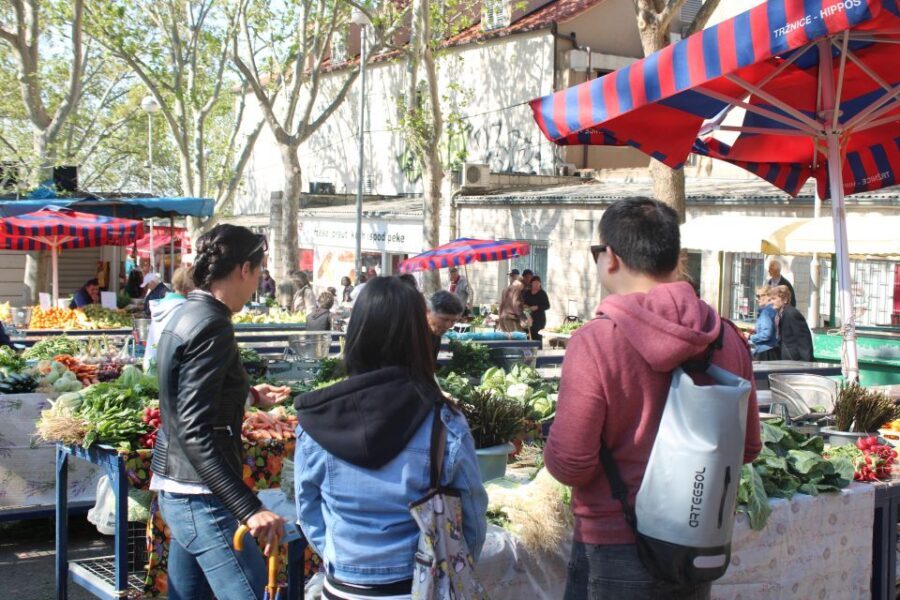
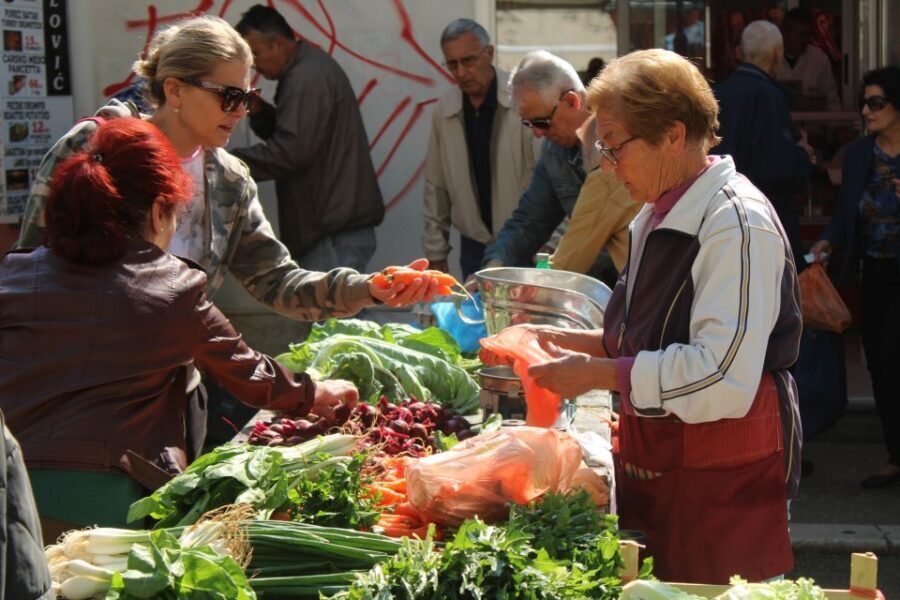
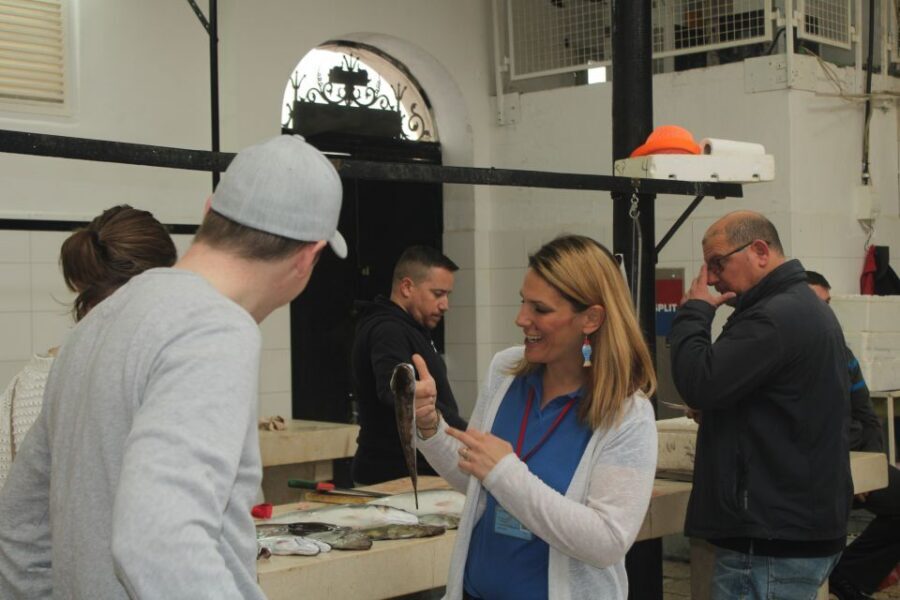
The markets are the heart of this experience. The guide doesn’t treat them like a photo stop; the emphasis is on what locals buy and how that connects to what ends up on plates and in snacks.
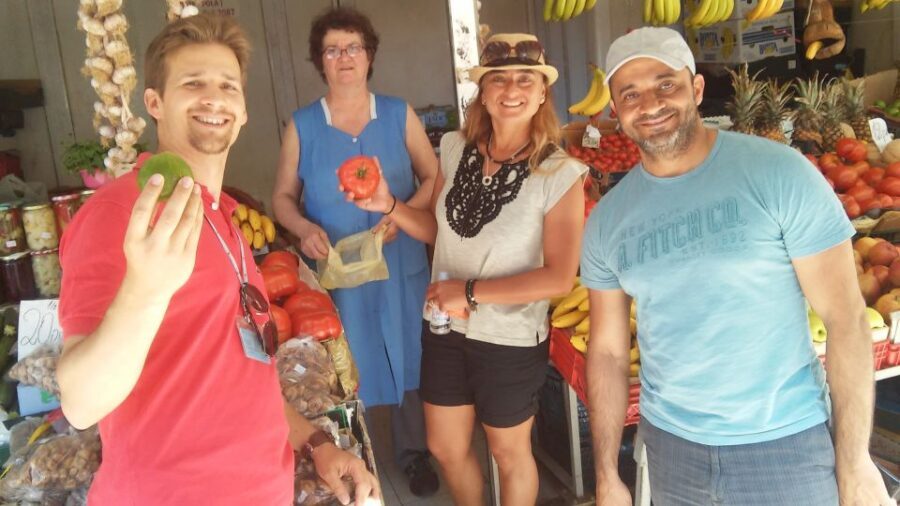
At the Farmers’ and Fish market, you’ll see the “why” behind the flavors. You’re tasting with ingredient context. That matters because Dalmatian cooking leans heavily on what’s fresh and seasonal—especially seafood and simple staples like olive oil, cheese, almonds, and bread.
You’ll also get explanations about traditional preparation. One of the strongest repeated themes in the experience is the idea of seeing fish up close first—then learning how it would typically be prepared. That turns your snack sampling into something closer to understanding a cuisine, not just eating it.
What I like as a traveler: market stops break up the walking and keep the tour feeling grounded. If you love food but also like watching people shop, this portion makes the tour feel like a real slice of life.
Dalmatian snack classics you’ll actually recognize after
This is where the tour shifts from ingredients to identity. You’ll be guided through a set of traditional Dalmatian snacks—enough variety to feel like a meal, but still within a short walk.
Here are some of the standout items you should look forward to:
- Soparnik: a classic savory pastry-style dish associated with the region
- Arancini: bite-sized treats that reflect Italian influence filtered through Dalmatian tastes
- Dalmatian prosciutto with homemade bread: salty cured meat and bread make a very Split-style pairing
- Salted anchovies and cheese: salty, briny flavors that highlight the Adriatic connection
- Almonds in sugar: sweet crunch that works as a contrast to the savory bites
- Olive oil tastings: not just a condiment—more like a spotlight on a core ingredient
The guide’s role is what makes these tastings more than random nibbles. With a local guide, you get the story behind each snack: where it shows up in daily life, what it’s made for, and why these flavors are still common.
Possible drawback to keep in mind: sample portions are designed for variety, not for satisfying a huge appetite the way a full sit-down meal would. If you’re extremely hungry, I’d still plan on eating a proper dinner after.
The chocolate shop with a Guinness World Record and the oldest pastry stop
This tour isn’t afraid of sweets—at the right times. Two specific stops elevate it beyond generic tastings.
First, you’ll visit a local chocolate shop connected to a Guinness World Record. That detail matters because it signals this isn’t a random souvenir candy stop. It’s a genuine shop with a reputation that’s worth putting on your food map.
Then you’ll hit an old-school pastry stop described as the oldest pastry shop in the city. That’s the kind of detail that changes the feeling of the tour. Instead of tasting “something sweet,” you’re tasting sweets that have been part of Split’s routines for a long time.
Why this is good for your day: sweet stops usually help the tour land. After savory bites and market flavors, the pastries give your palate a break—and you leave with a clearer memory of what Split does well.
A few more Split tours and experiences worth a look
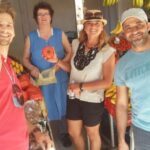
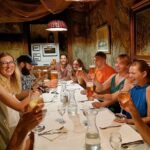
Wines, olive oil, and how to pace your tastings
Local wines and olive oil are included in the tastings, and there’s a minimum drinking age of 18. That means the tour can be fun for adults who want the full flavor arc, but it also means you won’t be relying on alcohol to make the tour enjoyable.
One review note that’s worth paying attention to: the wine tasting timing can be less obvious, and some schedules may treat it like a later separate segment. I’d treat that as a planning hint, not a dealbreaker. If you have dinner reservations or another activity right after, message or ask the guide how the tastings will be structured for your specific start time.
My practical advice: if you like wine, save your questions for that portion. The guide’s explanations are often the difference between tasting something and learning why it’s paired with the snack route you’re taking.
Private group comfort: the pace and the people behind it
This is a private group experience. Practically, that means fewer awkward moments standing in a crowd trying to hear the guide. You can ask follow-ups, and the guide can adjust the pace so you’re not rushing just to “check stops.”
The guides listed in past bookings include people like Marta, Antonio, Jakov, and Darko. What I’d take from their approach is that they tend to combine food facts with culture and cooking context—so you get a guide who can answer questions, not just recite a script.
One other theme that shows up strongly: the tours are described as very thorough while still not being a nonstop marathon. You’ll walk enough to connect the stops, but the sampling keeps the energy up and makes the route feel efficient rather than exhausting.
What to do before and after the tour
If you want the tasting to feel extra satisfying, do this:
- Go in with a light appetite. You’ll get a meaningful mix, but you’ll still want a meal later.
- Wear comfortable shoes. You’re walking through the old-town core around Diocletian’s Palace area.
- Bring a curious mindset. The best moments are when you ask about what you taste and how it’s traditionally made.
After the tour, you’re set up to explore Split with better food instincts. You’ll know what Soparnik is when you see it, and you’ll recognize prosciutto-and-bread as more than a menu item—it’s part of a style of eating.
Also, if you’re planning restaurant meals, you’ll be better at choosing places that match what you already learned to like.
Price and timing: getting $176 per group up to 2 to feel fair
At $176 per group up to 2 for a 2-hour tour, the price isn’t cheap in absolute terms—but it can feel fair if you value: (1) guided market insight, (2) multiple tastings, and (3) not dealing with crowd noise.
Private pricing is usually where you see the difference. You’re paying for a guide who can slow down for your questions and cover more “story” per minute. If you’re traveling with one other person (or you and a friend), this often becomes a smart use of your time because you’re buying a concentrated food education in a short window.
If you’re traveling solo, you may find the value depends on how much you care about guided explanations versus self-guided snacking. This tour leans toward people who want the stories as much as the tastes.
Who should book this tour (and who should skip it)
Book it if:
- You want a market-to-snack experience, not just random tastings
- You like classic Dalmatian flavors and want help identifying them
- You’re the type who enjoys asking questions and learning how food culture works
- You prefer a comfortable private pace
Consider skipping or choosing another option if:
- You want a full meal with large portions and sit-down dining
- You need wheelchair-friendly access
- You’re extremely pressed for time right after, since the tasting schedule can include a wine segment that may feel separate
Should you book this Split private food tasting?
Yes, if you want to understand Split through what people actually eat—markets first, then the snack staples that define the region, finished with real pastry and chocolate landmarks. The tour’s strongest selling point is the pairing of tastings with explanations, so you leave remembering specific flavors and what makes them “Dalmatian,” not just tasting something sweet and salty.
If your schedule is tight, do one simple thing: ask the guide how the wine portion will fit into your exact timing. Then relax. You’ve picked a food route that’s built to make your next Split meal feel smarter.
FAQ
Where is the meeting point?
Meet at the Golden Gate of Diocletian’s palace, down the stairs from the bronze statue of Gregory of Nin. Look for a guide with a blue umbrella.
How long is the Split private food tasting tour?
The duration is 2 hours.
Is this a private tour or a group tour?
It’s a private group experience, priced for a group up to 2.
Is hotel pickup included?
No. There is no hotel pickup.
What food and drinks are included in the tastings?
The tour includes tastings of traditional Dalmatian snacks such as prosciutto, cheese, almonds in sugar, Soparnik, salted anchovies, local wines, and olive oil (plus more snack samples during the stops).
Do you visit the markets?
Yes. The tour includes visits to the Farmers’ market and the Fish market.
Is there wine on the tour?
Yes, local wines are included as part of the tastings. The minimum drinking age is 18.
Are children allowed?
Unaccompanied minors are not allowed. Children must be accompanied by an adult.
Is the tour suitable for wheelchair users?
No. It is not suitable for wheelchair users.
What are my options if I need flexibility?
You can cancel up to 24 hours in advance for a full refund. You can also reserve now and pay later.